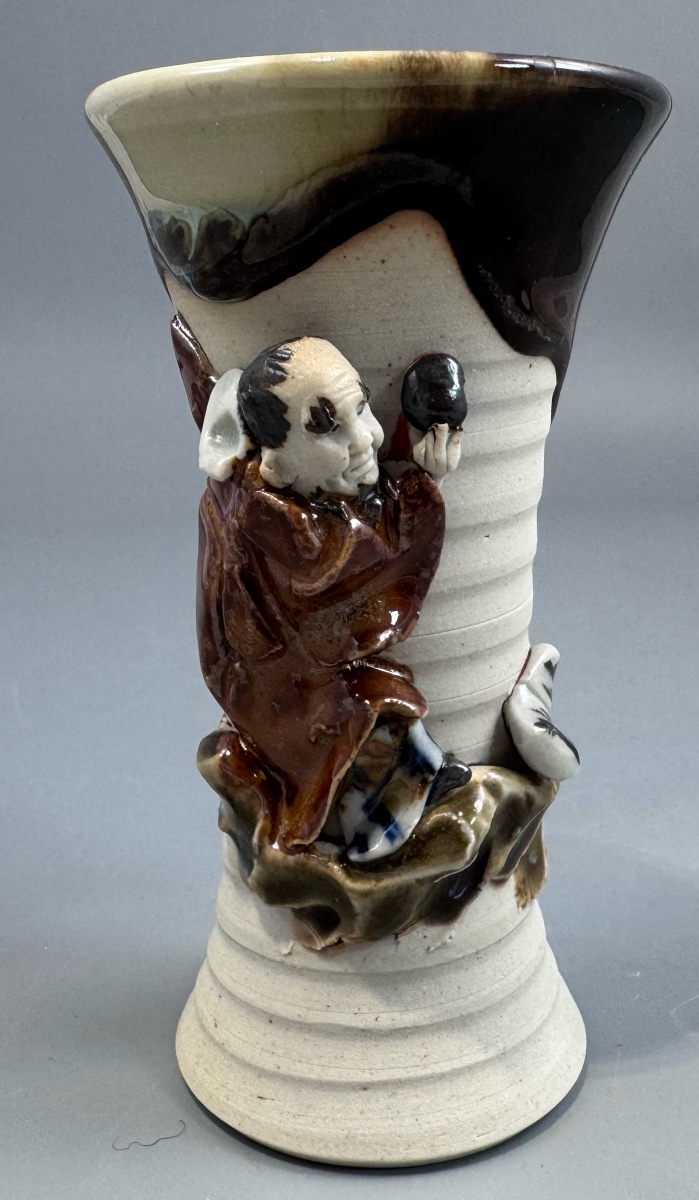


Sumida Gawa Stoneware Vase With Applied Rakan Figure, Signed Ryōsai, Meiji–taishō Period
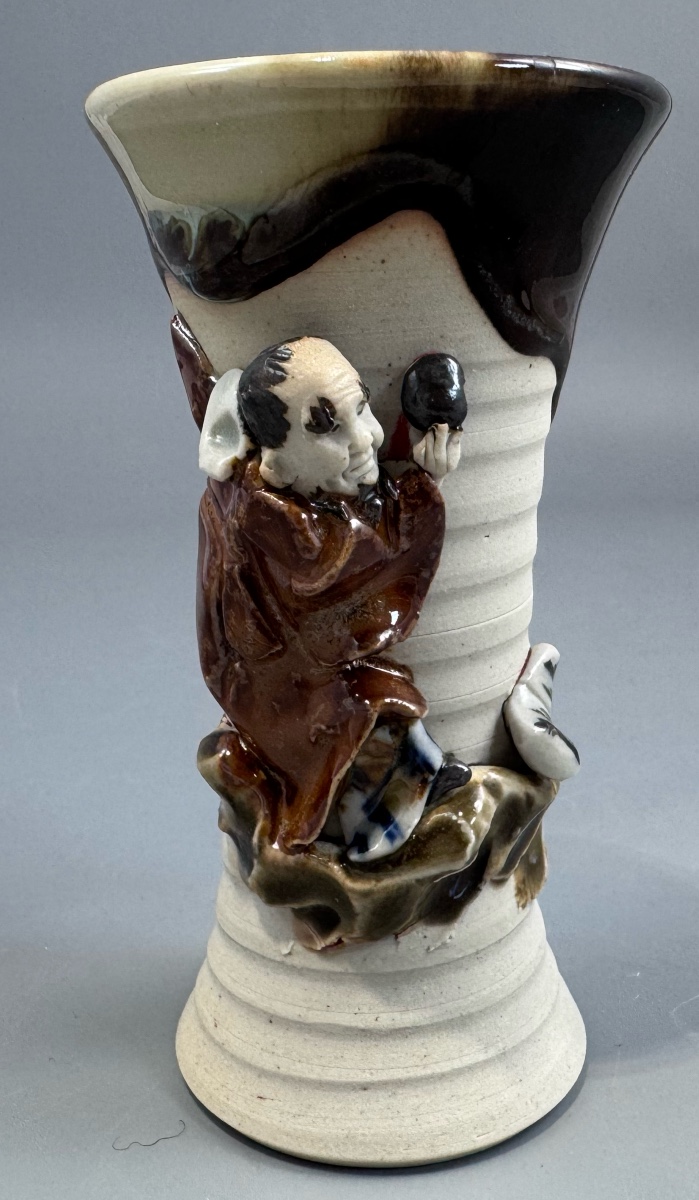
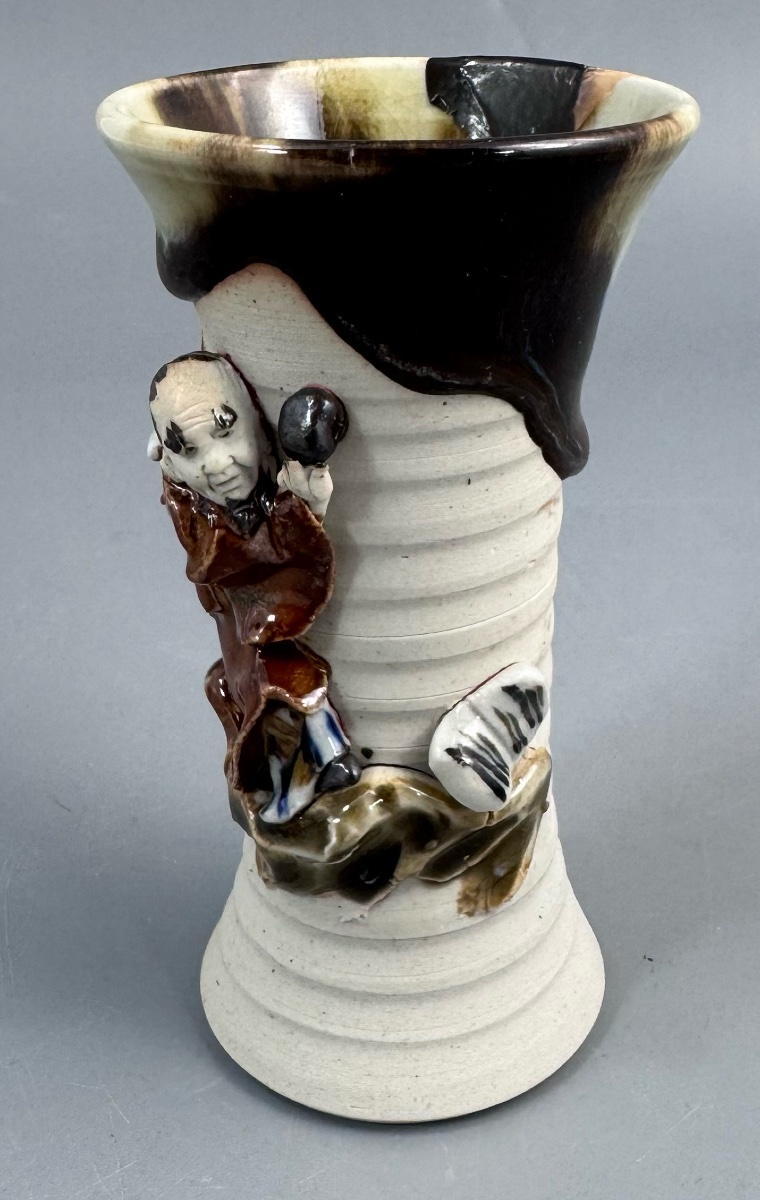
A hand-thrown Sumida ware (隅田焼 / Sumida-gawa) trumpet vase of gu form, Japan, late Meiji to early Taishō period, c. 1900–1920, signed Ryōsai and attributed to the workshop of Inoue Ryōsai (井上良斎).
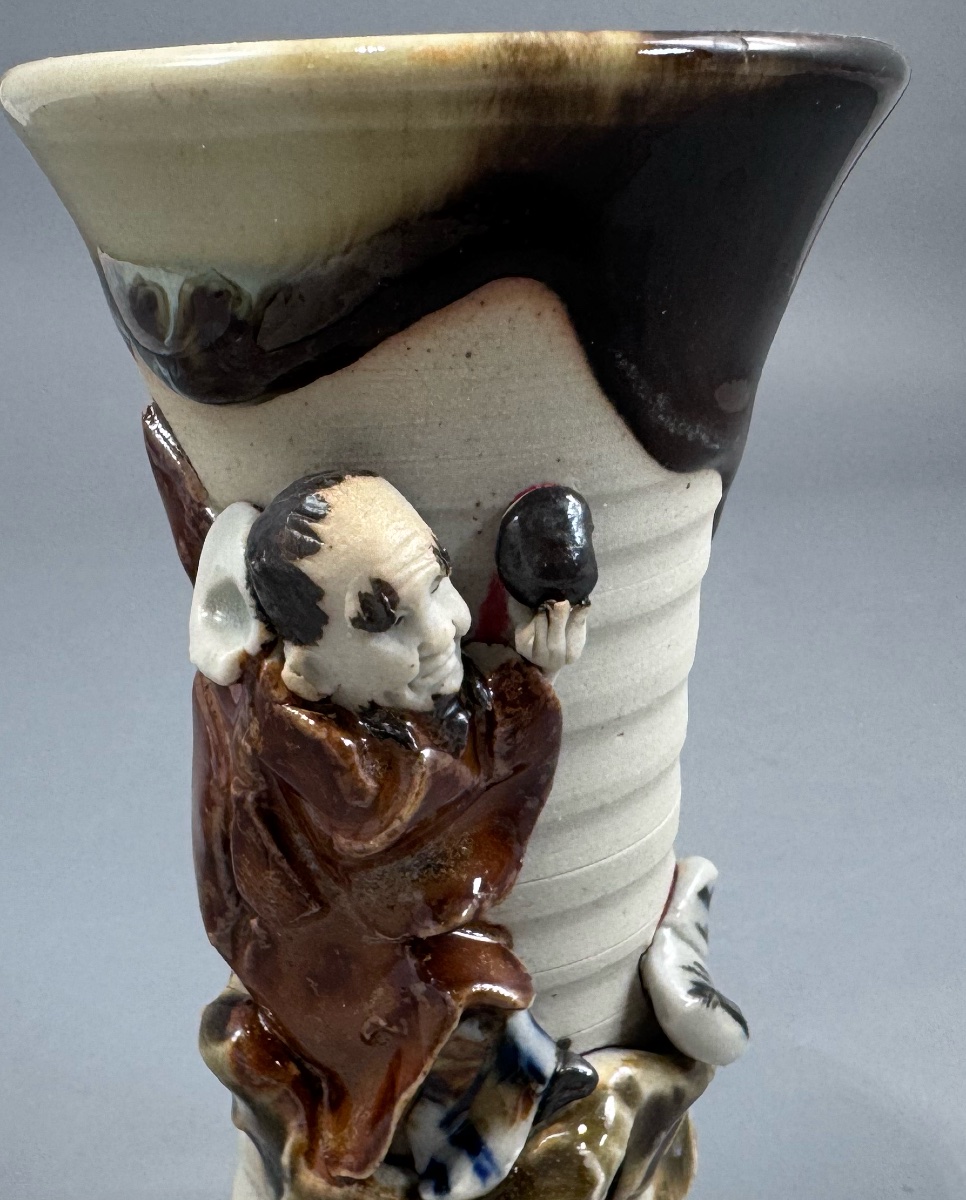
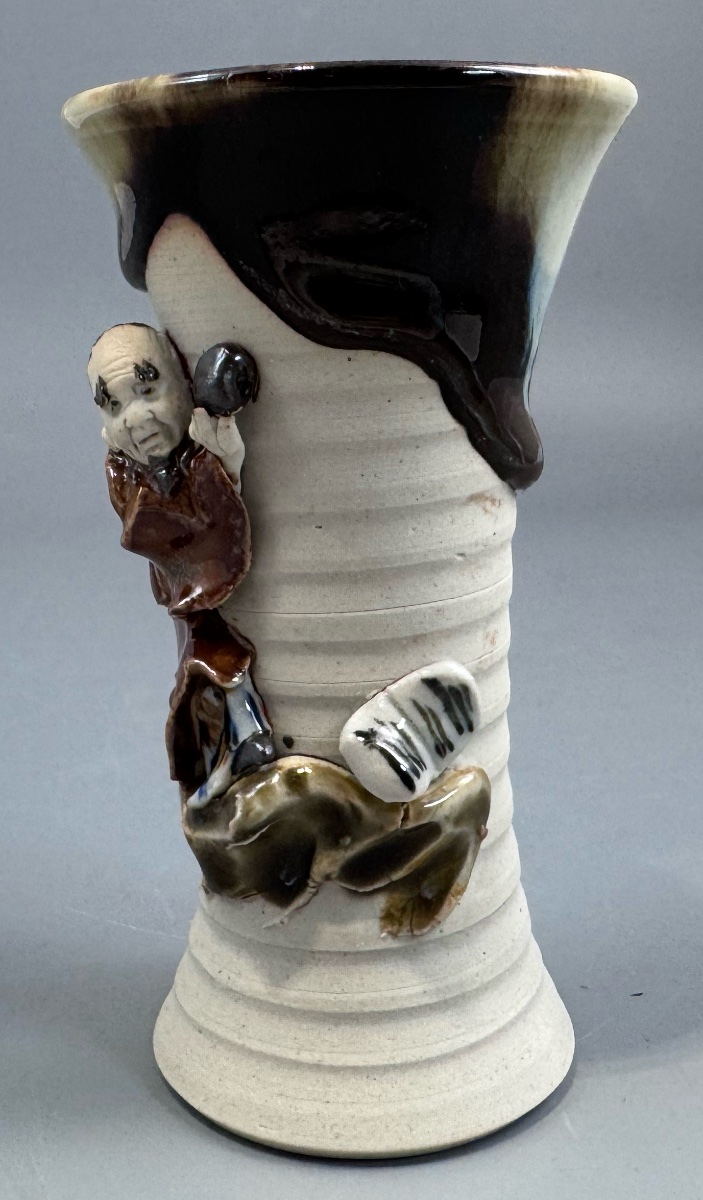
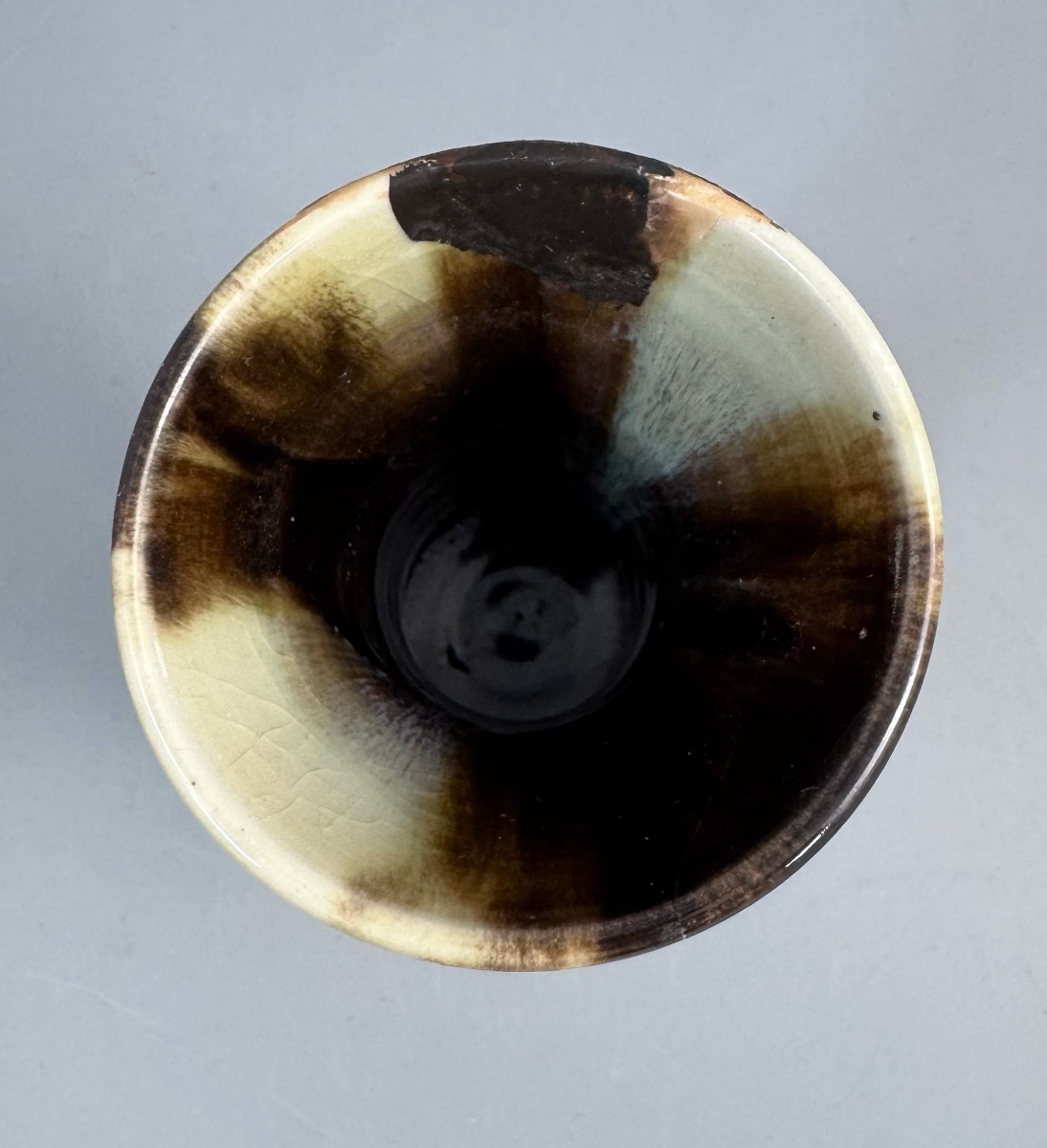
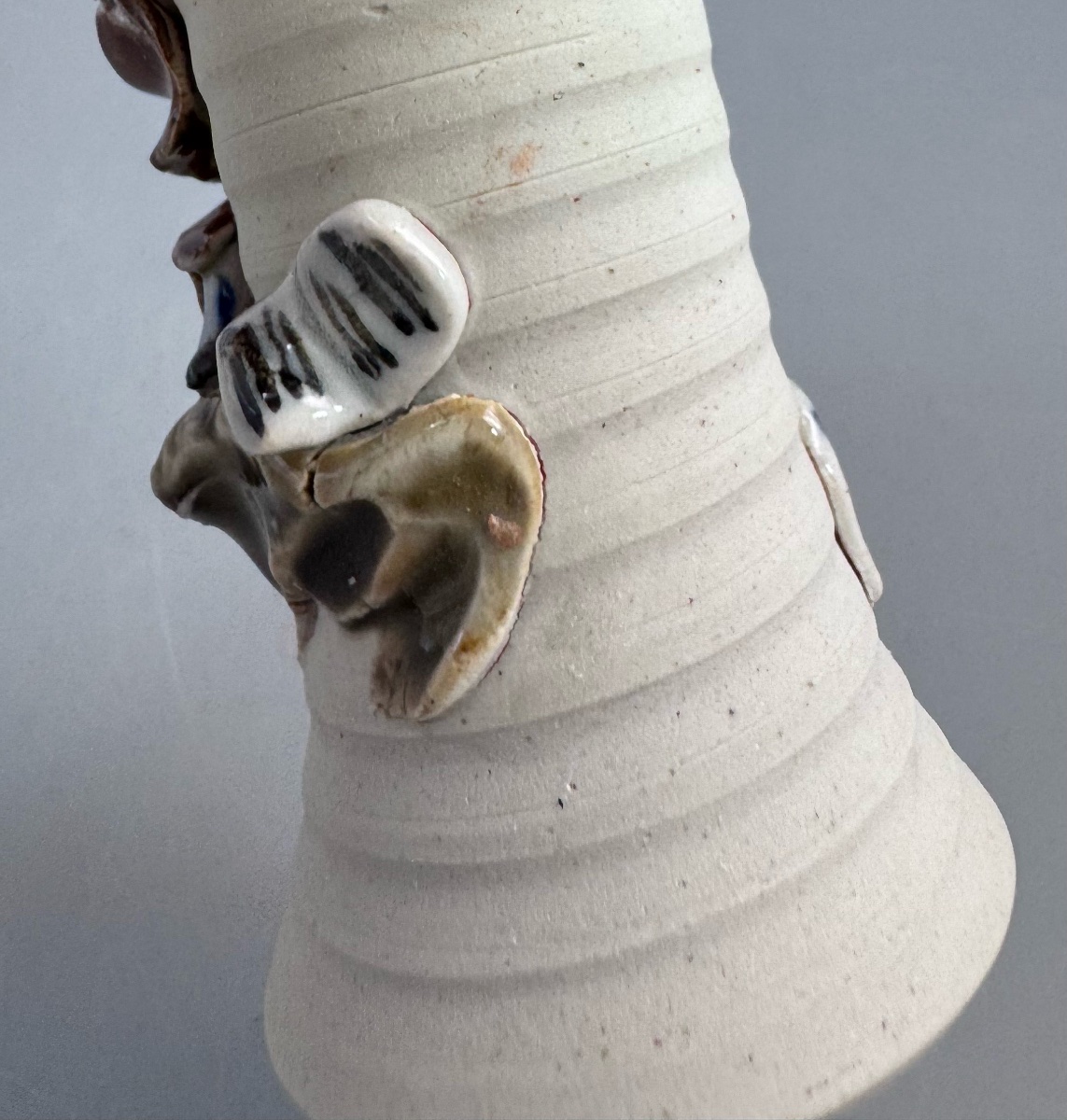
A buff stoneware body of the paler Sumida variant, left largely unglazed to display the heavily ribbed, wheel-thrown surface — the pronounced throwing rings running across the waisted cylindrical body and the stepped, flaring foot. The flared trumpet mouth and upper body are covered in a lustrous aubergine-black treacle glaze that pools at the rim and drips irregularly down over the pale body in tongues and runs, thinning in places to reveal amber, olive and blue-grey streaks — the flambé effect characteristic of the workshop.
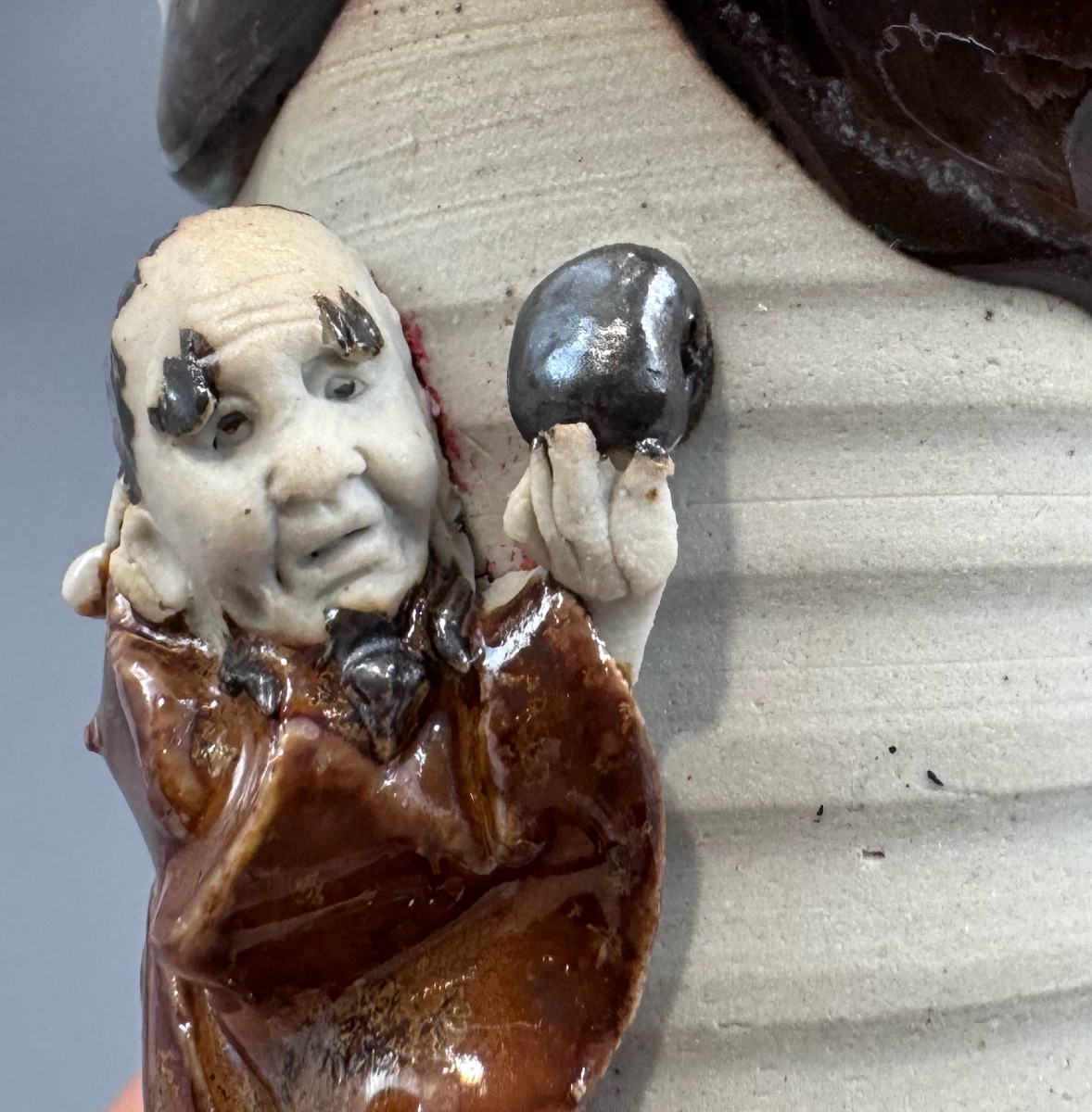
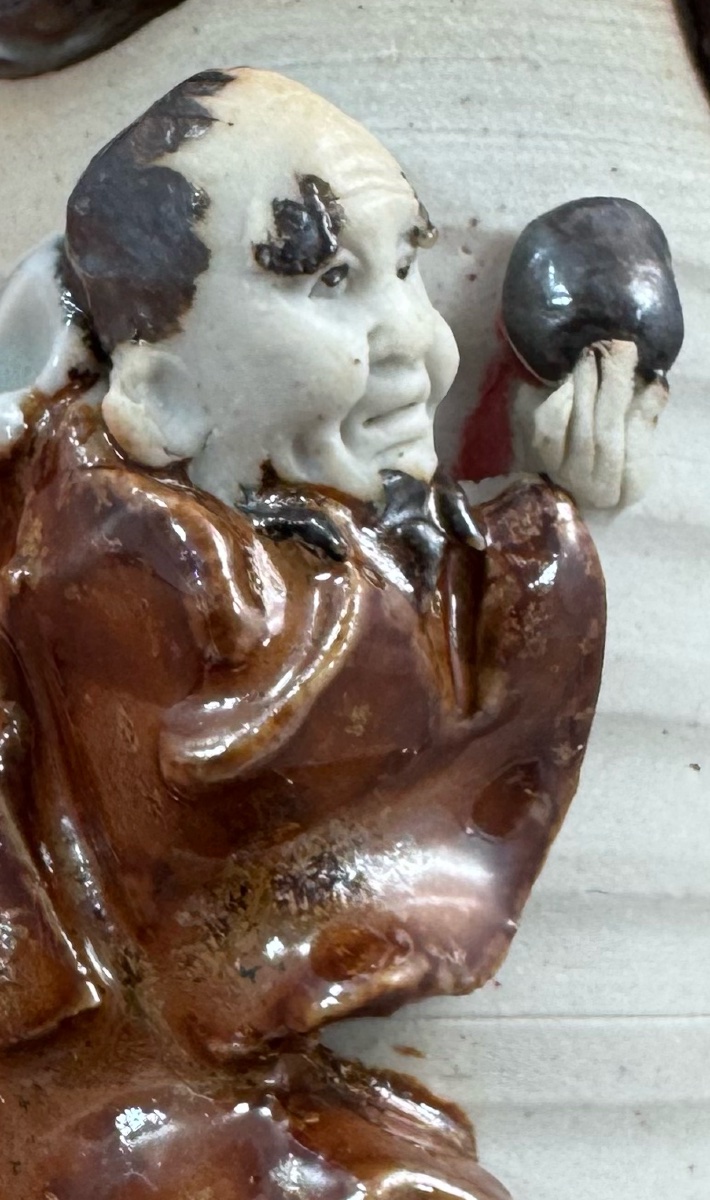
The applied decoration is separately modeled and glazed in porcelaneous white, iron-brown and cobalt underglaze blue, attached to the body before the final firing.
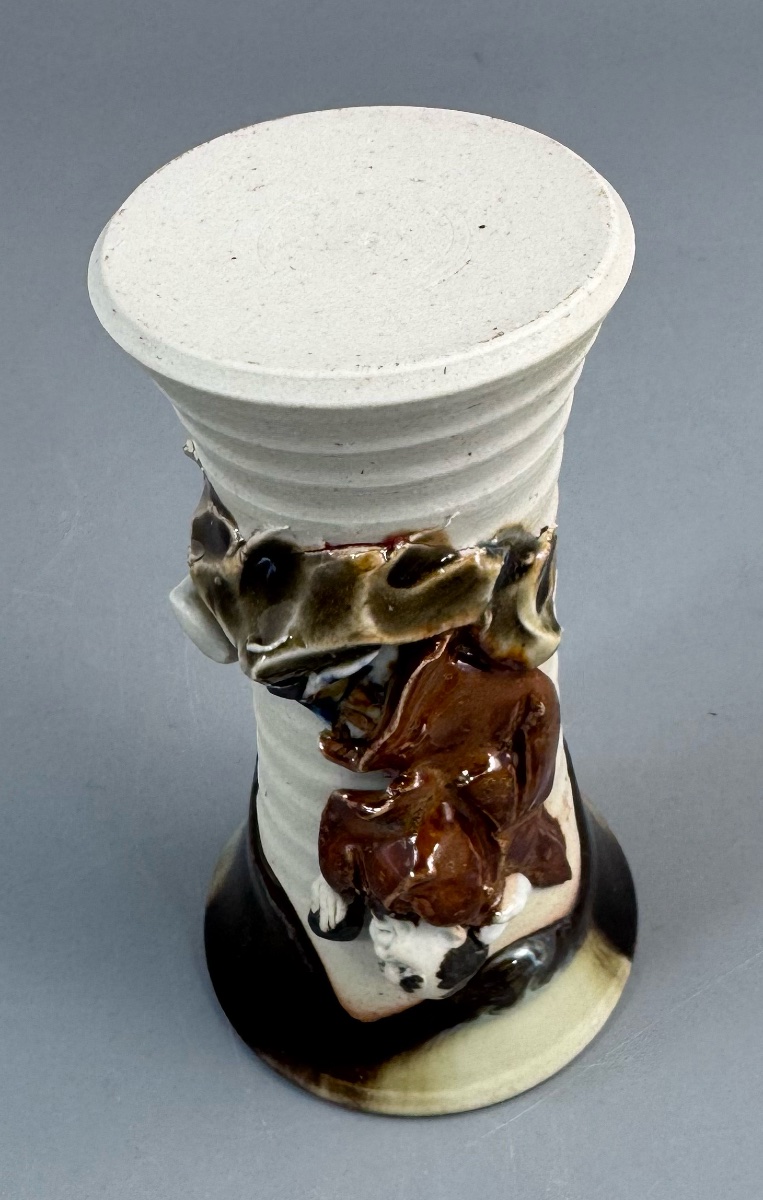
A rakan (Buddhist arhat, 羅漢), bald and finely wrinkled, is shown seated on olive-glazed craggy rockwork at the front of the vase, wrapped in flowing russet-brown robes with a pale cowl falling behind one shoulder. He holds aloft a dark spherical hōju (宝珠), the wish-granting jewel, his expression one of quiet amusement. A further porcelaneous fragment of robe in blue-and-white trails around the reverse. The three-dimensional figure wraps the front of the vessel with his drapery and rockwork continuing around the sides. Interior glazed in graduated aubergine-to-cream. Underside fully unglazed, revealing the pale buff clay with concentric turning rings.
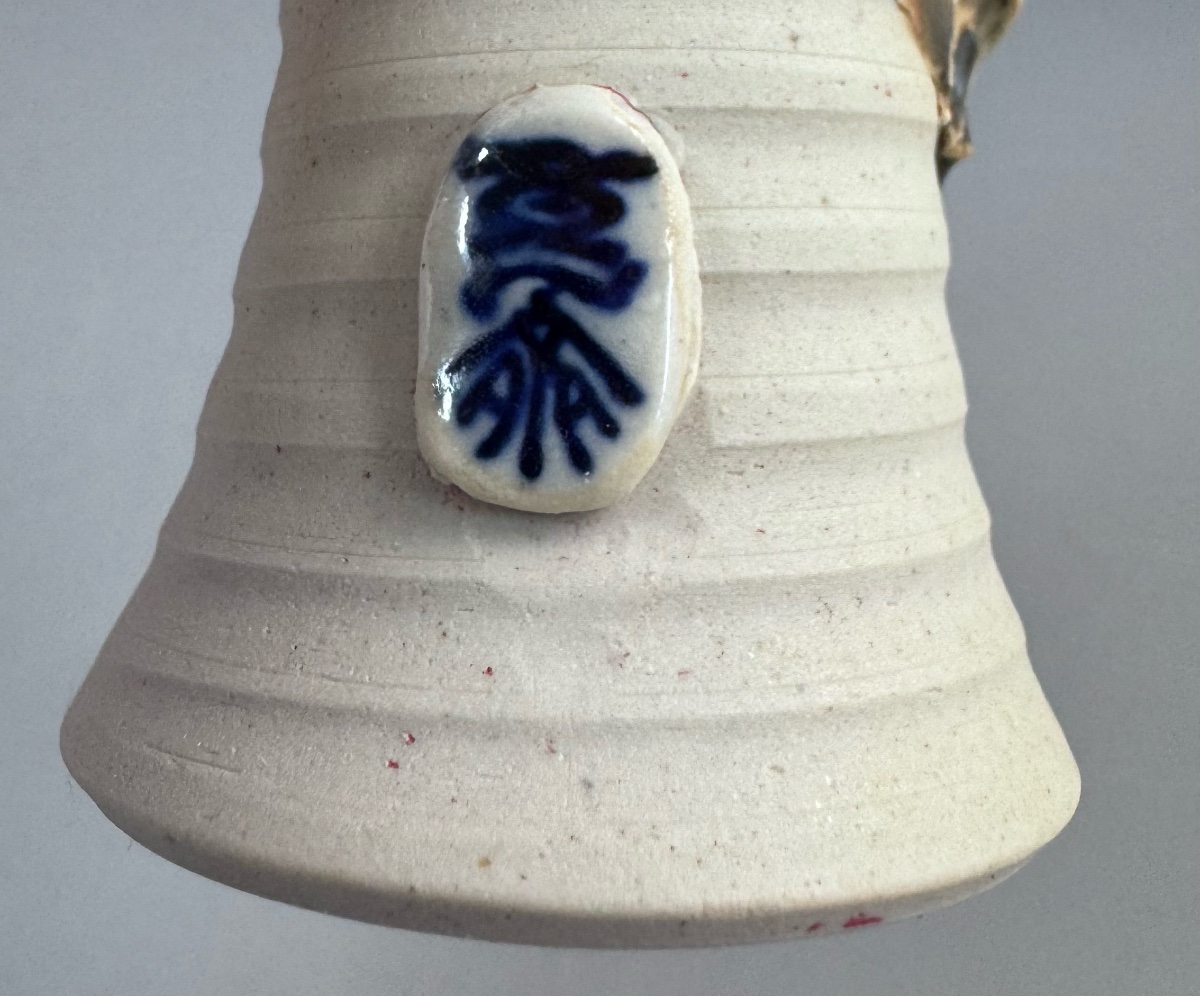
Hallmark: applied porcelain cartouche at the lower body on the reverse, painted in underglaze cobalt blue with the signature Ryōsai (良斎), consistent with marks associated with the Inoue Ryōsai workshop.
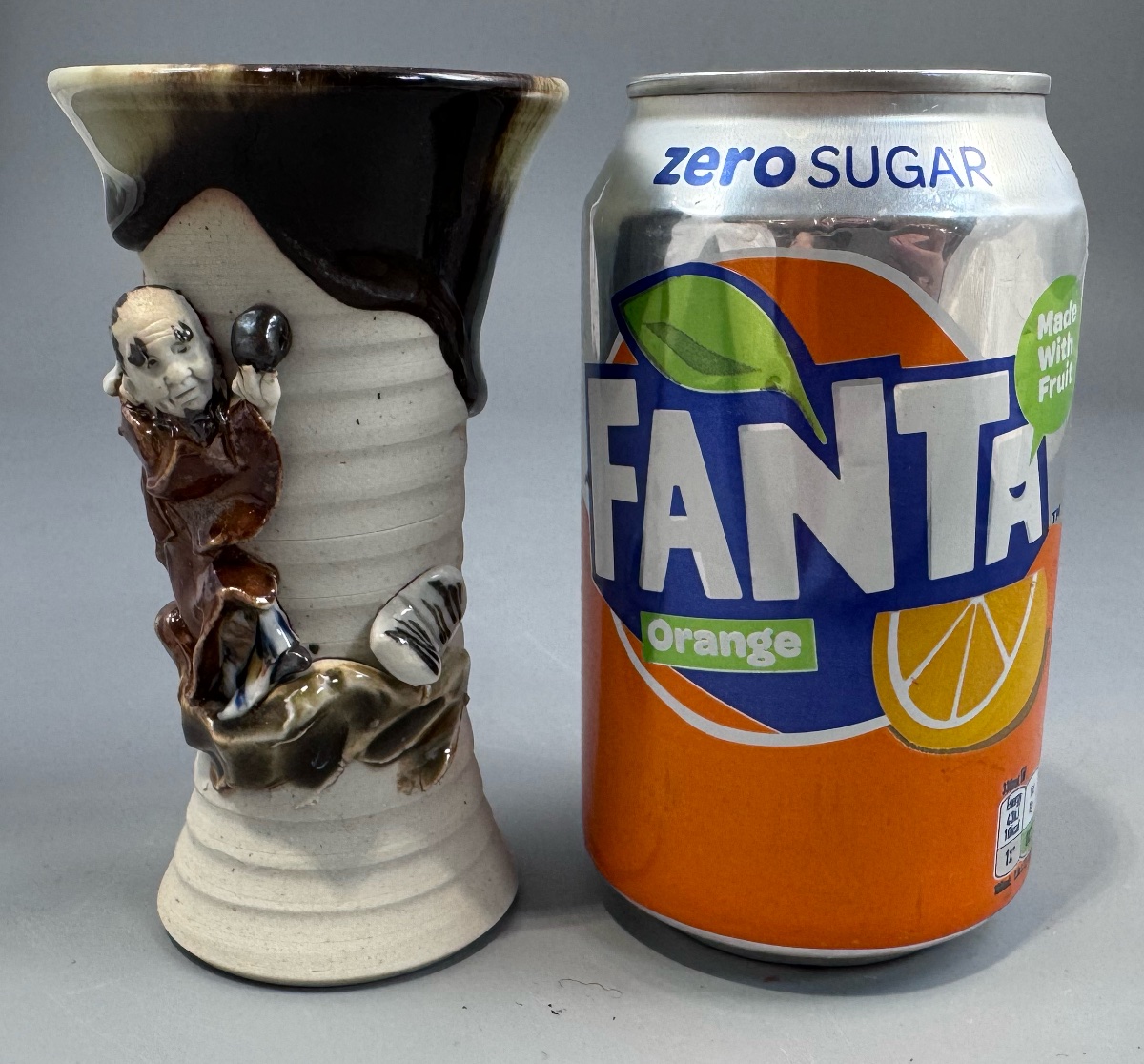
Dimensions: H 11.5 cm, W 6.5 cm. Weight 155 g.
Condition: good antique condition, honest age-related wear consistent with period use. Please carefully regard all photos as they make an integral part of the listing, and reach out if there are any questions.
Period: 20th century
Style: Asian art
Condition: Excellent condition
Material: Earthenware
Length: 6.5
Height: 11.5
Reference (ID): 1746067
Availability: In stock