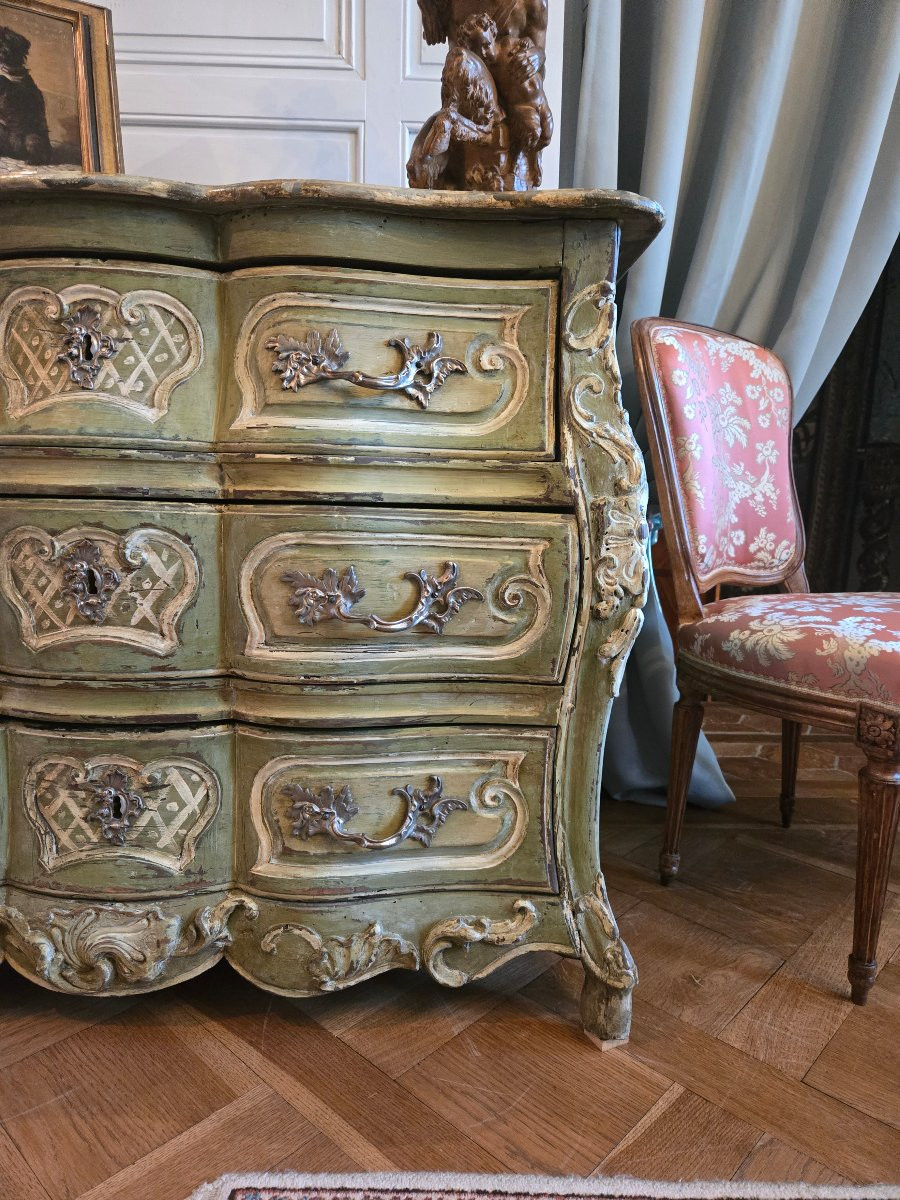

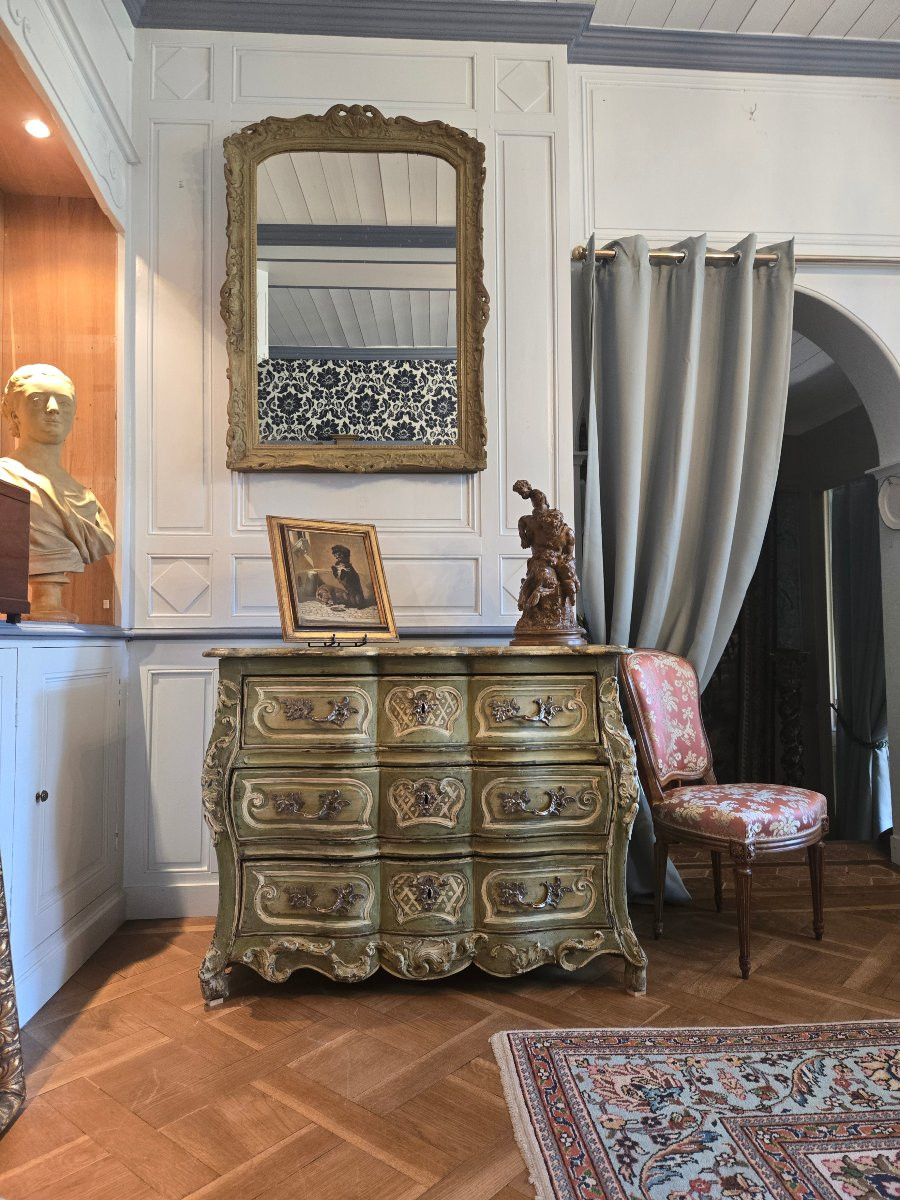


Louis XV Period Crossbow Chest Of Drawers, Central European Work, Mid 18th Century.
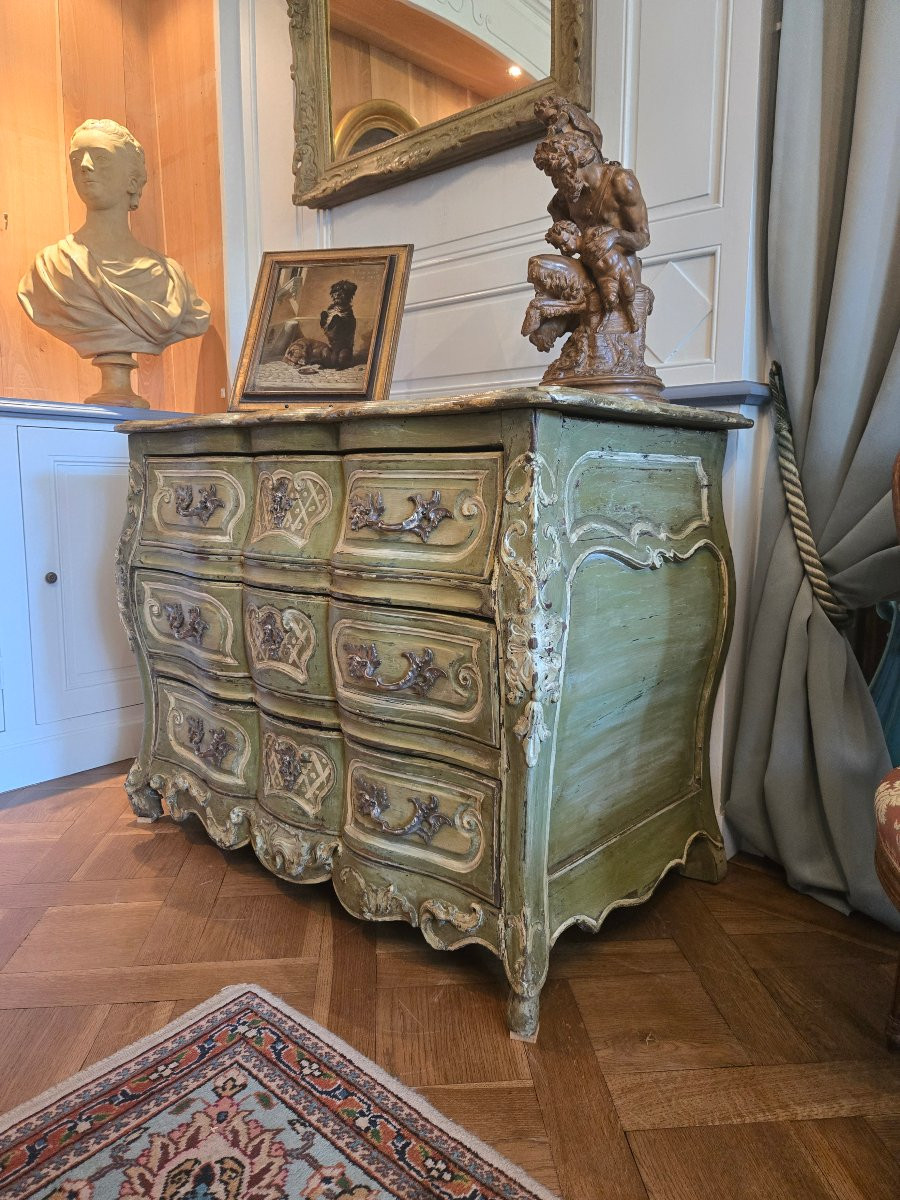
A singular curved chest of drawers from the Louis XV period, whose particularly eventful silhouette and sculptural presence immediately assert its character.
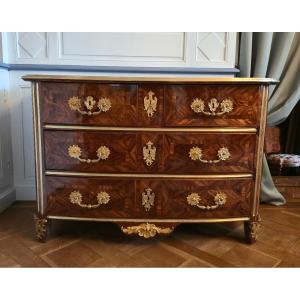
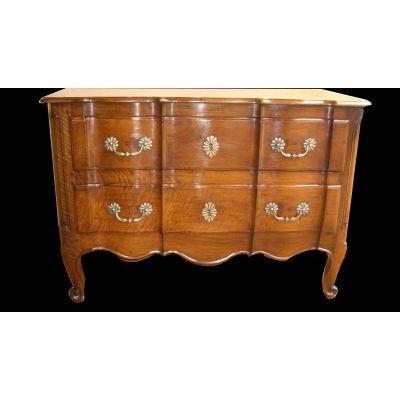
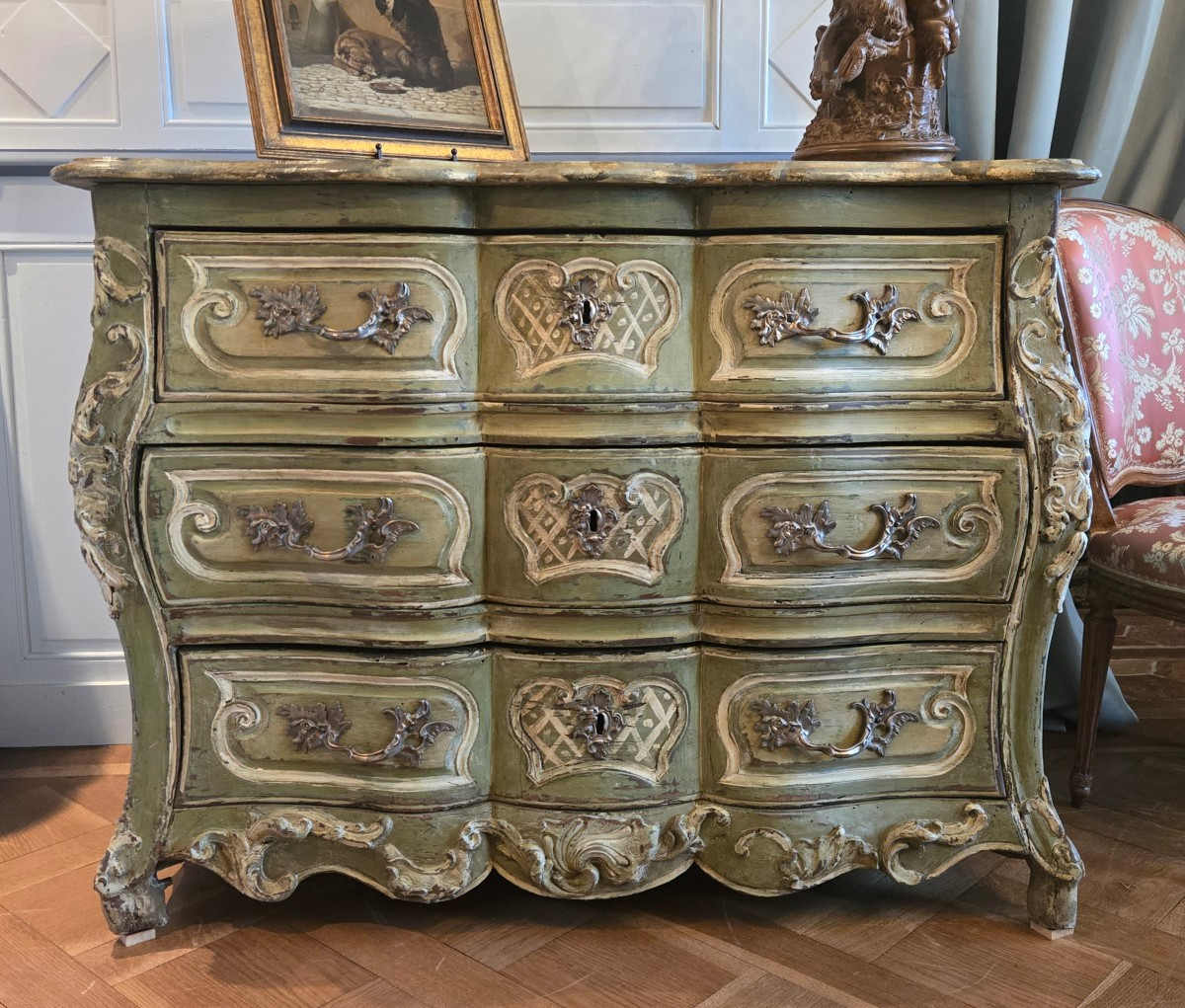
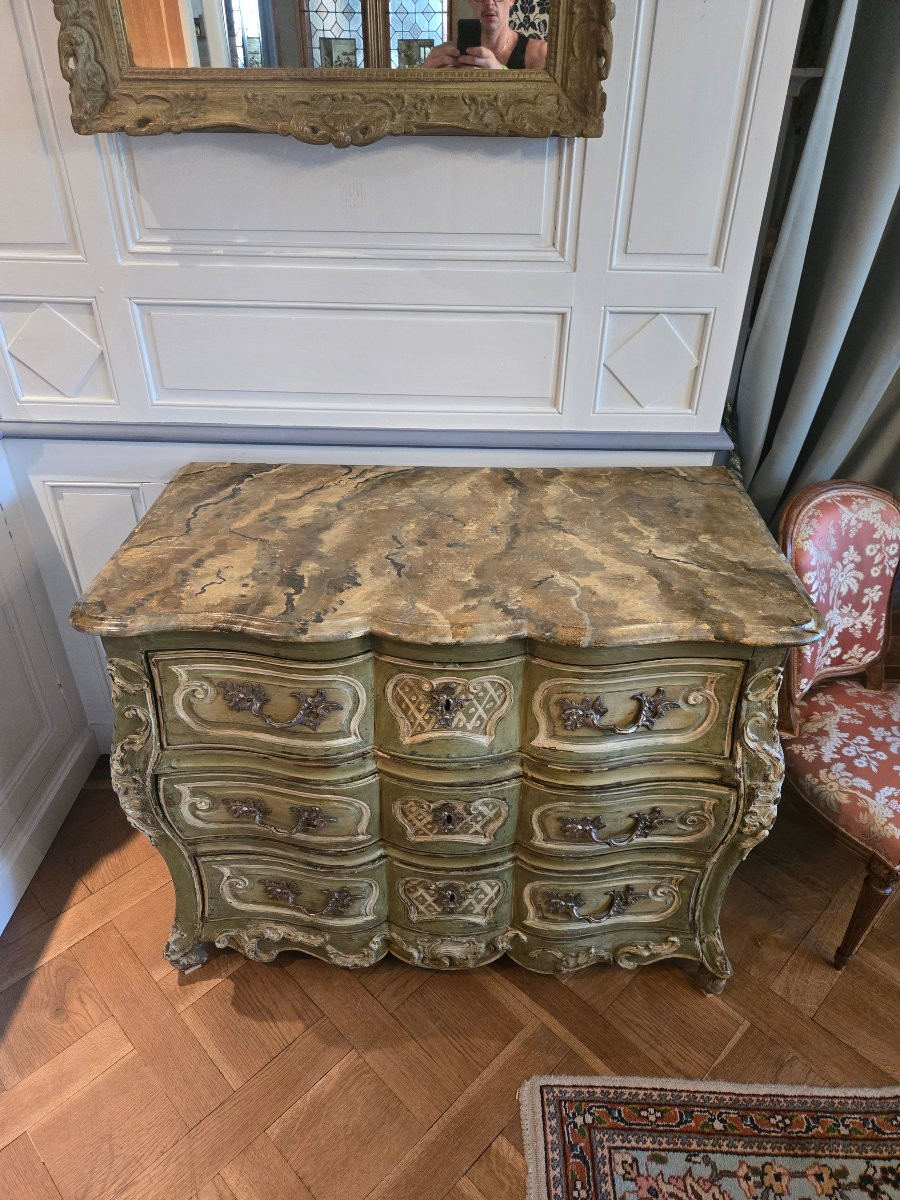
The cabinet adopts a highly accentuated crossbow front, developing a double curve in plan and elevation, while the sides, also curved, extend this movement throughout the structure. This extensive use of curves and counter-curves is reminiscent of "tomb" models, but differs from them in its uncommon freedom of design and particularly lively interpretation.
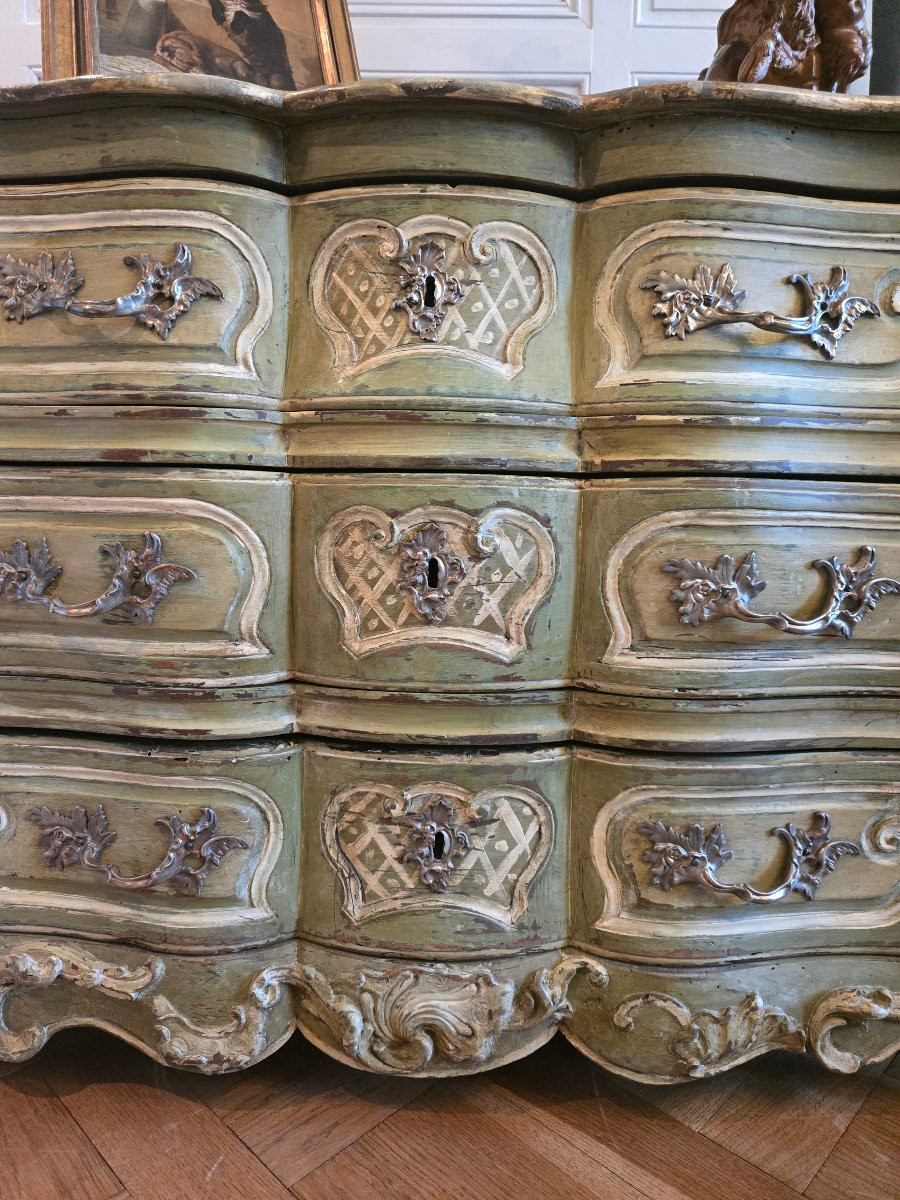
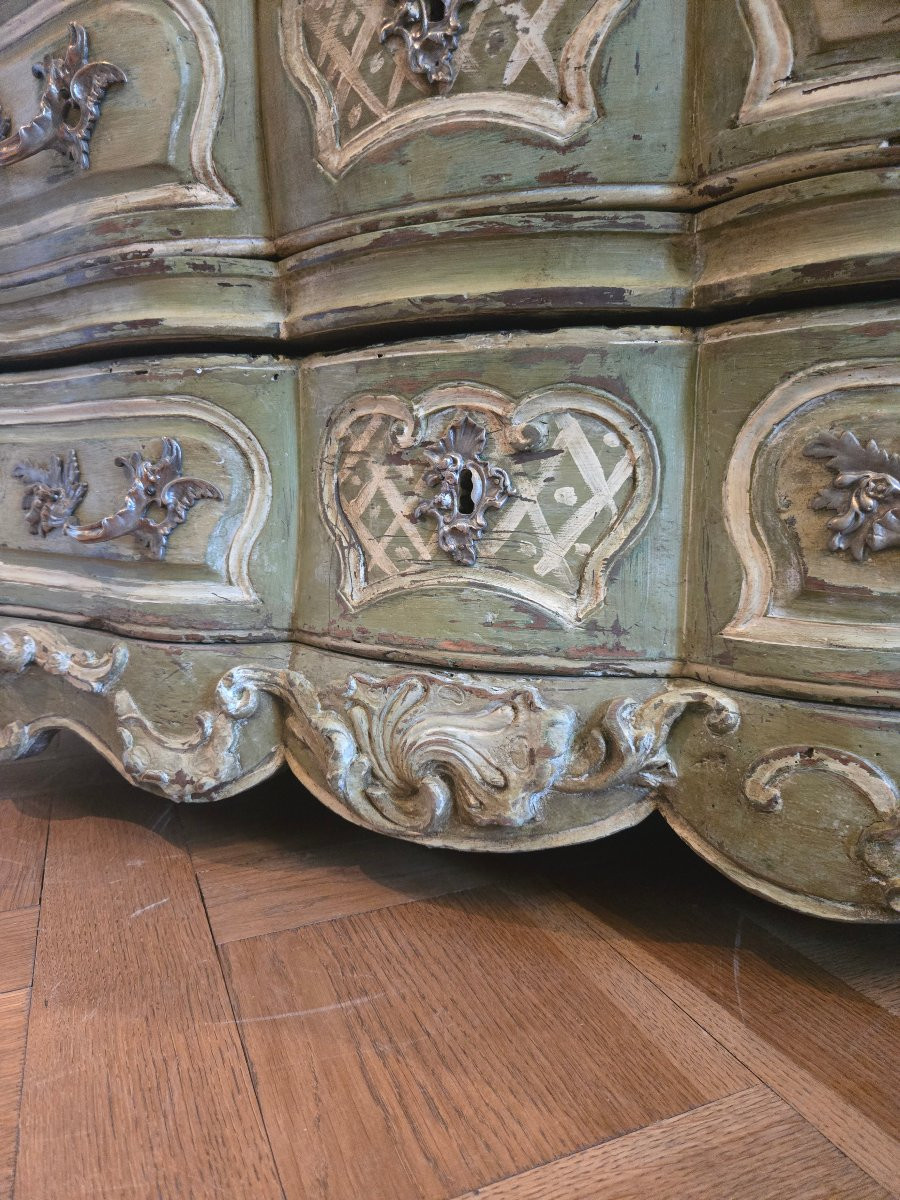
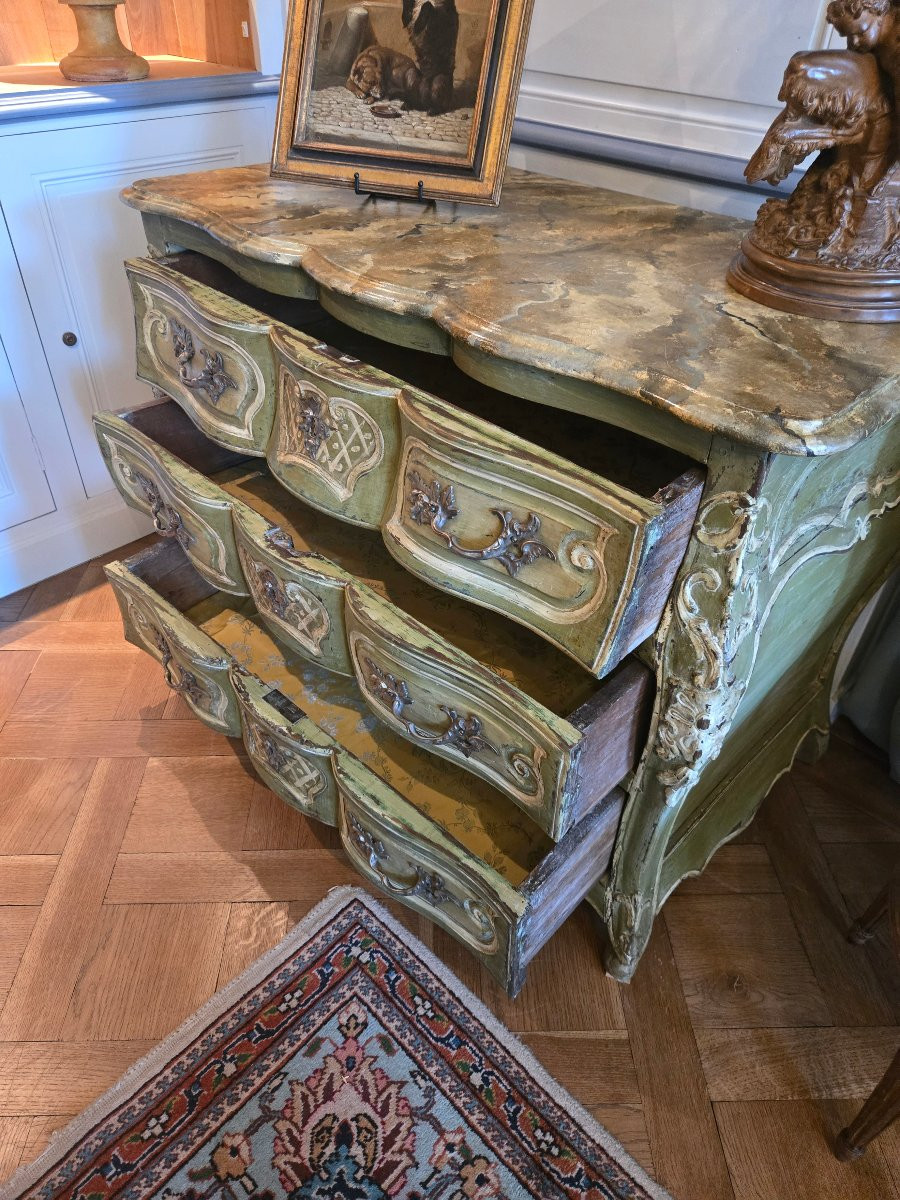
It opens with three superimposed drawers, separated by molded crosspieces carved with wide channels, in a spirit still marked by the rhythms inherited from the Regency period. The fronts are enlivened by scrolled cartouches with supple, asymmetrical contours, centered on bronze escutcheons, while the handles, also in bronze, are antique but later.
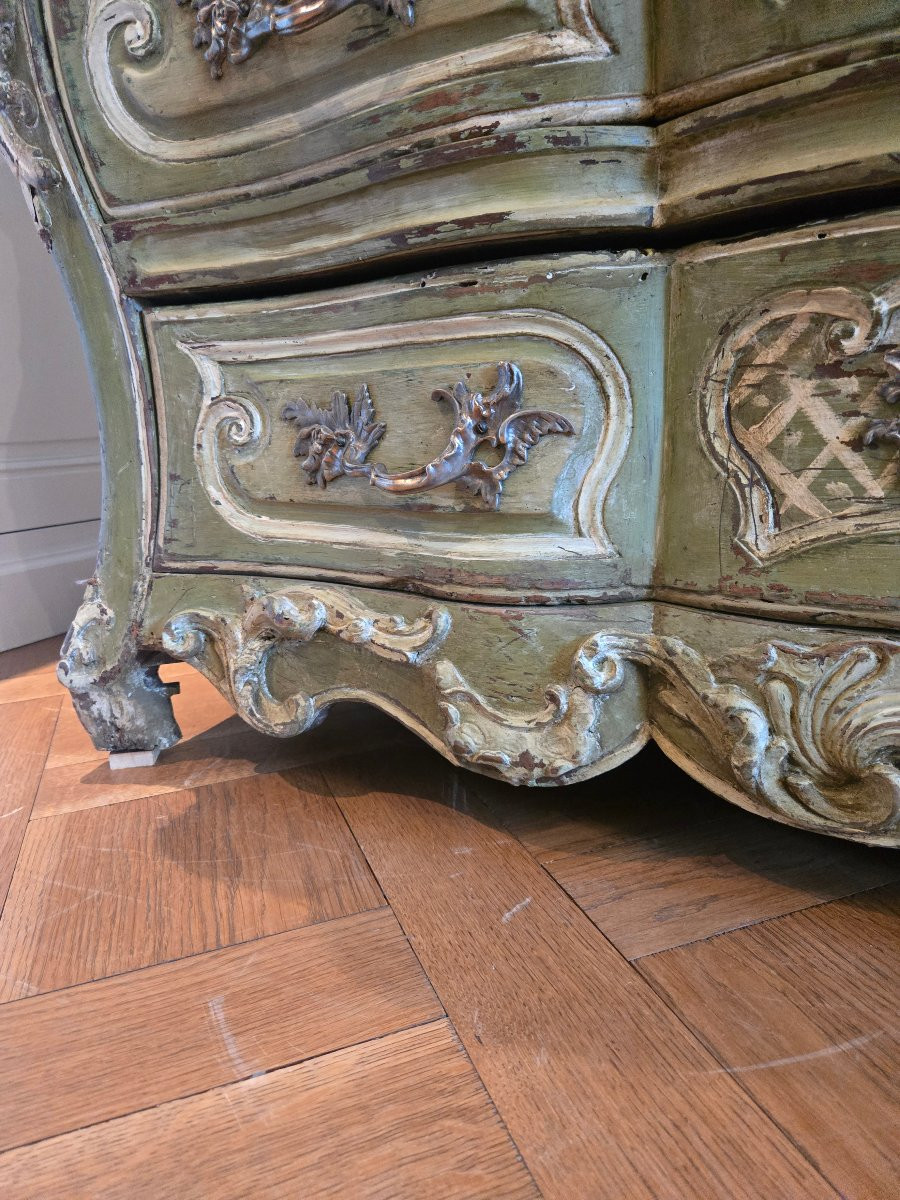
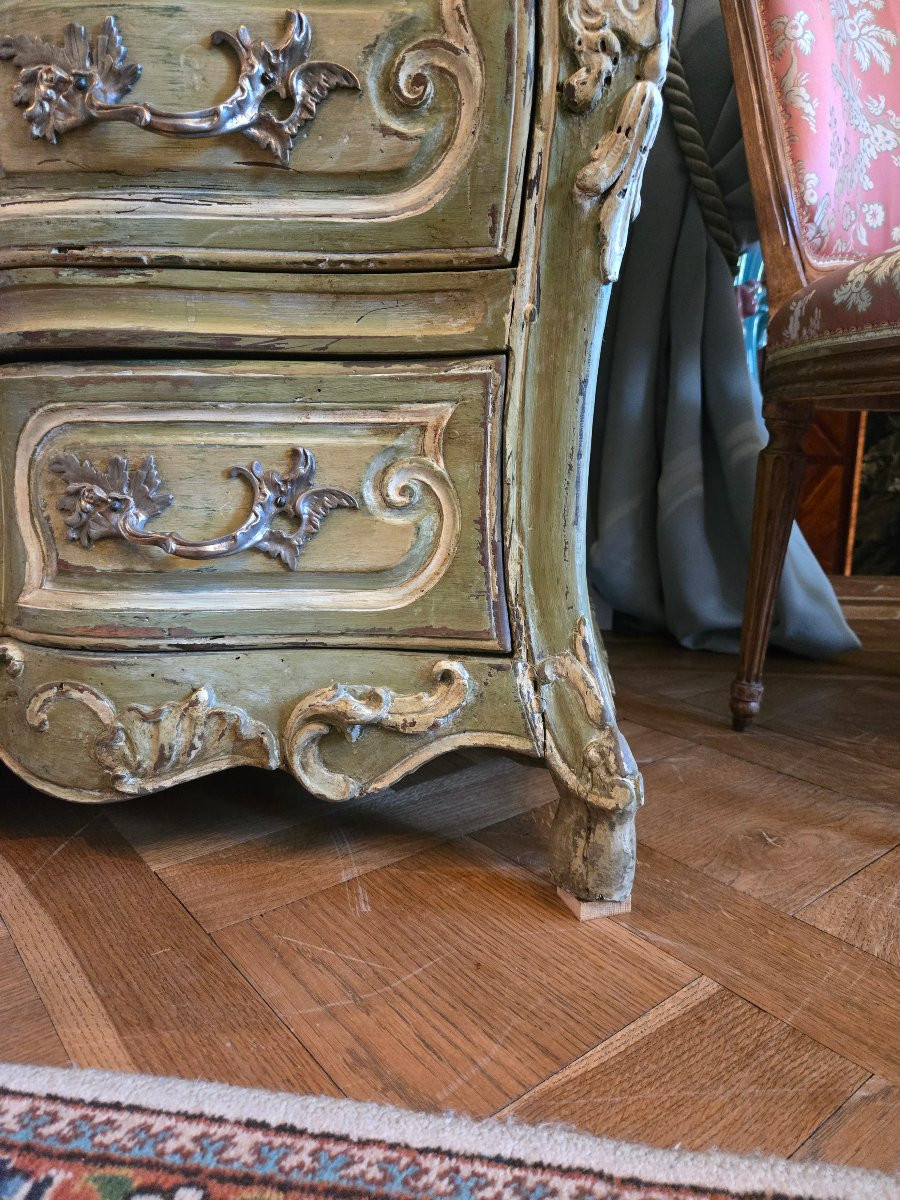
The sculpture, abundant and expressive, is deployed with real vigor throughout the piece of furniture. Leafy foliage, scrolls and stylized shells enliven the crosspieces, falls and belt, in a work where the material seems almost modeled rather than strictly drawn. The deeply carved reliefs catch the light and give the ensemble a lively presence, far removed from the most academic productions.
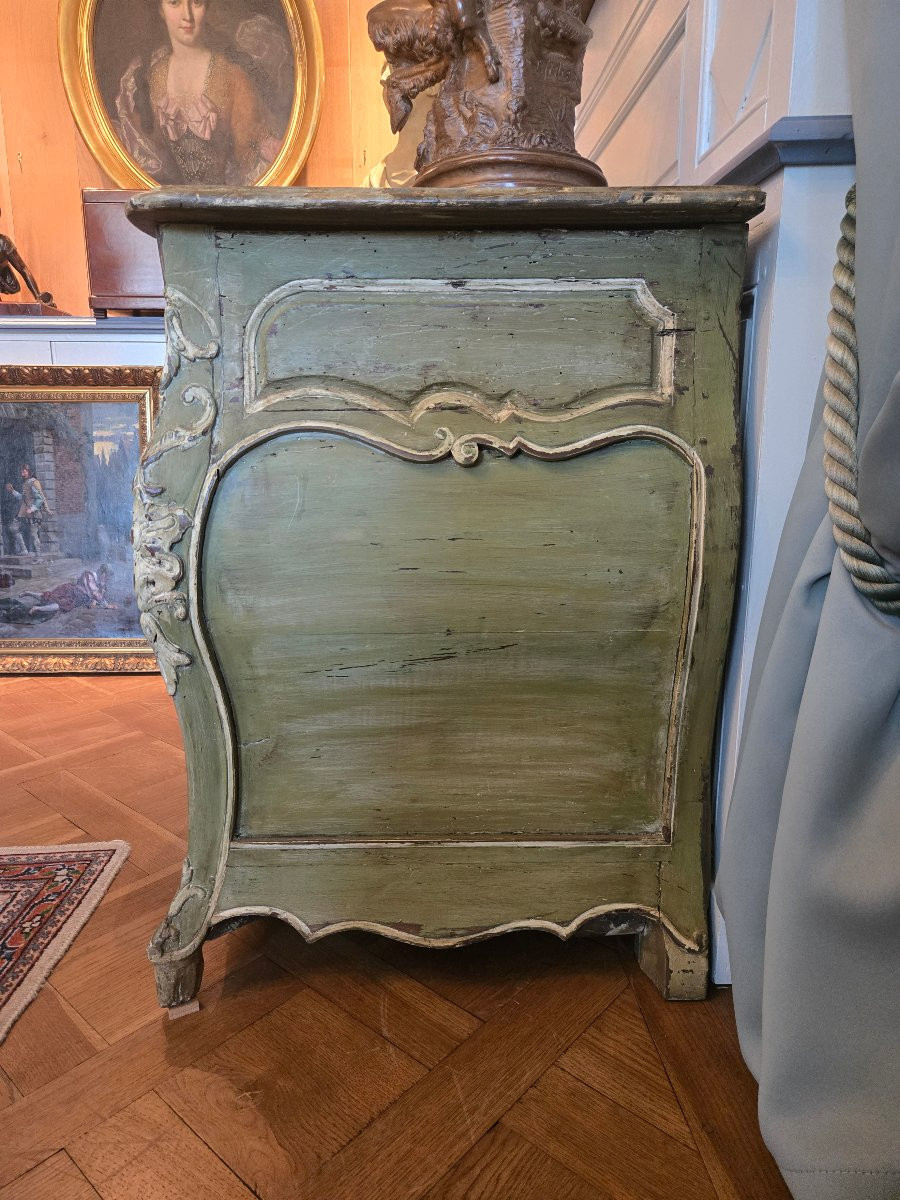
The strongly curved front jambs extend seamlessly to the feet, integrating the fall into a continuous movement. The wide-cut belt features a particularly strong central shell motif, framed by wide scrolls. The sides, also curved, are structured by molded panels, the top of which is scalloped, repeating an organization found on the most accomplished models of the 18th century, but here treated with a notable freedom of interpretation.
While this commode clearly borrows its vocabulary from the French Louis XV style, it is distinguished by a more instinctive interpretation and a marked taste for movement. Despite extensive research, no strictly comparable models have been identified, making it impossible to link this piece to a specific production center.
However, the very pronounced curvature, the composition of the volumes and the vigor of the carving bring this piece closer to certain Central European productions, notably in Southern Germany or Austria, where the Rococo adopted more expressive forms, sometimes close to the late Baroque. In these regions, cabinetmakers favored undulating lines, tense volumes and generous sculpture, resulting in furniture of great formal vitality. This chest of drawers is fully in keeping with this spirit, offering a free and particularly lively interpretation of the galbé model.
The cabinet is built in fruitwood and beech, with solid beech drawers featuring a high wood flow, reflecting old-fashioned, robust workmanship. The bottoms are grooved in the sides, back and crosspieces, while the intermediate floors, also in solid beech, are made of planks set perpendicular to the front. The back is made up of panels mounted in a stile-and-rail frame.
Today, the unit is in good overall condition, with a few minor restorations inherent to its age and use.
The frame features a cameo of nuanced greens, enhanced by light highlights underlining the moldings, while the top is treated in a veined marble spirit.
With its restrained proportions, highly curved silhouette and particularly expressive carved treatment, this chest of drawers stands out clearly from more classical productions and testifies to a free and lively approach to 18th-century Rococo furniture, at the crossroads of French and Central European influences.
Dimensions:
Width: 115 cm
Depth: 62 cm
Height: 86 cm
The cabinet adopts a highly accentuated crossbow front, developing a double curve in plan and elevation, while the sides, also curved, extend this movement throughout the structure. This extensive use of curves and counter-curves is reminiscent of "tomb" models, but differs from them in its uncommon freedom of design and particularly lively interpretation.
It opens with three superimposed drawers, separated by molded crosspieces carved with wide channels, in a spirit still marked by the rhythms inherited from the Regency period. The fronts are enlivened by scrolled cartouches with supple, asymmetrical contours, centered on bronze escutcheons, while the handles, also in bronze, are antique but later.
The sculpture, abundant and expressive, is deployed with real vigor throughout the piece of furniture. Leafy foliage, scrolls and stylized shells enliven the crosspieces, falls and belt, in a work where the material seems almost modeled rather than strictly drawn. The deeply carved reliefs catch the light and give the ensemble a lively presence, far removed from the most academic productions.
The strongly curved front jambs extend seamlessly to the feet, integrating the fall into a continuous movement. The wide-cut belt features a particularly strong central shell motif, framed by wide scrolls. The sides, also curved, are structured by molded panels, the top of which is scalloped, repeating an organization found on the most accomplished models of the 18th century, but here treated with a notable freedom of interpretation.
While this commode clearly borrows its vocabulary from the French Louis XV style, it is distinguished by a more instinctive interpretation and a marked taste for movement. Despite extensive research, no strictly comparable models have been identified, making it impossible to link this piece to a specific production center.
However, the very pronounced curvature, the composition of the volumes and the vigor of the carving bring this piece closer to certain Central European productions, notably in Southern Germany or Austria, where the Rococo adopted more expressive forms, sometimes close to the late Baroque. In these regions, cabinetmakers favored undulating lines, tense volumes and generous sculpture, resulting in furniture of great formal vitality. This chest of drawers is fully in keeping with this spirit, offering a free and particularly lively interpretation of the galbé model.
The cabinet is built in fruitwood and beech, with solid beech drawers featuring a high wood flow, reflecting old-fashioned, robust workmanship. The bottoms are grooved in the sides, back and crosspieces, while the intermediate floors, also in solid beech, are made of planks set perpendicular to the front. The back is made up of panels mounted in a stile-and-rail frame.
Today, the unit is in good overall condition, with a few minor restorations inherent to its age and use.
The frame features a cameo of nuanced greens, enhanced by light highlights underlining the moldings, while the top is treated in a veined marble spirit.
With its restrained proportions, highly curved silhouette and particularly expressive carved treatment, this chest of drawers stands out clearly from more classical productions and testifies to a free and lively approach to 18th-century Rococo furniture, at the crossroads of French and Central European influences.
Dimensions:
Width: 115 cm
Depth: 62 cm
Height: 86 cm
3 400 €
Period: 18th century
Style: Louis 15th - Transition
Condition: Good condition
Material: Painted wood
Reference (ID): 1745890
Availability: In stock
Print