THIS OBJECT WAS SOLD
Pair Of Imperial Damask Wool Curtains, Raymond Blue - France, Circa 1860
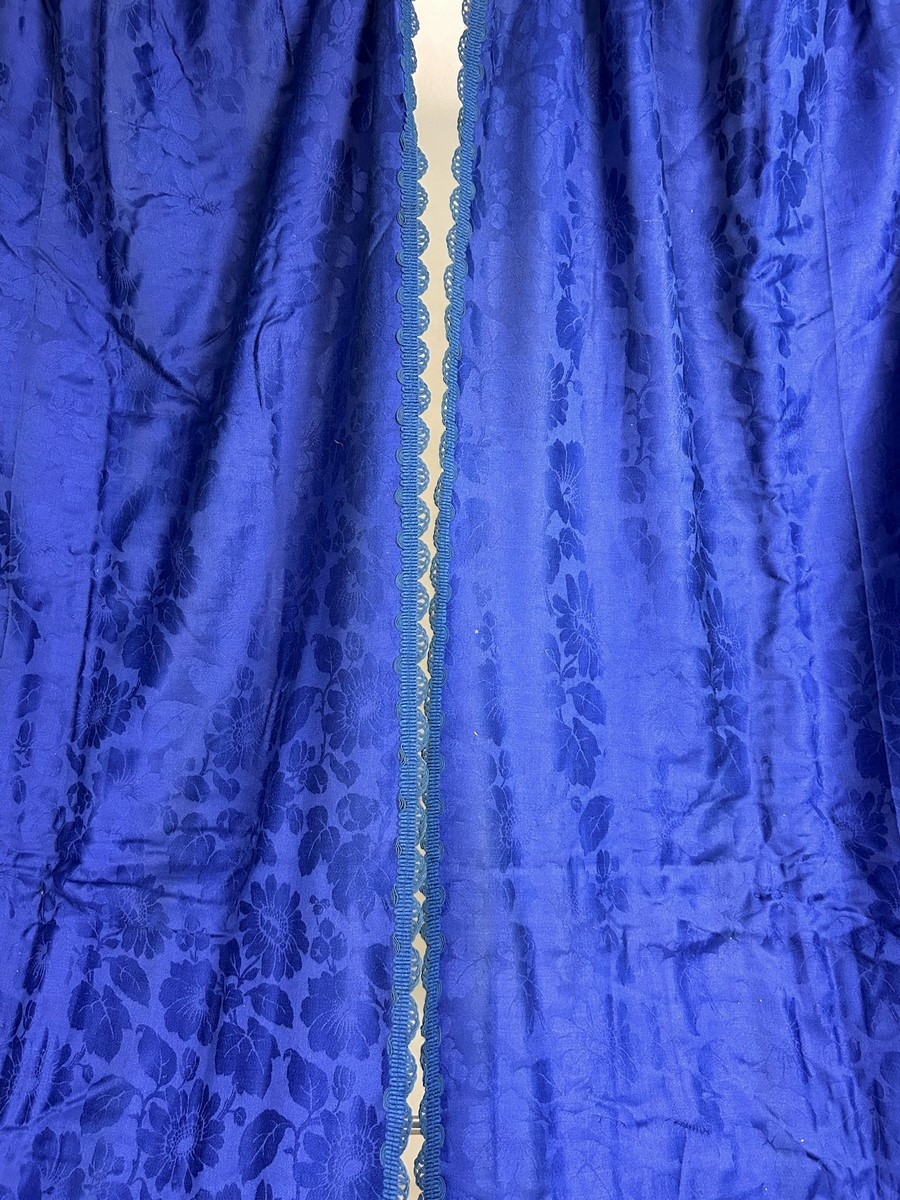
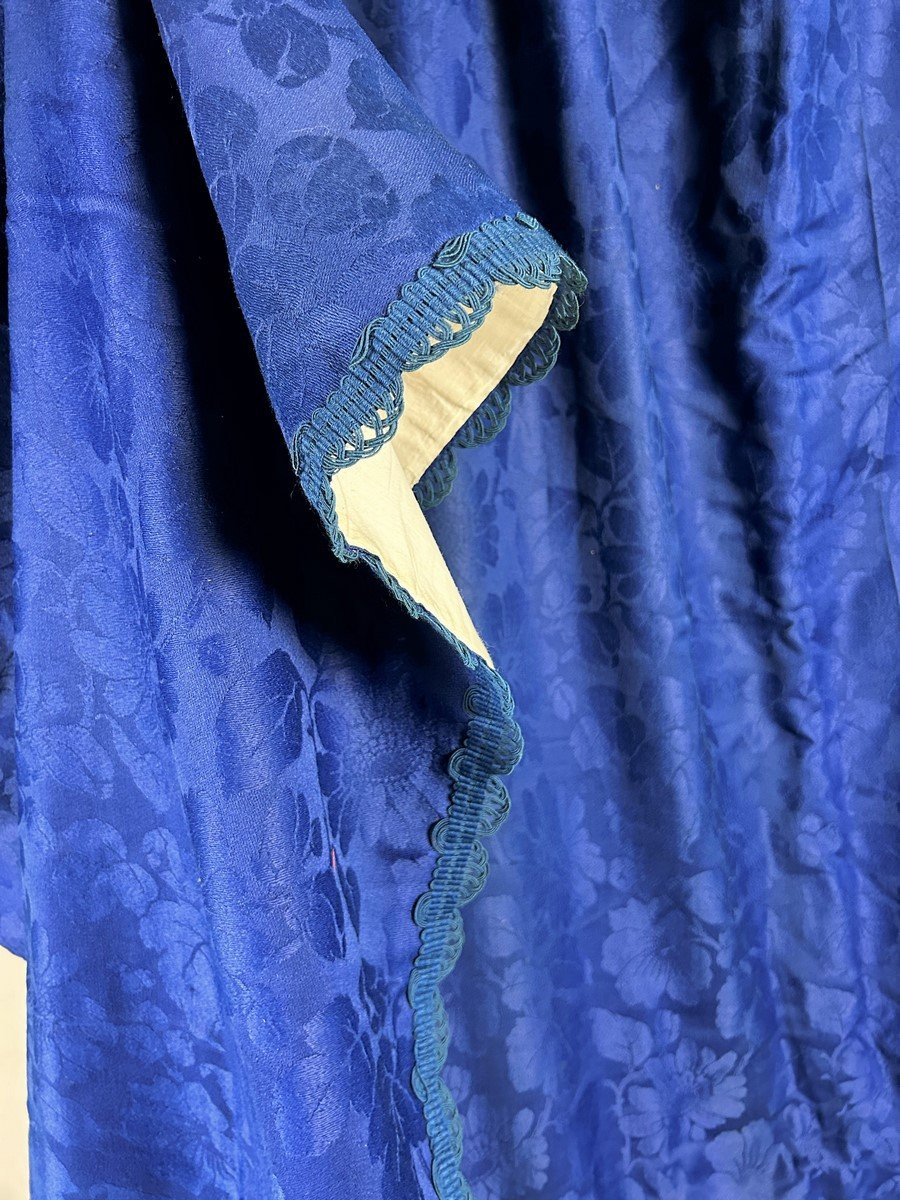
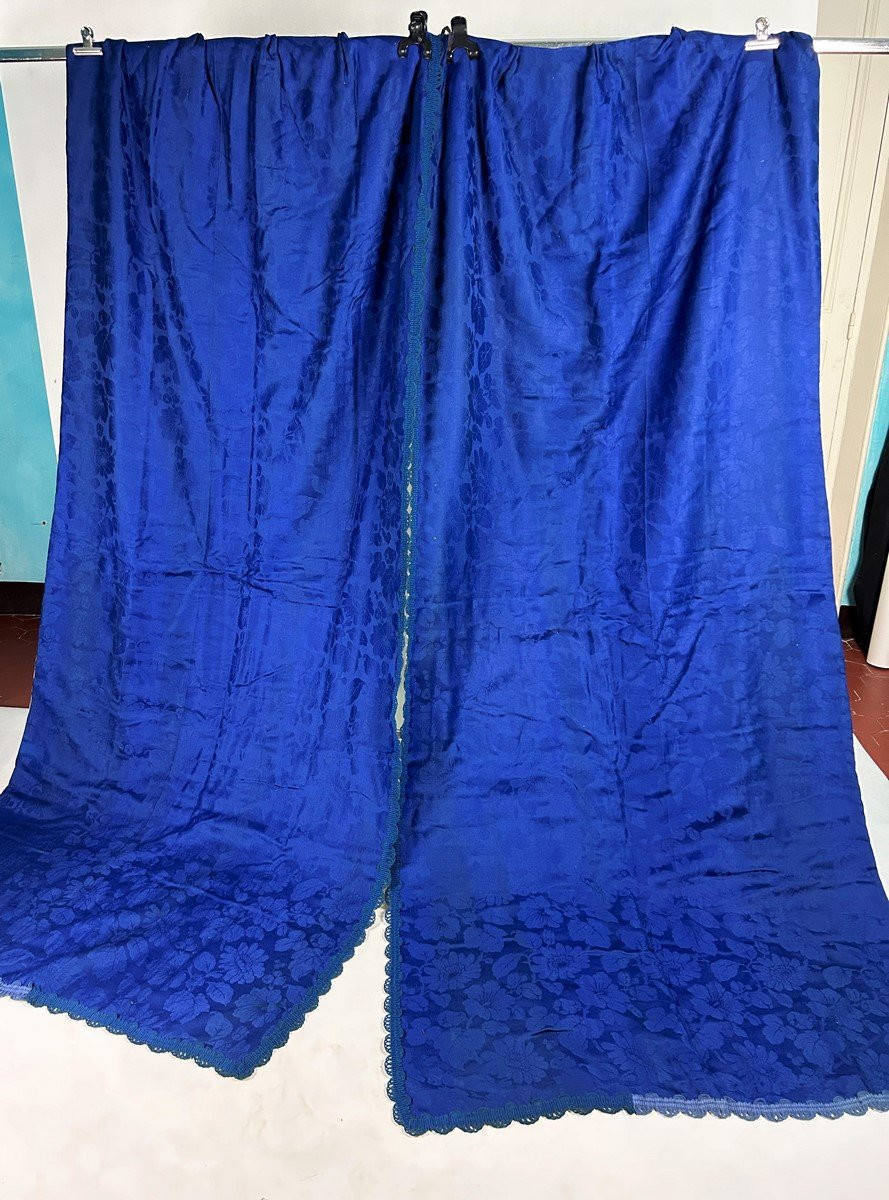
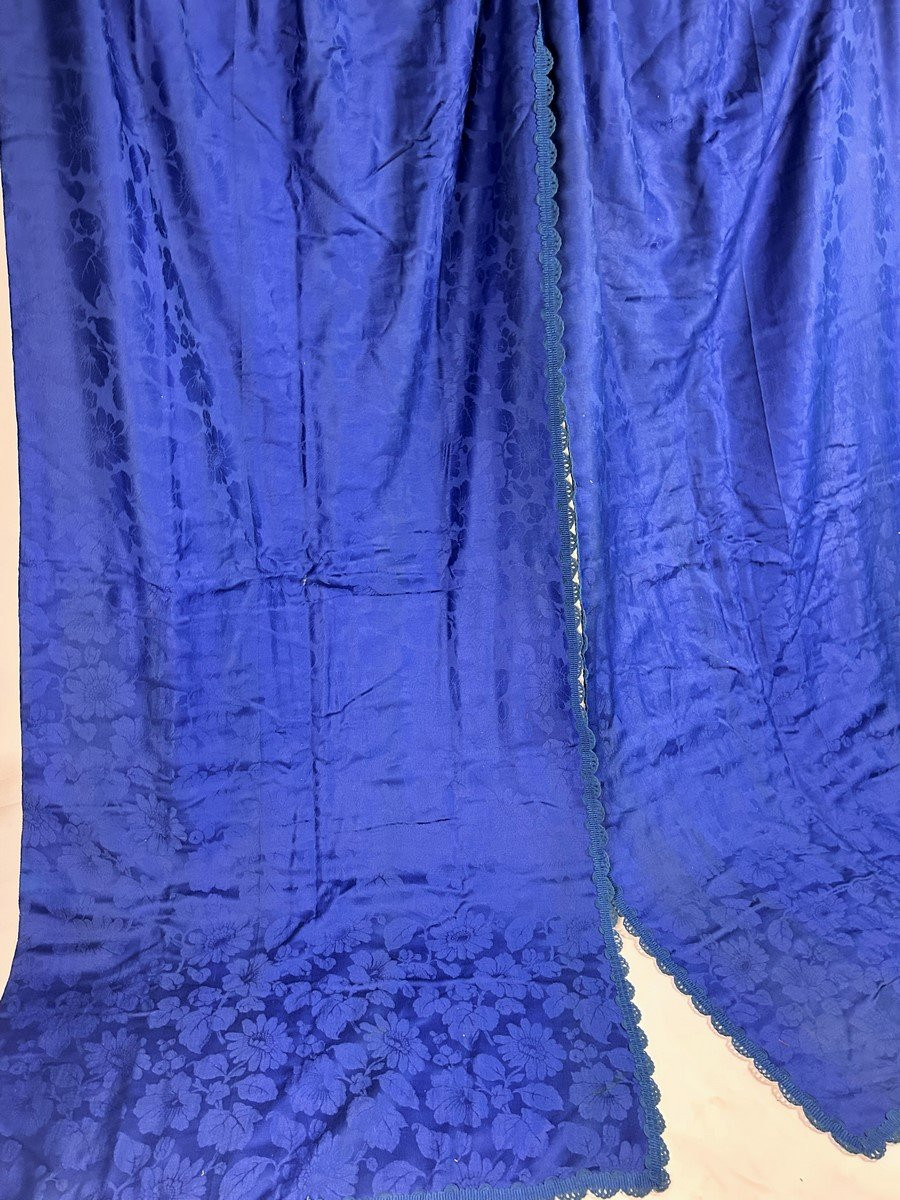
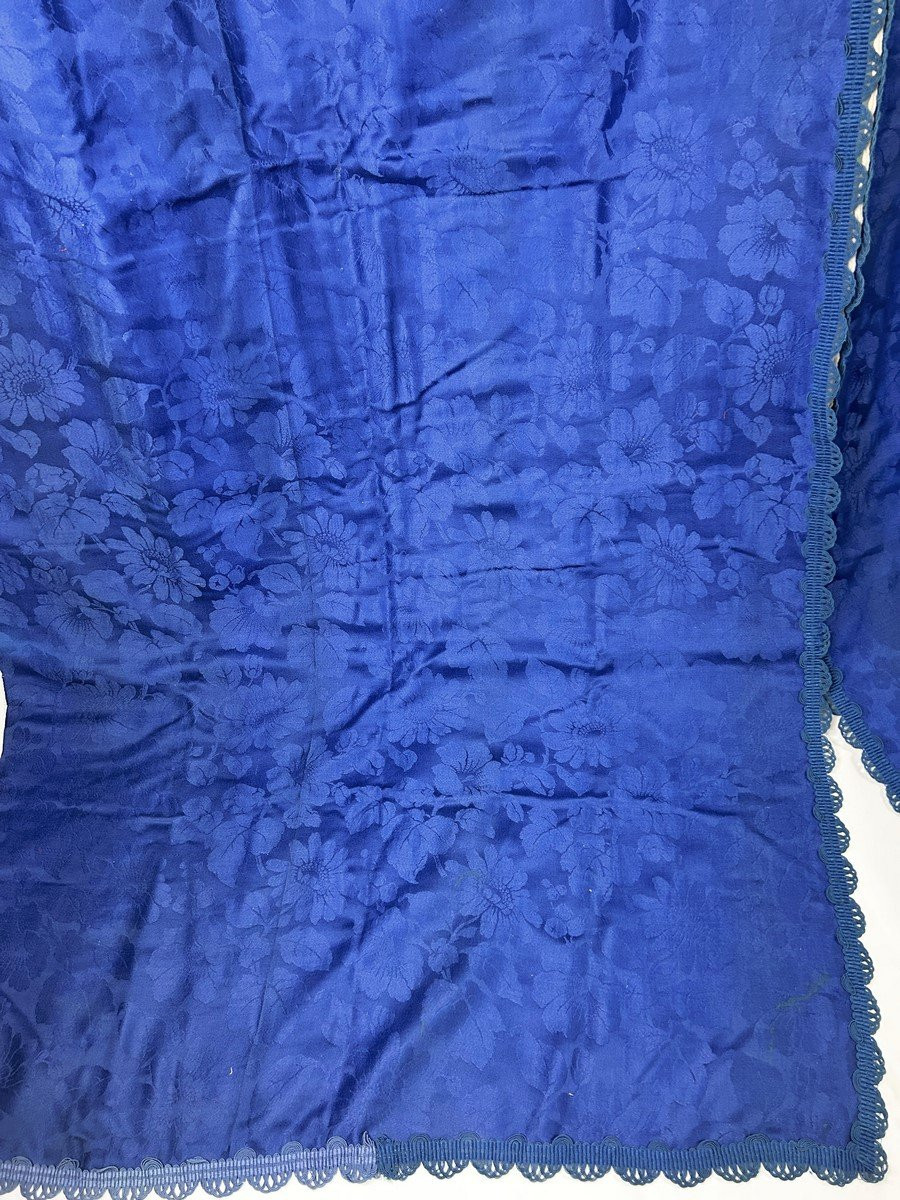
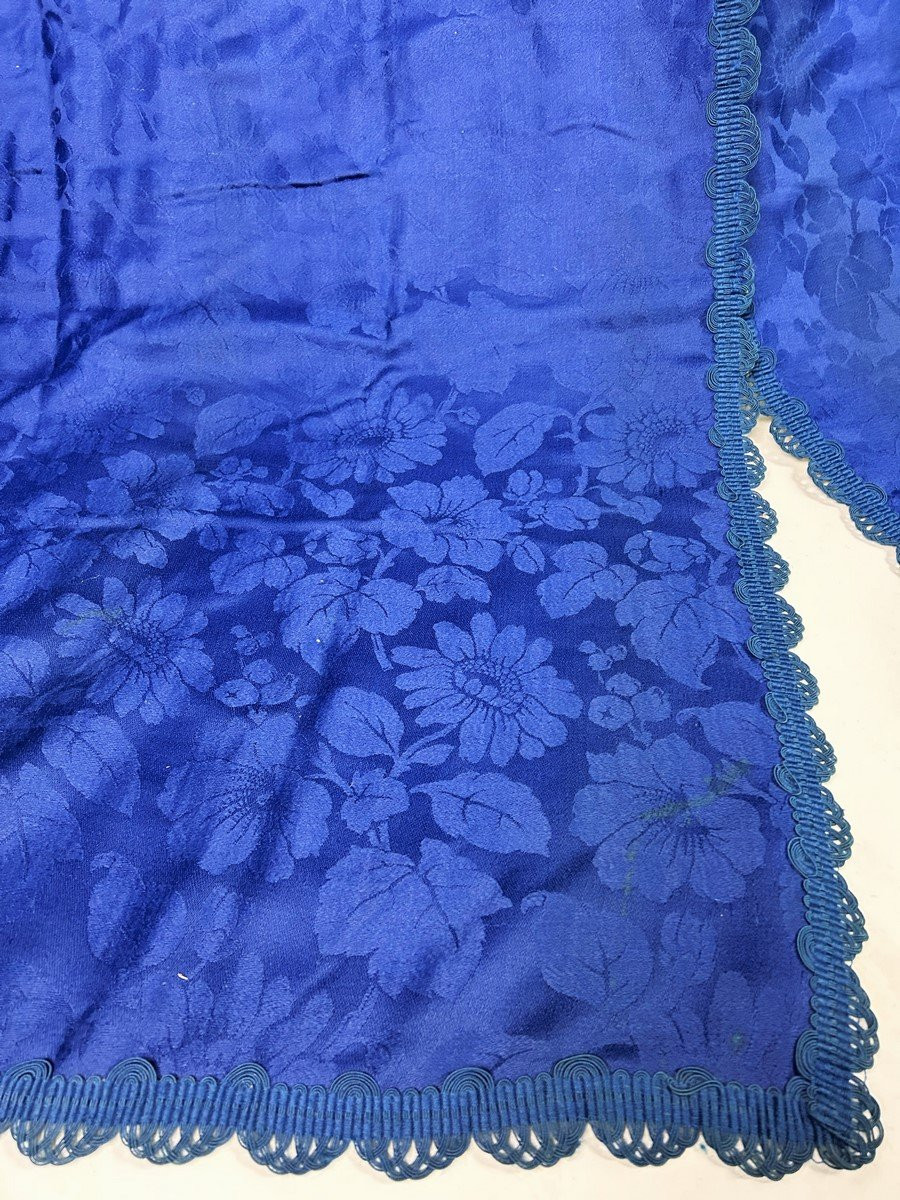
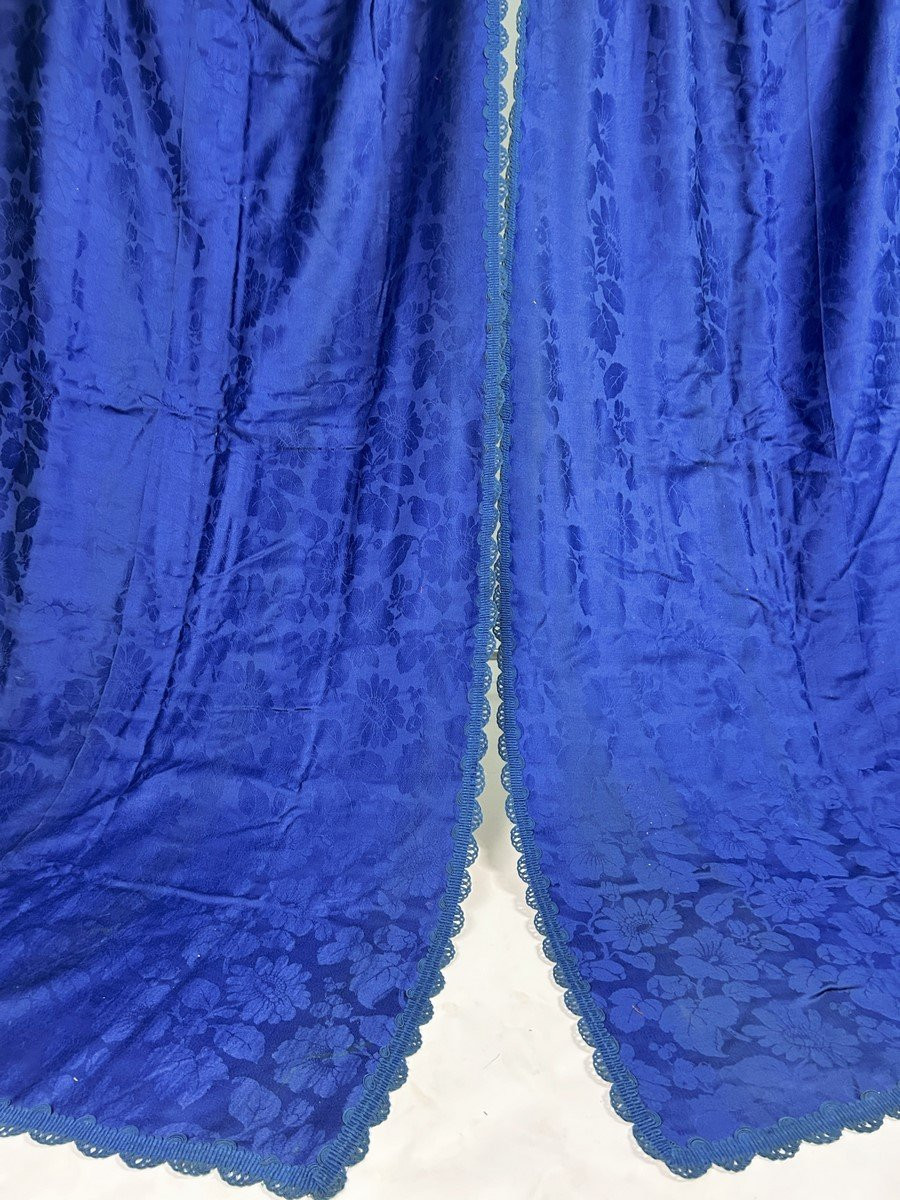
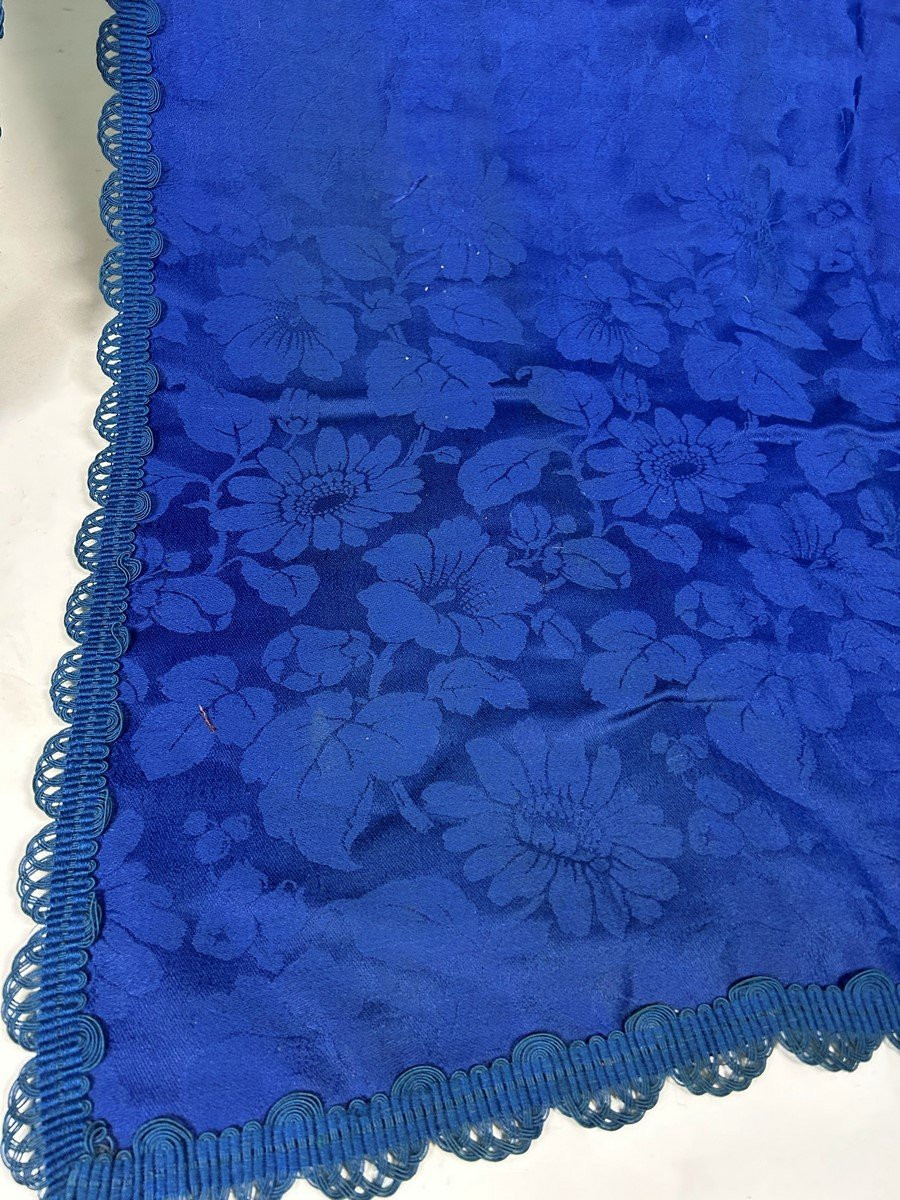
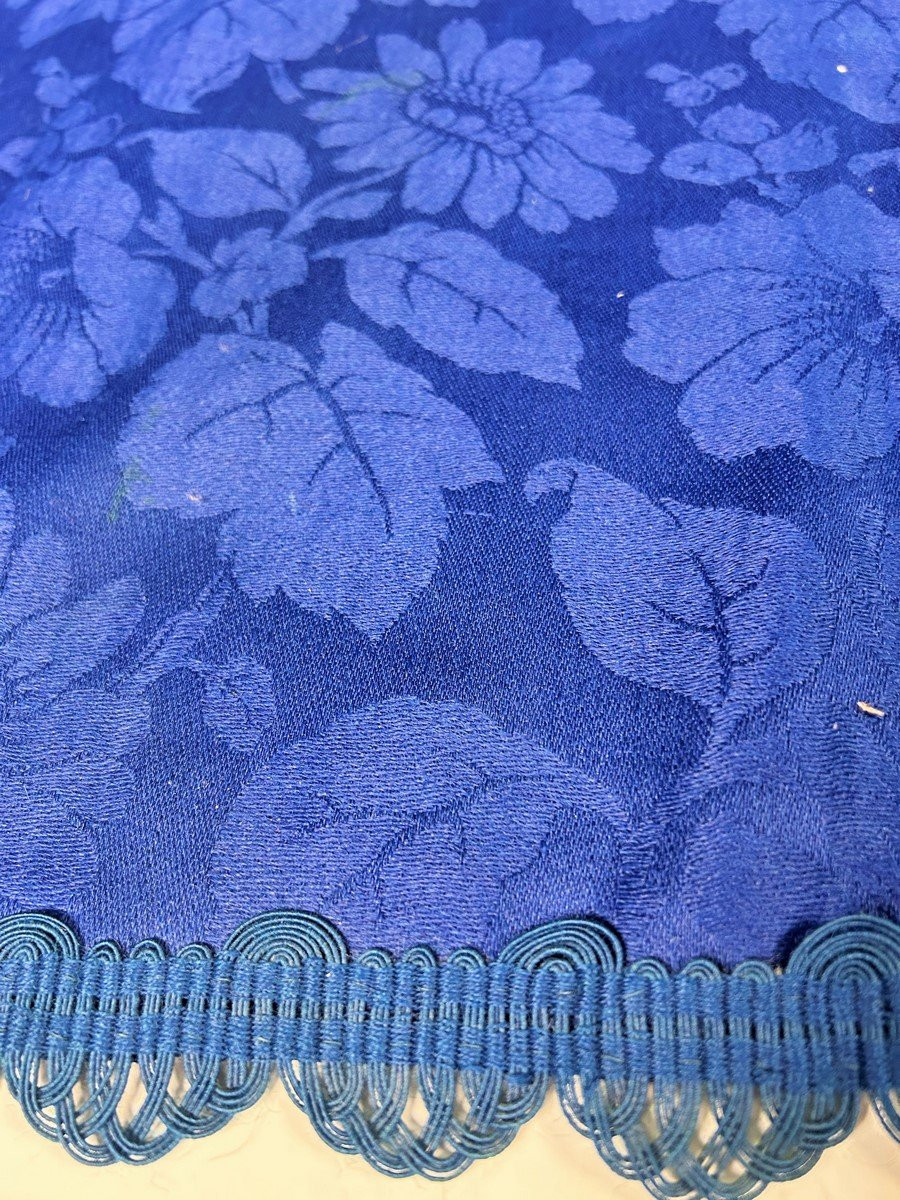
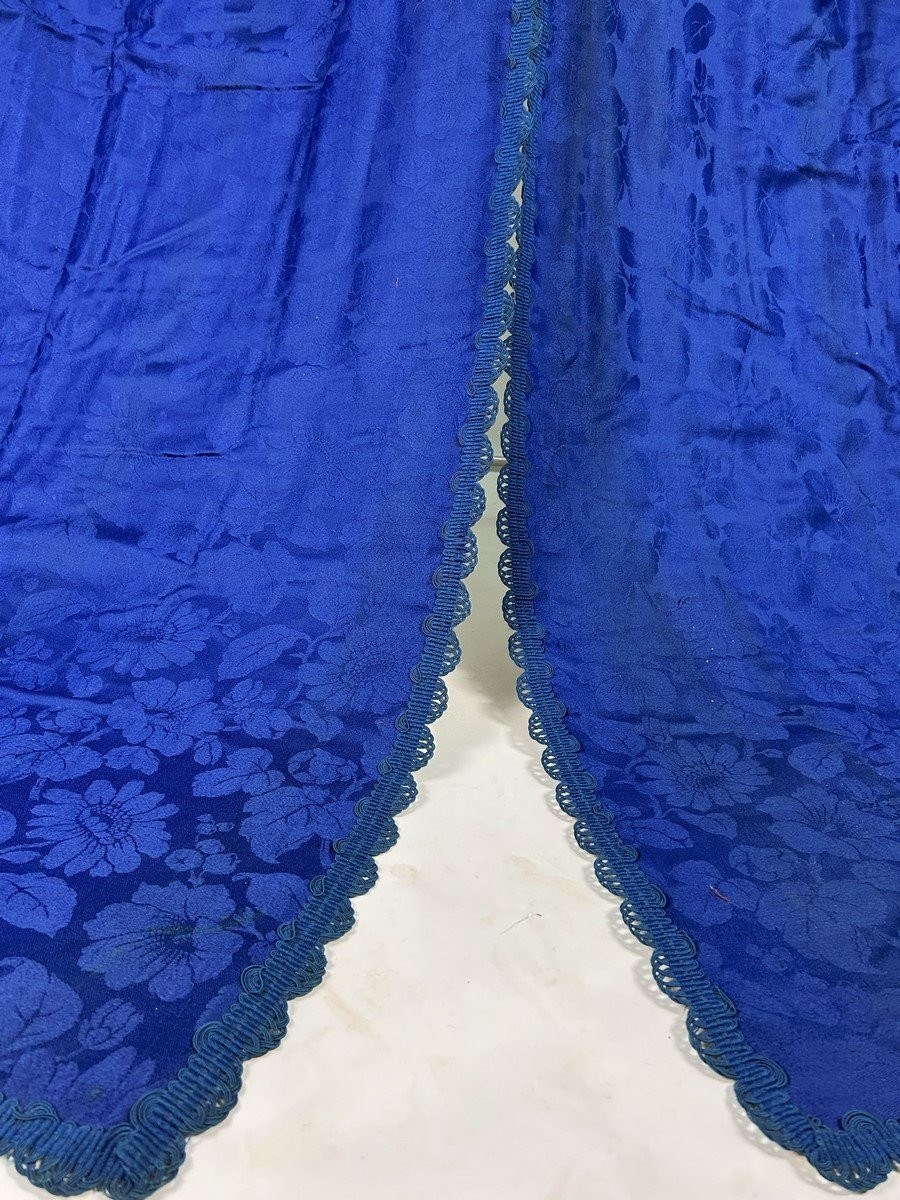
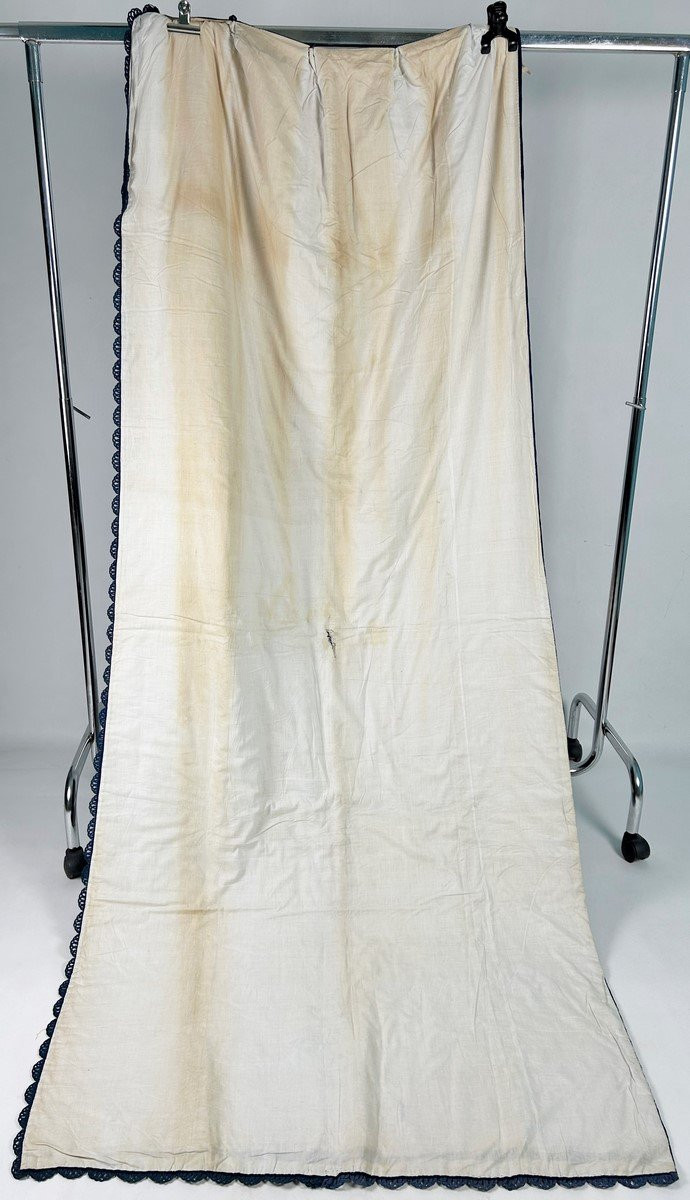
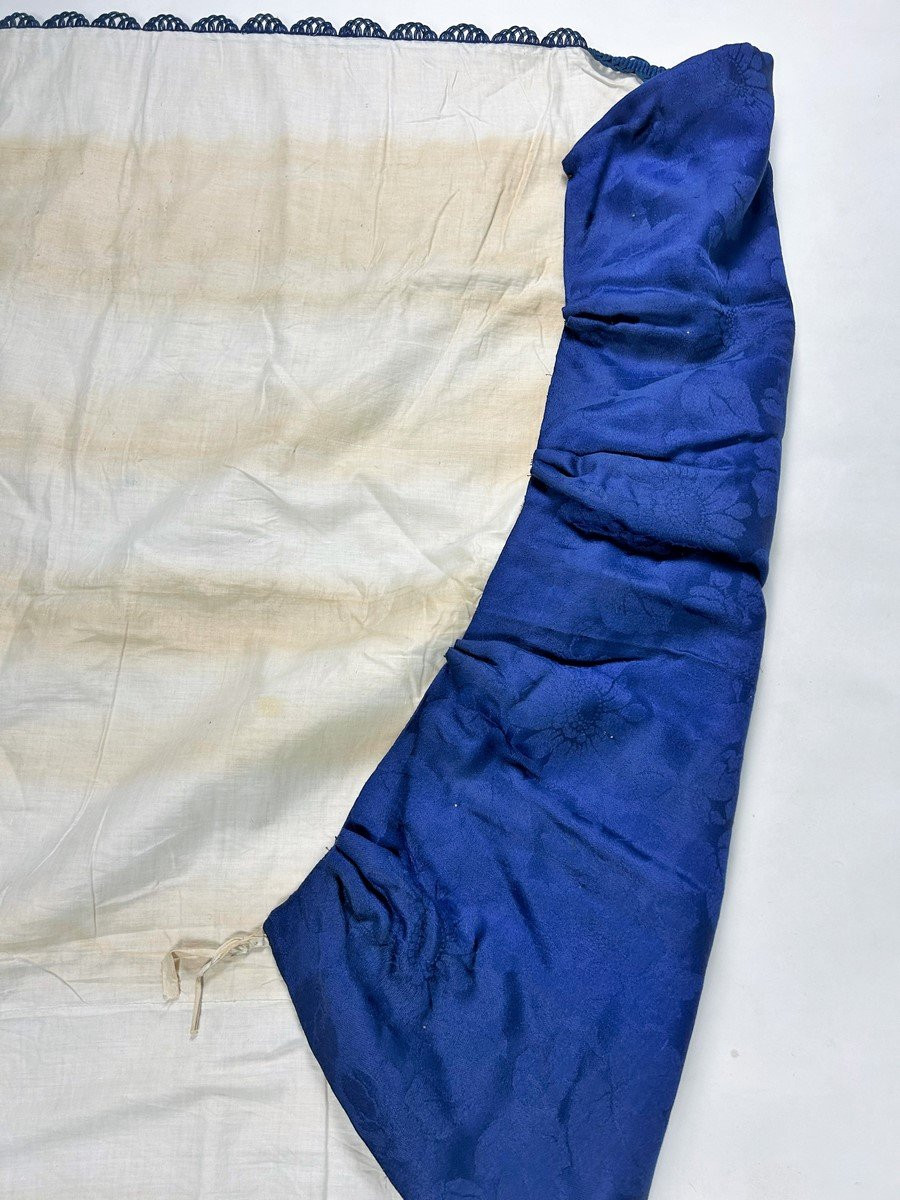
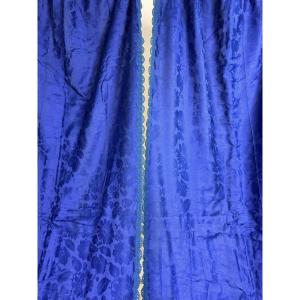


Circa 1850-1860, France. Pair of blue Raymond or Marie Louise blue wool damask curtains dating from the early Second Empire period. The soft, tightly woven damask wool is generously patterned with large, blooming, leafy flowers. Complete with matching trim in a more Prussian blue tone on two sides. This pair of imperial curtains is finely padded and lined with ecru cotton (some soiling to the lining) with pleats and a tie at the top. Note a 2 cm repair on one curtain; otherwise, no stains or holes. The color and luster are well preserved. Overall, the curtains are in excellent condition. Ready for immediate use as historical decoration. Dimensions: 235 cm high by 103 cm wide, each curtain. Jean-Michel Raymond (1766-1837) was a renowned chemist of the Grande Fabrique Lyonnaise, inventor of Marie Louise Blue or Raymond Blue. In January 1795, he studied chemistry at the École Normale Supérieure, founded on October 30, 1794, where he was one of the first students. In 1802, he was appointed to the École Centrale de l'Ardèche in Tournon, and in November-December 1803, he took up the newly established chair of chemistry in Lyon. At that time, silk production, particularly developed in Lyon, was an imperial priority. Dyeing was considered "a useful art." In 1800, the Society for the Encouragement of National Industry launched a prize program "to stimulate domestic industry in the production of Prussian blue, which is used extensively in the arts, and to avoid paying tribute to foreign industry for its manufacture." Jean-Michel Raymond invented blue balls in 1809 and succeeded in "fixing an extremely rich and dark blue color, perfectly insoluble in water and so strongly adhering to silk that neither water nor rubbing could remove it." Following the competition launched by Napoleon on July 3, 1810, to dye silk and wool with Prussian blue, a substitute for indigo, Jean-Michel Raymond received 8,000 francs as an encouragement on July 2, 1811. The dyeing process was then disseminated throughout the silk dye works of the Empire. The product, iron prussiate, was sometimes called Marie-Louise blue in homage to the Empress, and sometimes Raymond blue. The Academy of Lyon declared "that fashion proudly embraced this beautiful color which, under the name of Raymond blue, presented such a distinct and flattering nuance between sky blue and royal blue." Excerpt from the Historical Dictionary of the Academicians of Lyon.
Explore similar pieces and discover your ideal find:
embroidery and lace