THIS OBJECT WAS SOLD
Shishi-mai Mask - Edo Period (1603-1868).
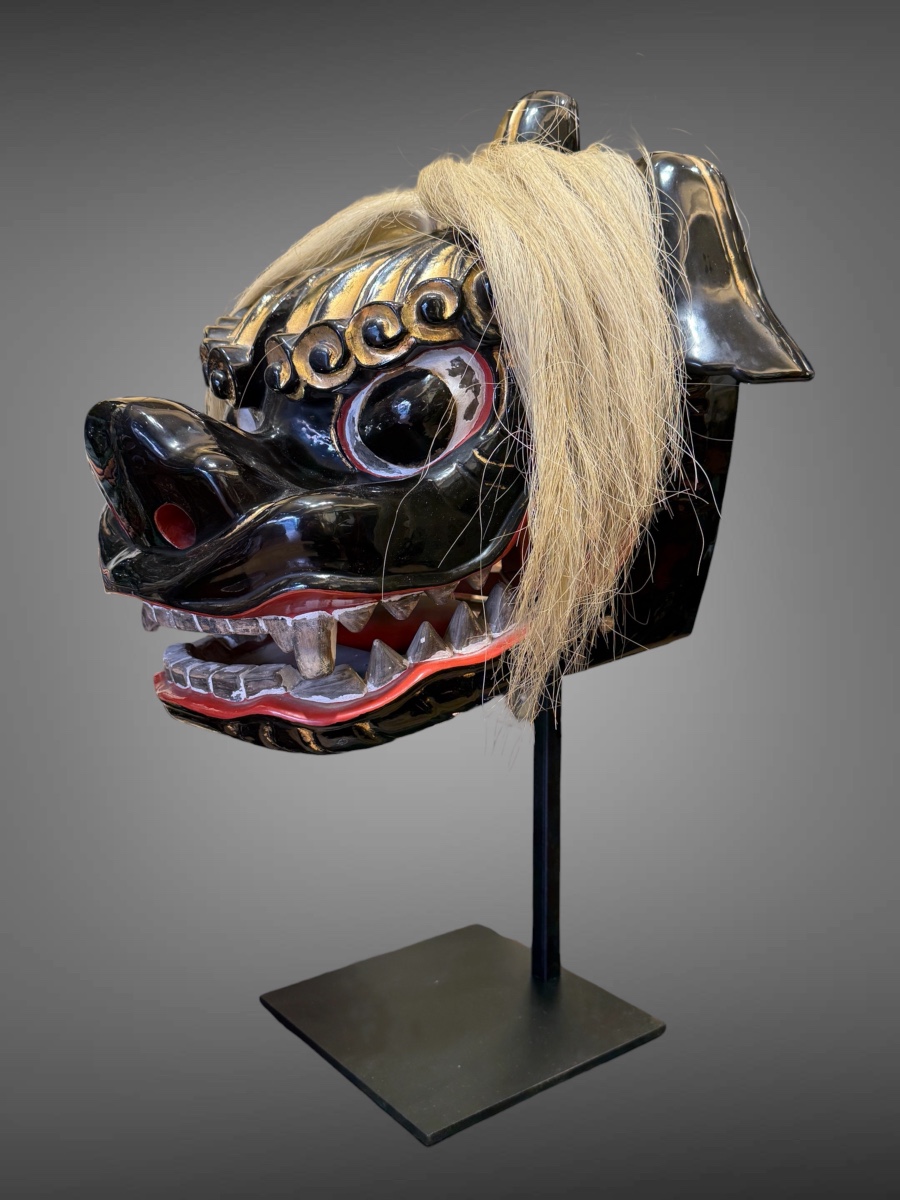
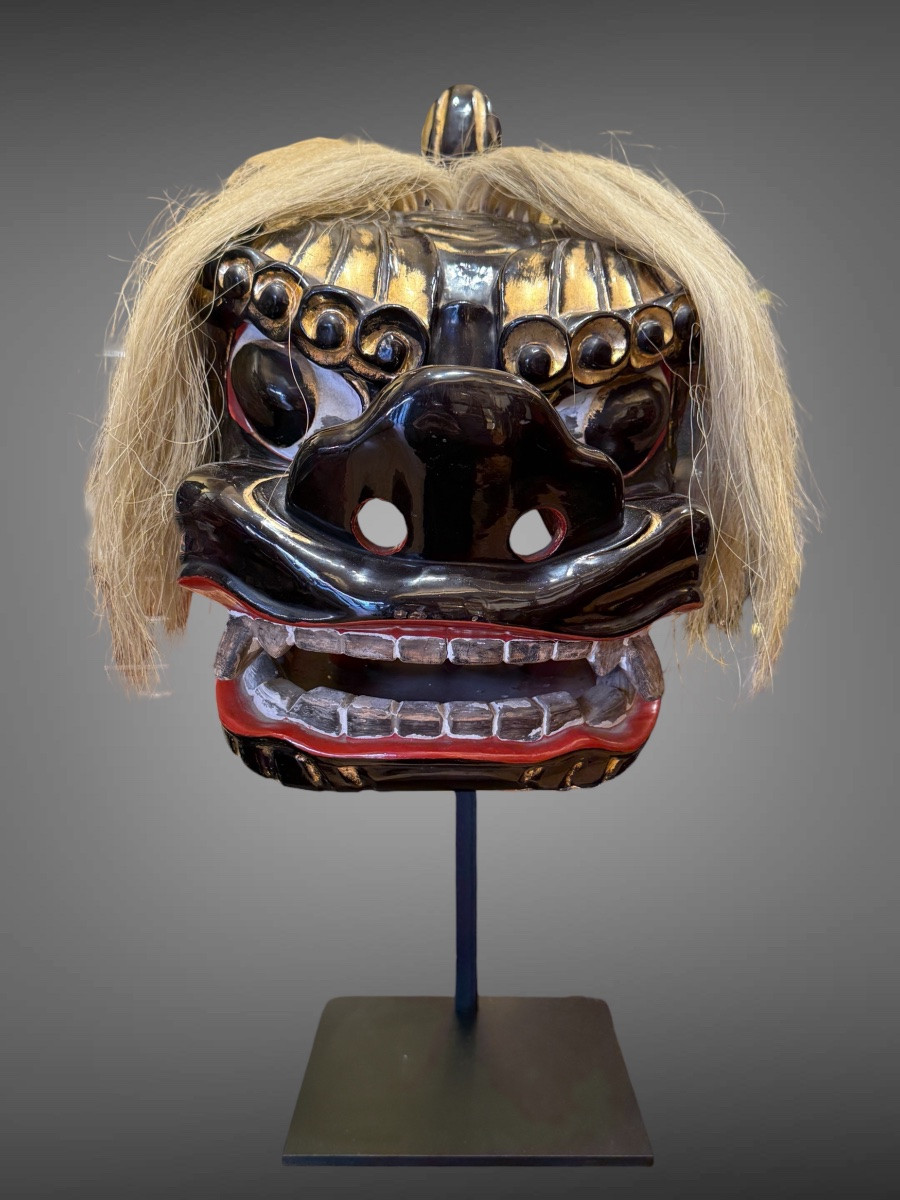

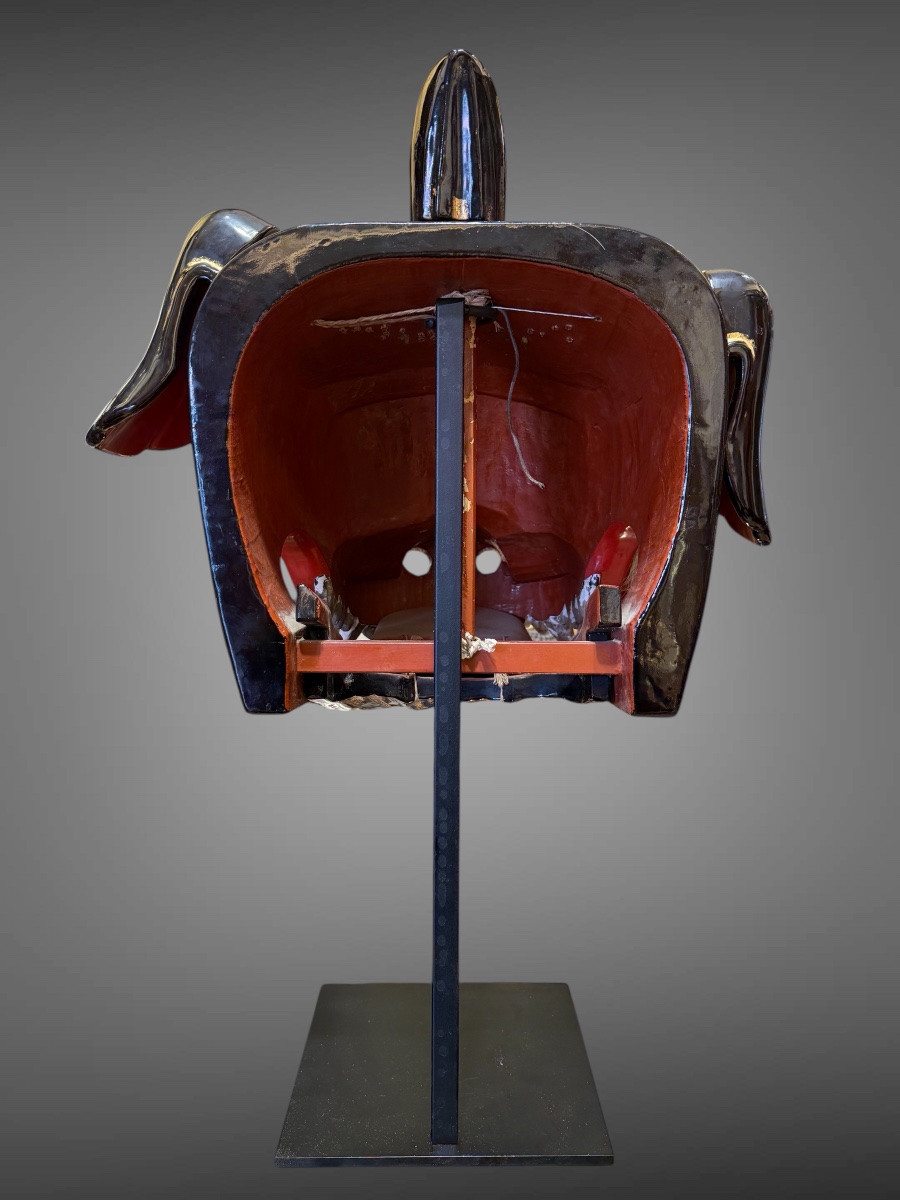
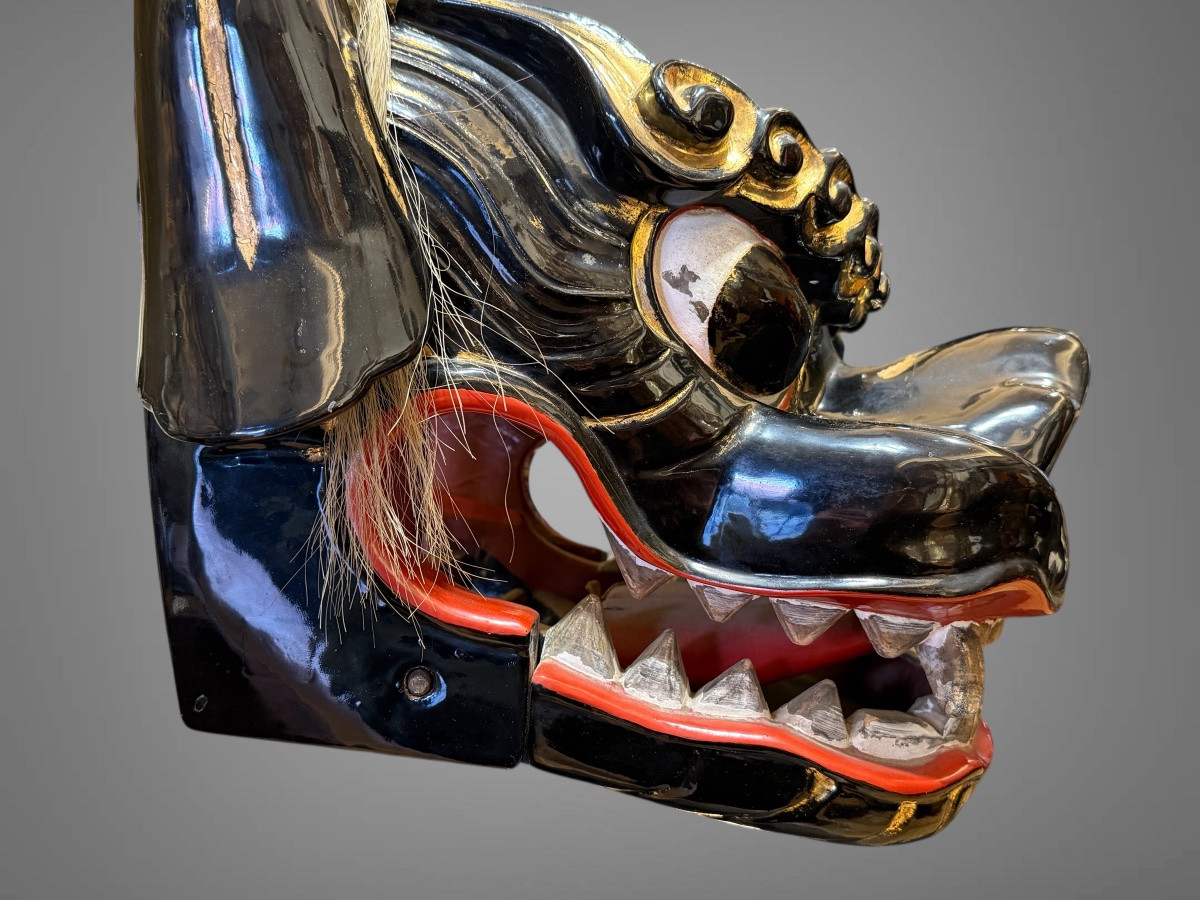
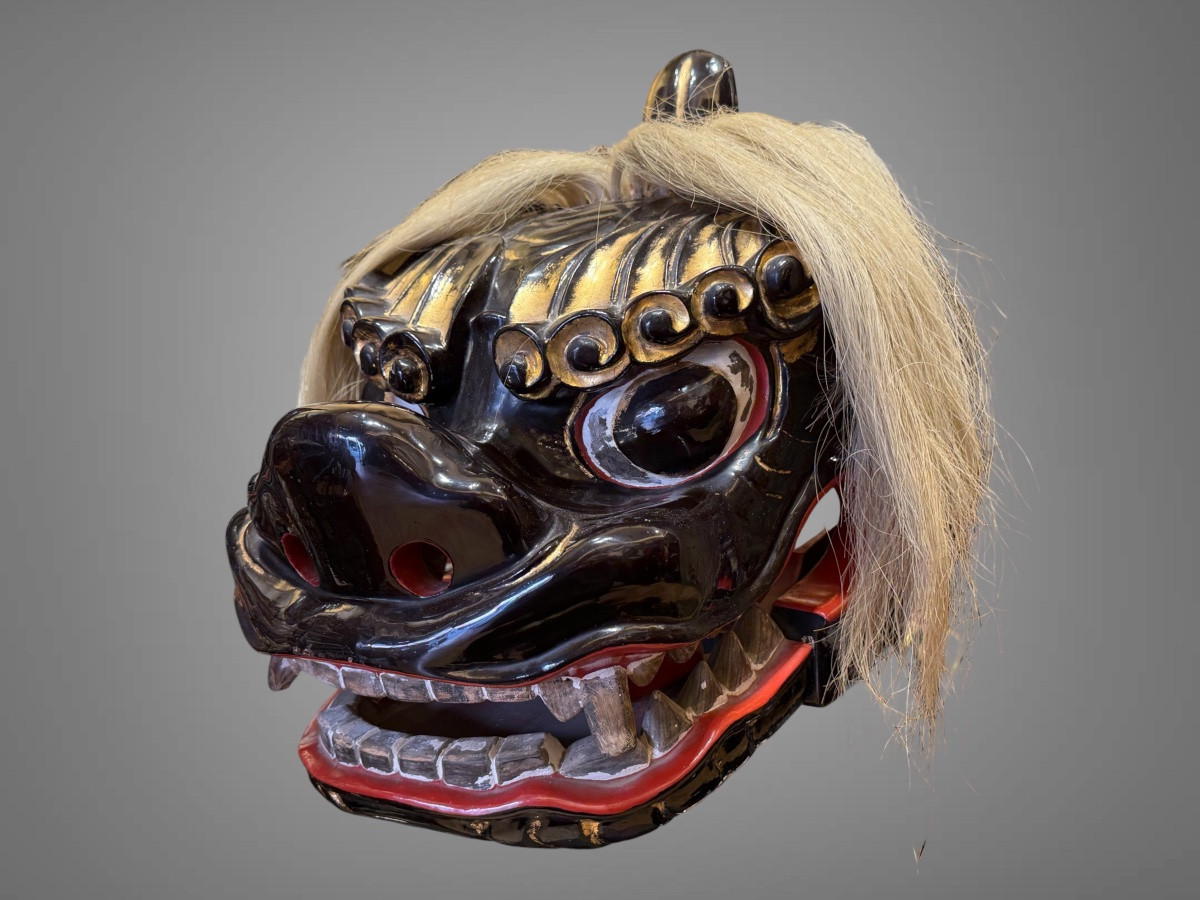
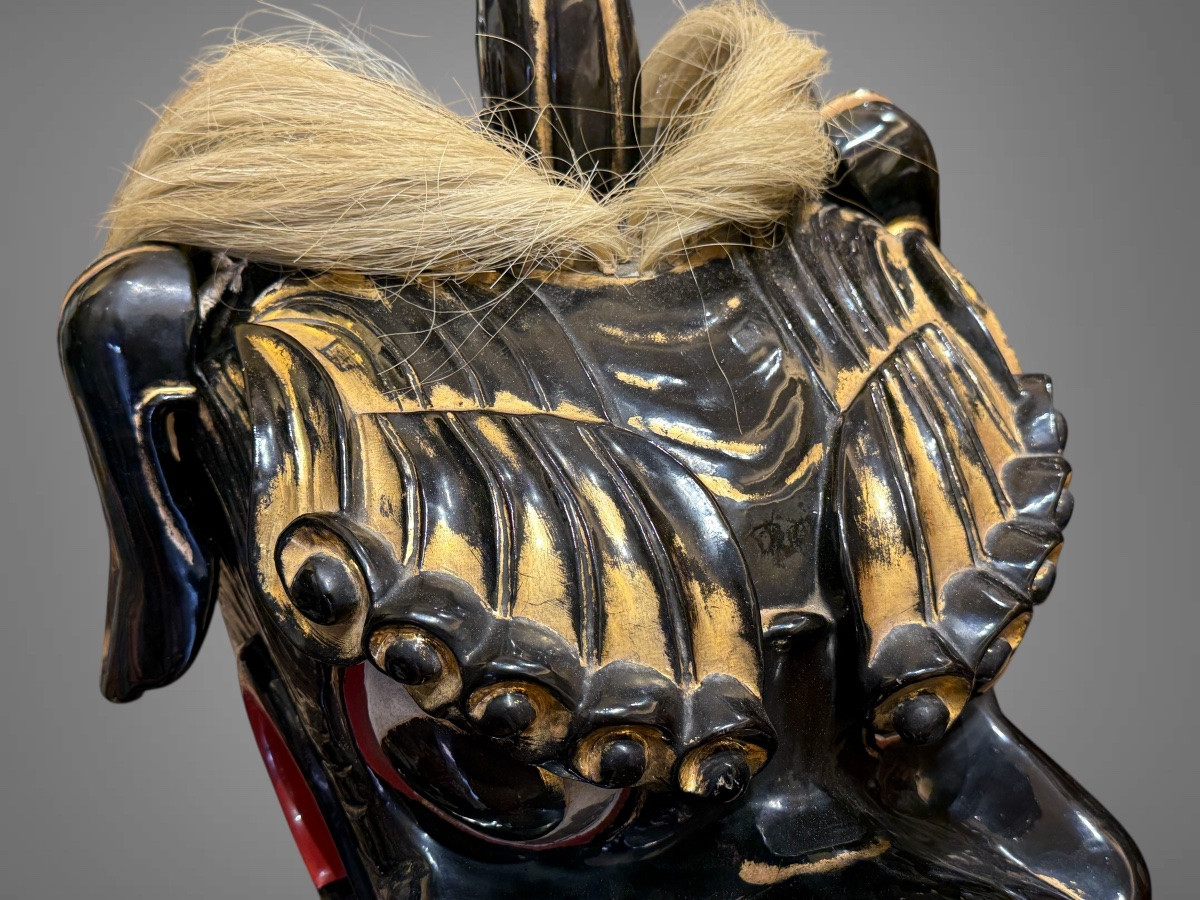
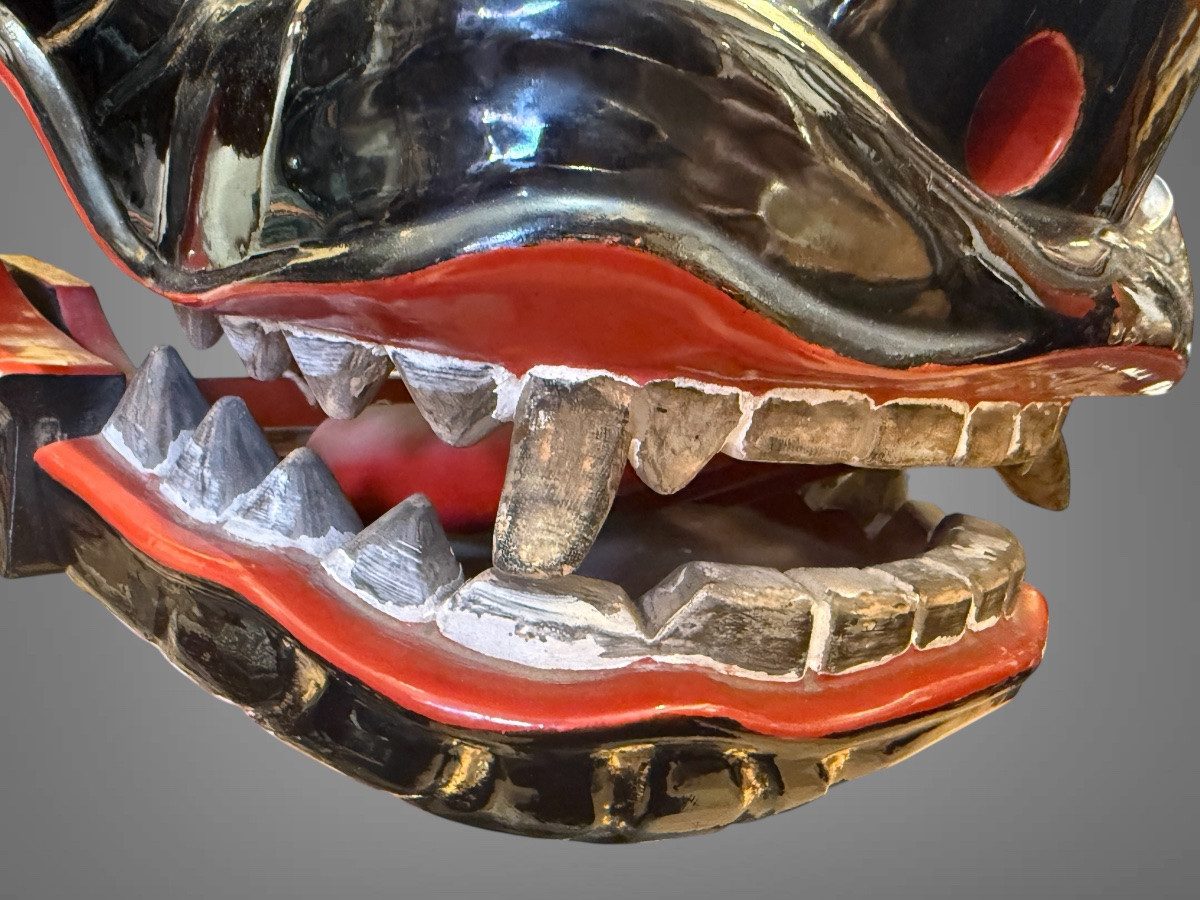

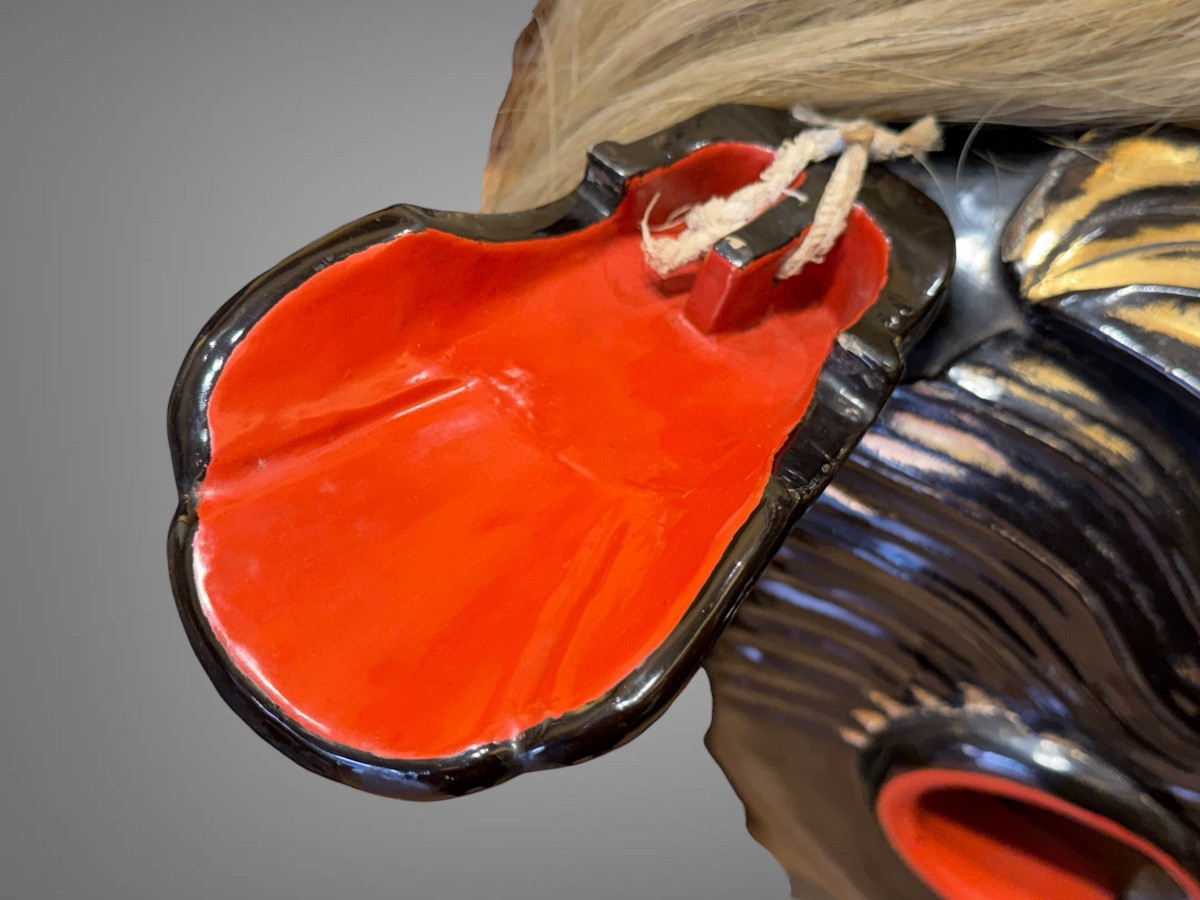
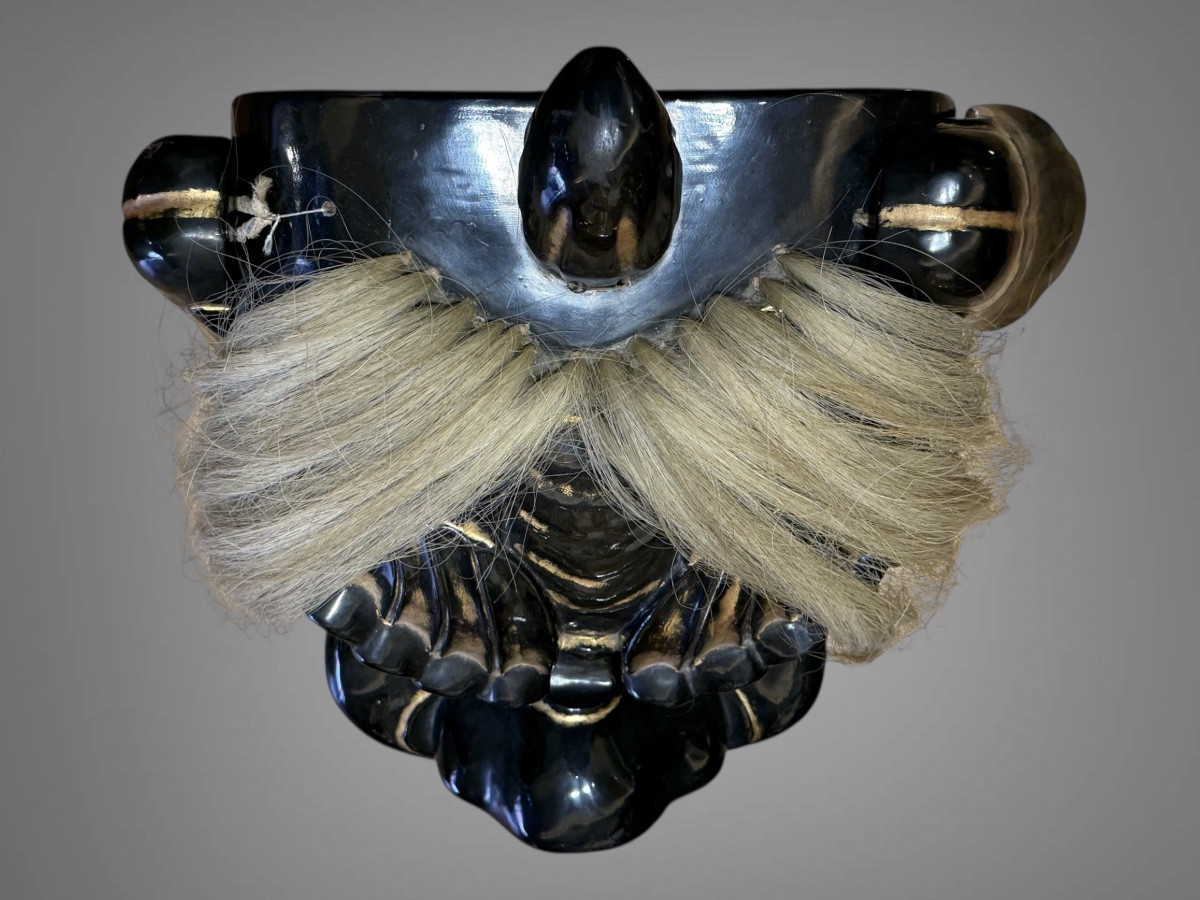
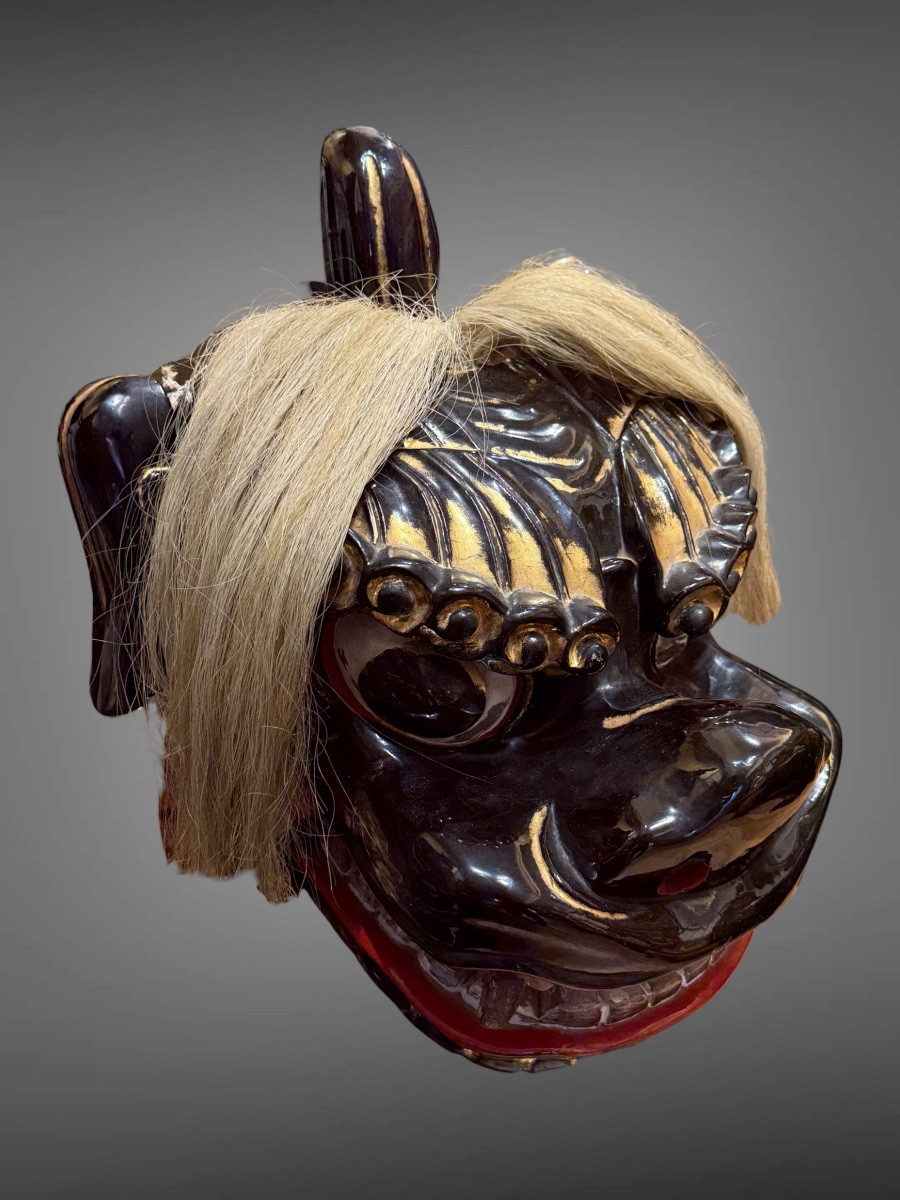
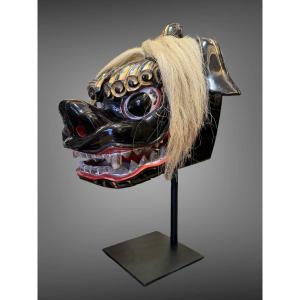


Japan - Edo Period (1603-1868). Important shishi mask in carved and glossy black lacquered wood, the mouth and interior of the mask lacquered red, the eyebrows gilded, the teeth and eyes white (some losses in the paint layer). Its mane is made of horsehair, the ears, mouth, and tongue are articulated. Dimensions: 35.5 x 41 x 32 cm. Dimensions with base: 62.5 x 41 x 32 cm. Notes: Japan has a long tradition of lion dance, known as Shishi-mai (獅子舞). Although probably originating in India, and now widespread in many Asian countries, it is believed to have been brought to Japan from China during the Tang Dynasty (618-907). In Chinese culture, lions already symbolized protection and power. The Japanese adapted this dance to integrate it into their own spiritual traditions, particularly Shintoism. Now fully assimilated into Japanese culture, the dance is frequently performed in Shinto shrines for the New Year, to purify, protect, and bring good fortune. The dancers are accompanied by flutes and drums (taiko). The articulated jaw of the mask is a key feature, allowing the dancer to snap its mouth, a gesture considered apotropaic (repelling evil spirits). The lion is a guardian and protector; it chases away demons and purifies places. During Shishi-mai, the lion's "biting" of a child's head is believed to bring health and good fortune.
Explore similar pieces and discover your ideal find:
Wood Sculptures