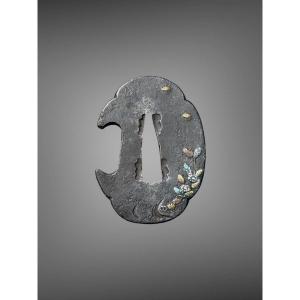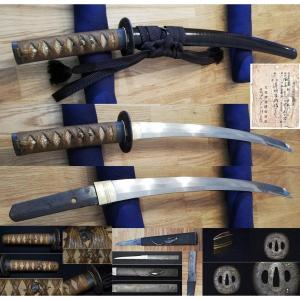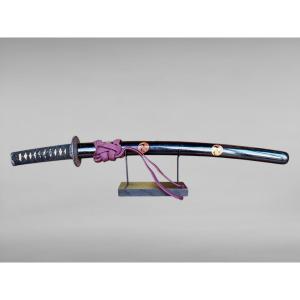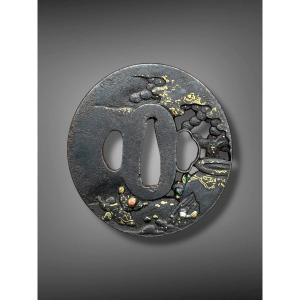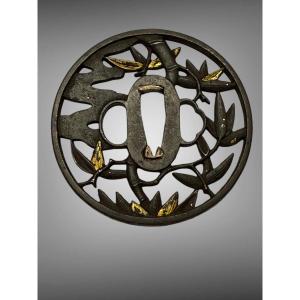


Iron Tsuba Maru Gata With Bamboo Decoration - Edo Period - D. 8.5 Cm.
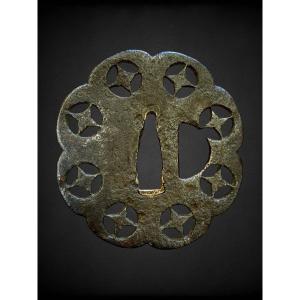
Type: Openwork Iron Tsuba (sukashi tsuba)
·
School: Higo (Jakushi or Jingo)
·
Period: Late Edo (circa 1800–1860)
·
Technique: Patinated iron,
golden inlays (nunome-zōgan) and sukashi (openwork) + golden inlays on the relief.
·
Symbolic: Flexibility, righteousness,
loyalty
Shape: round (maru-gata).
Material: iron (tetsu), decor
partially encrusted with gold (nunome-zōgan).
Pattern: bamboo branches (竹 take), with golden leaves.
Bamboo is a classic theme in
Japanese silverware and ironwork.
It symbolizes the righteousness, flexibility, and resilience of the samurai:
it bends without breaking.
Associated with longevity and loyalty, it is a protective theme
frequent on katana mounts.
The work of bamboo in openworked relief with nets
d'or strongly evokes:
Higo School (肥 後),
Higo province (Kyūshū, Kumamoto).
Or more precisely a craftsman of the Jakushi style (若 芝 派) or Higo Jingo, active between 17th and 19th centuries.
These workshops are distinguished by:
Dense iron and very well patinated,
Natural decorations (bamboo, plum, pine),
Sober gold inlays, sometimes slightly worn over time.
These schools produced elegant tsubas,
refined, highlighting the texture of the iron and light golden inlays.
The quality of the relief and the presence of gold on
the sheets are completely consistent with a work from the first half
of the 19th century. diameter 8.5 cm weight 80 grs
450 €
Period: 19th century
Style: Asian art
Condition: Good condition
Material: Wrought iron
Diameter: 8,5 cm.
Reference (ID): 1640399
Availability: In stock
Print