



Derby Porcelain Allegorical Figure Of Africa, Circa 1765
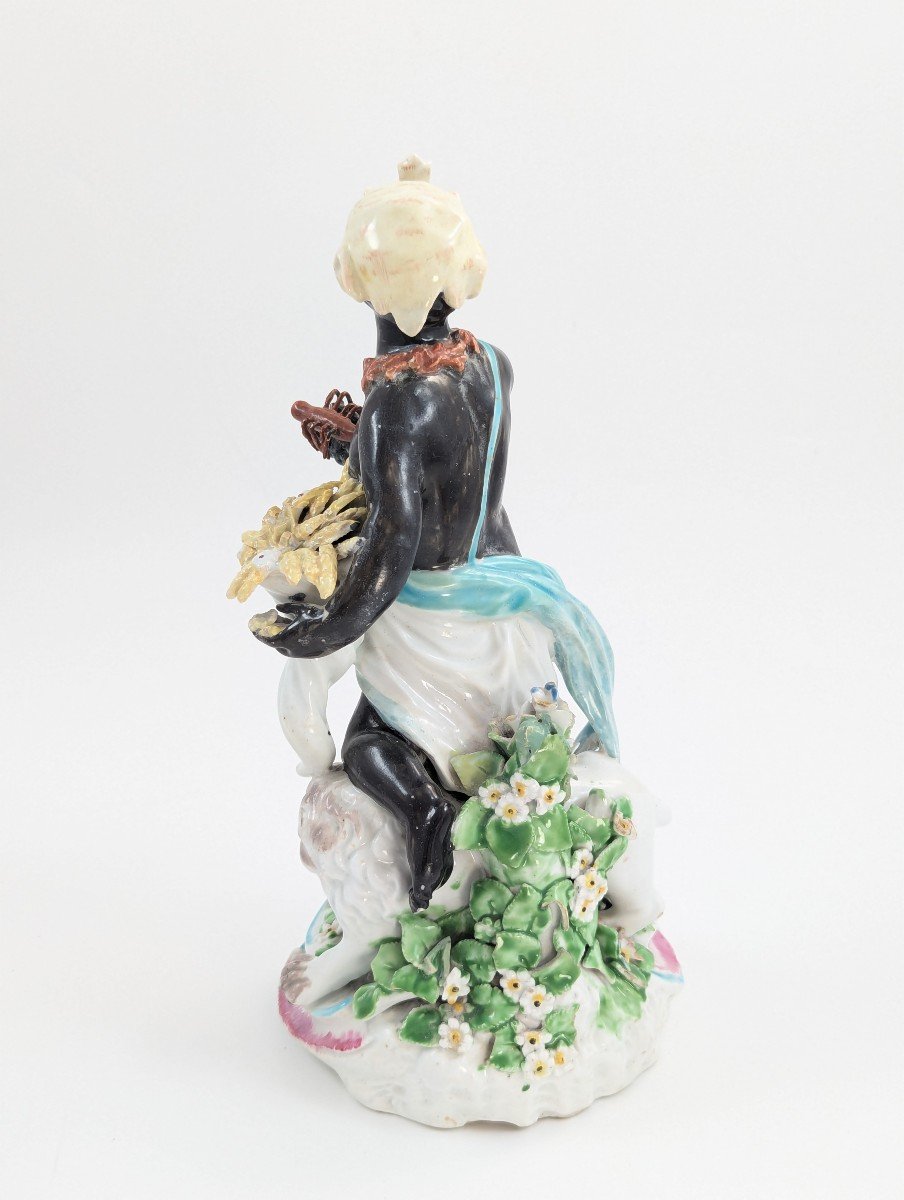
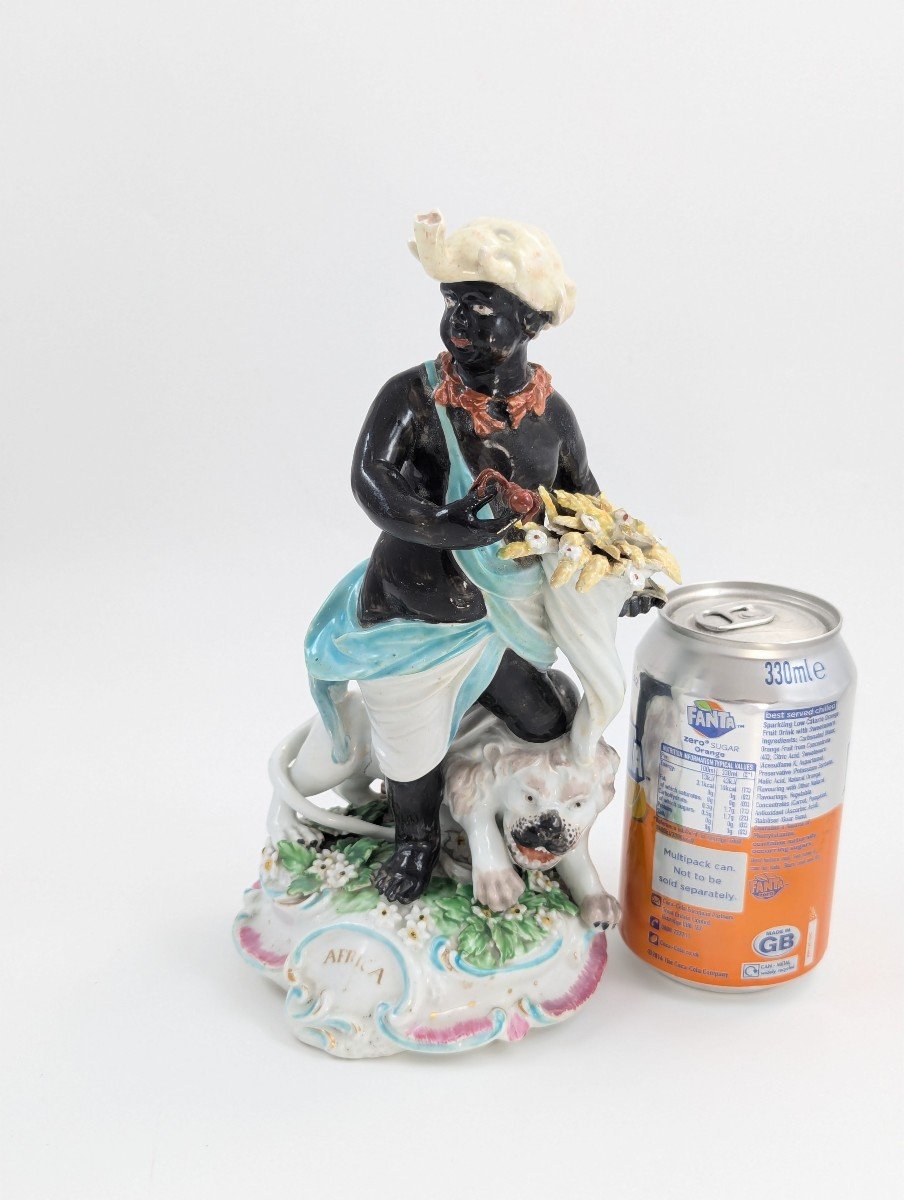
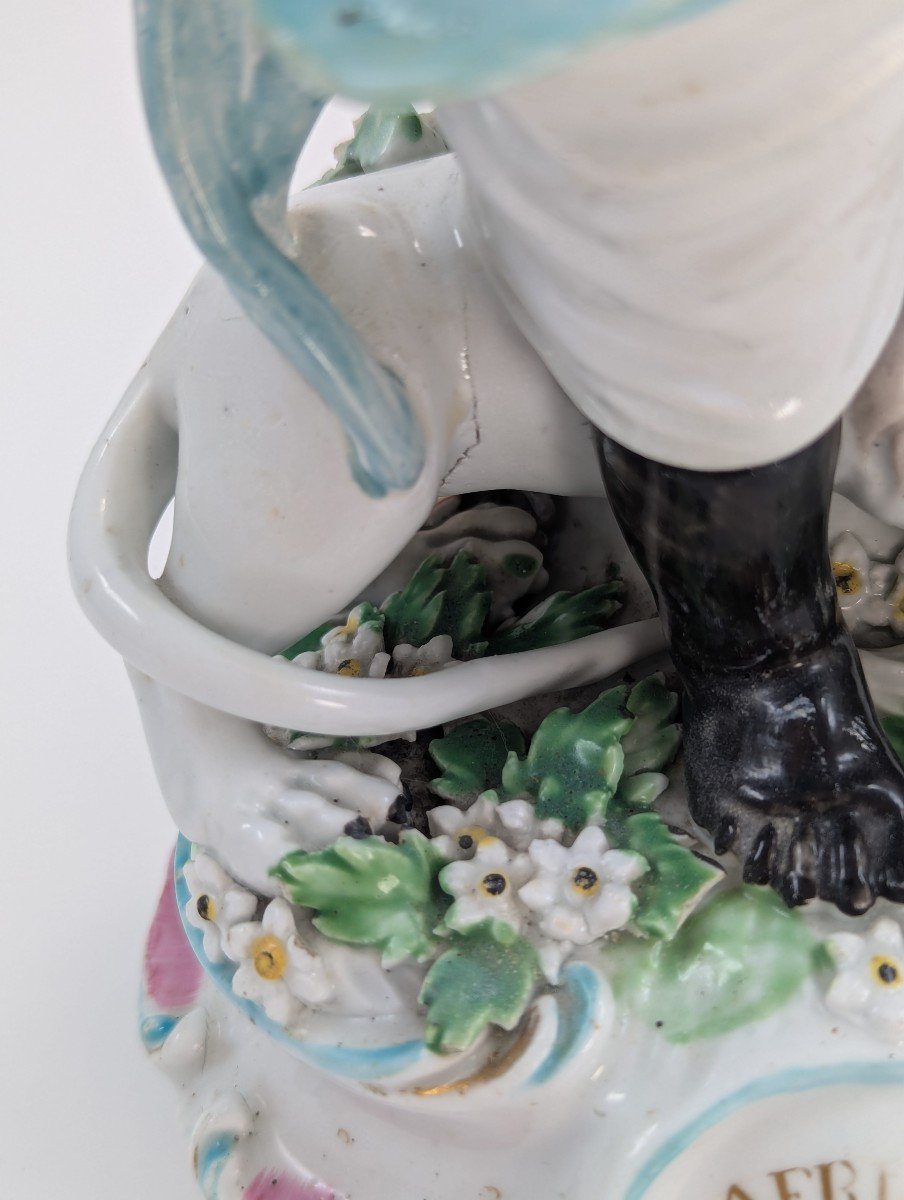
An 18th century Derby porcelain figure symbolising Africa, part of a set representing the four continents. The inscription ‘AFRICA’ is in gold on the front of the base. There are traces of scratches on the base.
Material: Soft porcelain
Height: 24 cm
Weight: 1067 grams
Condition: Crack on the back of the figurine (difficult to see); firing defect on the lion's belly; chips on the leaves and flowers.
The origins of Derby porcelain manufacture date back to the late 1740s, when Andrew Planché, a Huguenot refugee from Wallonia, began making simple porcelain toys in the shape of animals in his garden. In 1756, Staffordshire enameller William Duesbury and banker John Heath joined forces with Planché to set up a new porcelain factory. This became the largest factory of its time, taking over the bankrupt Chelsea and Bow factories, as well as the stock of several other workshops, including that of James Giles. The combination of diverse traditions, porcelain-making skills and discerning customers enabled Duesbury to create one of the finest porcelain factories of the eighteenth and nineteenth centuries, which, after many vicissitudes, is still in operation today.
At its height in the eighteenth century, the factory's reputation was such that in self-published advertisements, the Derby Porcelain Manufactory proclaimed itself to be ‘the second Dresden’.
Duesbury maintained what we would now call a ‘retail space’ independent of the Chelsea factory, in a former pub - The Castle Tavern - in Bedford Street, Covent Garden. This space served as both a warehouse and an exhibition space, and was the showcase for what had become ‘a very flourishing and lucrative business’. Derby porcelain was hand-painted, sometimes with Imari patterns, in London at the Chelsea premises, and the output from this dual operation became known as Chelsea Derby. Eventually the Chelsea site was closed and the Derby name was maintained in increasingly splendid isolation, to the extent that continued royal patronage allowed Duesbury to add a crown to its mark, giving rise to Royal Crown Derby Porcelain. Duesbury also used representations of the Sèvres, Dresden and Berlin porcelain marks, as he considered his own products to be superior to all but these three sources.
Early British porcelain is never perfect. In the 1800s, kilns were fuelled by coal, which often resulted in firing stains caused by flying particles. British manufacturers were also known to experiment, sometimes with technically flawed results. Due to kiln shrinkage, objects may show small firing lines or develop cracks over time, which should not be considered damage but rather imperfections in the maker's recipes, probably unknown at the time of production. Items that have been used for many years may show normal signs of wear, and gilding may disintegrate slightly even if it has never been handled. Minor scratches, nicks, stains and disintegration of gilding are normal for antique objects and should be taken into account.
Reference:
Derby Porcelain: The Golden Years 1750-1770, Dennis G. Rice, page 130, no. 86.
A similar example is in the Fitzwilliam Museum.
A similar example is also illustrated in the Derby Porcelain Society's online exhibition in the ‘Nottingham Road’ section.
See also examples from the Winterthur Museum and Birmingham Museum of Art, Collection, 2000.177.1.
Please study the accompanying photographs carefully as they form an integral part of this description. The item will be sent with full tracking and insurance.
At its height in the eighteenth century, the factory's reputation was such that in self-published advertisements, the Derby Porcelain Manufactory proclaimed itself to be ‘the second Dresden’.
Duesbury maintained what we would now call a ‘retail space’ independent of the Chelsea factory, in a former pub - The Castle Tavern - in Bedford Street, Covent Garden. This space served as both a warehouse and an exhibition space, and was the showcase for what had become ‘a very flourishing and lucrative business’. Derby porcelain was hand-painted, sometimes with Imari patterns, in London at the Chelsea premises, and the output from this dual operation became known as Chelsea Derby. Eventually the Chelsea site was closed and the Derby name was maintained in increasingly splendid isolation, to the extent that continued royal patronage allowed Duesbury to add a crown to its mark, giving rise to Royal Crown Derby Porcelain. Duesbury also used representations of the Sèvres, Dresden and Berlin porcelain marks, as he considered his own products to be superior to all but these three sources.
Early British porcelain is never perfect. In the 1800s, kilns were fuelled by coal, which often resulted in firing stains caused by flying particles. British manufacturers were also known to experiment, sometimes with technically flawed results. Due to kiln shrinkage, objects may show small firing lines or develop cracks over time, which should not be considered damage but rather imperfections in the maker's recipes, probably unknown at the time of production. Items that have been used for many years may show normal signs of wear, and gilding may disintegrate slightly even if it has never been handled. Minor scratches, nicks, stains and disintegration of gilding are normal for antique objects and should be taken into account.
Derby Porcelain: The Golden Years 1750-1770, Dennis G. Rice, page 130, no. 86.
A similar example is in the Fitzwilliam Museum.
A similar example is also illustrated in the Derby Porcelain Society's online exhibition in the ‘Nottingham Road’ section.
See also examples from the Winterthur Museum and Birmingham Museum of Art, Collection, 2000.177.1.
1 500 €
Period: 18th century
Style: English Style
Condition: Excellent condition
Material: Porcelain
Reference (ID): 1387258
Availability: In stock
Print