




Katana, Mishima School, Signed Kami Kamichi, Edo Period, 18th Century
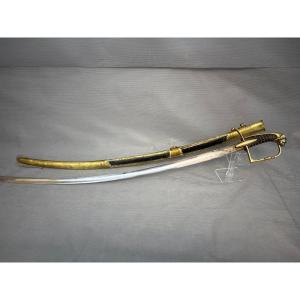
Katana from the Mishima School in KYOTO,
69.5 cm Nagasa blade.
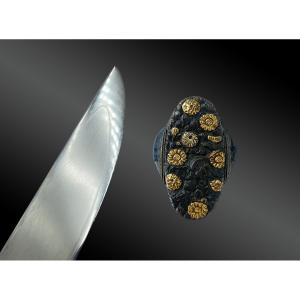
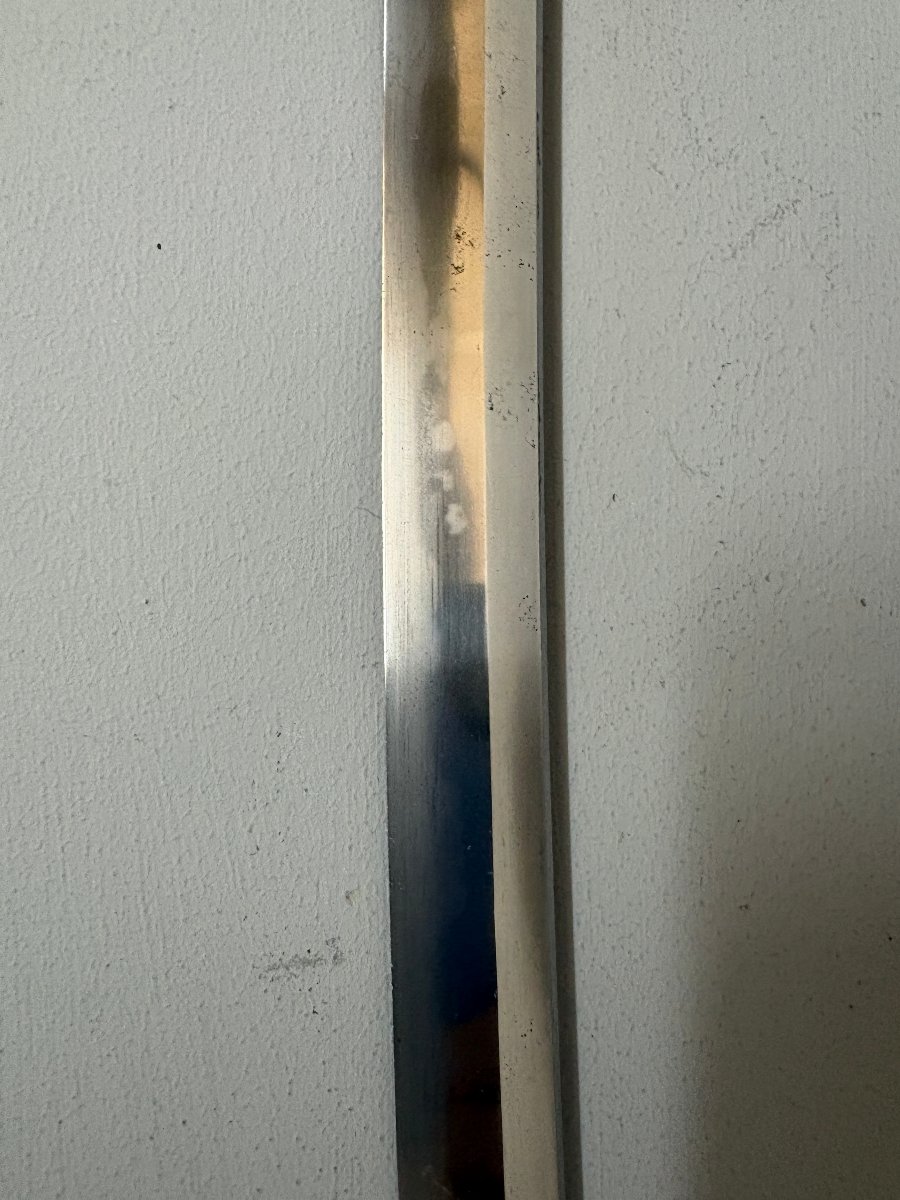
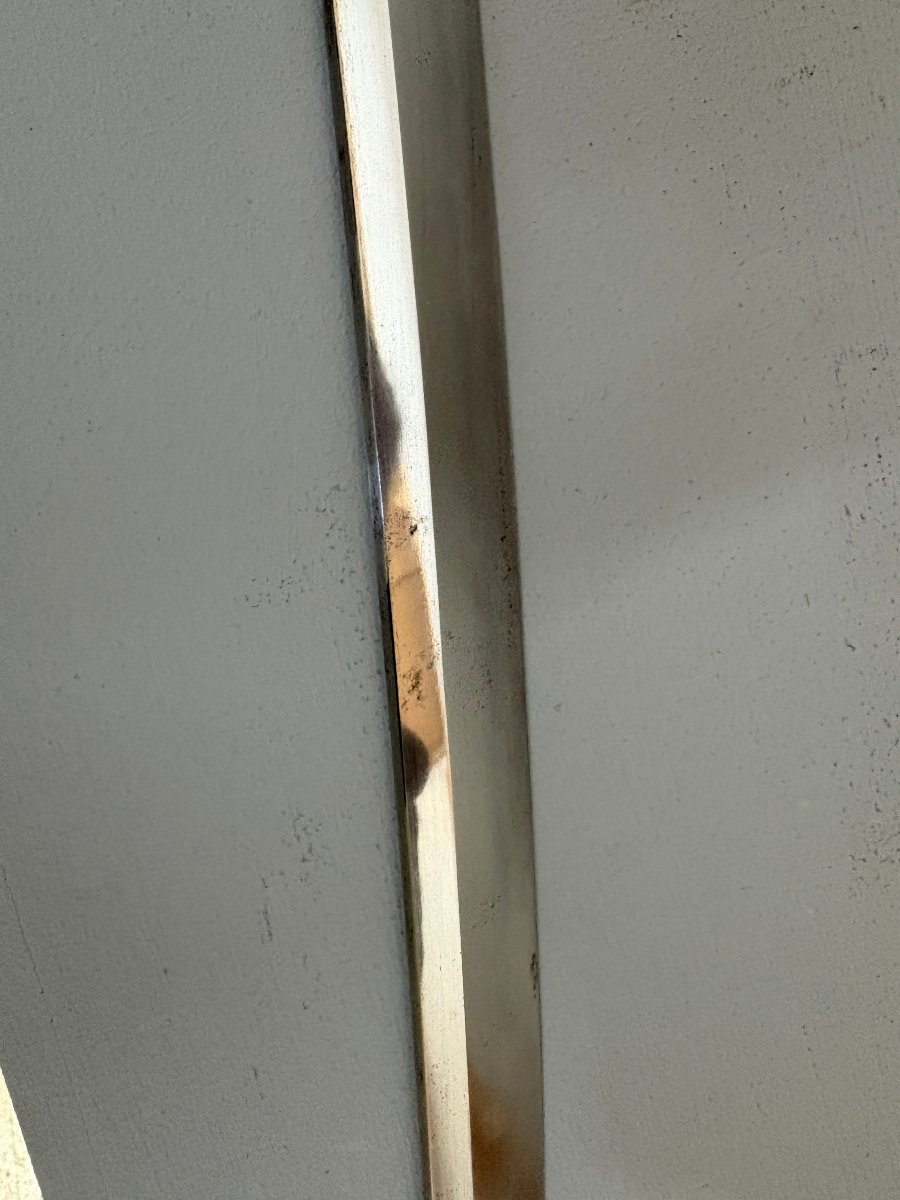
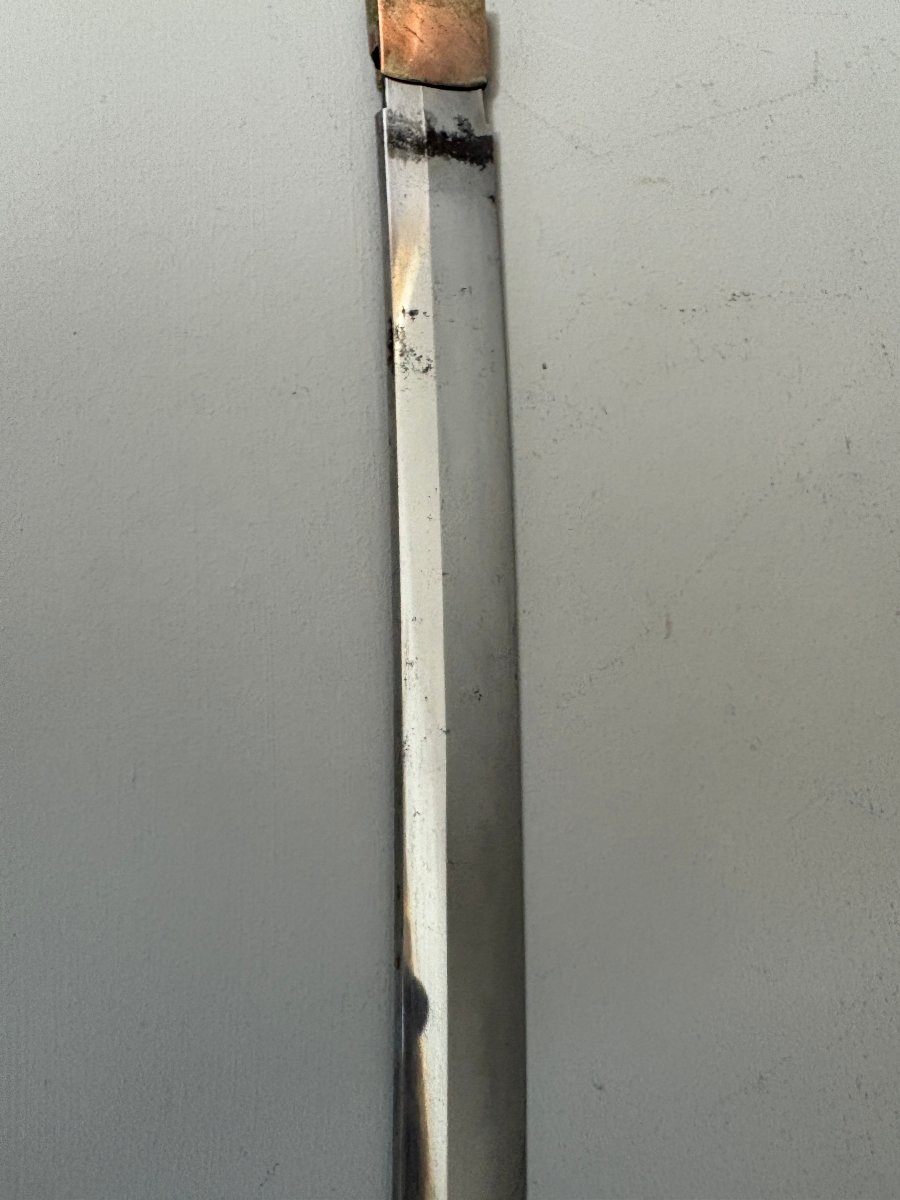
Shinoi-zukuri-style blade with a central ridge and a well-defined chu-kissaki yokote.
Gunome-midare-style temper line typical of the Mishima school.
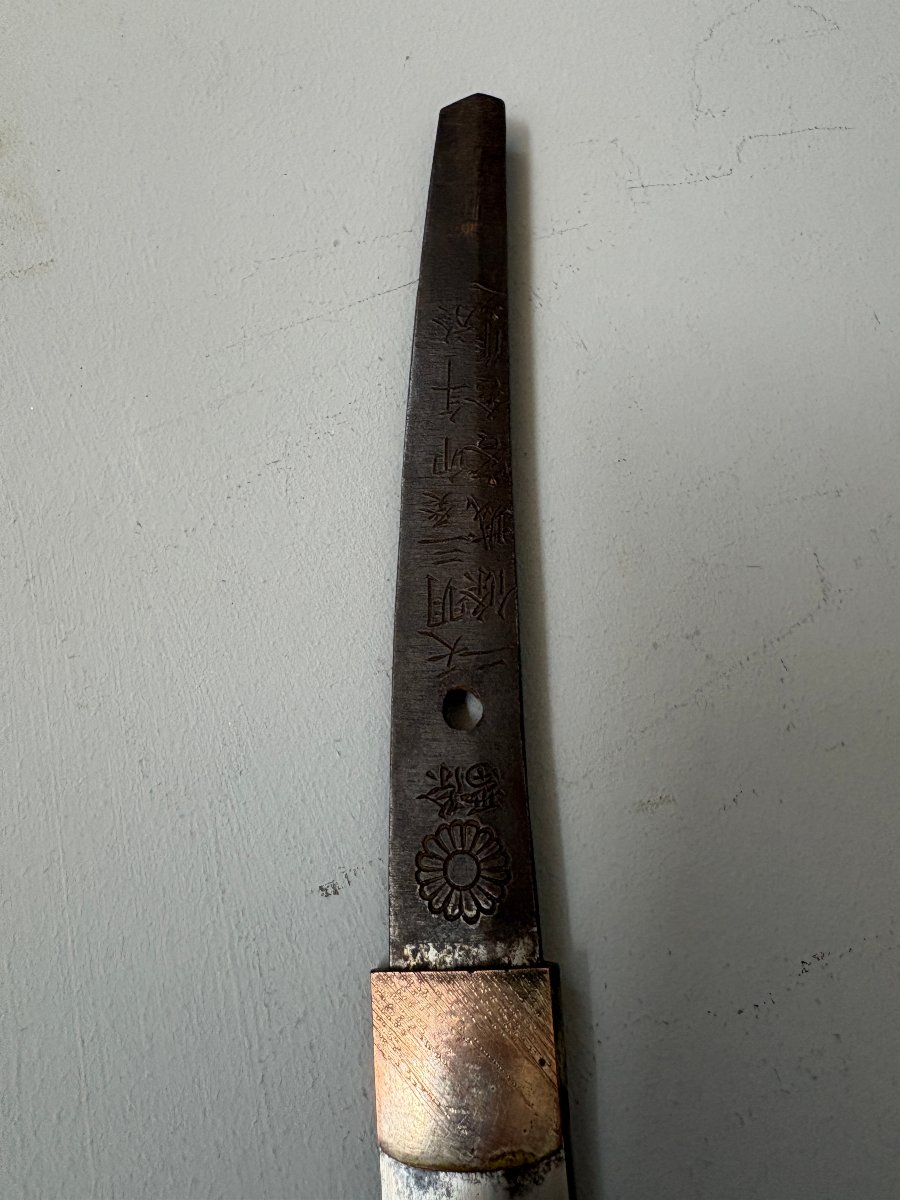
Antique polish showing slight wear scratches and a few small superficial oxidation spots. The very tip is very slightly dulled (less than 1 mm) and there are minor micro-impacts on the cutting edge. Simple patinated copper habaki.· Nakago (ubu-nakago) featuring horizontal file marks (kiri-yasurime) and a peg hole (mekugi-ana).·
Signature (Omote-mei):
Nihon Kaji Sōshō Iga no Kami Fujiwara Kinmichi saku (“Made by the Master Blacksmith of Japan, Lord of Iga, Fujiwara Kinmichi”).
Reverse (Ura-mei):
Imperial 16-petal chrysanthemum seal (Kiku-mon).
Talismanic inscription: Raiyoke (“Protection against lightning”). Date and place: “Made in the 3rd year of the Tenmei era, the Year of the Water Rabbit, at the guest quarters of Nijō Castle.”·
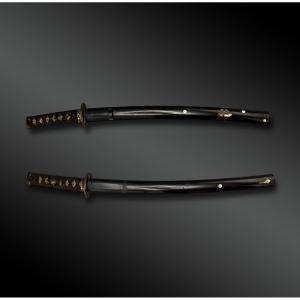
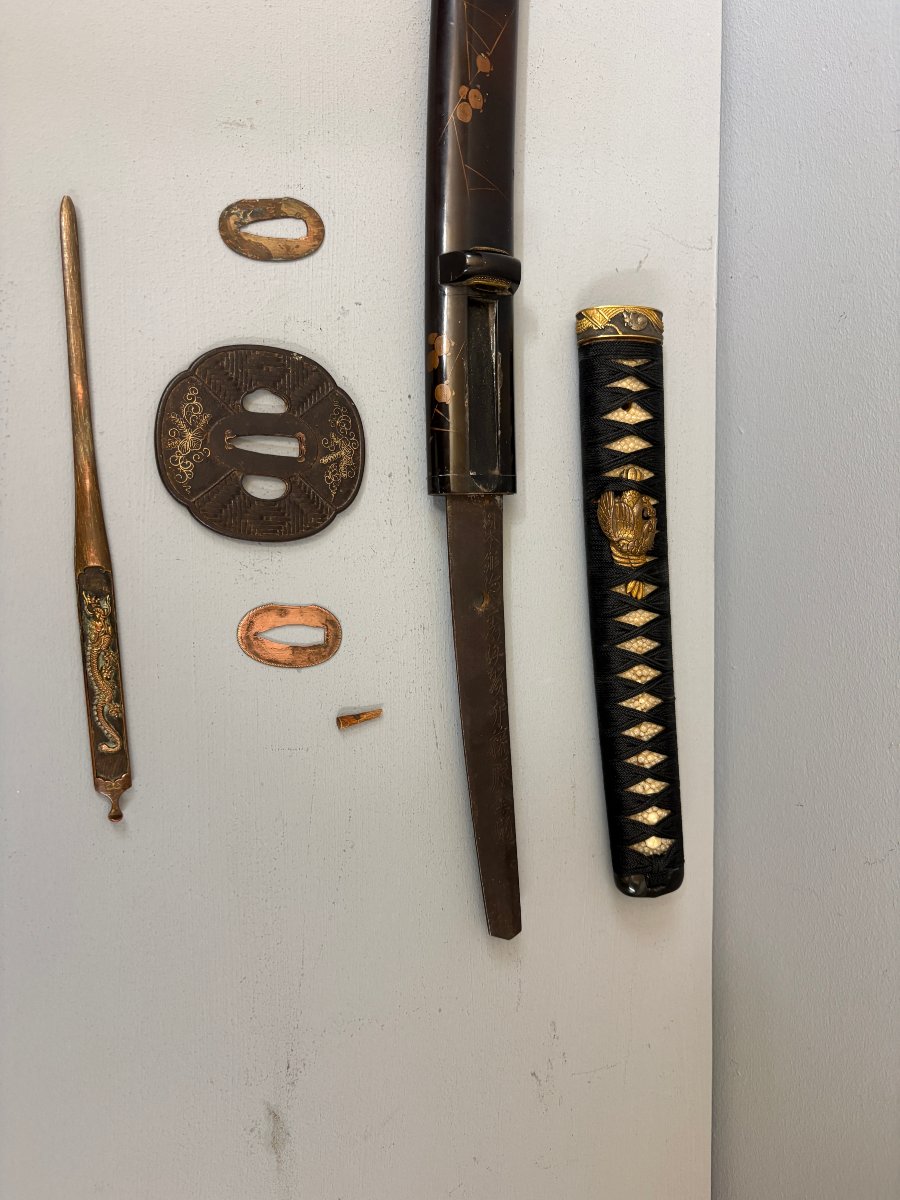
Black lacquered wooden scabbard (roiro) decorated with cherry blossoms (sakura) and gold geometric patterns in maki-e lacquer.
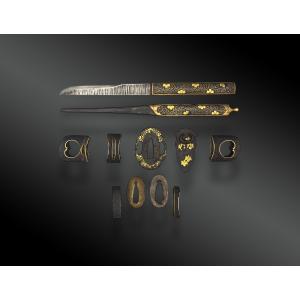
Guard (Tsuba): A patinated iron guard in a four-lobed shape (mokko-gata), decorated with engraved woven basketwork motifs (ajiro-mon) and gold floral inlays (zōgan), in the Kyō-Shōami or Higo style. Accompanied by a pair of seppa.
Black braided tsuka-ito on white stingray skin (samegawa). Gold-plated metal menuki depicting dragons, matching the chiseled and gilded fuchi.
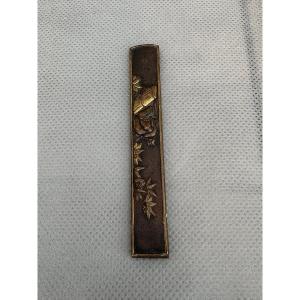
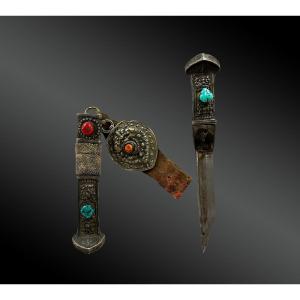
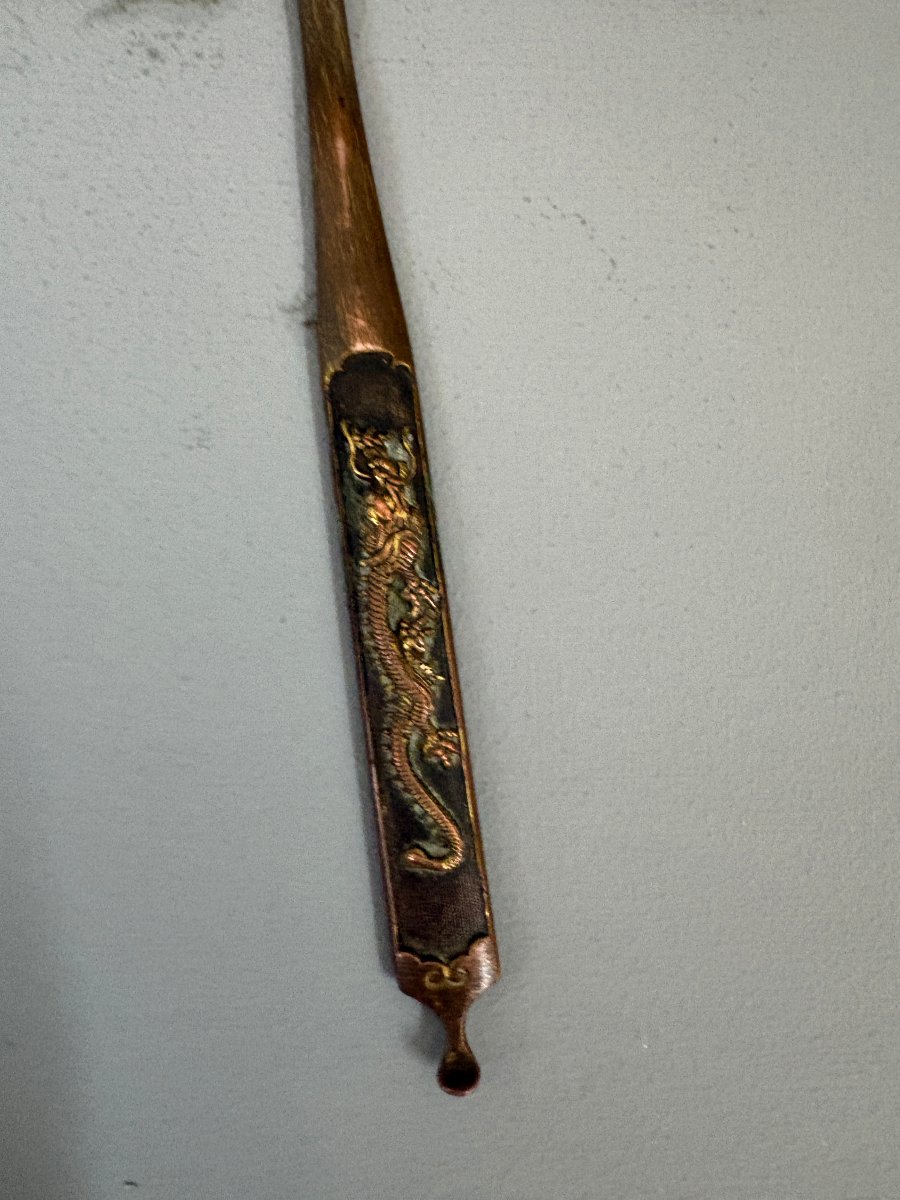
Accessory (Kōgai): Period utility pin made of patinated alloy (shakudō) with a granulated finish (nanako-ji), adorned with a gilded high-relief dragon (takabori-iroe) in the style of the Gotō school.
Please feel free to ask questions or request additional photos
5 900 €
Period: 18th century
Style: Asian art
Condition: Condition of use
Reference (ID): 1860185
Availability: In stock
Print