

Greco-buddhist Art From Gandhara, 3rd–4th Century; Buddha Head, Central Asia
Buddha Head
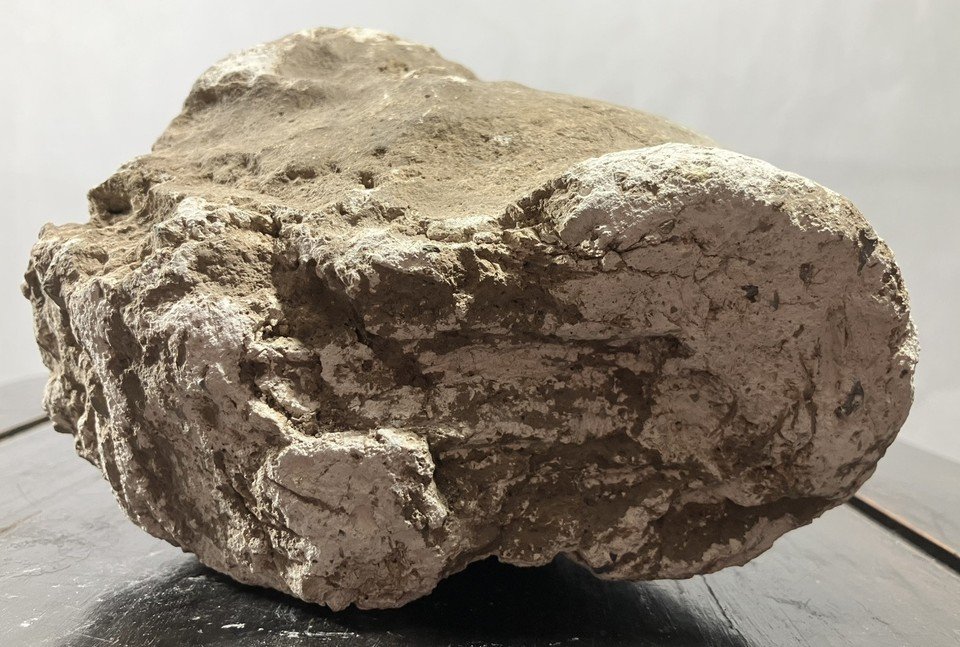
Stucco, with ancient traces of polychromy
Dimensions: 18 × 11 × 15 cm
This Buddha head belongs to the Gandharan sculptural tradition, one of the major expressions of ancient Buddhist art. The use ofstucco is particularly characteristic of Gandharan artfrom the 3rd and 4th centuries, a period during which this material developed in parallel with the rise of major monastic settlements. Lighter and more easily moldable than schist, stucco allowed for the rapid creation of figures and was frequently painted in multiple colors, traces of which may still be visible. The presence of this material, the design of the face, and the fragmentary nature of the piece are consistent with this tradition.
Gandhara corresponds primarily to a vast region in what is now northwestern Pakistan and the neighboring territories of eastern Afghanistan. Between the3rd and 5th centuries, the Buddhist centers of Taxila, Takht-i-Bahi, Sahri-Bahlol, Jamal Garhi, and Hadda saw significant production of stucco sculptures. This period marked a major evolution in Gandharan art: the Hellenistic and Roman heritage, transmitted from Central Asia, blended with Buddhist iconography and the artistic traditions of Northern India. The sculptures of this era thus constitute one of the most remarkable testimonies to the cultural exchanges between the Indian world, the Hellenistic world, and Central Asia. The most relevant parallels can be found with the workshops of Taxila, whose stucco works were particularly significant in the 4th century, with Hadda, famous for its stucco sculptures and traces of polychromy, as well as with the complexes at Sahri-Bahlol and Jamal Garhi. These comparisons are stylistic and geographical and do not allow the piece to be attributed to a specific workshop.
The sculpture survives in a fragmentary state, with significant losses and ancient wear on the surface. The traces of coloring still visible reinforce the archaeological significance of the piece, serving as a reminder that Gandharan sculptures were not intended to be monochromatic works. Its size of 18 cm allows for easy display while retaining a genuine sculptural presence. For a collector, the appeal lies in the combination of a subject emblematic of Buddhism, a characteristic material, and a particularly precise geographical context; an ancient piece that fits directly into the history of artistic exchanges between India, Afghanistan, and Central Asia.
Geographical : Gandhara – Taxila – Peshawar – Takht-i-Bahi – Sahri-Bahlol – Jamal Garhi – Hadda – Peshawar Valley – Khyber-Pakhtunkhwa – Nangarhar – Afghanistan – Pakistan – Northern India –ancient routes of Central Asia. Griechisch-buddhistische Kunst von Gandhara, 3.–4. Jahrhundert Stuck mit Spuren von Polychromie Dieser
Buddha-Kopf gehört zur Bildhauerkunst von Gandhara, einer der
bedeutendsten Traditionen der frühen buddhistischen Kunst. Stuck wurde
besonders im 3. und 4. Jahrhundert in Gandhara verwendet, als die großen
buddhistischen Klosterzentren eine umfangreiche Produktion von
Stuckskulpturen entwickelten. Das Material ließ sich leichter
modellieren als Schiefer und wurde häufig farbig gefasst. Gandhara
umfasste Gebiete des heutigen nordwestlichen Pakistan und des östlichen
Afghanistan. Zu den bedeutenden Zentren gehörten Taxila, Takht-i-Bahi,
Sahri-Bahlol, Jamal Garhi und Hadda. Die dort entstandene Kunst
verbindet buddhistische Ikonographie mit hellenistischen, römischen und
nordindischen Traditionen. Stilistische Vergleiche ergeben sich
insbesondere mit den Stuckarbeiten von Taxila und Hadda sowie mit
Sahri-Bahlol und Jamal Garhi. Diese Vergleiche sind ausschließlich
stilistisch und geografisch. Die Skulptur ist
fragmentarisch erhalten und weist deutliche Verluste und alte
Oberflächenabnutzungen auf. Reste der ursprünglichen Farbigkeit sind
noch sichtbar. Material, Thema und geografischer Zusammenhang machen das
Stück für eine Sammlung buddhistischer oder gandharischer Kunst
besonders interessant. Geografische Bezüge: Gandhara –
Taxila – Peschawar – Takht-i-Bahi – Sahri-Bahlol – Jamal Garhi – Hadda –
Afghanistan – Pakistan – Nordindien – Zentralasien. Arte greco-buddhista del Gandhara, III–IV secolo Stucco con tracce di policromia Questa
testa di Buddha appartiene alla tradizione scultorea del Gandhara, una
delle principali espressioni dell'arte buddhista antica. Lo stucco è
particolarmente caratteristico della produzione gandharica del III e IV
secolo, quando i grandi centri monastici svilupparono una notevole
produzione di sculture in questo materiale. Lo stucco permetteva una
modellazione più rapida della pietra e veniva spesso dipinto. Il
Gandhara comprendeva territori dell'attuale Pakistan nord-occidentale e
dell'Afghanistan orientale. Tra i principali centri buddhisti
figuravano Taxila, Takht-i-Bahi, Sahri-Bahlol, Jamal Garhi e Hadda. La
loro produzione unisce l'iconografia buddhista alle tradizioni
artistiche di origine ellenistica e romana e alle correnti dell'India
settentrionale. I confronti più pertinenti riguardano gli stucchi di
Taxila e Hadda, oltre agli insiemi di Sahri-Bahlol e Jamal Garhi. Si
tratta esclusivamente di confronti stilistici e geografici. La
scultura è frammentaria, con perdite importanti e usura antica della
superficie. Sono ancora visibili tracce di policromia. Il soggetto, il
materiale e il preciso riferimento geografico conferiscono all'opera un
interesse particolare per una collezione dedicata all'arte buddhista,
gandharica o alle antiche vie dell'Asia. Riferimenti
geografici: Gandhara – Taxila – Peshawar – Takht-i-Bahi – Sahri-Bahlol –
Jamal Garhi – Hadda – Afghanistan – Pakistan – India settentrionale –
Asia centrale. Arte greco-budista de Gandhara, siglos III–IV Estuco con restos de policromía Esta
cabeza de Buda pertenece a la tradición escultórica de Gandhara, una de
las grandes expresiones del arte budista antiguo. El estuco es
especialmente característico de la producción gandhariana de los siglos
III y IV, cuando los grandes centros monásticos desarrollaron una
importante producción escultórica en este material. El estuco permitía
un modelado más rápido que la piedra y recibía con frecuencia una
policromía. Gandhara comprendía territorios del actual
noroeste de Pakistán y del este de Afganistán. Entre sus principales
centros budistas se encontraban Taxila, Takht-i-Bahi, Sahri-Bahlol,
Jamal Garhi y Hadda. Su producción artística combina la iconografía
budista con tradiciones de origen helenístico y romano y con las
corrientes artísticas del norte de la India. Los paralelos más
pertinentes corresponden a los estucos de Taxila y Hadda, así como a
Sahri-Bahlol y Jamal Garhi. Se trata únicamente de comparaciones
estilísticas y geográficas. La escultura se conserva de
forma fragmentaria, con pérdidas importantes y desgaste antiguo de la
superficie. Todavía se observan restos de policromía. El tema, el
material y su precisa relación geográfica le confieren un interés
especial para una colección dedicada al arte budista, gandhariano o a
las antiguas rutas de Asia. Referencias geográficas:
Gandhara – Taxila – Peshawar – Takht-i-Bahi – Sahri-Bahlol – Jamal Garhi
– Hadda – Afganistán – Pakistán – norte de la India – Asia Central.
***
Deutsch
Buddha-Kopf
18 × 11 × 15 cm
Testa di Buddha
18 × 11 × 15 cm
Cabeza de Buda
18 × 11 × 15 cm
Period: Before 16th century
Style: Asian art
Condition: Condition of use
Material: Stucco
Reference (ID): 1858340
Availability: In stock