





The Infant Jesus, A Lombard Painter Active In The 17th Century
Artist: Ecole Lombarde Du Xviie Siècle
Lombard painter active in the 17th century
The Infant Jesus
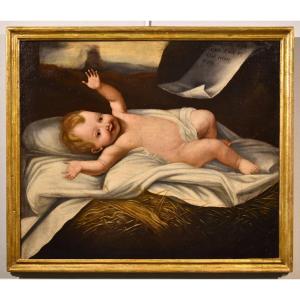
Oil on canvas (70 x 82 cm, in an antique frame 78 x 91 cm.)
Complete details of this painting can be found at the following - link -
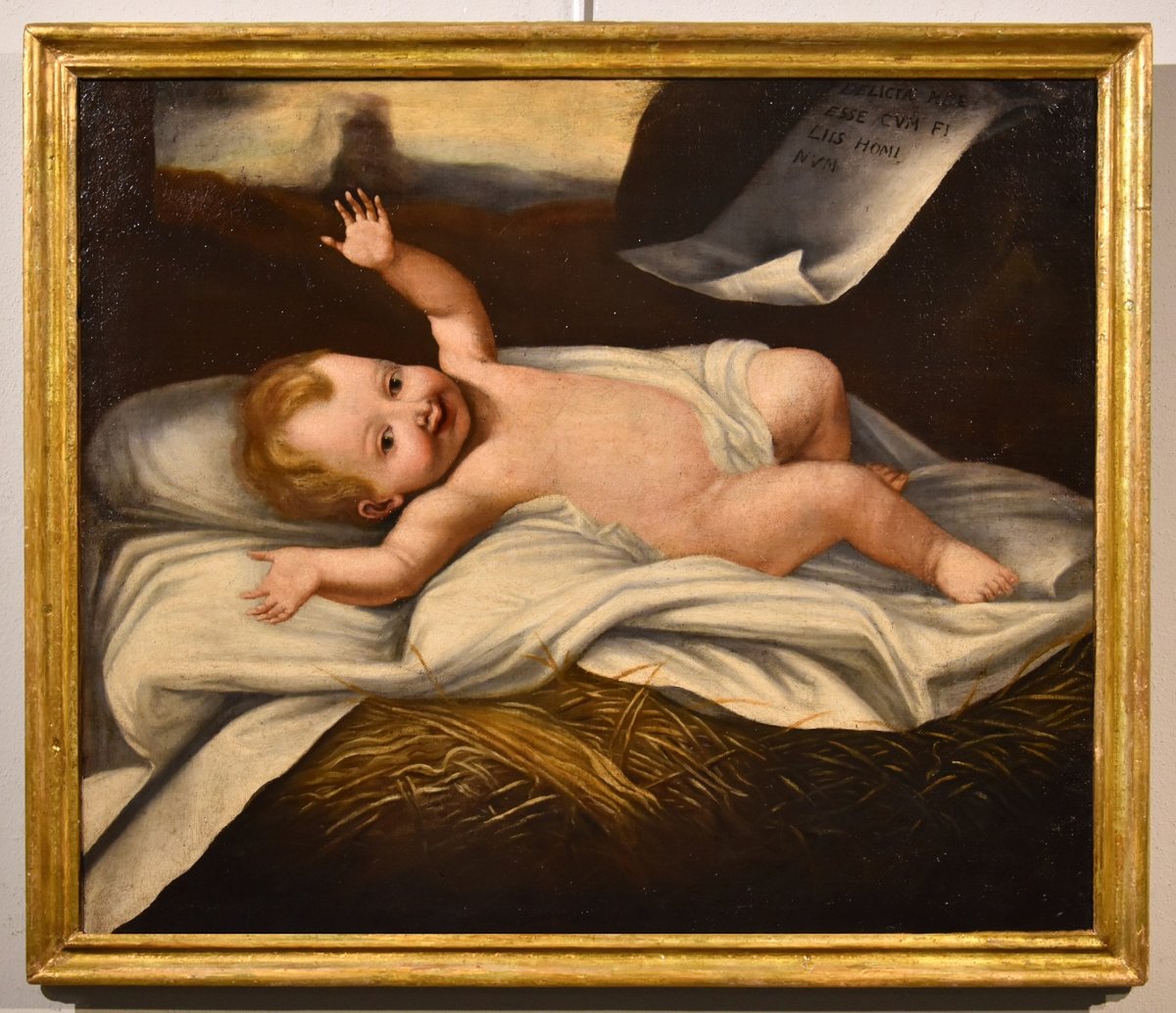
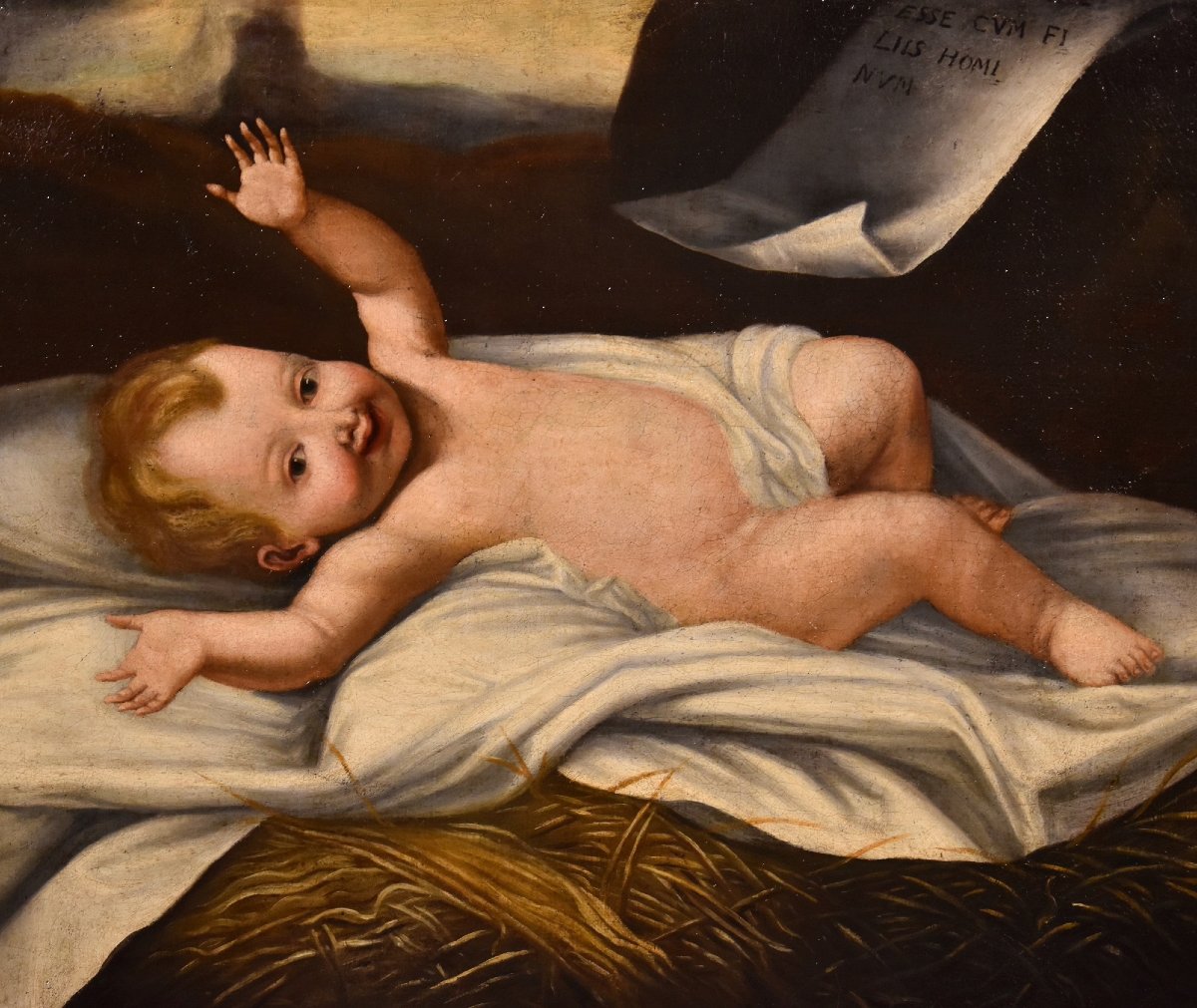
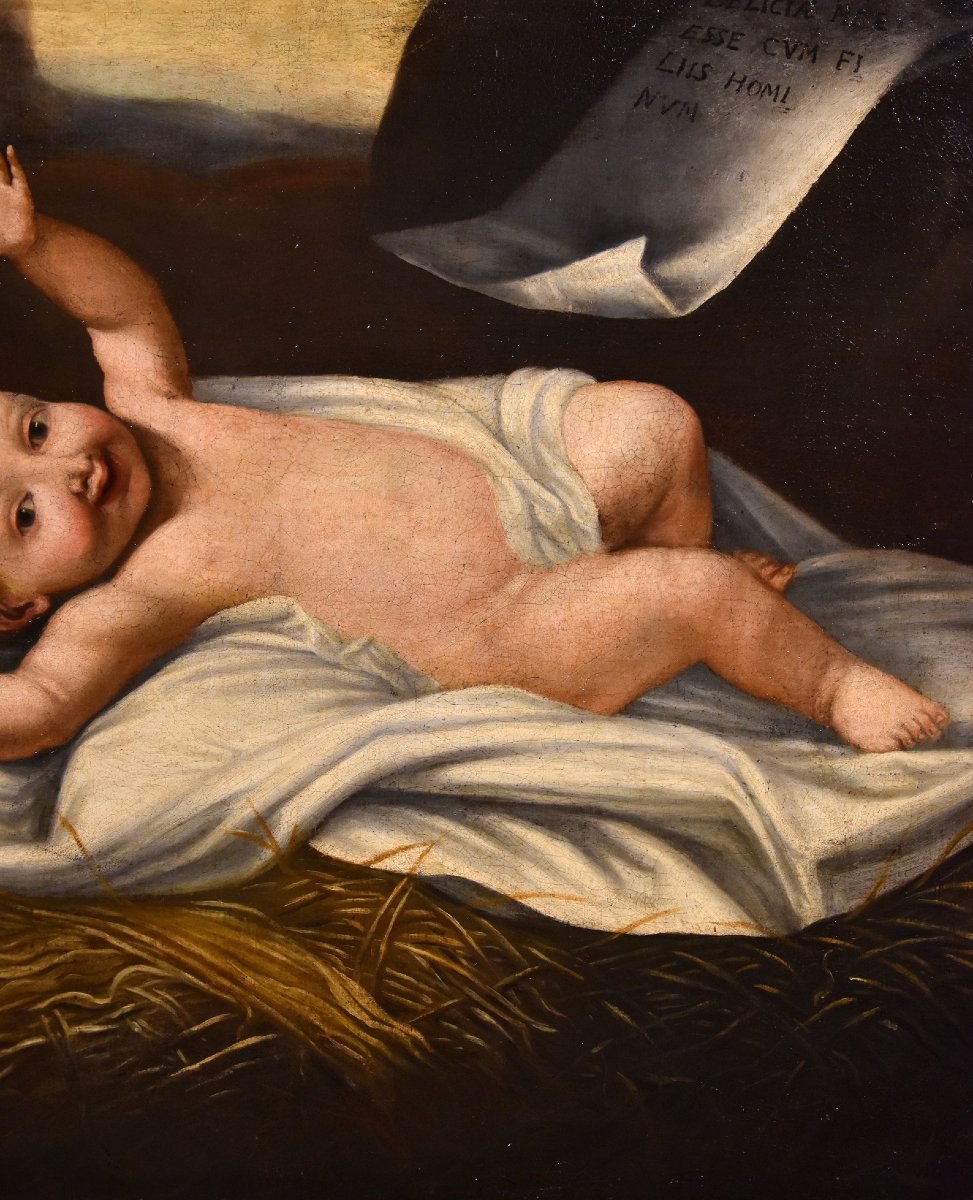
This painting depicts an iconographic theme that is as unusual as it is pleasing, occasionally used in the Christian tradition but represented here according to a distinctive iconography that places the Divine Child reclining on a white cloth spread out in a small, low straw manger; the sacred scene is set in a sort of child’s alcove, from which a natural glimpse of the background opens up, with white sheets and a pillow.
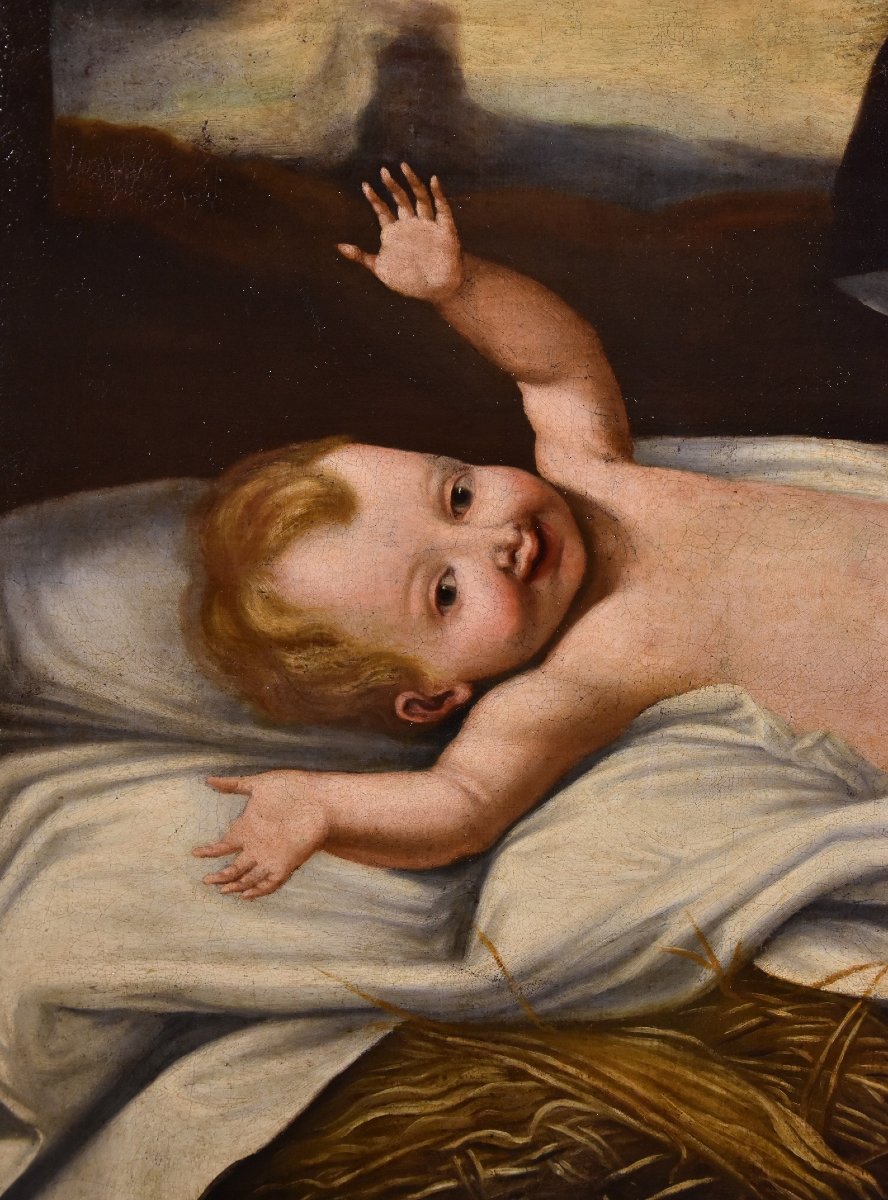
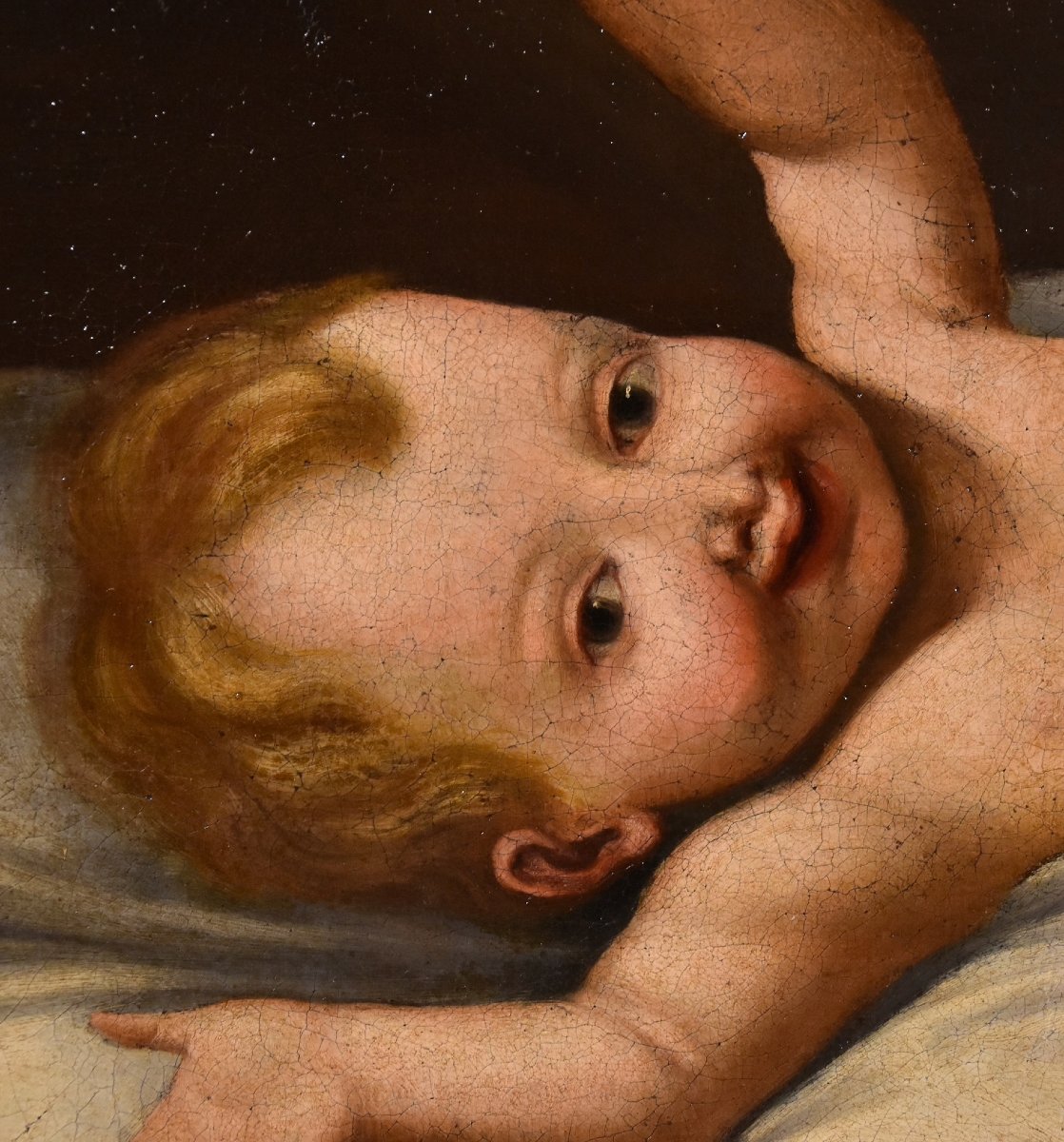
Jesus is awake and gazes directly at the viewer, not asleep as in most works of this type, and in a serene and lively pose, with the carefree spirit of any newborn child; above all, the scene is devoid of the usual attributes of the Passion or other references that might evoke his future sacrifice.
It is therefore a sacred painting which, given its likely purpose as a congratulatory gift for a birth, is not shrouded in any excess of religiosity.
Next to the child is a scroll bearing the biblical inscription “Deliciae meae esse cum filiis hominum” (Prov. 7:31). This message is rooted in the call for every person, from a very young age, to be virtuous, citing as motivation the great love that God pours out upon humanity, especially during childhood. Hence the meaning of the phrase *Deliciae meae esse cum filiis hominum*, that is, “I have placed my delights among the children of men,” because they are innocent and pure, and therefore have not yet fallen prey to vice.
Particularly noteworthy are the delicate complexion and the care with which the facial features have been rendered—so realistic that one might assume this is an actual portrait.
The tenderly natural interpretation reveals a work created by an artist active in the height of the seventeenth century: more precisely, we can attribute the work to an Italian (or Flemish) painter active in Lombardy (compare it with some of Giulio Cesare Procaccini’s depictions of the Virgin and Child, from which our artist must necessarily have drawn inspiration for the depiction of the child).
The work is in good condition and comes complete with a beautiful gilded wooden frame.
ADDITIONAL INFORMATION:
The painting is sold with a certificate of authenticity and a descriptive iconographic sheet.
We handle and arrange shipping for purchased works, both within Italy and internationally, using professional, insured carriers.
Please contact us for any information; we will be happy to assist you.
Follow us on:
https://www.instagram.com/galleriacastelbarco/?hl=it
https://www.facebook.com/galleriacastelbarco/
3 900 €
Period: 17th century
Style: Renaissance, Louis 13th
Condition: Excellent condition
Material: Oil painting
Width: encadré 91 cm.
Height: encadré 78 cm.
Reference (ID): 1849348
Availability: In stock
Print