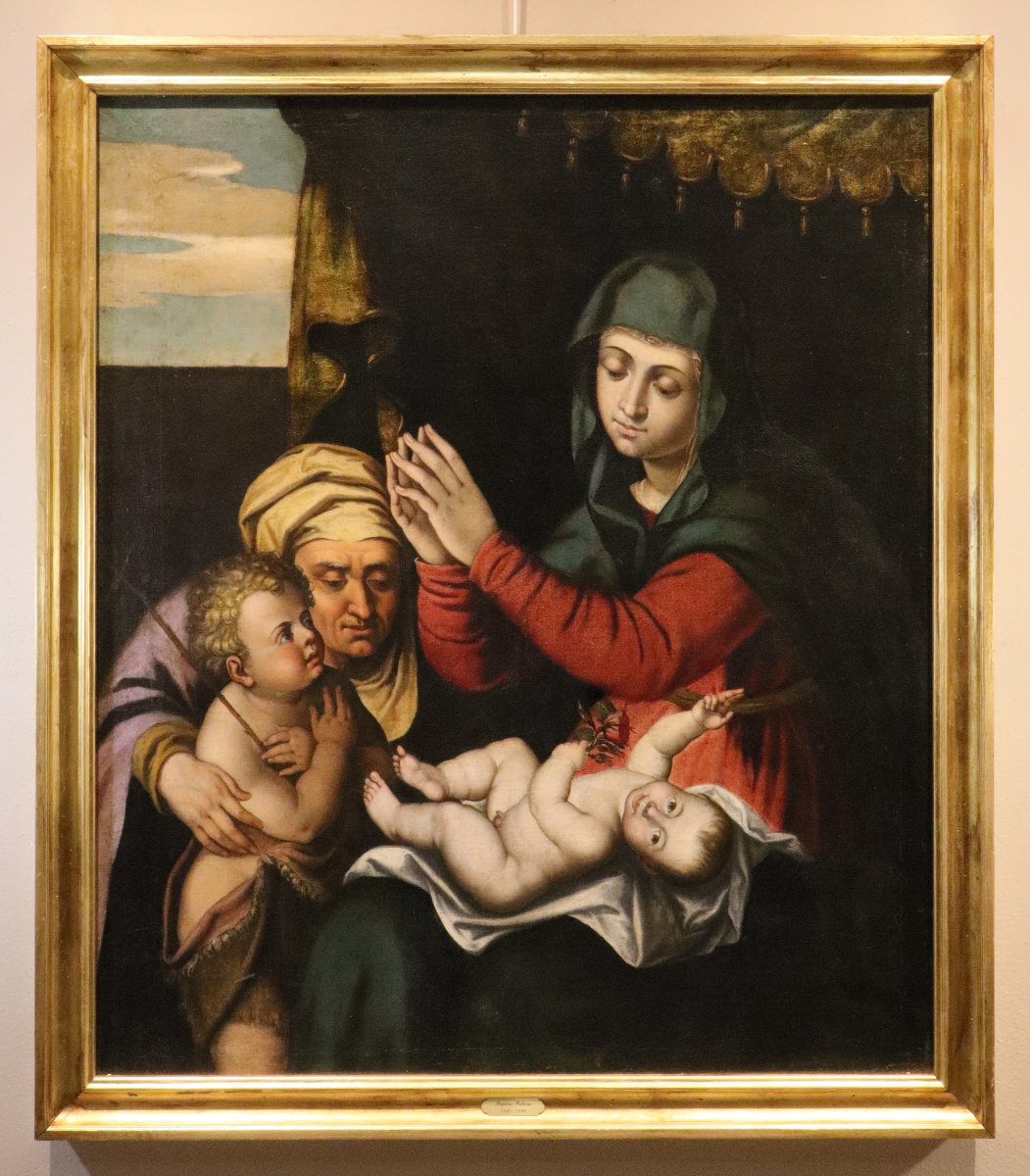



Madonna And Child, Saint John The Infant, And Saint Elizabeth, Scipione Pulzone (1540–1598)
Artist: Scipione Pulzone (gaeta, C. 1540 – Rome, 1598) Attributed To
Scipione Pulzone (Gaeta, c. 1540 – Rome, 1598) Attributed to
Madonna and Child, Saint John the Infant and Saint Elizabeth
Oil on canvas
119 x 102 cm
Frame: 130 x 114 cm
DETAILS OF THE PAINTING (click HERE)
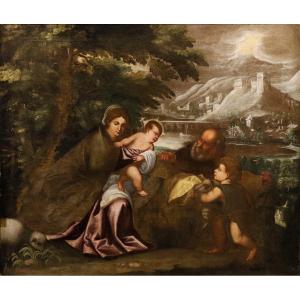
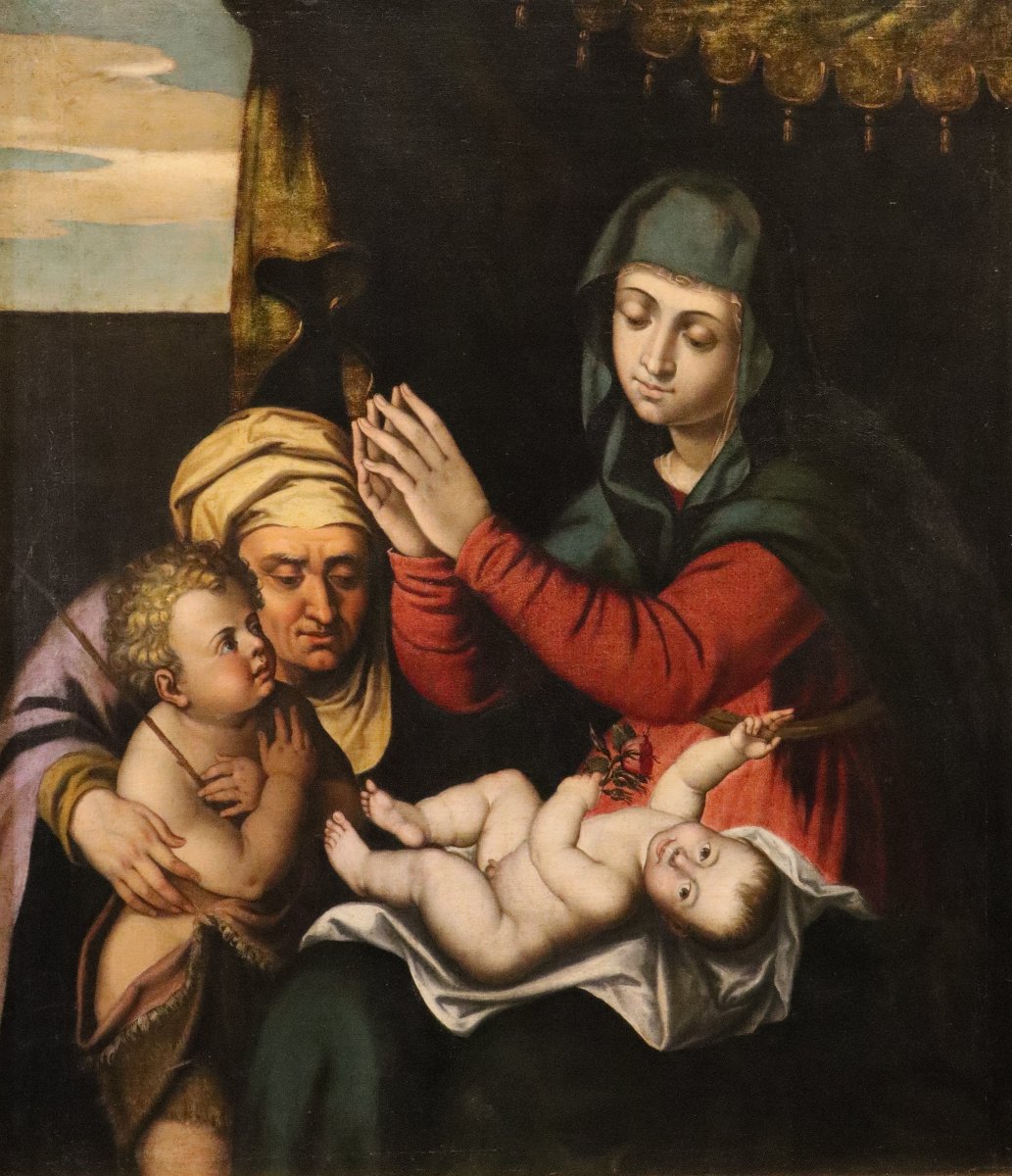
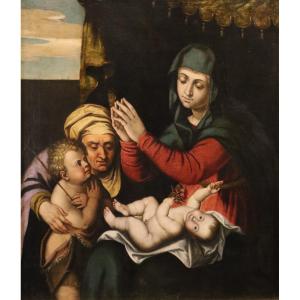
This fascinating painting depicts an engaging and widely recognised iconographic theme within the Christian tradition: the Virgin holding the Child in her arms are the central figures of this charming devotional scene. Completing the composition are the young Saint John the Baptist and his mother Elizabeth (who is also Mary’s cousin).
Through the exchange of glances between the mothers and the children, the dialogue between them is rendered intimate, domestic and emotional, foreshadowing their future spiritual bond.
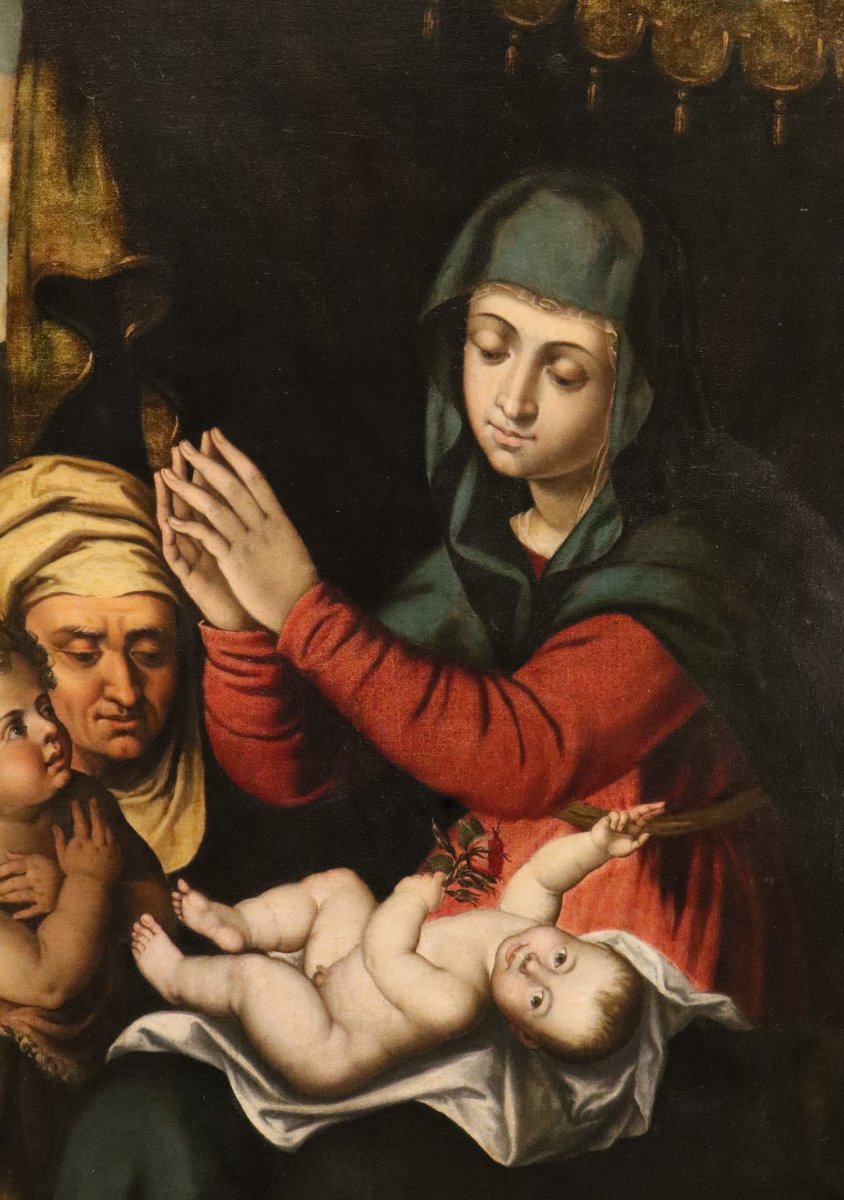
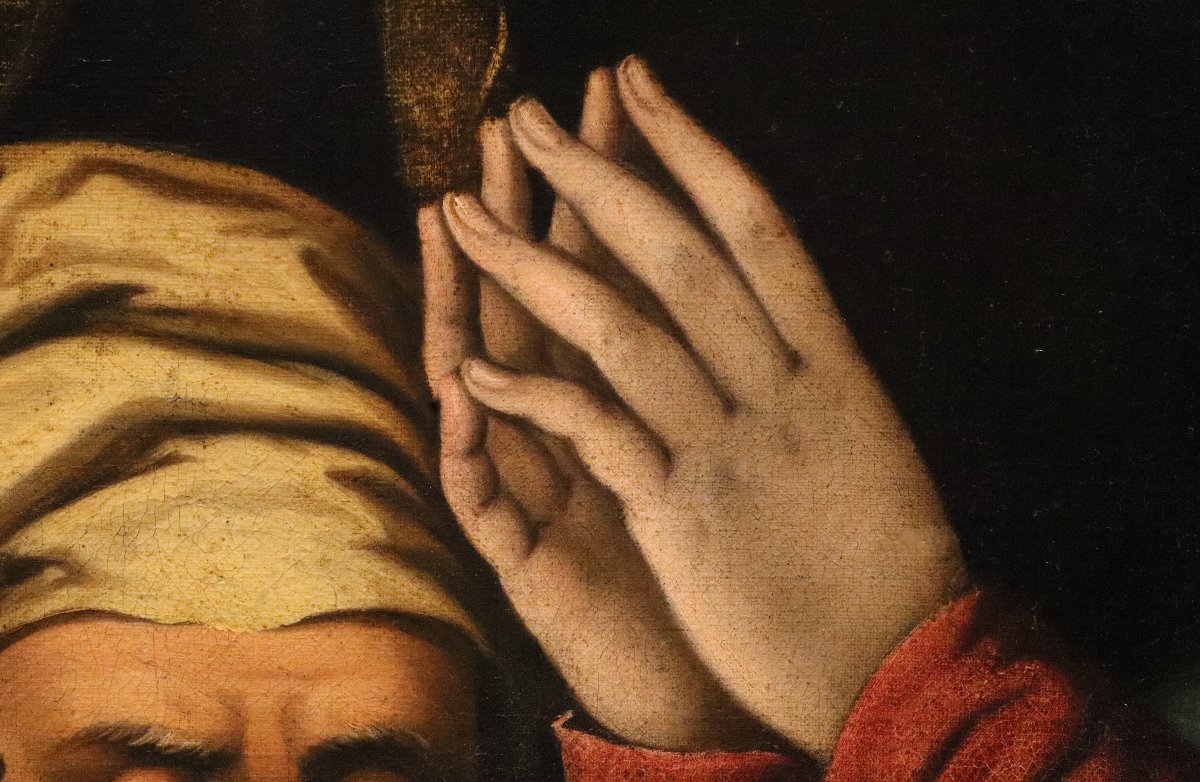
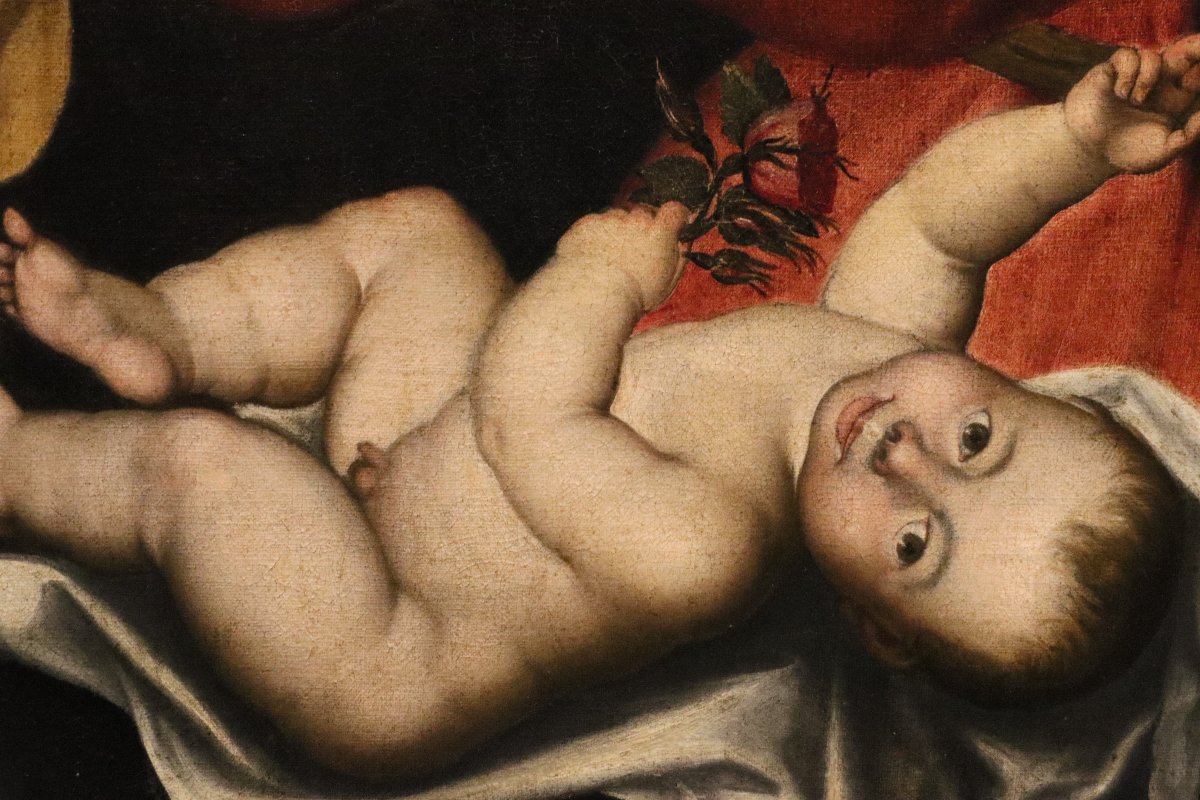
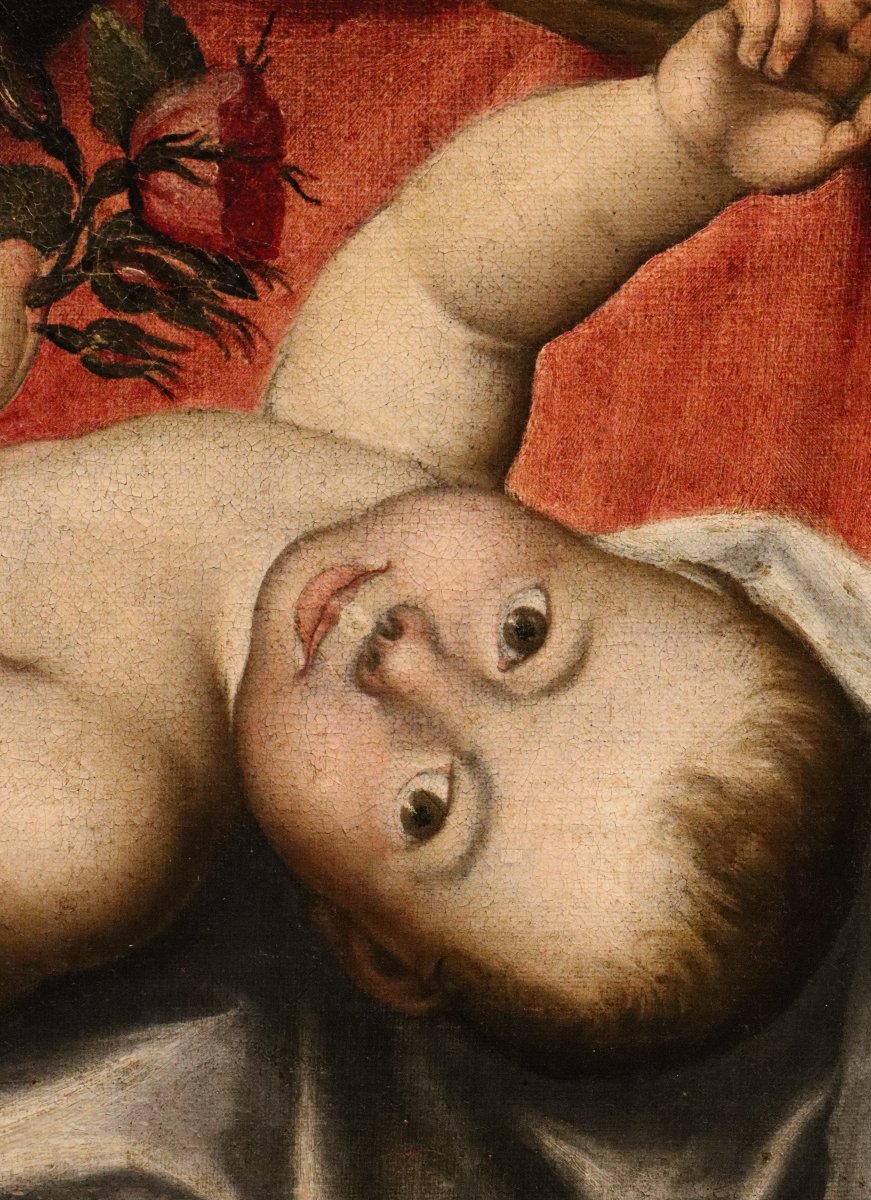
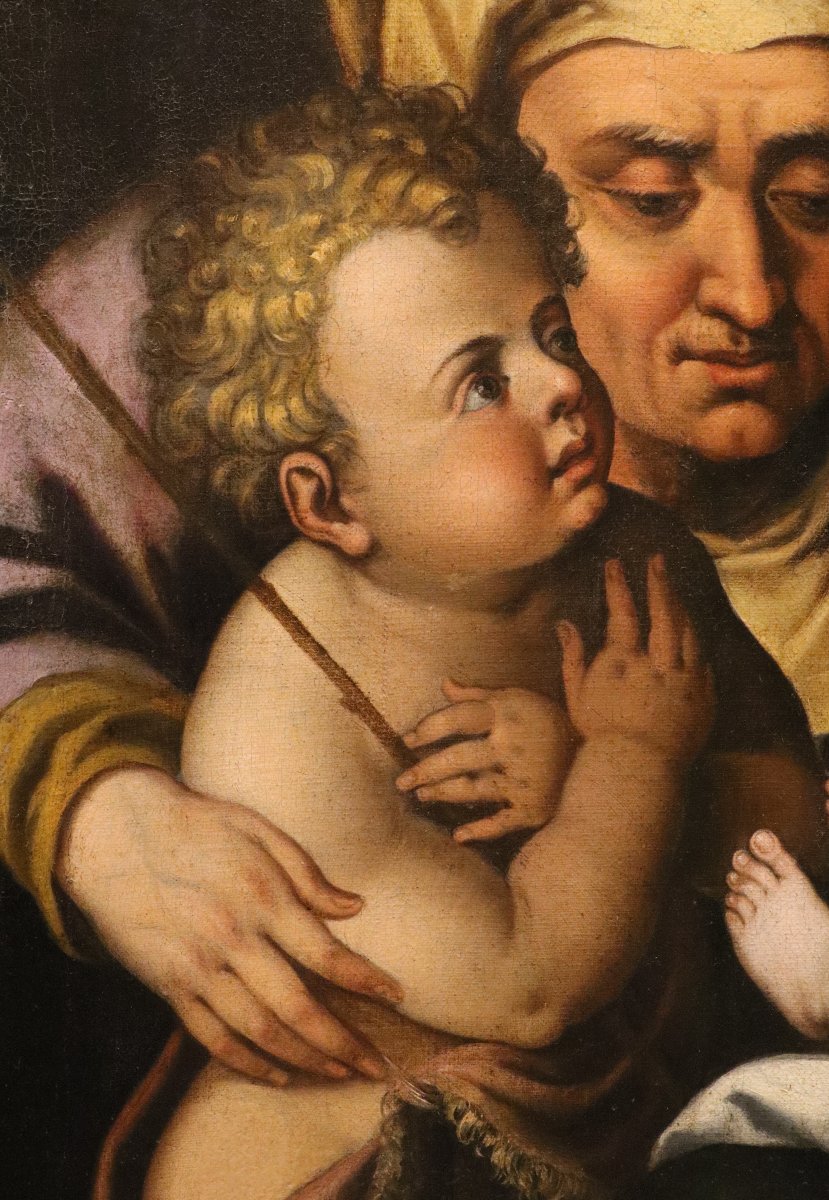
Mary’s stillness, with her hands outstretched and clasped in prayer, contrasts with the radiant presence of the Child, who holds a small red carnation in his little hands—alluding to the Passion—and looks directly at the viewer to establish a direct connection. He is depicted nude, in the act of revealing his complementary earthly and divine natures, and in a dynamic pose which, as well as lending dynamism to this devotional image, is indicative of our painter’s marked commitment to realism.
These compositional elements and the canvas’s fine stylistic qualities lead us to confirm its traditional attribution to Scipione Pulzone, known as ‘il Gaetano’ (Gata 1544 – Rome 1598), one of the most influential and original painters working in Rome during the second half of the 16th century.
His sober and extremely crisp style, which stood in contrast to Mannerist complexity, is geared towards communicative clarity and draws inspiration from Renaissance models, particularly Raphael (whose ‘Madonna Colonna’ seems to have directly inspired the figure of Mary), aiming for a profound expressive simplicity and a sense of ‘timeless’ grace.
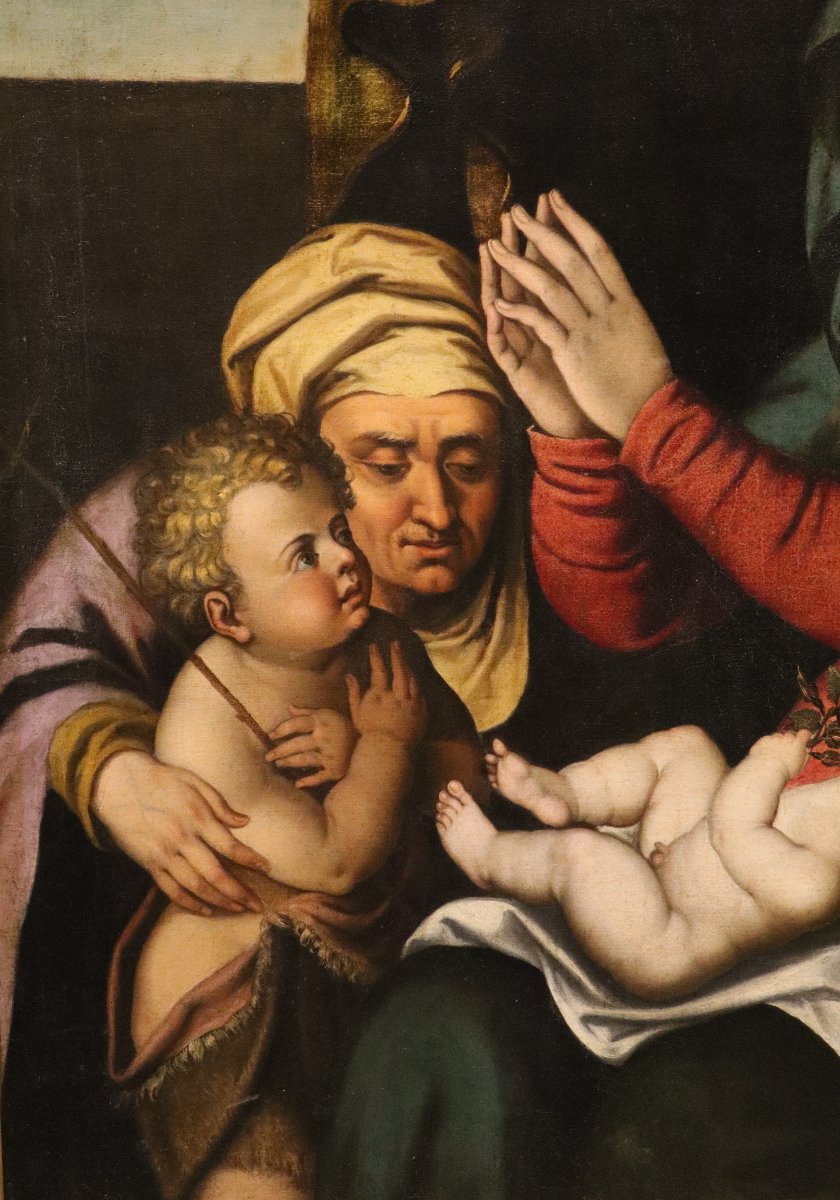
The attention to detail and the study of light, which highlights the figures in the foreground whilst emphasising the modesty of the Madonna and the simple humanity of Saint Anne—portrayed with a face marked by the passage of time—further support the attribution to Scipione Pulzone.
The striking contrast between the youth of the Madonna and the old age of Saint Elizabeth in particular is not merely a visual device common in Pulzone’s art, but constitutes the theological fulcrum of his sacred painting: the two figures, with their miraculous motherhoods, become the tangible demonstration of the divine miracle.
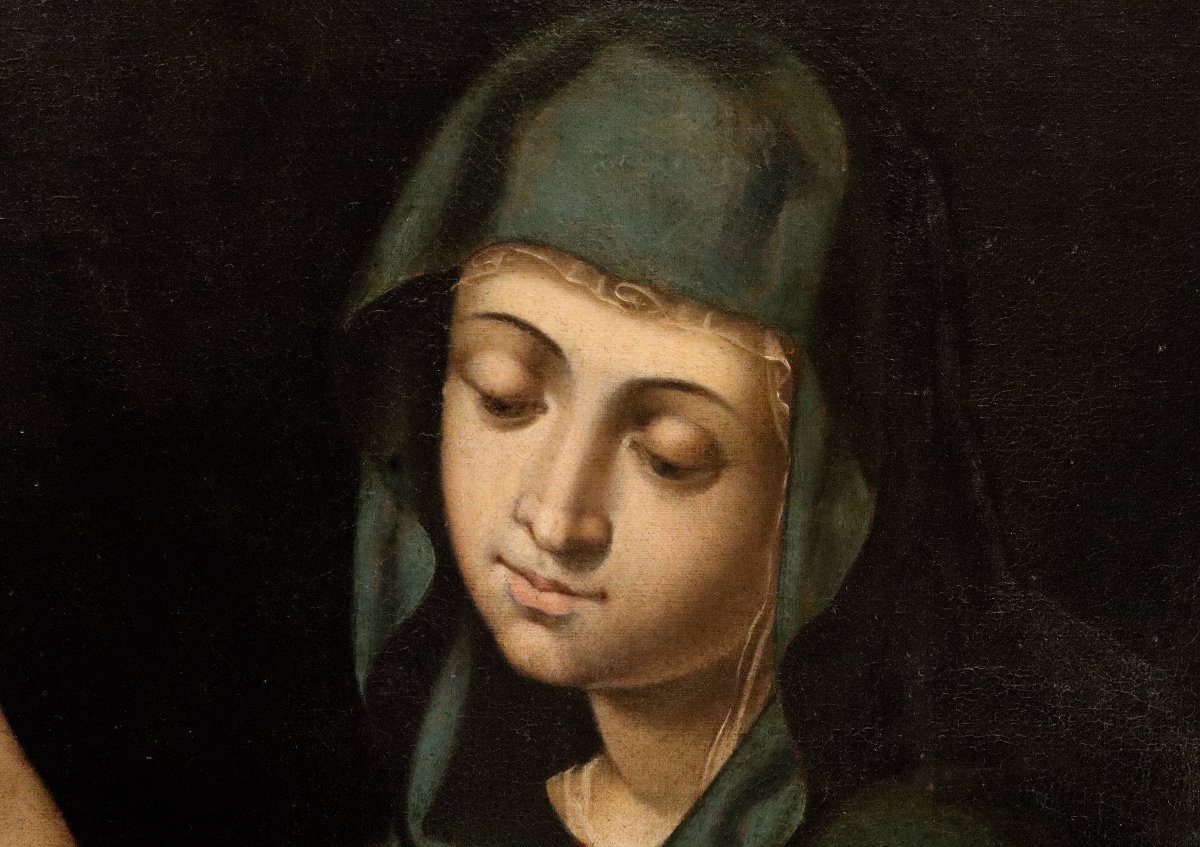
Elizabeth’s deep-set wrinkles, now barren due to her age, are the tangible signs of time and the toil of human history that embraces the miracle. Mary’s smooth, incorruptible, ivory-coloured skin reflects a spiritual youth that knows neither original sin nor physical decay.
In particular, the painter revisited this subject on several occasions;
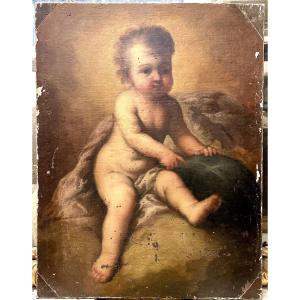
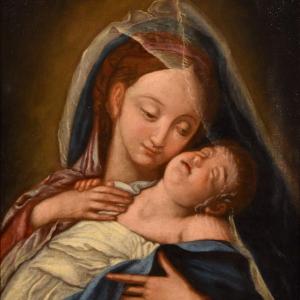
among the paintings most similar to our canvas, we may mention the Holy Family with the Infant Saint John and Saint Elizabeth (Fig. 1 – Sotheby’s auction, New York, 8 January 1981, lot 98) and the Holy Family with the Infant Saint John and Saint Anne (Fig. 2 – Galleria Borghese, Rome).
In both works, as in ours, the face of the elderly woman is rendered with extraordinary and meticulous realism (typical of his skill as a ‘lifelike’ portraitist), highlighting the deep wrinkles, the skin marked by time and the monastic veil covering her head.
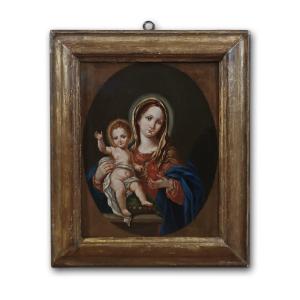
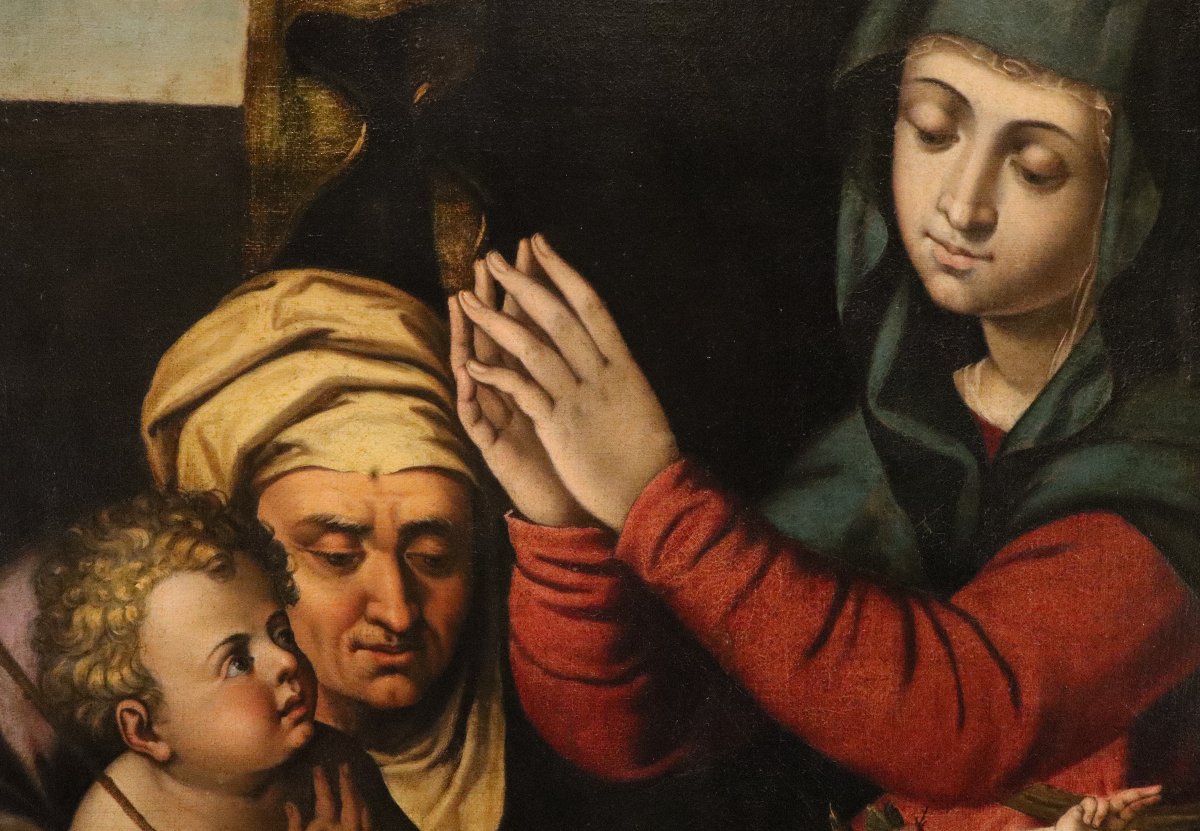
Then there is the face of the Madonna in our painting, which shows a strong expressive affinity with Pulzone’s countless Marian models: her gently half-closed eyes cast downwards, the perfect oval profile, the expression of composed and melancholic sweetness, and the almost enamelled and smooth rendering of the complexion are the very stylistic features found in his famous Madonnas of Divine Providence (for example, fig. 3: Convent of S. Carlo ai Catinari, Rome).
Finally, the gesture of the Virgin’s hands (such as the tapered, composed fingers) evokes the measured and extremely chaste gestures that Pulzone attributes to his saints and his praying Madonnas, and which we can, for example, find in the Assumption of the Virgin in the Church of St Silvestro al Quirinale (Fig. 4).
ADDITIONAL INFORMATION:
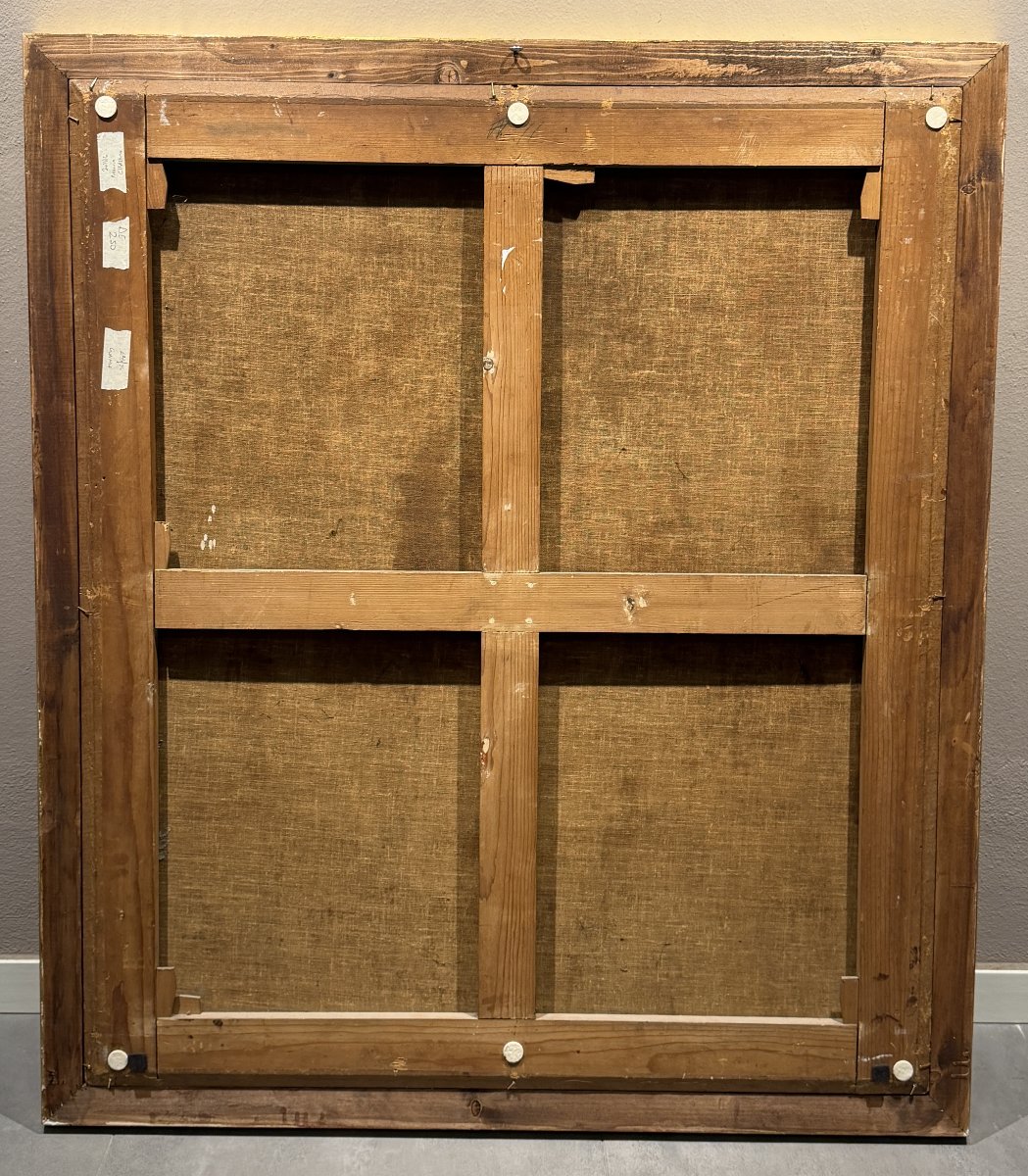
The work is complete with an attractive gilded wooden frame and is accompanied by a certificate of authenticity and a descriptive iconographic sheet.
We arrange and organise the transport of purchased works, both within Italy and abroad, using professional and insured carriers.
Please contact us for any further information; we will be delighted to assist you. It is also possible to view the painting at our gallery in Riva del Garda; we would be delighted to welcome you and show you our collection of artworks.
Follow us on:
https://www.instagram.com/galleriacastelbarco/?hl=it
https://www.facebook.com/galleriacastelbarco/
Madonna and Child, Saint John the Infant and Saint Elizabeth
Oil on canvas
119 x 102 cm
Frame: 130 x 114 cm
DETAILS OF THE PAINTING (click HERE)
This fascinating painting depicts an engaging and widely recognised iconographic theme within the Christian tradition: the Virgin holding the Child in her arms are the central figures of this charming devotional scene. Completing the composition are the young Saint John the Baptist and his mother Elizabeth (who is also Mary’s cousin).
Through the exchange of glances between the mothers and the children, the dialogue between them is rendered intimate, domestic and emotional, foreshadowing their future spiritual bond.
Mary’s stillness, with her hands outstretched and clasped in prayer, contrasts with the radiant presence of the Child, who holds a small red carnation in his little hands—alluding to the Passion—and looks directly at the viewer to establish a direct connection. He is depicted nude, in the act of revealing his complementary earthly and divine natures, and in a dynamic pose which, as well as lending dynamism to this devotional image, is indicative of our painter’s marked commitment to realism.
These compositional elements and the canvas’s fine stylistic qualities lead us to confirm its traditional attribution to Scipione Pulzone, known as ‘il Gaetano’ (Gata 1544 – Rome 1598), one of the most influential and original painters working in Rome during the second half of the 16th century.
His sober and extremely crisp style, which stood in contrast to Mannerist complexity, is geared towards communicative clarity and draws inspiration from Renaissance models, particularly Raphael (whose ‘Madonna Colonna’ seems to have directly inspired the figure of Mary), aiming for a profound expressive simplicity and a sense of ‘timeless’ grace.
The attention to detail and the study of light, which highlights the figures in the foreground whilst emphasising the modesty of the Madonna and the simple humanity of Saint Anne—portrayed with a face marked by the passage of time—further support the attribution to Scipione Pulzone.
The striking contrast between the youth of the Madonna and the old age of Saint Elizabeth in particular is not merely a visual device common in Pulzone’s art, but constitutes the theological fulcrum of his sacred painting: the two figures, with their miraculous motherhoods, become the tangible demonstration of the divine miracle.
Elizabeth’s deep-set wrinkles, now barren due to her age, are the tangible signs of time and the toil of human history that embraces the miracle. Mary’s smooth, incorruptible, ivory-coloured skin reflects a spiritual youth that knows neither original sin nor physical decay.
In particular, the painter revisited this subject on several occasions;
among the paintings most similar to our canvas, we may mention the Holy Family with the Infant Saint John and Saint Elizabeth (Fig. 1 – Sotheby’s auction, New York, 8 January 1981, lot 98) and the Holy Family with the Infant Saint John and Saint Anne (Fig. 2 – Galleria Borghese, Rome).
In both works, as in ours, the face of the elderly woman is rendered with extraordinary and meticulous realism (typical of his skill as a ‘lifelike’ portraitist), highlighting the deep wrinkles, the skin marked by time and the monastic veil covering her head.
Then there is the face of the Madonna in our painting, which shows a strong expressive affinity with Pulzone’s countless Marian models: her gently half-closed eyes cast downwards, the perfect oval profile, the expression of composed and melancholic sweetness, and the almost enamelled and smooth rendering of the complexion are the very stylistic features found in his famous Madonnas of Divine Providence (for example, fig. 3: Convent of S. Carlo ai Catinari, Rome).
Finally, the gesture of the Virgin’s hands (such as the tapered, composed fingers) evokes the measured and extremely chaste gestures that Pulzone attributes to his saints and his praying Madonnas, and which we can, for example, find in the Assumption of the Virgin in the Church of St Silvestro al Quirinale (Fig. 4).
ADDITIONAL INFORMATION:
The work is complete with an attractive gilded wooden frame and is accompanied by a certificate of authenticity and a descriptive iconographic sheet.
We arrange and organise the transport of purchased works, both within Italy and abroad, using professional and insured carriers.
Please contact us for any further information; we will be delighted to assist you. It is also possible to view the painting at our gallery in Riva del Garda; we would be delighted to welcome you and show you our collection of artworks.
Follow us on:
https://www.instagram.com/galleriacastelbarco/?hl=it
https://www.facebook.com/galleriacastelbarco/
9 500 €
Period: 16th century
Style: Louis 15th - Transition
Condition: Excellent condition
Material: Oil painting
Width: encadré 130 cm.
Height: encadré 114 cm.
Reference (ID): 1831682
Availability: In stock
Print