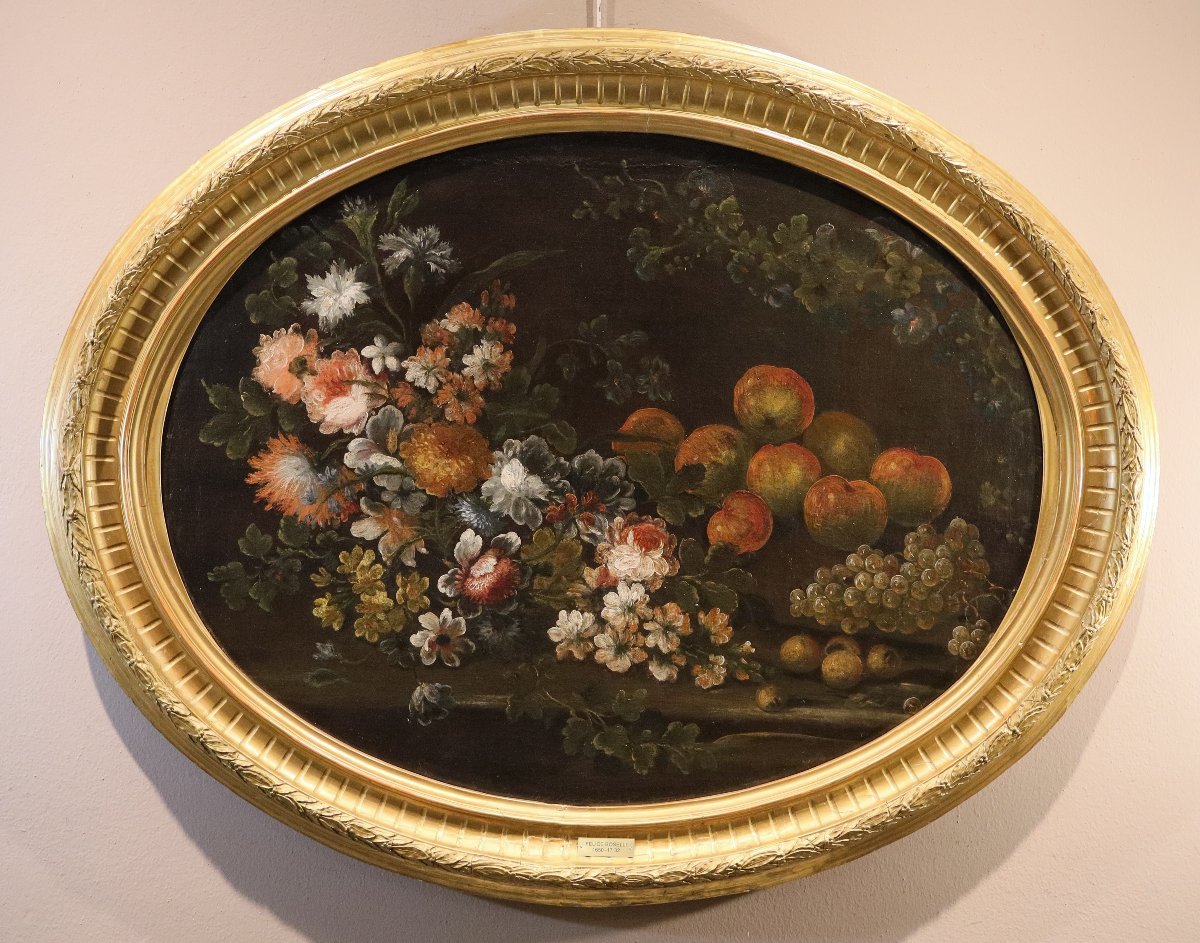
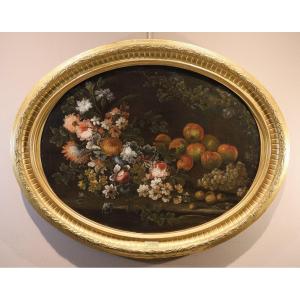


Felice Boselli (piacenza, 1650 – Parma, 1732), Still Life With Flowers And Fruit
Artist: Felice Boselli (plaisance, 1650 – Parme, 1732) . Expertise Prof. Ferdinando Arisi
Felice Boselli (Piacenza, 1650 – Parma, 1732)
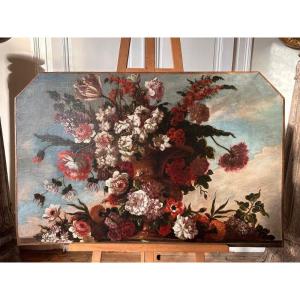
Still Life with Flowers and Fruit
Oil on oval canvas
73 x 96 cm.
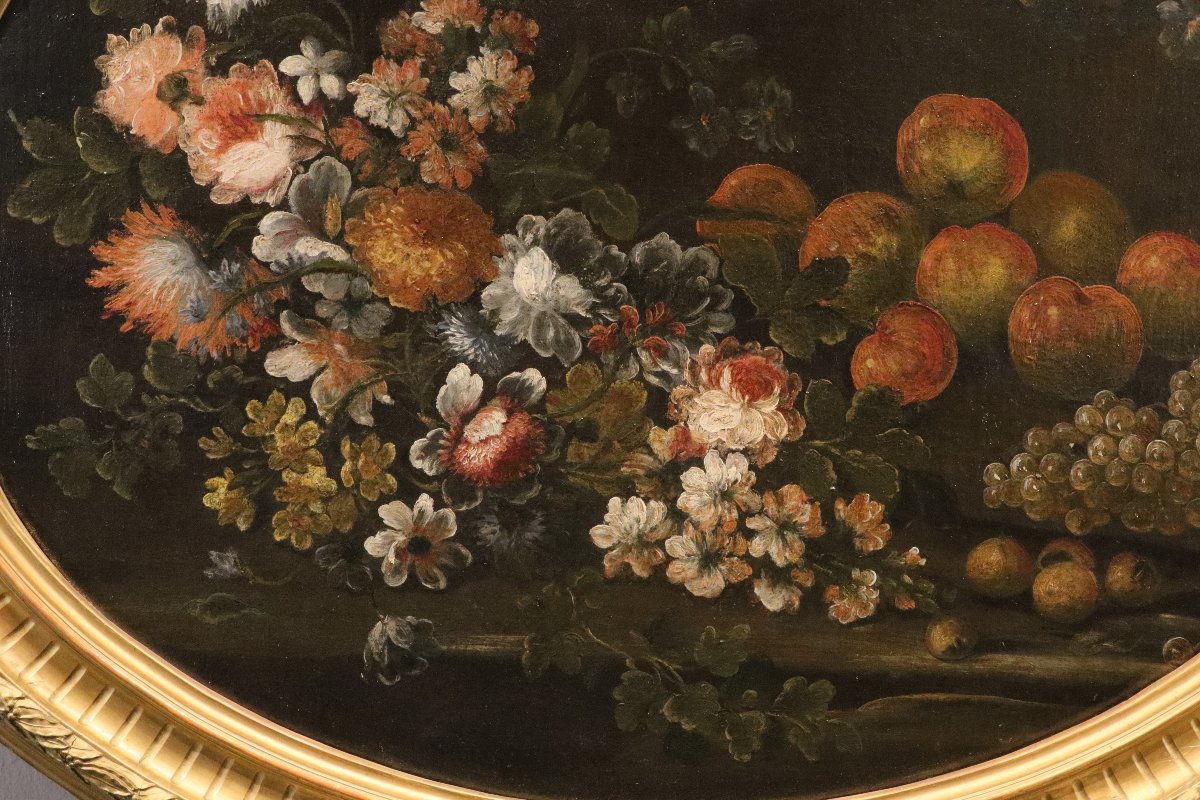
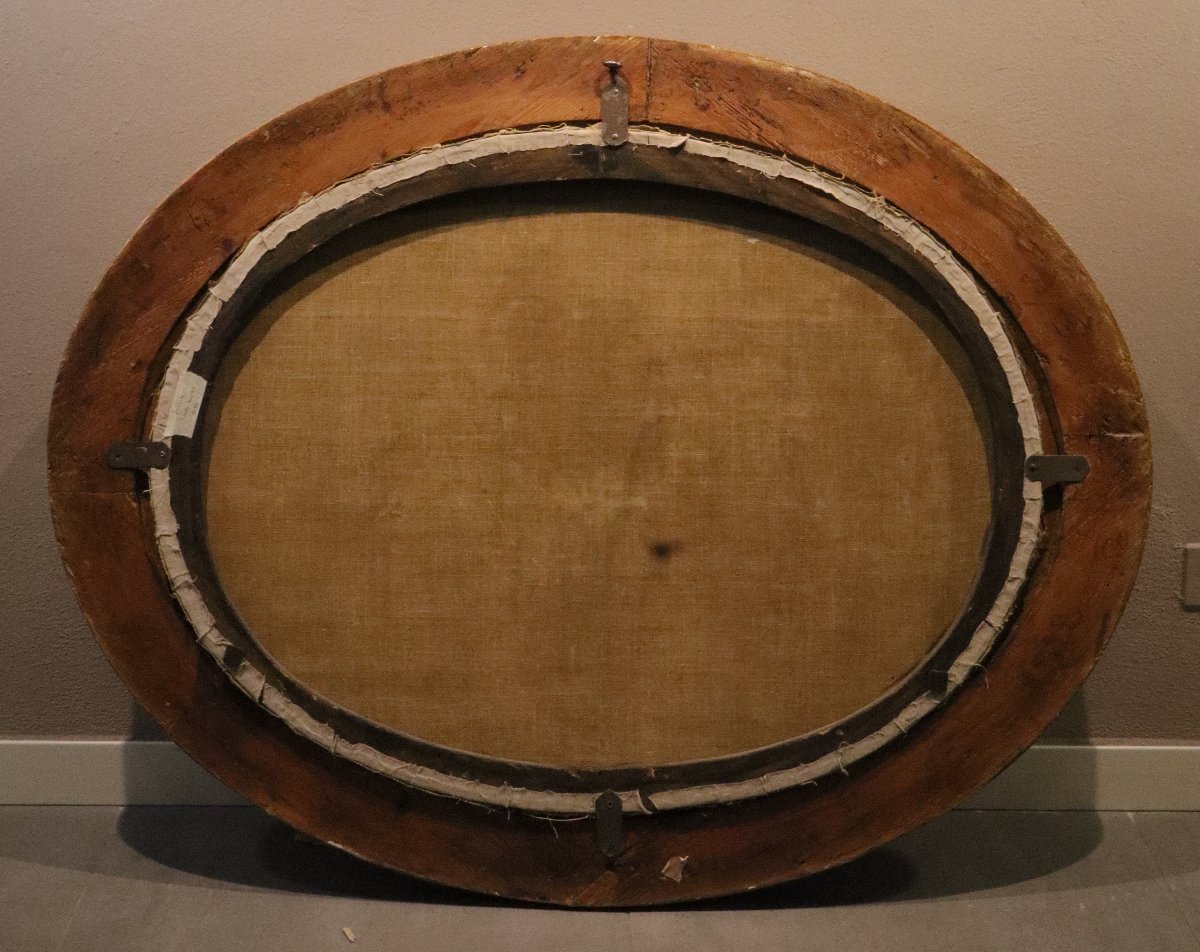
In a pleasing oval gilded frame with a beaded design, 95 x 122 cm.
The painting is accompanied by a critical description by Prof. Ferdinando Arisi
Reference bibliography: Ferdinando Arisi, “Still Life Between Milan and Parma in the Baroque Era. Felice Boselli, Corrections and Additions” (Edizioni TIP.LE.CO., 1995)
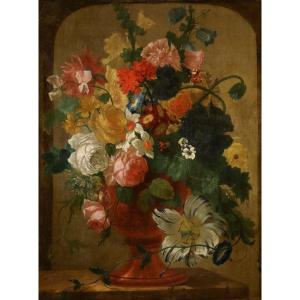
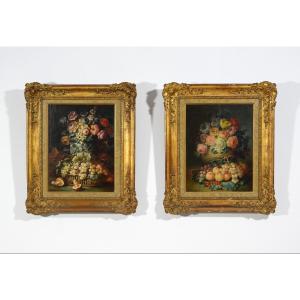
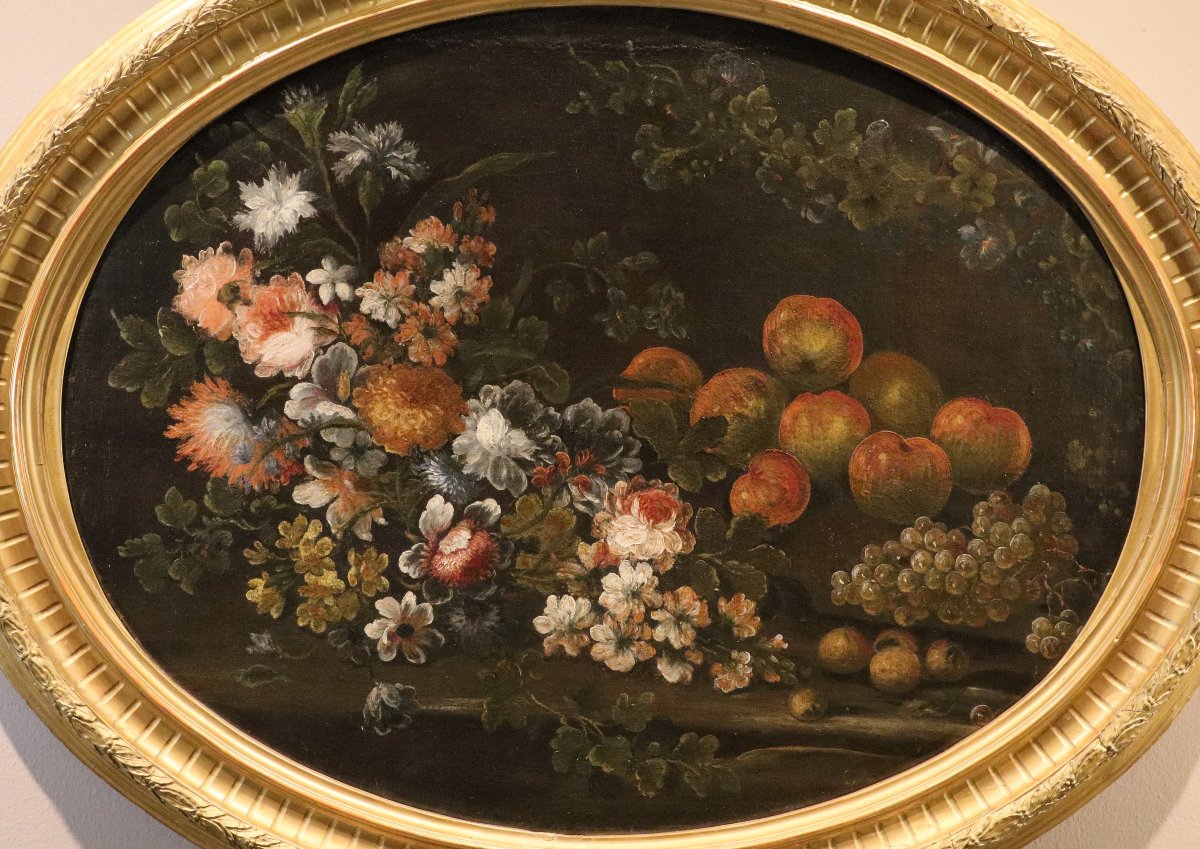
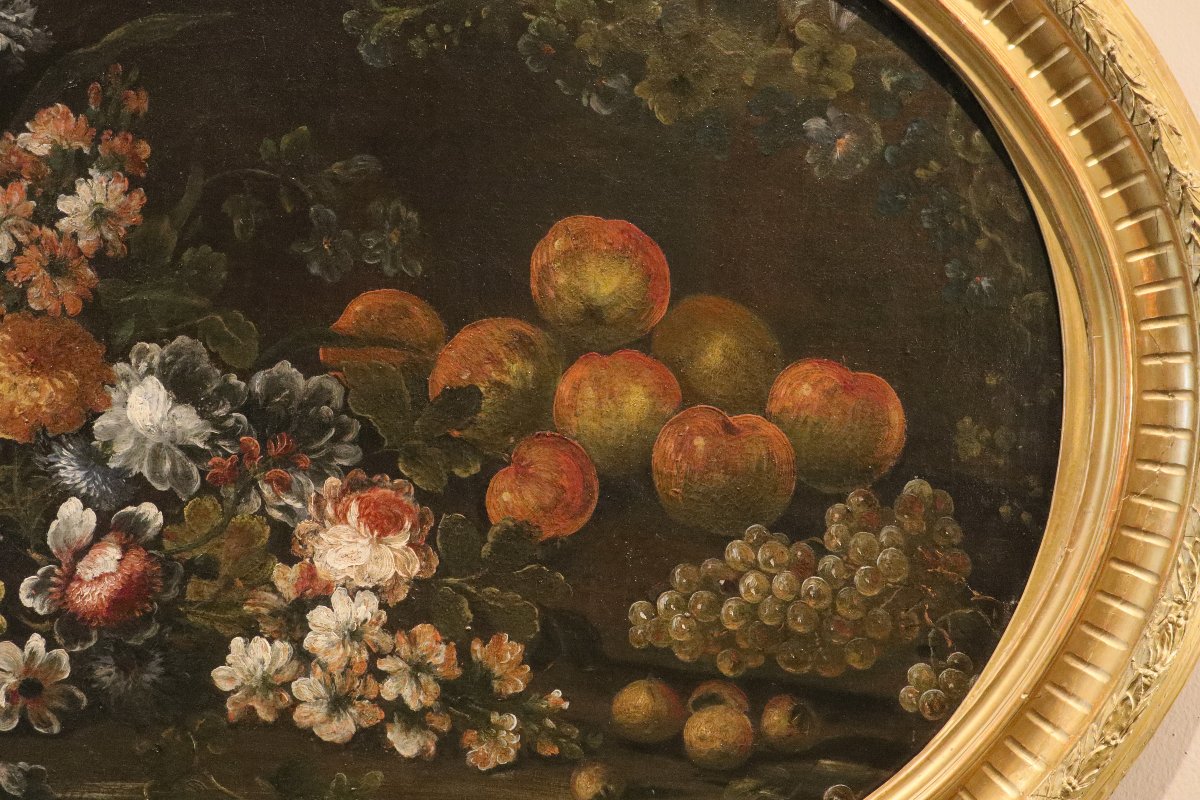
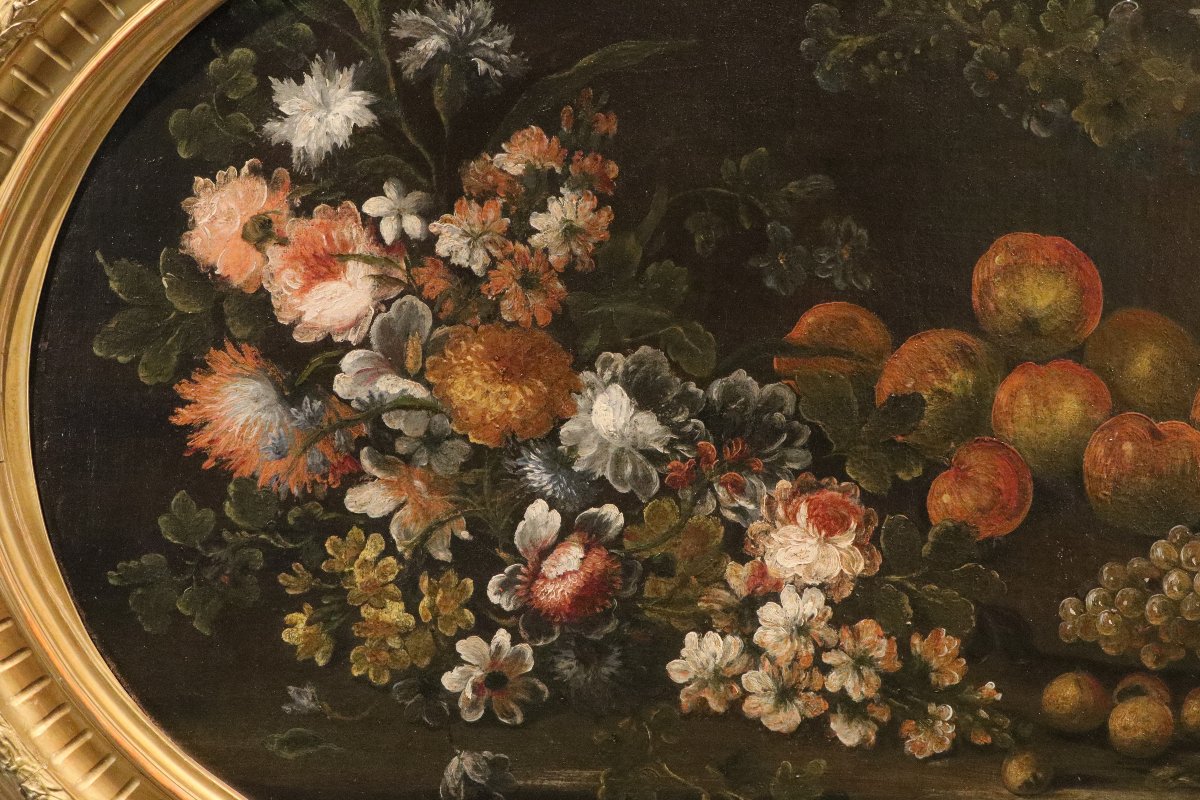
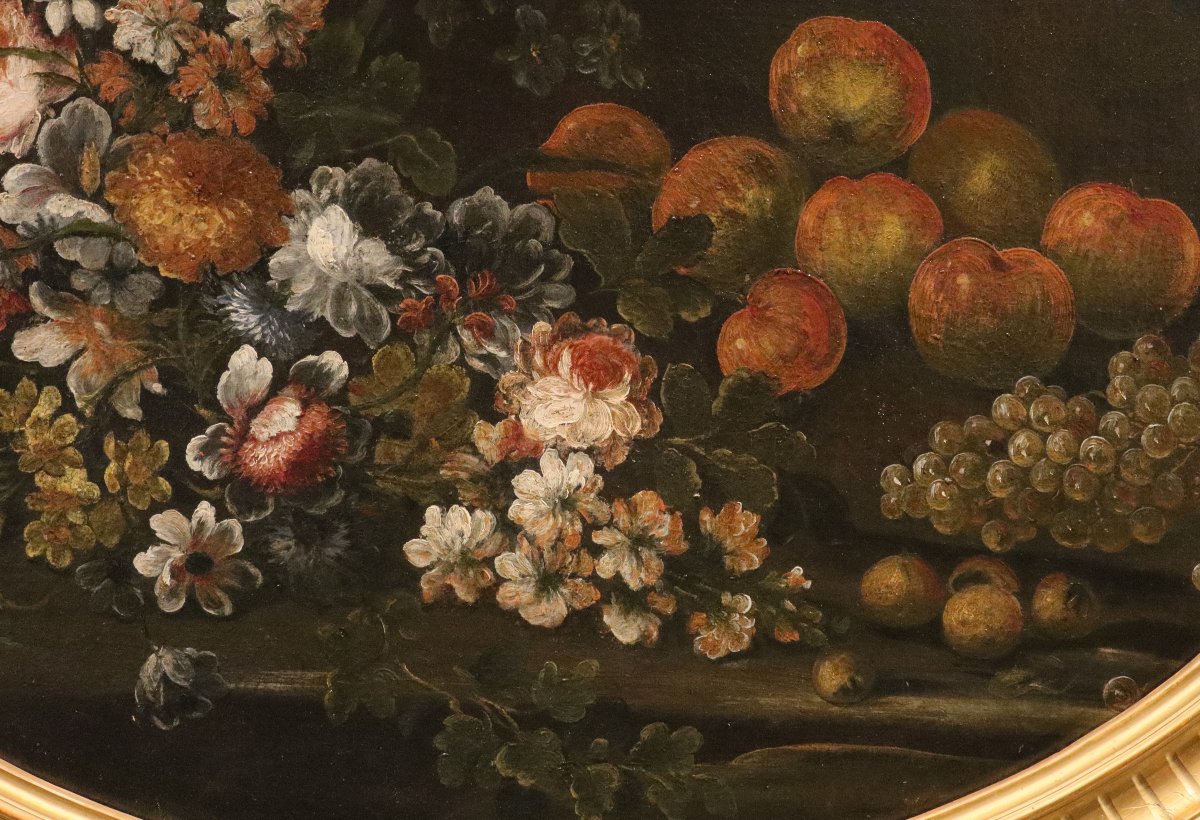
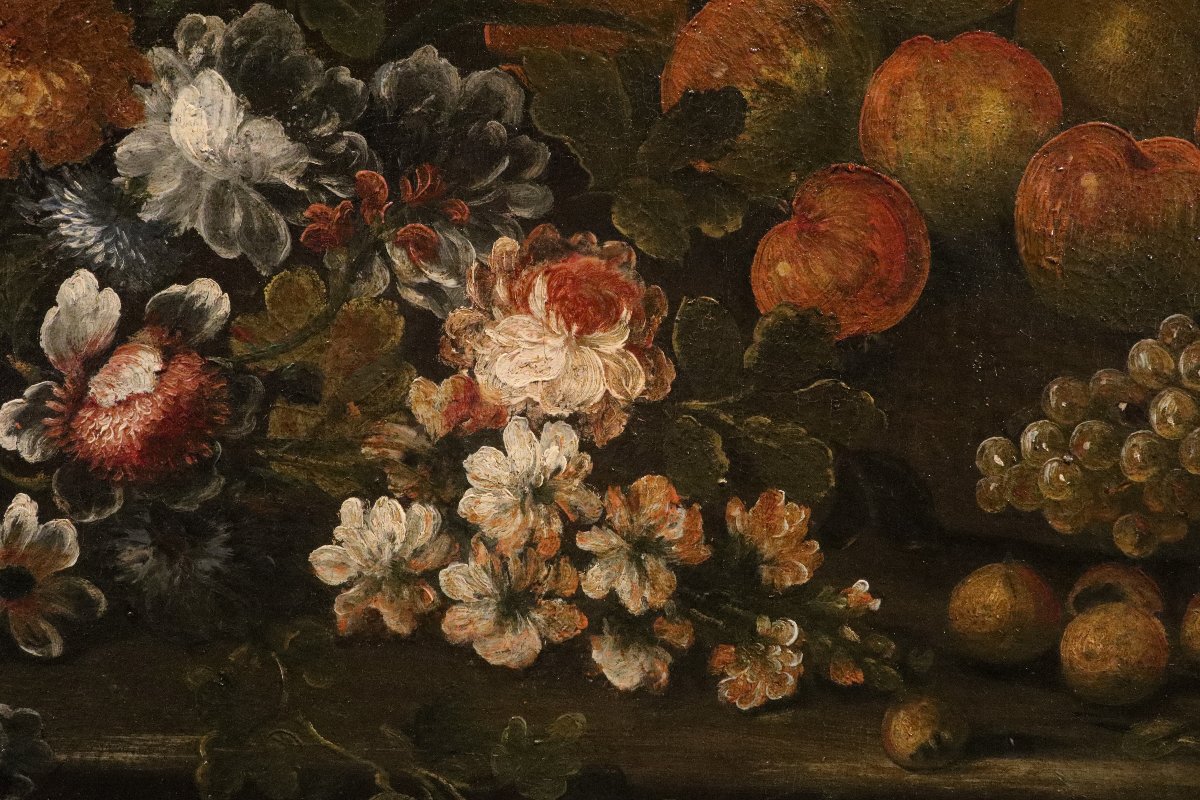
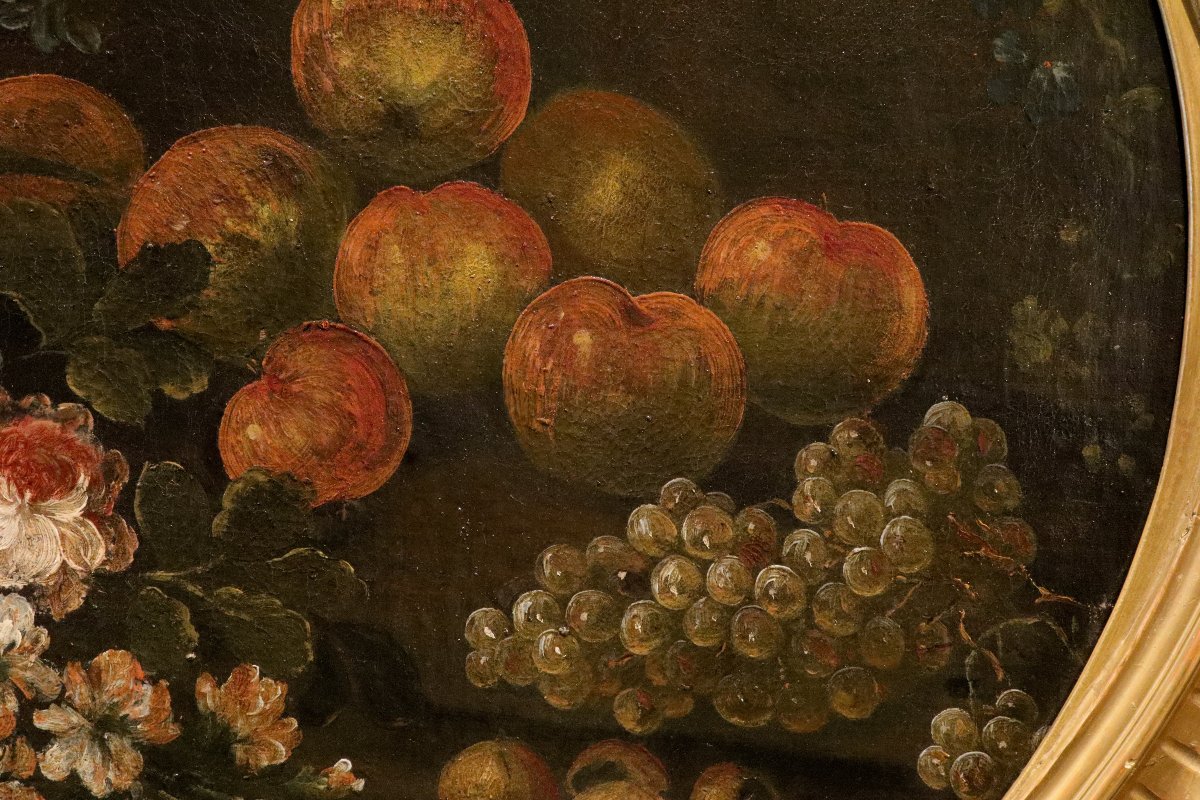
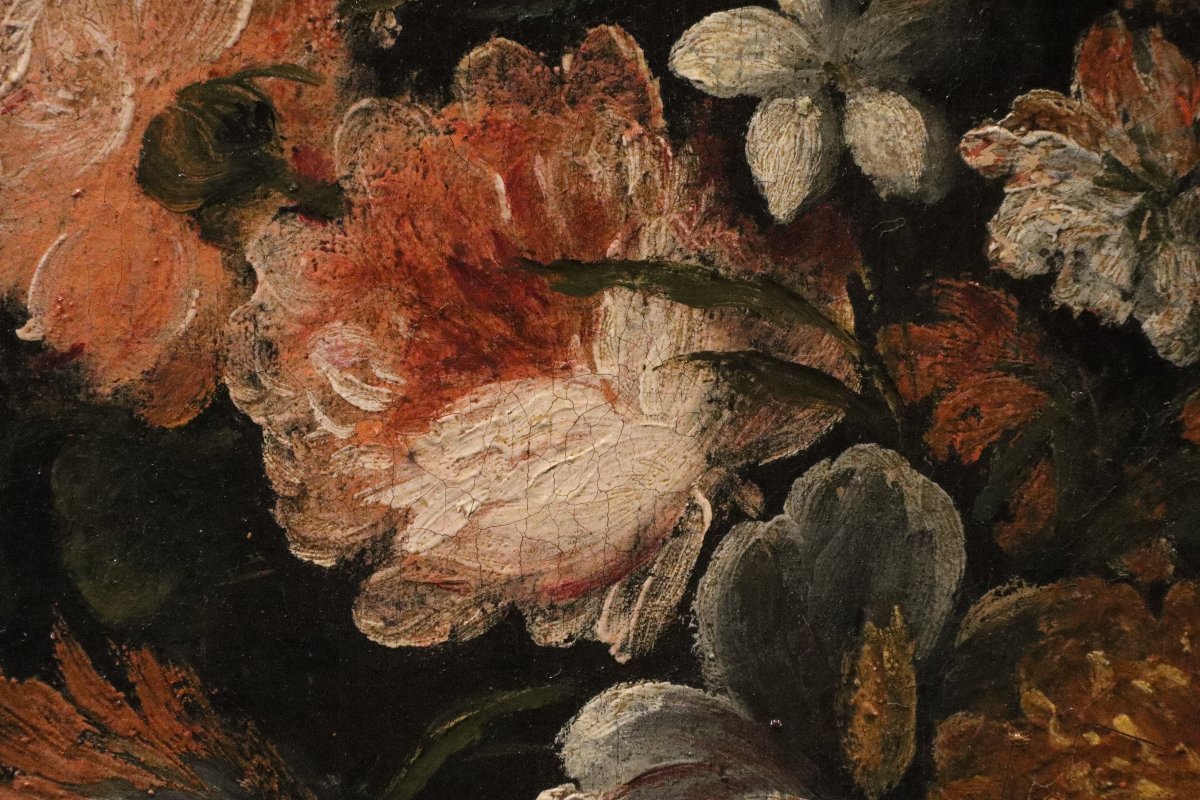
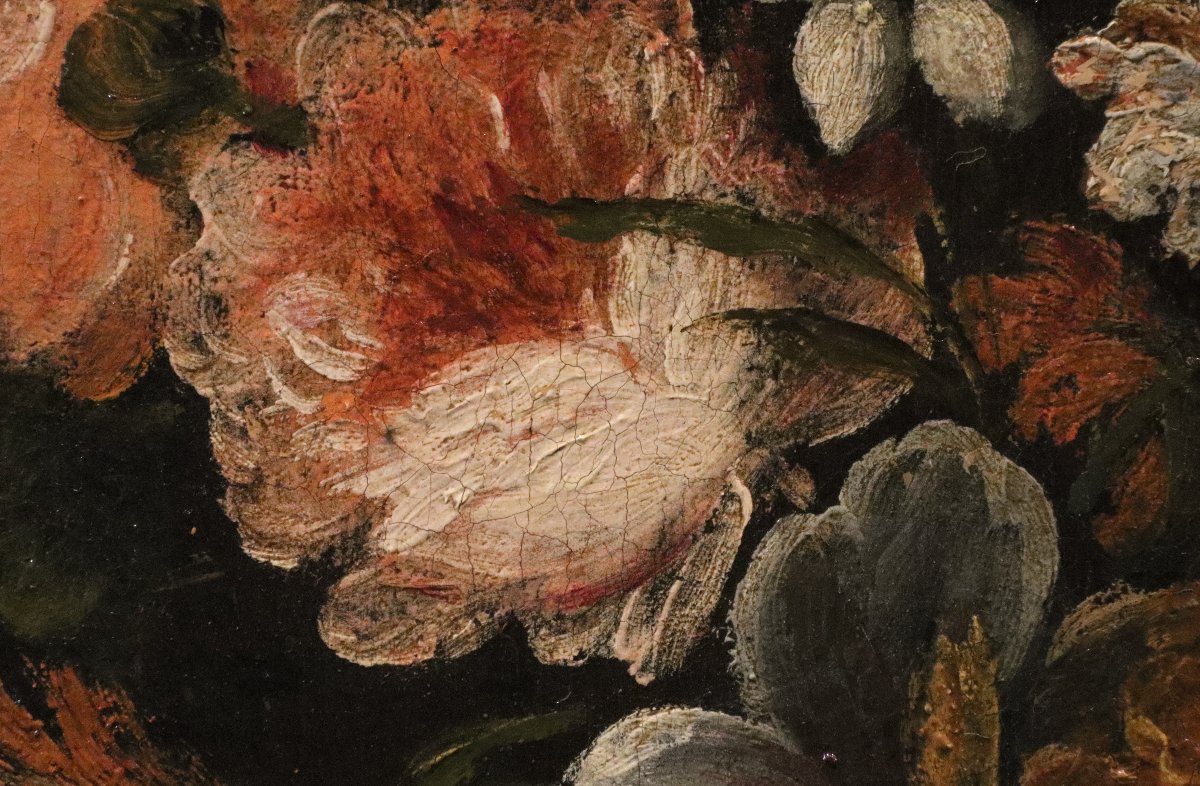
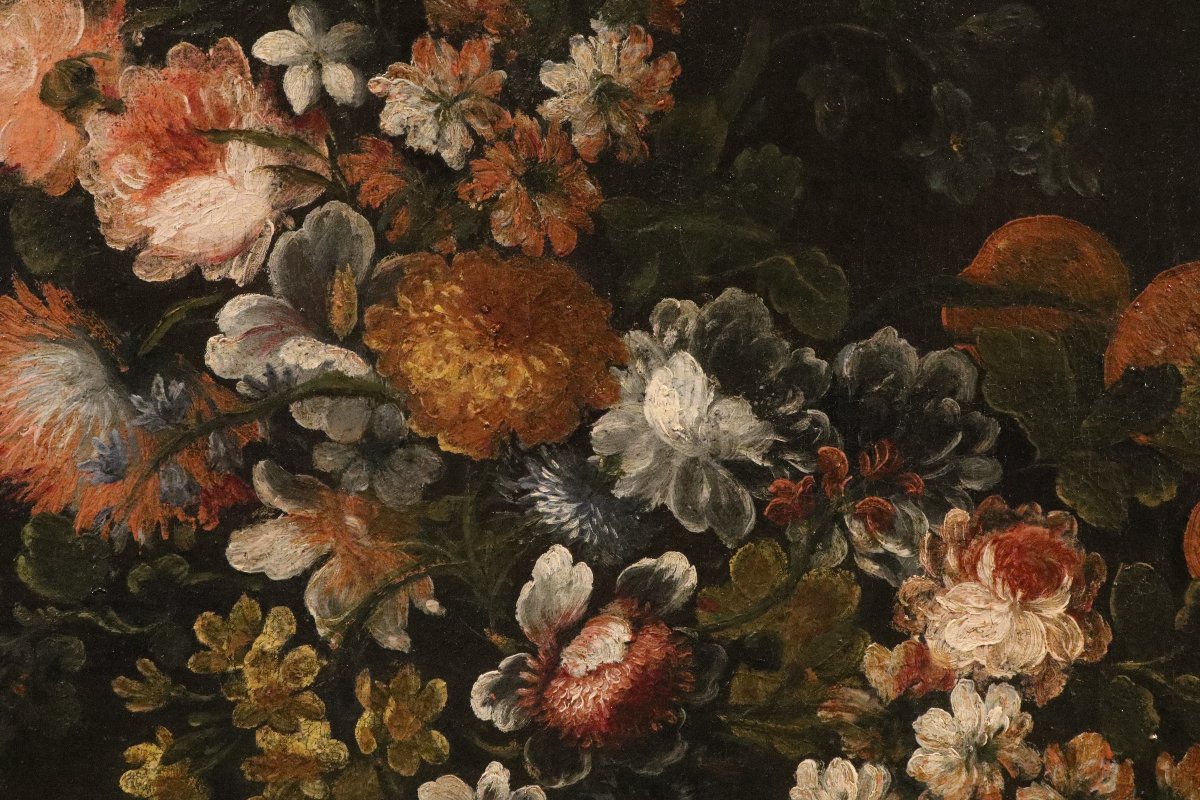
The painting is a splendid Baroque still life, set within a pleasing oval frame, featuring a rich arrangement of flowers arranged to fill the entire pictorial surface, among which carnations stand out, roses in shades of pink and white, small wildflowers, and bluebells. On the right side, the scene is enriched by a selection of fruit placed alongside the floral arrangement, including clearly visible peaches or small apples, bunches of white and black grapes, and other small fruits resembling medlars.
The work is attributed to the Piacenza-born painter Felice Boselli (1650–1732) by Prof. Ferdinando Arisi, an art historian and the foremost expert on the artist, who has dedicated fundamental studies and research to him.
The style of Boselli’s floral still lifes fully reflects the sensibility of the Emilian and Lombard Baroque, blending a strong naturalistic rendering with the decorative demands of the major aristocratic patrons in the Parma and Piacenza areas.
Although the artist is best known for his rustic markets, game pantries, and kitchen scenes overflowing with meat and fish, his depictions of flowers and fruit reveal highly distinctive and recognizable stylistic traits.
First and foremost, the flowers in Boselli’s works are almost always conceived as an inseparable pair with fruit, a union that celebrates the earth’s fertility and the exuberance of nature. And these compositions were often arranged within specific geometric formats (ovals or octagons), custom-designed to integrate into the wood paneling or friezes of ducal salons, such as those at the Rocca di Fontanellato or Soragna Castle, where he worked on a regular basis.
In the monograph that Ferdinando Arisi dedicated to the painter, titled “Still Life Between Milan and Parma in the Baroque Era: Felice Boselli, Corrections and Additions,” we can easily find comparisons with our painting. In particular, on page 70 (illustration 200), we see a still life with a similar subject, which the critic dates to the same period (circa 1690) because the same compositional style and the same composite brushstrokes used to render the flower petals—particularly those of the roses—are evident. Another work, on page 198 (illustration 254), is a still life from a private collection in which the monochromatic flowers set against the dark background are similar to those seen in our still life of flowers and fruit.
Last but not least, a defining feature of his works is his realistic and immediate approach, far removed from the idealized perfection or geometric symmetry of the Flemish masters: the flowers, therefore, are never stiffly arranged in monumental vases but are portrayed with an almost “spontaneous” freshness: cut, resting haphazardly on stone surfaces, or freely mixed with seasonal leaves and fruits.
ADDITIONAL INFORMATION:
The painting is framed in a beautiful gilded wooden frame and is sold with a certificate of authenticity and a descriptive iconographic sheet.
We handle and arrange the shipping of purchased works, both within Italy and internationally, through professional and insured carriers.
Please contact us for any information; we will be happy to assist you.
Follow us on:
https://www.instagram.com/galleriacastelbarco/?hl=it
https://www.facebook.com/galleriacastelbarco/
Still Life with Flowers and Fruit
Oil on oval canvas
73 x 96 cm.
In a pleasing oval gilded frame with a beaded design, 95 x 122 cm.
The painting is accompanied by a critical description by Prof. Ferdinando Arisi
Reference bibliography: Ferdinando Arisi, “Still Life Between Milan and Parma in the Baroque Era. Felice Boselli, Corrections and Additions” (Edizioni TIP.LE.CO., 1995)
The painting is a splendid Baroque still life, set within a pleasing oval frame, featuring a rich arrangement of flowers arranged to fill the entire pictorial surface, among which carnations stand out, roses in shades of pink and white, small wildflowers, and bluebells. On the right side, the scene is enriched by a selection of fruit placed alongside the floral arrangement, including clearly visible peaches or small apples, bunches of white and black grapes, and other small fruits resembling medlars.
The work is attributed to the Piacenza-born painter Felice Boselli (1650–1732) by Prof. Ferdinando Arisi, an art historian and the foremost expert on the artist, who has dedicated fundamental studies and research to him.
The style of Boselli’s floral still lifes fully reflects the sensibility of the Emilian and Lombard Baroque, blending a strong naturalistic rendering with the decorative demands of the major aristocratic patrons in the Parma and Piacenza areas.
Although the artist is best known for his rustic markets, game pantries, and kitchen scenes overflowing with meat and fish, his depictions of flowers and fruit reveal highly distinctive and recognizable stylistic traits.
First and foremost, the flowers in Boselli’s works are almost always conceived as an inseparable pair with fruit, a union that celebrates the earth’s fertility and the exuberance of nature. And these compositions were often arranged within specific geometric formats (ovals or octagons), custom-designed to integrate into the wood paneling or friezes of ducal salons, such as those at the Rocca di Fontanellato or Soragna Castle, where he worked on a regular basis.
In the monograph that Ferdinando Arisi dedicated to the painter, titled “Still Life Between Milan and Parma in the Baroque Era: Felice Boselli, Corrections and Additions,” we can easily find comparisons with our painting. In particular, on page 70 (illustration 200), we see a still life with a similar subject, which the critic dates to the same period (circa 1690) because the same compositional style and the same composite brushstrokes used to render the flower petals—particularly those of the roses—are evident. Another work, on page 198 (illustration 254), is a still life from a private collection in which the monochromatic flowers set against the dark background are similar to those seen in our still life of flowers and fruit.
Last but not least, a defining feature of his works is his realistic and immediate approach, far removed from the idealized perfection or geometric symmetry of the Flemish masters: the flowers, therefore, are never stiffly arranged in monumental vases but are portrayed with an almost “spontaneous” freshness: cut, resting haphazardly on stone surfaces, or freely mixed with seasonal leaves and fruits.
ADDITIONAL INFORMATION:
The painting is framed in a beautiful gilded wooden frame and is sold with a certificate of authenticity and a descriptive iconographic sheet.
We handle and arrange the shipping of purchased works, both within Italy and internationally, through professional and insured carriers.
Please contact us for any information; we will be happy to assist you.
Follow us on:
https://www.instagram.com/galleriacastelbarco/?hl=it
https://www.facebook.com/galleriacastelbarco/
7 700 €
Period: 17th century
Style: Louis 15th - Transition
Condition: Excellent condition
Material: Oil painting
Width: encadré 122 cm.
Height: encadré 95 cm.
Reference (ID): 1828793
Availability: In stock
Print