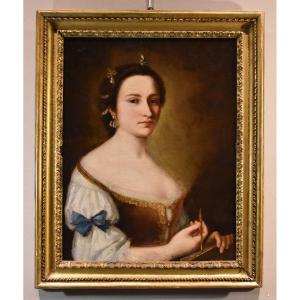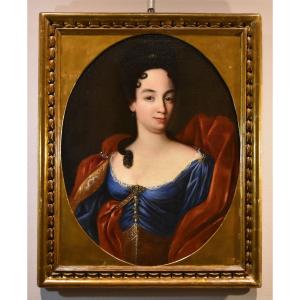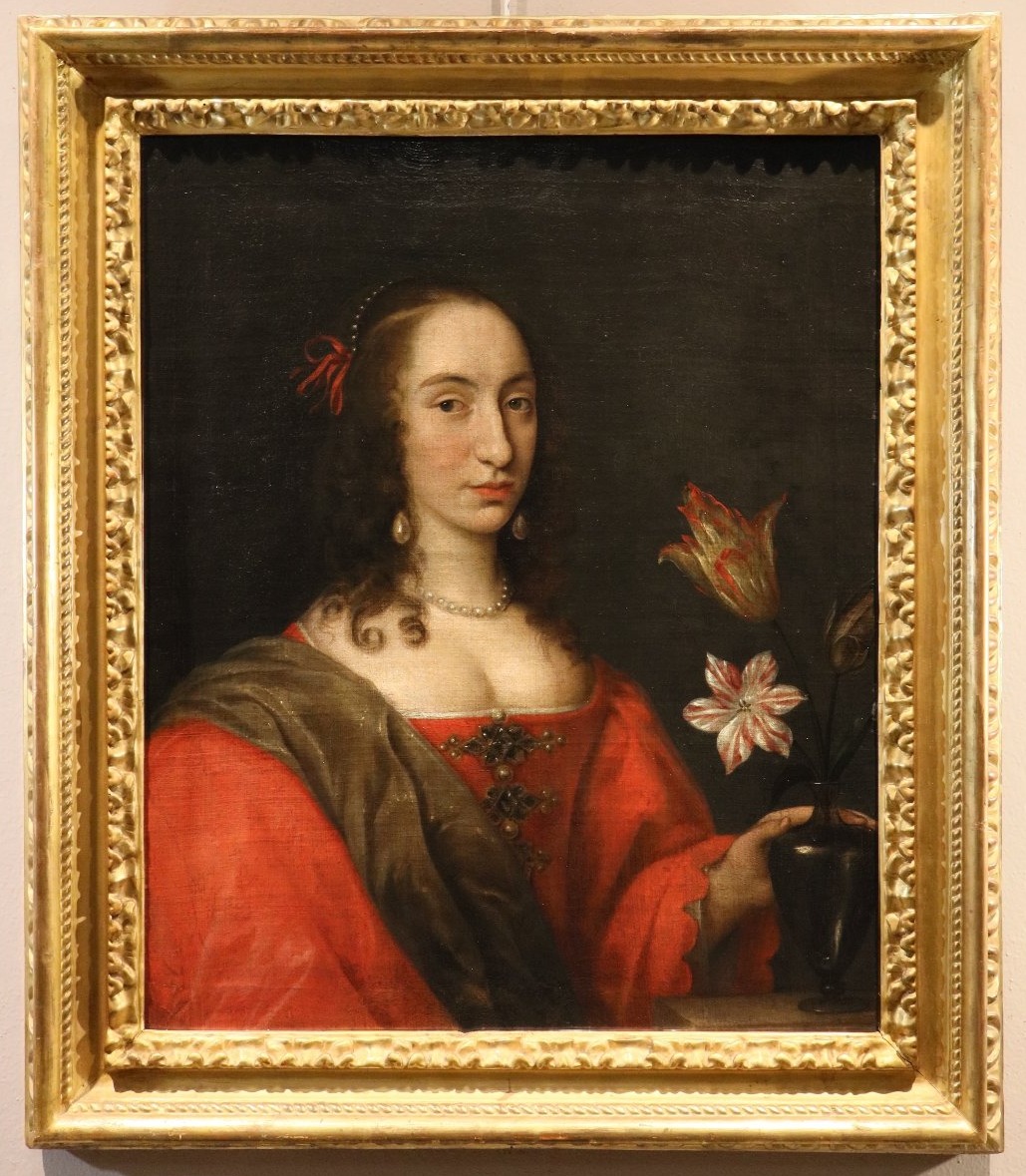


Willem Van Honthorst (utrecht, 1594–1666) Portrait Of Louise Henriette Of Orange
Artist: Willem Van Honthorst (utrecht, 1594 – Utrecht, 1666) - Expertise Professeur Emilio Negro (bologne)
Willem van Honthorst (Utrecht, 1594 – Utrecht, 1666)
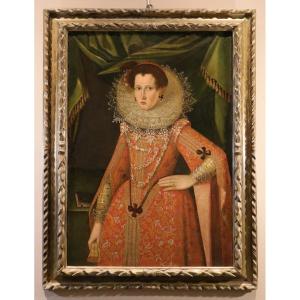
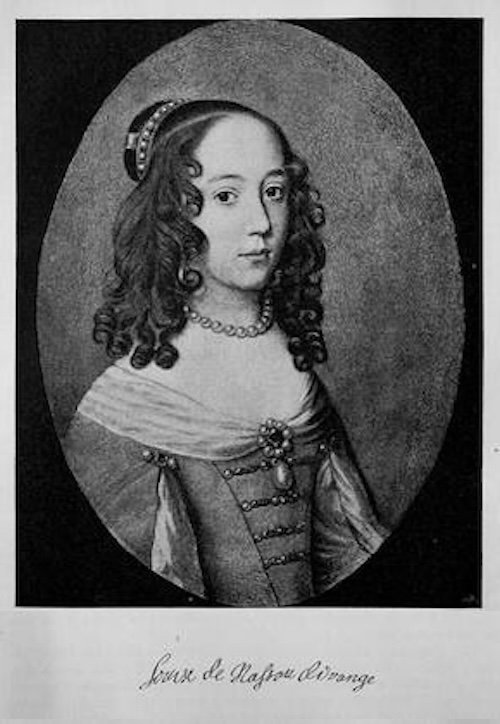
Portrait of Louise Henrietta of Orange (The Hague, 1627 – Cölln, 1667)
Countess of Nassau and Electress of Brandenburg
Oil on canvas
74 x 60 cm. – Framed: 90 x 78 cm.
Work accompanied by an expert report prepared by Prof. Emilio Negro (Bologna)
PAINTING DETAILS (CLICK HERE)
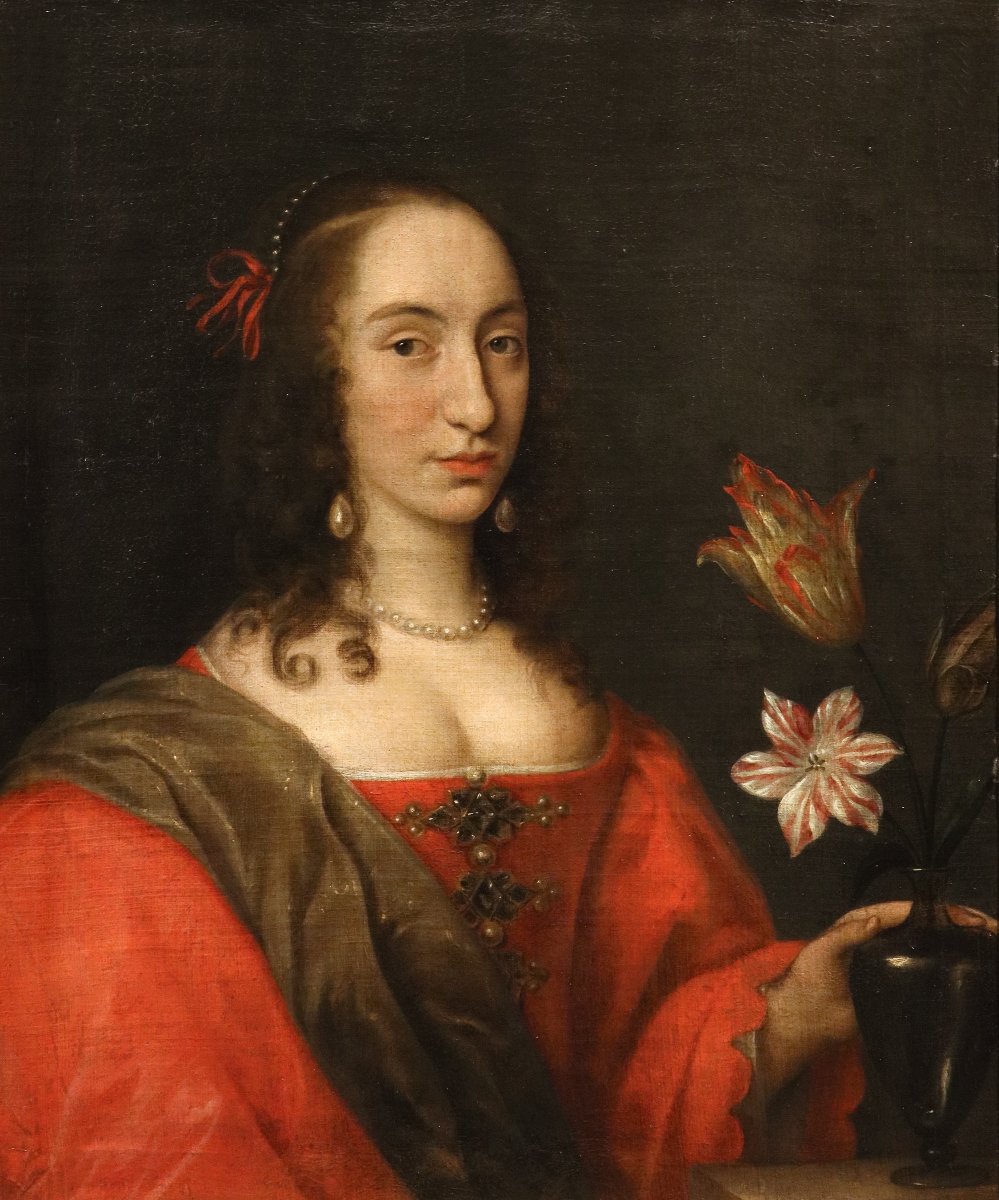
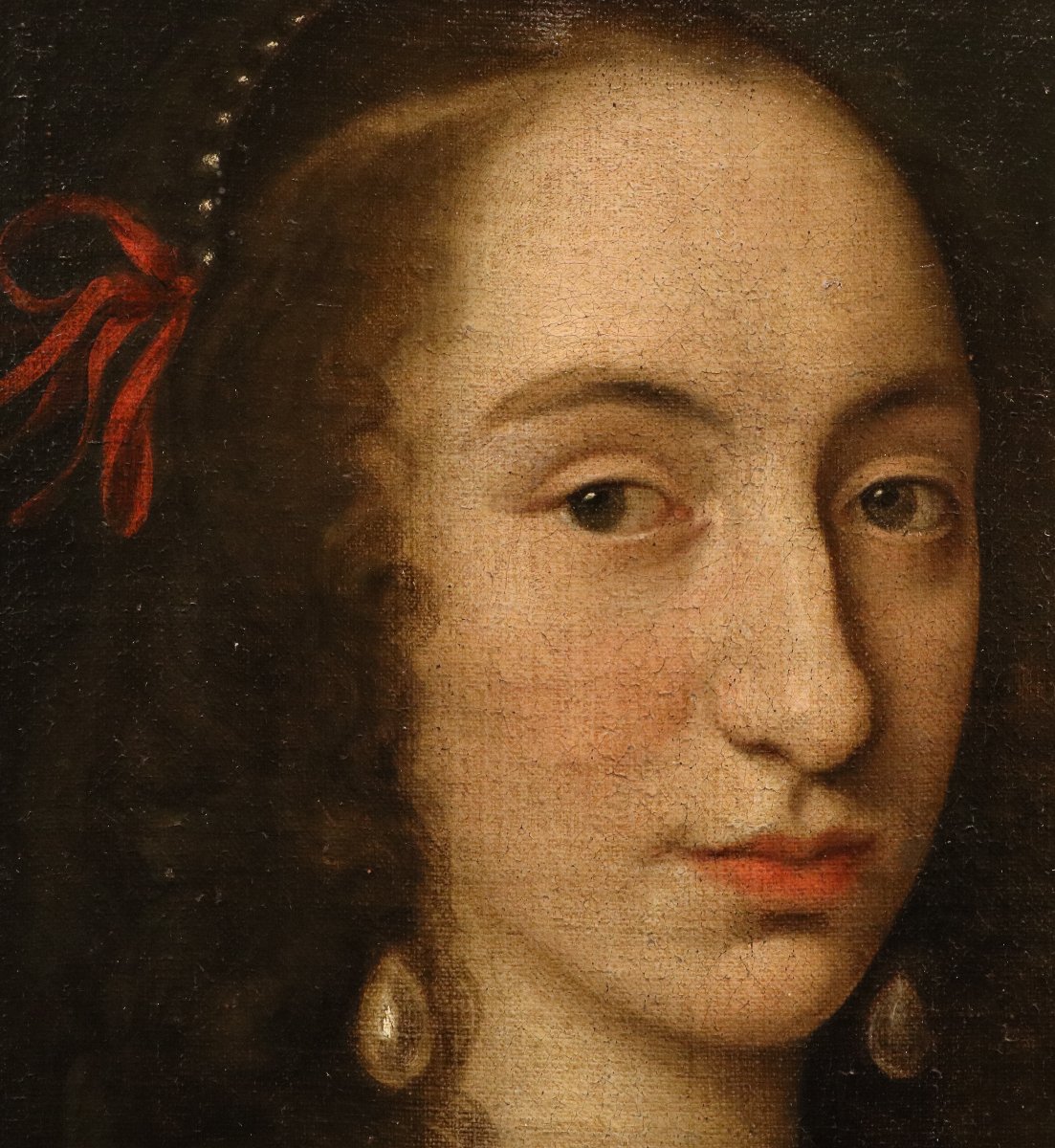
This exquisite portrait, depicting a young lady of the high aristocracy, is a true masterpiece of elegance and charm, capable of capturing the viewer’s gaze and transporting us directly to the heart of Flemish portraiture from the height of the 17th century.
More specifically, it is a work attributed to the Dutch painter Willem van Honthorst (Utrecht, 1594 – Utrecht, 1666) which, based on comparisons with other portraits of the period, is believed to depict Princess Louise of Holland in the Palatinate (1622–1709), Countess of Nassau, and, following her marriage to Frederick William I of Brandenburg, Electress Consort of Brandenburg.
As a painter for the German court in Berlin, Willem van Honthorst worked on behalf of the countess for seventeen years, from 1647 to 1664, creating numerous portraits of the ruler and her family circle. Portraiture became a valuable means of maintaining the support of relatives and patrons, and works such as this one were distributed throughout Europe.
The style of his portraits—which we can clearly admire in the painting under consideration here—gradually moved away from the realism of international Caravaggism (typical of the Utrecht School) to embrace a more composed, aristocratic, and idealized style.
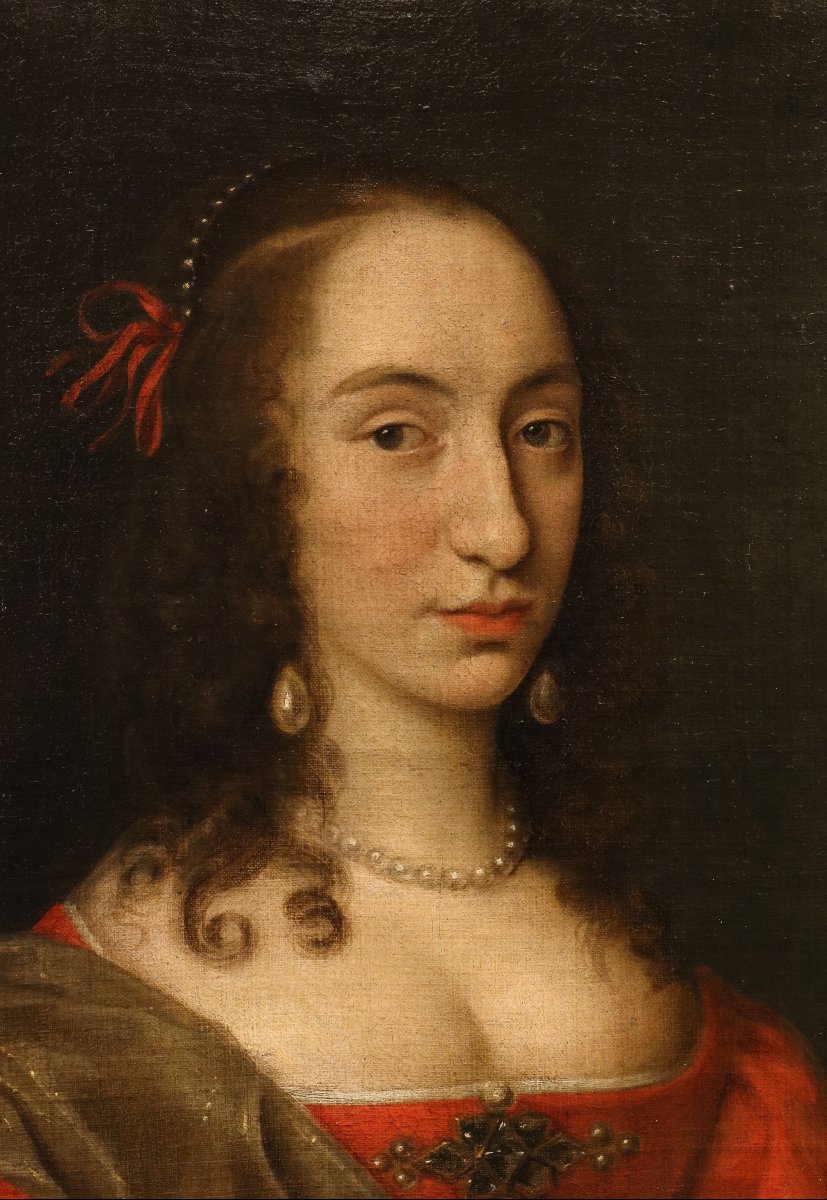
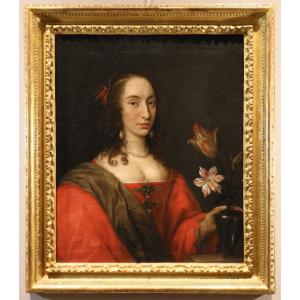
The canvas is dominated by the magnetic figure of the noblewoman, whose face—of an almost porcelain-like purity—emerges from a dark, deep background with extraordinary delicacy. Her large, intense eyes gaze at the viewer with proud aristocratic elegance, striking a perfect balance between the innocence of youth and an awareness of her social standing.
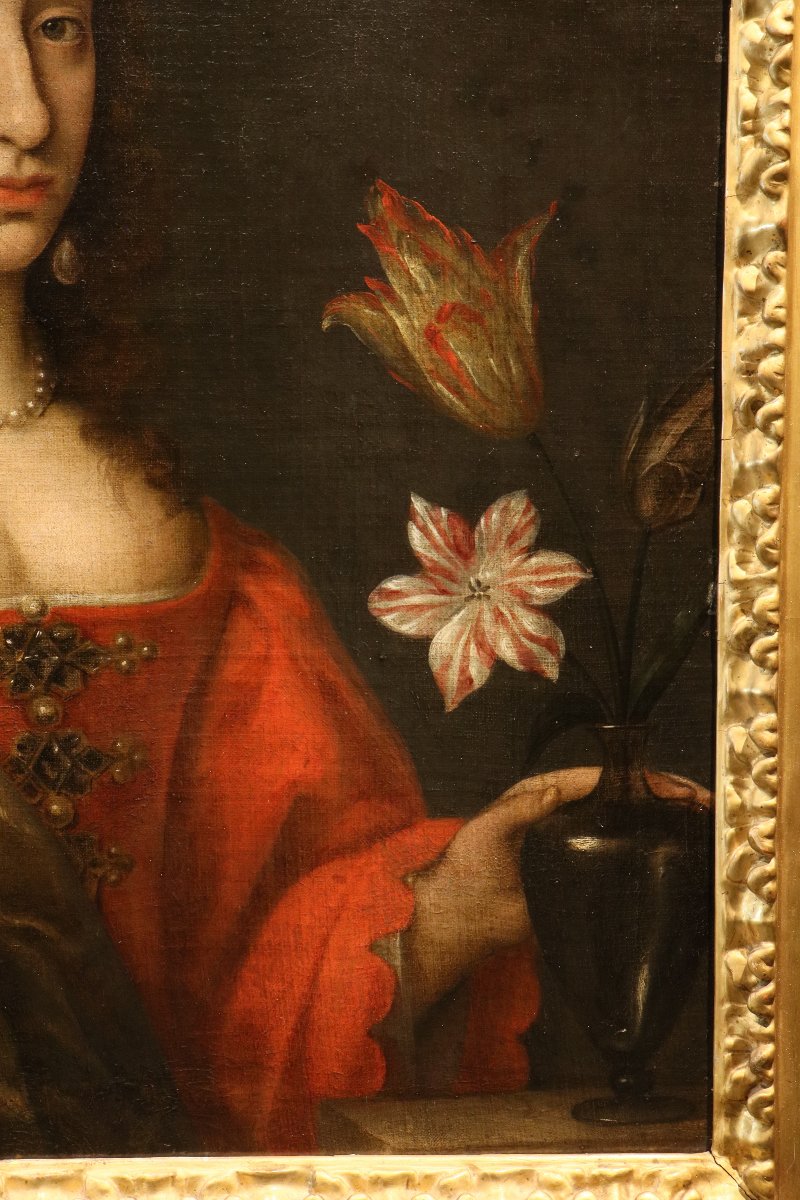
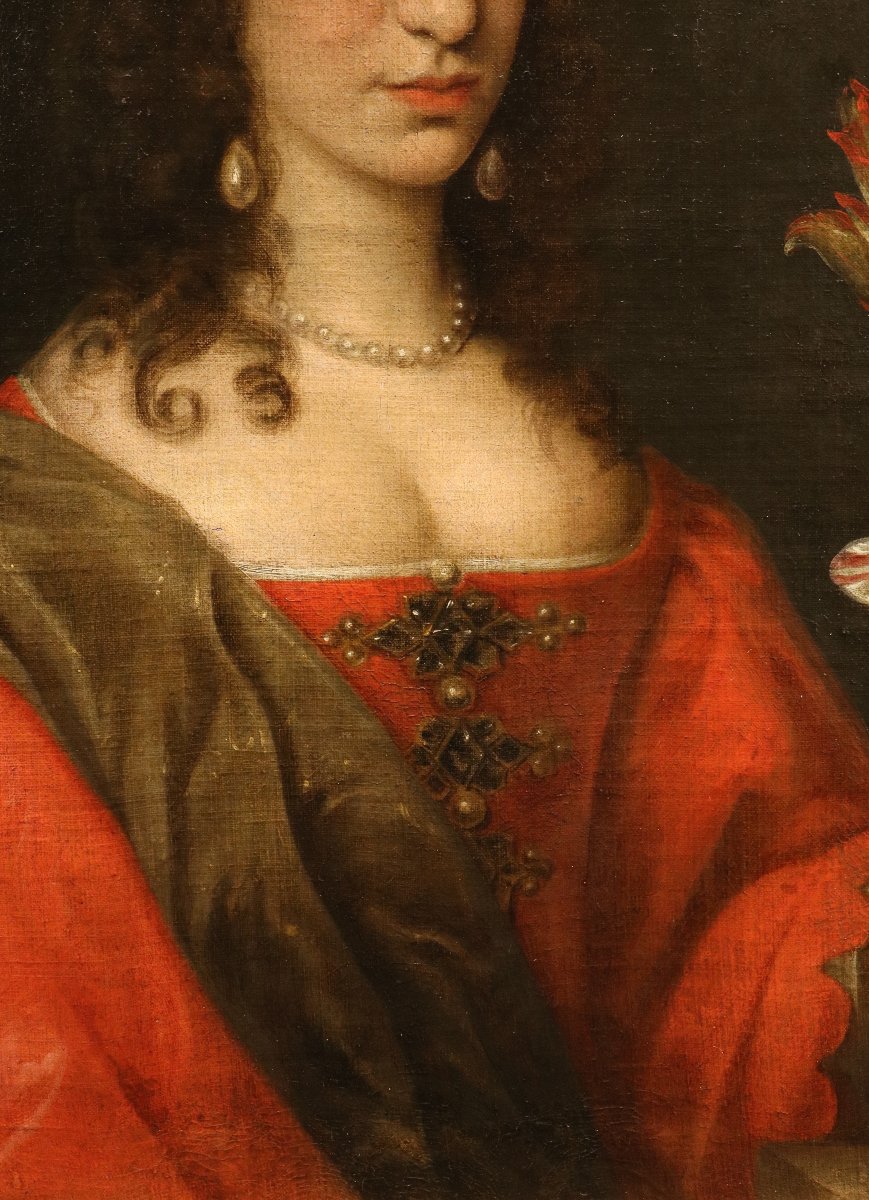
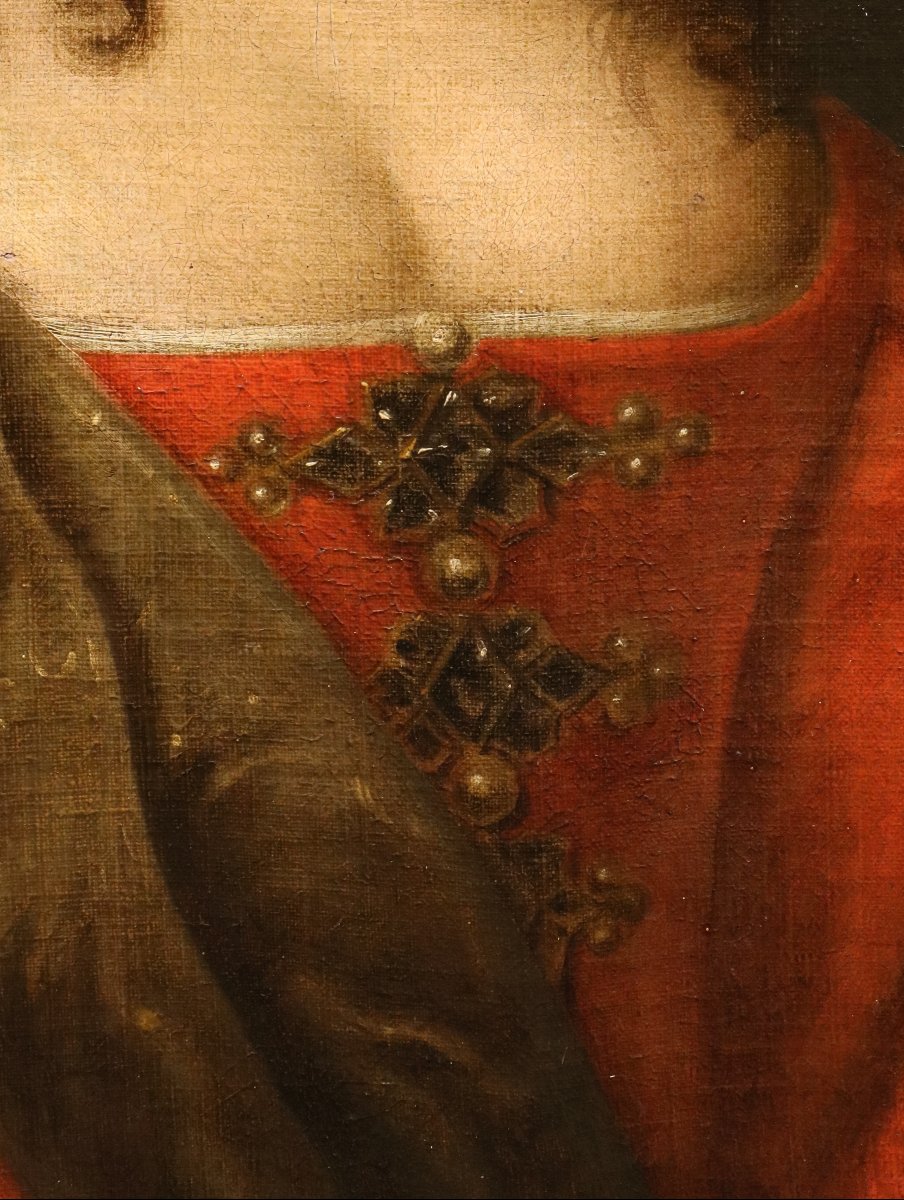
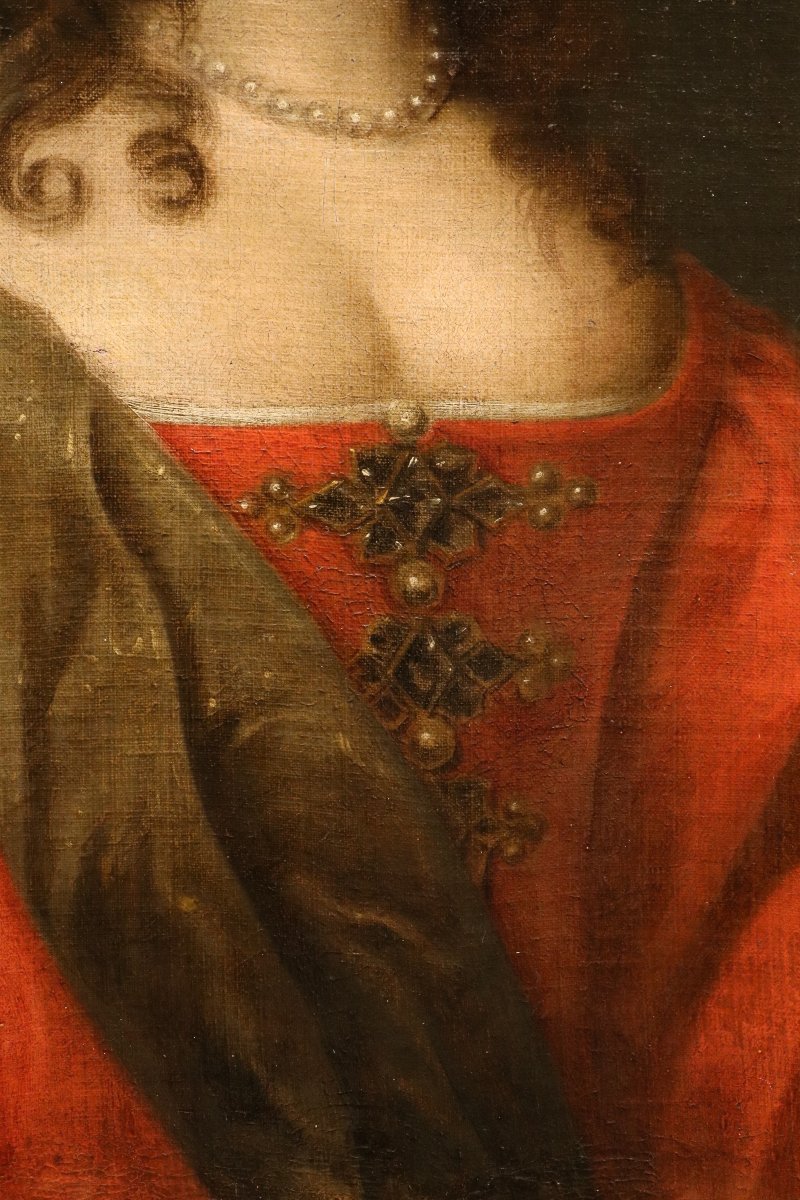
Every single detail of her attire is a celebration of luxury and fine craftsmanship, such as the sumptuous gown featuring a wide décolleté neckline in a vibrant bright red, paired with a dark stole draped over her shoulder and embellished with brooches set with precious stones that run along the bodice, accentuating its regal elegance.
The exquisite details are equally magnificent, including the large teardrop-shaped pearl earrings that stand out against her chestnut curls, echoed by the splendid necklace adorning her neck and her hair styled in curls embellished with a red ribbon.
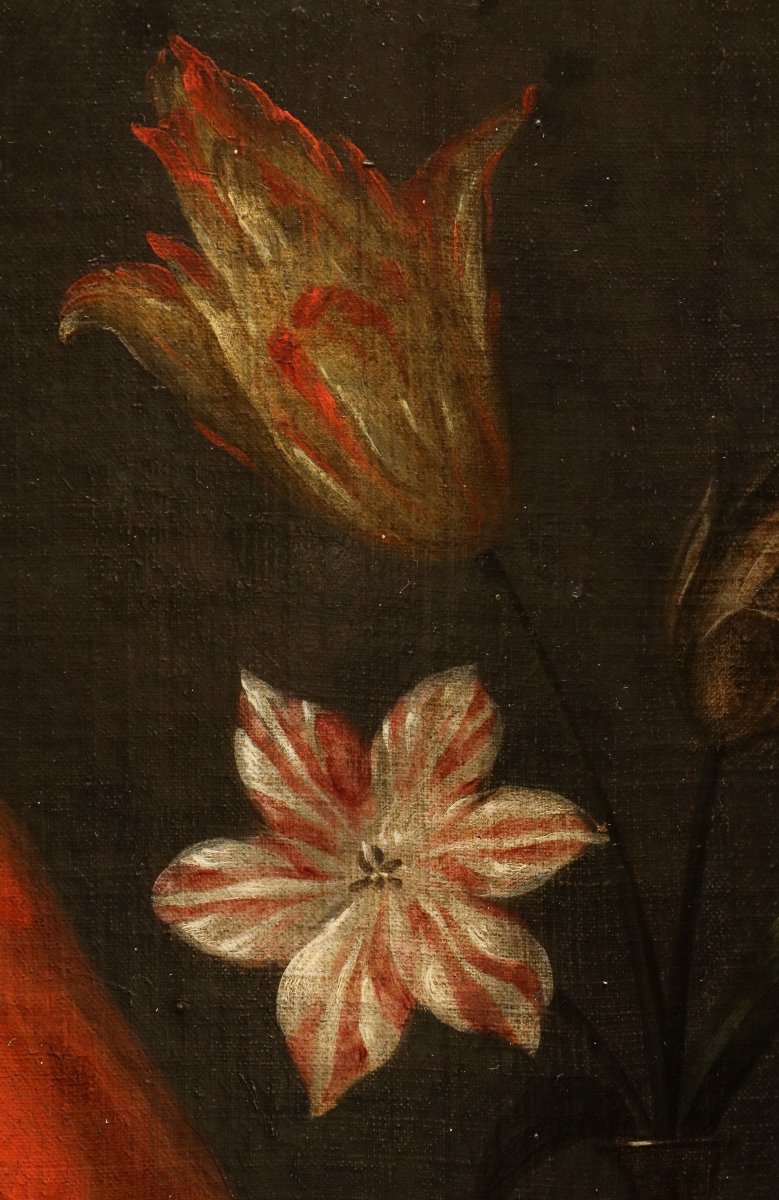
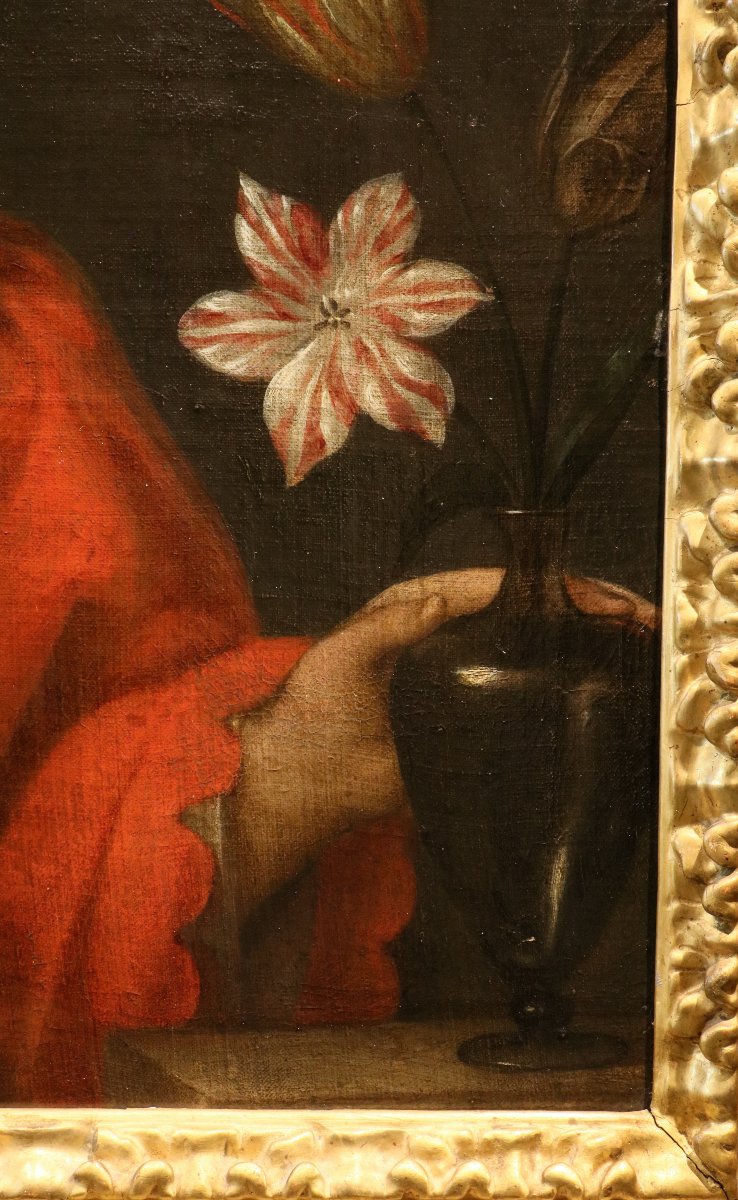
In her hands, the young woman holds a dark glass vase with studied grace; inside are striped tulips—a common iconographic device in Dutch Golden Age painting—which introduces a vital, poetic, and almost fragrant quality to the composition. It is also a recurring symbolic element in Baroque portraiture linked to vanity, ephemeral beauty, or specific wedding contexts.
ADDITIONAL INFORMATION:
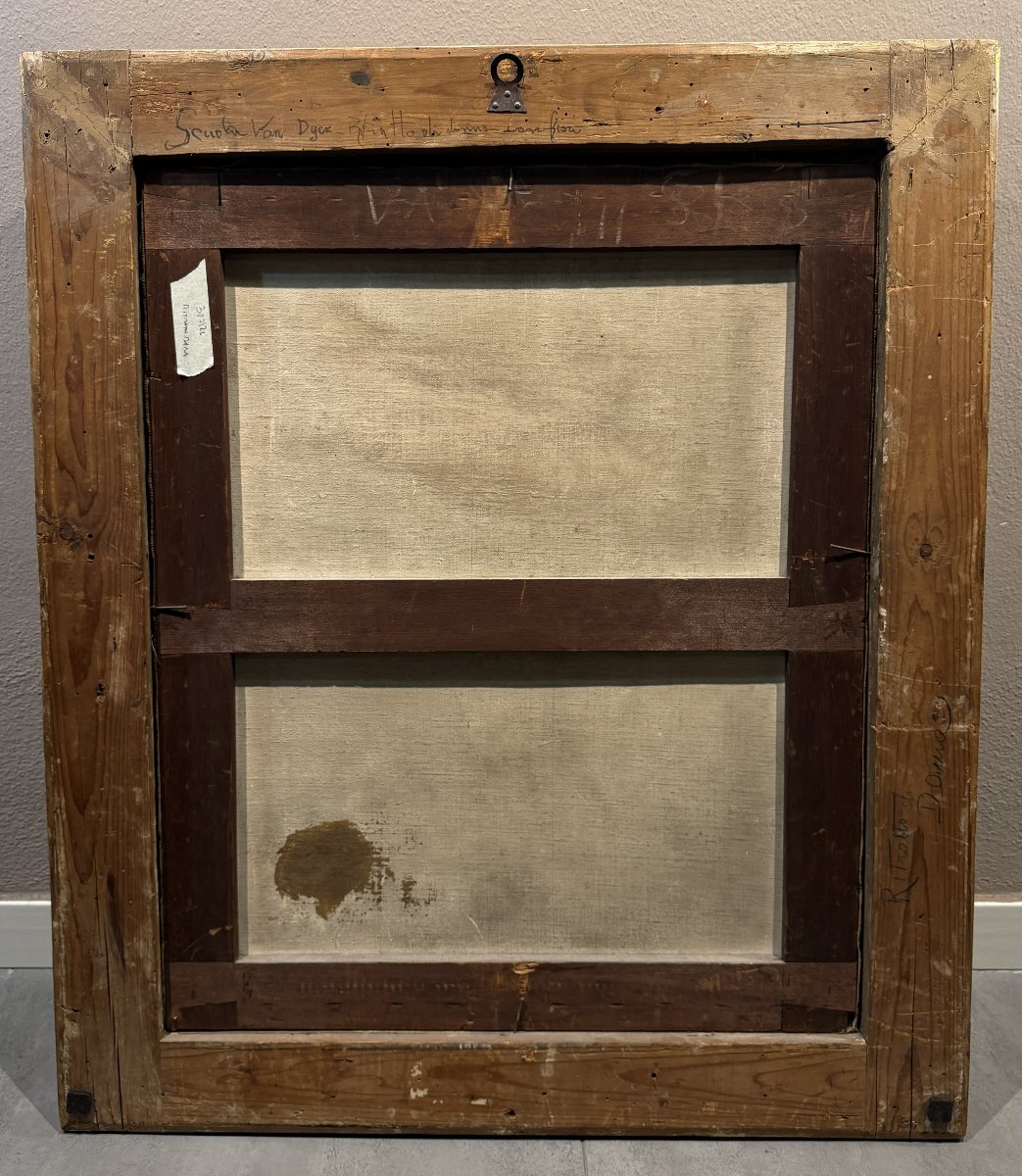
The painting is framed in a beautiful gilded wooden frame and is sold with a certificate of authenticity and a descriptive iconographic sheet.
We handle and arrange shipping for purchased works, both within Italy and internationally, through professional, insured carriers.
Please contact us for any information; we will be happy to assist you.
Follow us on:
https://www.instagram.com/galleriacastelbarco/?hl=it
https://www.facebook.com/galleriacastelbarco/
9 800 €
Period: 17th century
Style: Louis 15th - Transition
Condition: Good condition
Material: Oil painting
Width: encadré 90 cm.
Height: encadré 78 cm.
Reference (ID): 1839279
Availability: In stock
Print