


Anton Raphael Mengs (aussig, 1728 – Rome, 1779), Portrait Of A Young Girl With A Book
Artist: Anton Raphael Mengs (aussig, 1728 - Rome, 1779) Atelier
Anton Raphael Mengs (Aussig, 1728 – Rome, 1779) Workshop
Portrait of a Young Girl with a Book
oil on canvas
64 x 49 cm. – framed 77 x 63 cm.
Complete details of the work (click HERE)
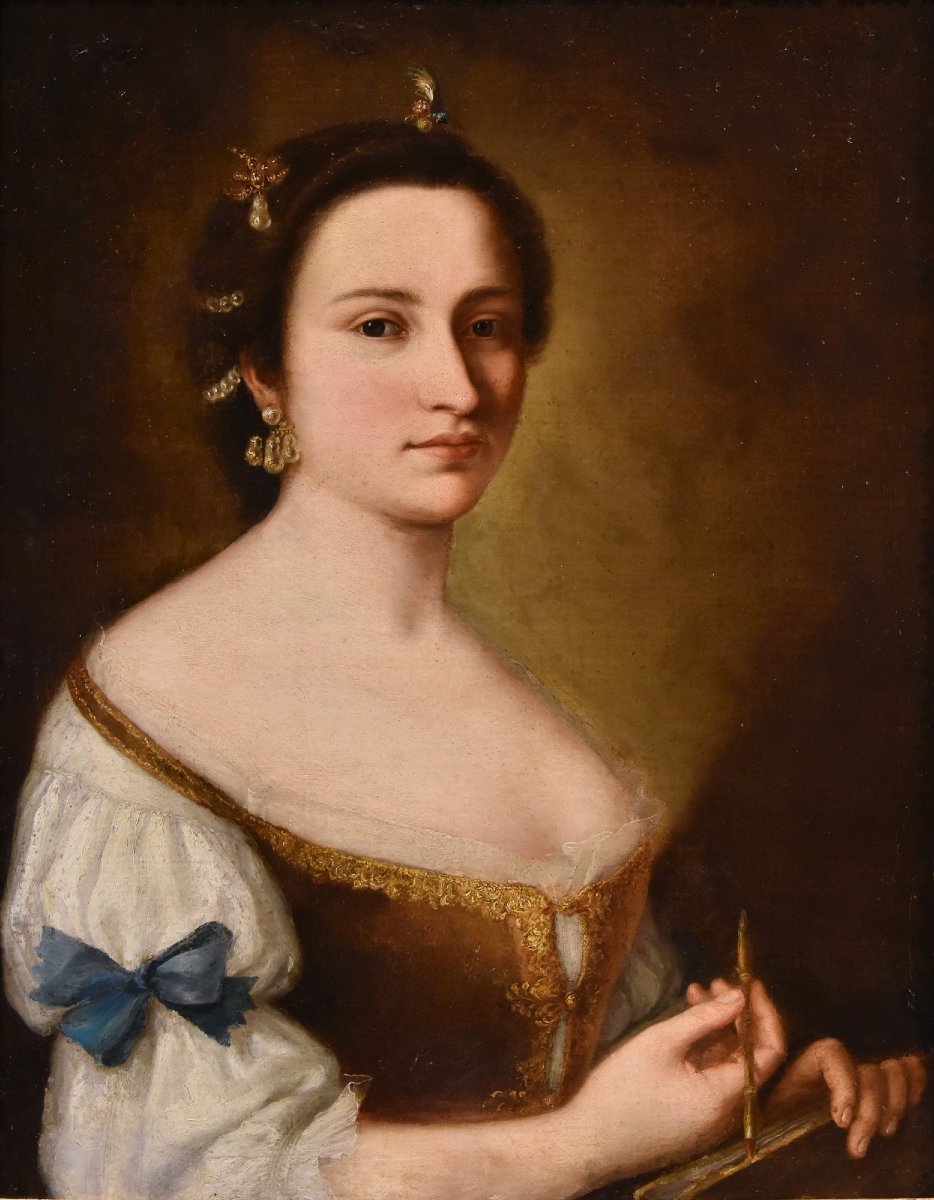
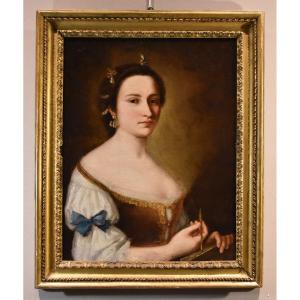
The work, depicting a charming portrait of a young woman, is attributed to a Neoclassical painter of the Roman school active in the 18th century within the circle of Anton Raphael Mengs (Aussig, 1728 – Rome, 1779).
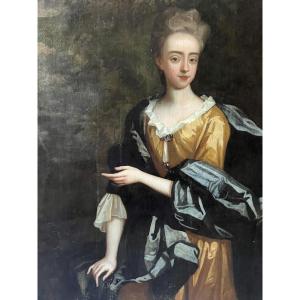
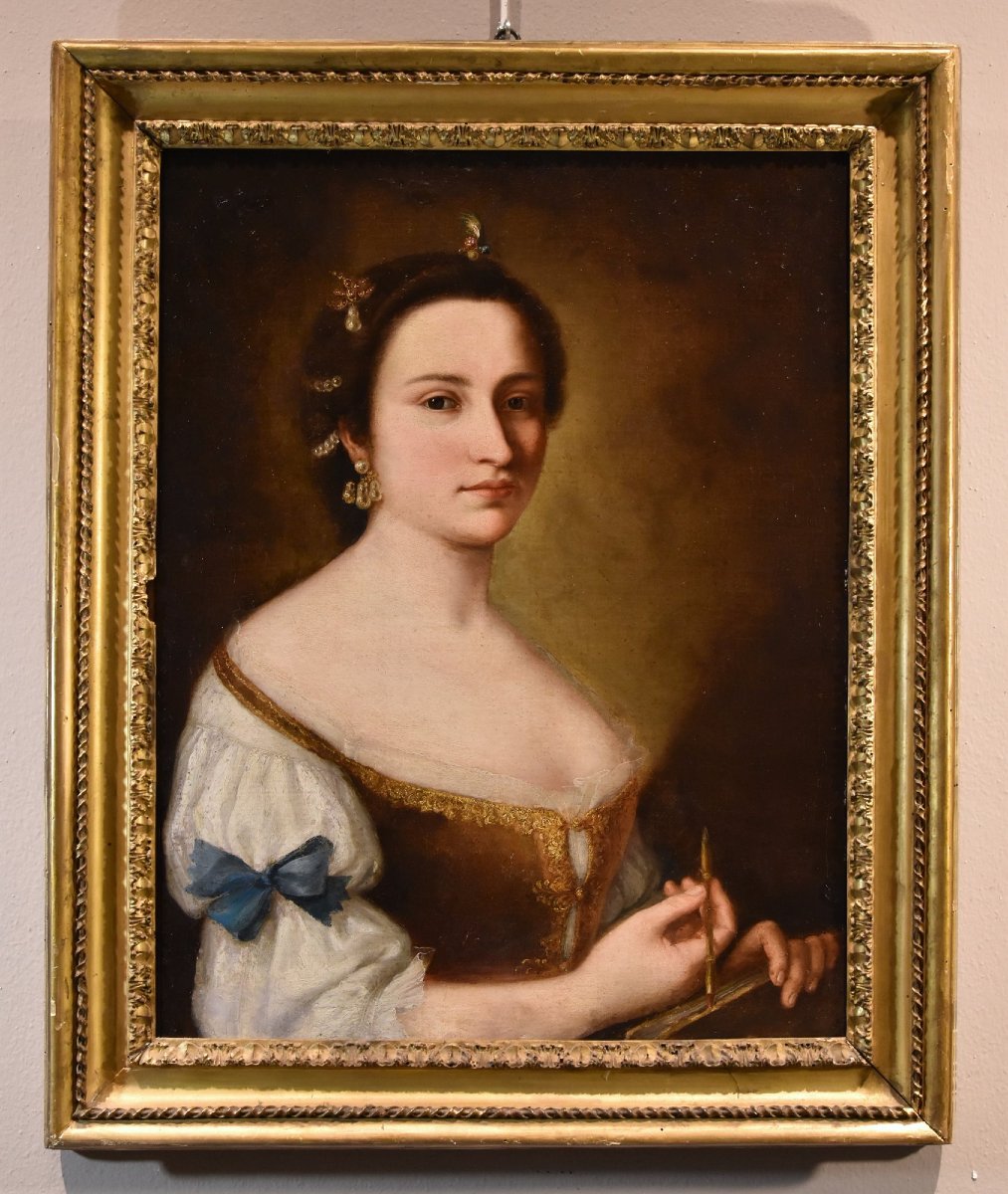
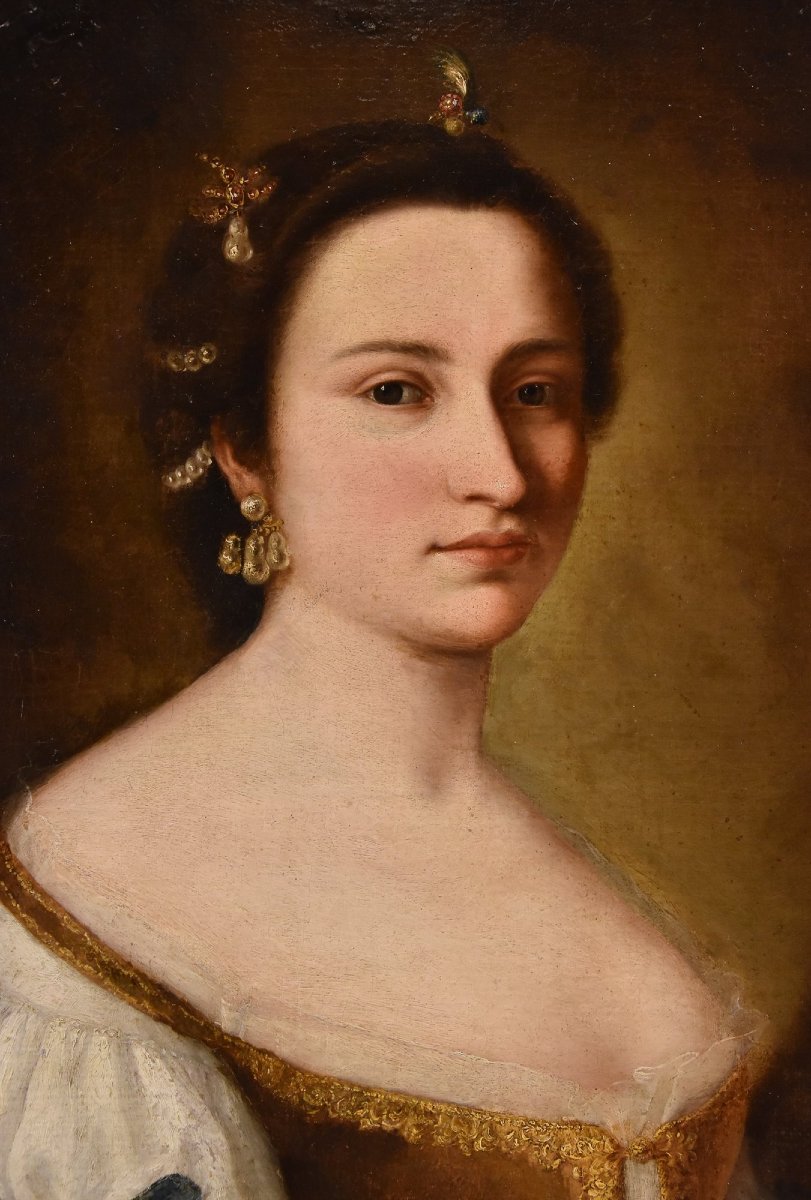
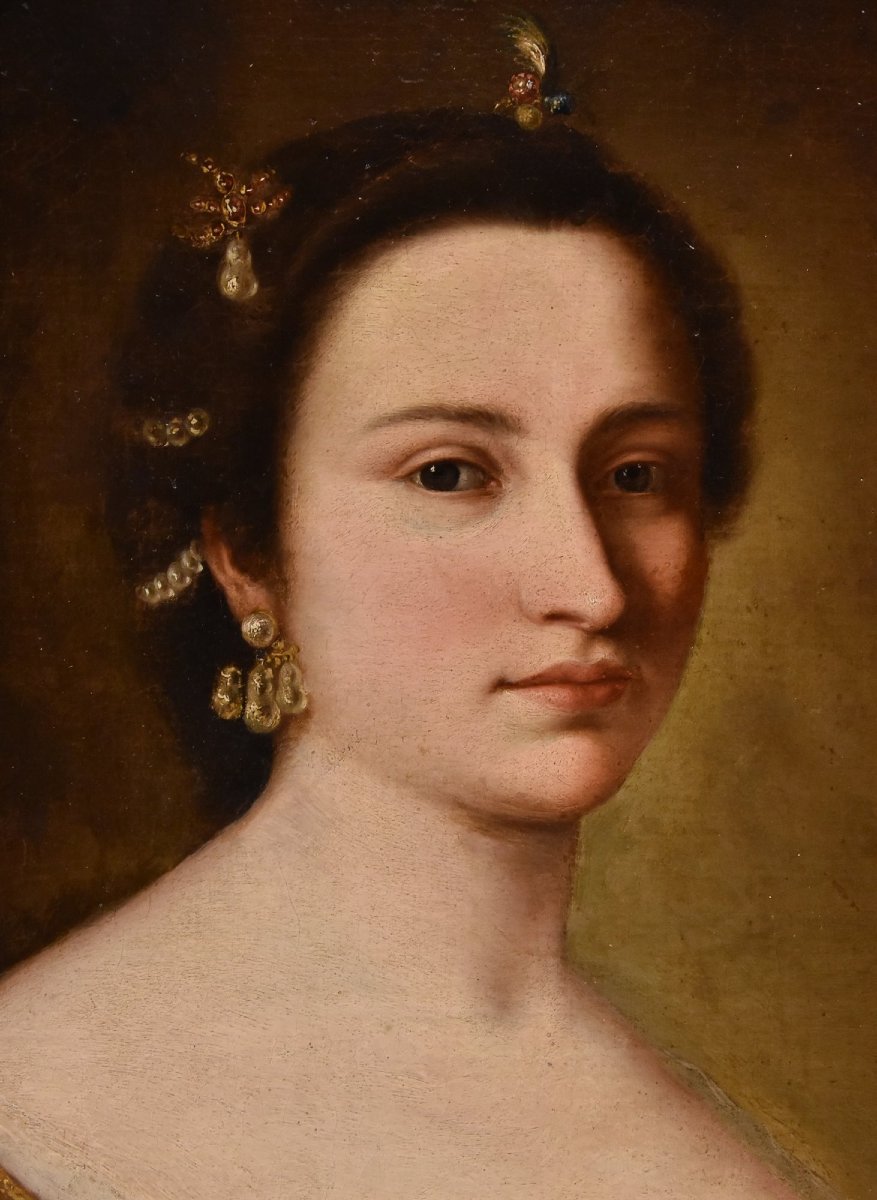
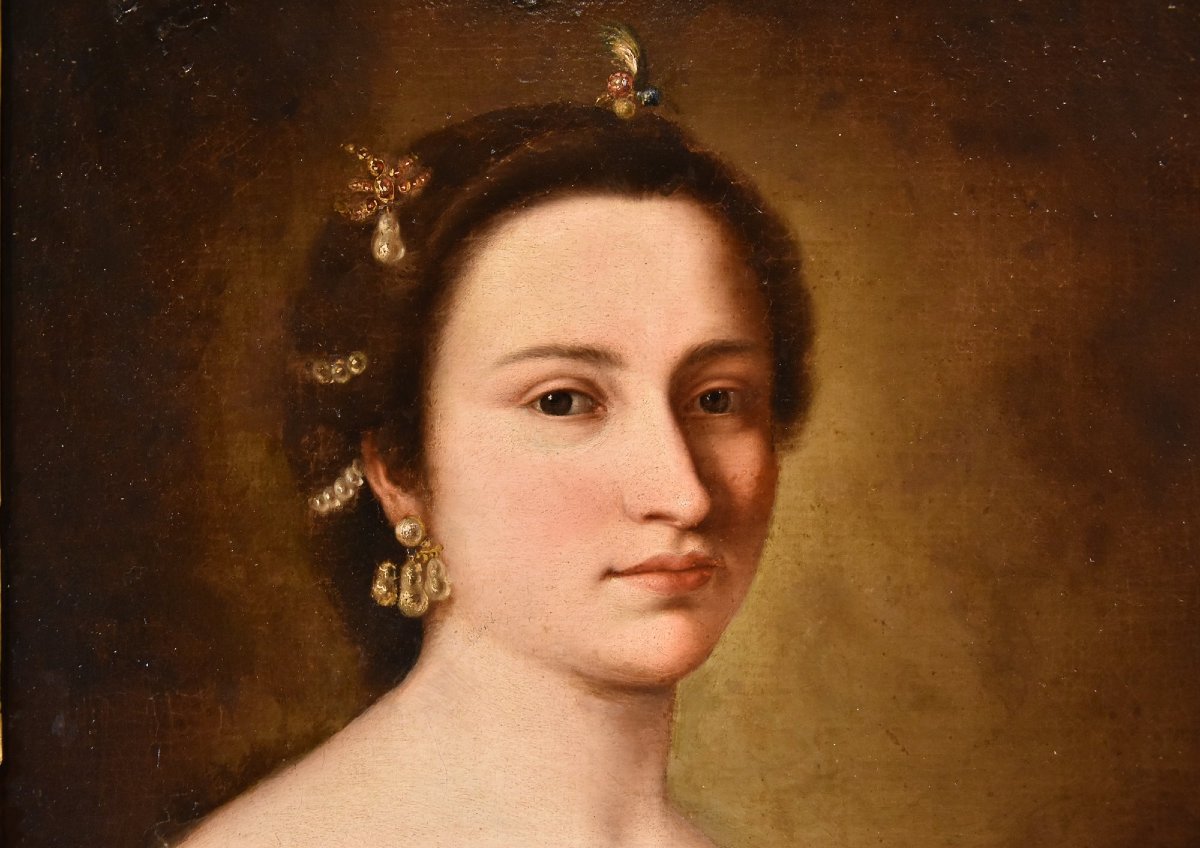
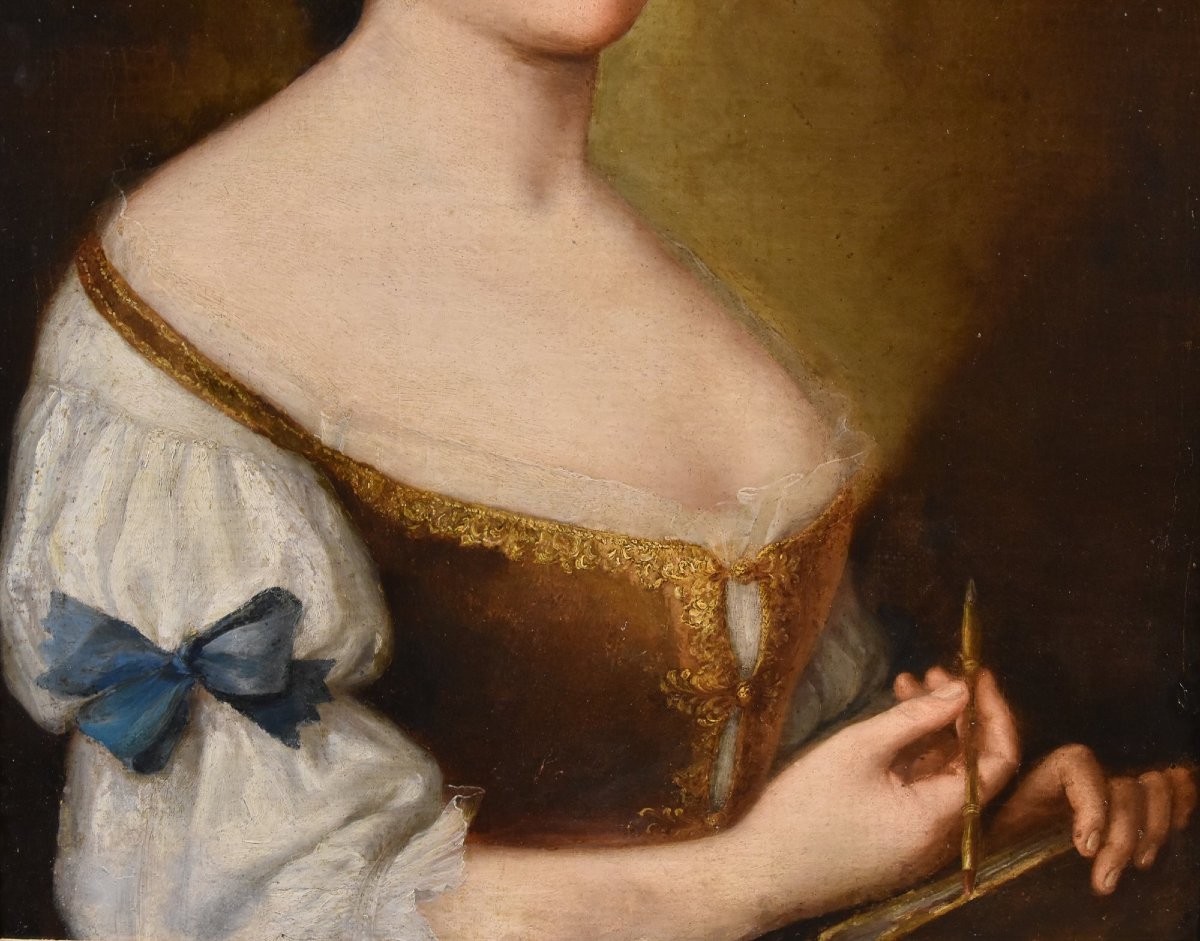
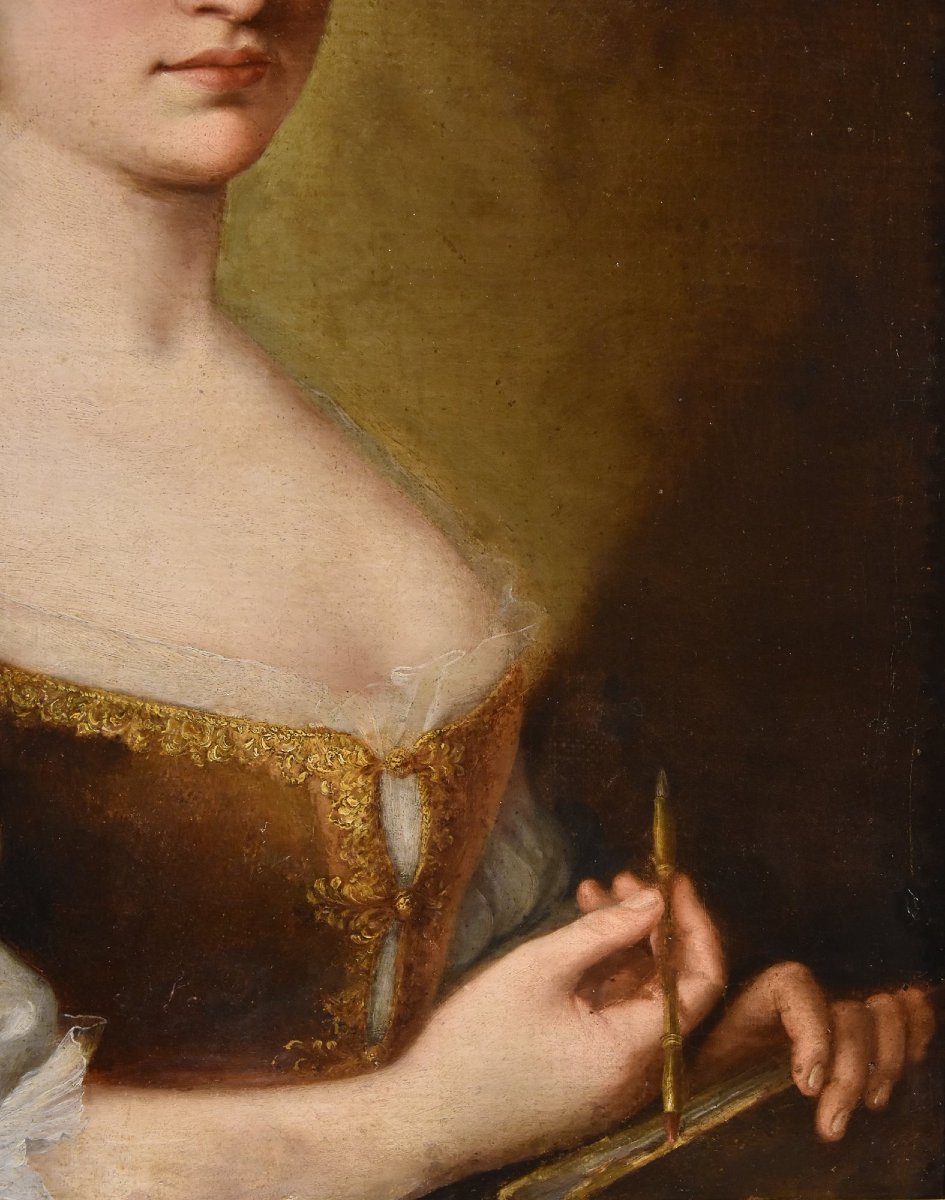
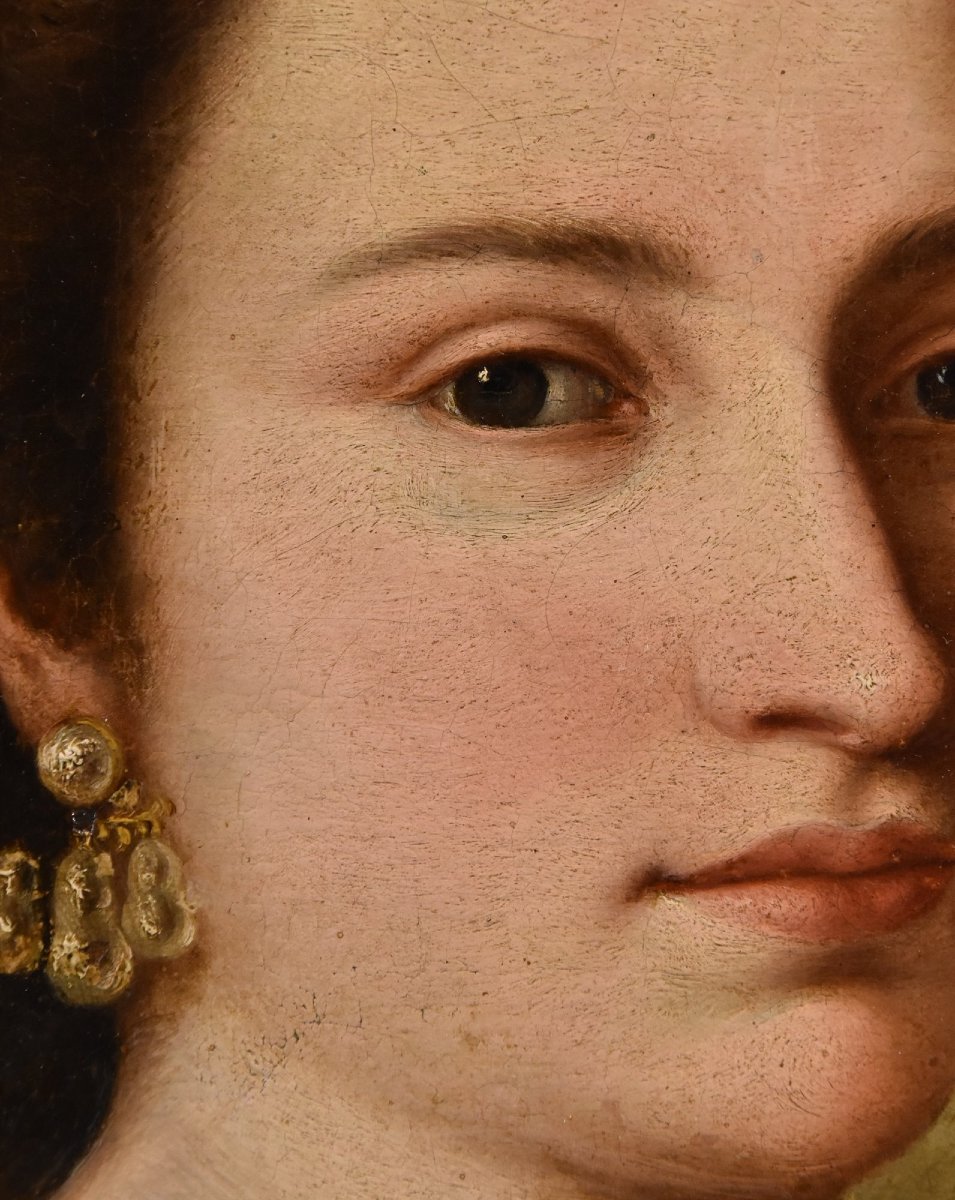
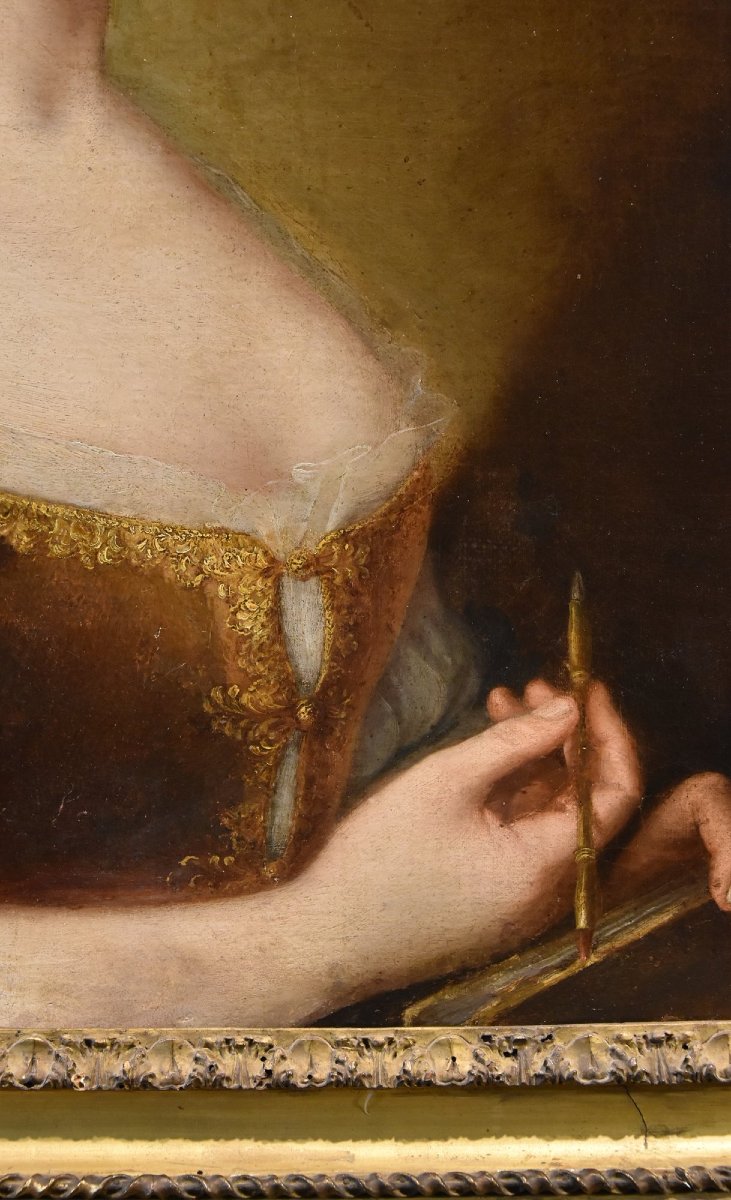
The subject is a young woman depicted in a half-length portrait, fashionably dressed in a gown with a boat neckline and puffed sleeves, adorned with a light blue bow on the left sleeve and gold embroidery. She wears precious earrings consisting of a large pearl from which three other teardrop-shaped pearls hang, while her hair is styled in a coiffure embellished with other simple yet precious jewels.
She holds a quill and a notebook in her hand, suggesting an artistic or intellectual pursuit, reinforced by a composed expression and a direct, penetrating, and introspective gaze toward the viewer.
The work reflects the 18th-century taste for the new vision of Neoclassical art, which also embraced portraiture, abandoning the excessive and redundant aesthetics of the Baroque in favor of a return to the principles of balance, composure, and serenity: with these principles, Mengs soon became famous and sought-after, rivaling the older Pompeo Batoni (1708–1787) for the role of the capital’s leading painter.
He moved to Rome in 1741 and quickly became an extraordinary portraitist—the highest-paid and most sought-after in Italy and at the European courts of the late 18th century— a must-see for wealthy Grand Tour travelers who wished to visit his studio on Via Sistina to commission their own portrait.
Confirming the connection to Mengs’s style are the pose, the details of the clothing, and the lightened background—which creates a sort of aura around the figure—all rendered here with such lightness and confidence that the work can be attributed to an artist from his inner circle or a student.
The details and the masterful execution are very similar to the master’s works, including, by way of comparison, his self-portrait (fig. 1 - https://catalogo.beniculturali.it/detail/HistoricOrArtisticProperty/0900099752), the Portrait of Johann Joachim Winckelmann (fig. 2—Metropolitan Museum of Art, https://www.metmuseum.org/art/collection/search/437067), or the Portrait of the Engraver Francesco Bartolozzi (fig. 3—Lviv National Art Gallery, https://commons.wikimedia.org/wiki/File:Mengs_Portrait_Kupferstecher_Francesco_Bartolozzi.jpg), in which we can see the same technical skill as well as the same stylistic characteristics and the same composition, which lend the subject an incredible immediacy of expression. In all these works, the subjects are holding books and objects alluding to their culture.
We see the same shape and structure of earrings—extremely valuable given the size of the pearls used—depicted by him in his portrait of Maria Luisa of Bourbon (https://catalogo.fondazionezeri.unibo.it/scheda/opera/64308/)
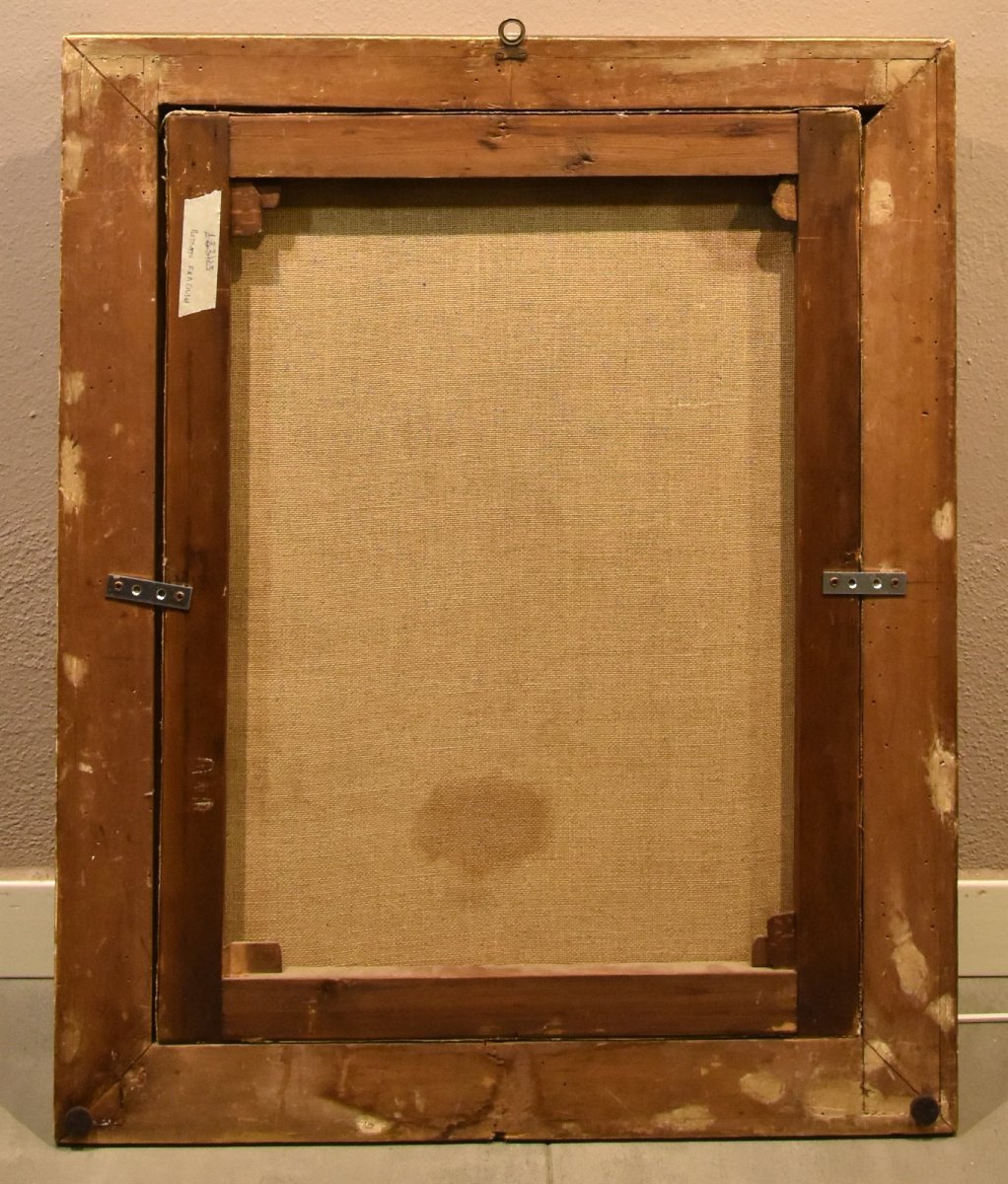
In good condition with some surface restorations, complete with a gilded frame (minor losses).
ADDITIONAL INFORMATION:
The work is sold complete with a certificate of authenticity and a descriptive iconographic sheet.
We handle and arrange the shipping of purchased works, both within Italy and internationally, using professional and insured carriers. It is also possible to view the painting at our gallery in Riva del Garda; we would be delighted to welcome you and show you our collection of works.
If the artwork is purchased by a non-Italian customer, an export permit will be required, which takes approximately 15–20 days to process; our gallery will handle the entire process until the permit is obtained. All costs associated with this process are included.
Please feel free to contact us, with no obligation, for any additional information.
Follow us on:
INSTAGRAM https://www.instagram.com/galleriacastelbarco/?hl=it
FACEBOOK https://www.facebook.com/galleriacastelbarco/
Portrait of a Young Girl with a Book
oil on canvas
64 x 49 cm. – framed 77 x 63 cm.
Complete details of the work (click HERE)
The work, depicting a charming portrait of a young woman, is attributed to a Neoclassical painter of the Roman school active in the 18th century within the circle of Anton Raphael Mengs (Aussig, 1728 – Rome, 1779).
The subject is a young woman depicted in a half-length portrait, fashionably dressed in a gown with a boat neckline and puffed sleeves, adorned with a light blue bow on the left sleeve and gold embroidery. She wears precious earrings consisting of a large pearl from which three other teardrop-shaped pearls hang, while her hair is styled in a coiffure embellished with other simple yet precious jewels.
She holds a quill and a notebook in her hand, suggesting an artistic or intellectual pursuit, reinforced by a composed expression and a direct, penetrating, and introspective gaze toward the viewer.
The work reflects the 18th-century taste for the new vision of Neoclassical art, which also embraced portraiture, abandoning the excessive and redundant aesthetics of the Baroque in favor of a return to the principles of balance, composure, and serenity: with these principles, Mengs soon became famous and sought-after, rivaling the older Pompeo Batoni (1708–1787) for the role of the capital’s leading painter.
He moved to Rome in 1741 and quickly became an extraordinary portraitist—the highest-paid and most sought-after in Italy and at the European courts of the late 18th century— a must-see for wealthy Grand Tour travelers who wished to visit his studio on Via Sistina to commission their own portrait.
Confirming the connection to Mengs’s style are the pose, the details of the clothing, and the lightened background—which creates a sort of aura around the figure—all rendered here with such lightness and confidence that the work can be attributed to an artist from his inner circle or a student.
The details and the masterful execution are very similar to the master’s works, including, by way of comparison, his self-portrait (fig. 1 - https://catalogo.beniculturali.it/detail/HistoricOrArtisticProperty/0900099752), the Portrait of Johann Joachim Winckelmann (fig. 2—Metropolitan Museum of Art, https://www.metmuseum.org/art/collection/search/437067), or the Portrait of the Engraver Francesco Bartolozzi (fig. 3—Lviv National Art Gallery, https://commons.wikimedia.org/wiki/File:Mengs_Portrait_Kupferstecher_Francesco_Bartolozzi.jpg), in which we can see the same technical skill as well as the same stylistic characteristics and the same composition, which lend the subject an incredible immediacy of expression. In all these works, the subjects are holding books and objects alluding to their culture.
We see the same shape and structure of earrings—extremely valuable given the size of the pearls used—depicted by him in his portrait of Maria Luisa of Bourbon (https://catalogo.fondazionezeri.unibo.it/scheda/opera/64308/)
In good condition with some surface restorations, complete with a gilded frame (minor losses).
ADDITIONAL INFORMATION:
The work is sold complete with a certificate of authenticity and a descriptive iconographic sheet.
We handle and arrange the shipping of purchased works, both within Italy and internationally, using professional and insured carriers. It is also possible to view the painting at our gallery in Riva del Garda; we would be delighted to welcome you and show you our collection of works.
If the artwork is purchased by a non-Italian customer, an export permit will be required, which takes approximately 15–20 days to process; our gallery will handle the entire process until the permit is obtained. All costs associated with this process are included.
Please feel free to contact us, with no obligation, for any additional information.
Follow us on:
INSTAGRAM https://www.instagram.com/galleriacastelbarco/?hl=it
FACEBOOK https://www.facebook.com/galleriacastelbarco/
4 900 €
Period: 18th century
Style: Louis 14th, Regency
Condition: Excellent condition
Material: Oil painting
Width: encadré 75 cm.
Height: encadré 100 cm.
Reference (ID): 1795798
Availability: In stock
Print