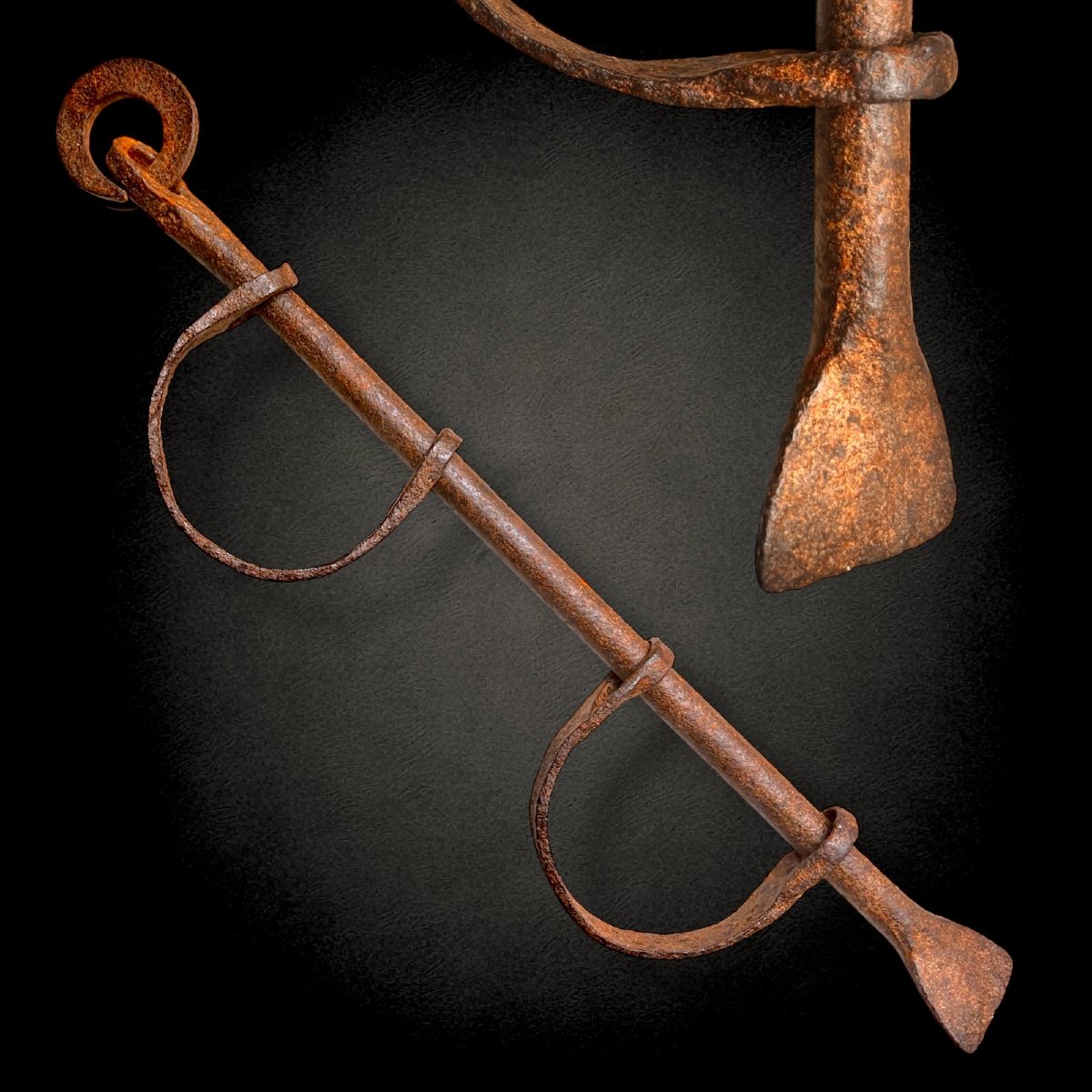


Shackles For Female Slaves (17th–18th Centuries) – Transatlantic Crossing
Shackles for enslaved women (17th–18th centuries) – Transatlantic Crossing
These cast-iron shackles, dating approximately to the 17th or 18th century, were used to restrain enslaved people on the lower decks of ships during the transatlantic crossing—the journey from Africa to the Americas. One end of the device features a ring, likely designed to accommodate a chain, allowing multiple individuals to be chained together. The other end is fitted with a rudimentary handle. The surface, marked by pitting and oxidation due to age, displays a rich natural patina. These shackles bear witness to the practices of the slave trade as it was carried out on the transatlantic route. The feet of enslaved Africans were secured at the ankles by these devices, with a ring inserted at the end to lock them in place; slave traders who could afford it might add a simple, rudimentary padlock. The transatlantic crossing was one segment of the “triangular trade,” a system through which millions of Africans were forcibly transported to the New World as part of the Atlantic slave trade. Ships departed from Europe bound for African markets, loaded with manufactured goods intended to be exchanged for Africans—whether purchased or abducted—who were then transported across the Atlantic to be enslaved. Upon arrival, these individuals were sold or traded for raw materials, which were then shipped back to Europe, thus completing the cycle. These transatlantic voyages represented a substantial financial undertaking, typically organized by companies or groups of investors rather than by individuals. Of the approximately 20 million people torn from their homes and sold into slavery, half never reached the African coast; the vast majority perished along the way.
These shackles are significantly smaller, indicating that they were intended for a female slave.
3 800 €
Period: 18th century
Style: Other Style
Condition: Good condition
Material: Metal
Length: 41 cm
Reference (ID): 1845472
Availability: In stock
Print