

Egyptian Archaeology, Necklace With Tubular Turquoise Blue Ceramic Beads
EGYPTIAN ARCHAEOLOGY
New Kingdom (ca. 1550 to 1069 BC), Late Period (ca. 664 to 332 BC) to Ptolemaic Period (332 to 30 BC)
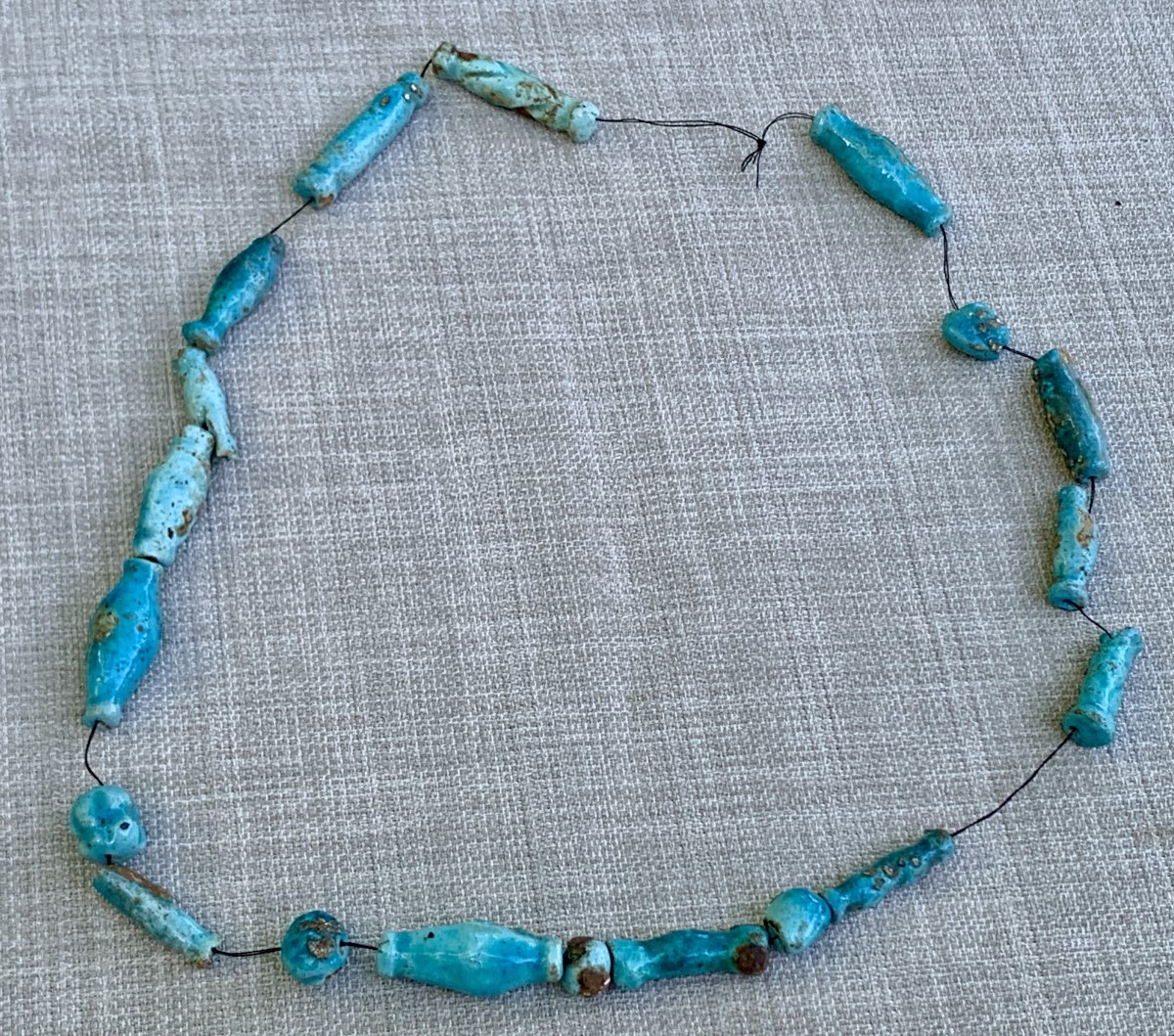
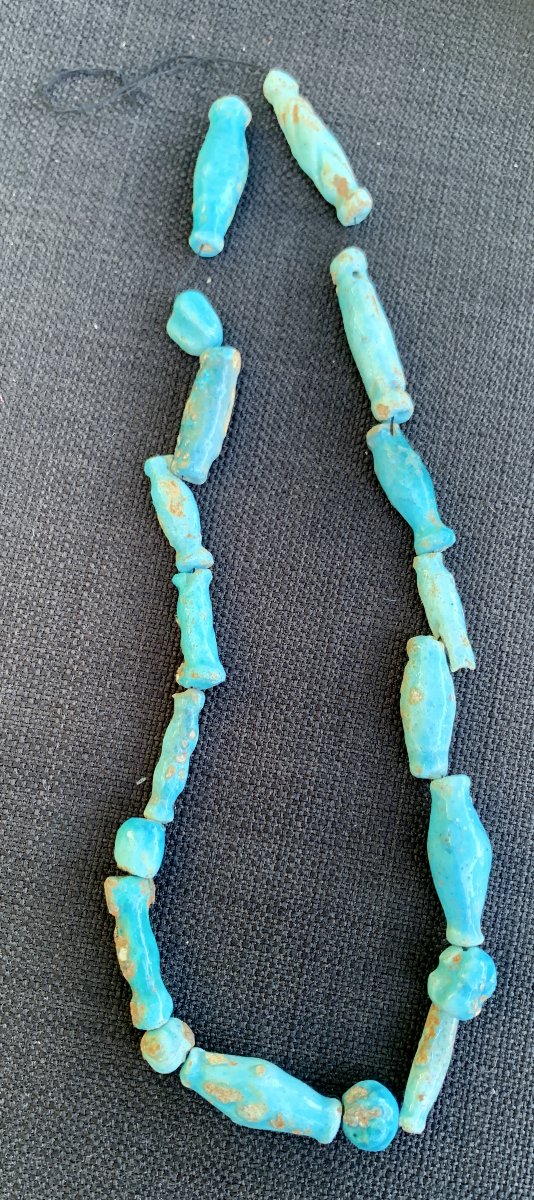
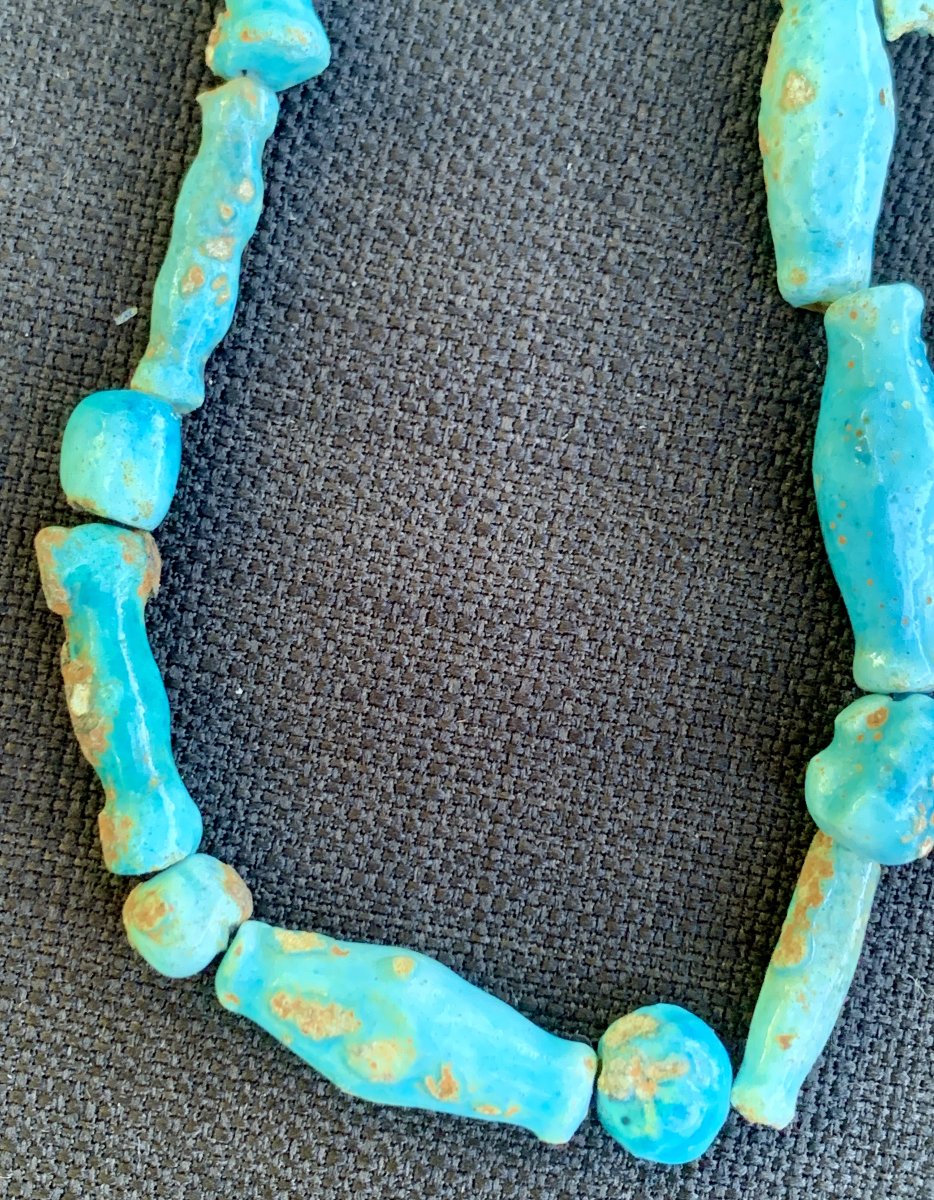
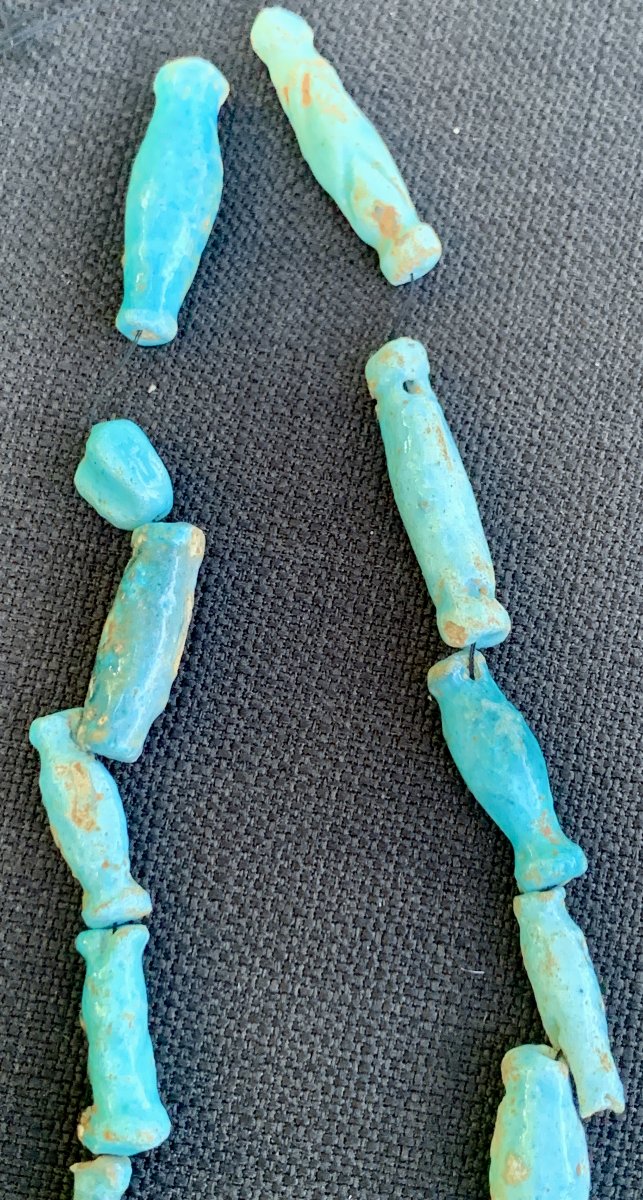
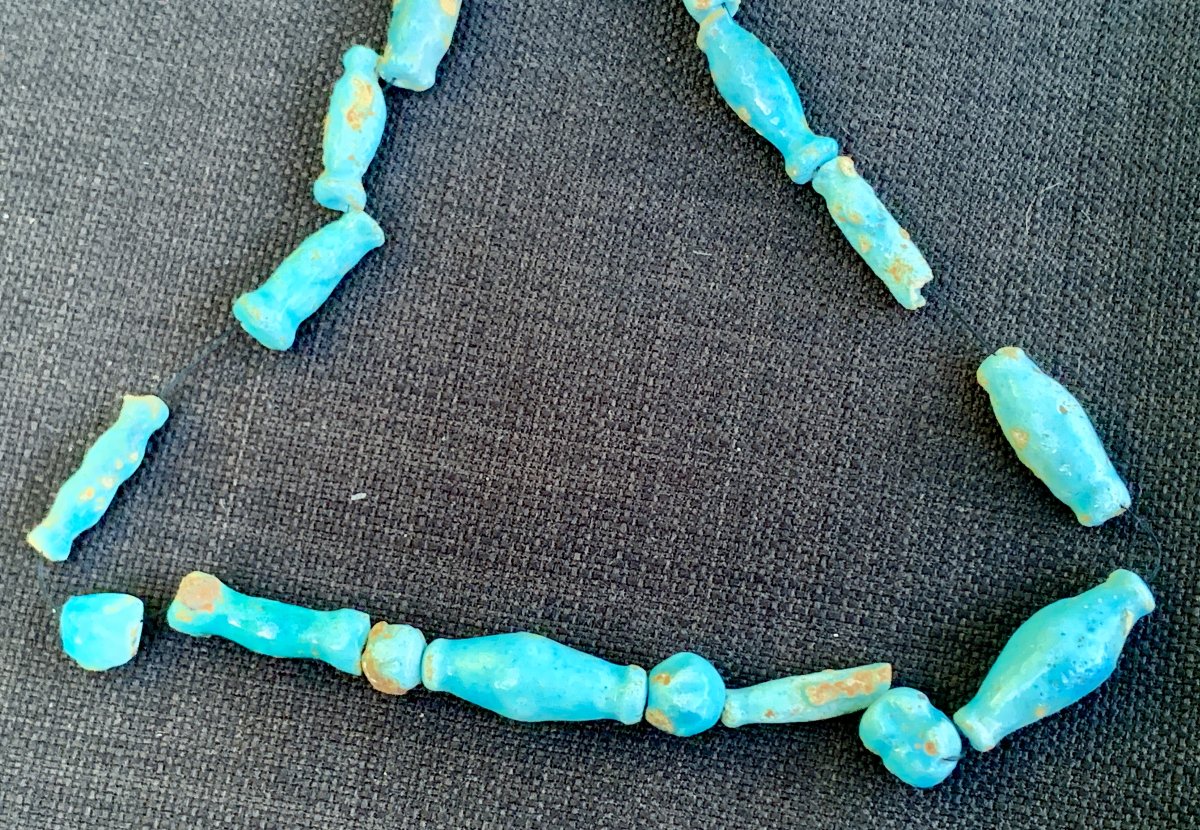
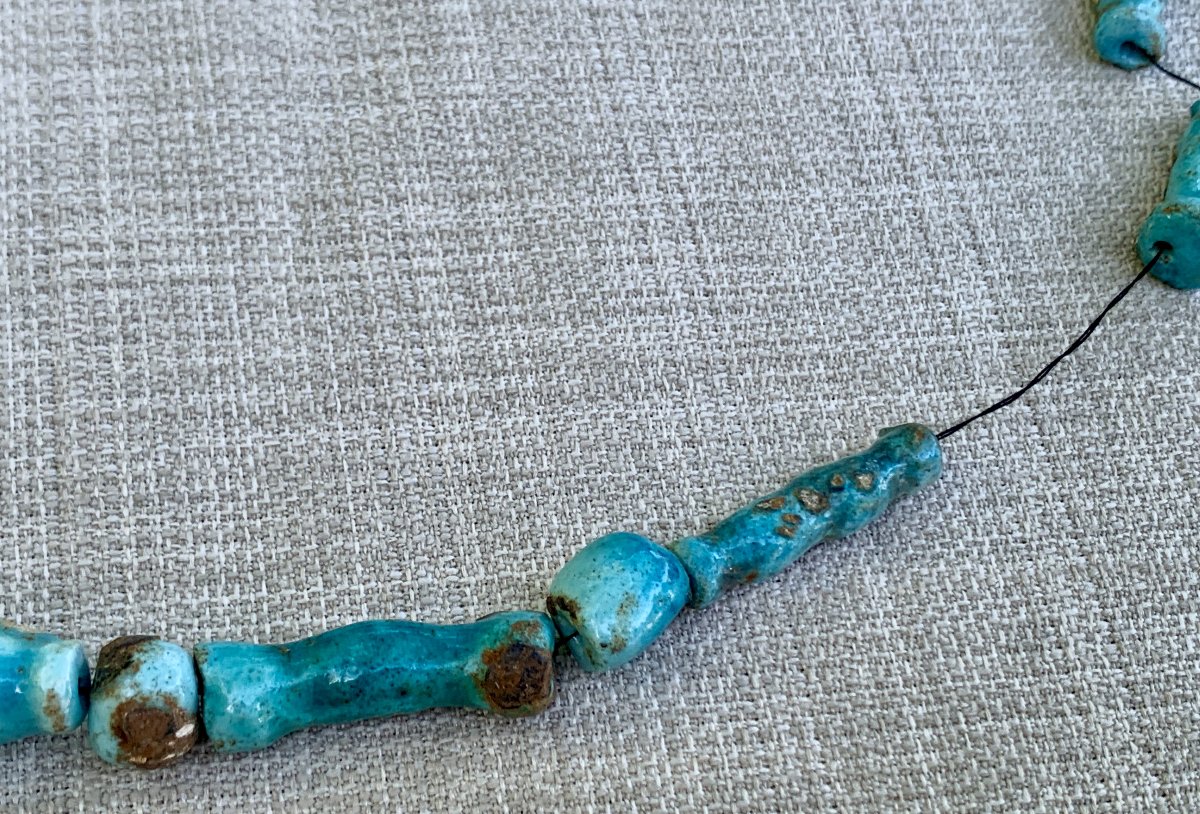
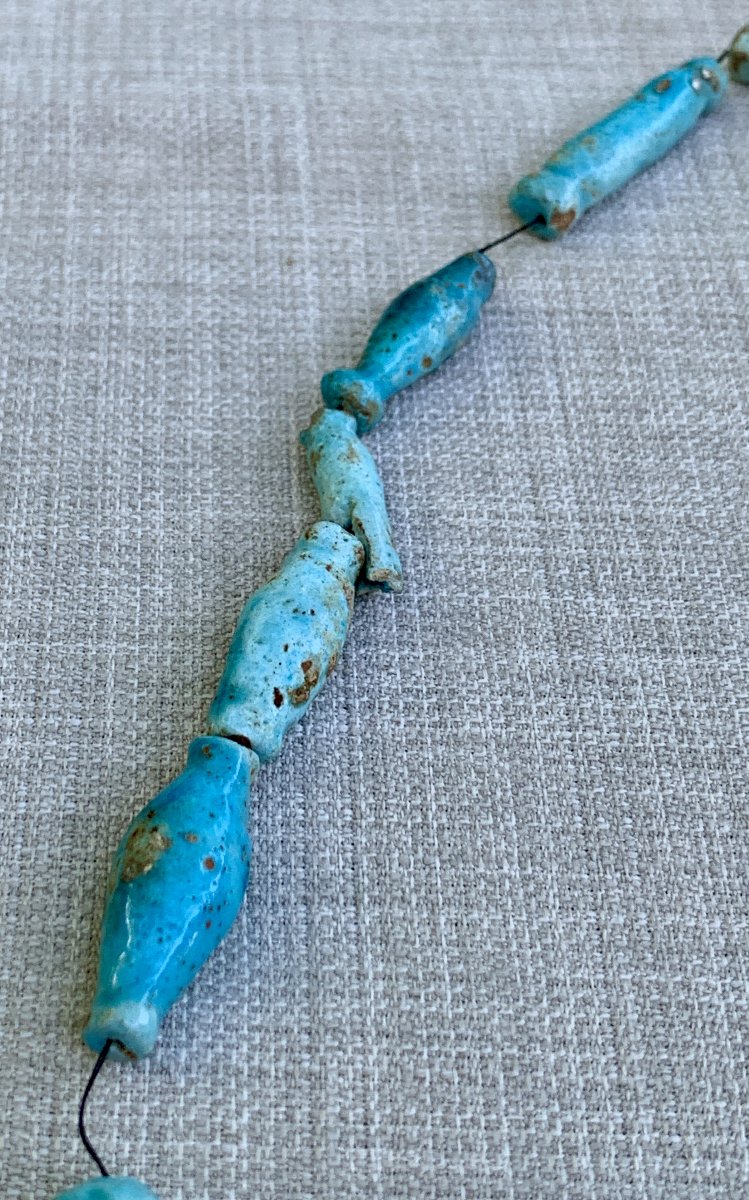
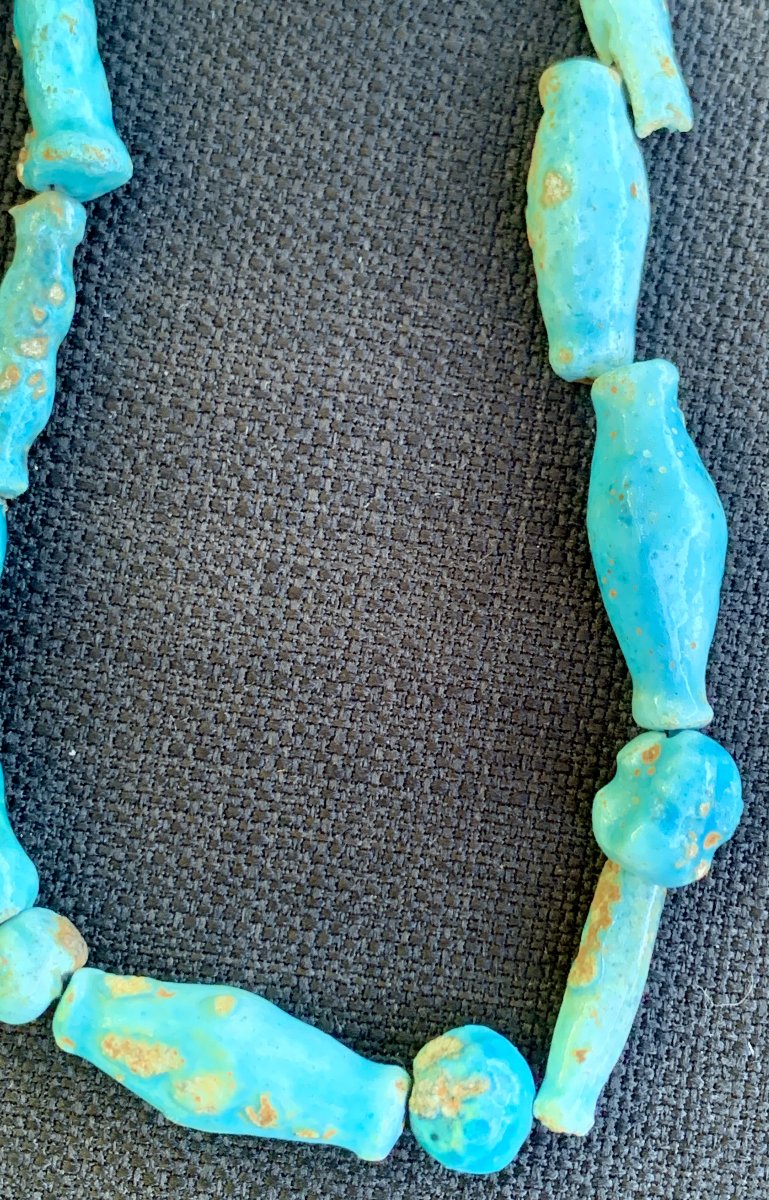
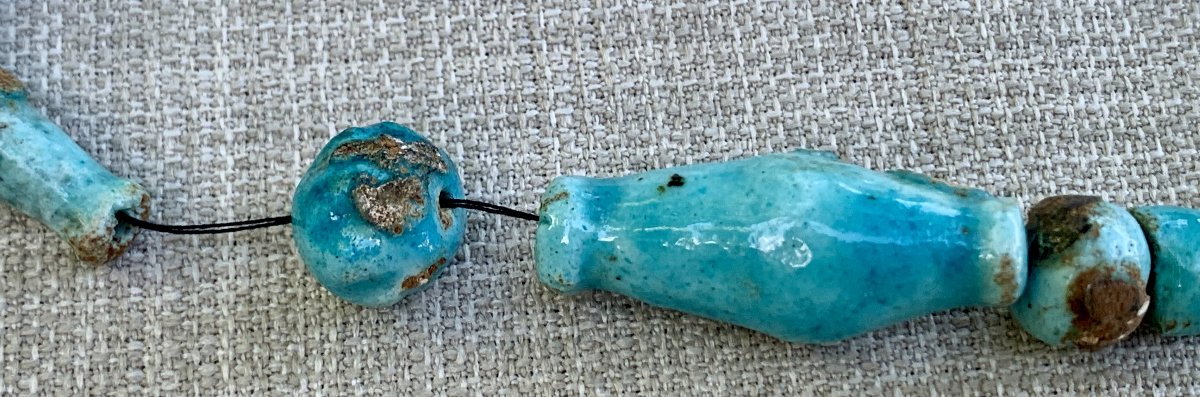
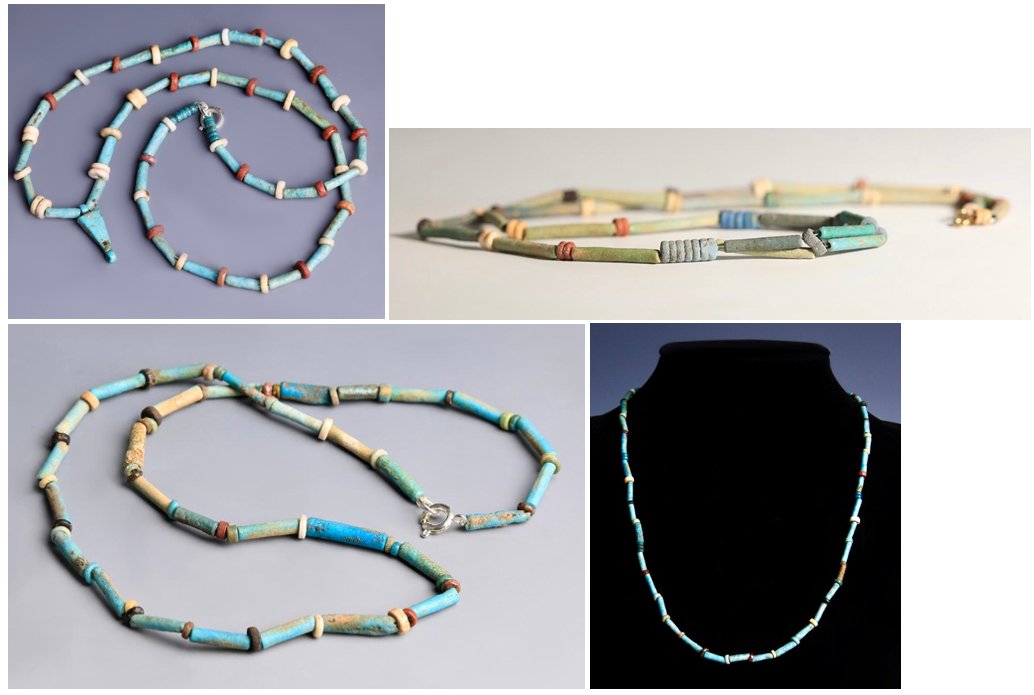
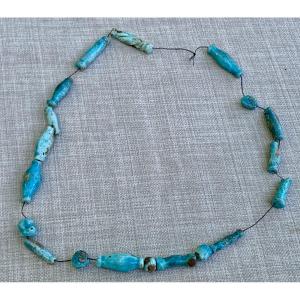
Reconstructed necklace of tubular beads made of turquoise blue ceramic often called glazed frit
This ancient Egyptian faience, unlike modern clay-based faience, is a siliceous ceramic made from quartz or crushed sand, limestone, and soda. The turquoise blue glaze is achieved by adding copper to the mixture. For the Egyptians, this bright blue-green color was closely associated with concepts of fertility, rebirth, and eternal life.
Egyptian necklaces very often alternate beads of different shapes: elongated or tubular, smaller ones in the shape of discs or rings used as spacers.
These necklaces, commonly found in archaeological digs, decorated large pectoral-type necklaces (like the famous Usekh collars) worn by the elite during their lifetime. They were also everywhere in funerary furniture and placed on mummies to provide magical protection in the afterlife.
Because of their huge popularity and continuous production over millennia, precisely dating these beads without excavation context remains broad. Nevertheless, this specific style falls within a wide period from the New Kingdom to the Ptolemaic period (around 1500 to 30 BC).
Condition :
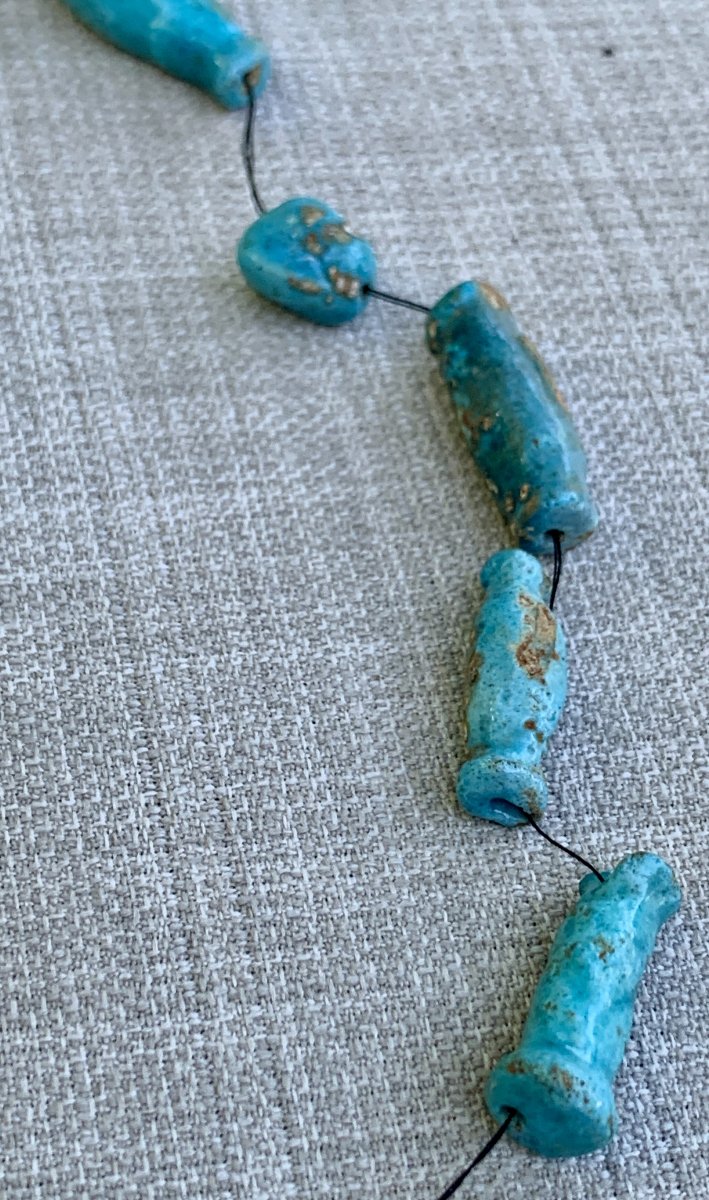
The original threads made of plant fibers or linen have disintegrated over time, so almost all necklaces of this type available on the market today or kept in museums have been restrung in a modern way for their preservation.
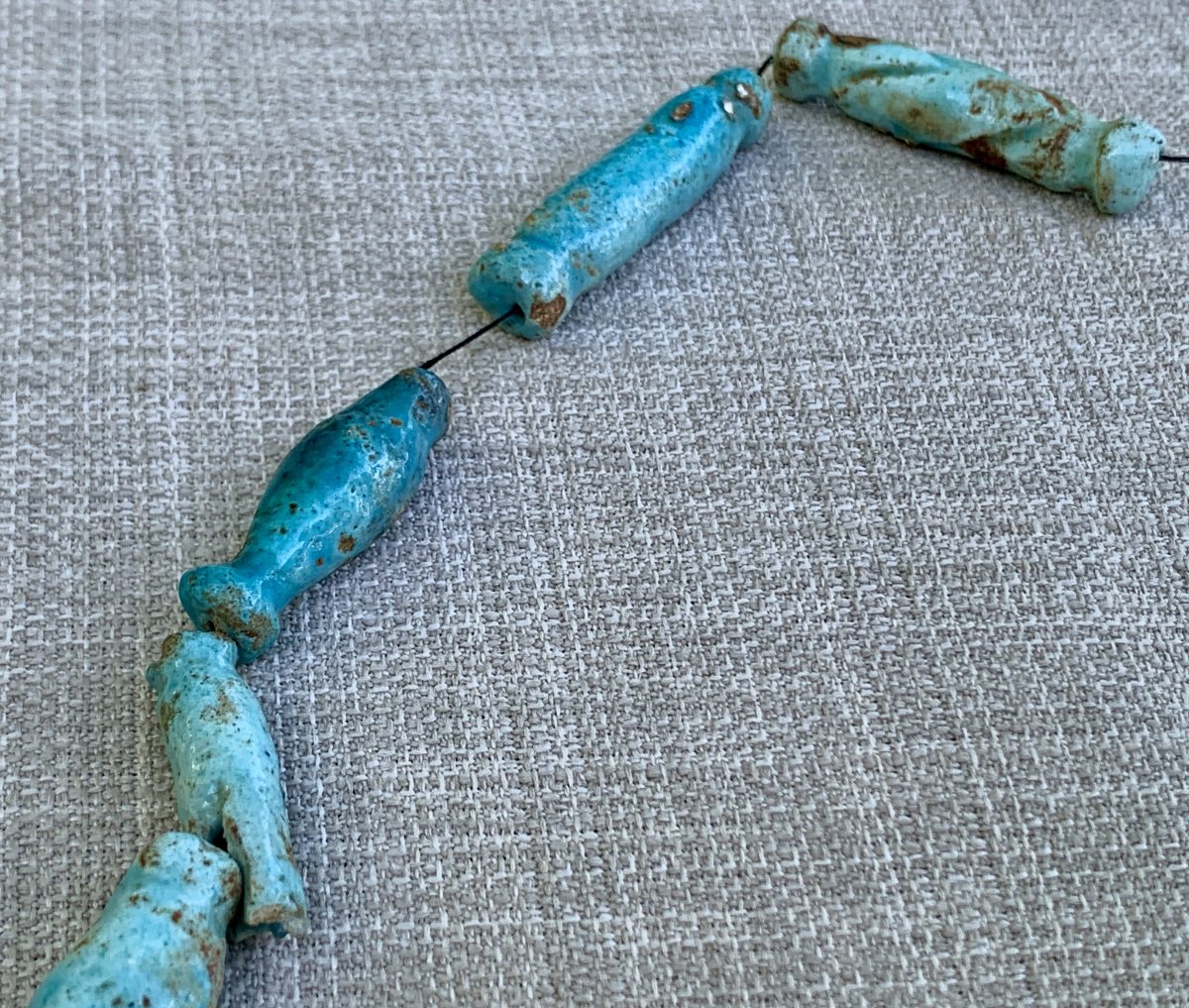
The slightly wavy appearance, the rough texture of the material, and the brown or beige discoloration areas (visible in the core and at the ends of the cylinders) correspond to the typical wear and sedimentation materials of objects that have stayed in the Egyptian soil for many centuries.
Dimensions :
19 beads, 5 circular and 14 oblong.
Average length for the tubular beads about 2 cm.
250 €
Period: Before 16th century
Style: Rome and Antic Greece
Condition: Good condition
Material: Ceramic
Length: 2 cm average lengh for tubular beads
Reference (ID): 1842045
Availability: In stock
Print