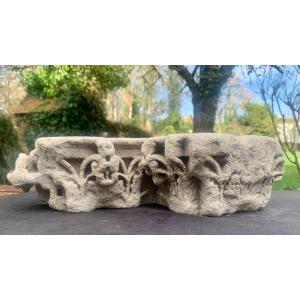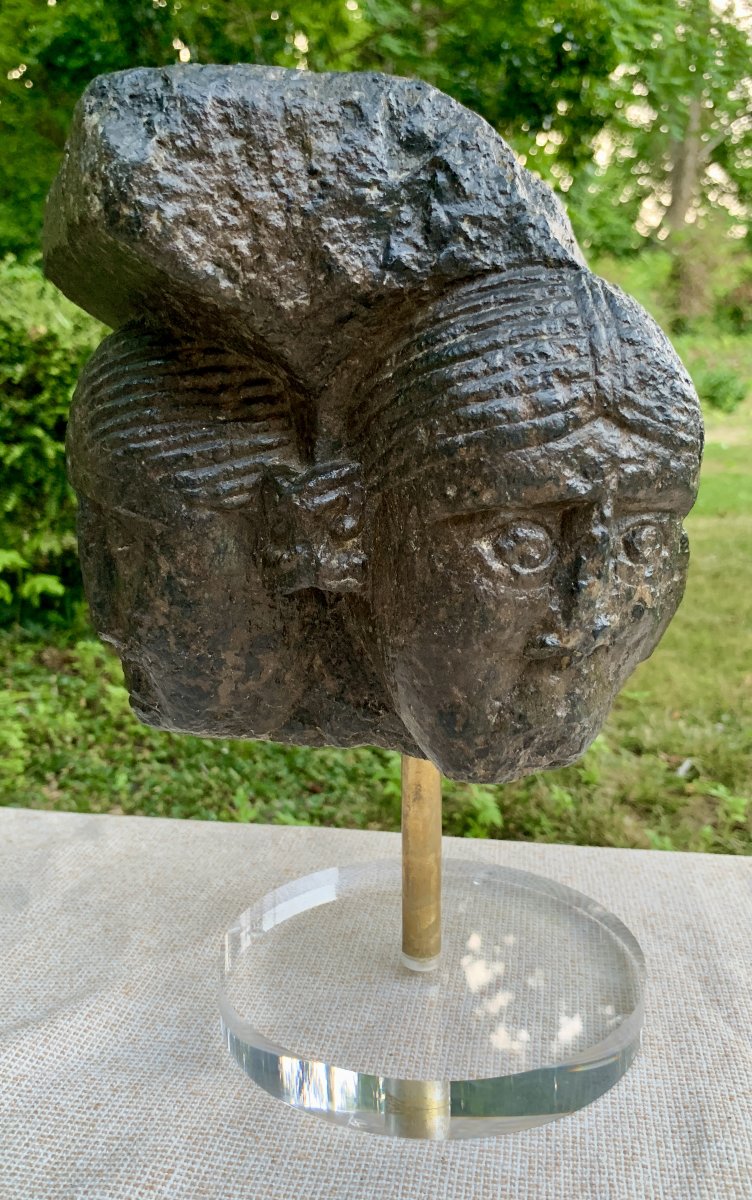
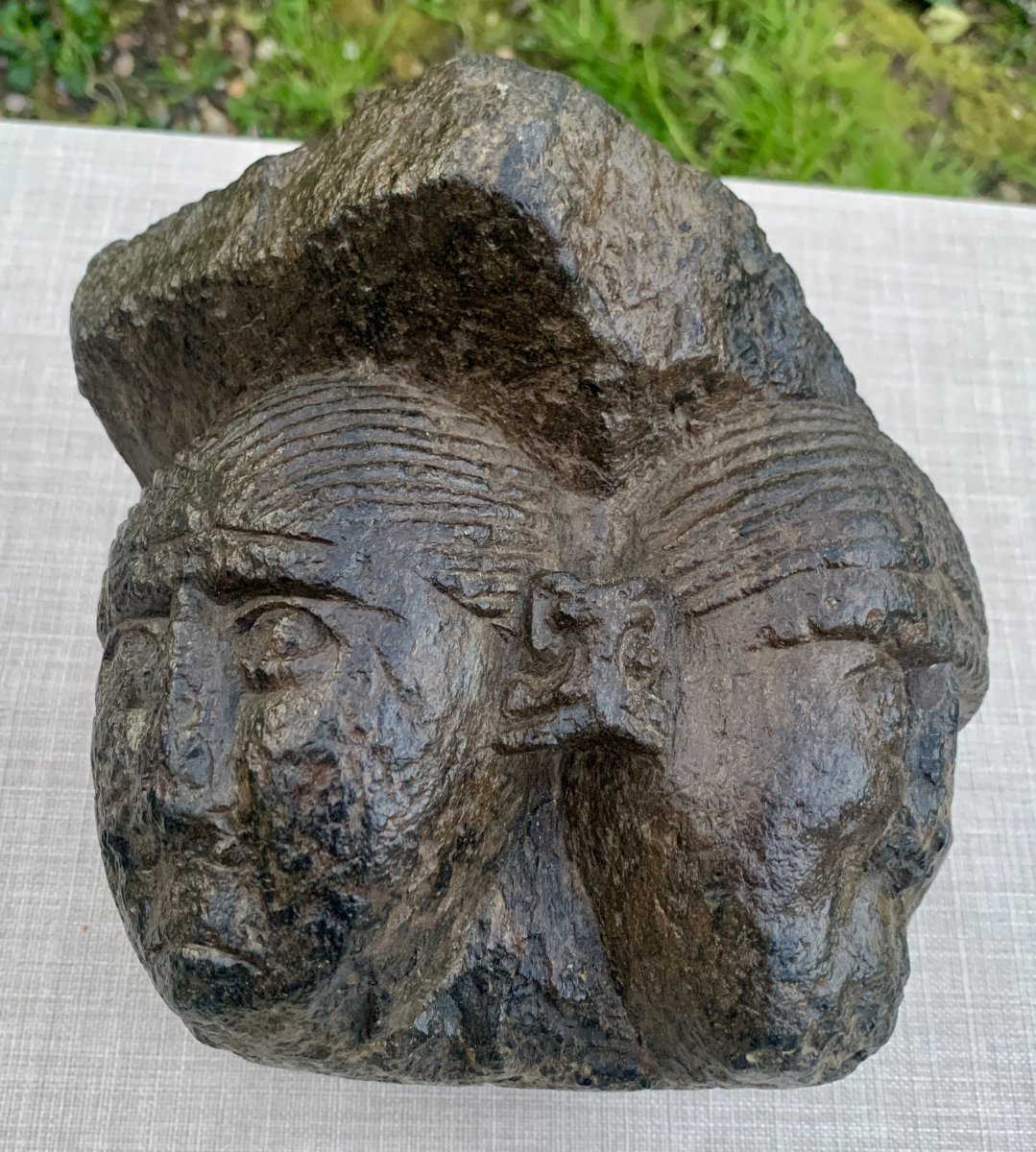
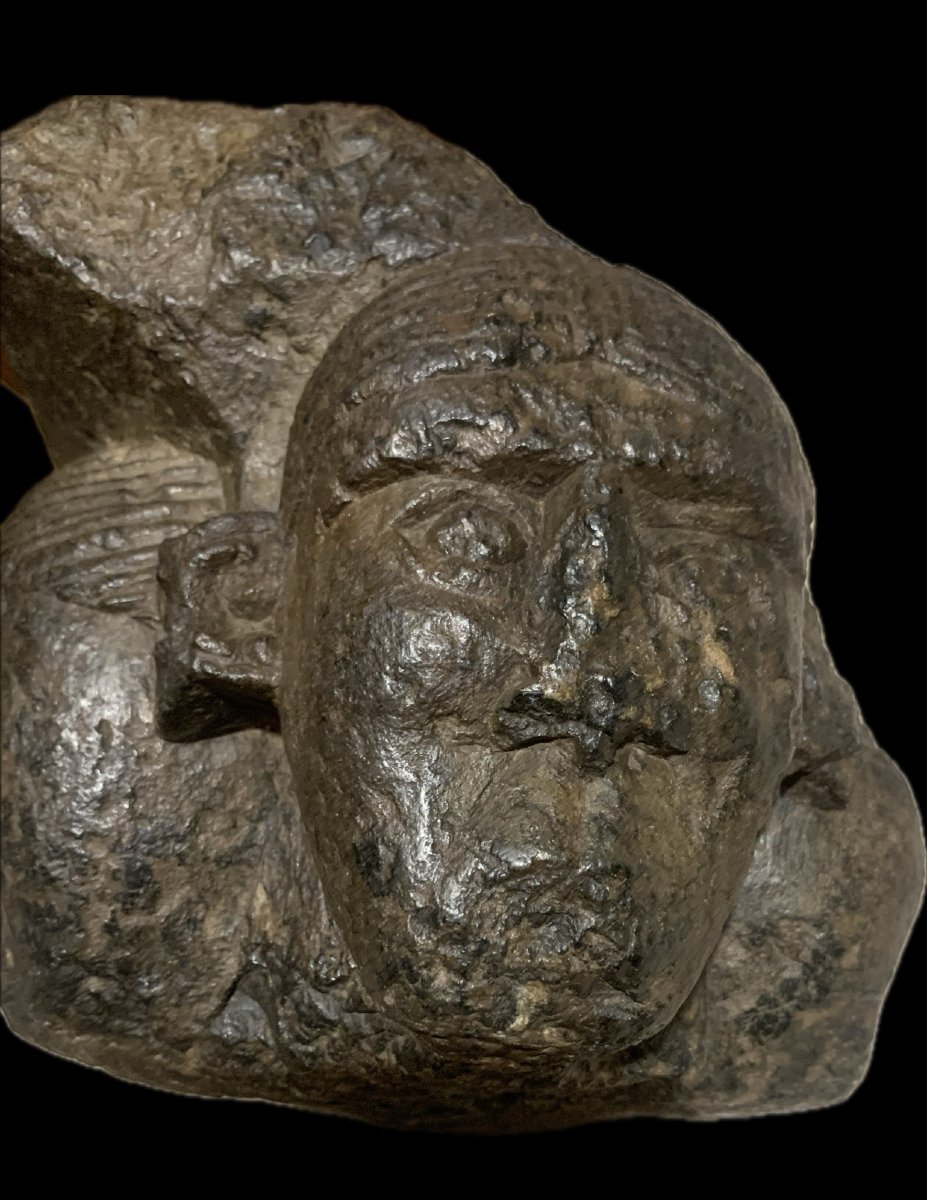


Museum:10/11th Small Black Stone (basalt ?) Carved Capital With 4 African Faces
Artist: Ateliers
HAUTE EPOQUE
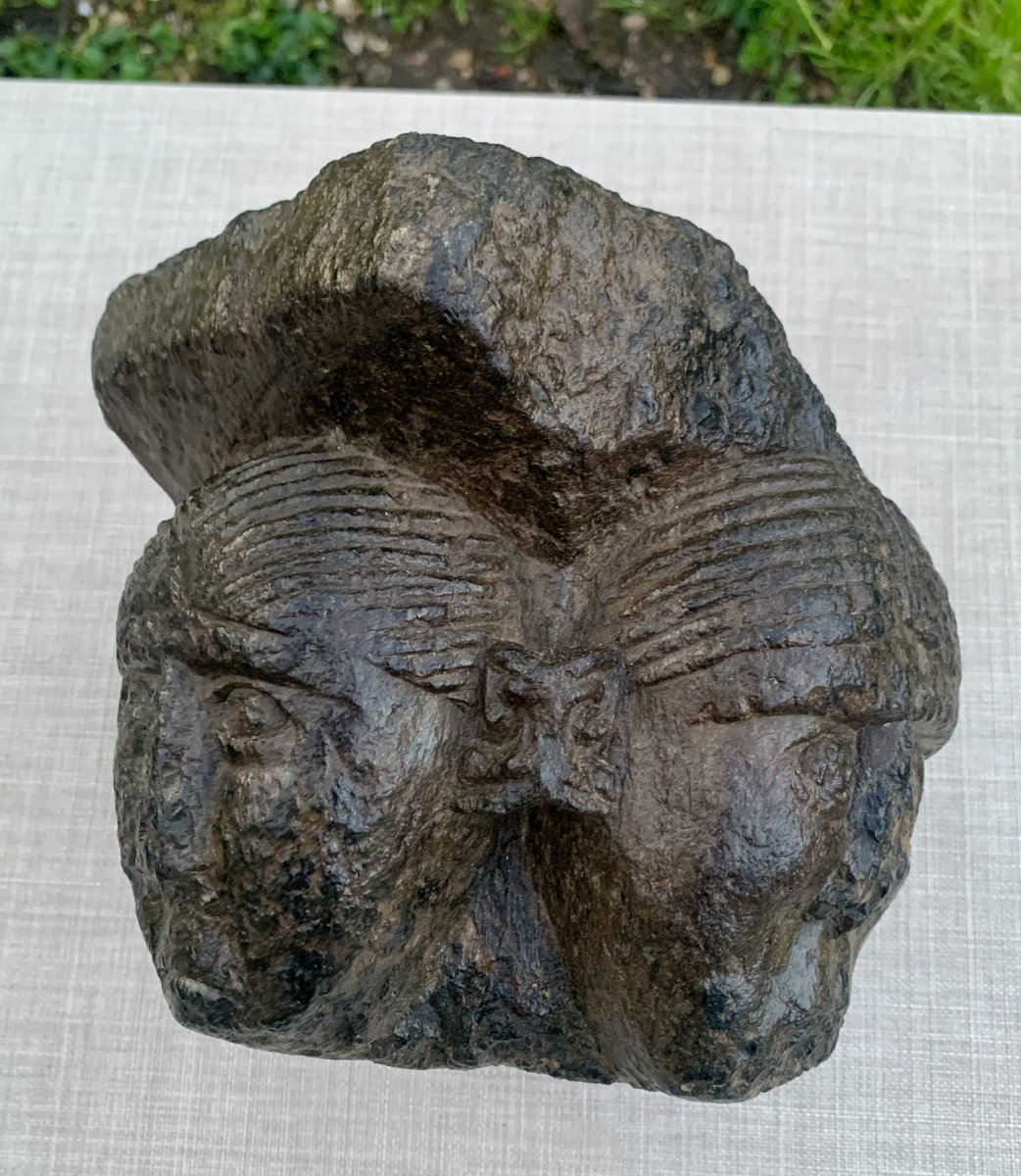
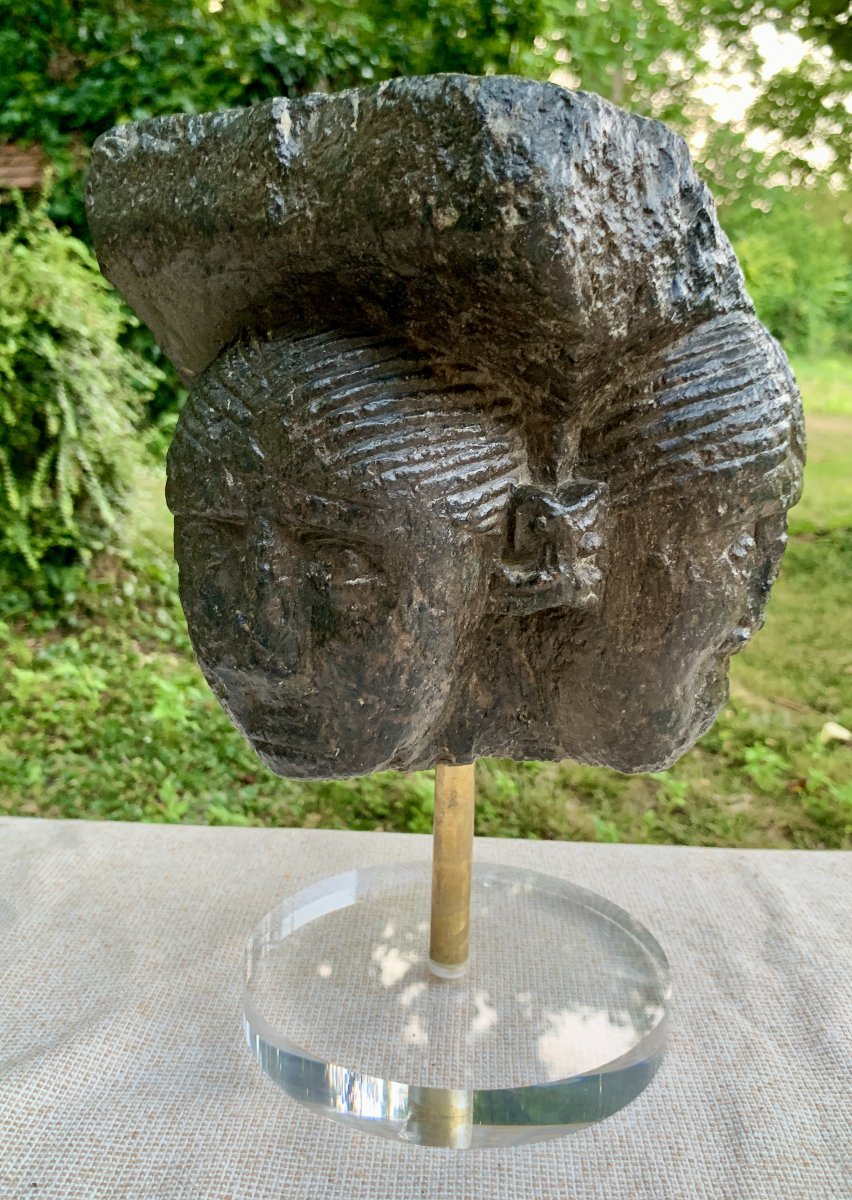
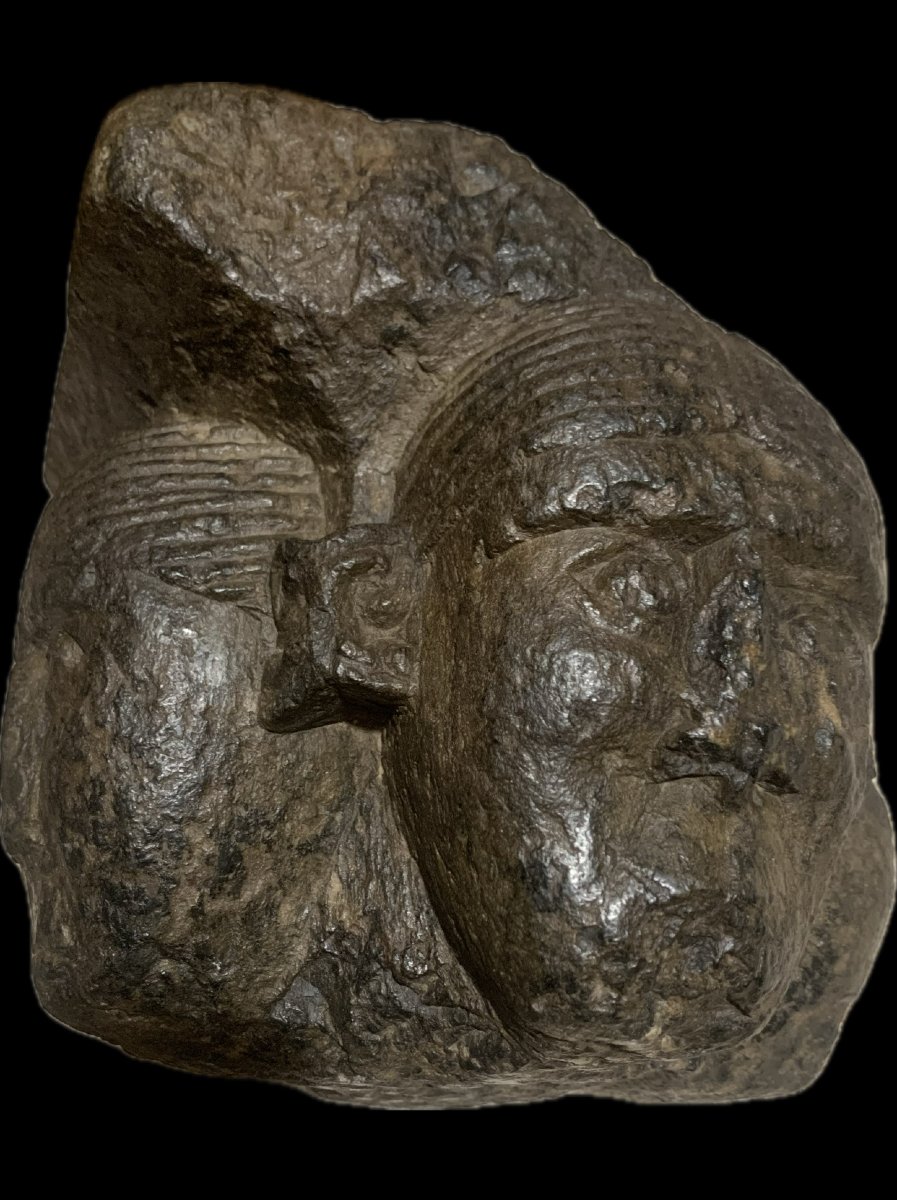
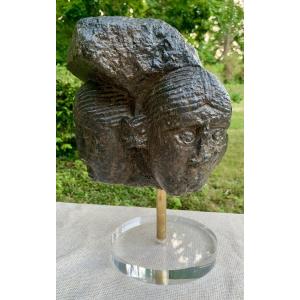
Superb and curious small full -all sides, capital stone carved, featuring on each of its sides an African face.
Roman or pre-Roman, 11th or 12th century,
Northern Italy (Piedmont, Emilia-Romagna, Lombardy, ...)?
Even if this origin is not certain, it remains very plausible. This region produced Romanesque sculpture with great expressive power, often carved in hard local rocks (dark sandstones, dense limestones, or weathered volcanic rocks), characterized by synthetic anthropomorphic figures with severe expressions. The stone, very dense, is here a deep, dark black with a rough appearance.
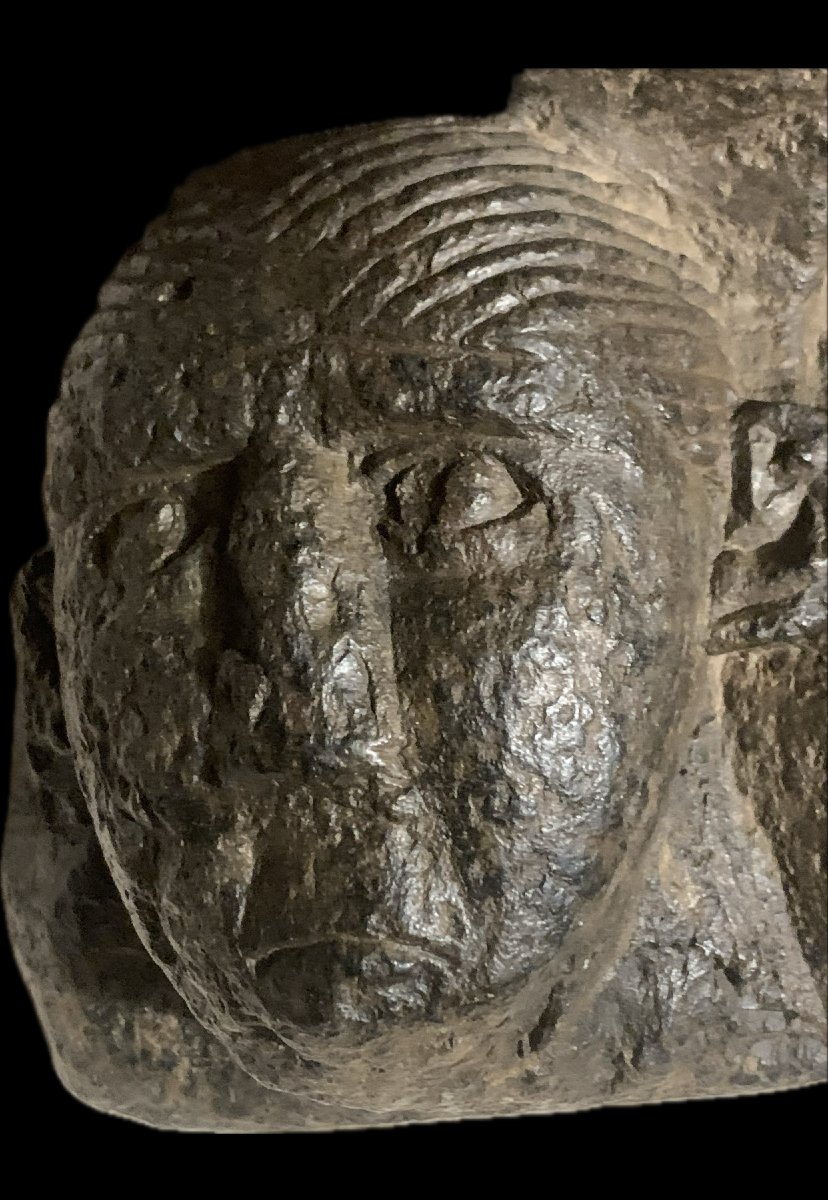
These materials were carved using sturdy tools (chisels, points), leaving clear cuts. Tool marks are visible: you can make out a very dense dotted texture on the striated hair, indicating the use of a point or a guesde (tools used by medieval stonemasons) to rough out the shape in hard rock, followed by work with a flat chisel to carve the main lines.
The European depiction of the African face in the Romanesque period, with its characteristic features (full lips, short and broad nose), can also more broadly refer to the representation of the Moor or Saracen figure.
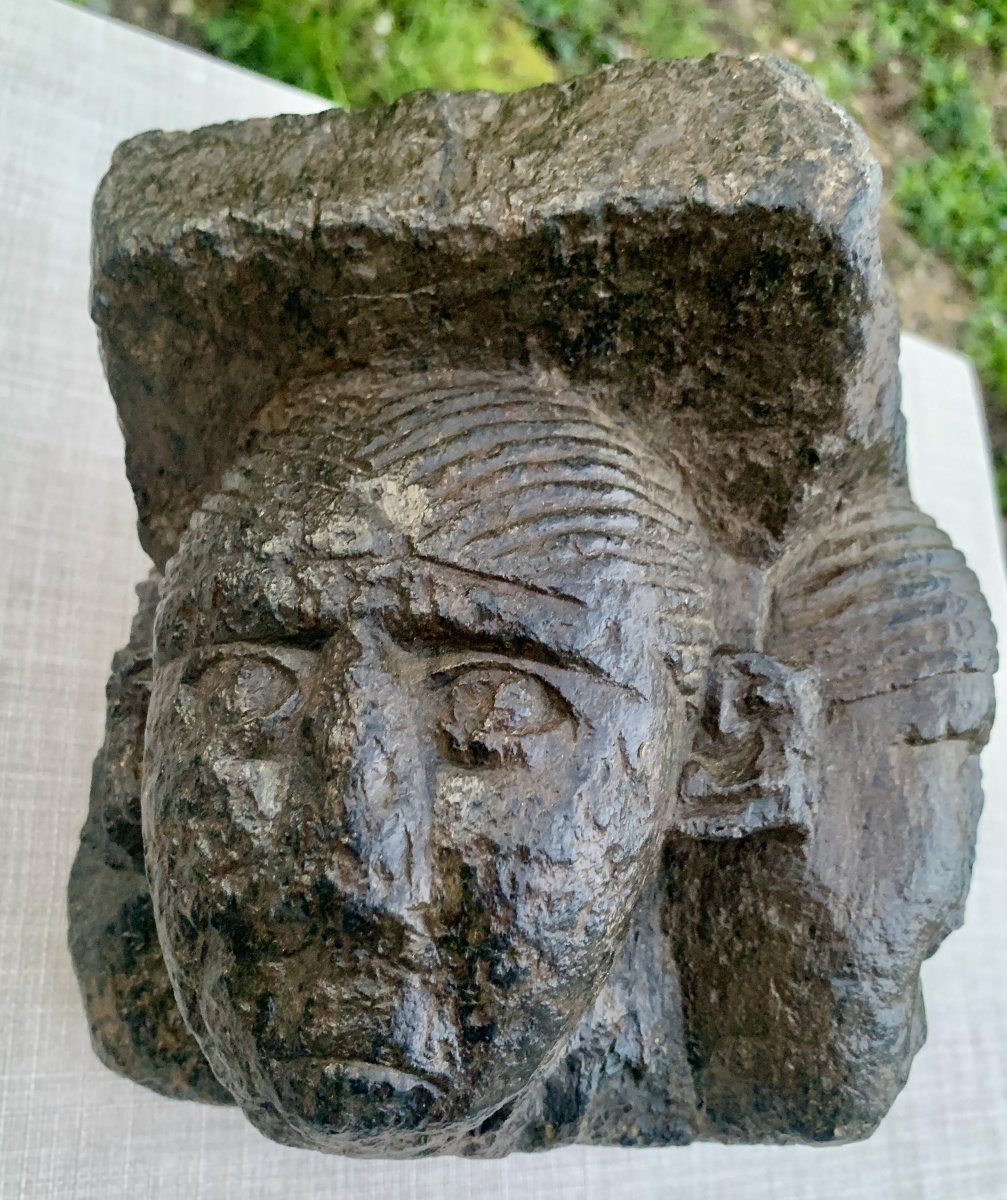
The eye sockets are deeply hollowed out, revealing a softly raised pupil. This technique catches side light in a way typical of Romanesque sculpture, creating a dark and expressive gaze that's essential for a piece displayed up high.
In Italian Romanesque art, the introduction of distinctive or exotic faces often has symbolic meaning. They represent pagan or distant peoples incorporated into universal Christian iconography, or sometimes the triumph over the non-believer.
Lombard art developed a very expressive stone art during this period: the stylization is very archaic here, and the treatment of faces is decidedly Romanesque (11th - 12th century) or even early medieval. It shows several typical features of medieval provincial sculpture in Europe:
* Almond-shaped eyes, very large, are outlined by thick eyelids carved in high relief.
* Eyebrows are marked by simple geometric linear incisions
* Hair is shown as parallel, stiff lines (in regular grooves)
* The ears of each face, set widely apart, curiously fit geometrically with the ears of neighboring faces
Dimensions:
approximately 20 x 20 cm
and 18.5 cm high;
weight 10.1 kg.
Condition:
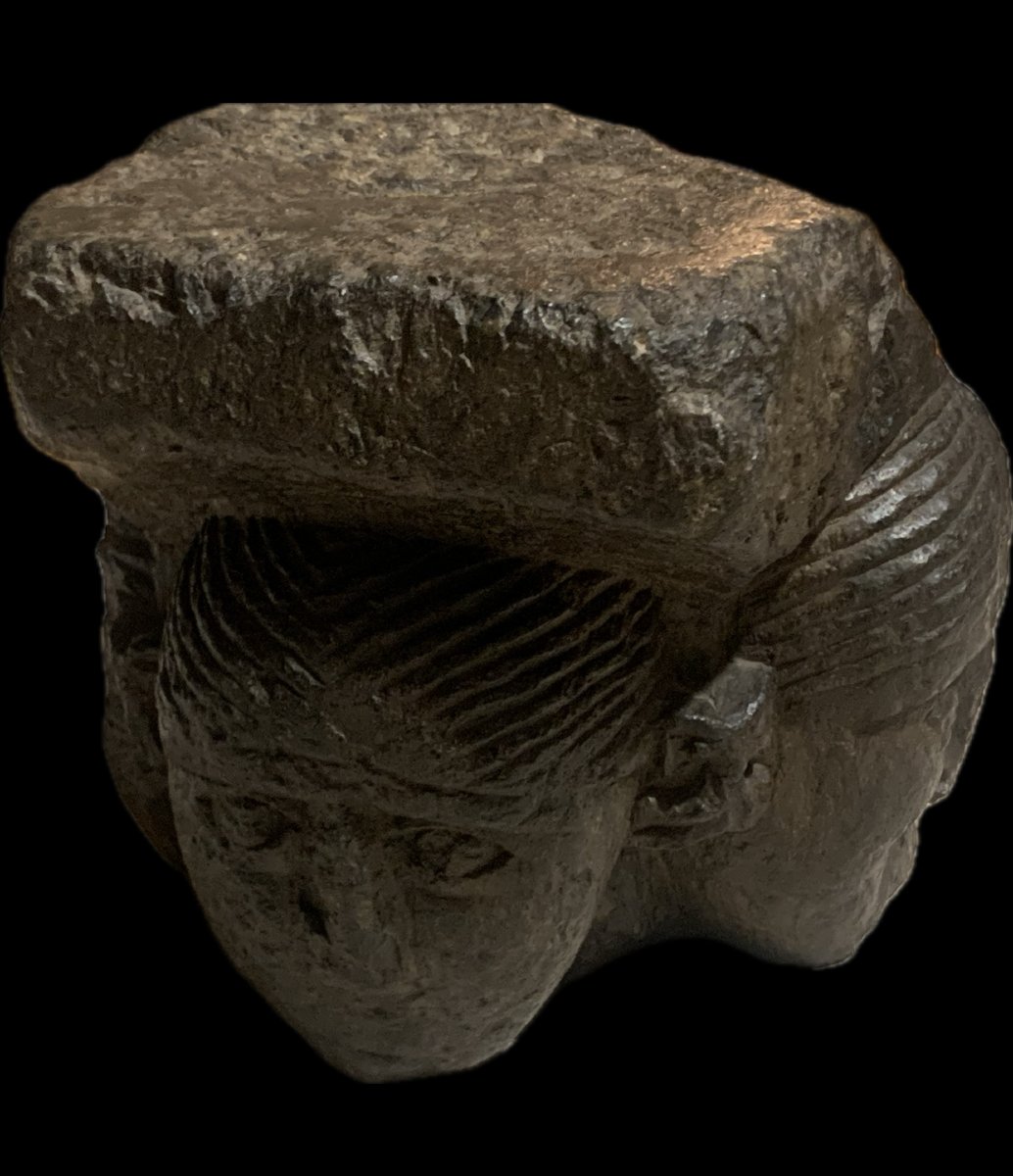
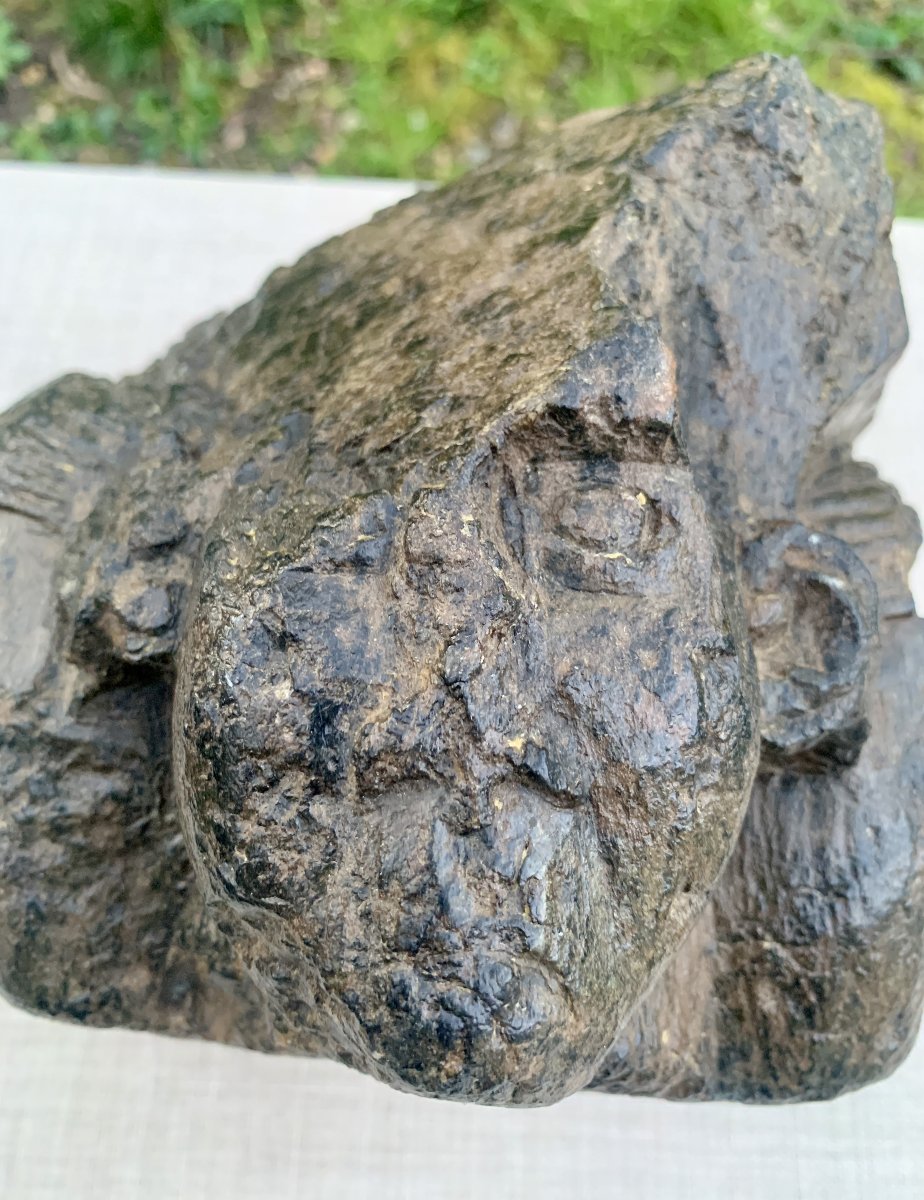
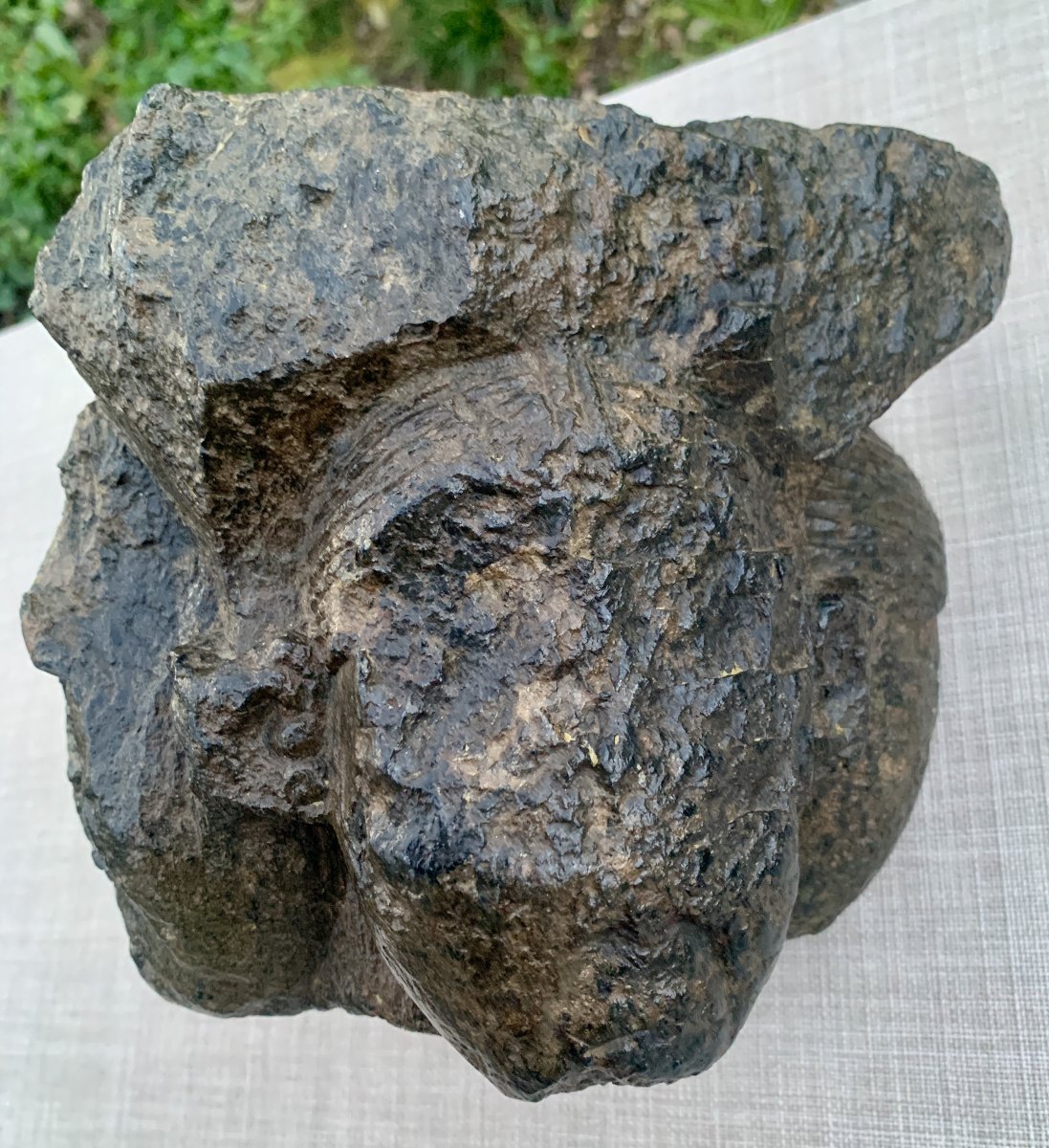
2 of the sides are damaged, one very missing in spots and the other very worn. The faces that are still readable are obviously not exact replicas, which enhances the handmade and unique character of the piece.
The circular cavity under the base, the mortise, was meant to receive an iron or lead pin, and allowed the capital to be perfectly centered and secured on its column shaft.
The thick upper oblique band, the abacus, extends widely forward above the foreheads. This confirms that this architectural element was meant to bear a heavy load (the start of a double arch or the fall of a vault from a small building, like a porch, a cloister, or a crypt).
Custom base, circular plexiglass base and brass tube
The stone has a beautiful, shiny patina, black, dense, and dark, linked to its age and wear over several centuries. The brown oxidation marks on the surface, related to its preservation, suggest that the architectural element has been removed from its original function and location for a long time.
Despite its fragmentary condition, this sculpture, extremely rare by its subject, keeps an amazing expressive power. It's a great example of triumphant Romanesque art, where the sacred mixes with expressive and exotic human representations.
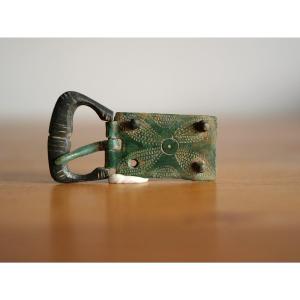
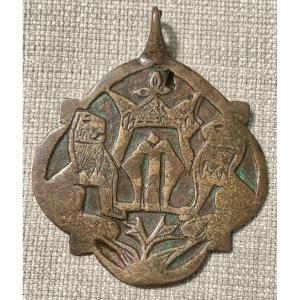
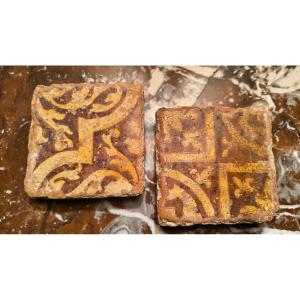
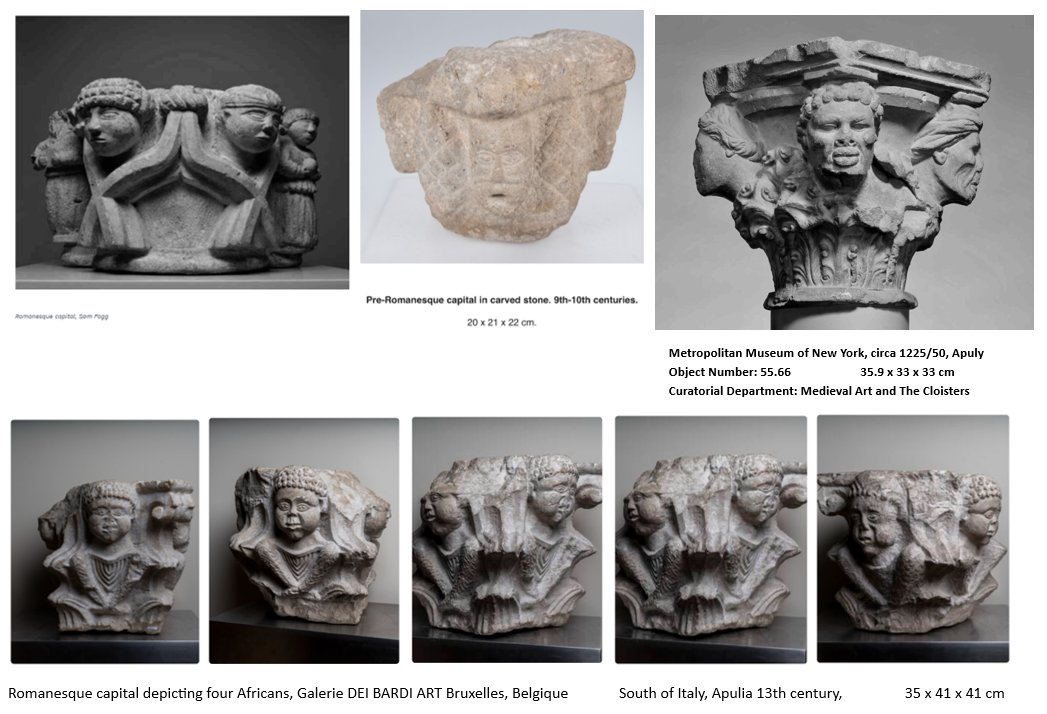
Please check on last photos other exapmles of roman capitals carved on the same thema of african representation
More photos available on request at fabien.siegfried@yahoo.com
7 800 €
Period: Before 16th century
Style: Renaissance, Louis 13th
Condition: Some scratches and chips
Material: Marble
Width: 20 cm environ
Height: 18,5 cm
Depth: 20 cm environ
Reference (ID): 1840216
Availability: In stock
Print