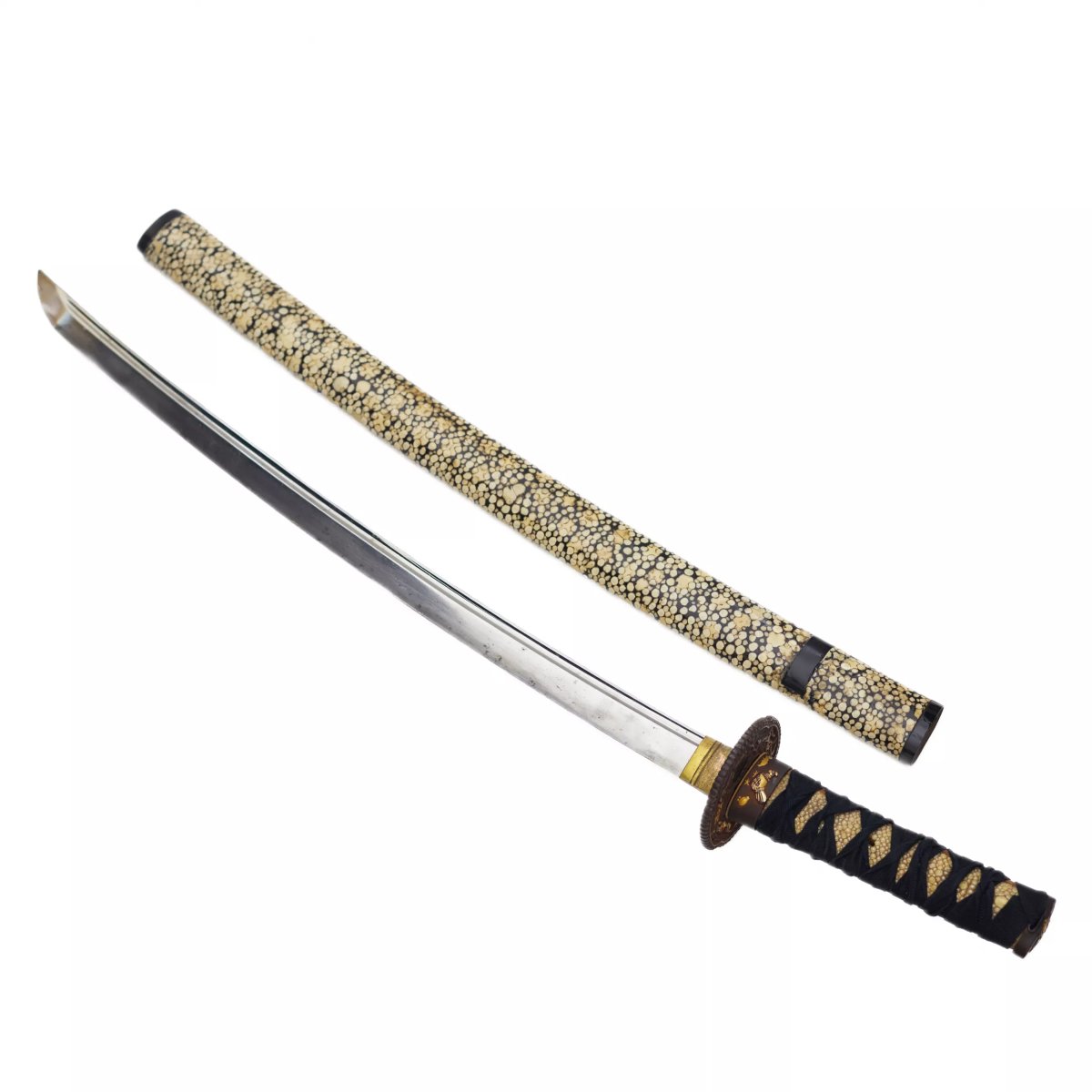
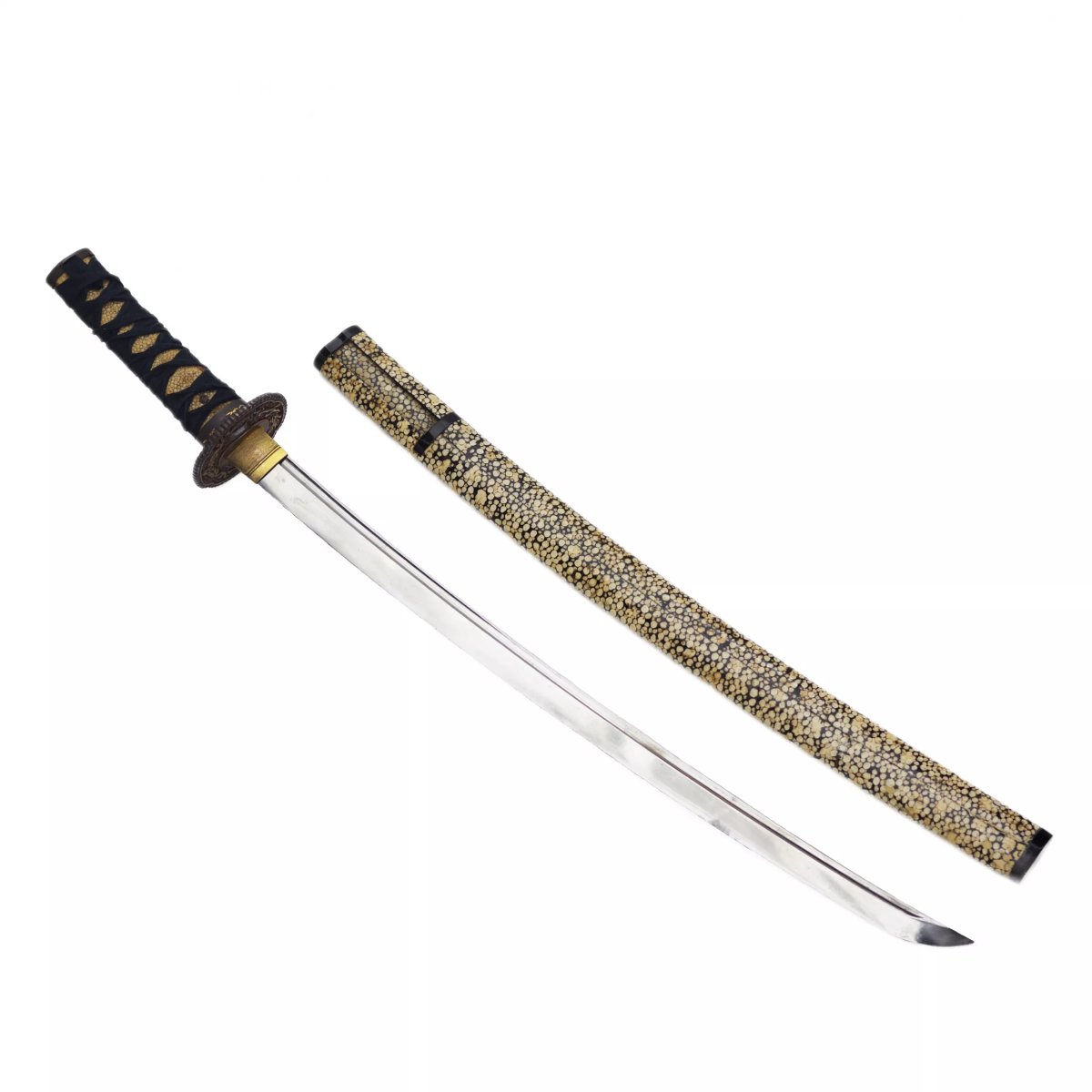
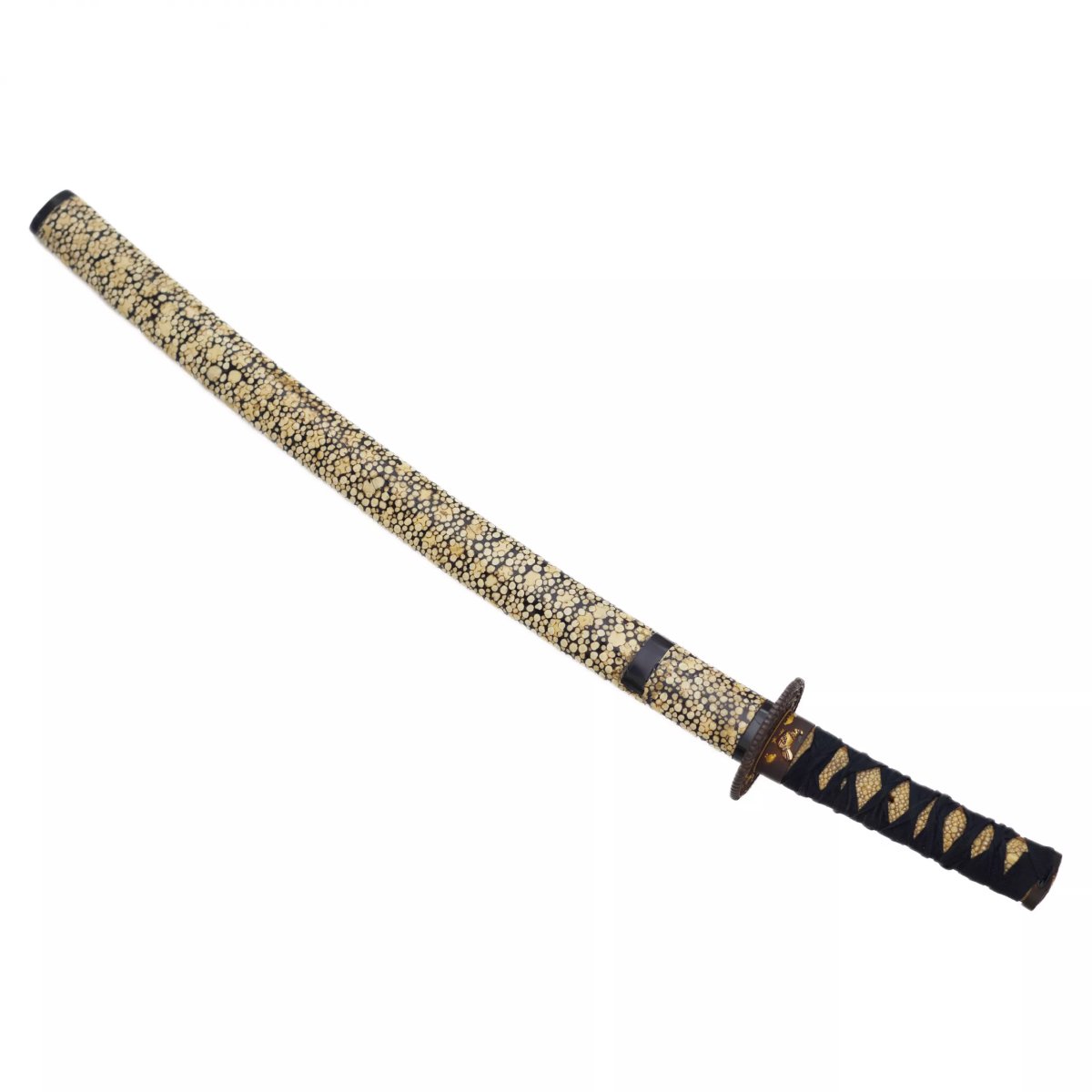
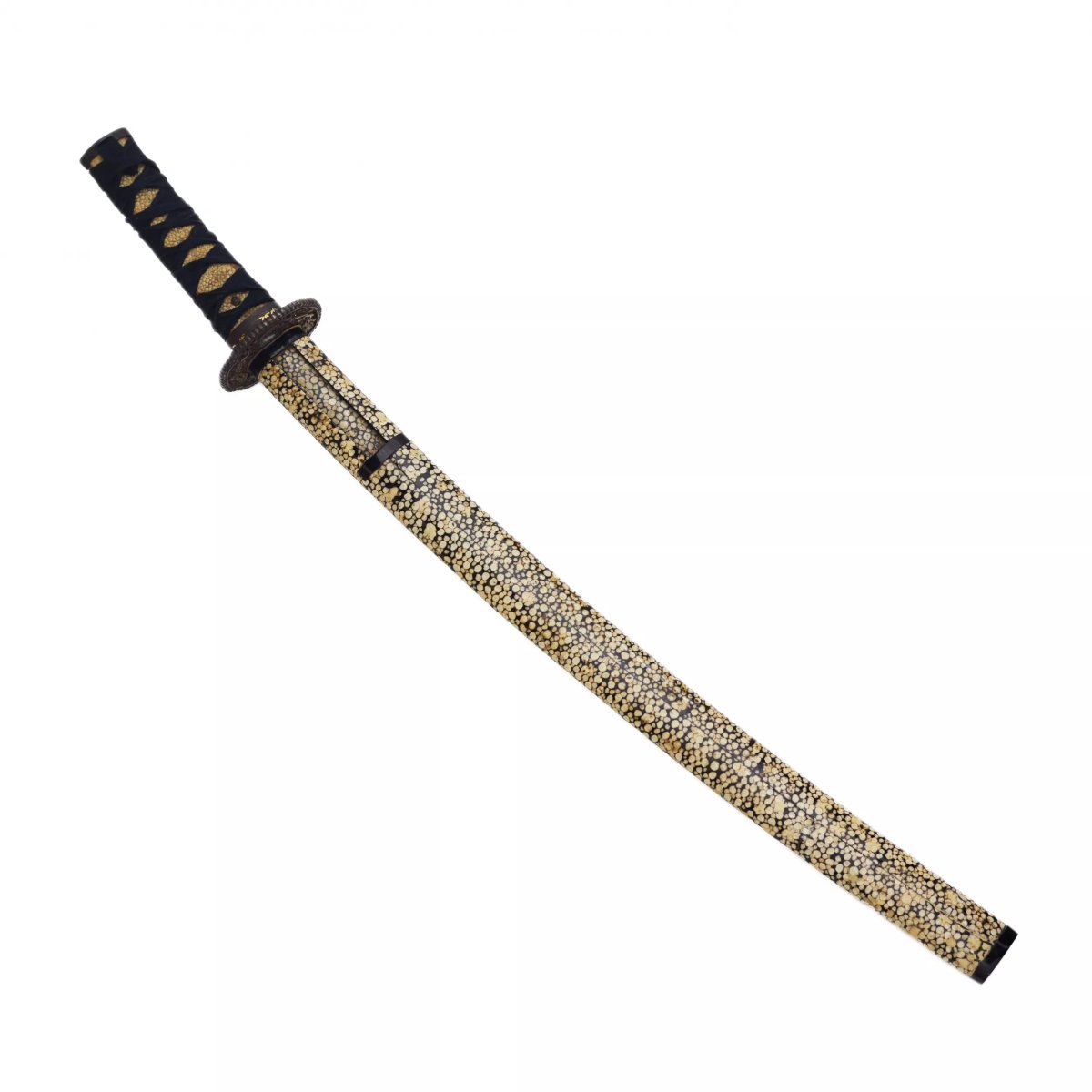


Wakizashi In A Ceremonial Koshirae With A Namban Tsuba. Japan, Edo Period, 19th Century
A Japanese wakizashi mounted in a lavish koshirae, characteristic of the late Edo period and combining the tradition of Japanese swordsmithing with the refinement of the decorative arts applied to sword mountings.
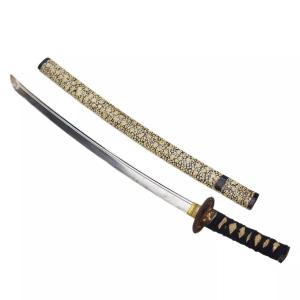
The slightly curved steel blade features a well-defined kissaki and a wide longitudinal bo-hi extending along a significant portion of the blade. These grooves are a traditional element of Japanese blades, serving to reduce their weight while maintaining their structural rigidity. Museum collections preserve wakizashi from the Edo period featuring wide bo-hi, attesting to the established use of this design in the art of Japanese swordmaking.
The tsuka is covered in samegawa stingray skin and features a traditional, tightly woven black tsuka-ito. Beneath the weaving are decorative menuki in the shape of stylized flowers.
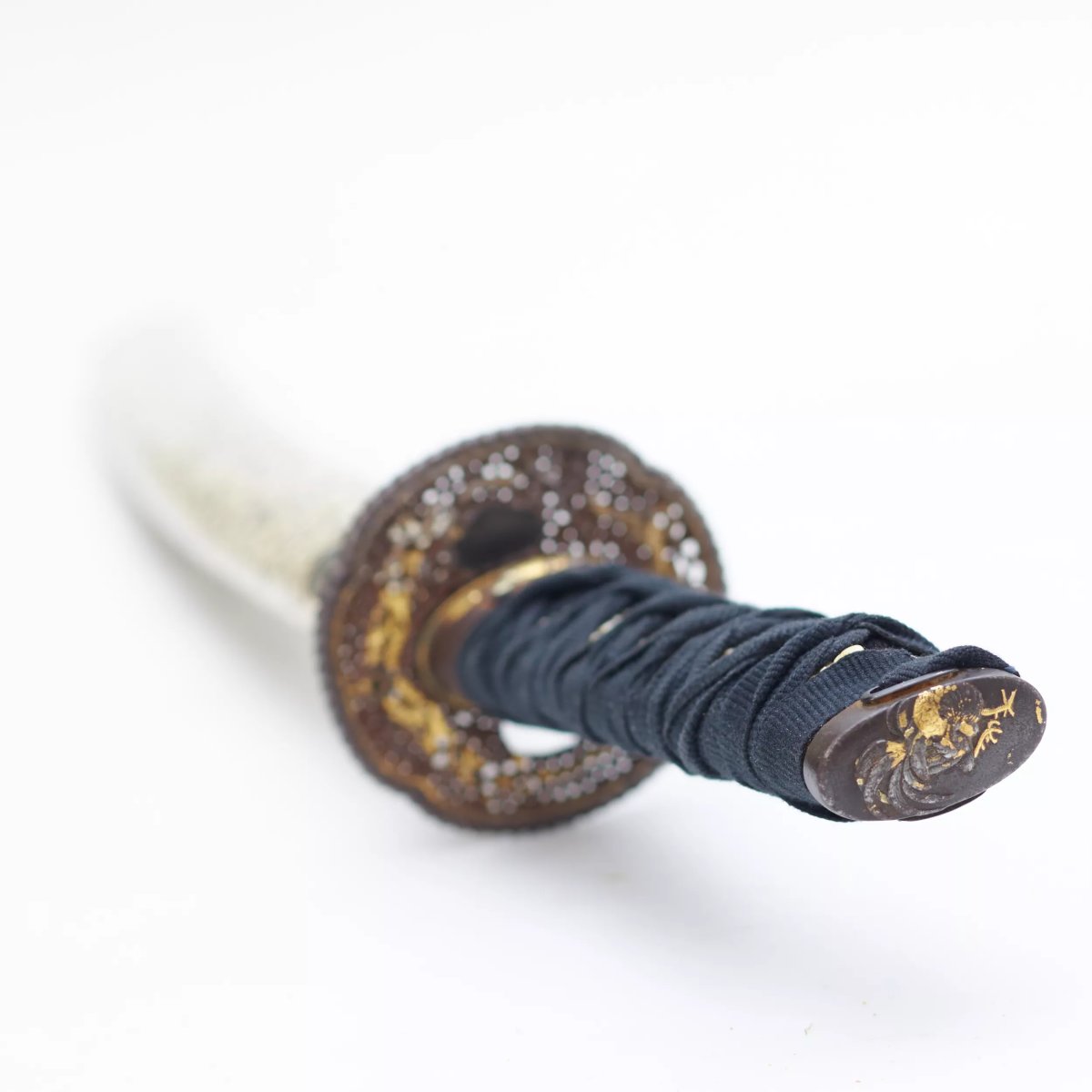
The iron fuchi and kashira are of particular artistic interest. They are adorned with inlays and partial gilding. Their decoration depicts a rooster, a hen, and a chick, forming a small genre scene. The zoomorphic and botanical motifs, executed using metal inlays and gold highlights, are characteristic of Japanese sword fittings from the Edo period. Similar combinations of iron, relief decoration, and gilding can be found in museum collections dedicated to Japanese weapons.
The iron tsuba is crafted using the sukashi technique, featuring an openwork design that is partially gilded. Its design belongs to the Namban tradition, a distinct style within the Japanese art of sword fittings that developed under the influence of European and Asian decorative motifs imported and subsequently reinterpreted by Japanese artisans.
The saya features a remarkable surface of coarse-grained, polished stingray skin, creating a particularly expressive natural texture. The dark metal fittings contrast with the cream and brown tones of the covering. A slot for the kozuka is present, but the kozuka itself is missing.
The combination of a bo-hi blade, a traditional samegawa-covered handle, a fuchi-kashira with figurative decoration, an openwork Namban tsuba, and a remarkable stingray skin scabbard gives the set the cohesive decorative character of Japanese weapons from the late Edo period. Comparable 19th-century wakizashi in museum collections feature a similar combination of a steel blade and a set of fittings designed as a true work of decorative art.
Materials: Steel, iron, samegawa stingray skin, fabric, gilding, inlays.
Dimensions: Total length 68.5 cm.
Condition: Good condition, with natural signs of age and use. Kozuka missing.
ID-ANTQ-8118
Period: 19th century
Style: Other Style
Condition: Good condition
Material: Metal
Length: 7
Width: 7
Height: 70
Reference (ID): 1840698
Availability: In stock