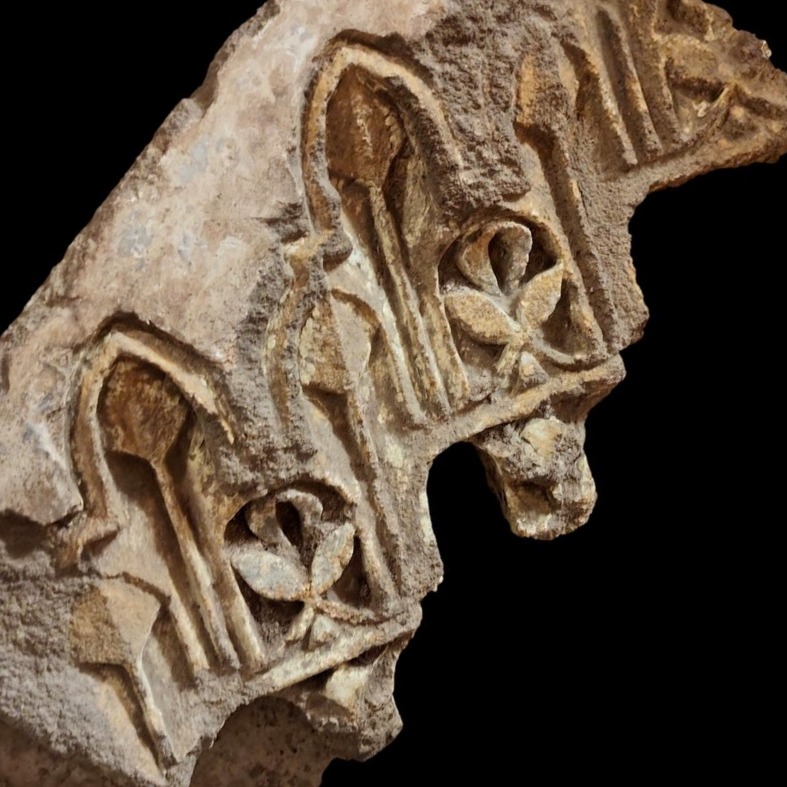
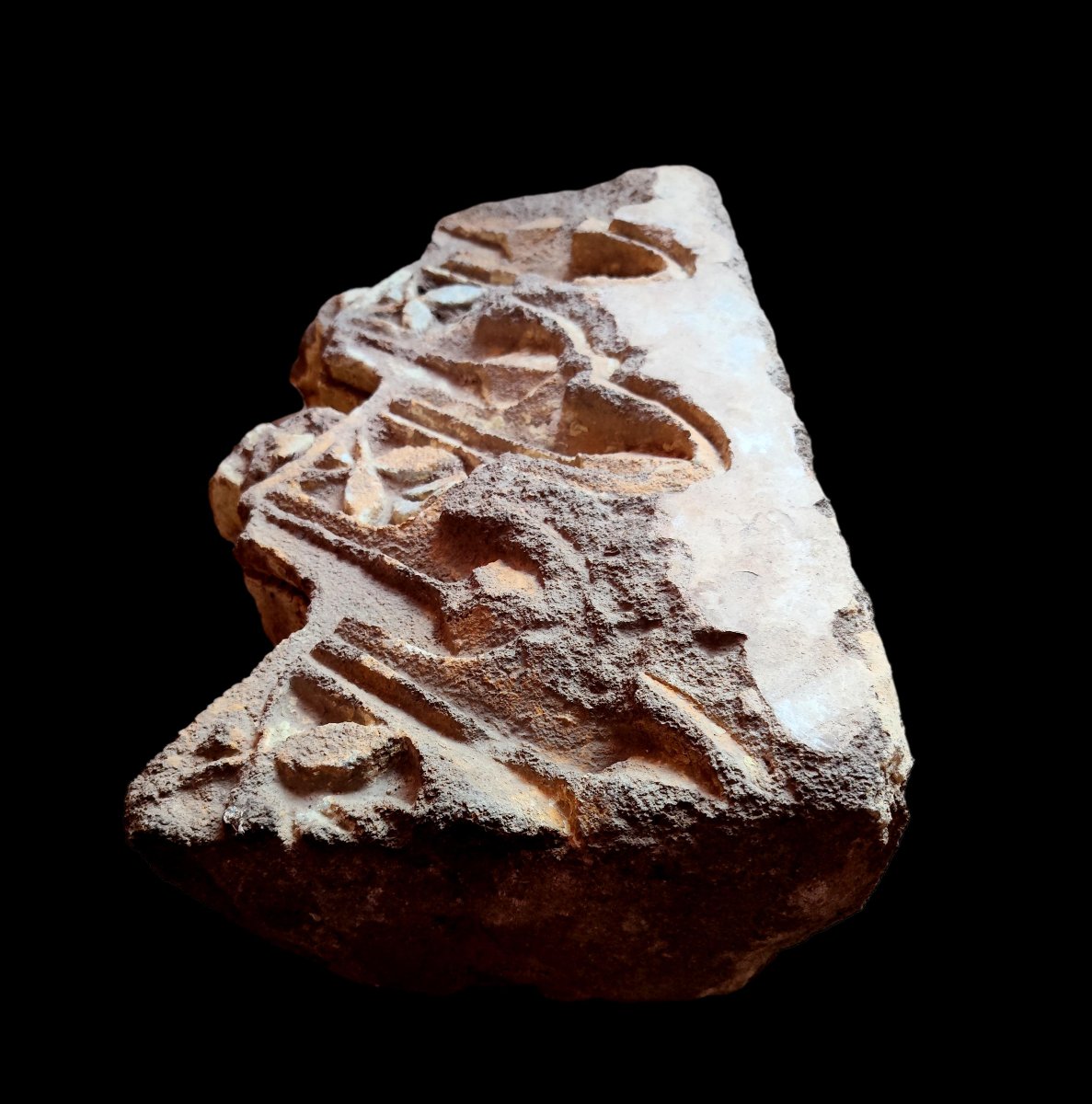
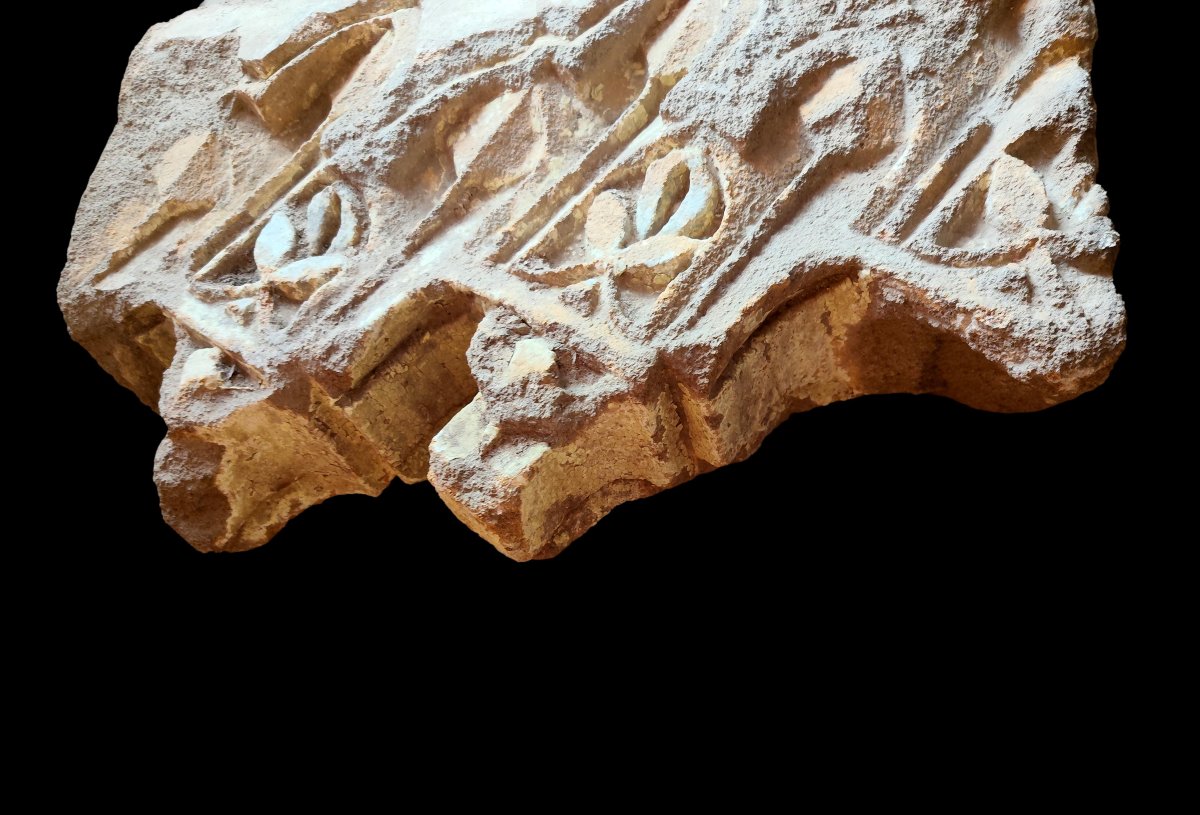
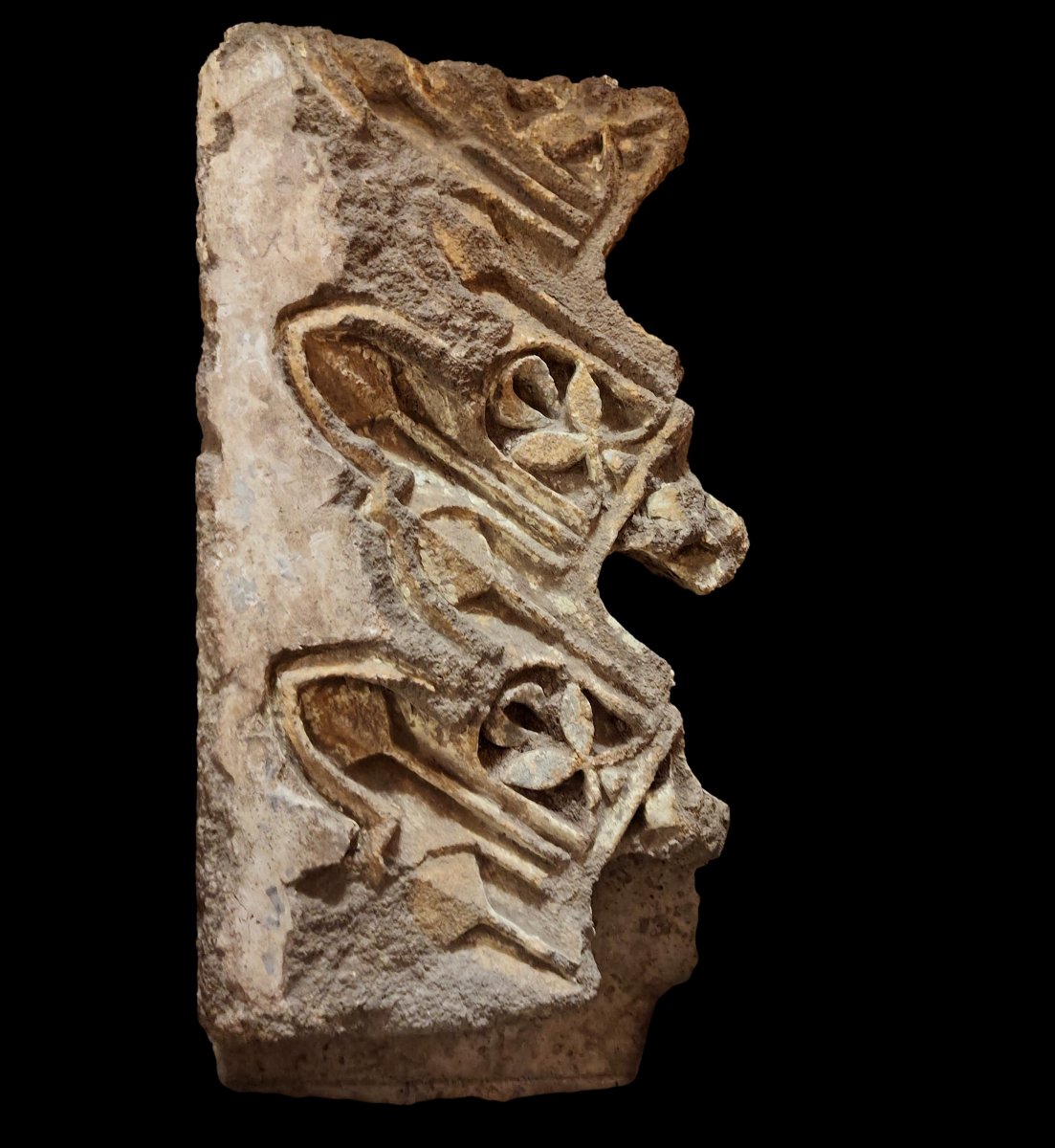
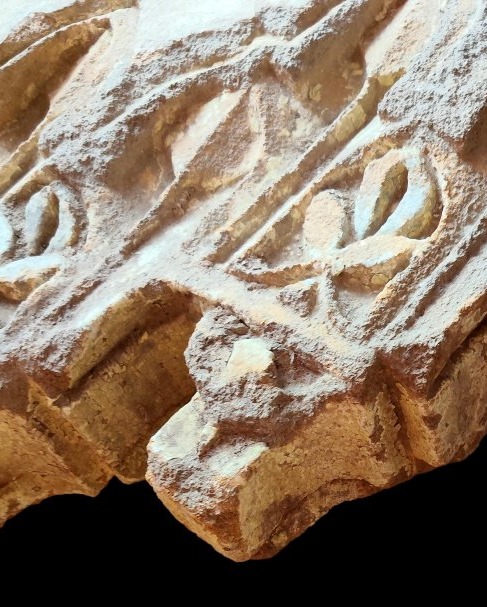


Architectural Fragment Made Of Sandstone, Morocco, Umayyad Period? Traces Of Polychrome Decoration, Collection
Artist: Art Du Maroc
Architectural fragment made of sandstone,
Morocco, Umayyad period?
traces of polychrome decoration,
a beautiful collector's item
Dimensions: Length: 49 cm (19") - width: 31 cm (12") - depth: 16 cm (6") - weight: 15 kg
## The architecture and art of the Umayyad dynasty (661–750 in Damascus, then until the 11th century in Córdoba) are characterized by a masterful and diverse use of stone.
By combining the traditions of Roman, Byzantine, and Persian antiquity, they employed various types of rock to construct their masterpieces.
Limestone and sandstone:
These were the basic materials for Umayyad masonry in Syria, Jordan, and Palestine (as seen in the ramparts of the “desert castles”).
Limestone blocks were carefully cut into large, regular courses.
Major milestones of the Umayyads in Morocco
For any inquiries, please feel free to contact me at:
06 13 36 09 30 or winsteinprovence@gmail.com
On our website, you’ll find a wide selection of Persian, Anatolian, and Caucasian rugs, as well as a beautiful collection of antique objects from around the world.
www.winsteinprovence.com
(Texts and photo credits: Winstein, all rights reserved)
Morocco, Umayyad period?
traces of polychrome decoration,
a beautiful collector's item
Dimensions: Length: 49 cm (19") - width: 31 cm (12") - depth: 16 cm (6") - weight: 15 kg
## The architecture and art of the Umayyad dynasty (661–750 in Damascus, then until the 11th century in Córdoba) are characterized by a masterful and diverse use of stone.
By combining the traditions of Roman, Byzantine, and Persian antiquity, they employed various types of rock to construct their masterpieces.
Limestone and sandstone:
These were the basic materials for Umayyad masonry in Syria, Jordan, and Palestine (as seen in the ramparts of the “desert castles”).
Limestone blocks were carefully cut into large, regular courses.
Major milestones of the Umayyads in Morocco
- The conquest (7th–8th centuries) : The westward advance through North Africa took place in stages from Kairouan (founded around 670), overcoming local resistance and that of the Berber tribes. In 711, the Umayyads incorporated Moroccan territory into their empire, using it as a launching pad for Tariq ibn Ziyad’s crossing into Al-Andalus.
- Provenance: Jean Louis Steinbach Collection
For any inquiries, please feel free to contact me at:
06 13 36 09 30 or winsteinprovence@gmail.com
On our website, you’ll find a wide selection of Persian, Anatolian, and Caucasian rugs, as well as a beautiful collection of antique objects from around the world.
www.winsteinprovence.com
(Texts and photo credits: Winstein, all rights reserved)
890 €
Period: Before 16th century
Style: Orientalism
Condition: Condition of use
Material: Sandstone
Length: 49 cm - 19"
Width: 31 cm - 12"
Depth: 16 cm - 6"
Reference (ID): 1838757
Availability: In stock
Print