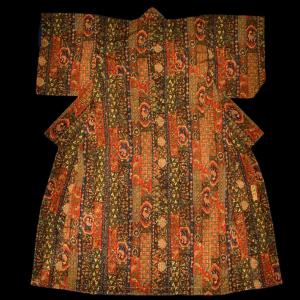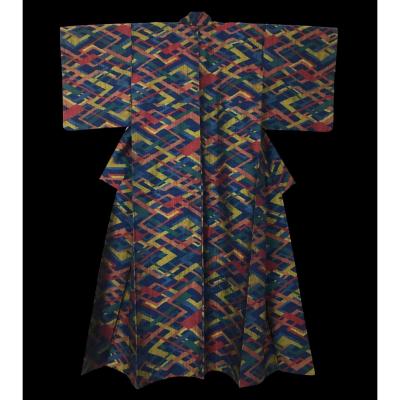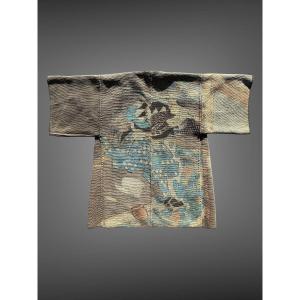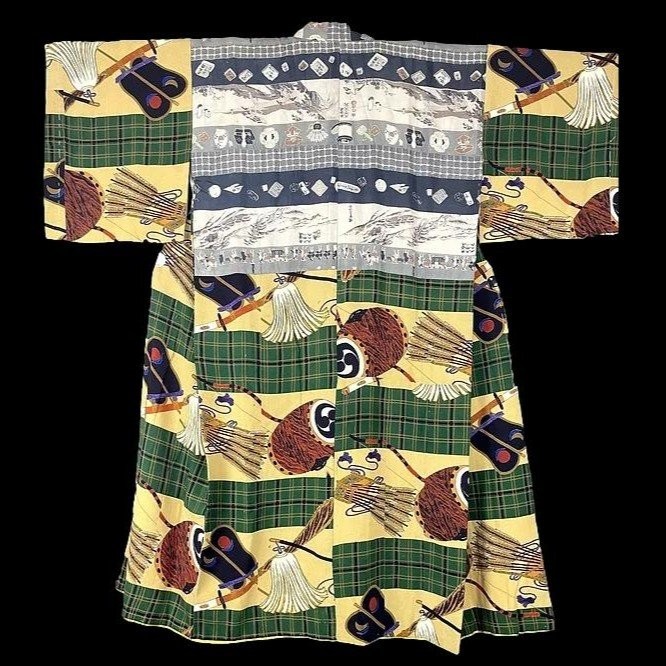
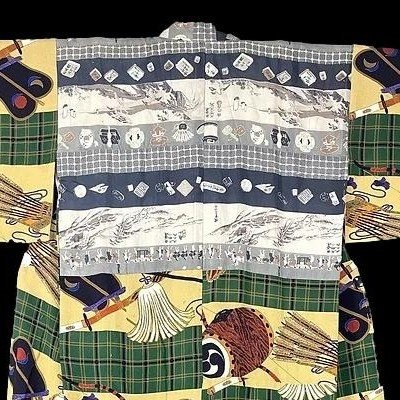





Men's Silk-on-silk Nagajuban, Tsumugi, Silk Pongee, Japan Circa 1950
In keeping with Japanese tradition, this antique nagajuban, dating from around 1950, is made from pure silk for men.
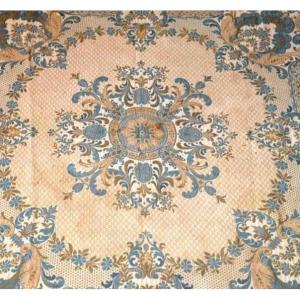
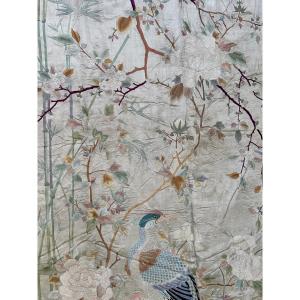
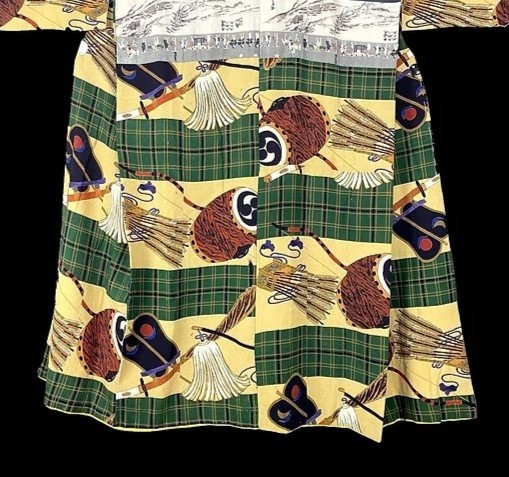
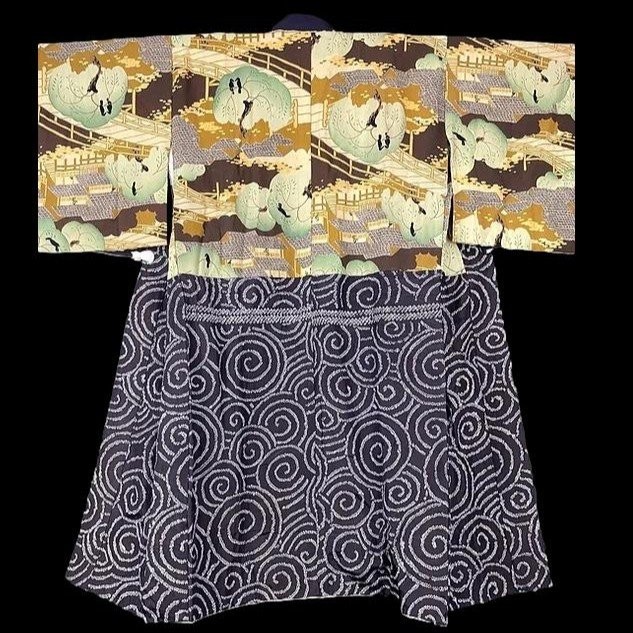
This beautiful nagajuban features an antique design, capturing the very essence of classic Japanese style.
Enhance your kimono ensemble with this authentic piece.
It combines comfort and Japanese heritage in every detail.
The nagajuban is an elegant traditional Japanese garment and undergarment, designed to be worn under a kimono or as a lounge jacket.
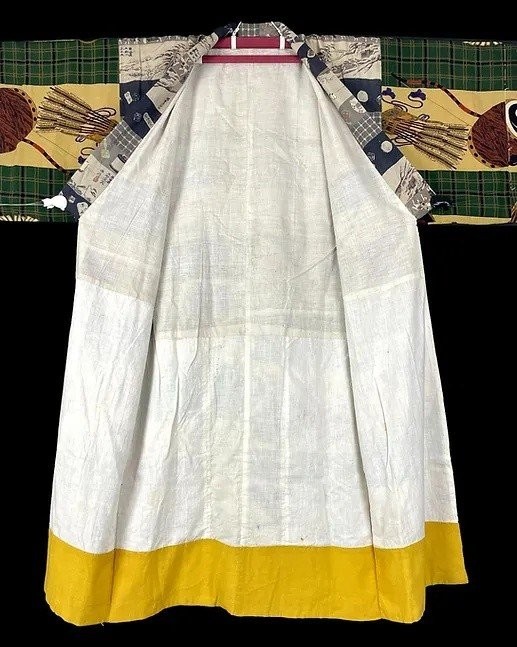
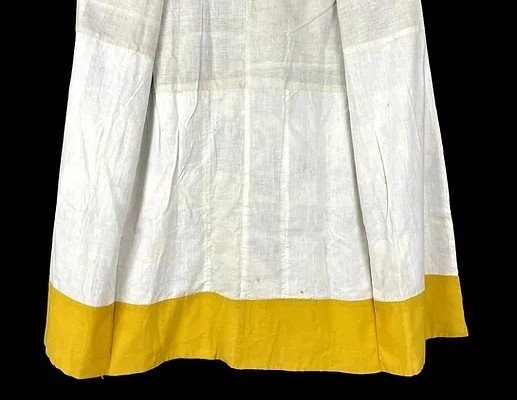
Often, it is a white cotton robe that acts as a barrier between the skin and the kimono, thus providing effective protection against wear and perspiration on the traditional men's Japanese kimono.
Easy to care for, the nagajuban offers a practical solution.
It is important to note that this undergarment is specifically designed to be worn under a kimono, and not under a yukata.
Size: 1. Length: 121 cm 2. Width: 118 cm.
Made of elegant, highly prized, luxurious Tsumugi (silk pongee).
These belong to the category of nagajuban and kimonos known as "woven" (orimono), which implies that the silk thread was dyed before being woven (although there are exceptions), unlike nagajuban and kimonos made from white fabric and dyed afterward (komon, hômongi, etc.).
The patterns flow seamlessly from the seams. Connoisseurs of this type of fabric are true experts.
During the Edo period (1603-1867), the different social classes were subject to strict rules, even regarding their clothing. Indeed, silk was reserved for the nobility and warriors.
However, silk farmers began to produce fabrics for their own use from average-quality silk threads that were impossible to sell commercially.
These fabrics, which revealed... Irregularities on their surface, which bore no resemblance to silk (but rather to cotton), made them highly prized by the lower classes (merchants, bourgeois) who, thanks to this ingenuity, were then able to wear with impunity a material that was otherwise forbidden to them.
FREE SHIPPING WITH IN FRANCE €0 / EUROPE €15 / WORLD €25 Colissimo.
Texts, photos WINSTEIN, all rights reserved.
This beautiful nagajuban features an antique design, capturing the very essence of classic Japanese style.
Enhance your kimono ensemble with this authentic piece.
It combines comfort and Japanese heritage in every detail.
The nagajuban is an elegant traditional Japanese garment and undergarment, designed to be worn under a kimono or as a lounge jacket.
Often, it is a white cotton robe that acts as a barrier between the skin and the kimono, thus providing effective protection against wear and perspiration on the traditional men's Japanese kimono.
Easy to care for, the nagajuban offers a practical solution.
It is important to note that this undergarment is specifically designed to be worn under a kimono, and not under a yukata.
Size: 1. Length: 121 cm 2. Width: 118 cm.
Made of elegant, highly prized, luxurious Tsumugi (silk pongee).
These belong to the category of nagajuban and kimonos known as "woven" (orimono), which implies that the silk thread was dyed before being woven (although there are exceptions), unlike nagajuban and kimonos made from white fabric and dyed afterward (komon, hômongi, etc.).
The patterns flow seamlessly from the seams. Connoisseurs of this type of fabric are true experts.
During the Edo period (1603-1867), the different social classes were subject to strict rules, even regarding their clothing. Indeed, silk was reserved for the nobility and warriors.
However, silk farmers began to produce fabrics for their own use from average-quality silk threads that were impossible to sell commercially.
These fabrics, which revealed... Irregularities on their surface, which bore no resemblance to silk (but rather to cotton), made them highly prized by the lower classes (merchants, bourgeois) who, thanks to this ingenuity, were then able to wear with impunity a material that was otherwise forbidden to them.
FREE SHIPPING WITH IN FRANCE €0 / EUROPE €15 / WORLD €25 Colissimo.
Texts, photos WINSTEIN, all rights reserved.
240 €
Period: 20th century
Style: Asian art
Condition: Excellent condition
Material: Silk
Length: 121 cm - 48"
Width: 118 cm - 46"
Reference (ID): 1695305
Availability: In stock
Print