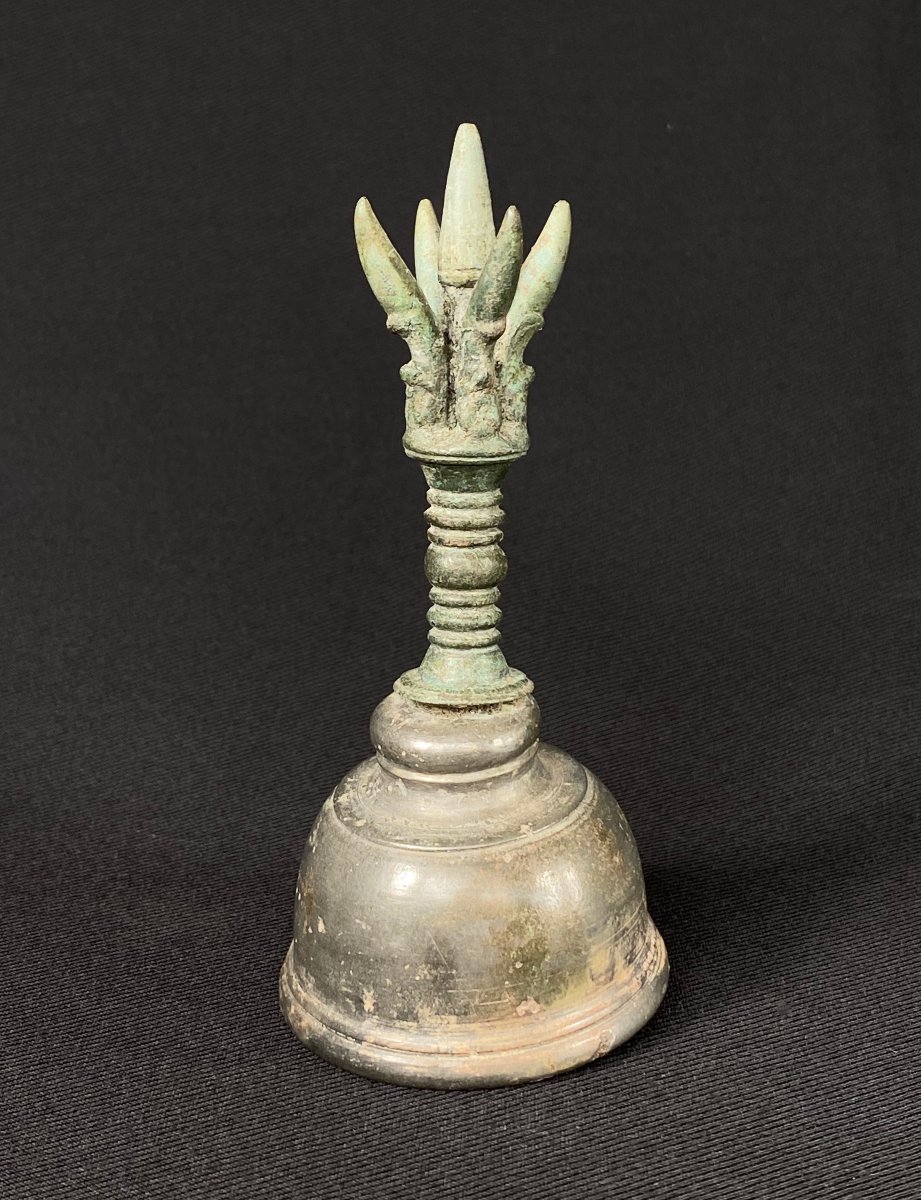


Ritual Bell (gantha), Bronze Artifact From An Archaeological Excavation Dating From The Khmer Empire (11th–13th Centuries)
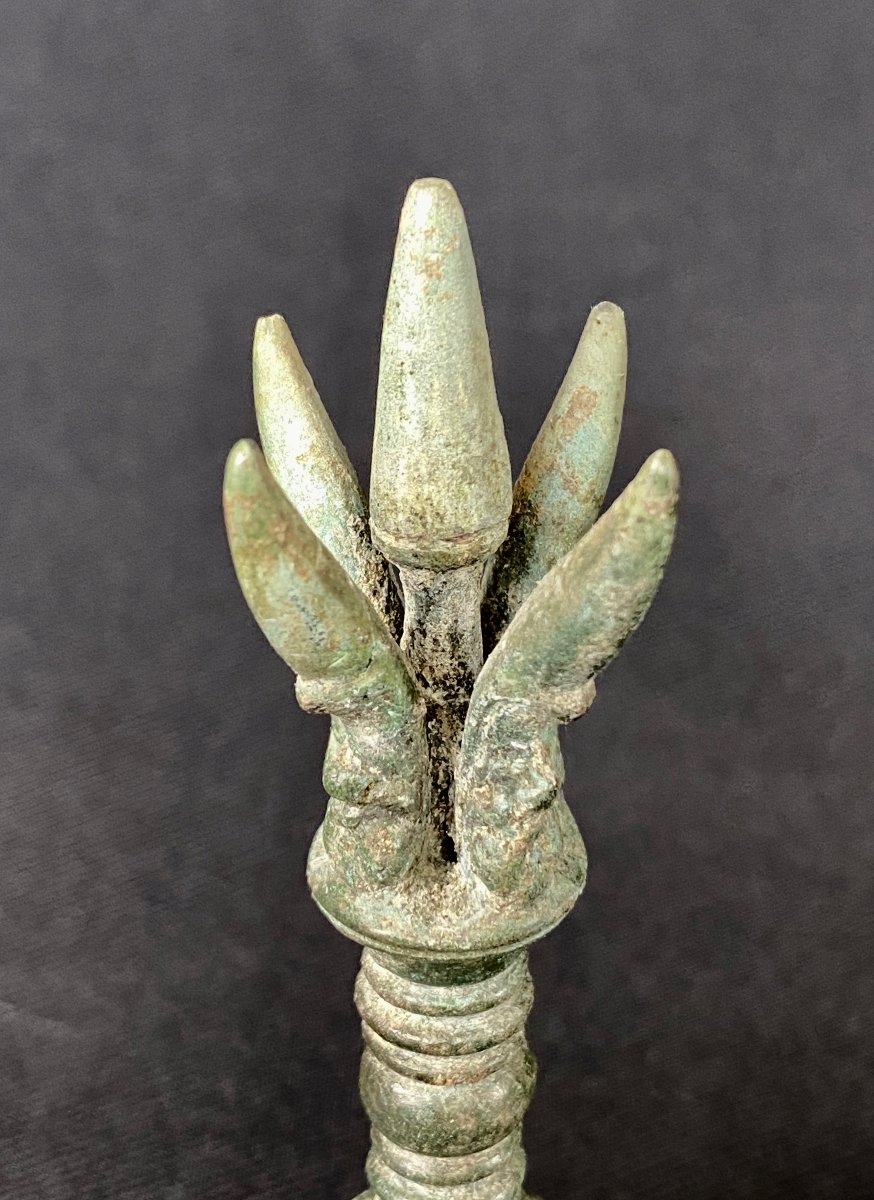
A ritual bell (gantha in Sanskrit) used in Mahayana and Tantric Buddhist rituals. During prayers, the monk holds the vajra (dorje in Tibetan) in one hand and the gantha in the other. The end of the gantha is often shaped like a half-vajra, as is the case here.
The handle bears symbolic meaning: its four short prongs represent the four cardinal directions, and the fifth represents the sky. It is associated with the male life force, whereas the bell itself represents the female life force. The bulging section in the middle is said to represent the life force, and each ring has its own specific meaning.
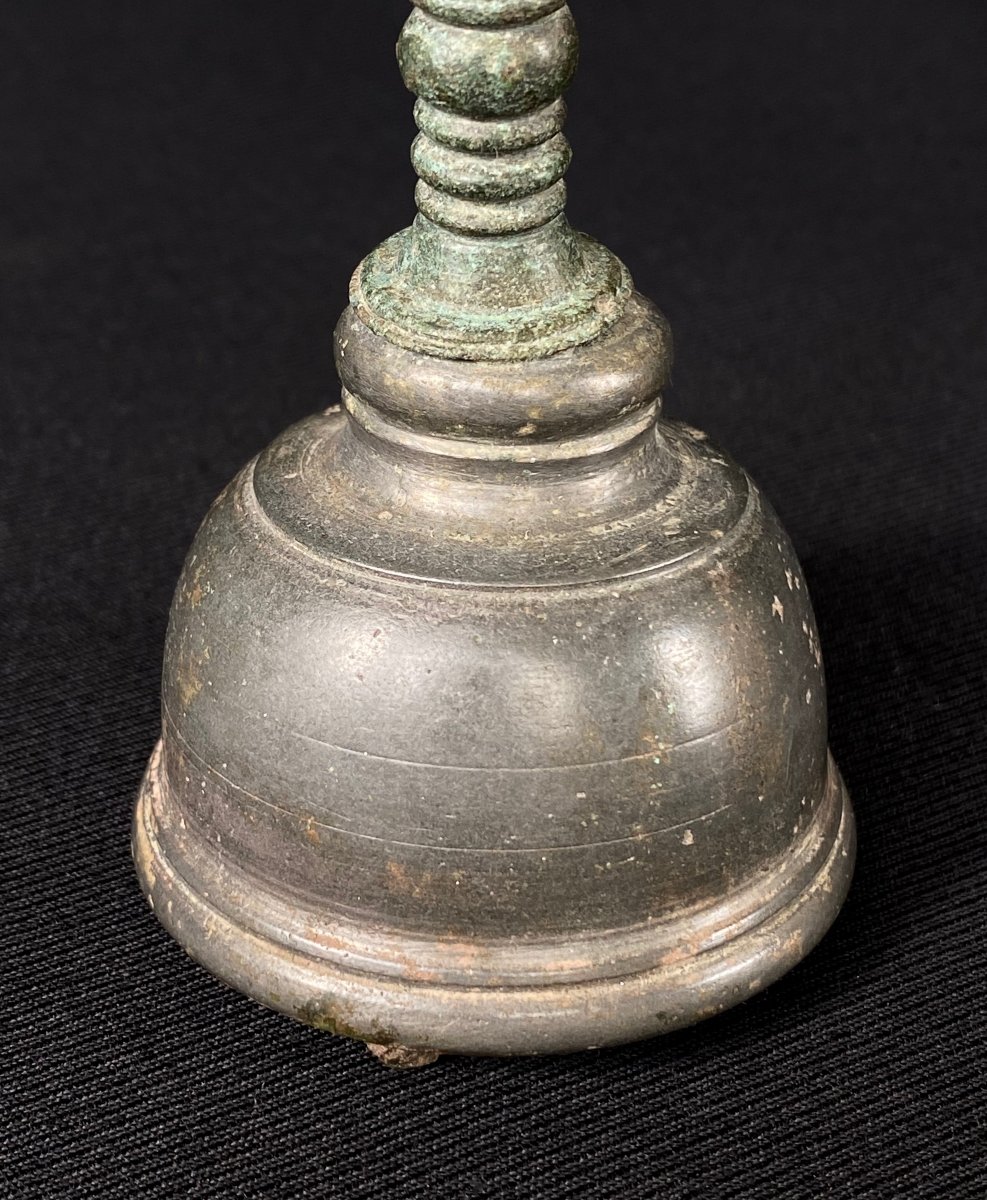
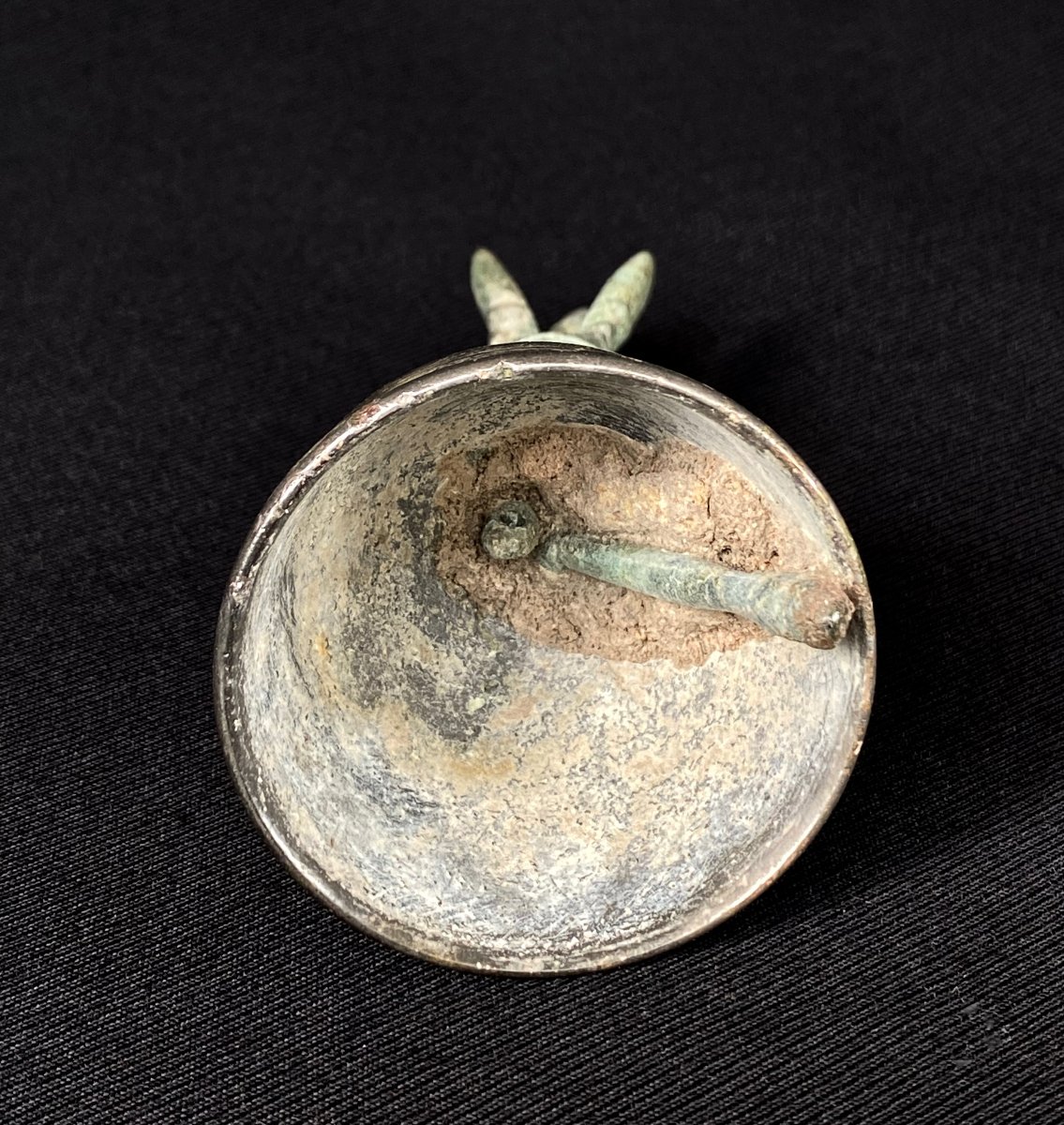
These small bells are always composed of two bronze elements made of different alloys: the bell body is made of bell bronze enriched with tin (or even silver) for a better tone. The clapper, also made of bronze, is almost always missing from excavated bronze artifacts, as it was held in place by a cord that has since disappeared. This specimen is exceptionally complete, with its clapper still in place and not fully excavated.
Archaeological bronze found in the Lopburi region, which was part of the Khmer Empire during the 12th–13th centuries. A beautiful historical object in good condition with a lovely malachite patina.
Length: 127 mm, weight: 206 g.
Free shipping within France via Colissimo tracked delivery.
To view other items: www.lamalledugouverneur.com
Period: Before 16th century
Style: Asian art
Condition: Good condition
Reference (ID): 1837774
Availability: In stock