

Large Clock “l’offrande” Louis-philippe Circa 1840
ORDERING AND ADDITIONAL INFORMATION FROM OUR WEBSITE
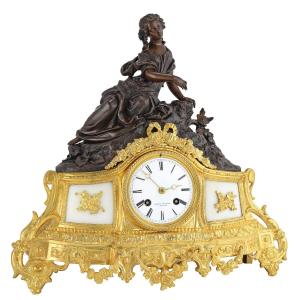
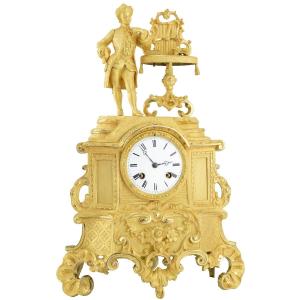
A monumental mantel clock from the Louis-Philippe period, circa 1840, exceptional for its proportions, decorative richness and remarkable quality of execution. This is a particularly rare and imposing model with a striking decorative presence, crafted entirely from finely chased bronze and mercury-gilt with fine gold. The gilding, still remarkably luminous and nuanced, admirably enhances the profusion of relief work, the precision of the chasing and the multitude of details covering the entire composition. Through its impressive scale, sophisticated ornamentation and the quality of its sculptural work, this clock bears witness to production of the very highest calibre.
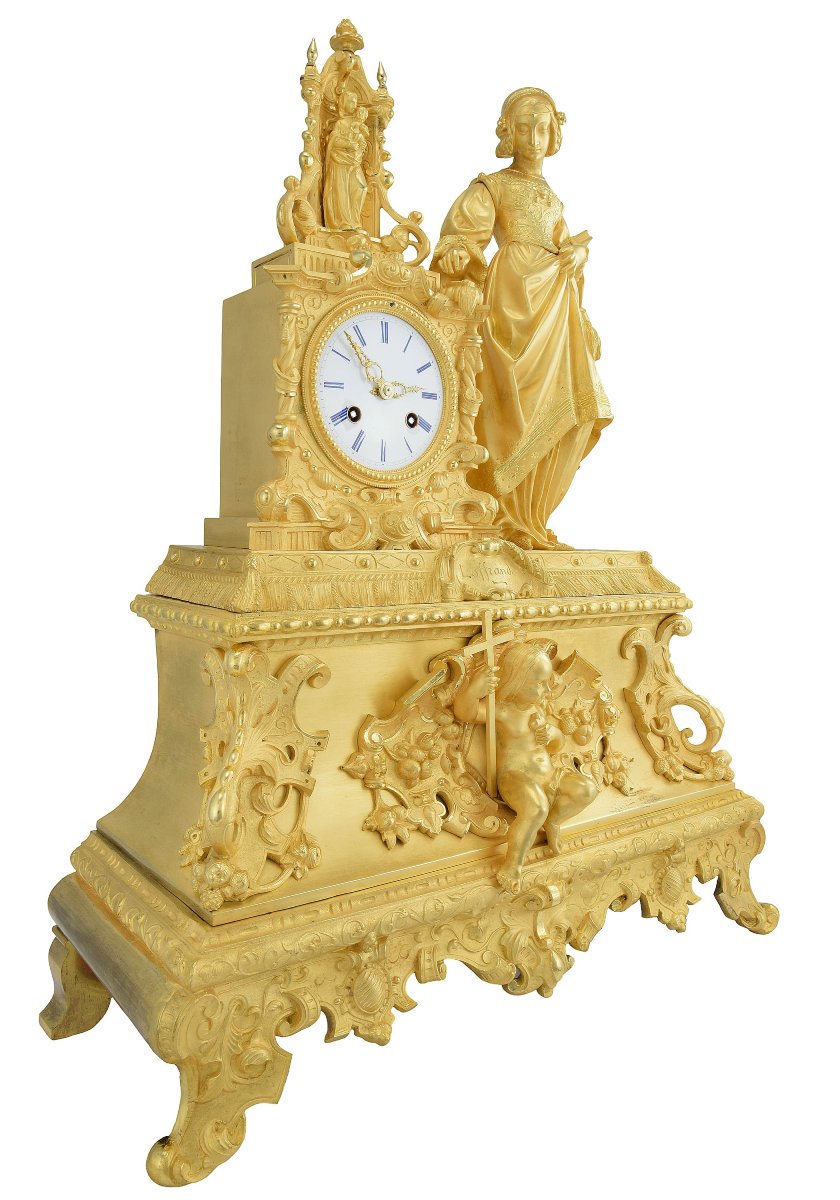
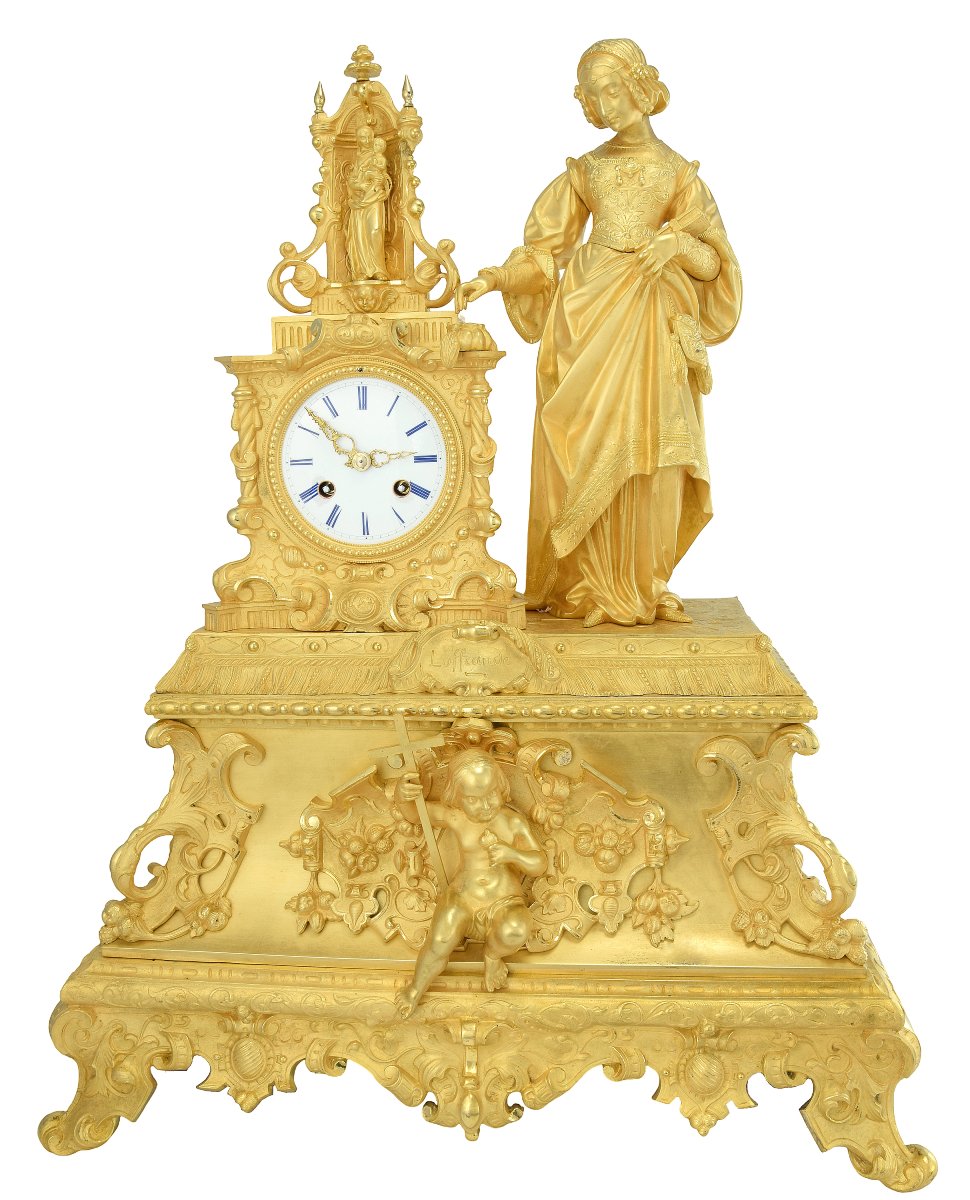
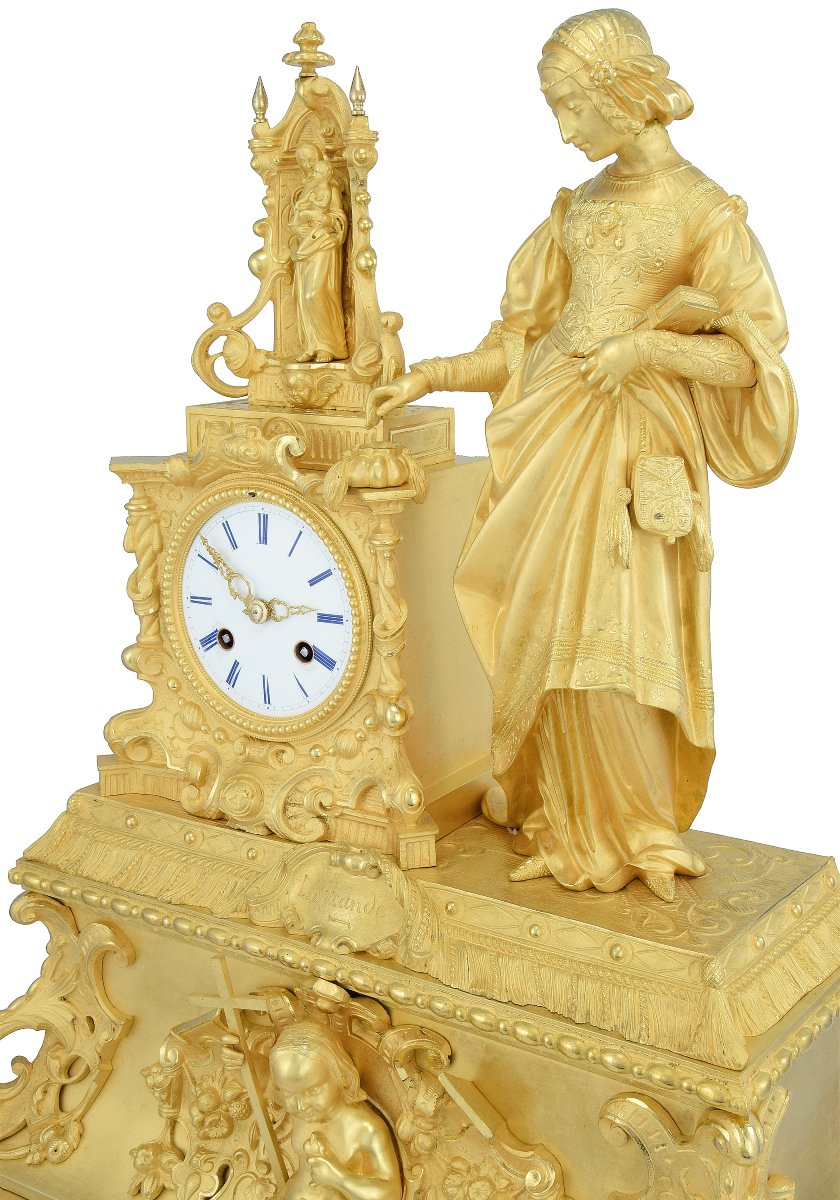
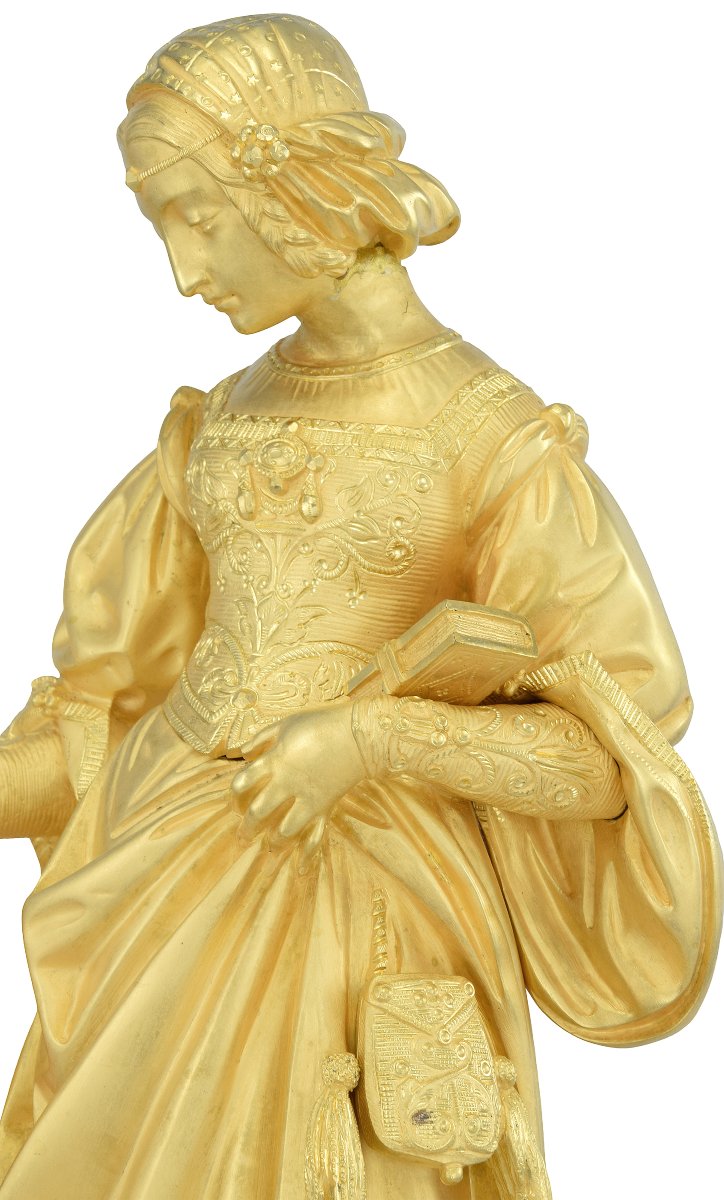
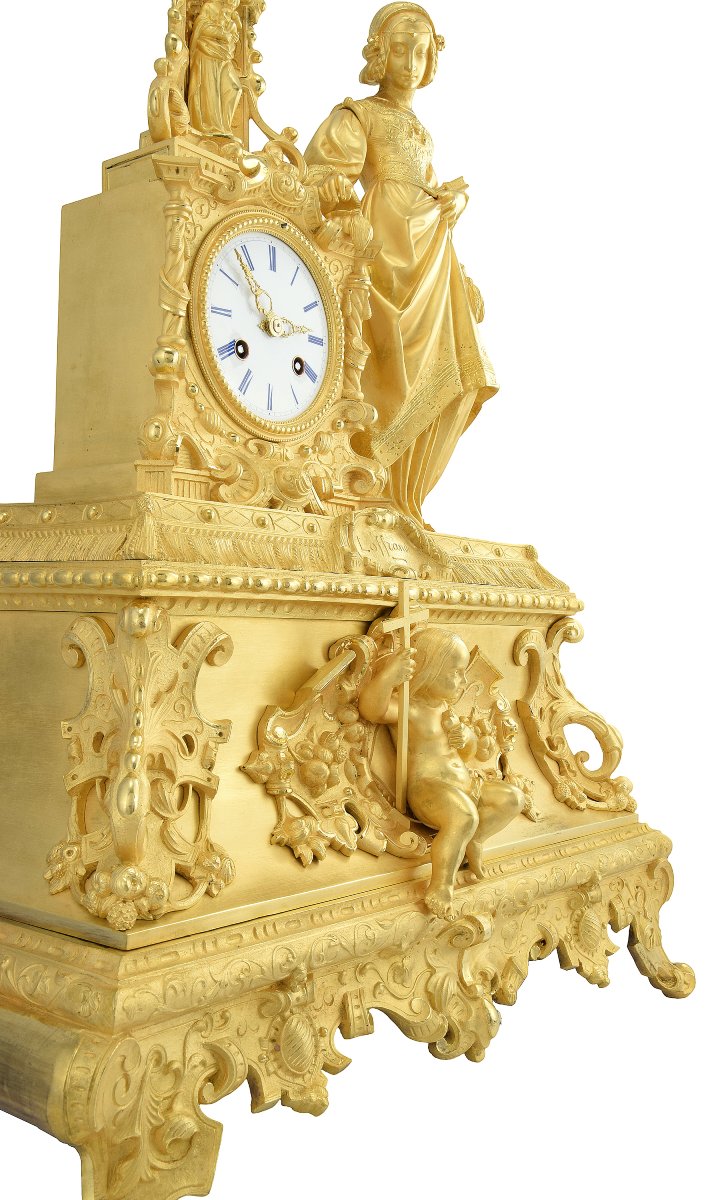
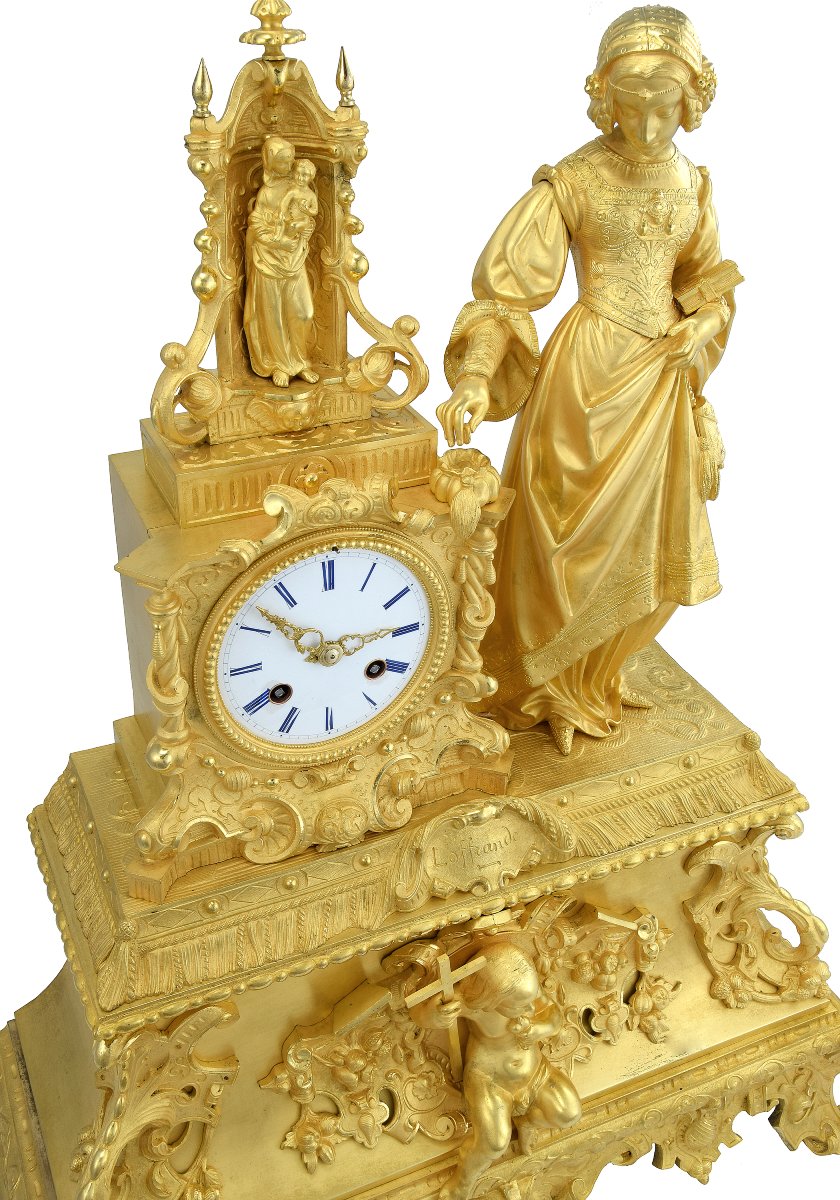
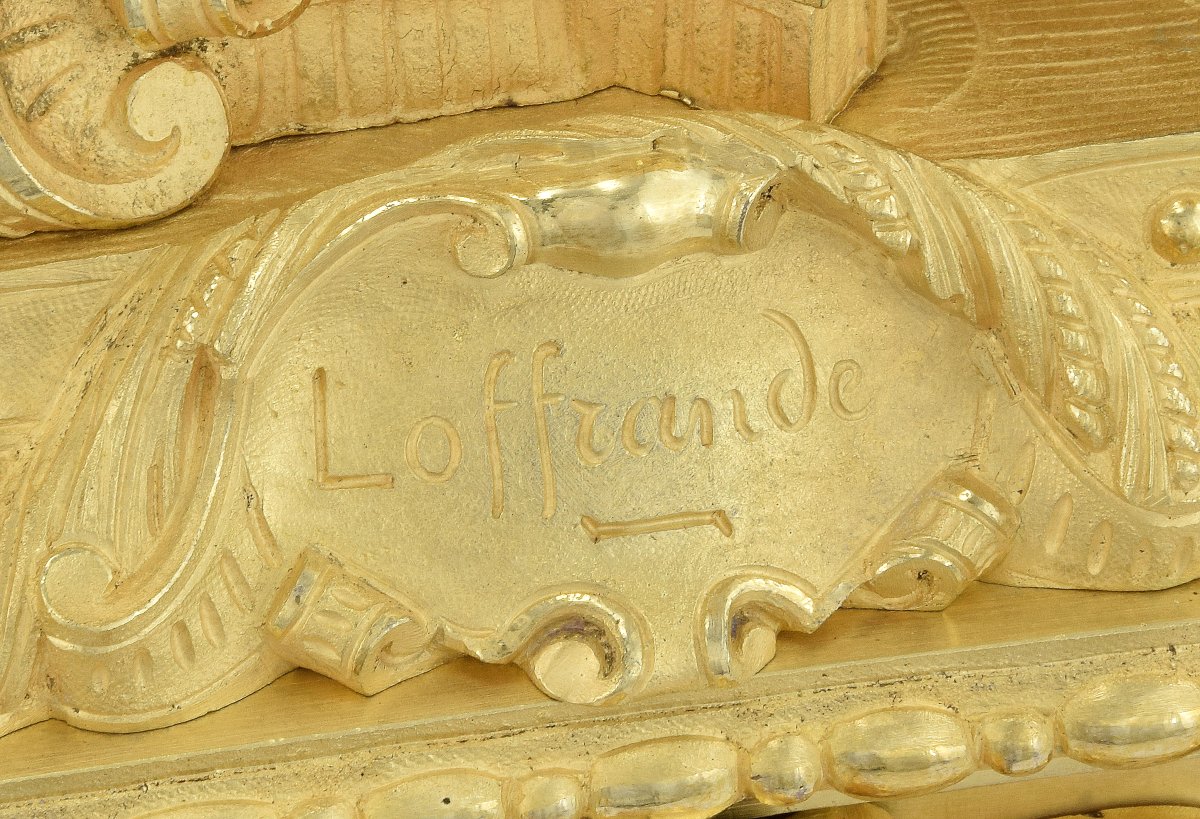
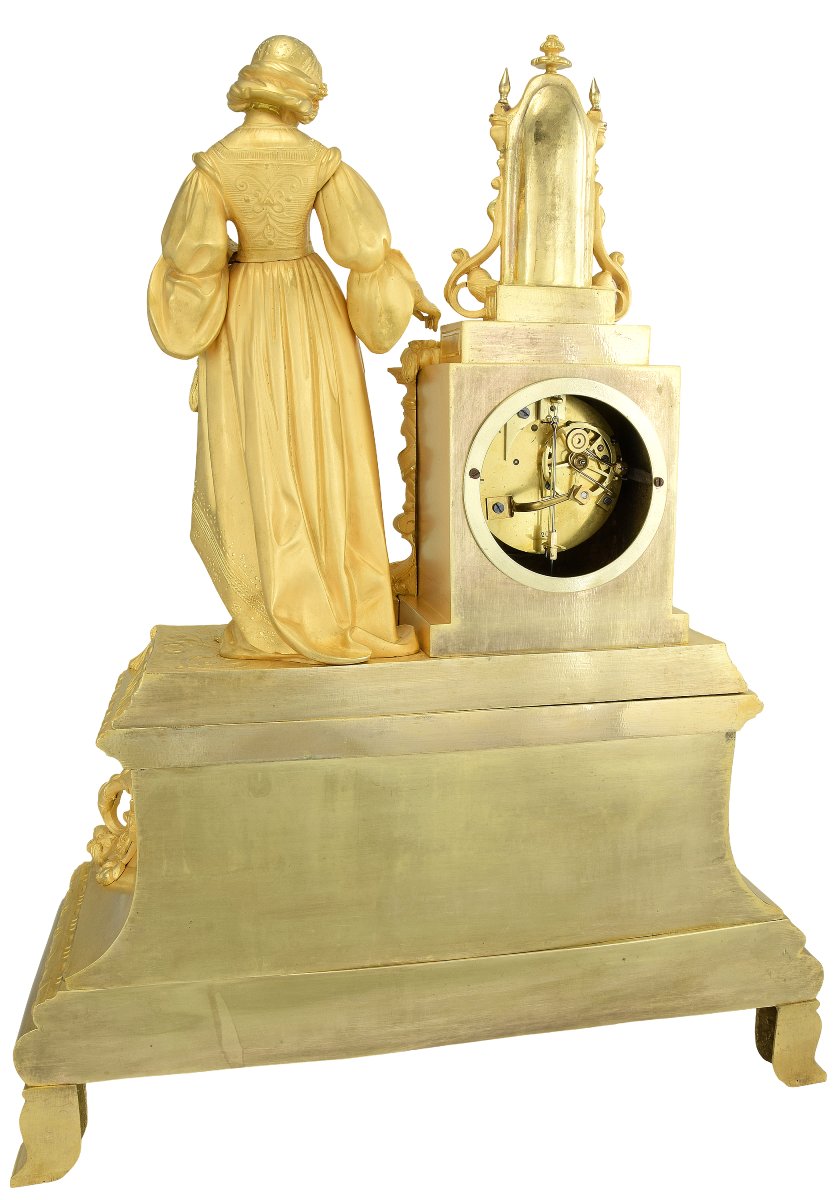
The composition develops a religious and devotional theme, clearly suggested by the inscription “L’Offrande” (The Offering), placed at the centre of the plinth, together with the ensemble of sacred motifs. The upper section is dominated by an elegant female figure, depicted standing in a contemplative attitude, with her body slightly inclined forwards. She is dressed in a richly ornamented Renaissance-inspired costume, whose elaborately decorated bodice, puffed sleeves, trimmings, embroidery and carefully worked folds testify to particularly refined chasing. Her hairstyle, secured by a headband and adorned with flowers, reinforces the noble and ceremonial character of the figure. Her right hand is delicately lowered in a gesture of offering, extended gracefully above the purse, and appears to constitute the true symbolic focal point of the composition. She is about to make her offering in a gesture that is at once humble, generous and imbued with devotion. The open purse, positioned precisely beneath her hand, gives tangible form to the act of giving, while the nearby representation of the Virgin and Child lends this gesture a clearly spiritual dimension. The composition thus evokes charity, generosity and devotion, making the suspended hand the very expression of the “Offering” theme inscribed on the clock.
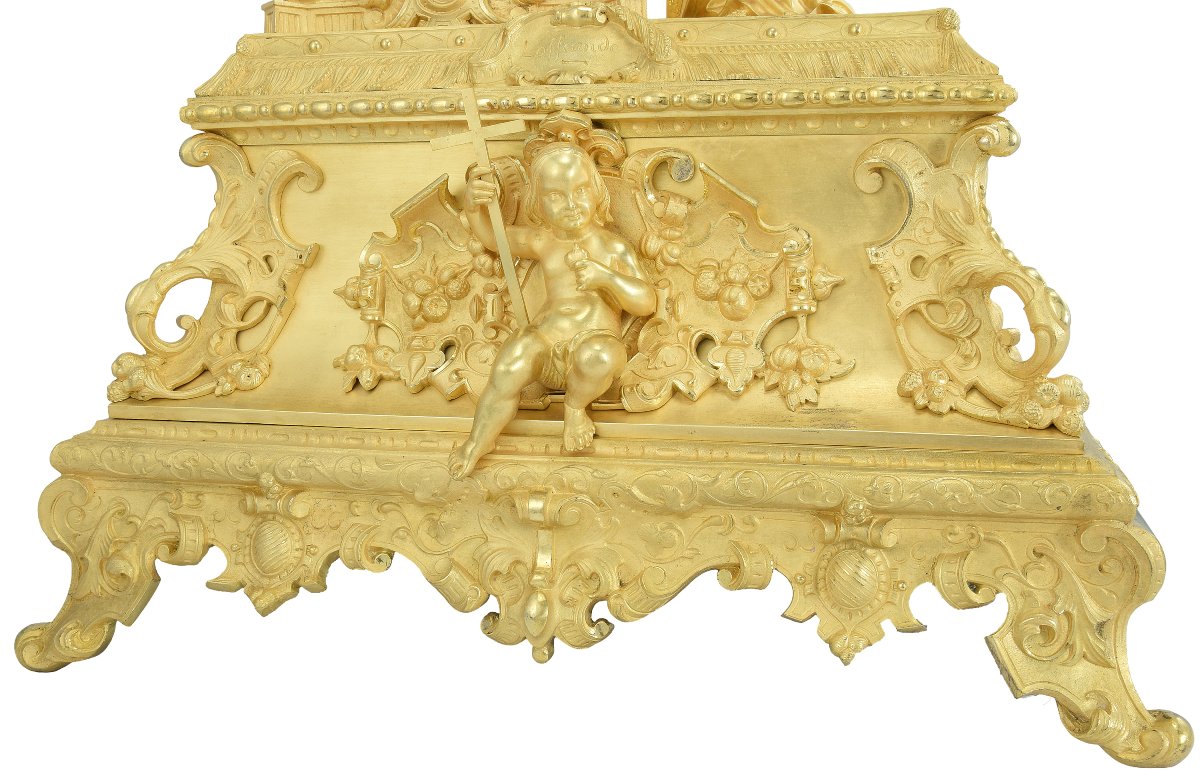
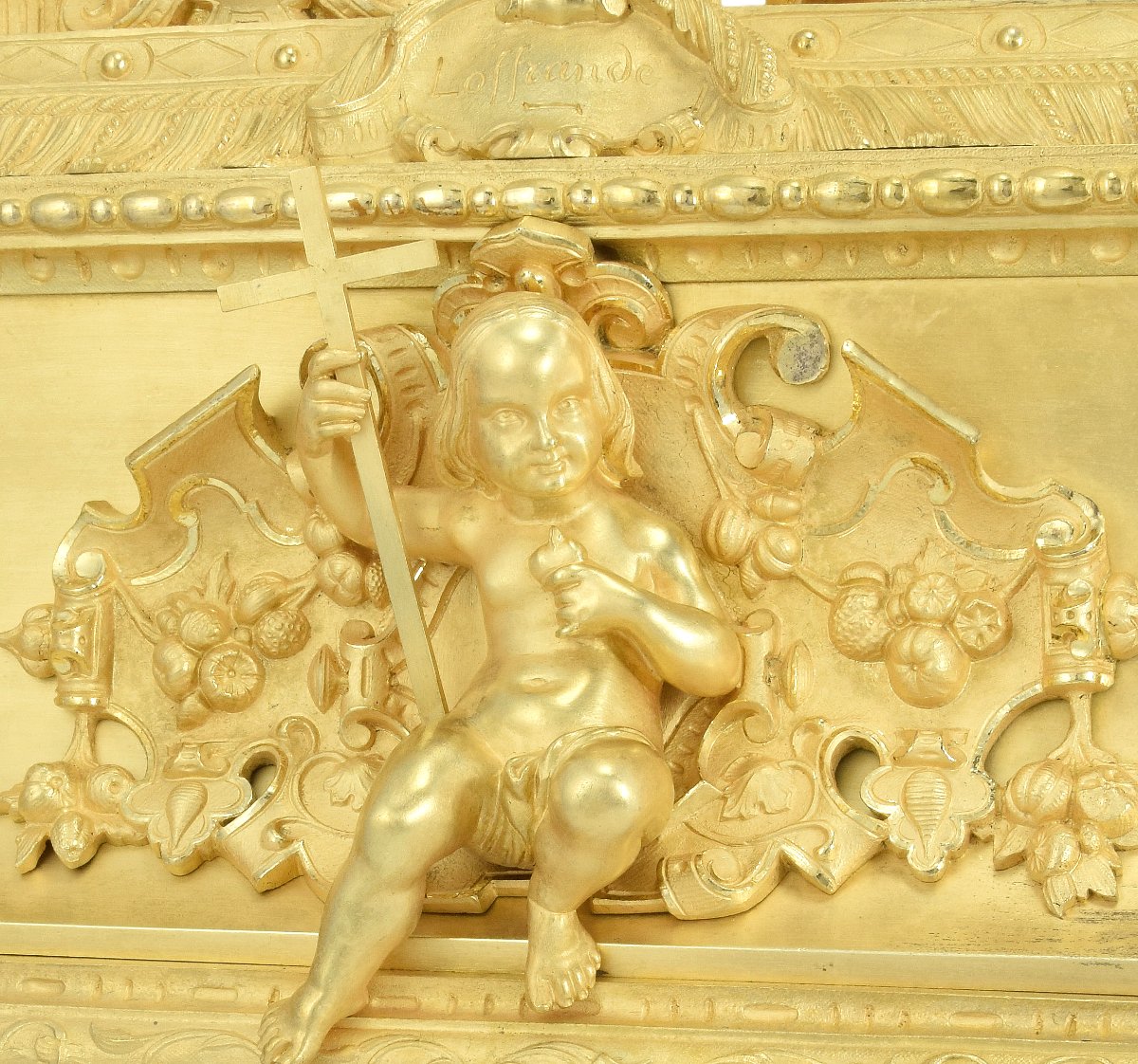
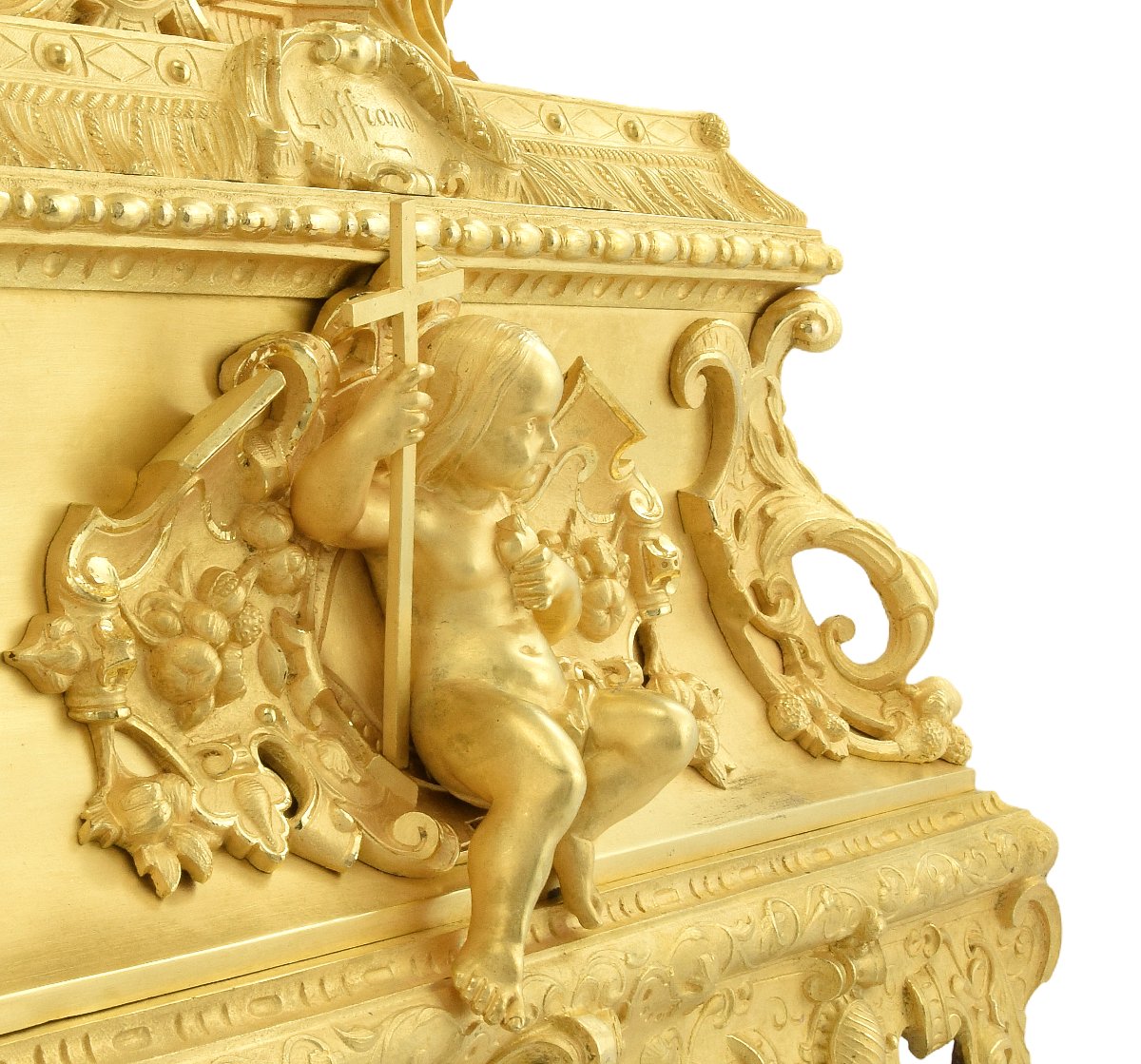
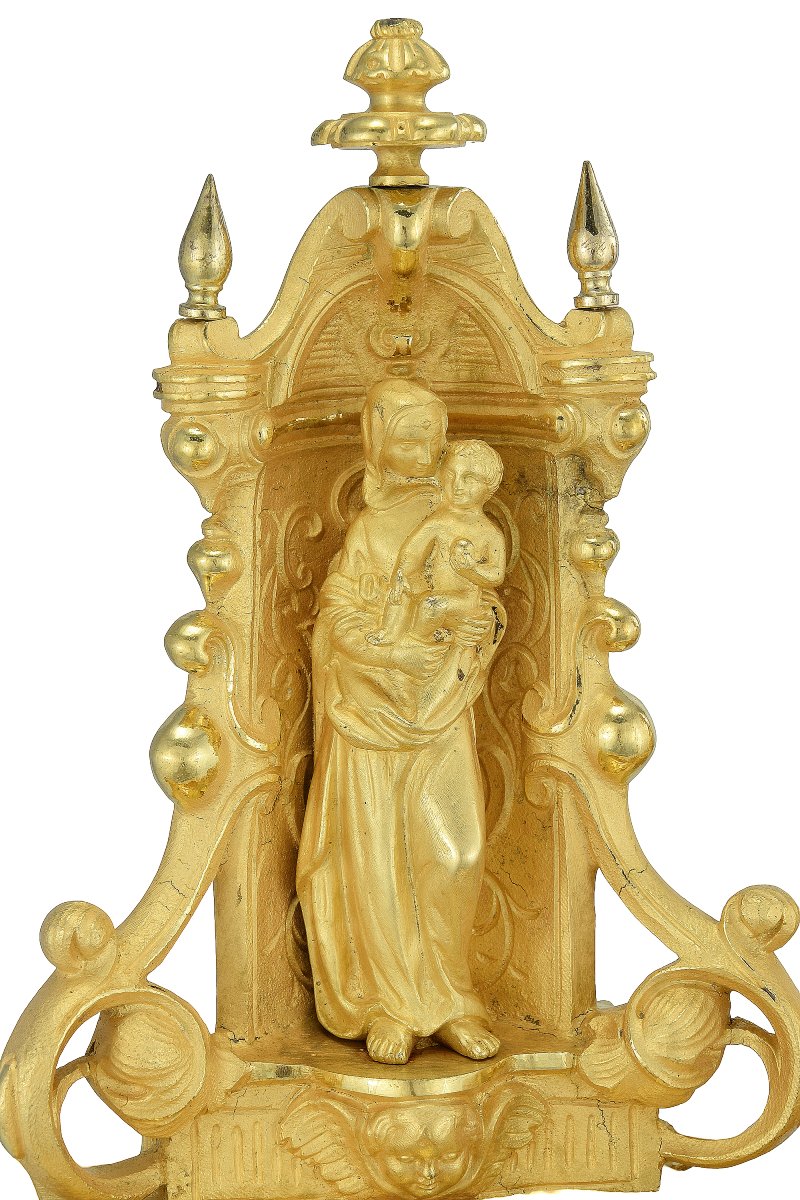
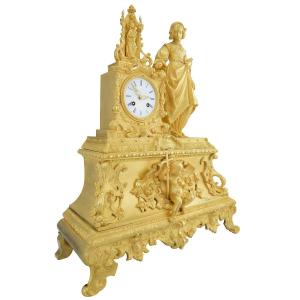
Her other hand elegantly gathers the folds of her dress. Beside her rises a small religious edifice, conceived as a miniature sacred architectural structure: an elaborately designed niche houses a representation of the Virgin and Child, set beneath an undulating pediment and framed by volutes, scrolling foliage and ornamental motifs. The presence of the Virgin and Child, associated with the young woman's gesture, gives full meaning to the notion of the “Offering”, which lies at the heart of the clock's iconography. The upper architecture is punctuated by small pinnacles, flame-shaped elements, mascarons and volutes, creating a particularly spectacular silhouette. At the centre, the circular white enamel dial, featuring blue Roman numerals, is surrounded by rich beaded mouldings and a bronze surround profusely chased with scrolling foliage, shells, volutes and palmettes. The middle section is dominated by a charming allegorical putto, depicted seated in the foreground and firmly holding a large cross. His lively, naturalistic pose contrasts with the solemn character of the scene above. He is surrounded by luxuriant garlands of flowers and fruit, leaves, shells, rocaille ornament and arabesques, forming an elaborate decorative panel reminiscent of a Rococo cartouche. On either side unfold large symmetrical ornaments composed of volutes, foliage and flowers, while the inscription “L’Offrande” appears within a central cartouche featuring cut-leather ornament, directly beneath the upper composition. The plinth rests on a substantial architectural case, decorated with successive mouldings, rows of beading, vegetal friezes, gadrooning and geometric motifs. The sides are enriched with large acanthus scrolls, shells and floral bouquets. The particularly spectacular base adopts an undulating silhouette inspired by the Rococo repertoire: scrolling consoles, acanthus leaves, shells, flowers, foliage and openwork motifs are arranged around strongly curved feet. The whole creates an impression of decorative abundance that remains perfectly controlled, bringing architecture, sculpture and horology together in a highly coherent composition.
This clock is therefore an exceptional piece, both for its monumental scale and for the richness and coherence of its iconography. Its particularly elaborate composition, abundance of high-relief sculpture, unusual religious decoration and the inscription “L’Offrande” give it a distinctive artistic identity. The combination of Neo-Renaissance-inspired architecture, Rococo ornamental vocabulary, sculpted figures and devotional imagery makes it an especially appealing and rare work on the market. The quality of the mercury gilding with fine gold, the delicacy of the chasing and the preservation of numerous details allow the full craftsmanship of nineteenth-century bronze chasers and gilders to be appreciated. With its exceptional volume, spectacular silhouette and commanding sculptural figures, this clock is far more than an instrument for measuring time: it is a true work of decorative art, conceived to become the focal point of an interior. An authentic, imposing and exceptionally decorative piece, particularly appealing to collectors seeking a characterful Louis-Philippe mantel clock, rare for its iconography and remarkable for the quality of its execution.
Original mechanism, intact and unmodified, with silk-thread suspension. Striking on the hours and half-hours on an antique bell, producing a clear and authentic tone.
A monumental mantel clock from the Louis-Philippe period, circa 1840, exceptional for its proportions, decorative richness and remarkable quality of execution. This is a particularly rare and imposing model with a striking decorative presence, crafted entirely from finely chased bronze and mercury-gilt with fine gold. The gilding, still remarkably luminous and nuanced, admirably enhances the profusion of relief work, the precision of the chasing and the multitude of details covering the entire composition. Through its impressive scale, sophisticated ornamentation and the quality of its sculptural work, this clock bears witness to production of the very highest calibre.
The composition develops a religious and devotional theme, clearly suggested by the inscription “L’Offrande” (The Offering), placed at the centre of the plinth, together with the ensemble of sacred motifs. The upper section is dominated by an elegant female figure, depicted standing in a contemplative attitude, with her body slightly inclined forwards. She is dressed in a richly ornamented Renaissance-inspired costume, whose elaborately decorated bodice, puffed sleeves, trimmings, embroidery and carefully worked folds testify to particularly refined chasing. Her hairstyle, secured by a headband and adorned with flowers, reinforces the noble and ceremonial character of the figure. Her right hand is delicately lowered in a gesture of offering, extended gracefully above the purse, and appears to constitute the true symbolic focal point of the composition. She is about to make her offering in a gesture that is at once humble, generous and imbued with devotion. The open purse, positioned precisely beneath her hand, gives tangible form to the act of giving, while the nearby representation of the Virgin and Child lends this gesture a clearly spiritual dimension. The composition thus evokes charity, generosity and devotion, making the suspended hand the very expression of the “Offering” theme inscribed on the clock.
Her other hand elegantly gathers the folds of her dress. Beside her rises a small religious edifice, conceived as a miniature sacred architectural structure: an elaborately designed niche houses a representation of the Virgin and Child, set beneath an undulating pediment and framed by volutes, scrolling foliage and ornamental motifs. The presence of the Virgin and Child, associated with the young woman's gesture, gives full meaning to the notion of the “Offering”, which lies at the heart of the clock's iconography. The upper architecture is punctuated by small pinnacles, flame-shaped elements, mascarons and volutes, creating a particularly spectacular silhouette. At the centre, the circular white enamel dial, featuring blue Roman numerals, is surrounded by rich beaded mouldings and a bronze surround profusely chased with scrolling foliage, shells, volutes and palmettes. The middle section is dominated by a charming allegorical putto, depicted seated in the foreground and firmly holding a large cross. His lively, naturalistic pose contrasts with the solemn character of the scene above. He is surrounded by luxuriant garlands of flowers and fruit, leaves, shells, rocaille ornament and arabesques, forming an elaborate decorative panel reminiscent of a Rococo cartouche. On either side unfold large symmetrical ornaments composed of volutes, foliage and flowers, while the inscription “L’Offrande” appears within a central cartouche featuring cut-leather ornament, directly beneath the upper composition. The plinth rests on a substantial architectural case, decorated with successive mouldings, rows of beading, vegetal friezes, gadrooning and geometric motifs. The sides are enriched with large acanthus scrolls, shells and floral bouquets. The particularly spectacular base adopts an undulating silhouette inspired by the Rococo repertoire: scrolling consoles, acanthus leaves, shells, flowers, foliage and openwork motifs are arranged around strongly curved feet. The whole creates an impression of decorative abundance that remains perfectly controlled, bringing architecture, sculpture and horology together in a highly coherent composition.
This clock is therefore an exceptional piece, both for its monumental scale and for the richness and coherence of its iconography. Its particularly elaborate composition, abundance of high-relief sculpture, unusual religious decoration and the inscription “L’Offrande” give it a distinctive artistic identity. The combination of Neo-Renaissance-inspired architecture, Rococo ornamental vocabulary, sculpted figures and devotional imagery makes it an especially appealing and rare work on the market. The quality of the mercury gilding with fine gold, the delicacy of the chasing and the preservation of numerous details allow the full craftsmanship of nineteenth-century bronze chasers and gilders to be appreciated. With its exceptional volume, spectacular silhouette and commanding sculptural figures, this clock is far more than an instrument for measuring time: it is a true work of decorative art, conceived to become the focal point of an interior. An authentic, imposing and exceptionally decorative piece, particularly appealing to collectors seeking a characterful Louis-Philippe mantel clock, rare for its iconography and remarkable for the quality of its execution.
Original mechanism, intact and unmodified, with silk-thread suspension. Striking on the hours and half-hours on an antique bell, producing a clear and authentic tone.
2 500 €
Period: 19th century
Style: Louis Philippe, Charles 10th
Condition: Fully restored in our whorkshop
Material: Bronze
Width: 44 cm
Height: 56 cm
Depth: 19 cm
Reference (ID): 1834919
Availability: In stock
Print