



émile Just Bachelet — Two Art Deco Ducks In Rosewood - S.a.s. Paris
Artist: émile Just Bachelet
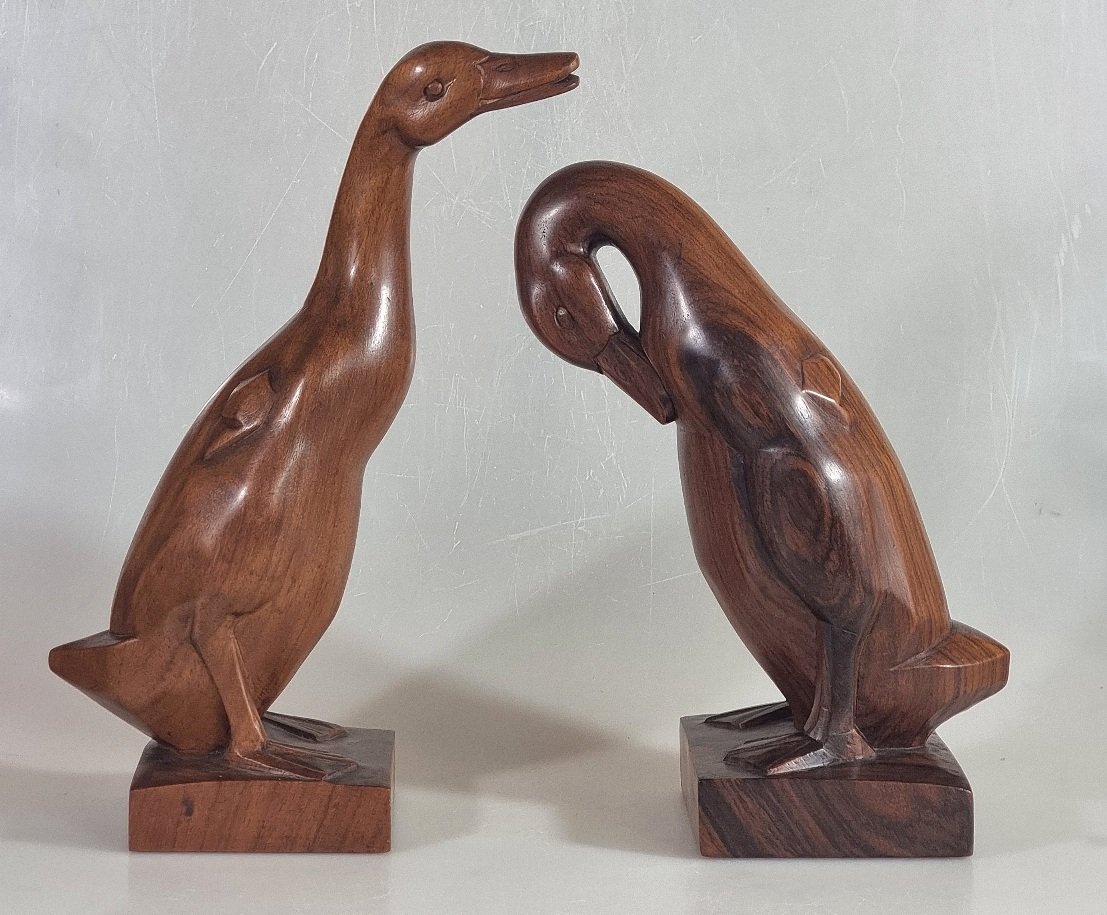
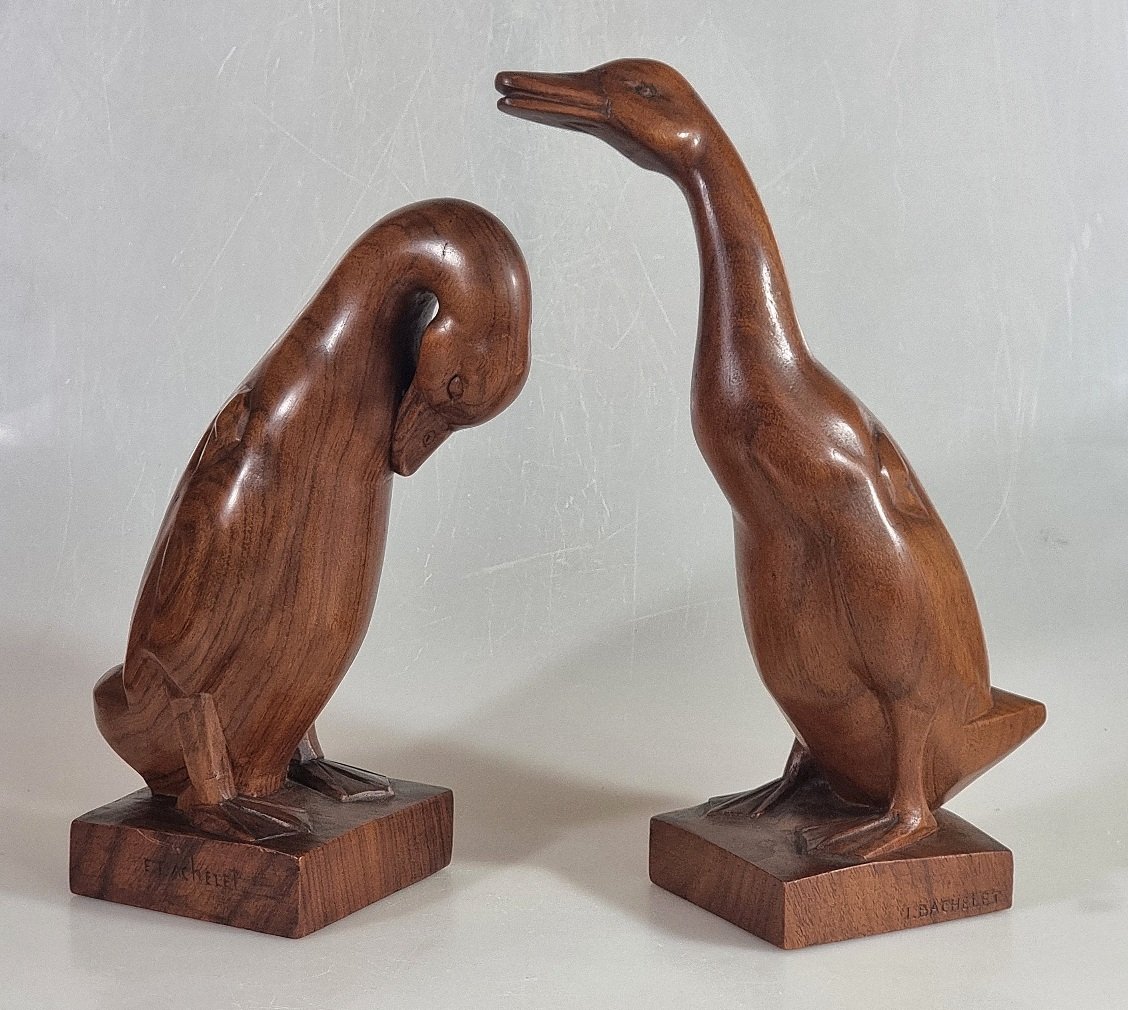
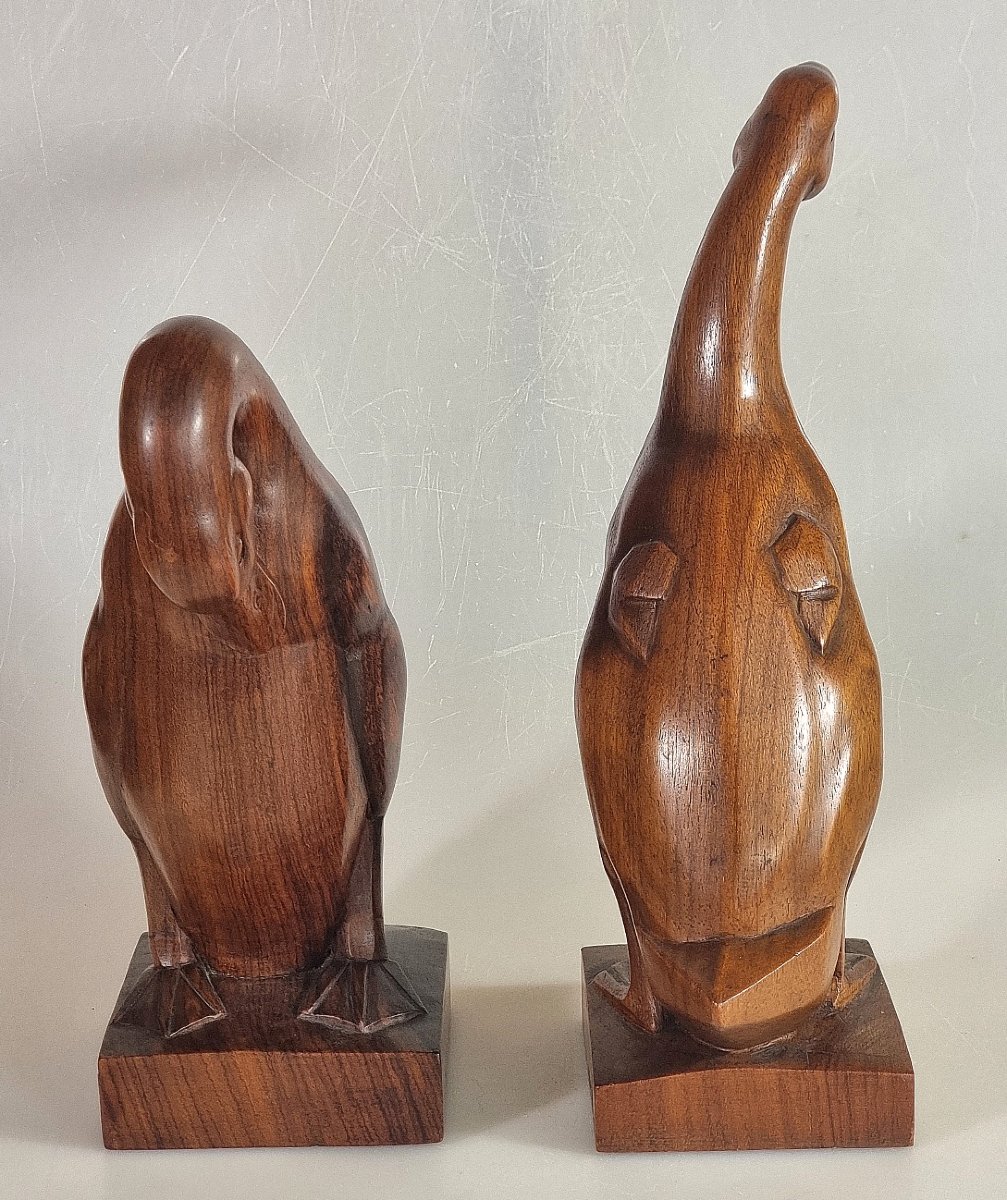
Beautiful ducks, probably Indian Runner Ducks, directly carved from rosewood. They are designs by the French sculptor Emile Just Bachelet (Nancy, 1892–1981). Bachelet created various versions of these ducks in different poses, all directly carved from rosewood.
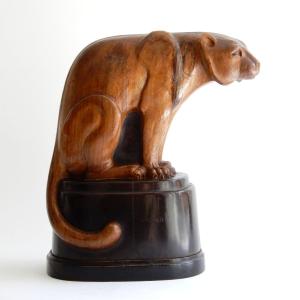
Bachelet created numerous animal figures that are highly stylised, yet retain a strong sense of the animal itself. Their surfaces are almost polished, and the carving is exceptionally skilful. They are sculptures that are almost irresistible to touch. In addition to his wooden sculptures for S.A.S. Paris, he created numerous animal figures in bronze. As a sculptor, he worked in a wide range of materials, including wood, bronze, ivory and marble, and he also designed several porcelain pieces for Sèvres. He was a remarkably versatile artist and never truly confined himself to a single material or specialty.
Dating and S.A.S. Paris
The model can be dated to circa 1929. Two variants of Bachelet's rosewood ducks, Canard tête baissée and Canard tête levée, were already published in Mobilier et Décoration, no. 2, February 1929, p. 77, in an article devoted to the rosewood sculptures presented by DIM (Décoration Intérieure Moderne).
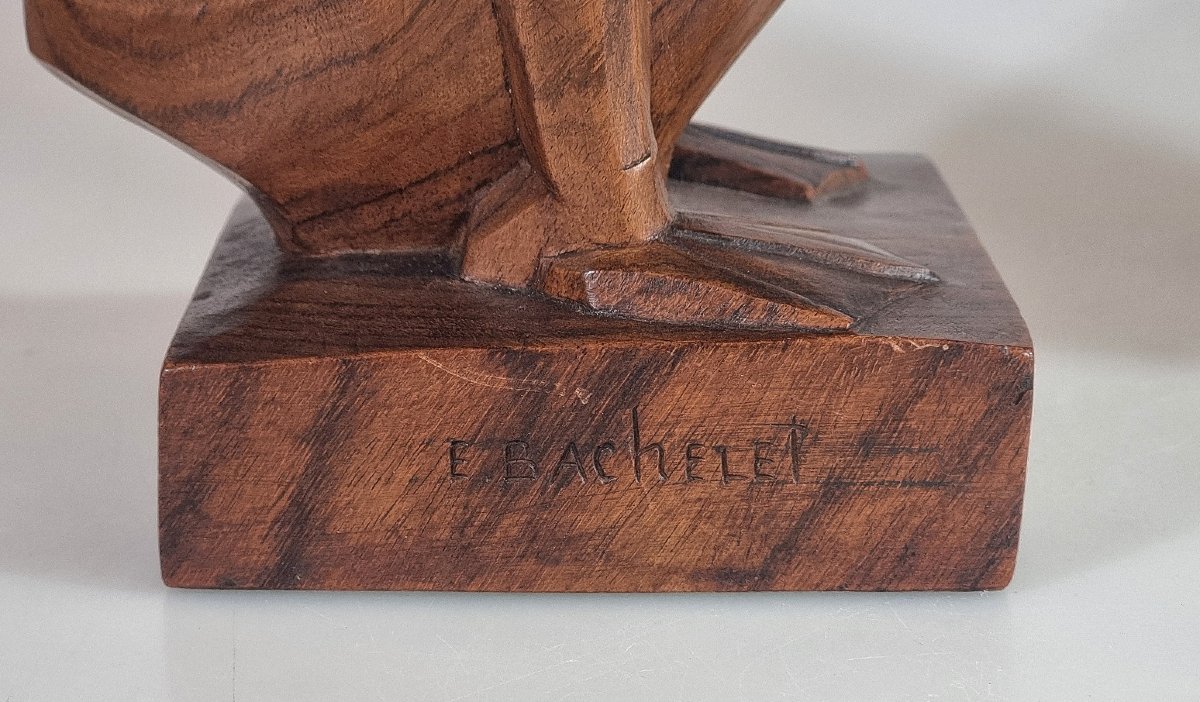
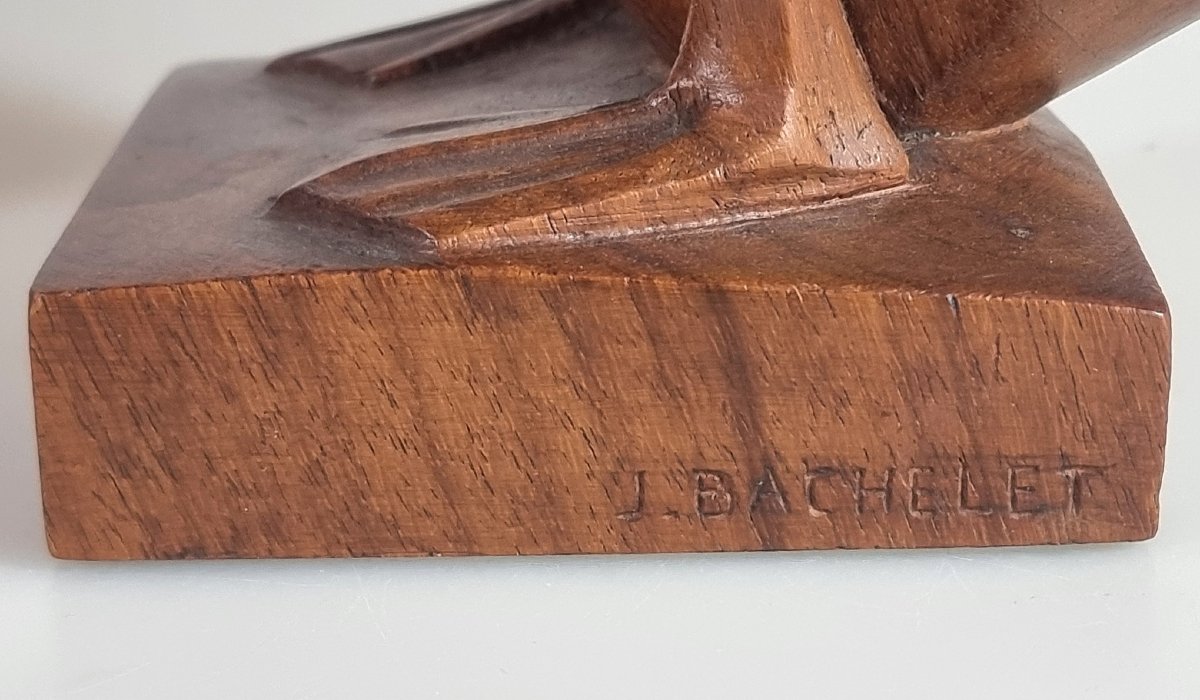
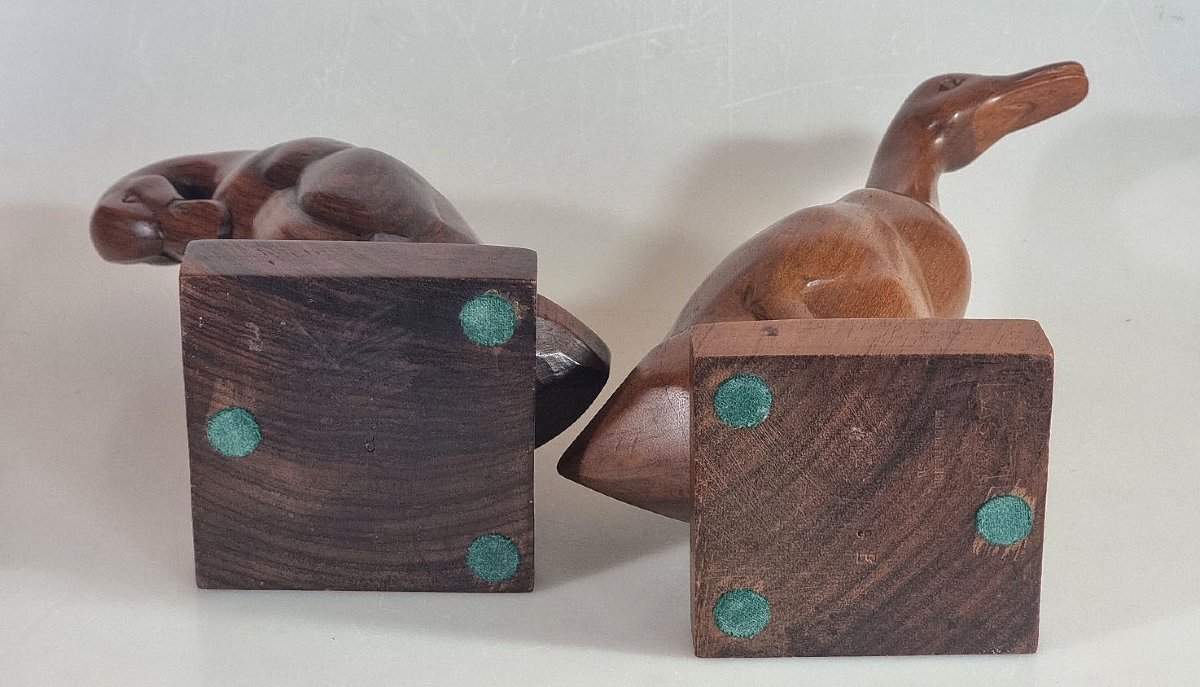
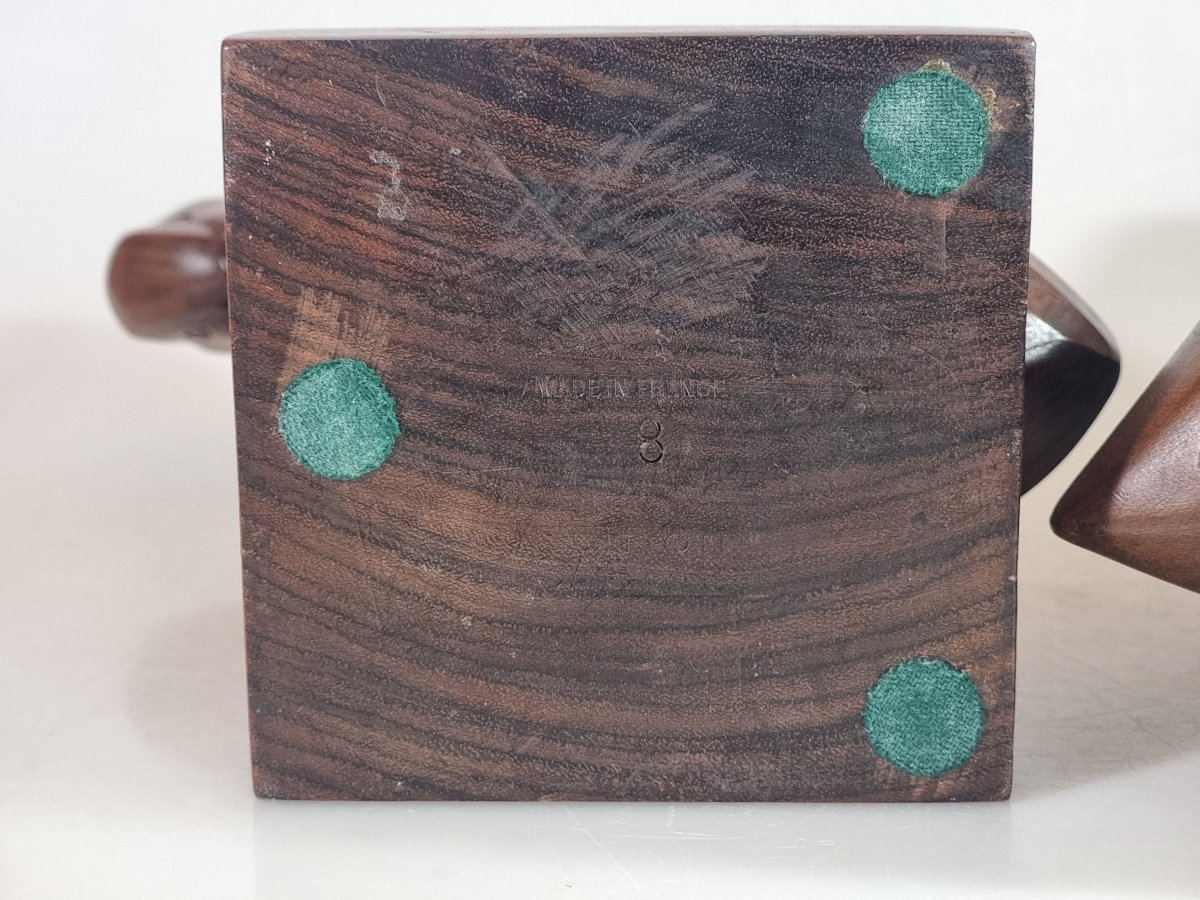
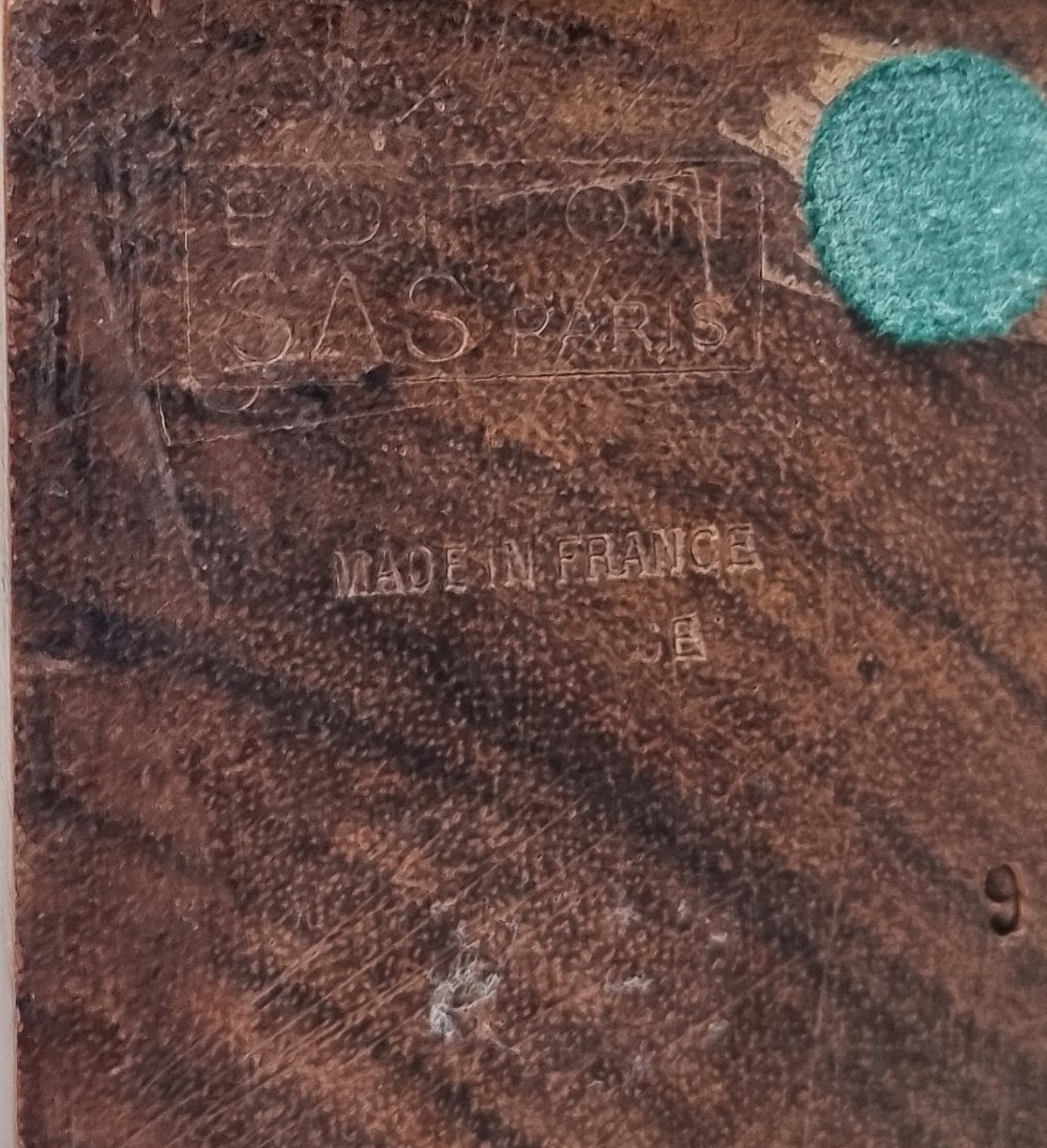
The present examples are individually numbered 8 and 9E. Their undersides bear the impressed rectangular “EDITION SAS PARIS” mark, with “MADE IN FRANCE” stamped separately.
Édition S.A.S. Paris is closely associated with a group of French sculptors who exhibited at the Salon des Artistes Français and who, in the late 1920s and early 1930s, arranged for their sculptural designs to be produced in small editions, particularly in exotic woods such as rosewood and mahogany.
Among the artists associated with these editions were Emile Just Bachelet, Jan and Joël Martel, Édouard Marcel Sandoz, Gilbert Privat, Canto da Maya, Jacques Adnet and Louis-Henri Nicot.
The exact nature of S.A.S. is not entirely clear. It has been described as a collective or initiative through which artists arranged for their own works to be produced and published, while other sources refer to S.A.S. as a specialised workshop involved in producing the sculptures. What is clear is that the S.A.S. mark appears on a remarkable group of high-quality Art Deco sculptures, often accompanied by the artist's signature, an individual number or letter-number combination, and the words “Made in France”.
These sculptures were presented at the Salon in the late 1920s and early 1930s and were sometimes produced for contemporary interior-design clients such as DIM.
Bachelet's rosewood ducks are a particularly fine example. The documented variants Canard tête baissée and Canard tête levée demonstrate that these models were already part of the S.A.S. production in 1929. One documented example of Canard tête baissée is numbered 9, while Canard tête levée is numbered 10.
The fact that the present examples bear the numbers 8 and 9E adds to the interest of this pair and places them within the documented S.A.S. production of Bachelet's rosewood animal sculptures.
Today, these wooden sculptures, usually carved from rosewood or other exotic woods, are highly sought after by collectors. The quality of the carving is exceptionally high, while the editions were very small, making these works particularly rare. Examples can be found in museum and important private collections.
Art and Commercialism in the 1920s and 1930s
In the 1920s and 1930s, commercialism entered the art world in a new and significant way. Art increasingly needed to become accessible to the middle class and, ideally, to a much wider public. Figurines were therefore produced in larger editions, often using less expensive materials than bronze, such as spelter, an alloy of metals. Sculptors suddenly found themselves working within an increasingly commercial environment.
This development had its advantages. Many sculptors gained opportunities they might otherwise not have had. There were more possibilities for artists, and innovation became increasingly connected with fashion, interior design and contemporary trends.
However, there were also disadvantages. Artists were sometimes poorly paid, placed under pressure, or contracted to produce works with which they did not necessarily agree, while the publisher or manufacturer benefited commercially.
By taking matters into their own hands, artists could retain greater control over their work, maintain the quality of the finished pieces, and earn money without intermediaries. It may also have been a form of protest against the increasingly commercial art market. This, however, is my interpretation.
Measurements:
8 =27 cm hauteur, base 10,1 x 10,5
9E = 32 cm hauteur, base 10,1 x 9,6 cm
Biography
Emile Just Bachelet (Nancy, 1892–1981) was a French sculptor known for the remarkable diversity of his work, characterized by elegance, refinement and a keen attention to detail. Born in Nancy in 1892, Bachelet developed an early interest in the ancient sculptures discovered in his region.
Bachelet first studied at the Académie des Beaux-Arts under Victor Prouvé, a central figure in the Art Nouveau movement, and later continued his education in Paris under Henri Coutan.
Throughout his career, Bachelet demonstrated remarkable versatility, working in a wide range of materials, including wood, bronze, ivory, marble and porcelain. His ivory carvings are particularly beautiful. His sculptures encompass a variety of subjects, from animals—especially farm animals—and human figures to decorative motifs and architectural elements.
His stylisation is distinctive: his figures remain remarkably natural while being clearly stylised. A critic writing in the 1920s described this characteristic as Bachelet's tendency to move away from strict realism.
One of Bachelet's significant contributions to the decorative arts was his involvement with Édition S.A.S. Paris, through which a number of his sculptural designs were produced in small editions. His sculptures were shown at prestigious venues such as the Salon des Artistes Français, where they attracted considerable attention.
Bachelet's mastery of form and technique, combined with his innate sense of aesthetics, established him as a highly accomplished sculptor of his generation. His works are distinguished by their craftsmanship, meticulous attention to detail, and harmonious balance between tradition and modernity.
During his long and productive career, Bachelet received numerous commissions for public monuments, architectural decoration and decorative sculpture. His work was commissioned for private residences, public spaces and cultural institutions.
Bachelet received numerous commissions and worked on an extraordinary variety of projects. He designed façades and monuments, as well as smaller decorative works and animal figures. He had a beautiful home and studio in Nancy, where he lived until the outbreak of the Second World War. He subsequently moved to Aix-en-Provence, where he continued to work and live until his death in 1981.
Emile Just Bachelet's sculptures can still be found in the public landscape today, as well as in museum collections, including the Musée des Beaux-Arts de Nancy and the Musée d'Art Moderne de la Ville de Paris.
Literature
• Thierry Roche, Dictionnaire biographique des sculpteurs des années 1920–30, Éditions Beau-Fixe, 2007, p. 38.
• Alistair Duncan, Art Deco Sculpture, Thames & Hudson, London, 2016, p. 371.
• Alastair Duncan, Art Deco Complete – The Definitive Guide to the Decorative Arts of the 1920s & 30s, Thames & Hudson, London, 2009, pp. 322, 325 and 492.
Bachelet created numerous animal figures that are highly stylised, yet retain a strong sense of the animal itself. Their surfaces are almost polished, and the carving is exceptionally skilful. They are sculptures that are almost irresistible to touch. In addition to his wooden sculptures for S.A.S. Paris, he created numerous animal figures in bronze. As a sculptor, he worked in a wide range of materials, including wood, bronze, ivory and marble, and he also designed several porcelain pieces for Sèvres. He was a remarkably versatile artist and never truly confined himself to a single material or specialty.
Dating and S.A.S. Paris
The model can be dated to circa 1929. Two variants of Bachelet's rosewood ducks, Canard tête baissée and Canard tête levée, were already published in Mobilier et Décoration, no. 2, February 1929, p. 77, in an article devoted to the rosewood sculptures presented by DIM (Décoration Intérieure Moderne).
The present examples are individually numbered 8 and 9E. Their undersides bear the impressed rectangular “EDITION SAS PARIS” mark, with “MADE IN FRANCE” stamped separately.
Édition S.A.S. Paris is closely associated with a group of French sculptors who exhibited at the Salon des Artistes Français and who, in the late 1920s and early 1930s, arranged for their sculptural designs to be produced in small editions, particularly in exotic woods such as rosewood and mahogany.
Among the artists associated with these editions were Emile Just Bachelet, Jan and Joël Martel, Édouard Marcel Sandoz, Gilbert Privat, Canto da Maya, Jacques Adnet and Louis-Henri Nicot.
The exact nature of S.A.S. is not entirely clear. It has been described as a collective or initiative through which artists arranged for their own works to be produced and published, while other sources refer to S.A.S. as a specialised workshop involved in producing the sculptures. What is clear is that the S.A.S. mark appears on a remarkable group of high-quality Art Deco sculptures, often accompanied by the artist's signature, an individual number or letter-number combination, and the words “Made in France”.
These sculptures were presented at the Salon in the late 1920s and early 1930s and were sometimes produced for contemporary interior-design clients such as DIM.
Bachelet's rosewood ducks are a particularly fine example. The documented variants Canard tête baissée and Canard tête levée demonstrate that these models were already part of the S.A.S. production in 1929. One documented example of Canard tête baissée is numbered 9, while Canard tête levée is numbered 10.
The fact that the present examples bear the numbers 8 and 9E adds to the interest of this pair and places them within the documented S.A.S. production of Bachelet's rosewood animal sculptures.
Today, these wooden sculptures, usually carved from rosewood or other exotic woods, are highly sought after by collectors. The quality of the carving is exceptionally high, while the editions were very small, making these works particularly rare. Examples can be found in museum and important private collections.
Art and Commercialism in the 1920s and 1930s
In the 1920s and 1930s, commercialism entered the art world in a new and significant way. Art increasingly needed to become accessible to the middle class and, ideally, to a much wider public. Figurines were therefore produced in larger editions, often using less expensive materials than bronze, such as spelter, an alloy of metals. Sculptors suddenly found themselves working within an increasingly commercial environment.
This development had its advantages. Many sculptors gained opportunities they might otherwise not have had. There were more possibilities for artists, and innovation became increasingly connected with fashion, interior design and contemporary trends.
However, there were also disadvantages. Artists were sometimes poorly paid, placed under pressure, or contracted to produce works with which they did not necessarily agree, while the publisher or manufacturer benefited commercially.
By taking matters into their own hands, artists could retain greater control over their work, maintain the quality of the finished pieces, and earn money without intermediaries. It may also have been a form of protest against the increasingly commercial art market. This, however, is my interpretation.
Measurements:
8 =27 cm hauteur, base 10,1 x 10,5
9E = 32 cm hauteur, base 10,1 x 9,6 cm
Biography
Emile Just Bachelet (Nancy, 1892–1981) was a French sculptor known for the remarkable diversity of his work, characterized by elegance, refinement and a keen attention to detail. Born in Nancy in 1892, Bachelet developed an early interest in the ancient sculptures discovered in his region.
Bachelet first studied at the Académie des Beaux-Arts under Victor Prouvé, a central figure in the Art Nouveau movement, and later continued his education in Paris under Henri Coutan.
Throughout his career, Bachelet demonstrated remarkable versatility, working in a wide range of materials, including wood, bronze, ivory, marble and porcelain. His ivory carvings are particularly beautiful. His sculptures encompass a variety of subjects, from animals—especially farm animals—and human figures to decorative motifs and architectural elements.
His stylisation is distinctive: his figures remain remarkably natural while being clearly stylised. A critic writing in the 1920s described this characteristic as Bachelet's tendency to move away from strict realism.
One of Bachelet's significant contributions to the decorative arts was his involvement with Édition S.A.S. Paris, through which a number of his sculptural designs were produced in small editions. His sculptures were shown at prestigious venues such as the Salon des Artistes Français, where they attracted considerable attention.
Bachelet's mastery of form and technique, combined with his innate sense of aesthetics, established him as a highly accomplished sculptor of his generation. His works are distinguished by their craftsmanship, meticulous attention to detail, and harmonious balance between tradition and modernity.
During his long and productive career, Bachelet received numerous commissions for public monuments, architectural decoration and decorative sculpture. His work was commissioned for private residences, public spaces and cultural institutions.
Bachelet received numerous commissions and worked on an extraordinary variety of projects. He designed façades and monuments, as well as smaller decorative works and animal figures. He had a beautiful home and studio in Nancy, where he lived until the outbreak of the Second World War. He subsequently moved to Aix-en-Provence, where he continued to work and live until his death in 1981.
Emile Just Bachelet's sculptures can still be found in the public landscape today, as well as in museum collections, including the Musée des Beaux-Arts de Nancy and the Musée d'Art Moderne de la Ville de Paris.
Literature
• Thierry Roche, Dictionnaire biographique des sculpteurs des années 1920–30, Éditions Beau-Fixe, 2007, p. 38.
• Alistair Duncan, Art Deco Sculpture, Thames & Hudson, London, 2016, p. 371.
• Alastair Duncan, Art Deco Complete – The Definitive Guide to the Decorative Arts of the 1920s & 30s, Thames & Hudson, London, 2009, pp. 322, 325 and 492.
2 650 €
Period: 20th century
Style: Art Deco
Condition: Excellent condition
Length: 10,1
Width: 9,6
Height: 32
Reference (ID): 1833122
Availability: In stock
Print