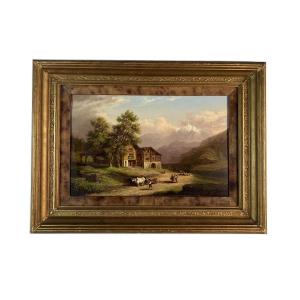



Charles Wellens, Belgium, 1889–1959, Winter Landscape, Oil On Canvas, Ca. 1940
Artist: Charles Wellens (1889-1959)
Charles Wellens (1889–1959) – Thatched Cottage in the Snow in the Limburg Campine – Signed Oil on Canvas, circa 1940–1950 – Vintage Painting, Belgian Artist, Winter Landscape, Snow, Campine, Limburg, winterlandschap, sneeuw, Kempen, Belgische schilder
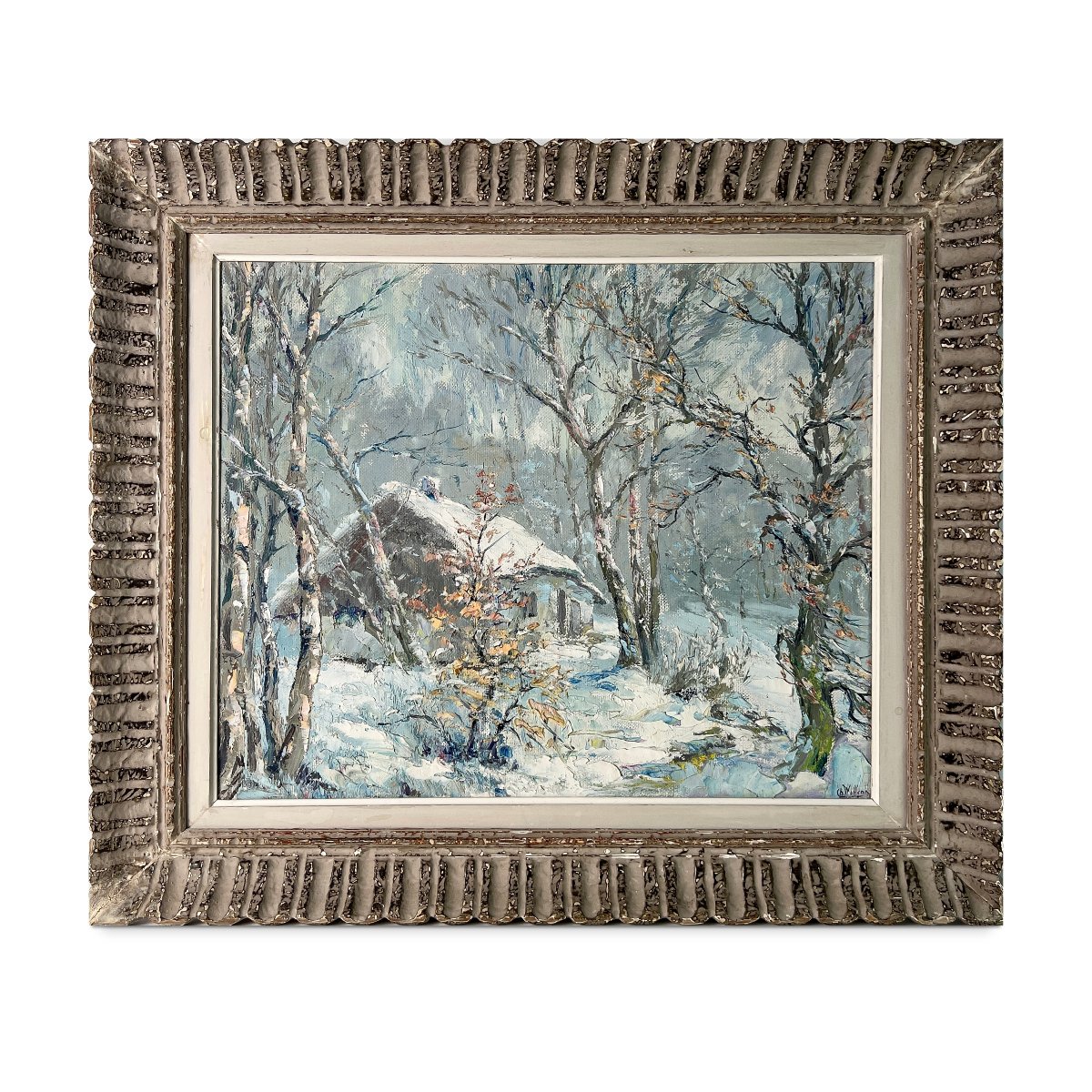
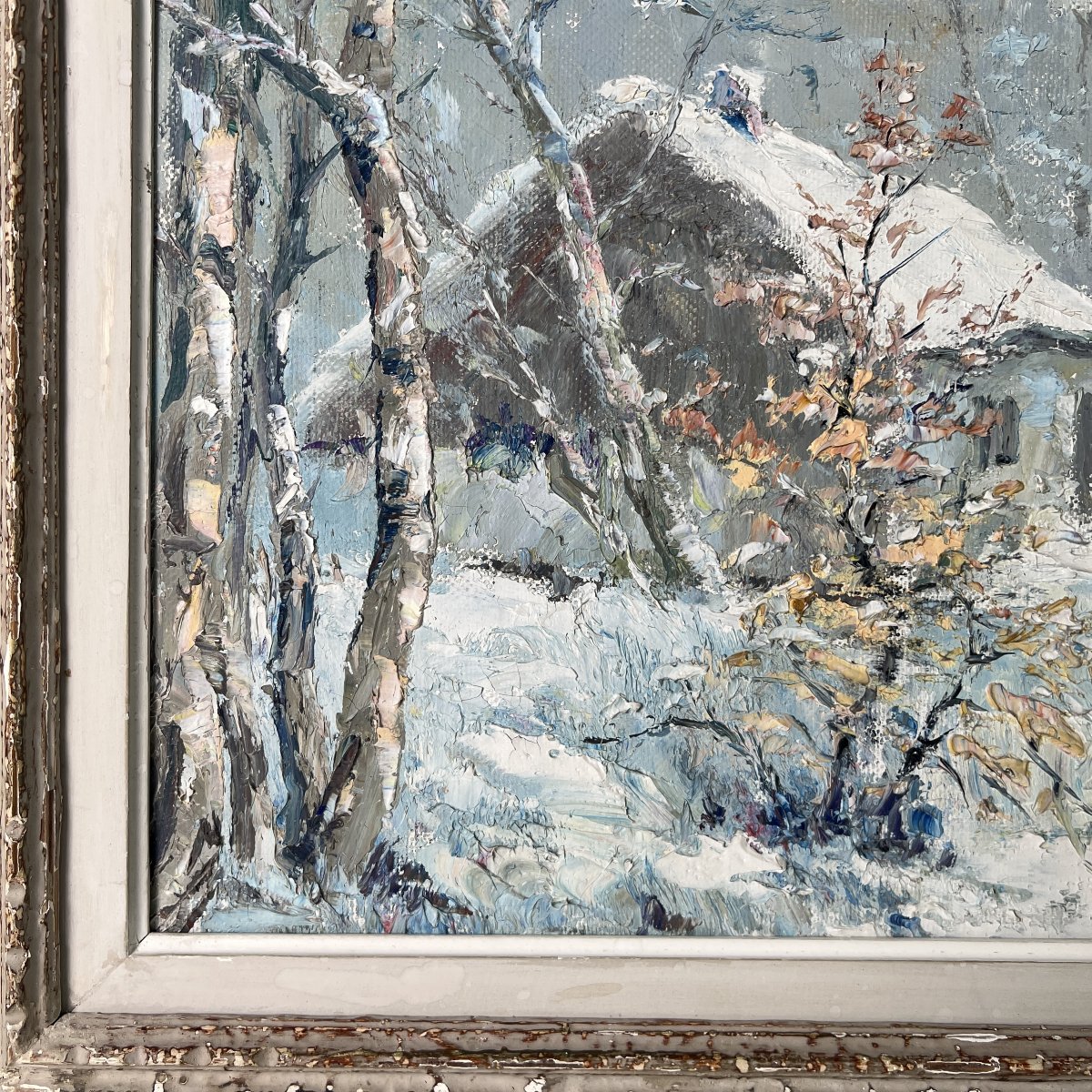
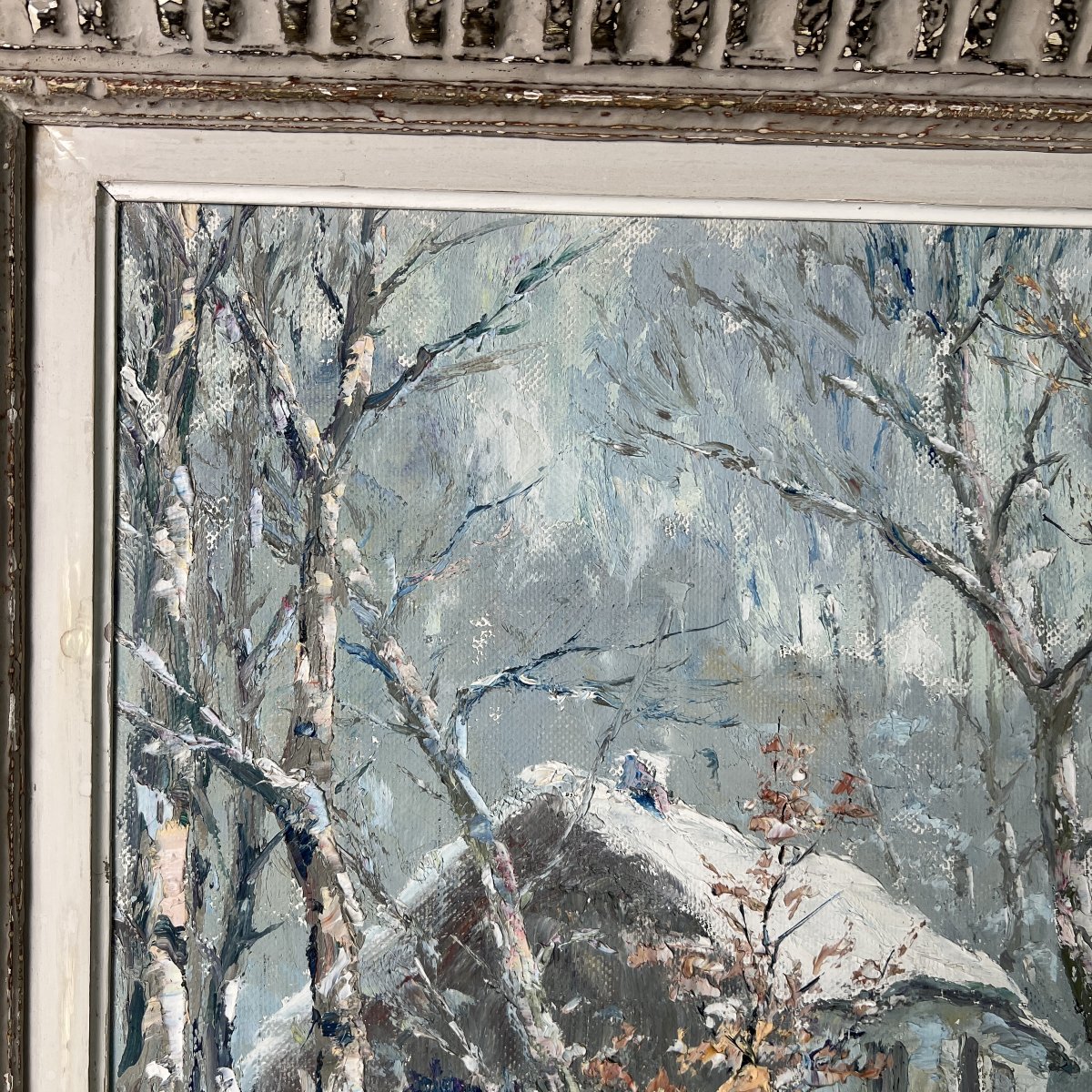
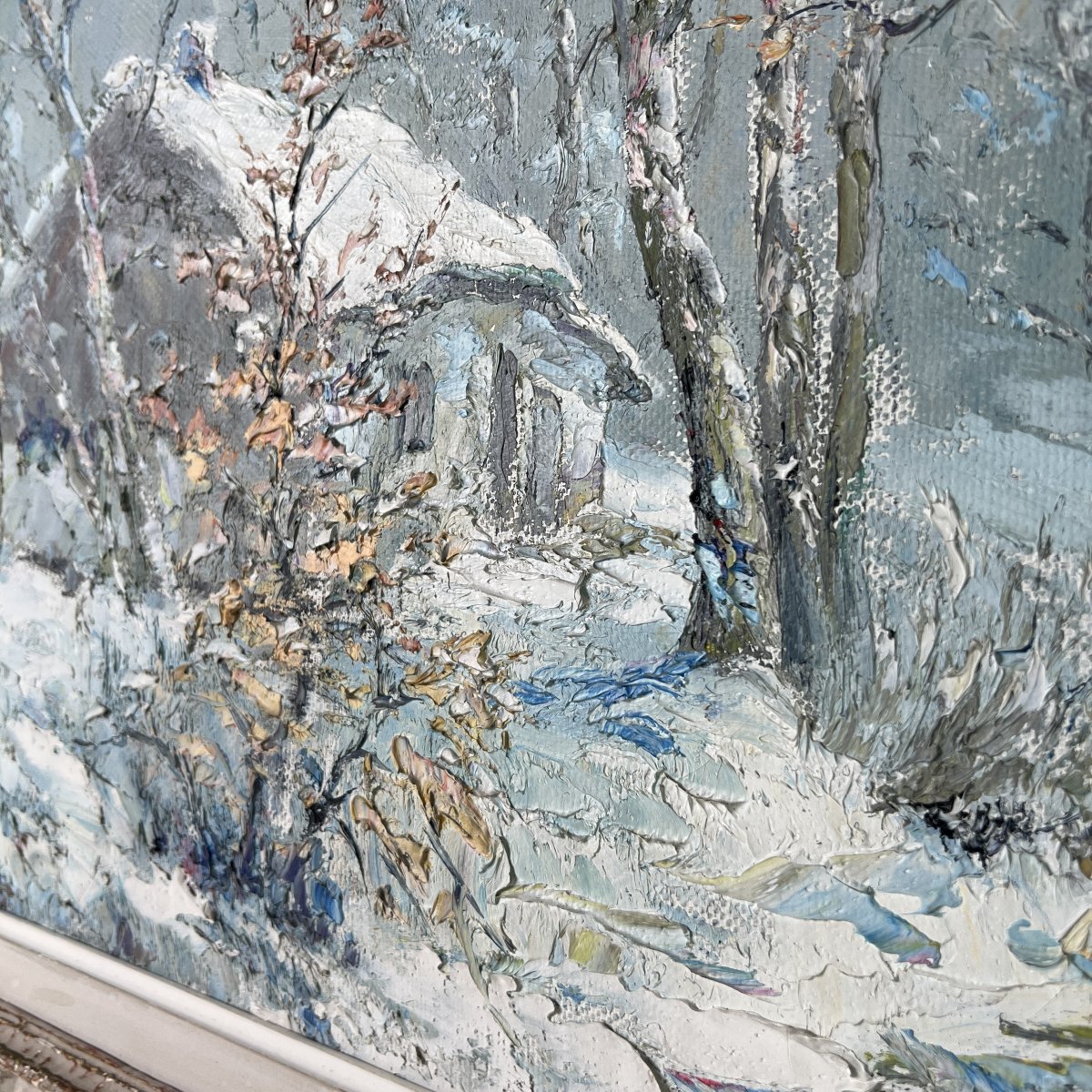
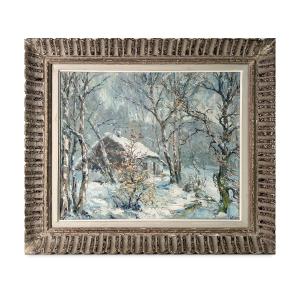
A thatched cottage in the snow in the Campine, a signed oil on canvas by Charles Wellens (1889–1959), the Belgian painter who made the Limburg Campine his almost exclusive subject from 1913 onwards. A half-buried thatched roof, a screen of birches with white trunks streaked with black, and a russet oak providing the only warm accents in a palette of blue-greys, green-greys and lilacs. A subject less common in his work than the heather moorlands, and more intimate: where those landscapes open onto emptiness, the house anchors the eye and gives the scene its story. Painted with palette knife and brush, with bold, confident handling of the paint. Framed and ready to hang.
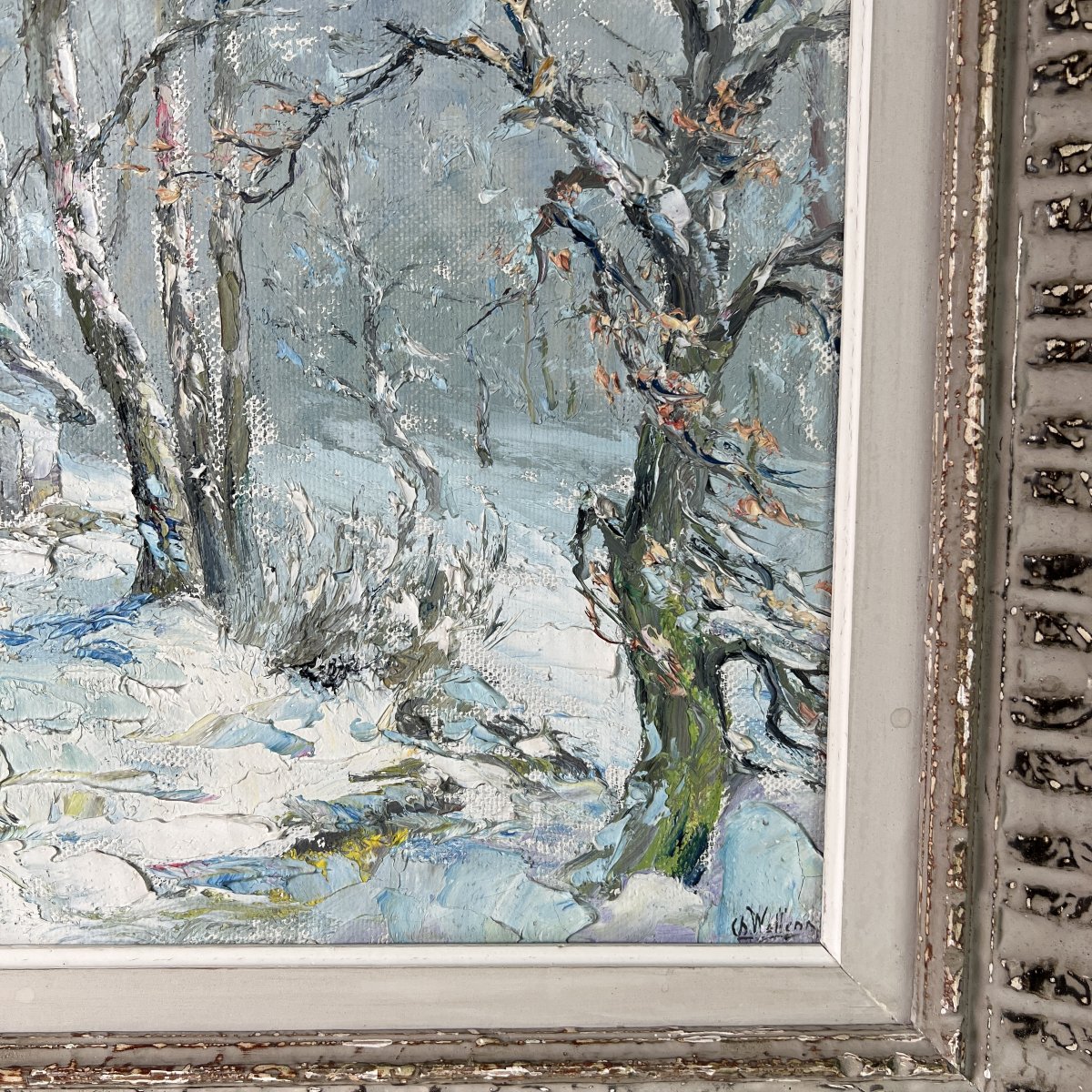
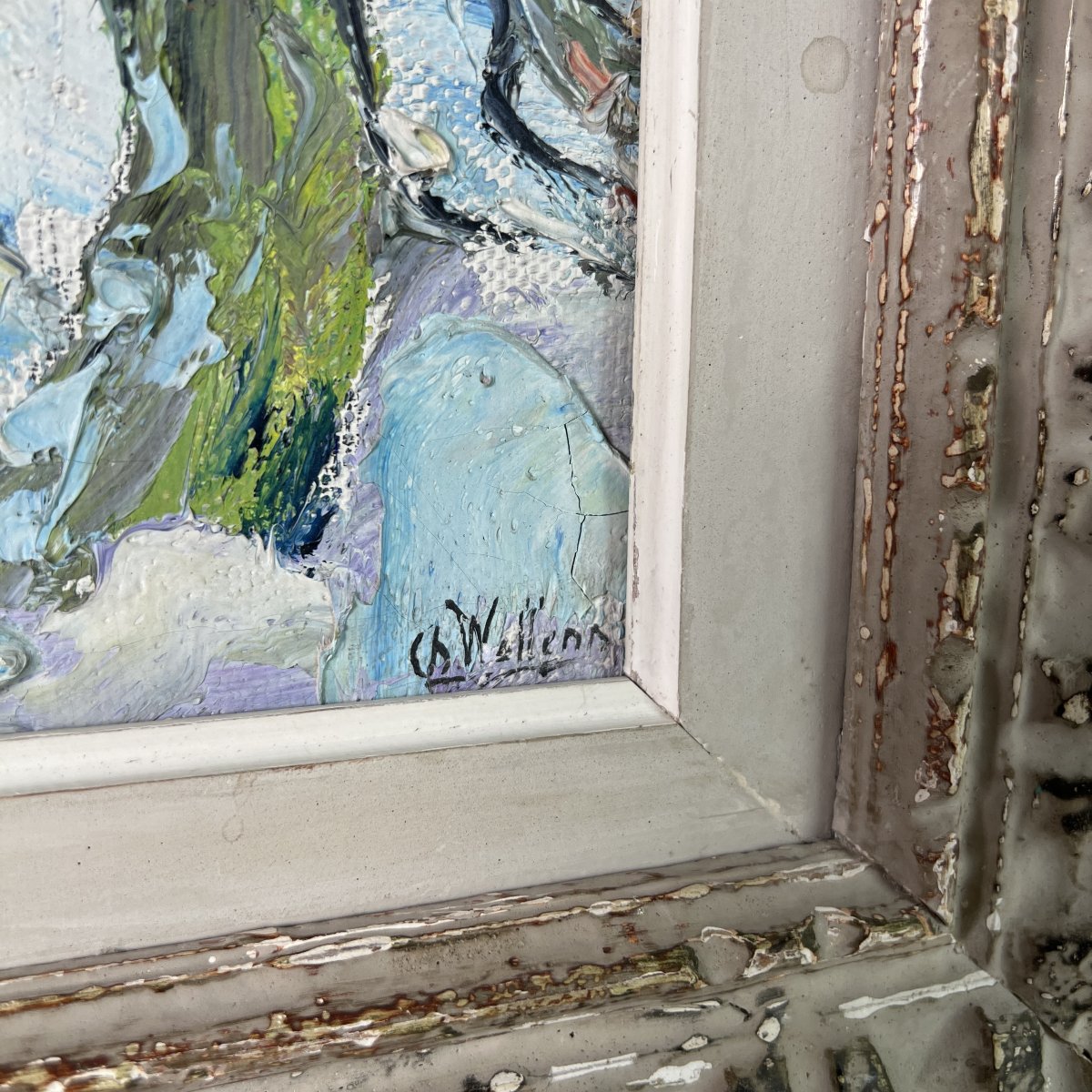
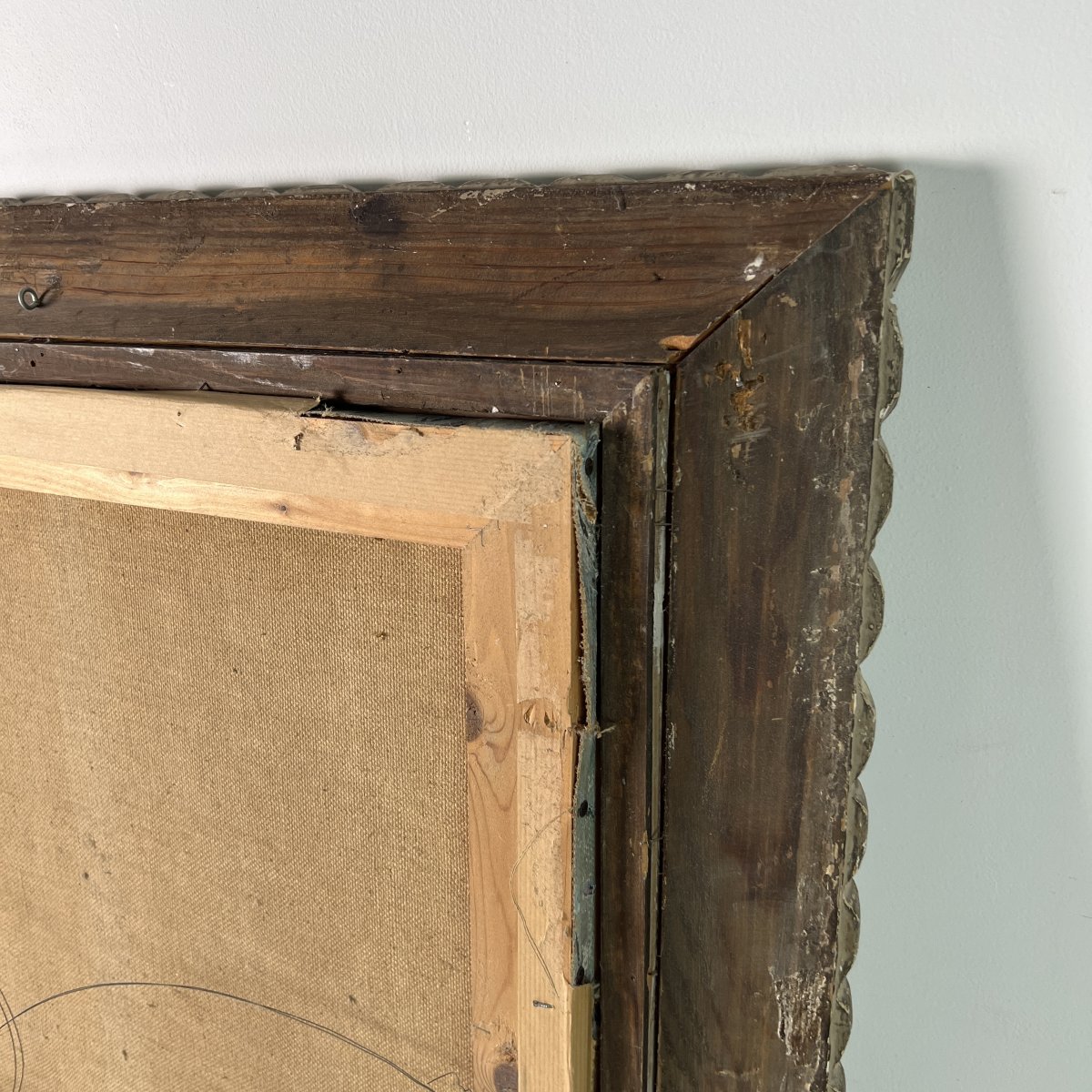
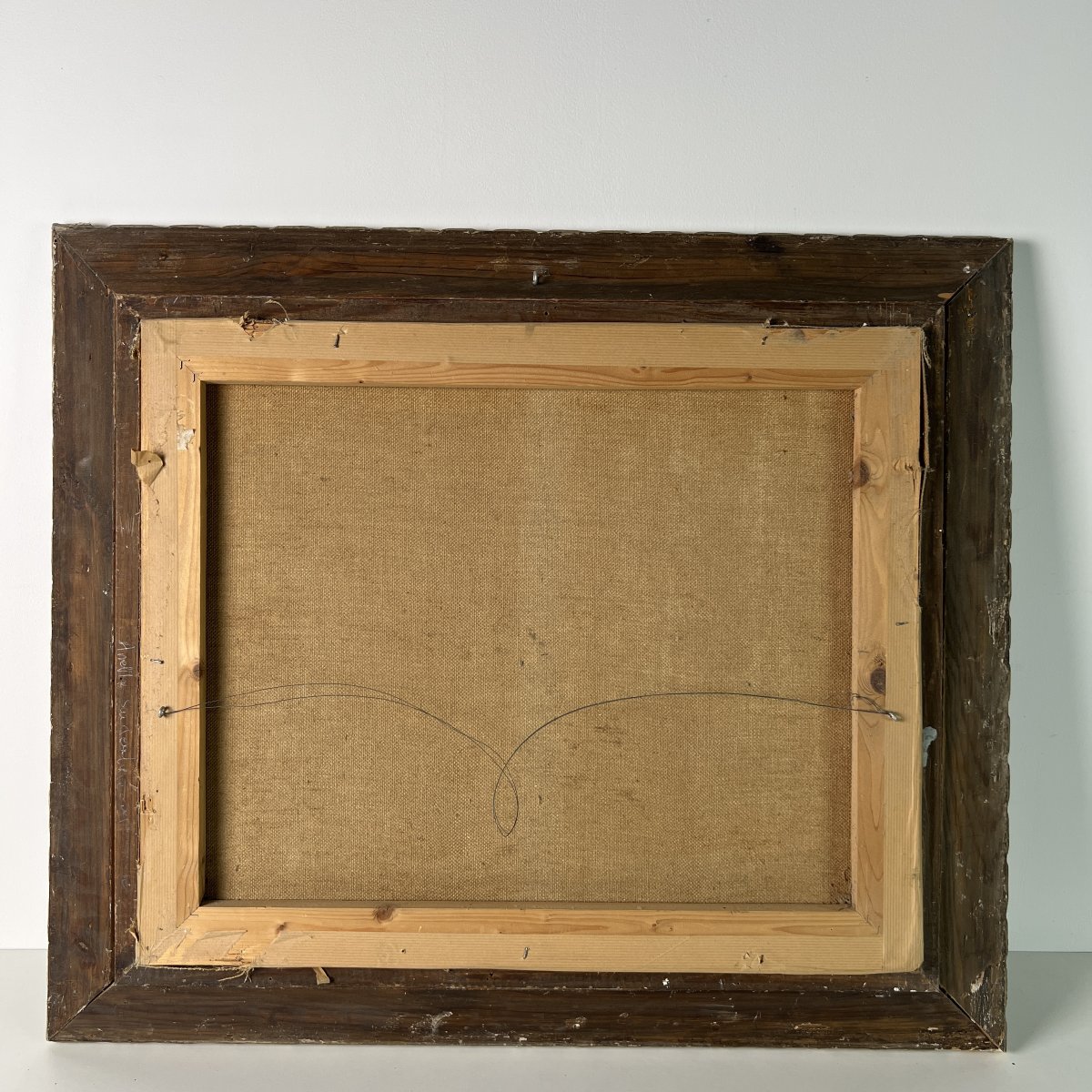
A fir stretcher with tensioning keys and linen canvas: these features, together with the palette-knife technique, are consistent with a date of circa 1940–1950, although they do not allow for more precise dating. Signed “Ch. Wellens” at the lower right. No labels, stamps or inscriptions on the reverse.
Provenance: private French collection.
Trained at the Academy of Fine Arts in Leuven under Omer Dierickx and Jos Damien, Wellens left the city in 1913, after receiving the government’s Grand Vermeil Medal, to settle in Hasselt. He then abandoned figure painting and portraiture in favour of the Campine moorlands, becoming their quintessential painter—a “Campine painter”, as he liked to be called. Broad horizons, sandy heaths, heather and dwarf oaks: the Limburg Campine, stretching north from Hasselt to the Dutch border, was a major centre of Belgian plein-air painting, explored with an easel on the back and a paint box slung over the shoulder. His work was shown in exhibitions in Rio de Janeiro, Buenos Aires, Rouen and Lille.
Snow-covered woodland. A small, dark opening punctuates the cottage’s gable. At the centre, the oak has retained its dry leaves; this marcescence introduces the tawny shades, sienna and ochre that make the greys sing. A sunken snowy path in the foreground, with branches dissolving into the mist beyond.
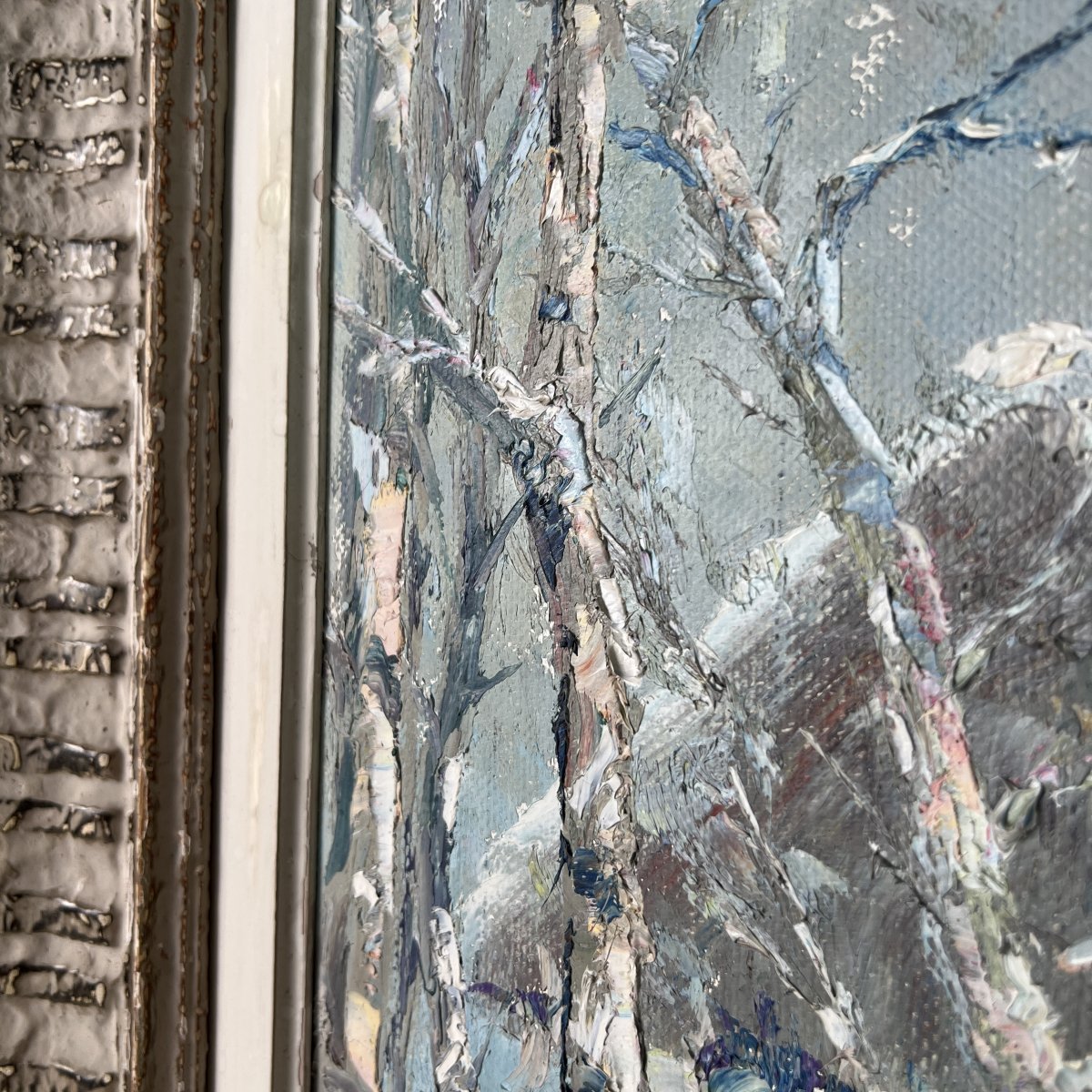
Here, palette knife and brush work together: snow laid down in broad patches, impasto two to three millimetres thick on both the snow and the tree trunks, dead leaves rendered as dabs of paint, and branches drawn with brisk, vigorous strokes. Seen close up, the surface borders on abstraction; from three metres away, everything resolves into place. The canvas weave, left visible in the background, lends the distance its shimmering, misty quality.
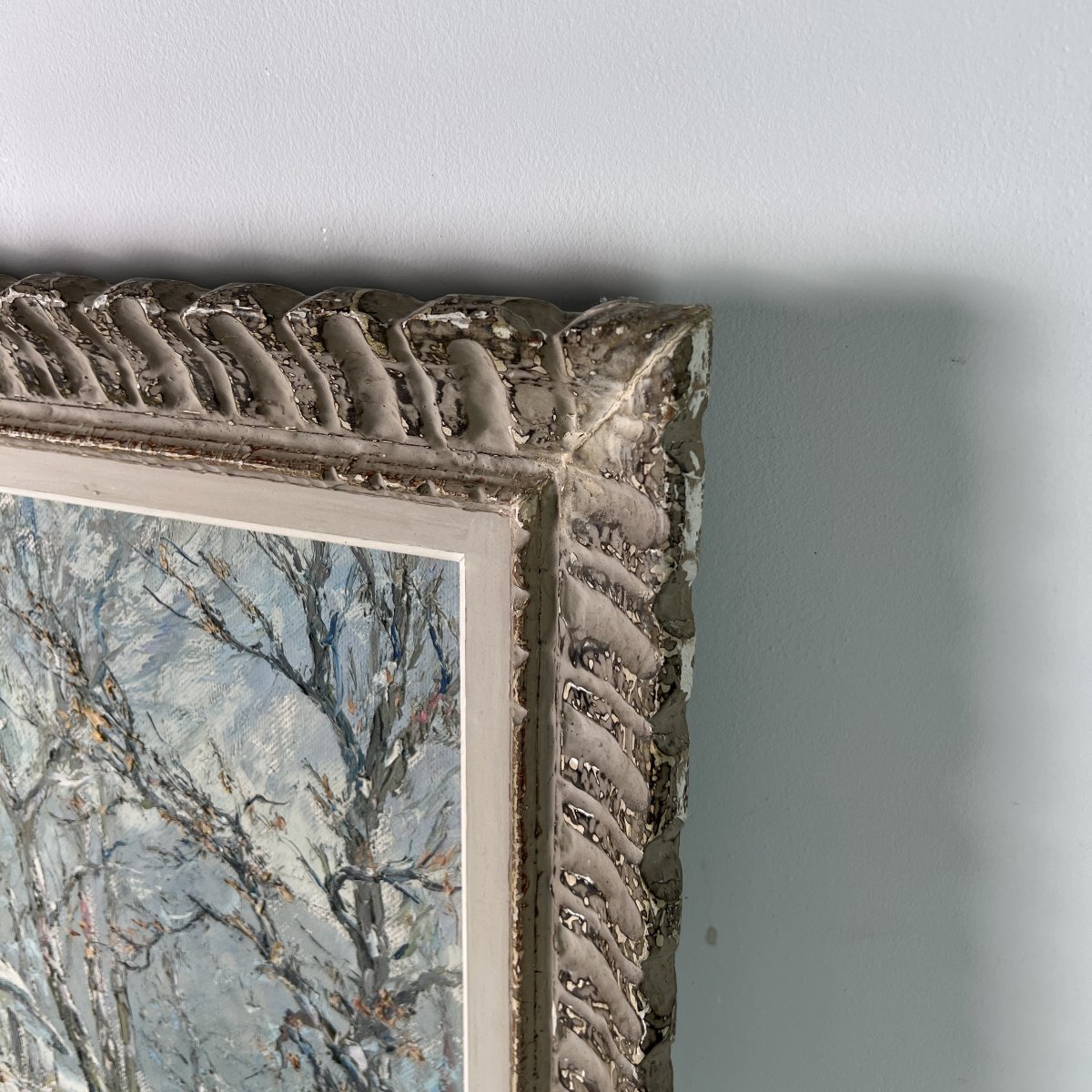
A wide gadrooned frame in wood and composition, repainted taupe-grey and then rubbed back. Chips reveal a reddish-brown ground and traces of white, suggesting an originally gilded or silvered finish that was later repatinated. A white inner moulding serves as a liner. A Gustavian look much sought after in interior decoration.
Very good overall condition. The canvas is perfectly taut, with no dents or distortion, and no paint loss or lifting. Fine drying cracks in the thickest impasto at the lower right—a normal occurrence in oil-rich paint—are very discreet and have no structural impact.
The frame shows wear to the patina along the edges and corners; the joints are sound and the moulding is intact.
Measurements:
• Stretcher: 60.5 cm wide × 50 cm high (French standard size 12 figure, used horizontally)
• Sight size: 59 cm wide × 48 cm high
• Overall frame dimensions: 79 cm wide × 68 cm high
Safe and secure shipping:
• France: € 18
• European Union: € 28
• International: € 98
• Professional packing; each shipment insured for the full value of the piece.
• Authenticity guaranteed; a detailed invoice is provided with every acquisition.
• Returns accepted within 14 days of receipt.
• Our pieces may be viewed by appointment.
• Does this item pique your interest or curiosity? Feel free to contact us, we would be delighted to discuss it with you. We are available from Monday to Saturday, from 8 a.m. to 7 p.m., at +33 652 43 97 82
We correspond fluently in English and have shipped a wide variety of pieces internationally for many years. Please do not hesitate to contact us with any questions. Excellent customer service, we accept returns up to 14 days, 100% positive customer reviews.
Visit our store to check all our amazing products
850 €
Period: 20th century
Style: Other Style
Condition: Excellent condition
Material: Oil painting
Width: 60 cm
Height: 50 cm
Reference (ID): 1829290
Availability: In stock
Print