
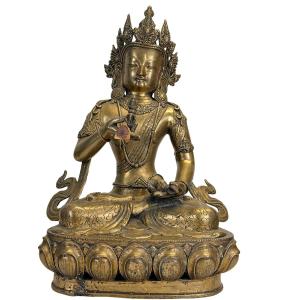


Tibetan Vajrasattva In Gilded Bronze – Newar Influence, 19th Century
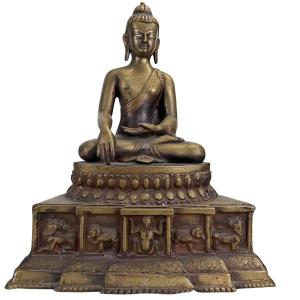
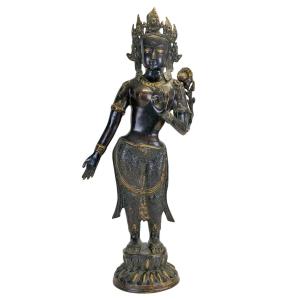
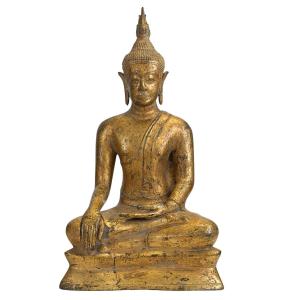
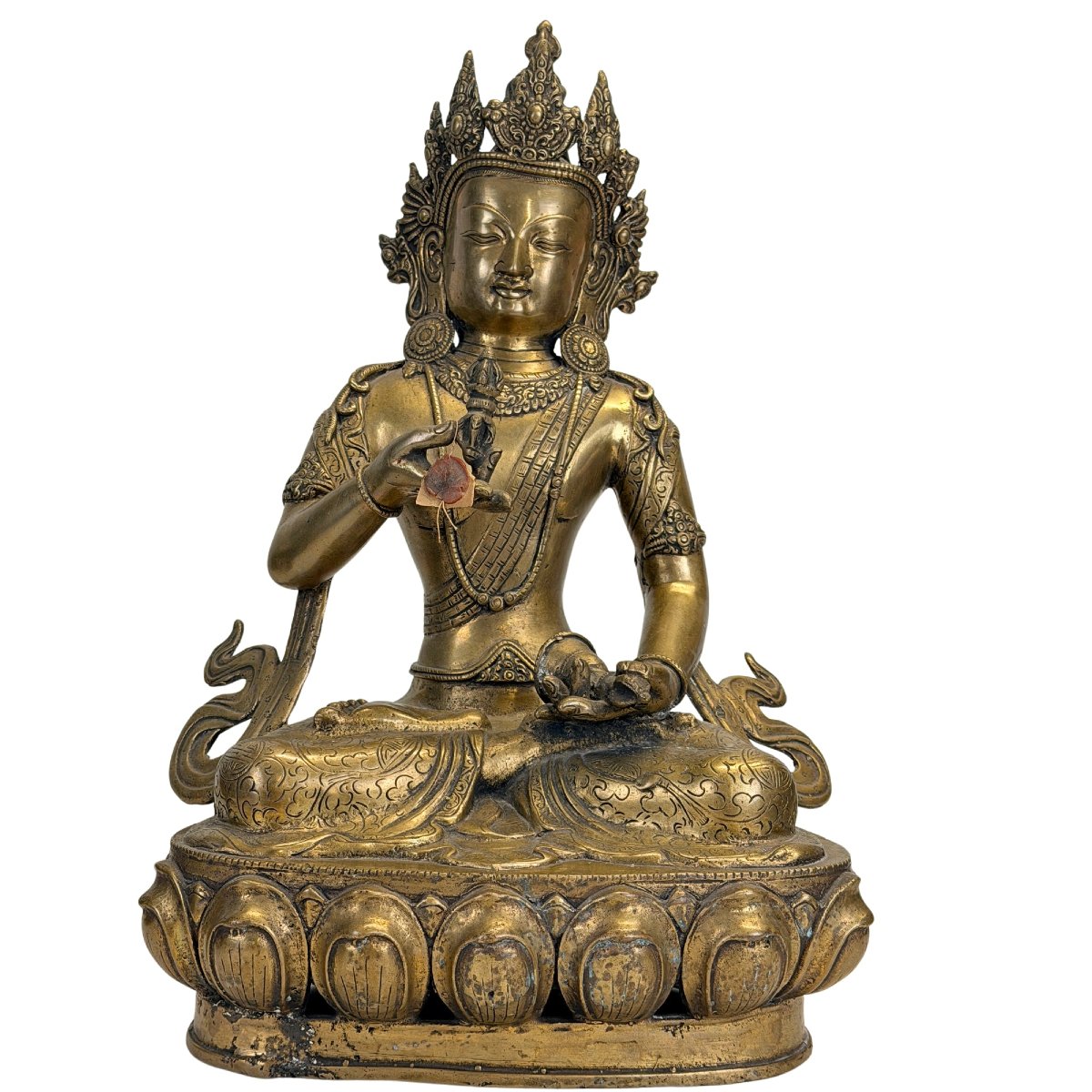
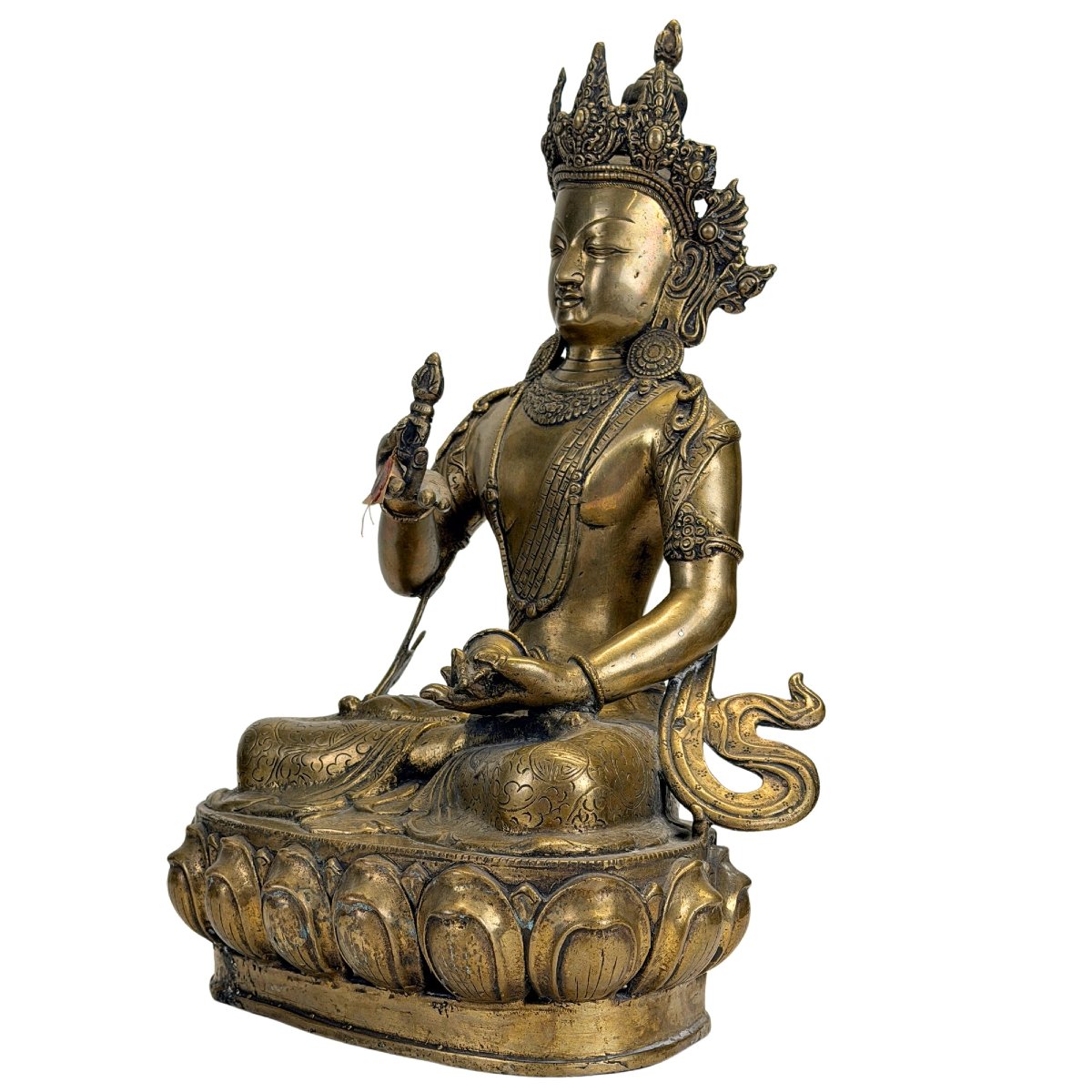
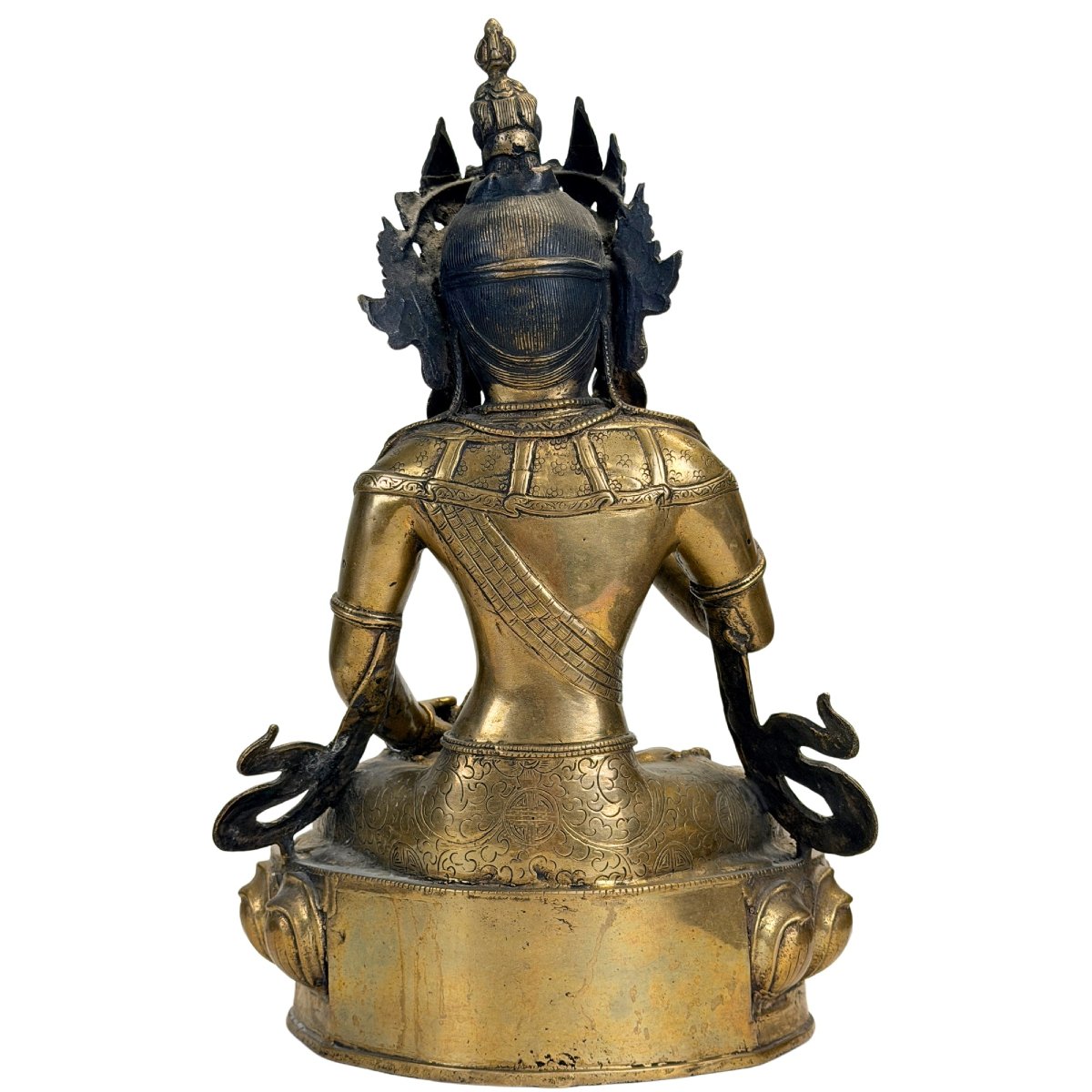
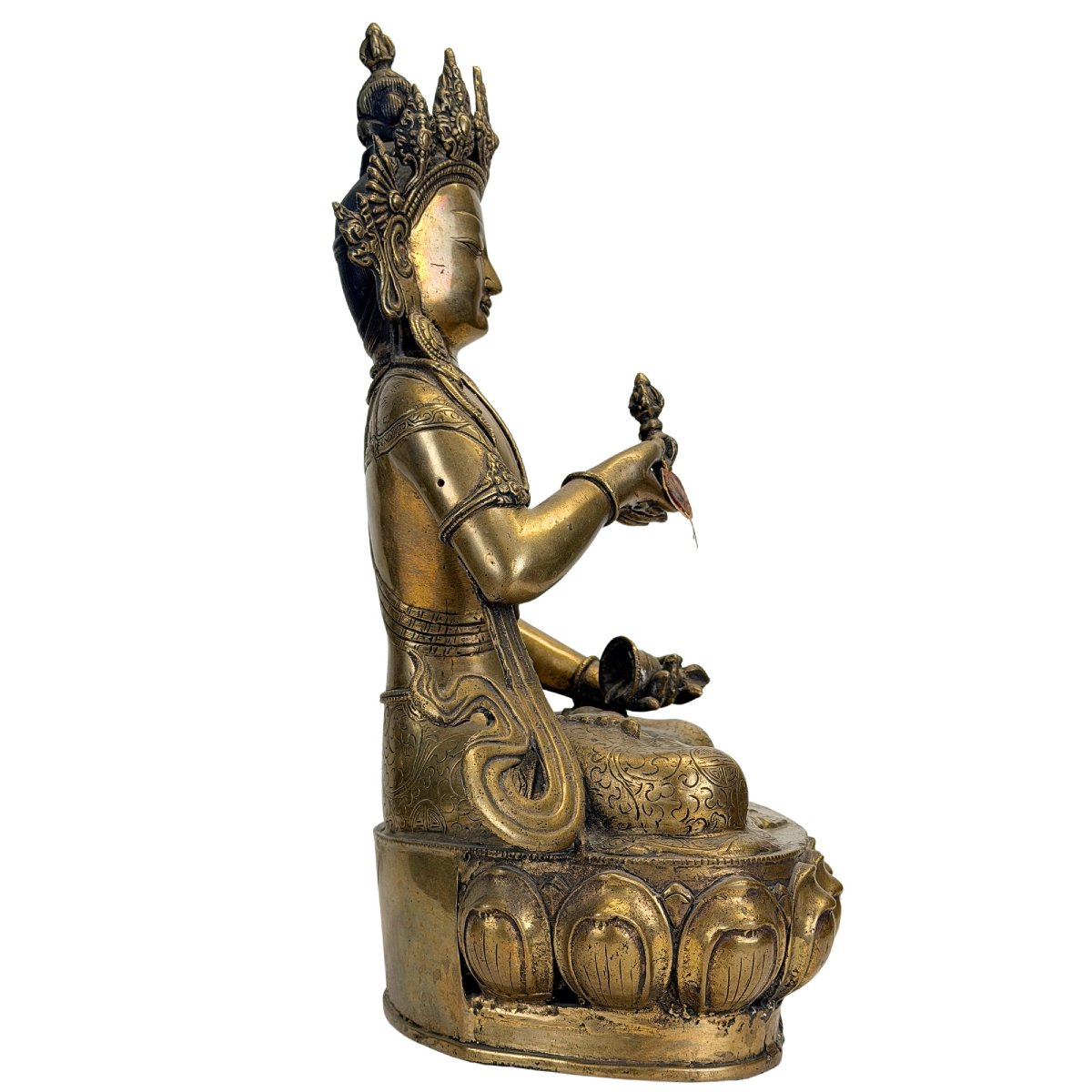
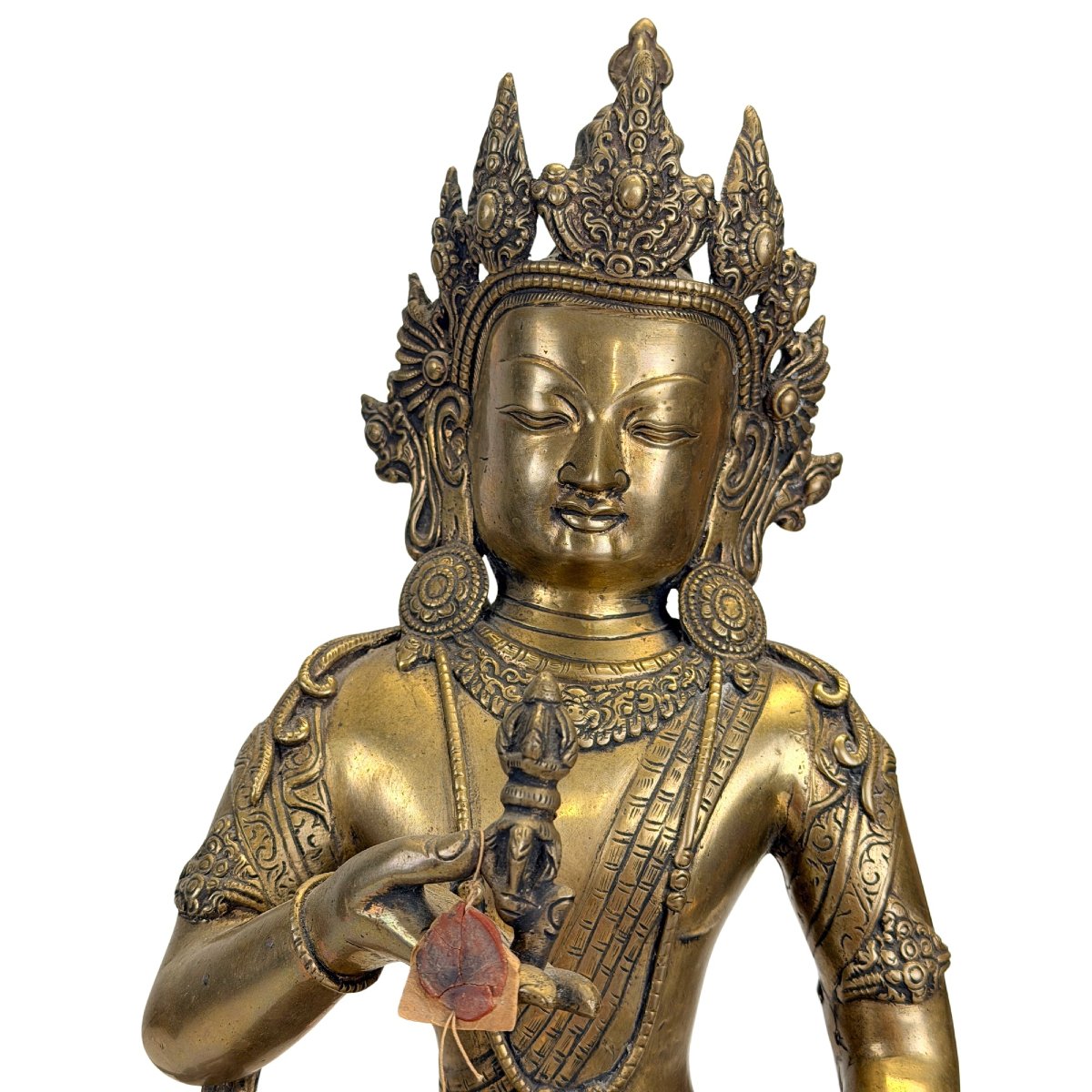
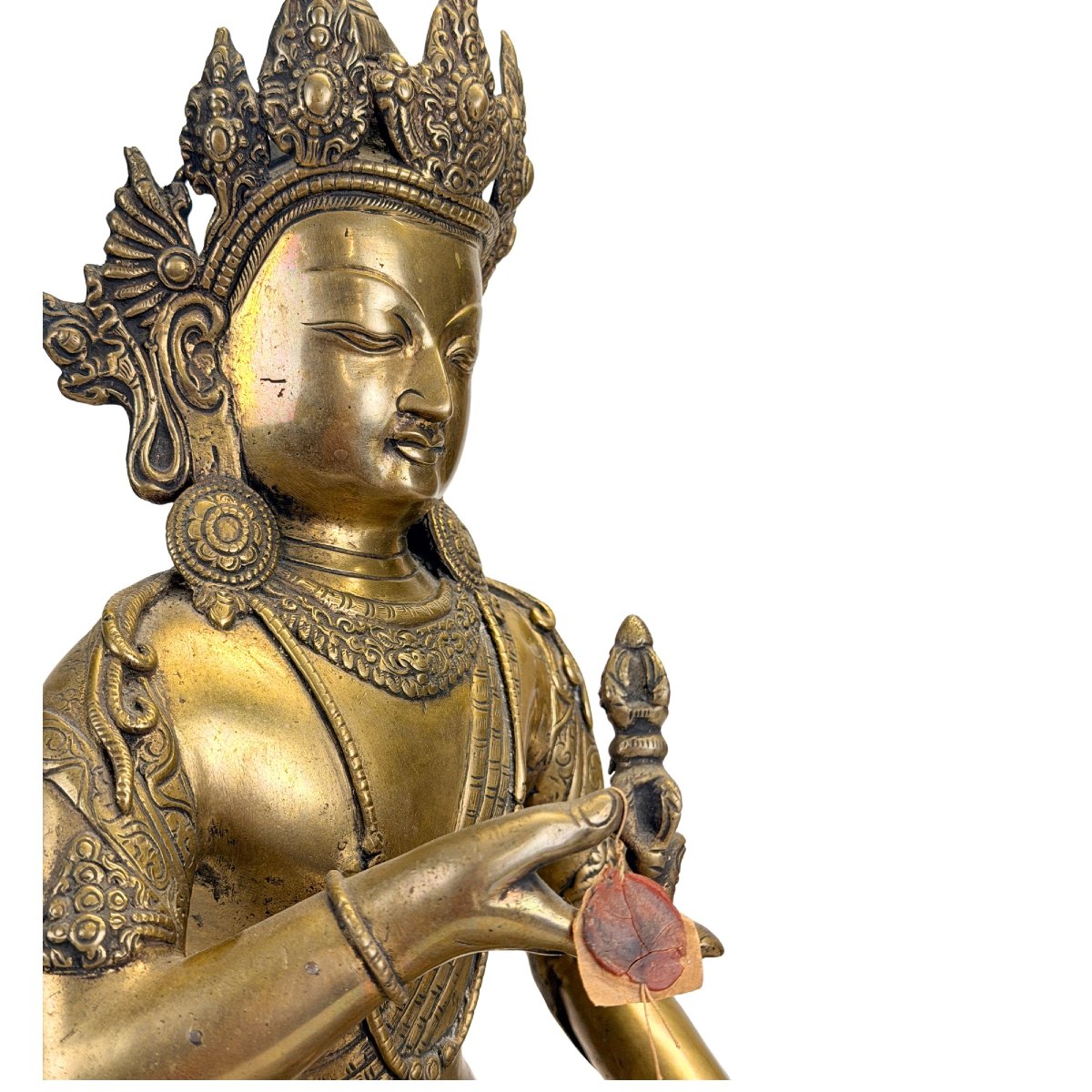
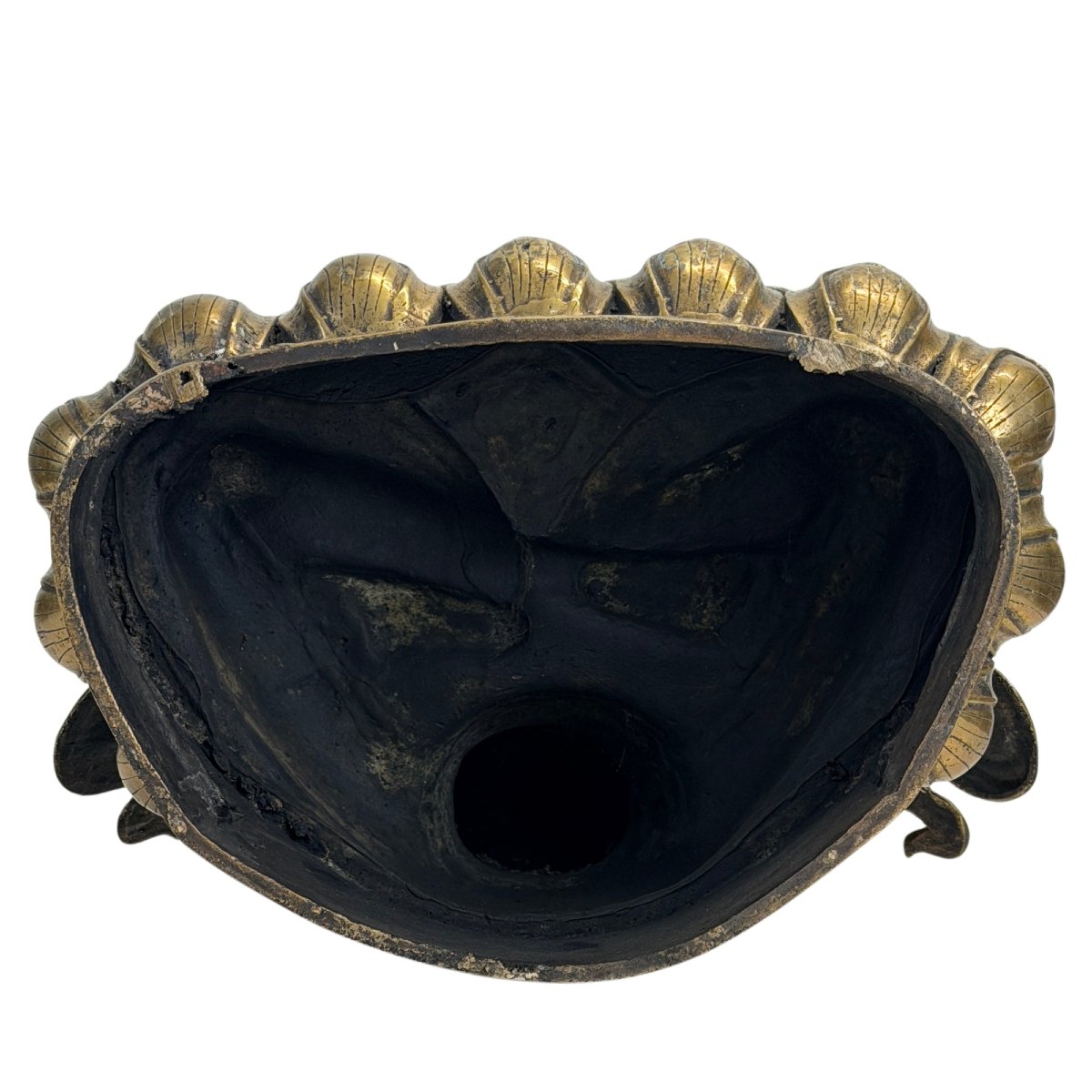
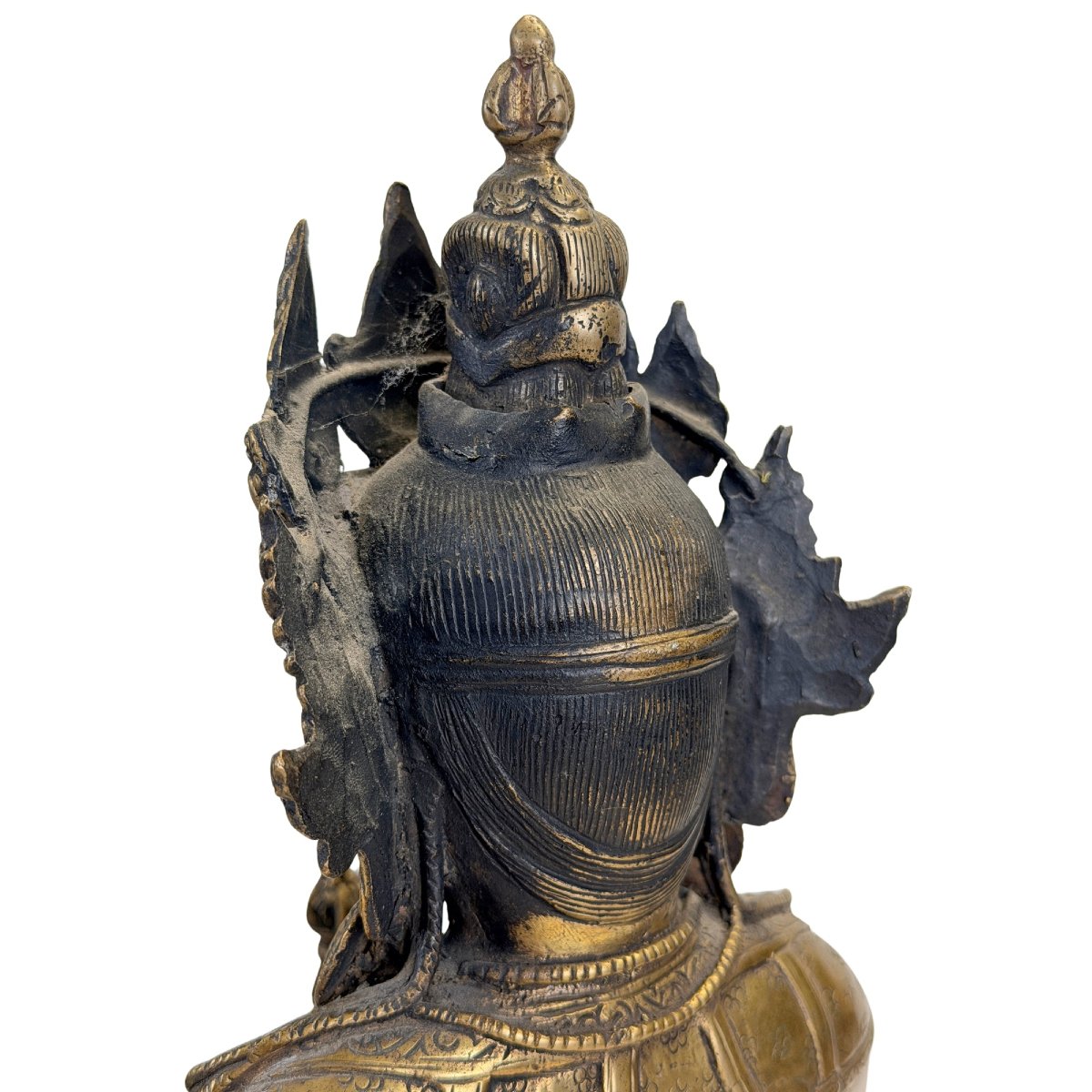
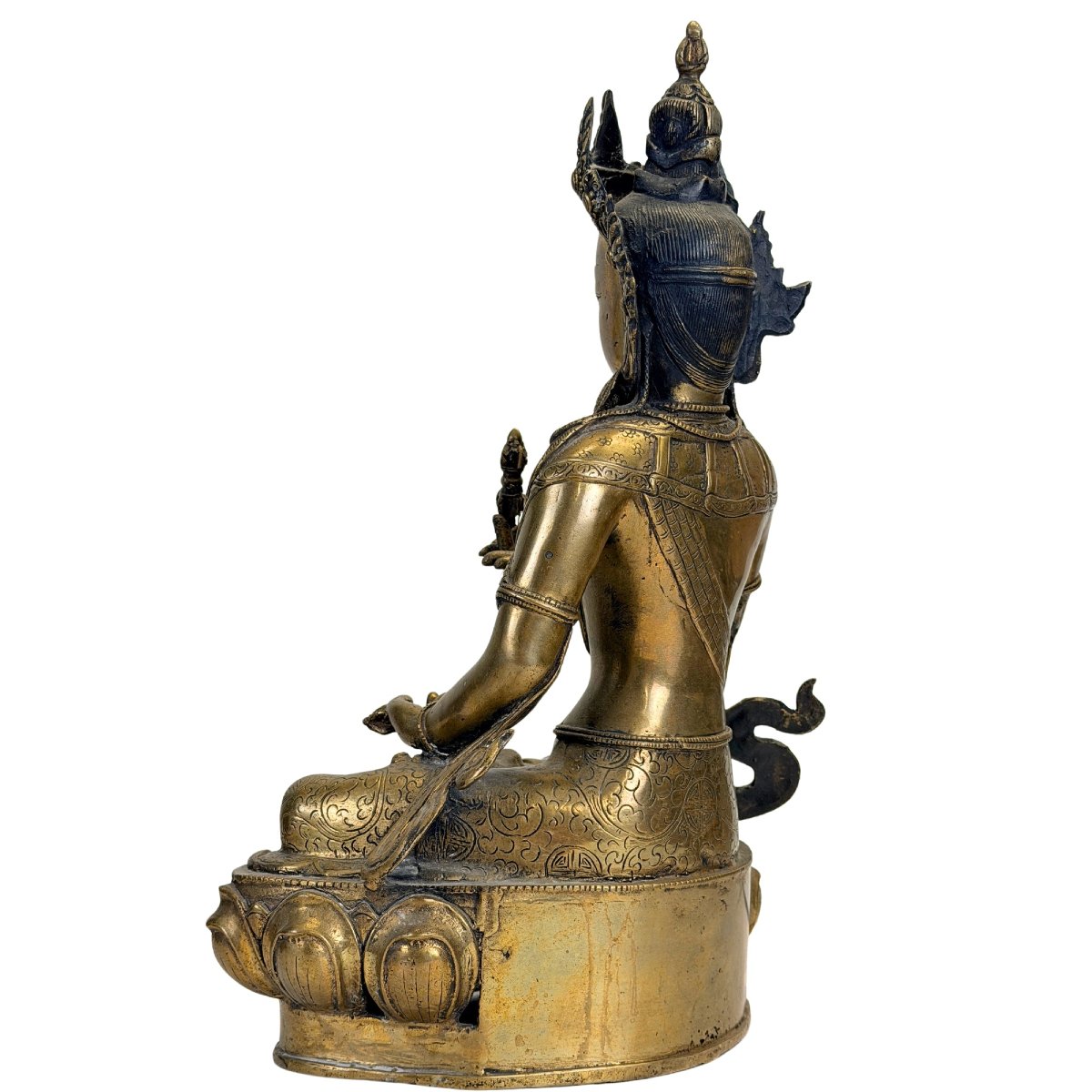
A copper-rich bronze Vajrasattva with original gilding, Tibet/Himalayas, 19th century. The sculpture combines Tibetan iconography with a strong Newar influence, particularly evident in the crown, jewelry, and engraved motifs on the clothing.
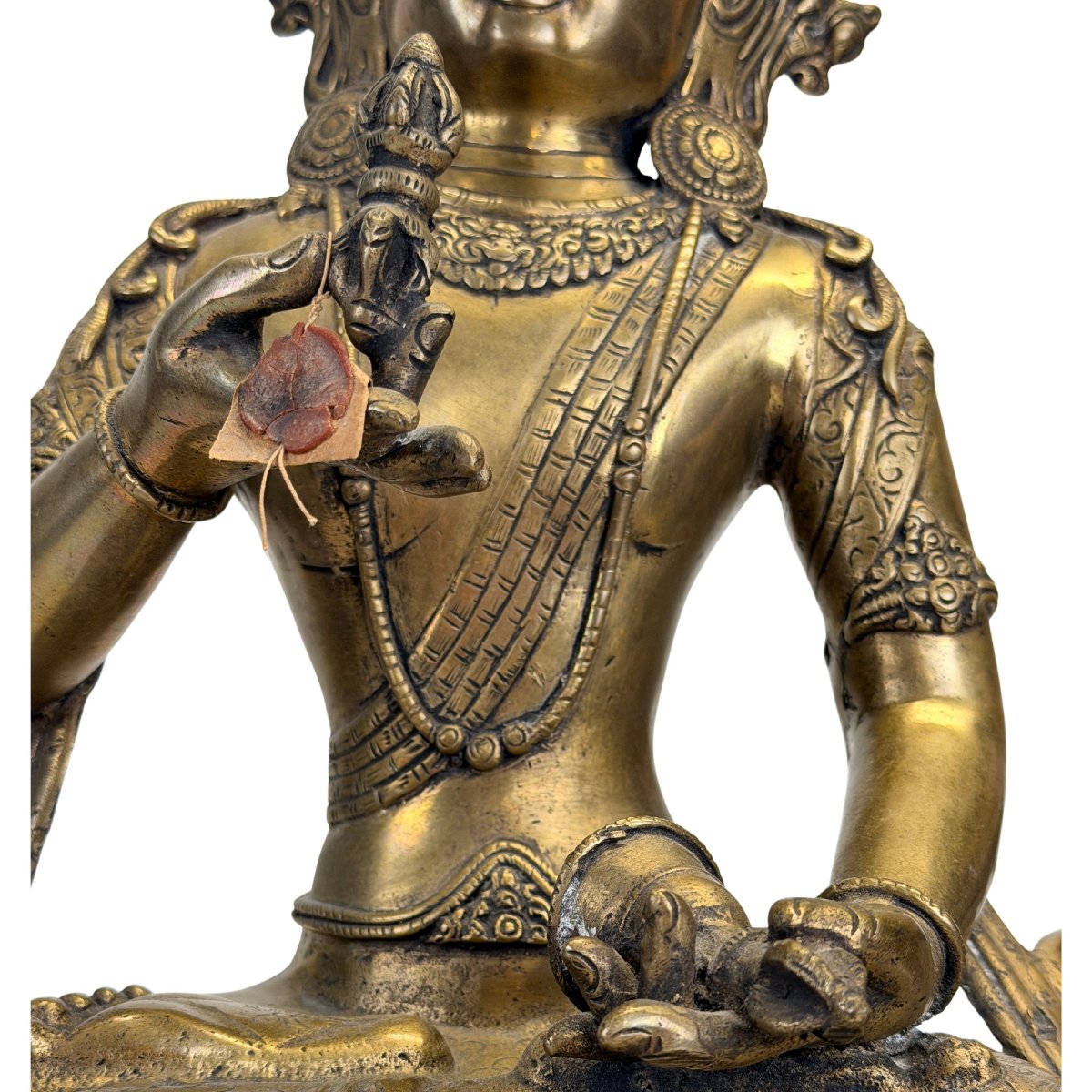
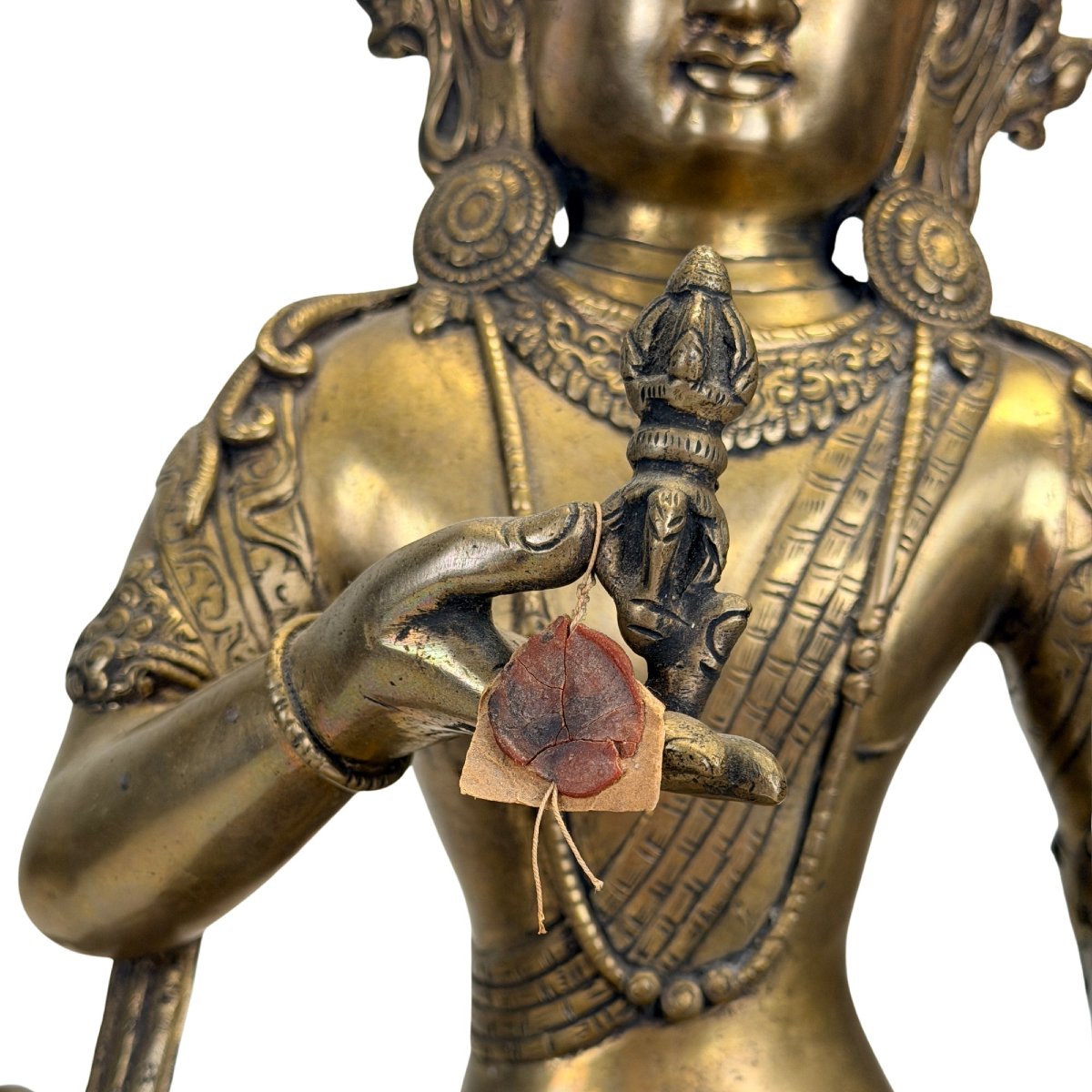
Vajrasattva, also known as Dorje Sempa, holds the vajra in his right hand and the ghanta, a ritual bell, in his left. These attributes symbolically unite method and wisdom. The figure sits on a fully bloomed lotus; the ornaments were finished by hand after casting.
Microscopic examination reveals hand-engraved details, deposits in the recesses, and gilding that is unevenly preserved depending on the surface’s exposure. Its appearance is consistent with traditional mercury-based gilding; however, the presence of mercury has not been confirmed by elemental analysis. Our expert assessment dates the piece to the 19th century.
A small red Nepalese seal remains attached to its original cord. It provides insight into the piece’s history of circulation; its proposed dating to around 1950–1960 remains provisional and does not determine either the age of the sculpture or its place of manufacture.
Original condition: wear on the gilding, polished areas, small scratches and pitting, oxidation, and dark deposits. The seal shows signs of drying, crazing, and losses along its edges.
Height: 40.5 cm. Width: 27.5 cm. Weight: 5.4 kg. Reference: 724.
Vajrasattva, also known as Dorje Sempa, holds the vajra in his right hand and the ghanta, a ritual bell, in his left. These attributes symbolically unite method and wisdom. The figure sits on a fully bloomed lotus; the ornaments were finished by hand after casting.
Microscopic examination reveals hand-engraved details, deposits in the recesses, and gilding that is unevenly preserved depending on the surface’s exposure. Its appearance is consistent with traditional mercury-based gilding; however, the presence of mercury has not been confirmed by elemental analysis. Our expert assessment dates the piece to the 19th century.
A small red Nepalese seal remains attached to its original cord. It provides insight into the piece’s history of circulation; its proposed dating to around 1950–1960 remains provisional and does not determine either the age of the sculpture or its place of manufacture.
Original condition: wear on the gilding, polished areas, small scratches and pitting, oxidation, and dark deposits. The seal shows signs of drying, crazing, and losses along its edges.
Height: 40.5 cm. Width: 27.5 cm. Weight: 5.4 kg. Reference: 724.
15 500 €
Period: 19th century
Style: Asian art
Condition: Condition of use
Material: Bronze
Width: 27,5 cm
Height: 40,5 cm
Reference (ID): 1826214
Availability: In stock
Print