

Saint Sebastian, Alabaster Sculpture, Northern Italy, 17th Century
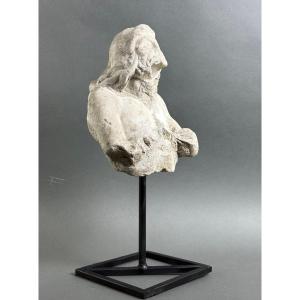
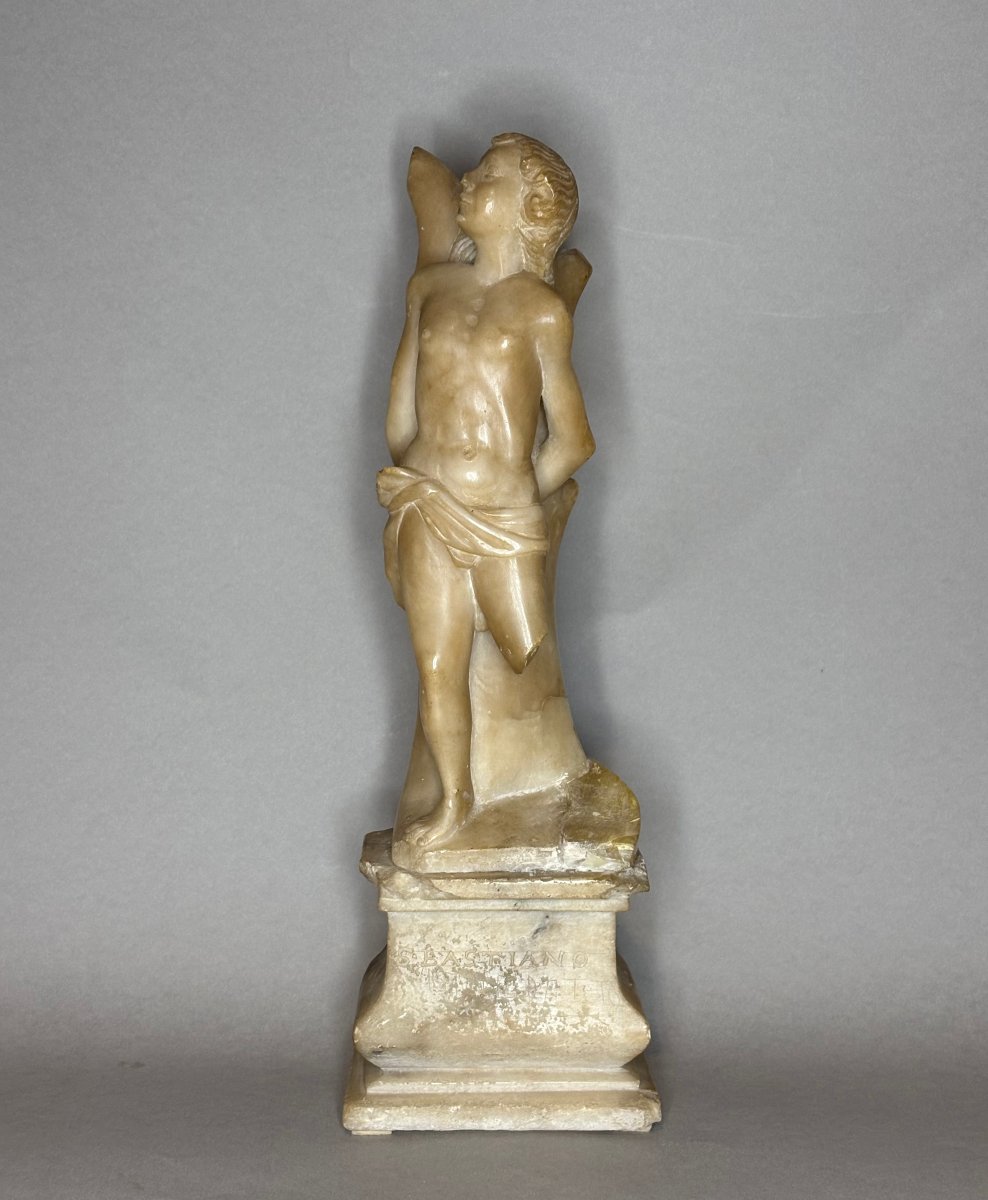
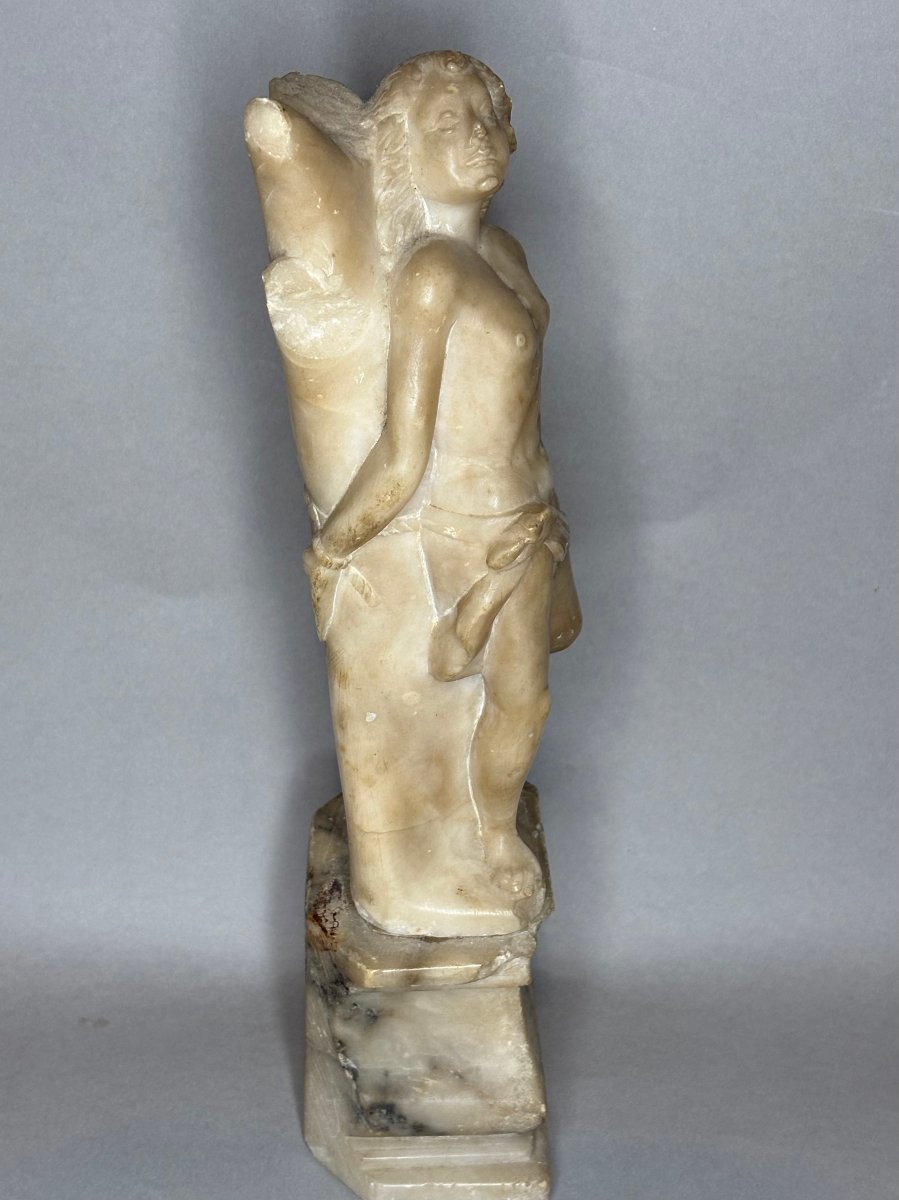
Alabaster sculpture depicting Saint Sebastian, by a Baroque sculptor from the Lombardy region, 17th century.
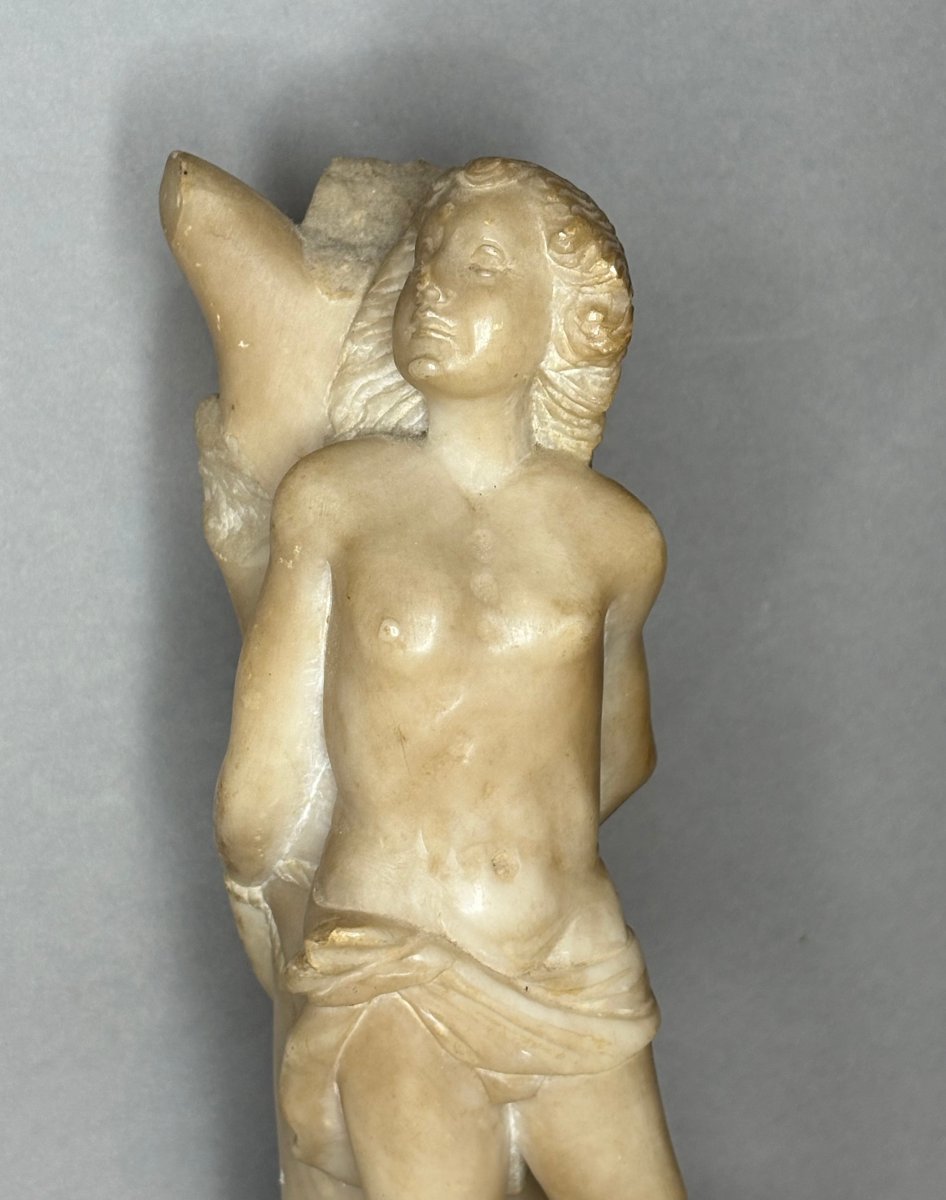
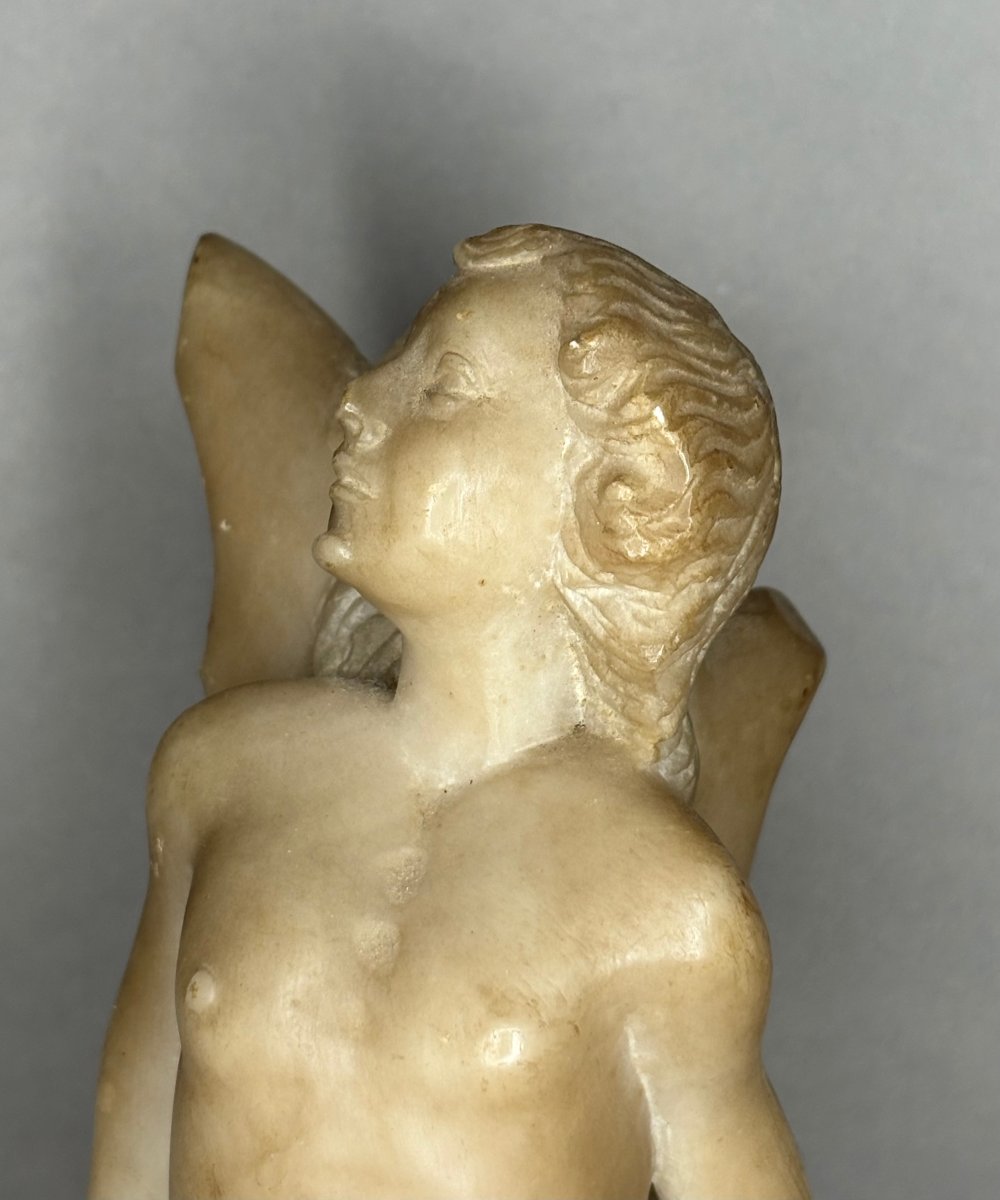
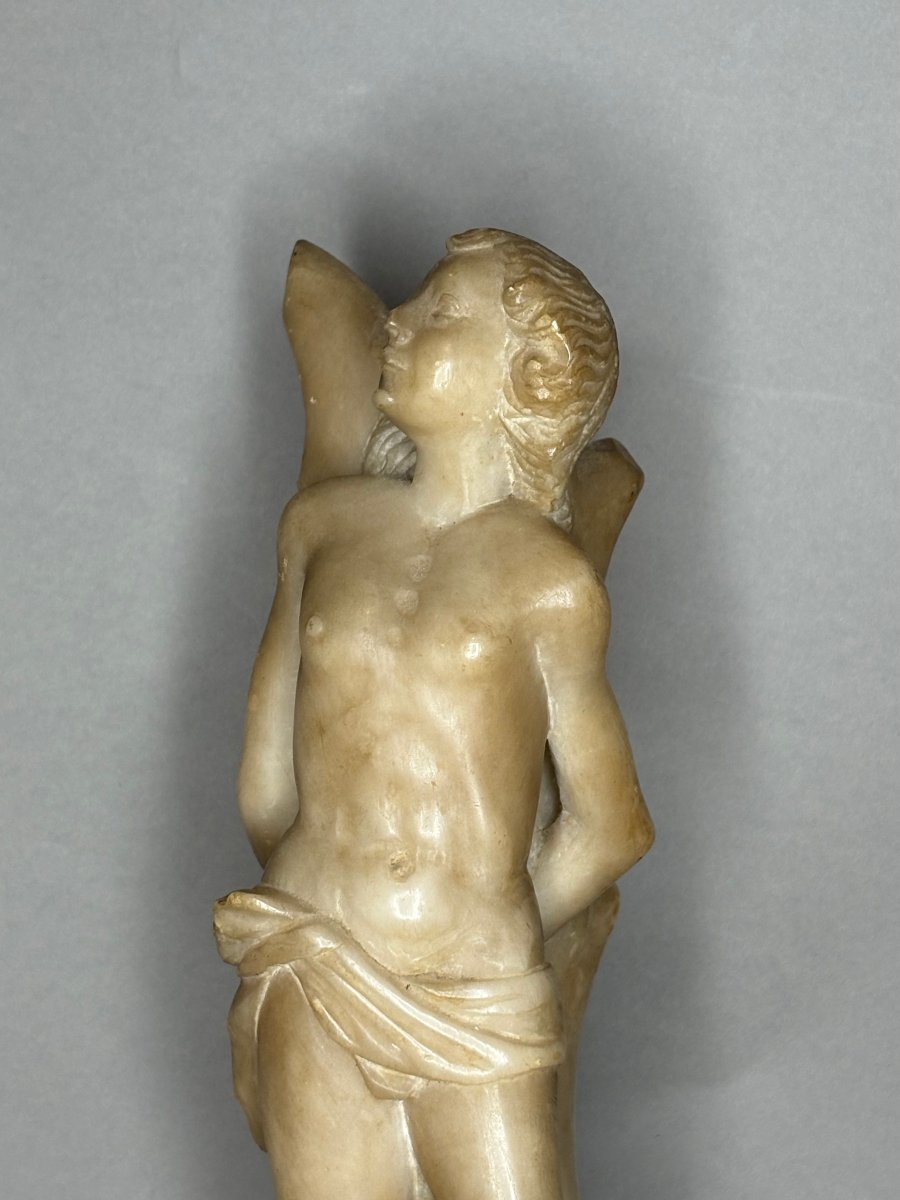
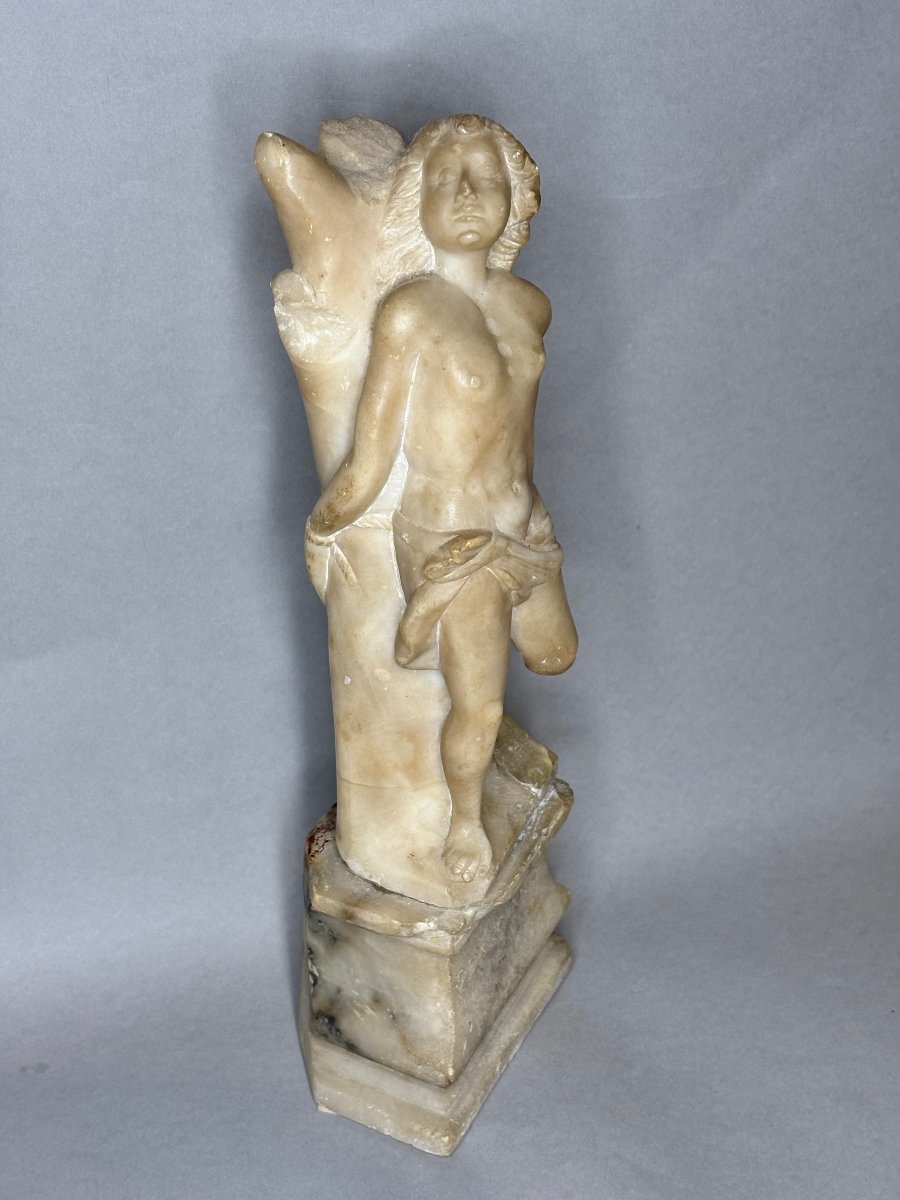
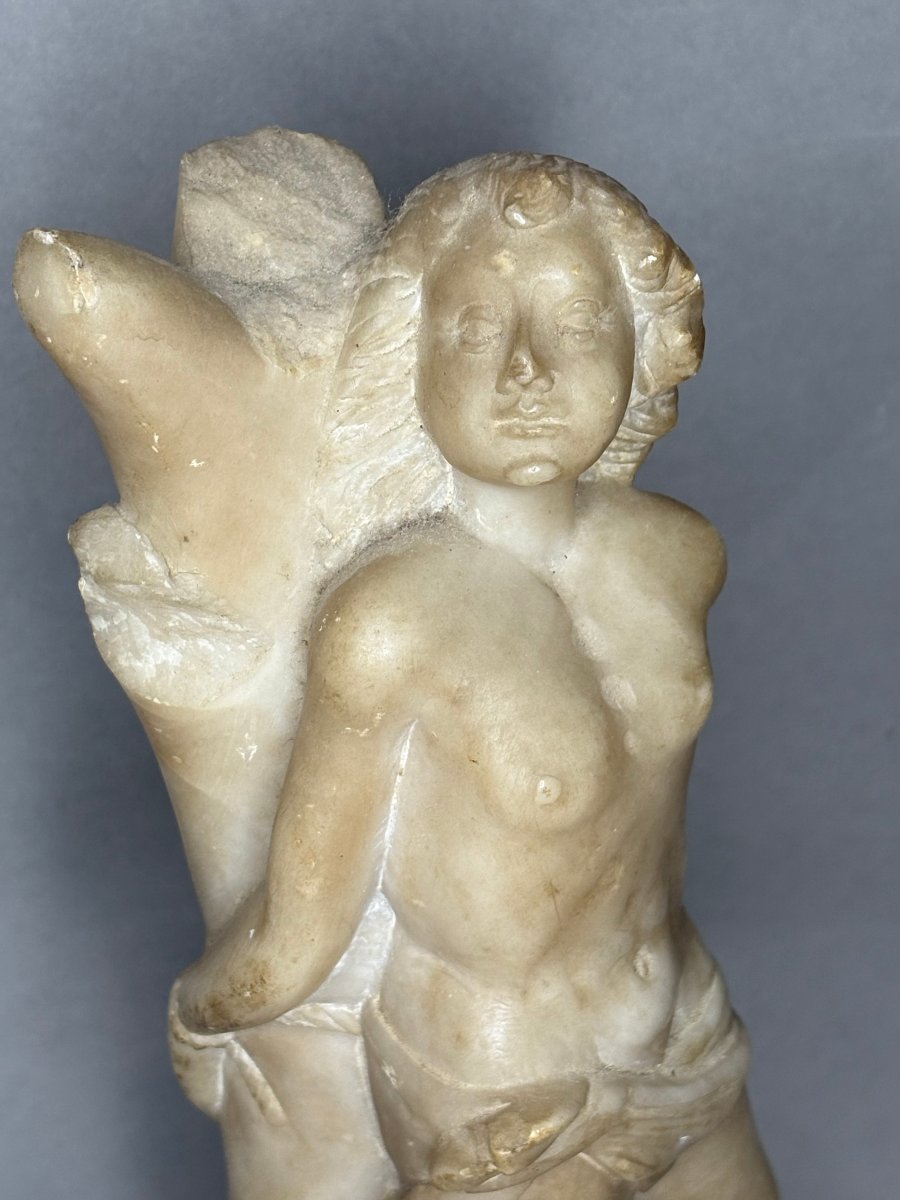
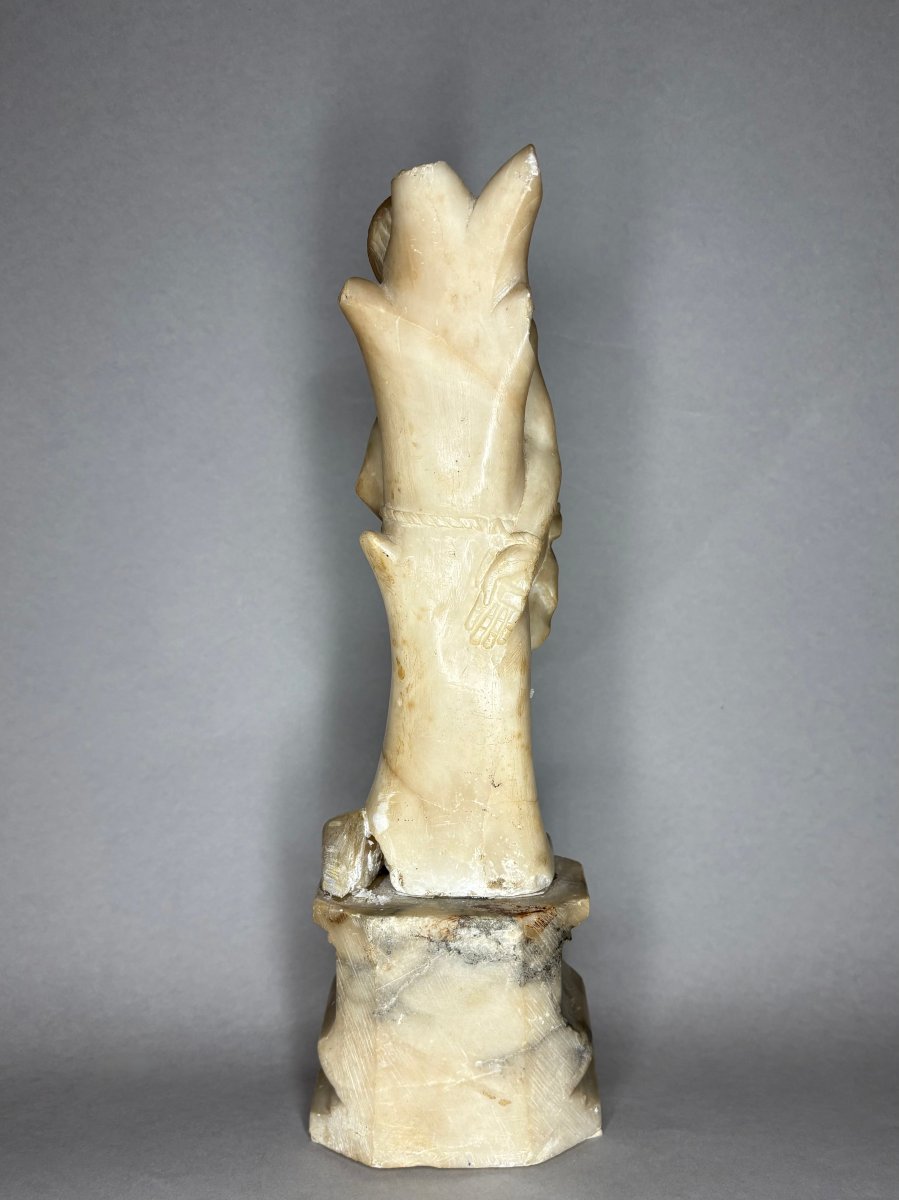
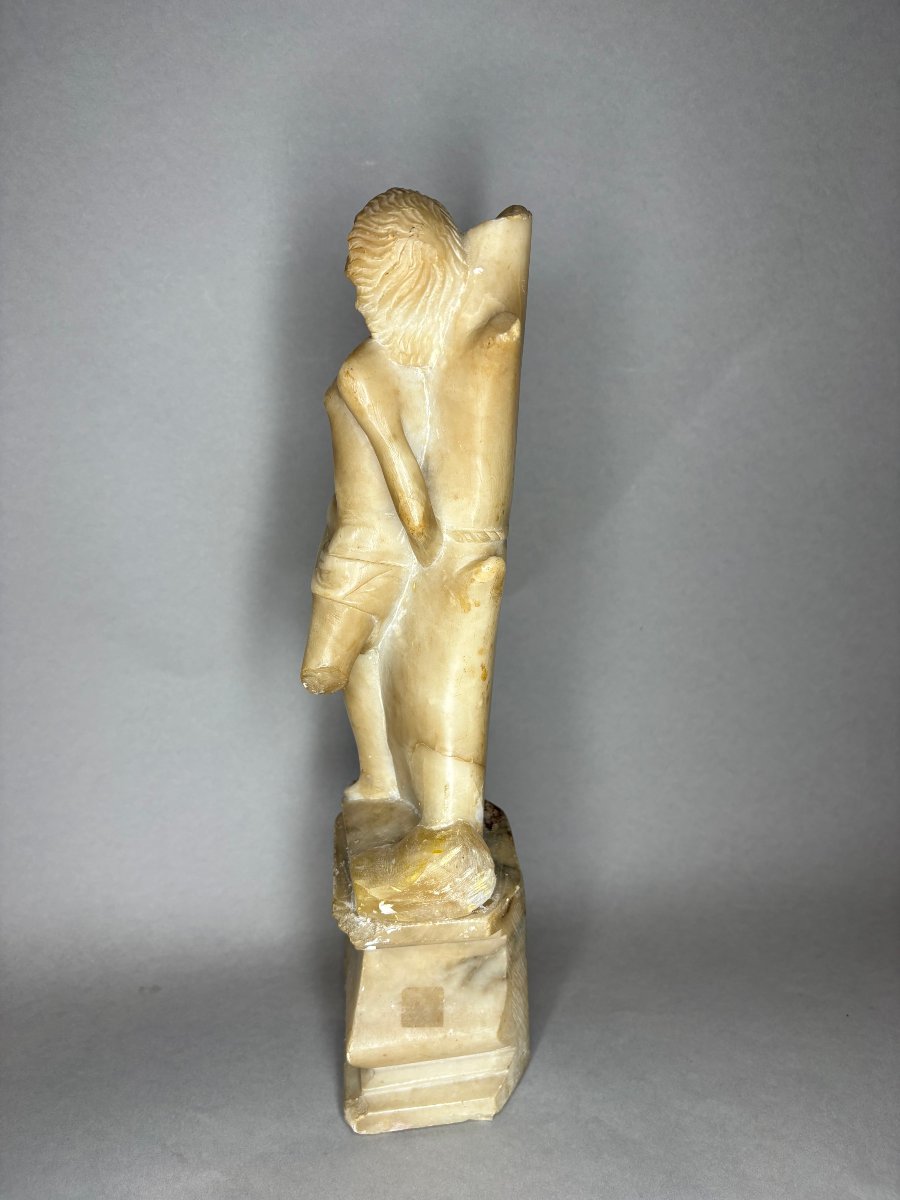
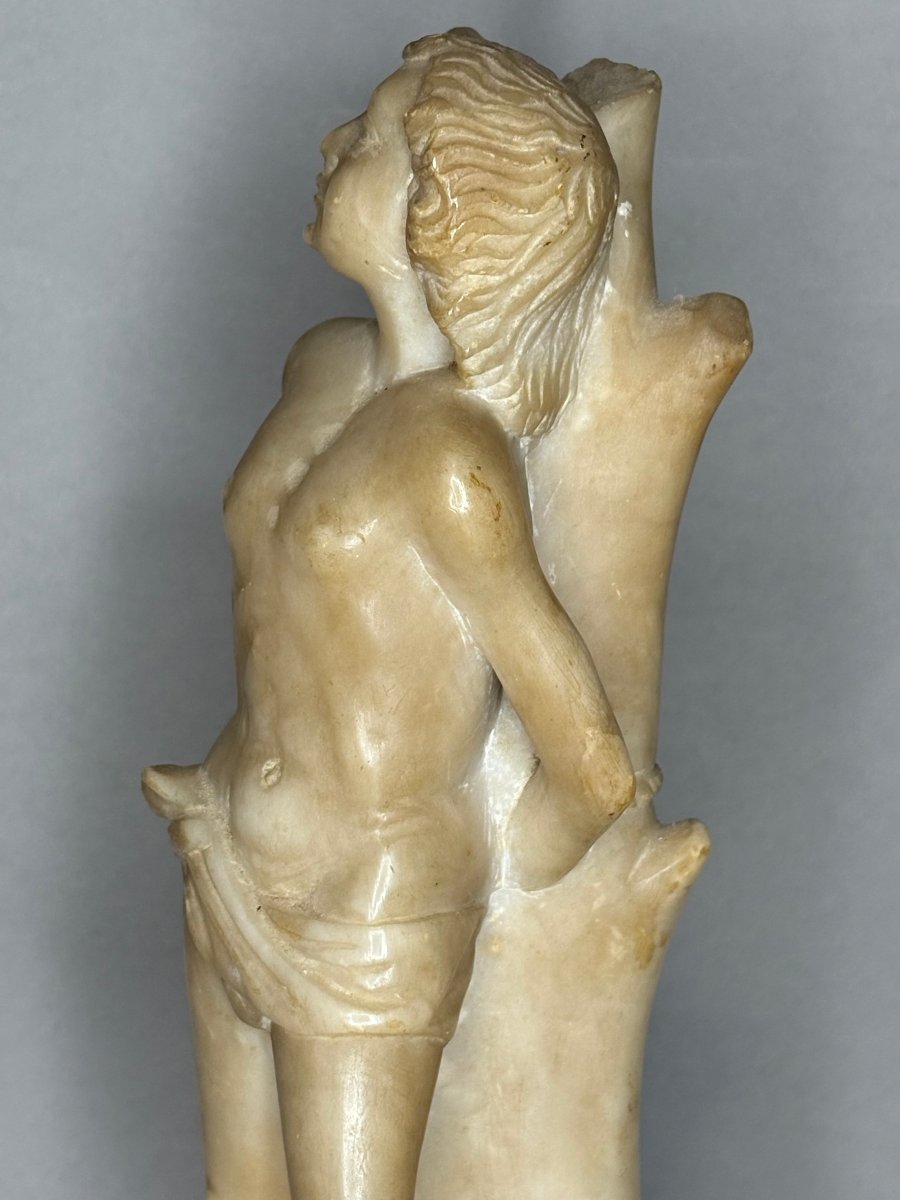
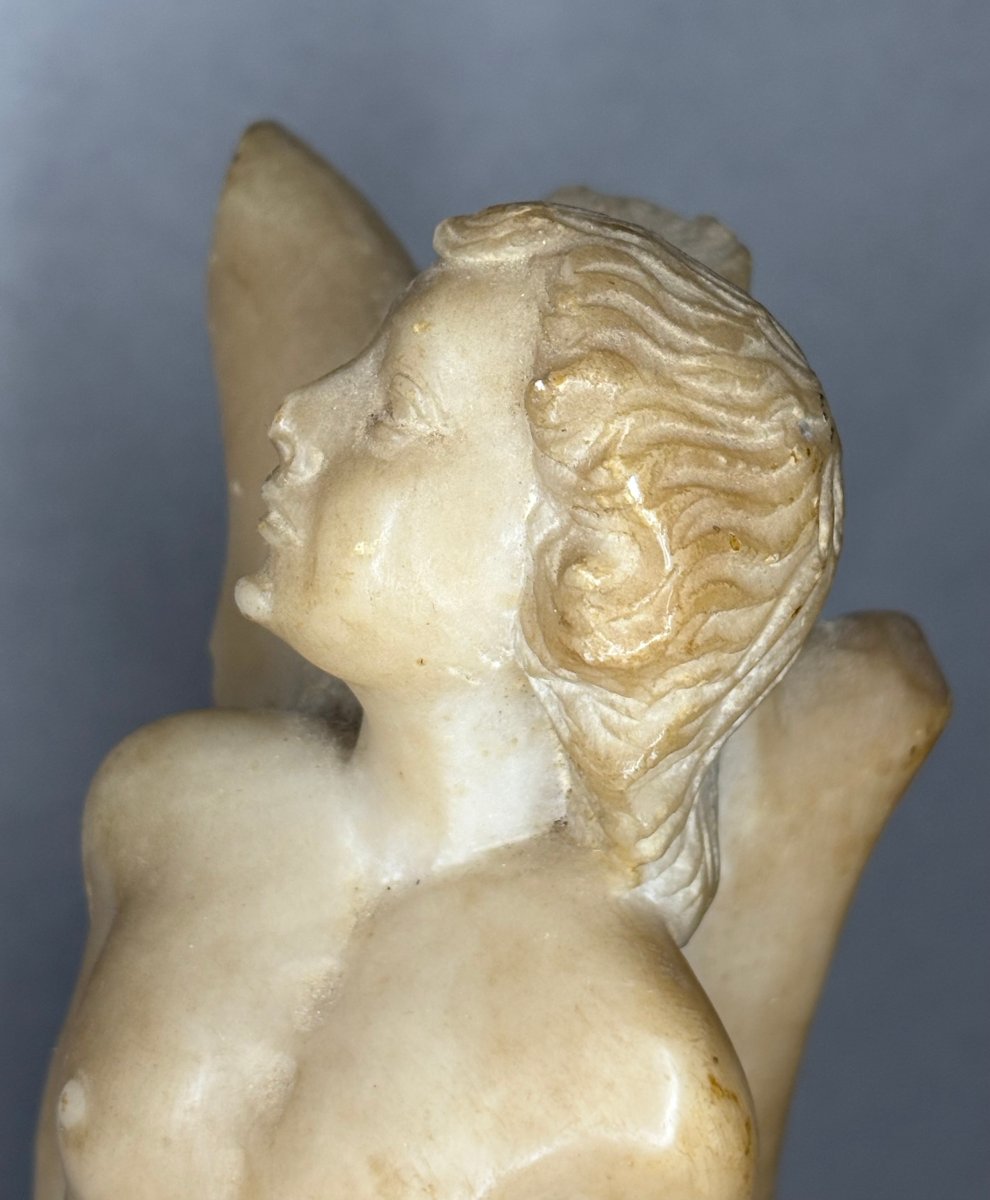
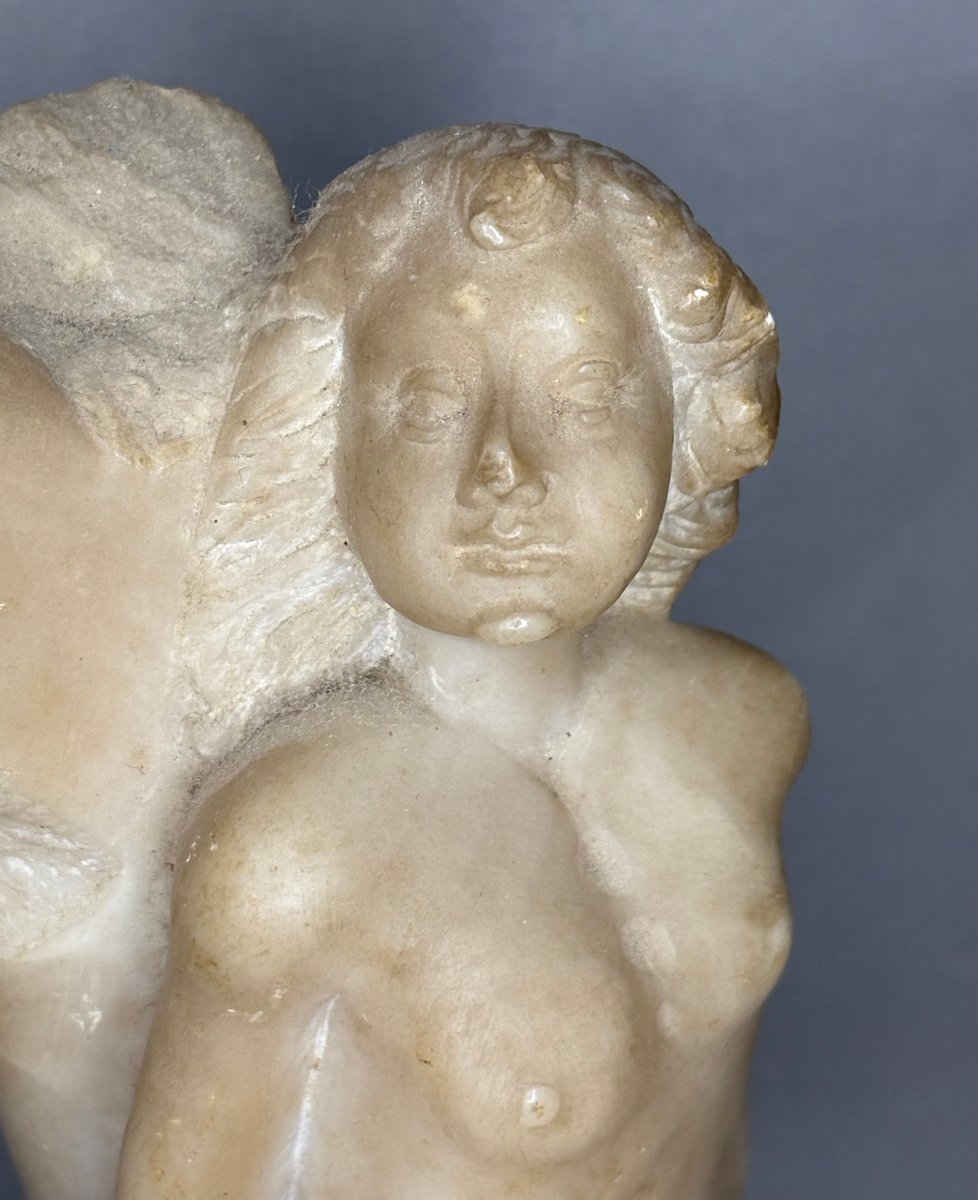
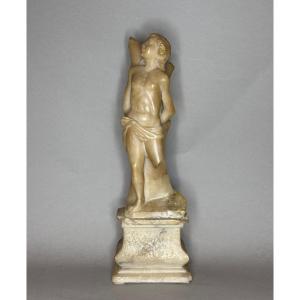
The saint is depicted as a young, half-naked ephebe with flowing hair, tied to the trunk of a tree. The figure has a young, slender body with soft, not overly muscular contours, evoking the classical ideals of youth; the torso is slightly twisted to the left, with weight shifted onto the right leg, which remains intact. This natural movement breaks up the stiffness of the pose. His upper limbs are drawn back and bound behind his back, a pose typical of the iconography of Saint Sebastian’s martyrdom that highlights his chest and abdomen. The head is tilted backward and the gaze is directed toward the sky, an expression that emphasizes the spiritual dimension, the acceptance of pain, or mystical ecstasy.A loincloth or drapery wraps asymmetrically around the hips, creating deep folds that add volume and chiaroscuro to the lower torso.
The subject of Saint Sebastian underwent a profound evolution during the Italian Renaissance: depicted until the early 16th century as a mature man or a clothed soldier, from the second half of the 15th century onward his figure underwent a radical shift toward a classical aesthetic idealization, transforming into a youthful ephebe with a harmonious physique.
The characteristics of the statuette show strong similarities to works from northern Italy, particularly works from the Lombard region, where there is a strong emphasis on anatomical naturalism combined with the drapery of a densely ruffled loincloth that wraps asymmetrically around the hips, just as in the sculpture under analysis. Many small devotional sculptures of the Lombard school used soft limestone or veined marble to emphasize the lustre of the saint’s bare skin, with stylistic results entirely consistent with this example.
The statue is displayed on its original pedestal, where the inscription “S. Bastiano” is still legible.
To find out more
Video available here
Dimensions
Total height (H tot): 33 cm
Sculpture height (H scultura): 23 cm,5
Base width: 10 cm
Base depth: 7 cm
++++++++++++++++++++++++++++++++++++++++DELIVERY AND PAYMENT++++++++++++++++++++++++++++++++
SHIPPING VIA DHL in a custom-made crate, including insurance based on the value
Payment methods: Bank transfer - Online credit card (including AMEX) - PayPal (+3.7%) - NO checks +++++++++++++++++++++++++++++++++++++++++++++++++++++++++++++++++++++++++++++++++++++++++++++++
The saint is depicted as a young, half-naked ephebe with flowing hair, tied to the trunk of a tree. The figure has a young, slender body with soft, not overly muscular contours, evoking the classical ideals of youth; the torso is slightly twisted to the left, with weight shifted onto the right leg, which remains intact. This natural movement breaks up the stiffness of the pose. His upper limbs are drawn back and bound behind his back, a pose typical of the iconography of Saint Sebastian’s martyrdom that highlights his chest and abdomen. The head is tilted backward and the gaze is directed toward the sky, an expression that emphasizes the spiritual dimension, the acceptance of pain, or mystical ecstasy.A loincloth or drapery wraps asymmetrically around the hips, creating deep folds that add volume and chiaroscuro to the lower torso.
The subject of Saint Sebastian underwent a profound evolution during the Italian Renaissance: depicted until the early 16th century as a mature man or a clothed soldier, from the second half of the 15th century onward his figure underwent a radical shift toward a classical aesthetic idealization, transforming into a youthful ephebe with a harmonious physique.
The characteristics of the statuette show strong similarities to works from northern Italy, particularly works from the Lombard region, where there is a strong emphasis on anatomical naturalism combined with the drapery of a densely ruffled loincloth that wraps asymmetrically around the hips, just as in the sculpture under analysis. Many small devotional sculptures of the Lombard school used soft limestone or veined marble to emphasize the lustre of the saint’s bare skin, with stylistic results entirely consistent with this example.
The statue is displayed on its original pedestal, where the inscription “S. Bastiano” is still legible.
To find out more
Video available here
Dimensions
Total height (H tot): 33 cm
Sculpture height (H scultura): 23 cm,5
Base width: 10 cm
Base depth: 7 cm
++++++++++++++++++++++++++++++++++++++++DELIVERY AND PAYMENT++++++++++++++++++++++++++++++++
SHIPPING VIA DHL in a custom-made crate, including insurance based on the value
Payment methods: Bank transfer - Online credit card (including AMEX) - PayPal (+3.7%) - NO checks +++++++++++++++++++++++++++++++++++++++++++++++++++++++++++++++++++++++++++++++++++++++++++++++
1 800 €
Period: 17th century
Style: Renaissance, Louis 13th
Condition: Some scratches and chips
Material: Alabaster
Width: 10
Height: 33
Depth: 7
Reference (ID): 1821292
Availability: In stock
Print