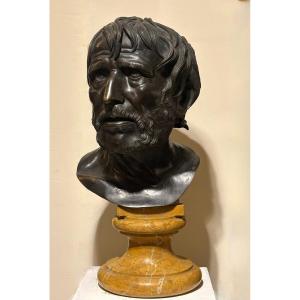


Late 18th Large Grand Tour Pseudo-seneca Bronze Head
Video available here: https://youtube.com/shorts/TKTWkksXnoo?feature=share
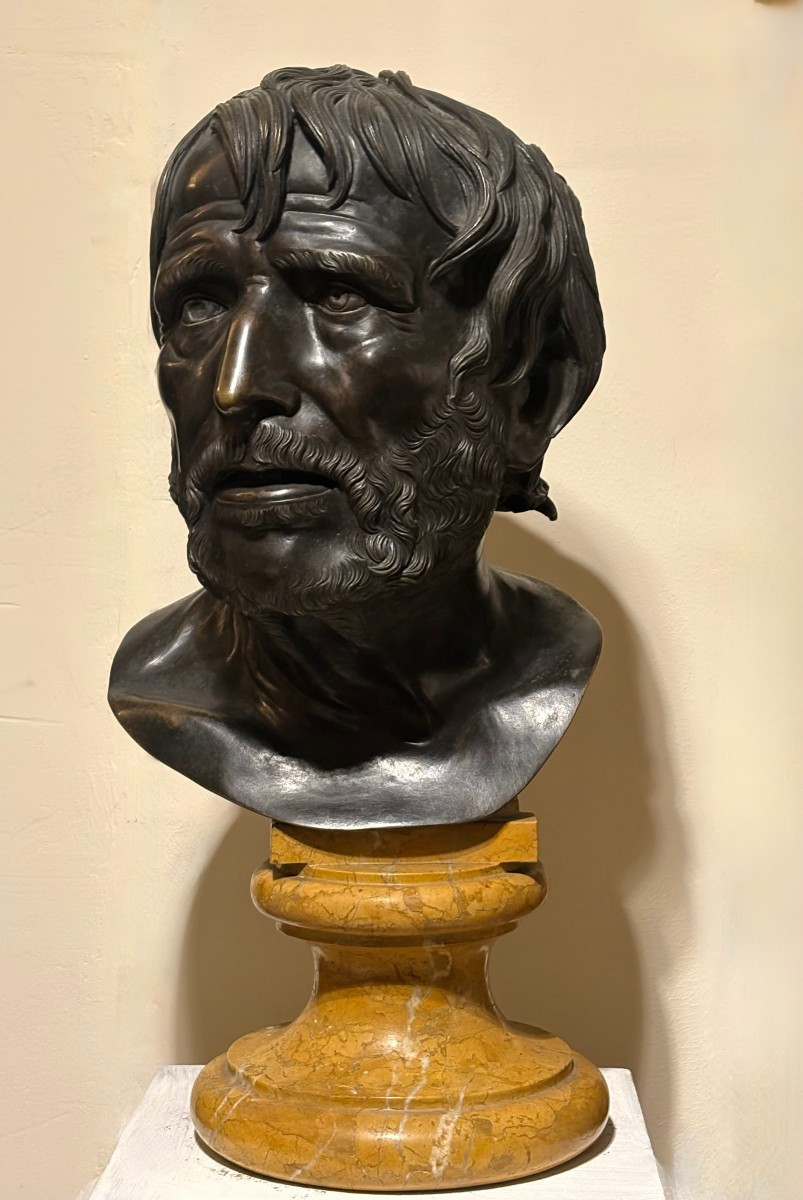
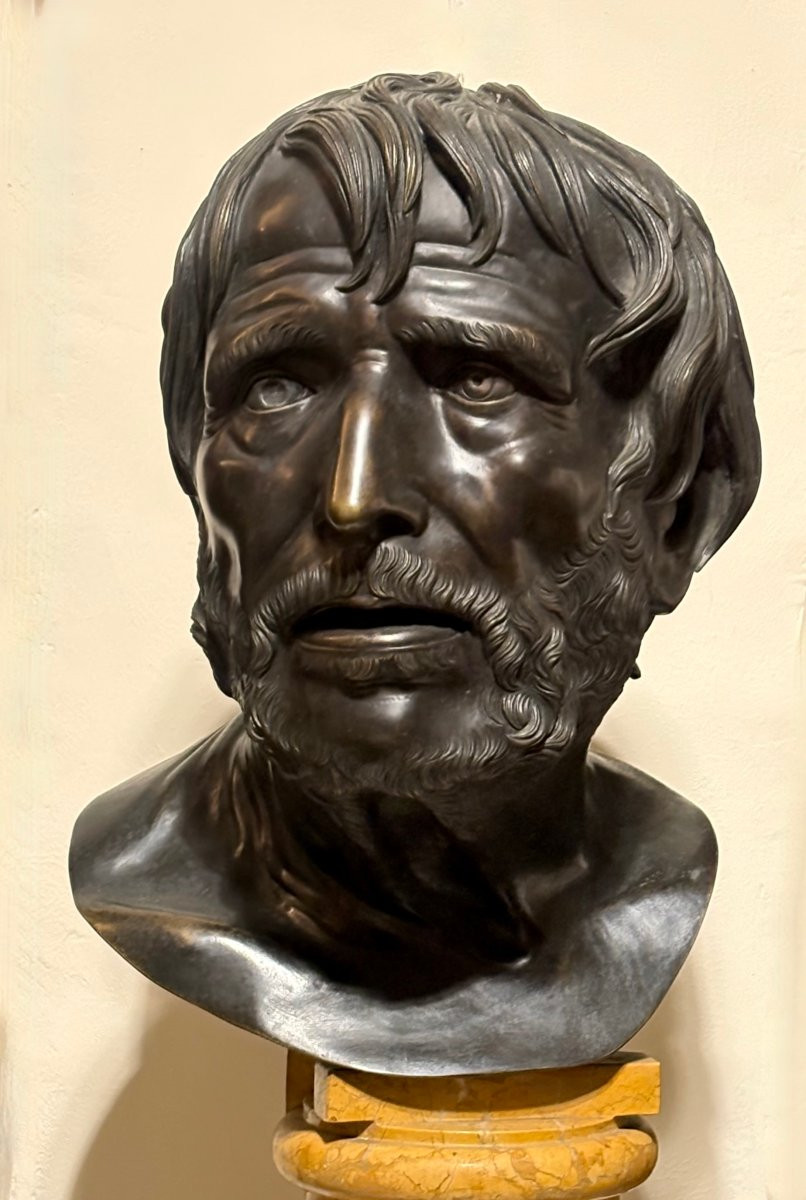
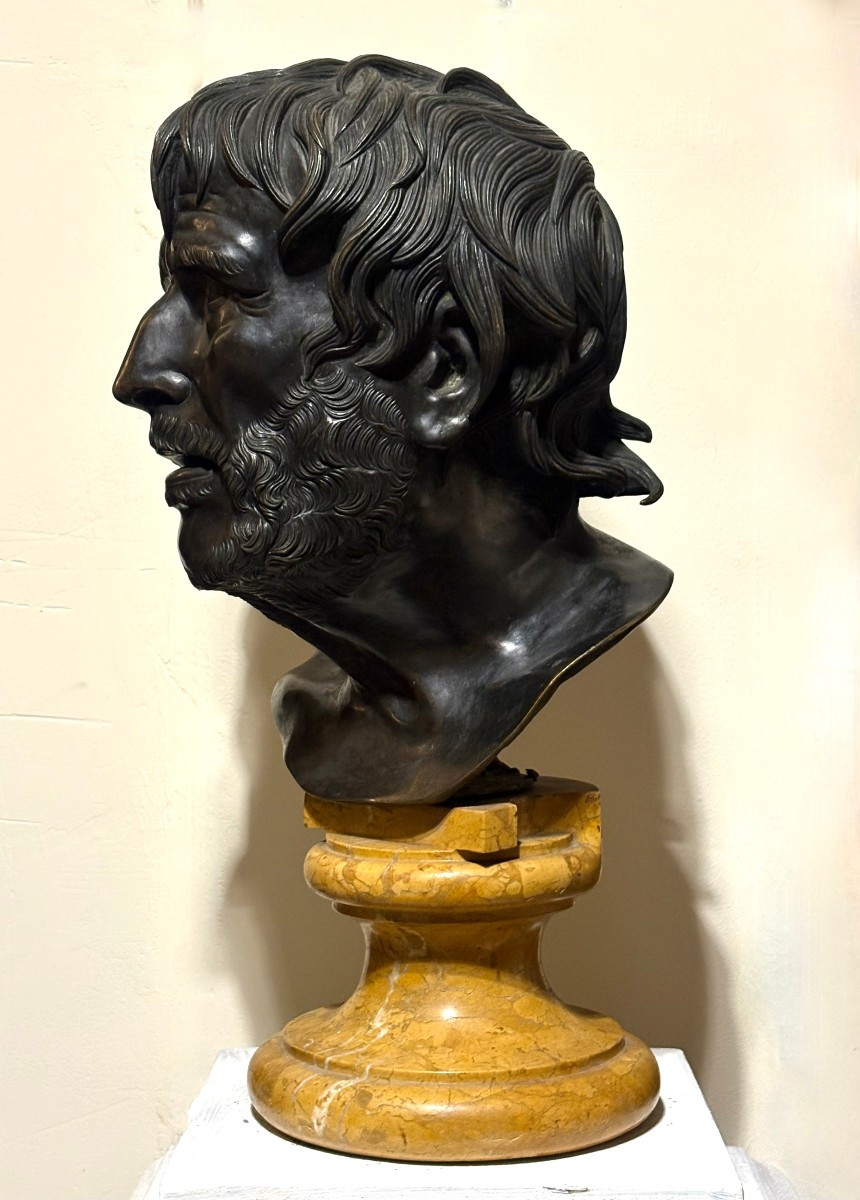
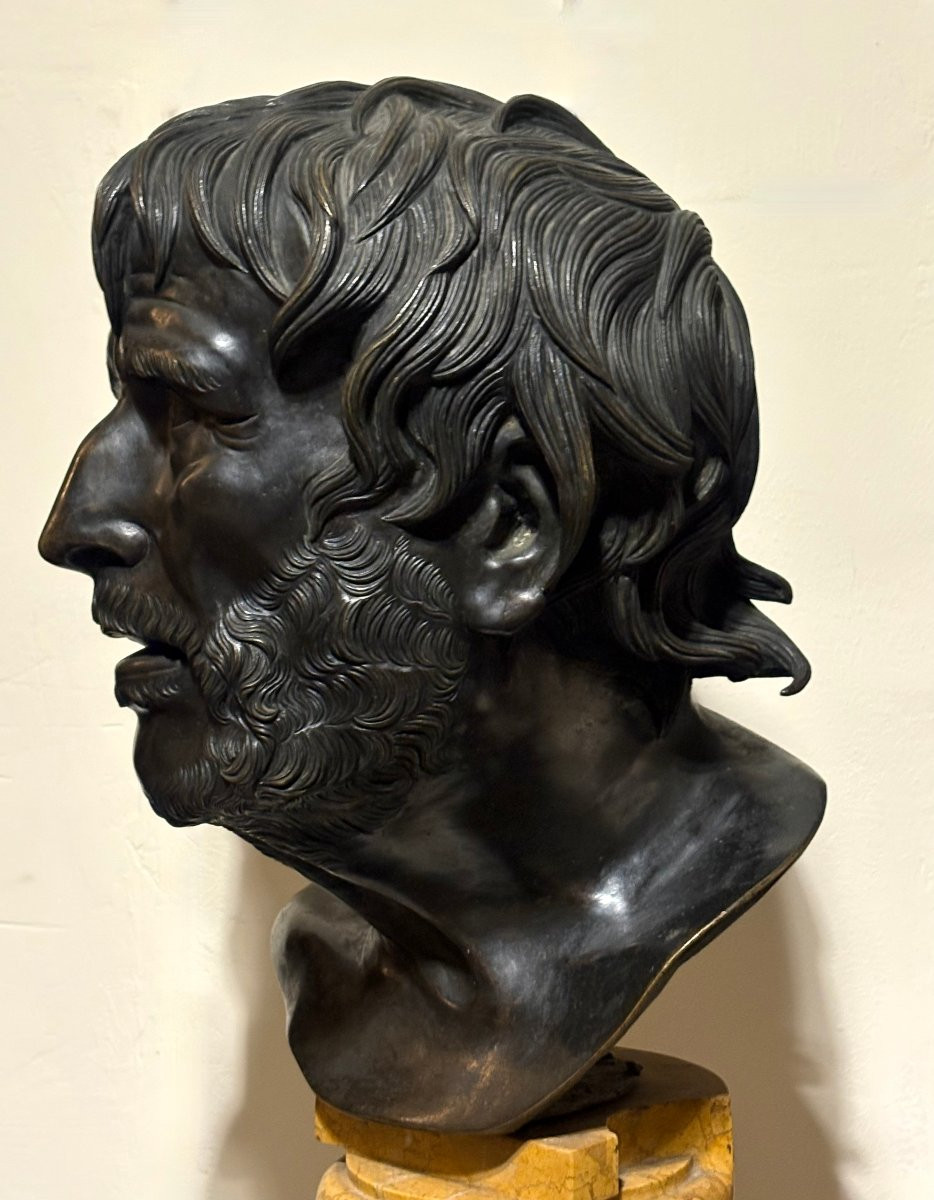
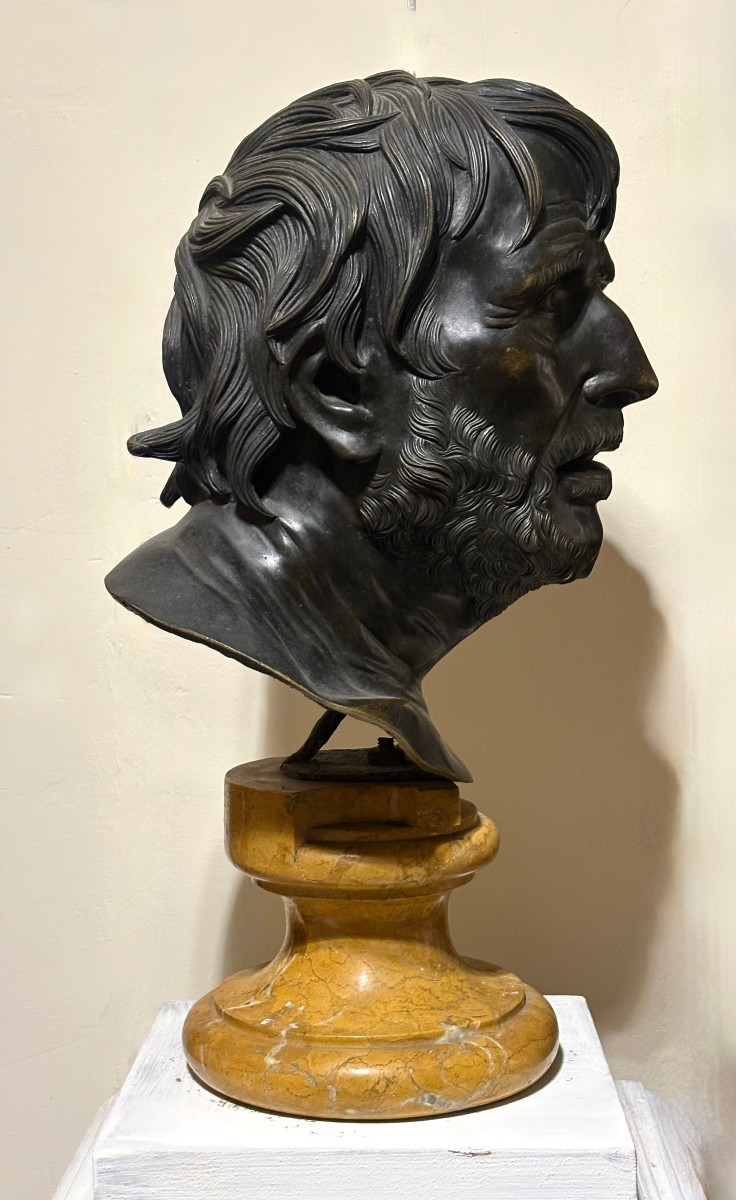
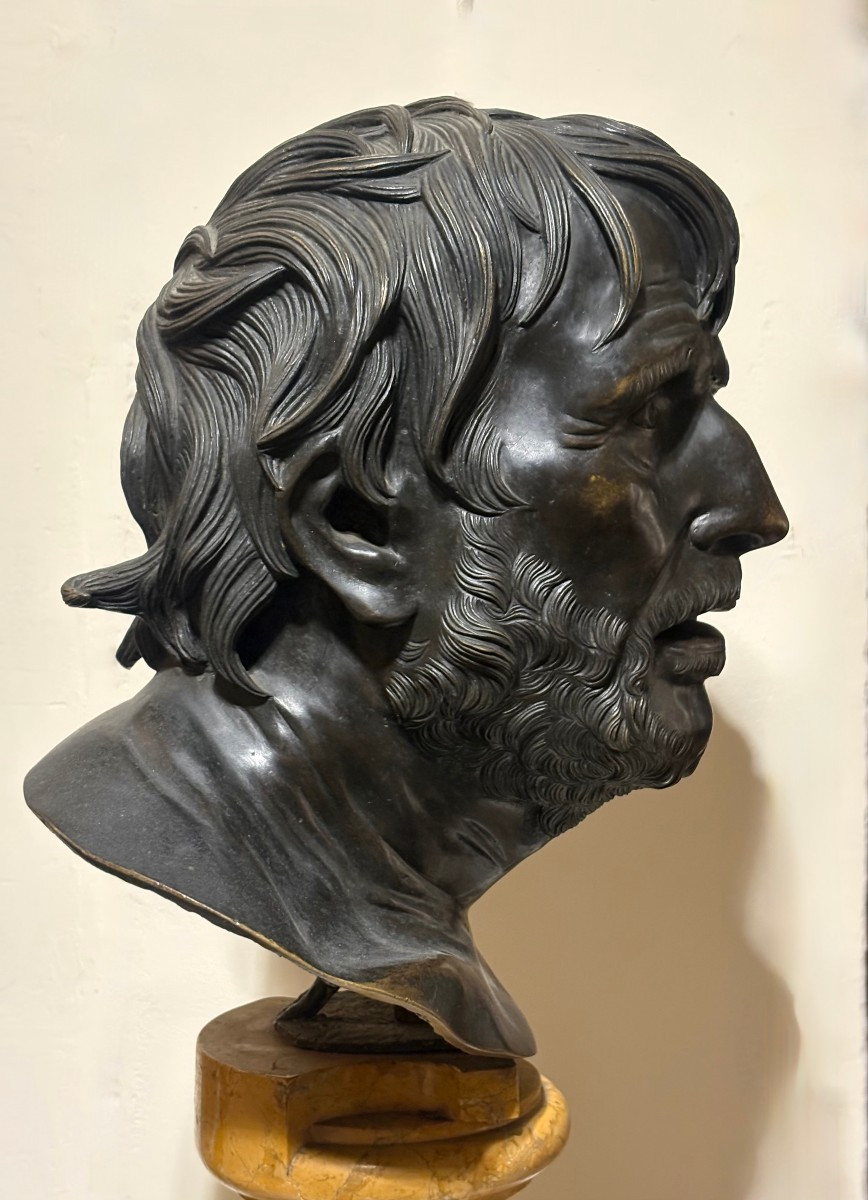
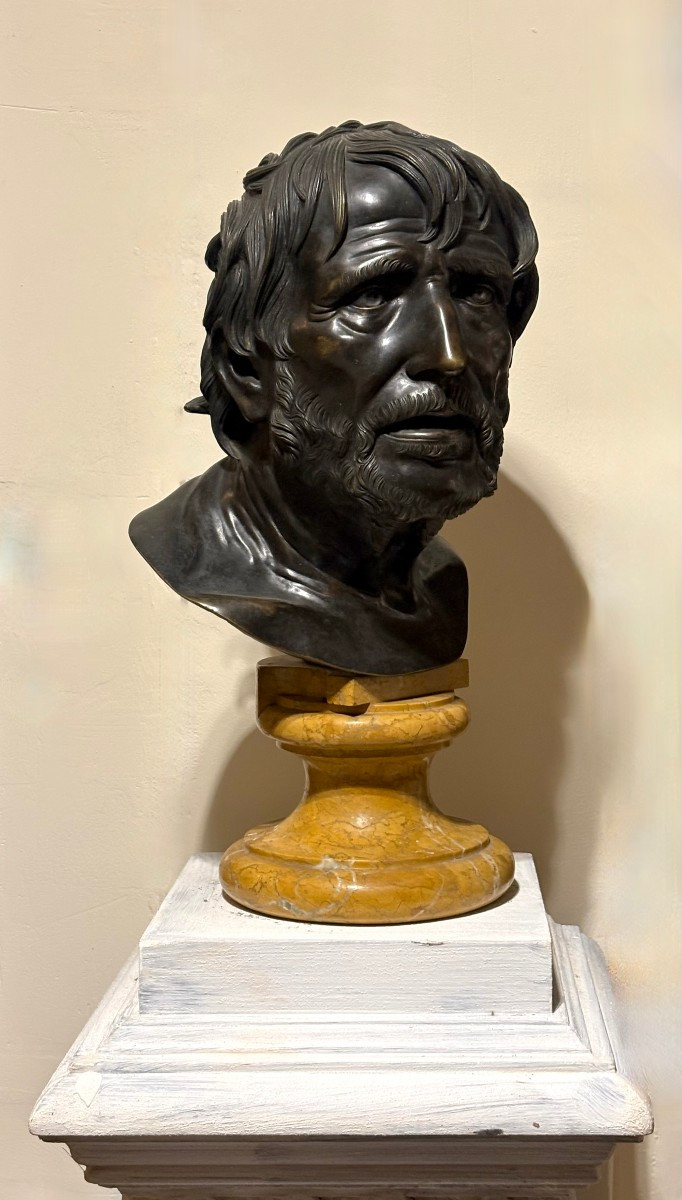
Large bronze head from the Grand Tour period depicting Pseudo-Seneca, Italian workshop, late 18th–early 19th century.
The Pseudo-Seneca is a Roman bronze head from the late 1st century BC, discovered in 1754 in the Villa dei Papiri in Herculaneum and now housed in the National Archaeological Museum of Naples. It is the finest example ever found among some twenty busts depicting the same subject. It was initially thought to represent Lucius Annaeus Seneca, the famous Roman philosopher of the 1st century AD.
Beginning in the 19th century, the traditional theory of a “life portrait” of Seneca was rejected, and numerous other hypotheses were put forward regarding the identity of the model depicted in this imaginary portrait: from the Archaic period (Hesiod or Aesop; the iambic poets Archilochus or Hipponax), to the Classical period (the playwrights Epicharmus, Aristophanes, and Philemon; the tragedian Euripides), to the Hellenistic period (the philosophers Carneades and Eratosthenes; the poets Callimachus, Apollonius of Rhodes, and Philetas of Cos), or even the Latin poet Lucretius.
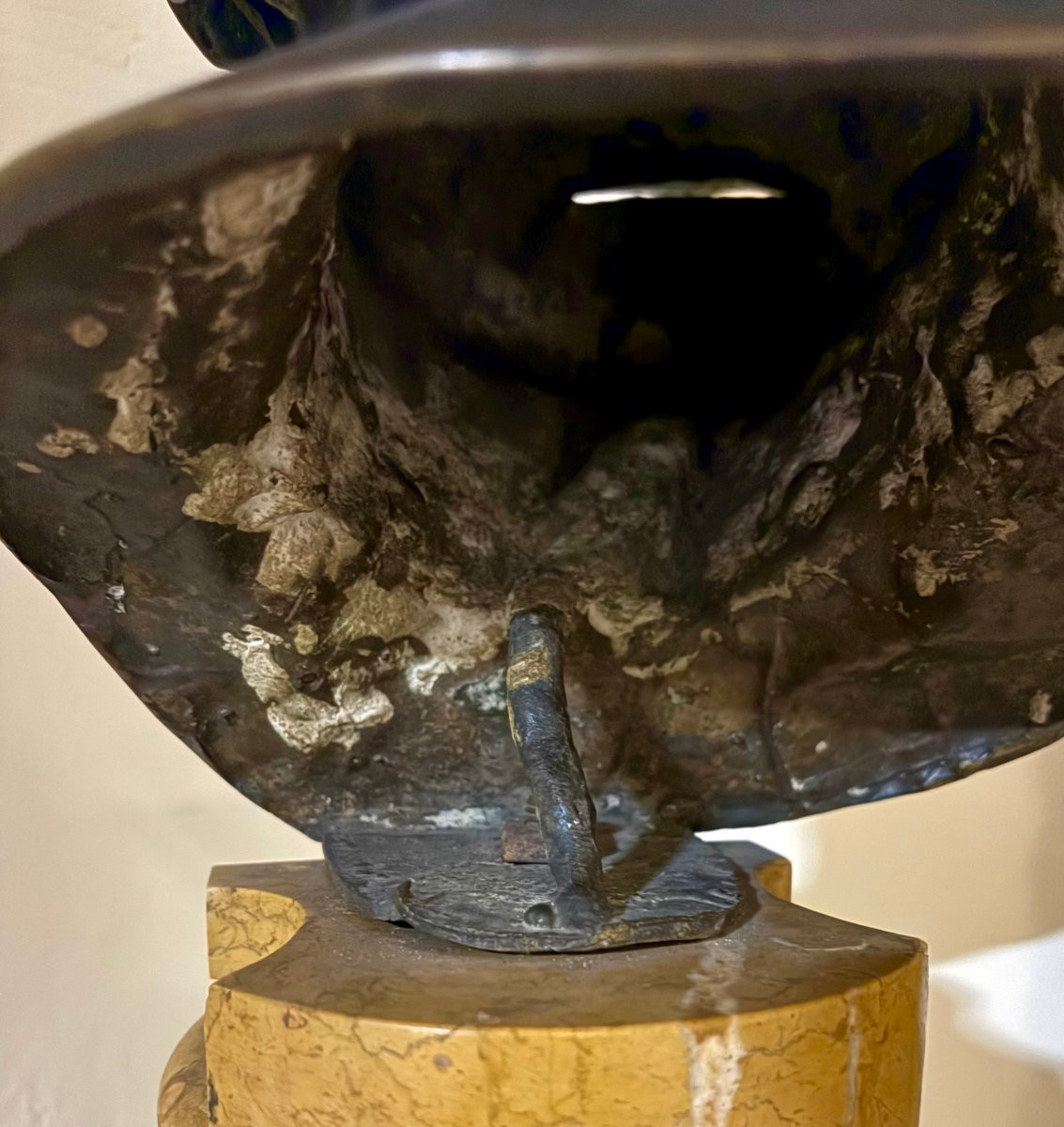
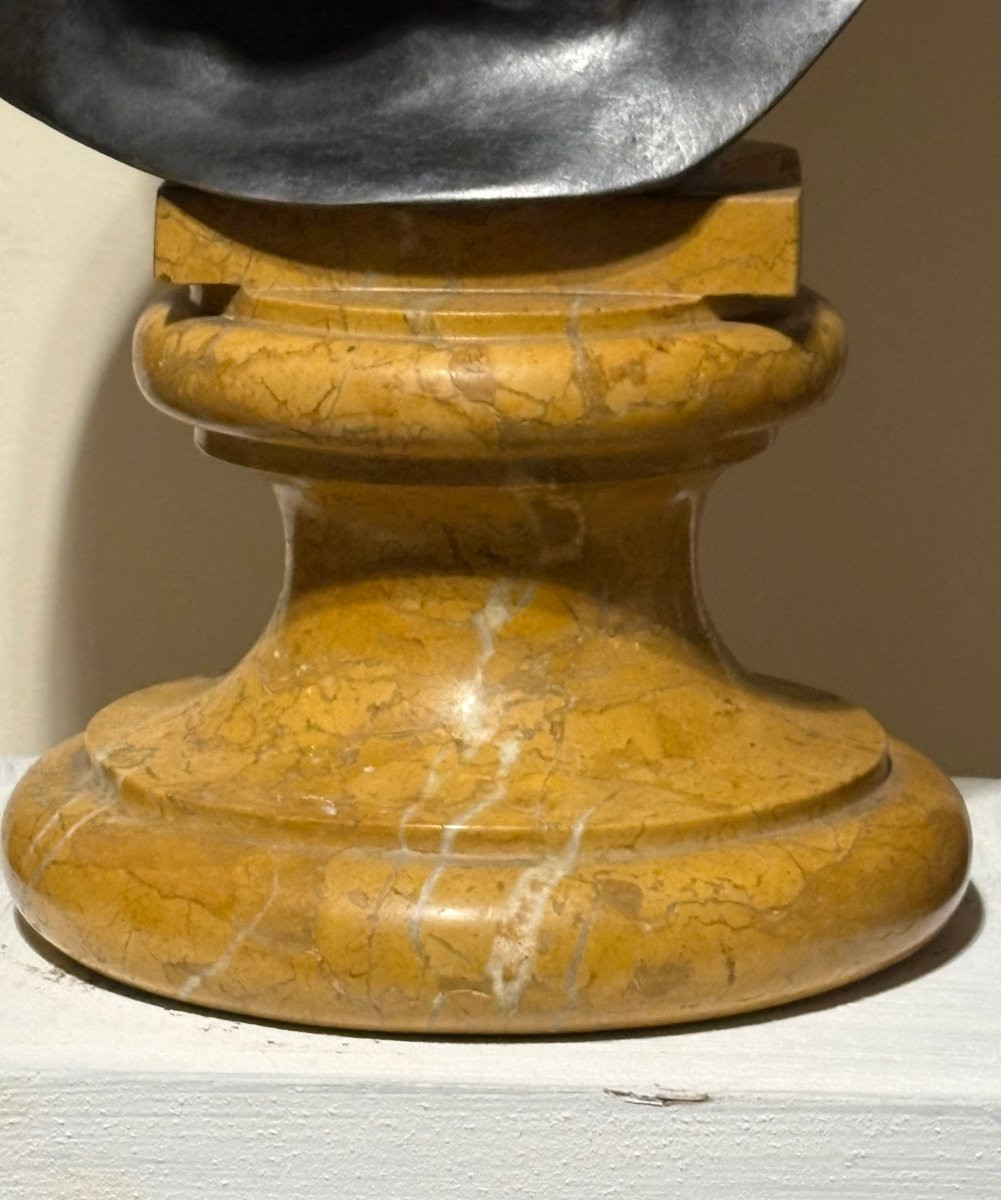
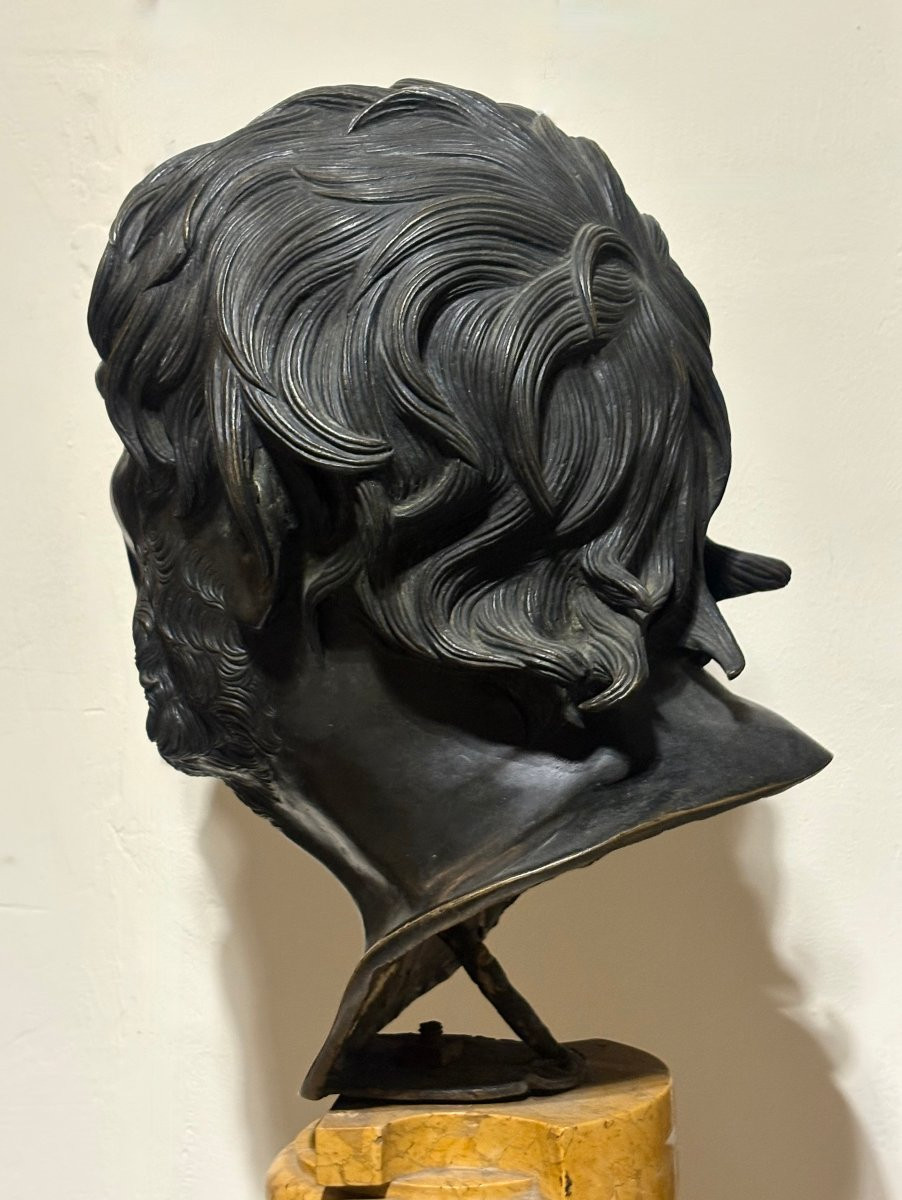
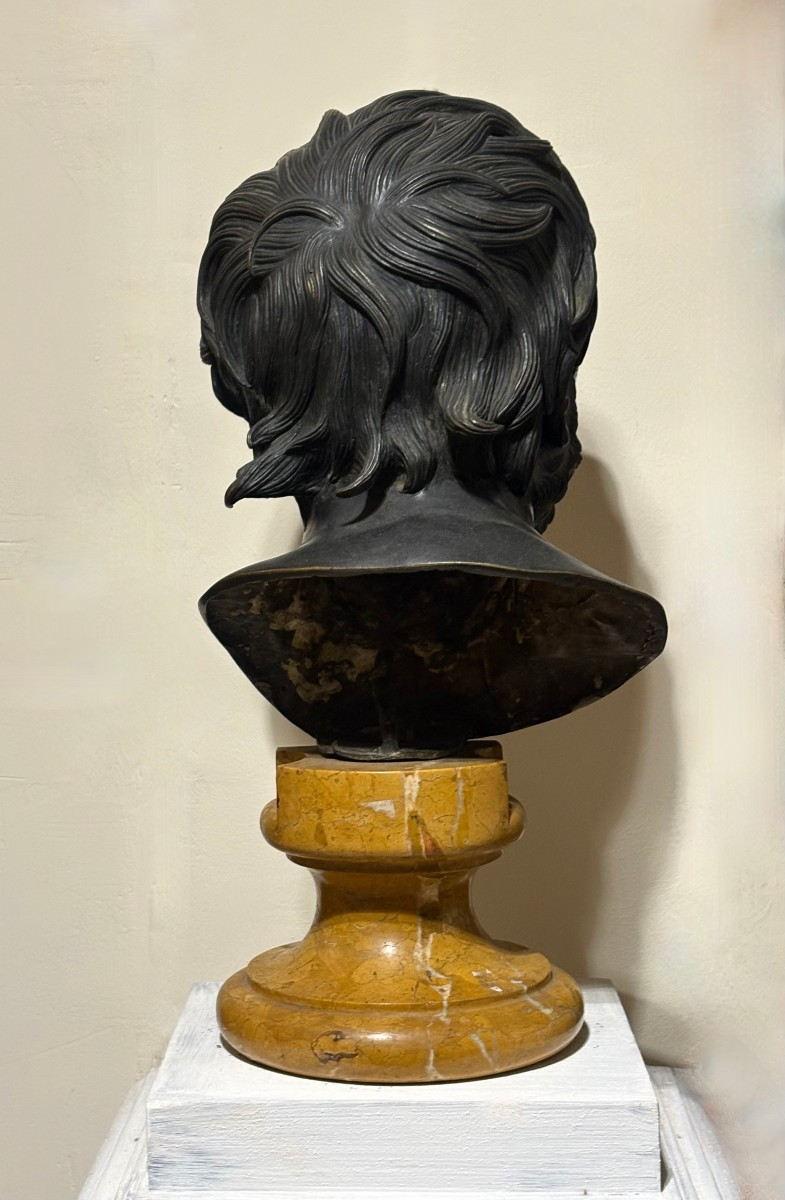
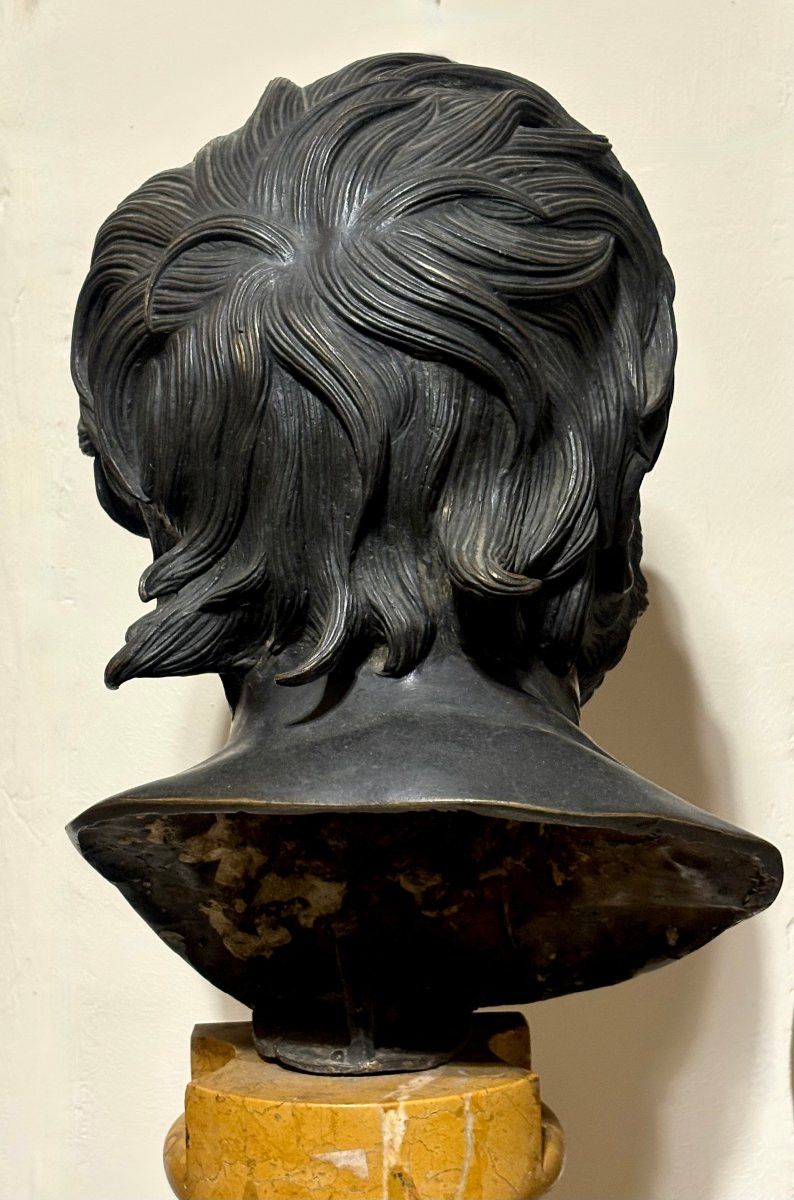
Its discovery had such an impact on the art world that, between the late 18th and early 19th centuries, Neapolitan workshops obtained permission to make a cast of it for bronze copies. Our head exhibits characteristics typical of the early models: impeccable sculptural quality, with refined and precise details, thanks to the fact that the casting was made from the original molds of the work, making it the most detailed of all; a splendid aged brown patina; a base in Siena yellow marble of an intense ochre color, a material rediscovered by the Neoclassical movement for its warm, sunny hue; the system that originally secured the head to the marble, later replaced by a large nut.
The face is expressive, with a thick beard and tousled hair, giving him a melancholic and pensive air.
The bronze head of Pseudo-Seneca was one of the most iconic antiquities of the Grand Tour. Discovered in 1754 at the Villa dei Papiri in Herculaneum, it aroused the admiration of travelers during their visits to Naples. The work became a must-have item for European aristocratic travelers. Numerous copies were produced throughout the 19th century and up to the present day, but the oldest remain the most valuable.
Dimensions:
H 46 cm
W 22 cm
++++++++++++++++++++++++++++++++++++++++++++SHIPPING AND PAYMENT+++++++++++++++++++++++++++++++
Shipping via MBE with UPS, DHL, or TNT/FedEx couriers. Custom-made wooden crate.
Payment methods: Bank transfer - Online credit card (including AMEX) - PayPal (+3.7%) - NO checks +++++++++++++++++++++++++++++++++++++++++++++++++++++++++++++++++++++++++++++++++++++++++++++++++
Large bronze head from the Grand Tour period depicting Pseudo-Seneca, Italian workshop, late 18th–early 19th century.
The Pseudo-Seneca is a Roman bronze head from the late 1st century BC, discovered in 1754 in the Villa dei Papiri in Herculaneum and now housed in the National Archaeological Museum of Naples. It is the finest example ever found among some twenty busts depicting the same subject. It was initially thought to represent Lucius Annaeus Seneca, the famous Roman philosopher of the 1st century AD.
Beginning in the 19th century, the traditional theory of a “life portrait” of Seneca was rejected, and numerous other hypotheses were put forward regarding the identity of the model depicted in this imaginary portrait: from the Archaic period (Hesiod or Aesop; the iambic poets Archilochus or Hipponax), to the Classical period (the playwrights Epicharmus, Aristophanes, and Philemon; the tragedian Euripides), to the Hellenistic period (the philosophers Carneades and Eratosthenes; the poets Callimachus, Apollonius of Rhodes, and Philetas of Cos), or even the Latin poet Lucretius.
Its discovery had such an impact on the art world that, between the late 18th and early 19th centuries, Neapolitan workshops obtained permission to make a cast of it for bronze copies. Our head exhibits characteristics typical of the early models: impeccable sculptural quality, with refined and precise details, thanks to the fact that the casting was made from the original molds of the work, making it the most detailed of all; a splendid aged brown patina; a base in Siena yellow marble of an intense ochre color, a material rediscovered by the Neoclassical movement for its warm, sunny hue; the system that originally secured the head to the marble, later replaced by a large nut.
The face is expressive, with a thick beard and tousled hair, giving him a melancholic and pensive air.
The bronze head of Pseudo-Seneca was one of the most iconic antiquities of the Grand Tour. Discovered in 1754 at the Villa dei Papiri in Herculaneum, it aroused the admiration of travelers during their visits to Naples. The work became a must-have item for European aristocratic travelers. Numerous copies were produced throughout the 19th century and up to the present day, but the oldest remain the most valuable.
Dimensions:
H 46 cm
W 22 cm
++++++++++++++++++++++++++++++++++++++++++++SHIPPING AND PAYMENT+++++++++++++++++++++++++++++++
Shipping via MBE with UPS, DHL, or TNT/FedEx couriers. Custom-made wooden crate.
Payment methods: Bank transfer - Online credit card (including AMEX) - PayPal (+3.7%) - NO checks +++++++++++++++++++++++++++++++++++++++++++++++++++++++++++++++++++++++++++++++++++++++++++++++++
5 800 €
Period: 18th century
Style: Rome and Antic Greece
Condition: Excellent condition
Material: Bronze
Width: 22
Height: 46
Reference (ID): 1761309
Availability: In stock
Print