


Paris, 1809–1819, 12 Liqueur Glasses, 950% Sterling Silver And Vermeil, Jacques-louis Berger
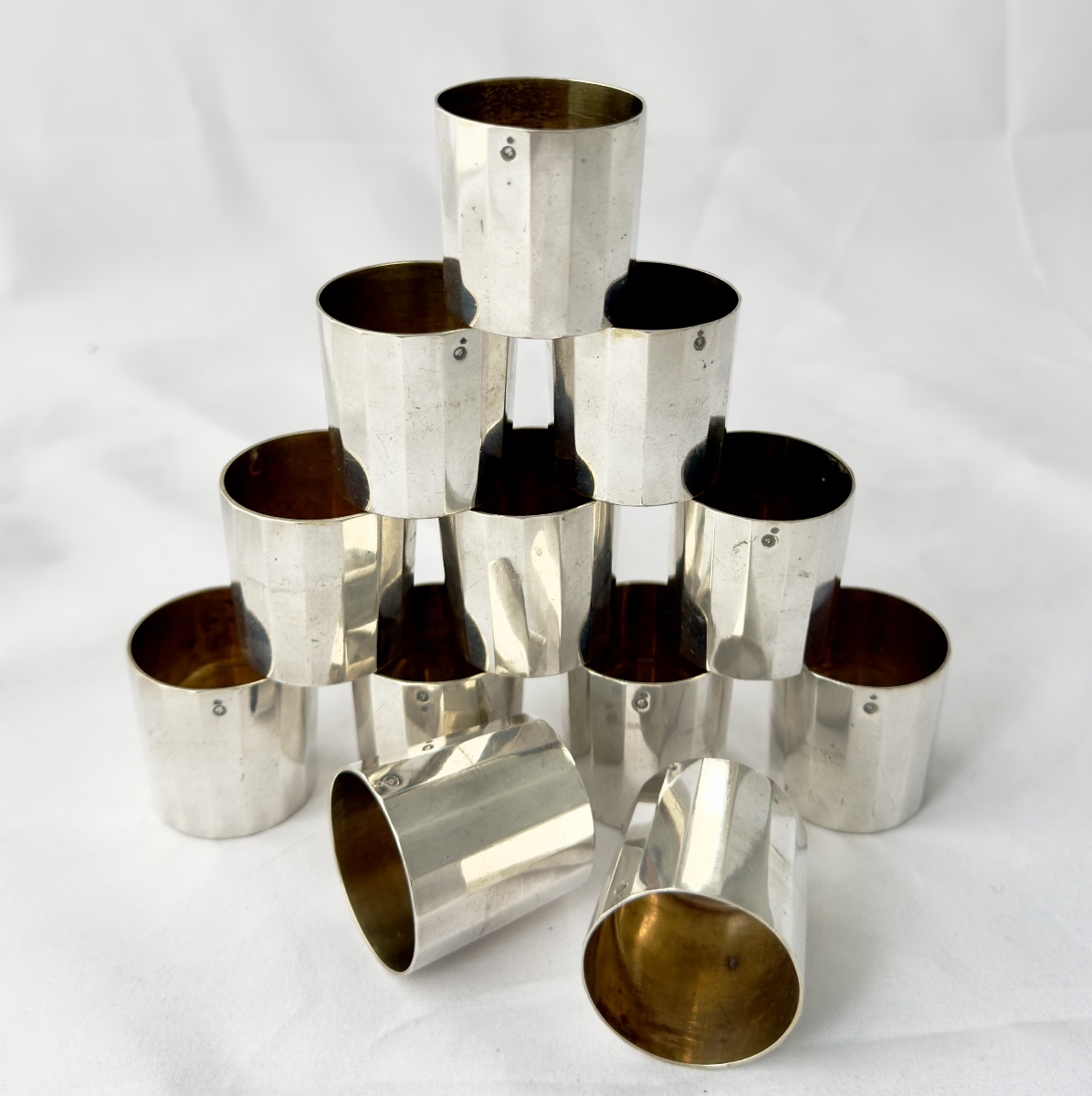
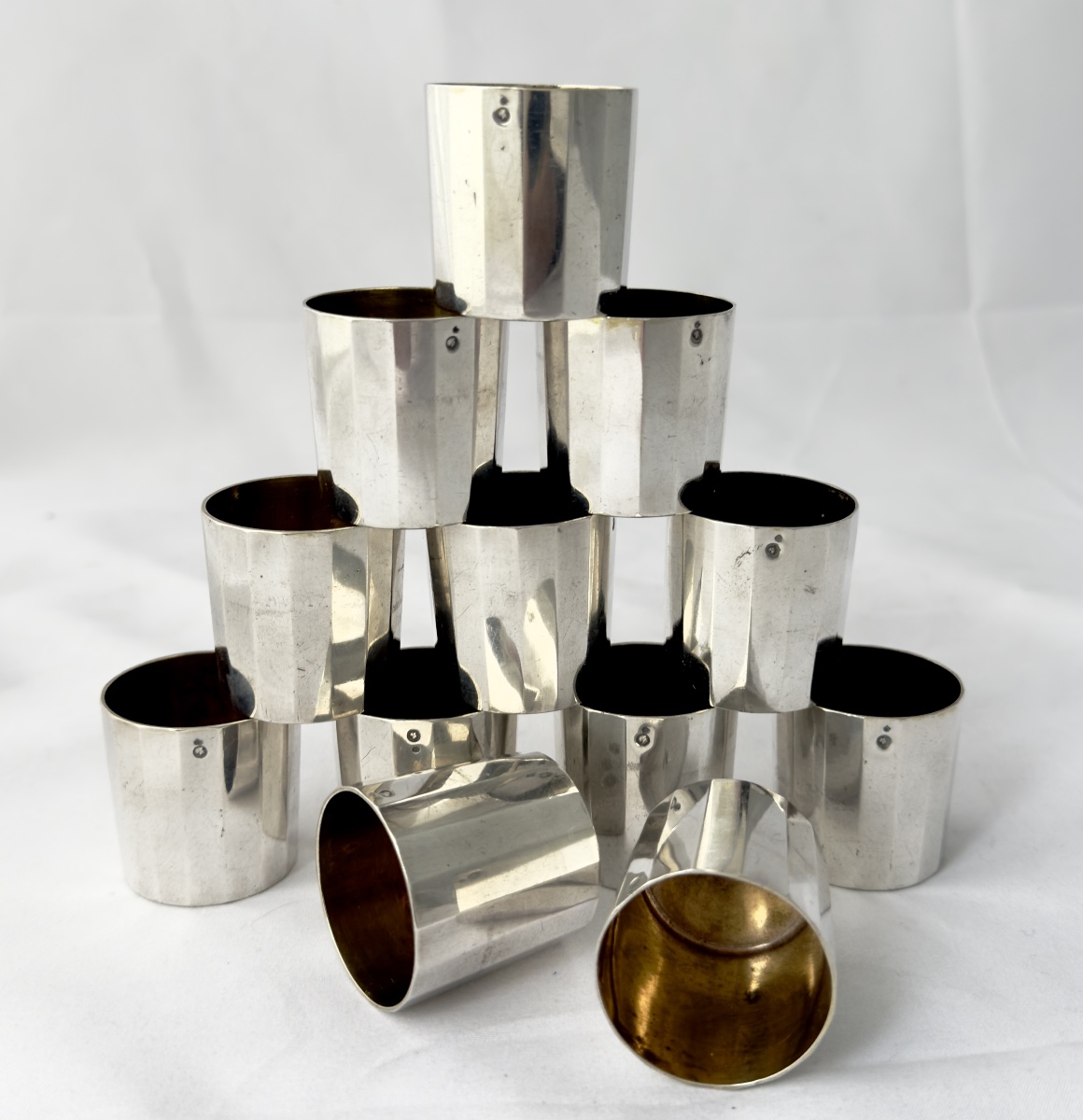
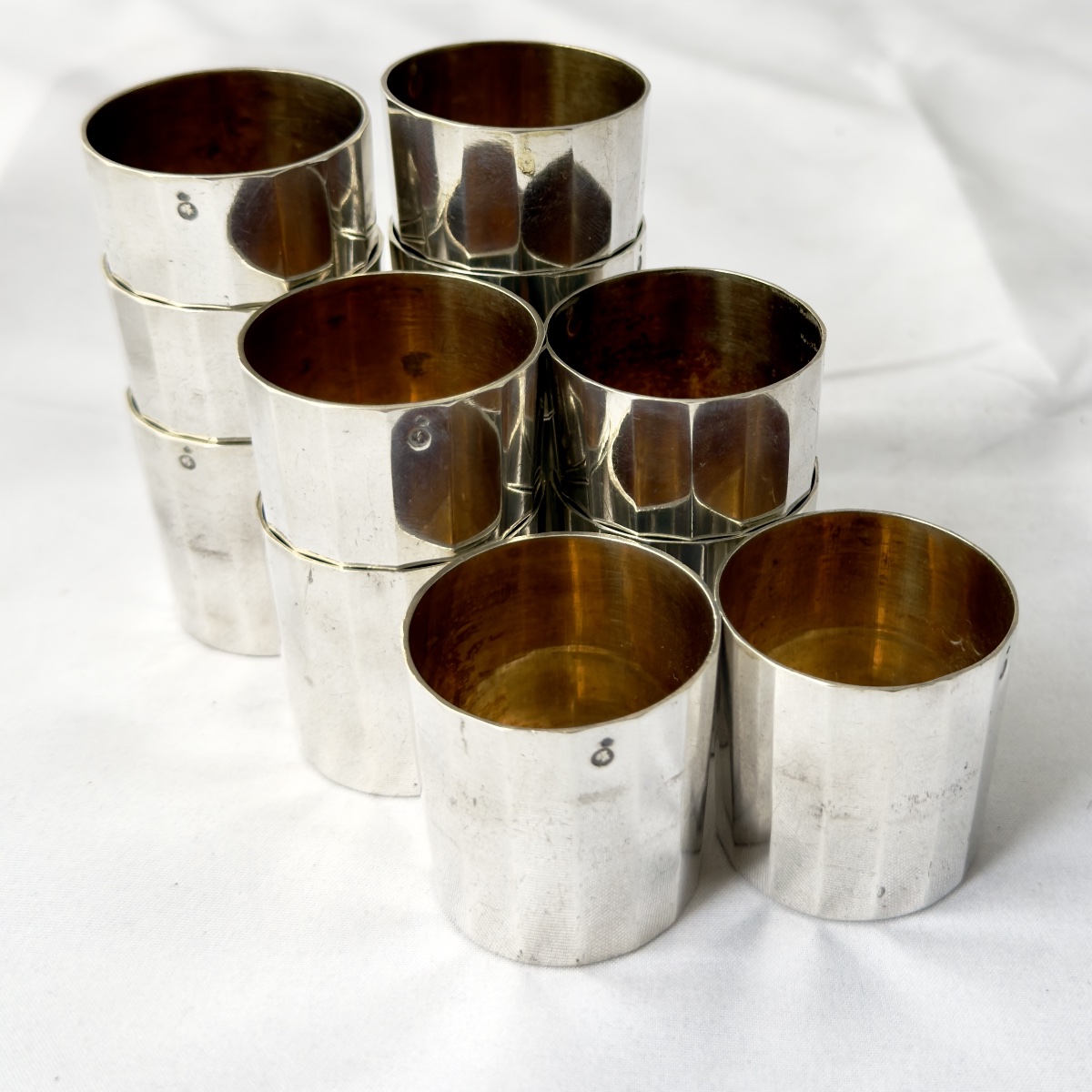
PARIS, 1809–1819 – LOUIS-JACQUES BERGER – SET OF TWELVE SOLID SILVER LIQUEUR GLASSES WITH VERMEIL INTERIOR. Each goblet measures 3.9 cm in height and 3.9 cm in diameter. Total weight: 450 g. First-grade silver, 950/1000. Hallmark of silversmith Louis-Jacques Berger, a Parisian specialist in “timbalerie.”
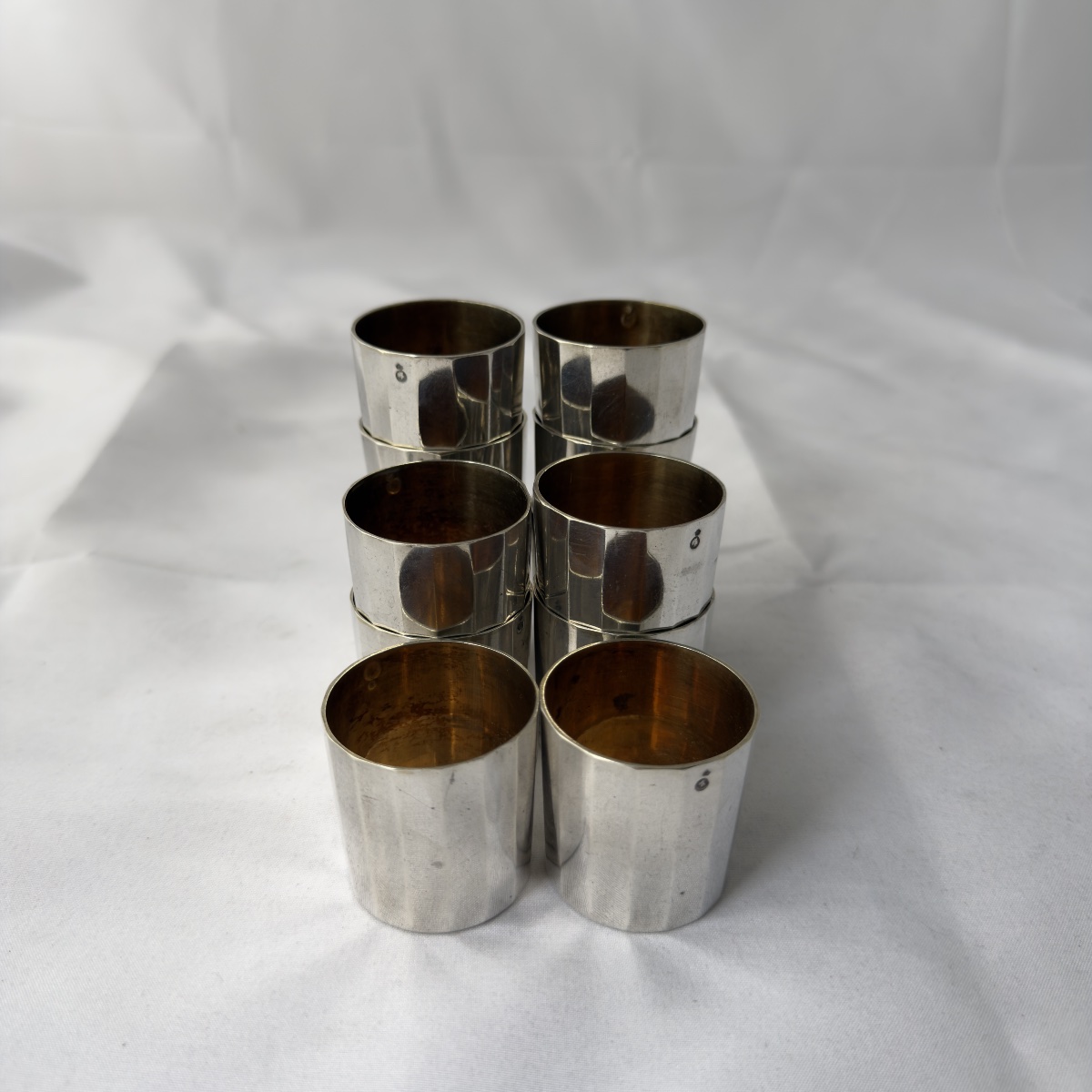
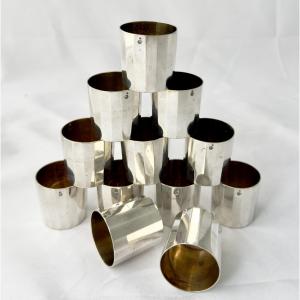
A rare, uniform set of twelve solid silver liqueur cups made in Paris between 1809 and 1819 by Louis-Jacques Berger.
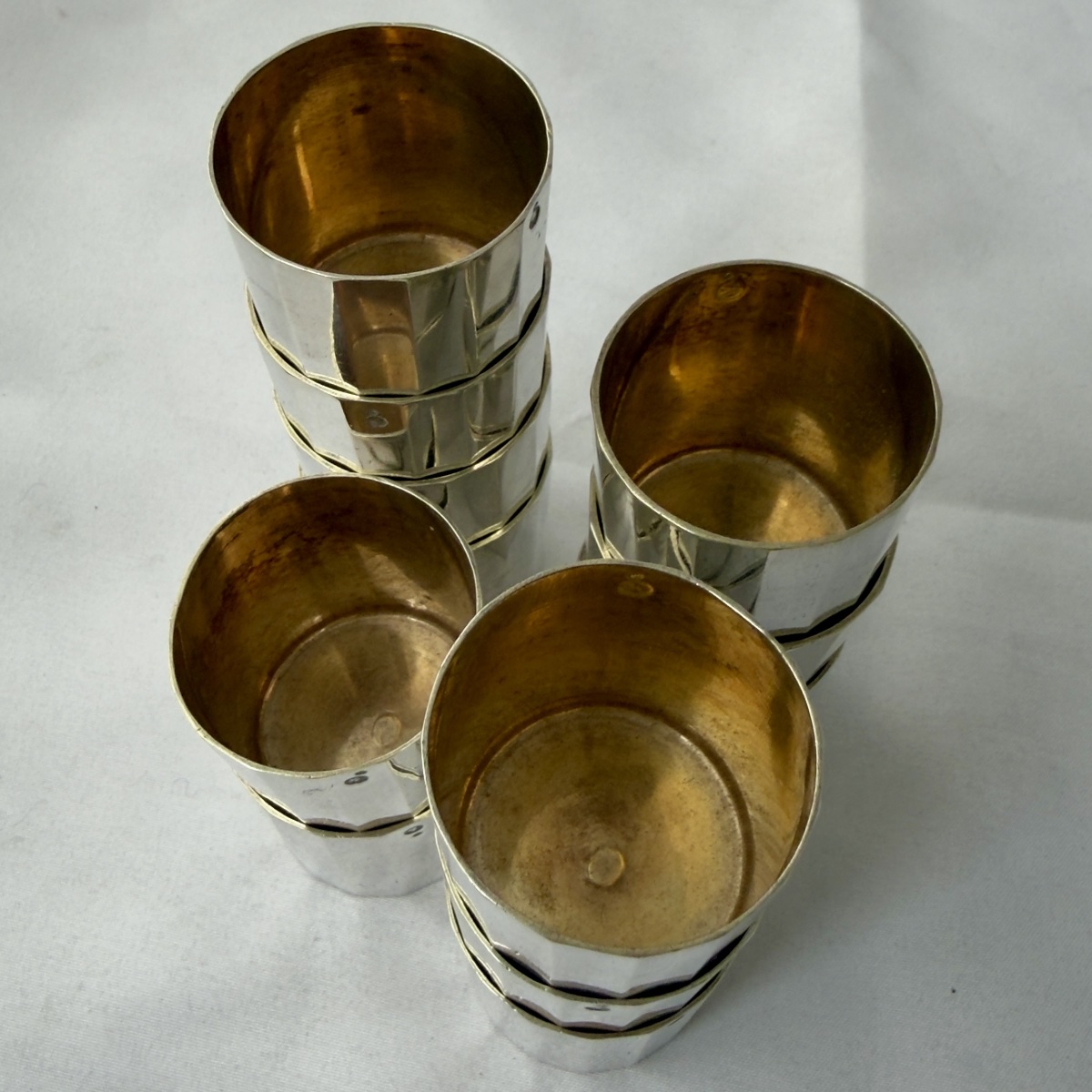
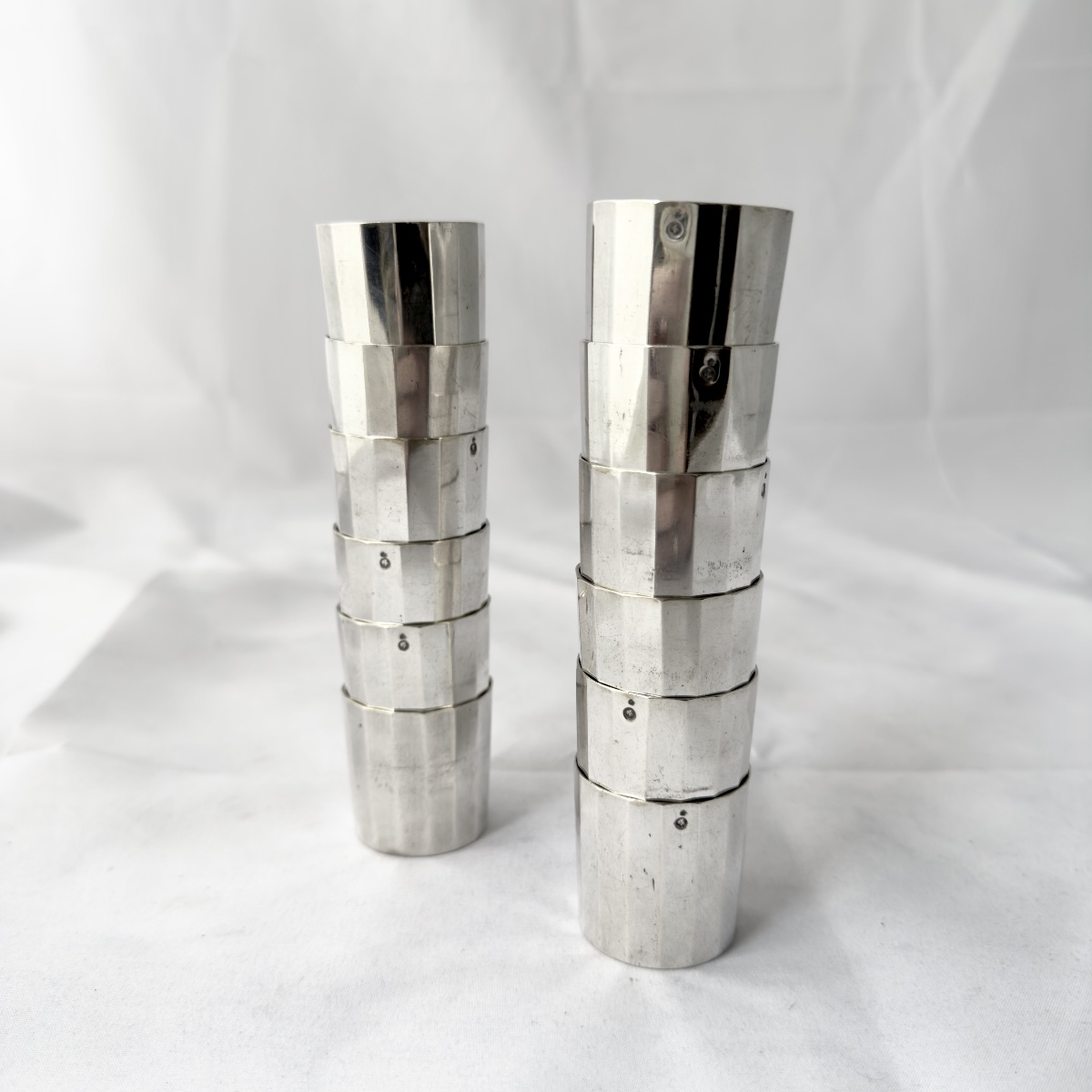
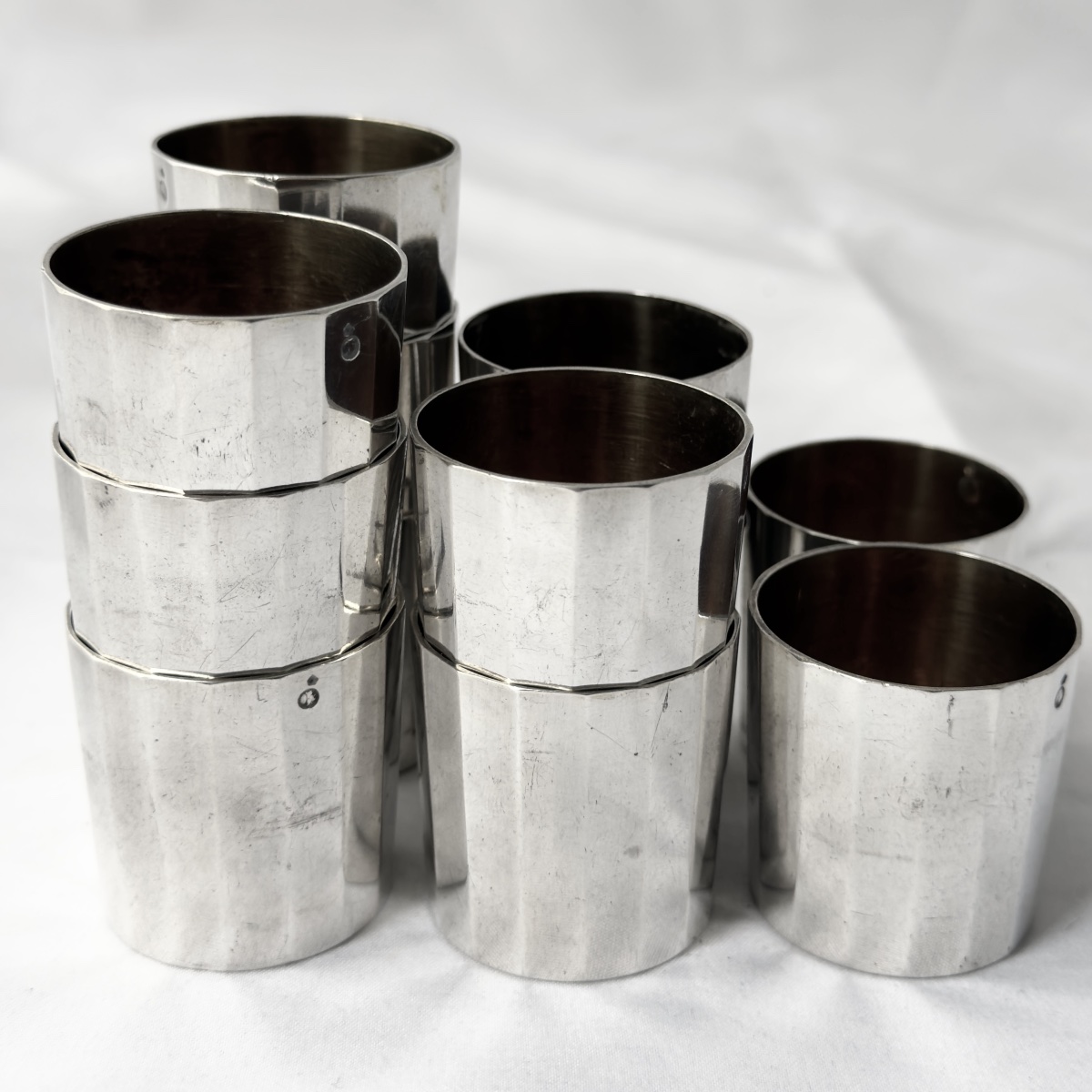
Displaying remarkable neoclassical simplicity, each goblet features a slightly flared body, entirely faceted into sixteen straight, flat sides. The absence of engraved decoration or a monogram highlights this geometric design and the play of light created by the various facets on the polished silver.
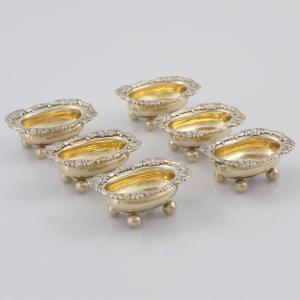
The interiors of the twelve goblets are vermeil and retain their original gilding, which has now developed a natural patina.
Despite their small size—3.9 cm in height and diameter—the twelve goblets together weigh a substantial 450 grams. The silver is relatively thick, and their construction is particularly sturdy.
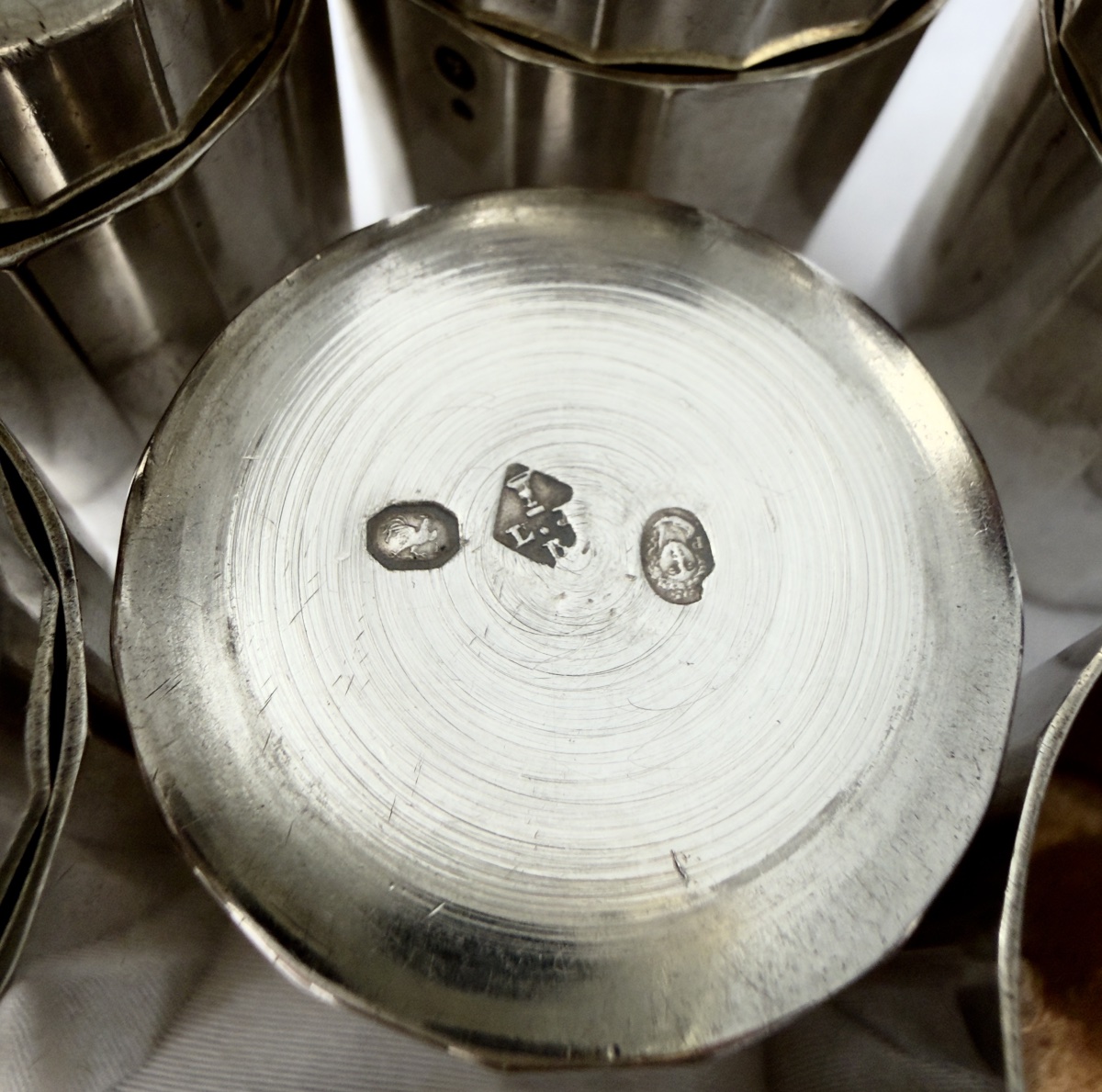
Each piece is individually hallmarked. On the base are Louis-Jacques Berger’s maker’s mark—the initials L.J.B. accompanied by a vase—as well as the first-class rooster mark, indicating 950/1000 silver. The rim bears the Paris medium-guarantee hallmark. Also noted is the hallmark of the Paris Goldsmiths’ Association, featuring a woman’s head accompanied by a “P.” Taken together, these hallmarks indicate that they were manufactured in Paris between 1809 and 1819.
Louis-Jacques Berger specialized precisely in this category of silverware: Parisian trade records list him as a maker of “cups and mugs (timbalerie).” His hallmark, featuring the initials L.J.B. and a vase, was engraved on September 24, 1807.
Goblets for serving liqueurs
These vessels are traditionally referred to as “liqueur goblets.” Their small size is suited for serving spirits consumed in small quantities, usually at the end of a meal.
The word “liqueur” had a broader meaning then than it does today. Diderot and d’Alembert’s *Encyclopédie* defines “spirited liqueurs” as preparations combining spirits, water, sugar, and aromatic substances, and specifies that the most common were prepared from brandy (Encyclopédie, vol. IX, Paris, 1765, entry “Liqueur,” pp. 563–566).
These beverages included, in particular, various flavored concoctions as well as ratafias, whose consumption at the end of a meal is well documented in the 18th century. Brillat-Savarin, recalling a dinner around 1740, reports that after dessert, coffee was rarely served, but “quite often cherry or carnation ratafia” (Physiology of Taste, 1825).
The presence of twelve identical goblets thus constitutes a complete liqueur set. The preservation of a complete set of twelve pieces by the same silversmith—all hallmarked, of the highest fineness, with sixteen sides, and retaining their vermeil interior—constitutes a particularly interesting example of Parisian timbalerie from the First Empire and the early years of the Restoration.
Silversmith: Louis-Jacques Berger
Paris, 1809–1819
Solid silver, finest grade: 950/1000
Vermeil interior
Body with sixteen straight sides
Height: 3.9 cm
Diameter: 3.9 cm
Total weight: 450 g
Period: 19th century
Style: Consulat, Empire
Condition: Excellent condition
Material: Sterling silver
Diameter: 3,9 cm
Height: 3,9 cm
Reference (ID): 1817732
Availability: In stock