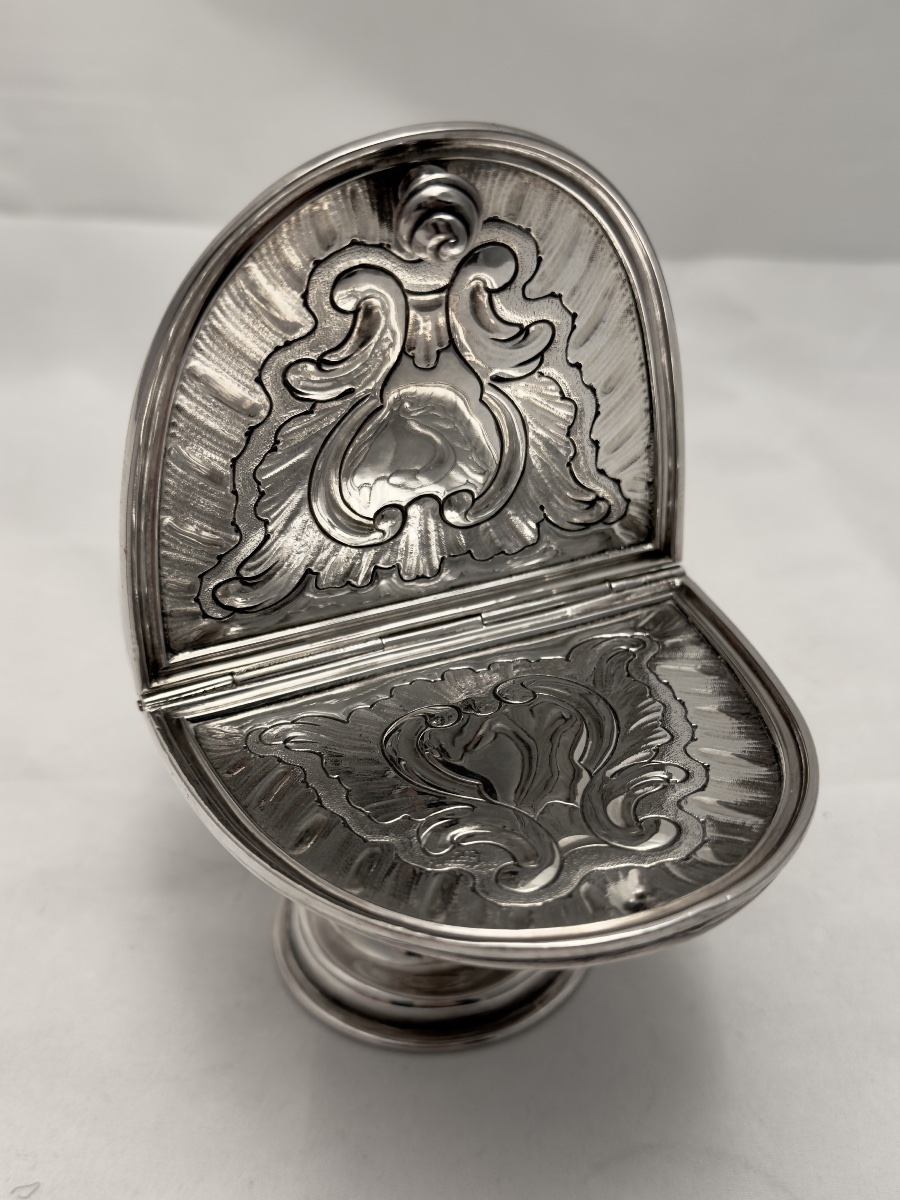
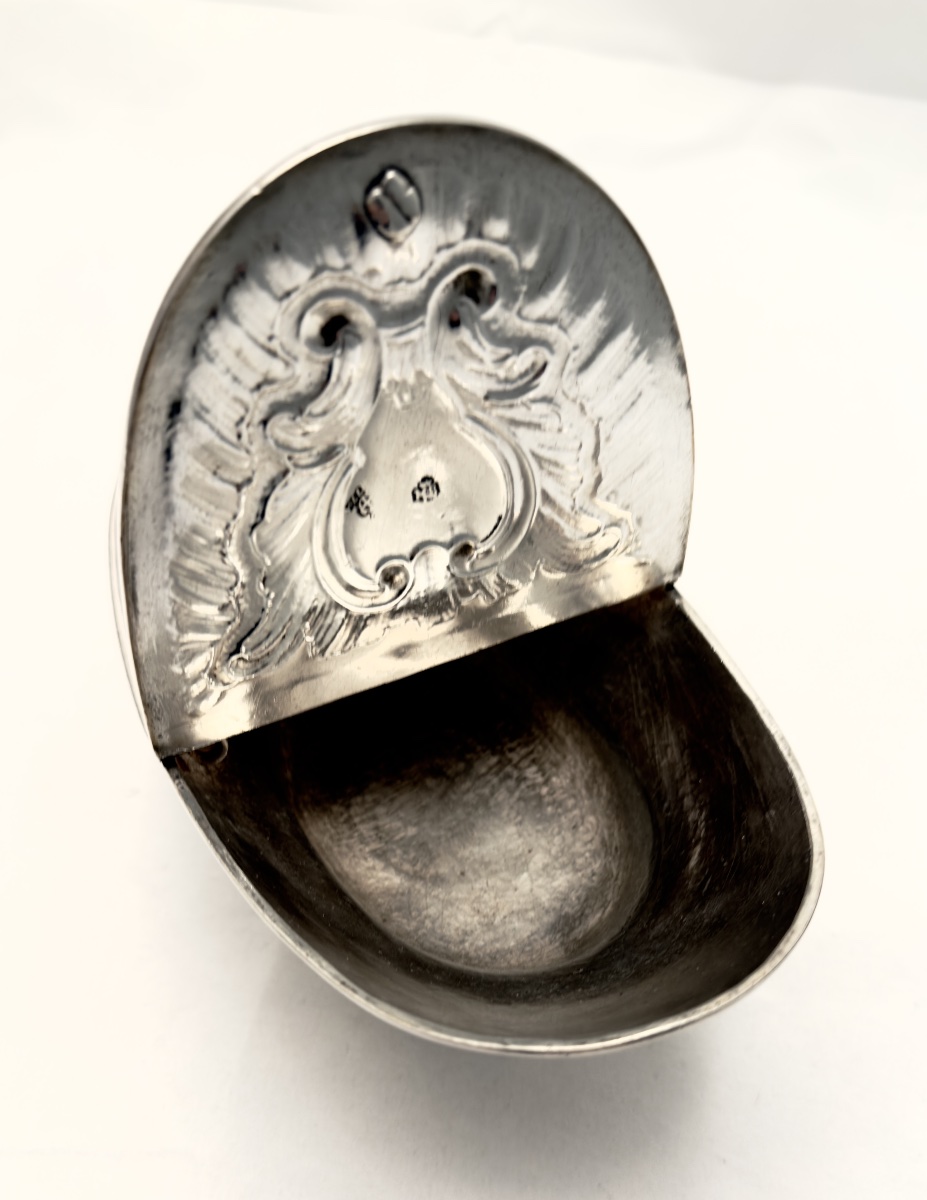
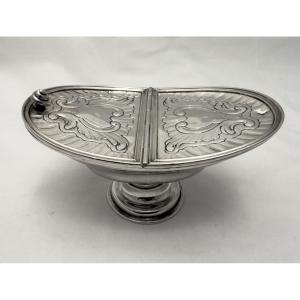


Marseille, 1779, Incense Burner, Matthieu Brémond, Solid Silver, Louis XV
Silver incense boat – Mathieu Brémond, Marseille, 1779
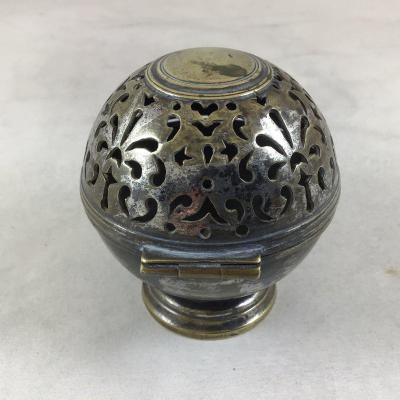
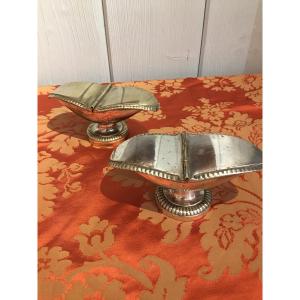
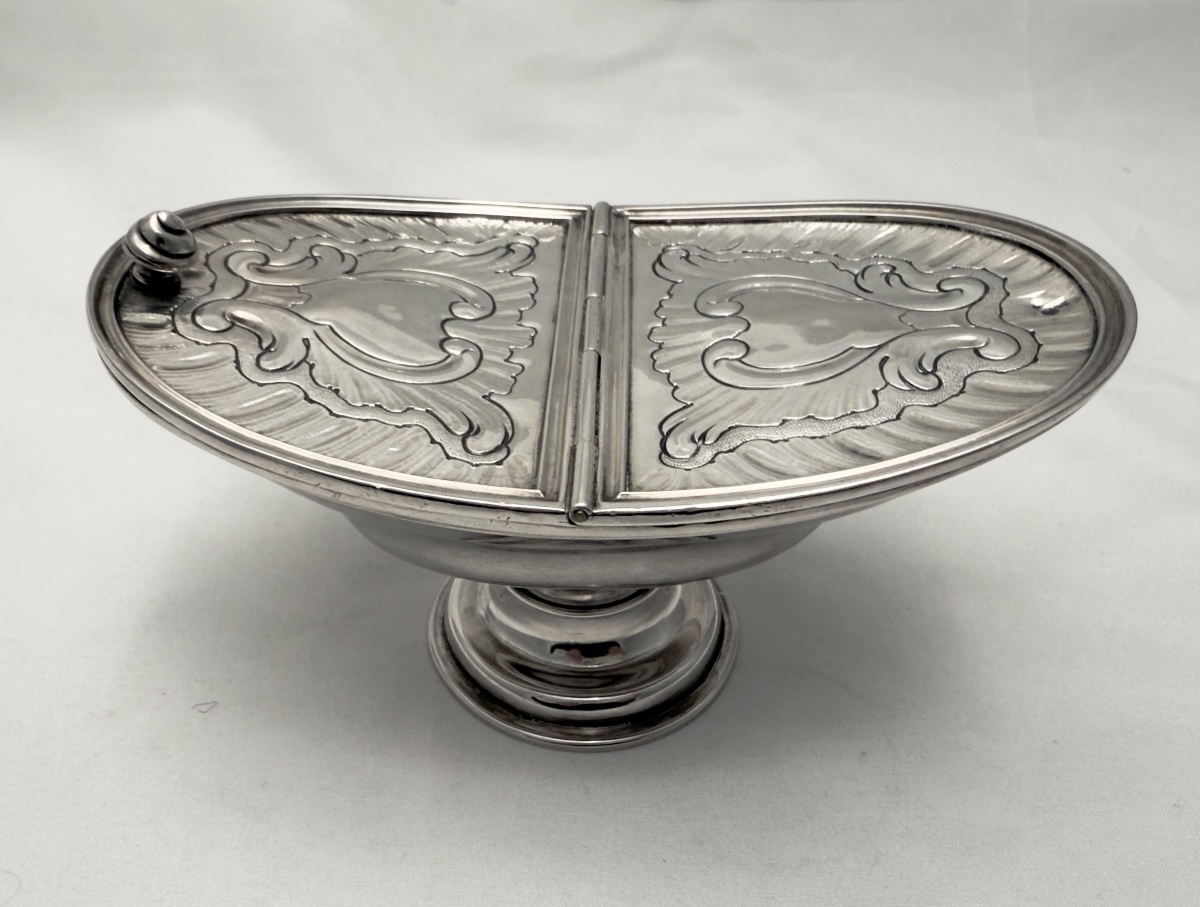
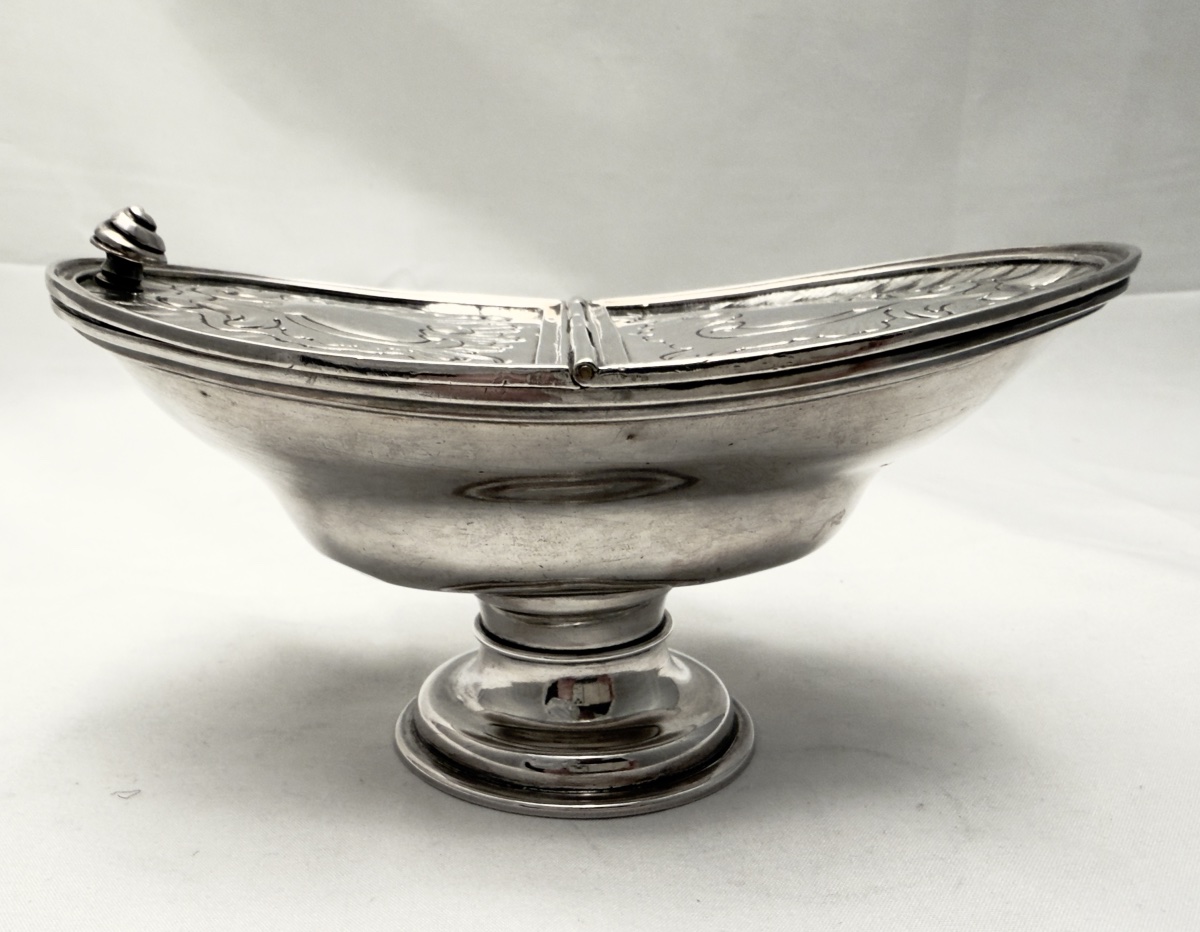
This elegant solid silver incense boat was made in Marseille in 1779 by Mathieu Brémond, one of the important Marseille silversmiths of the second half of the eighteenth century.
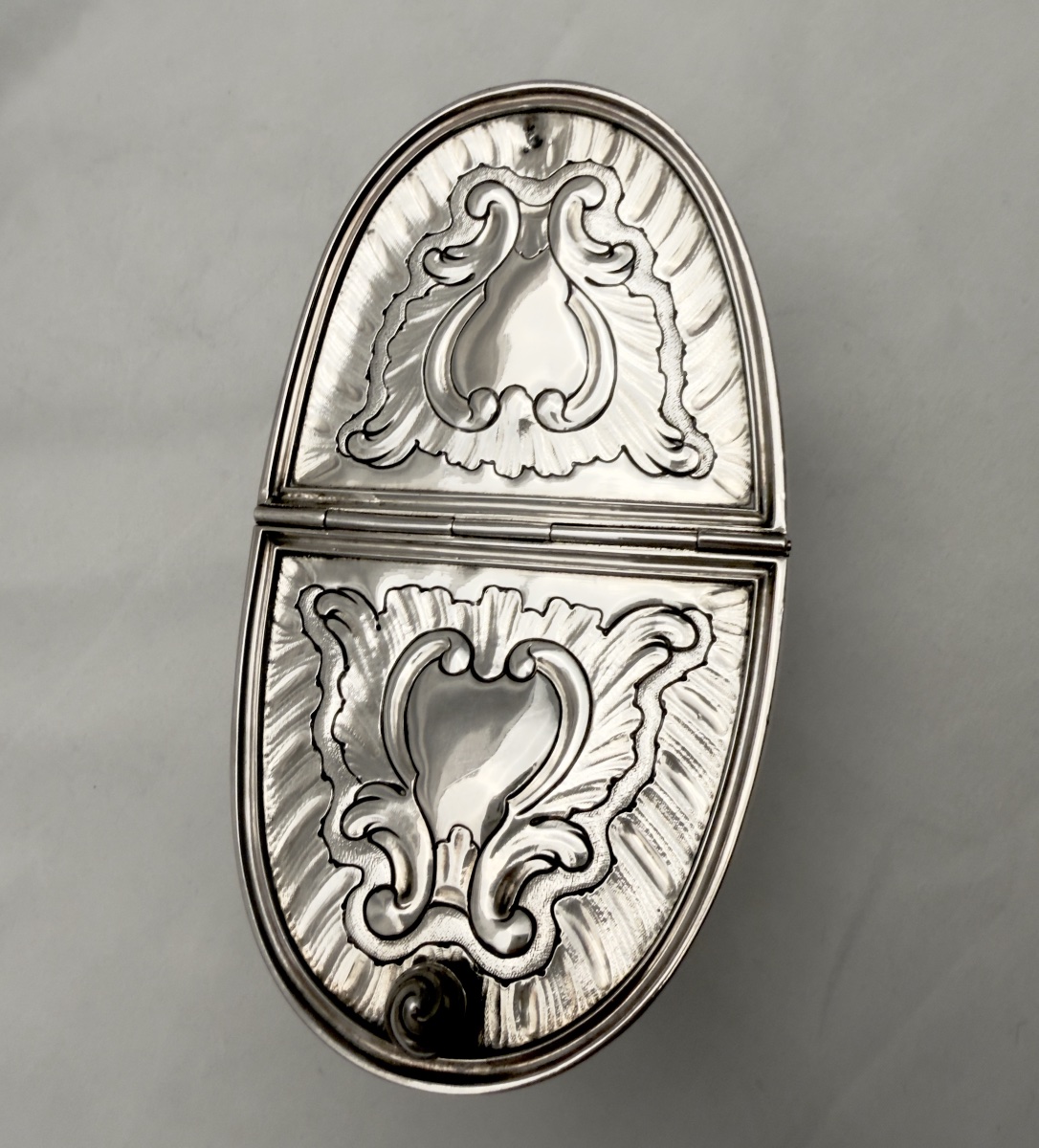
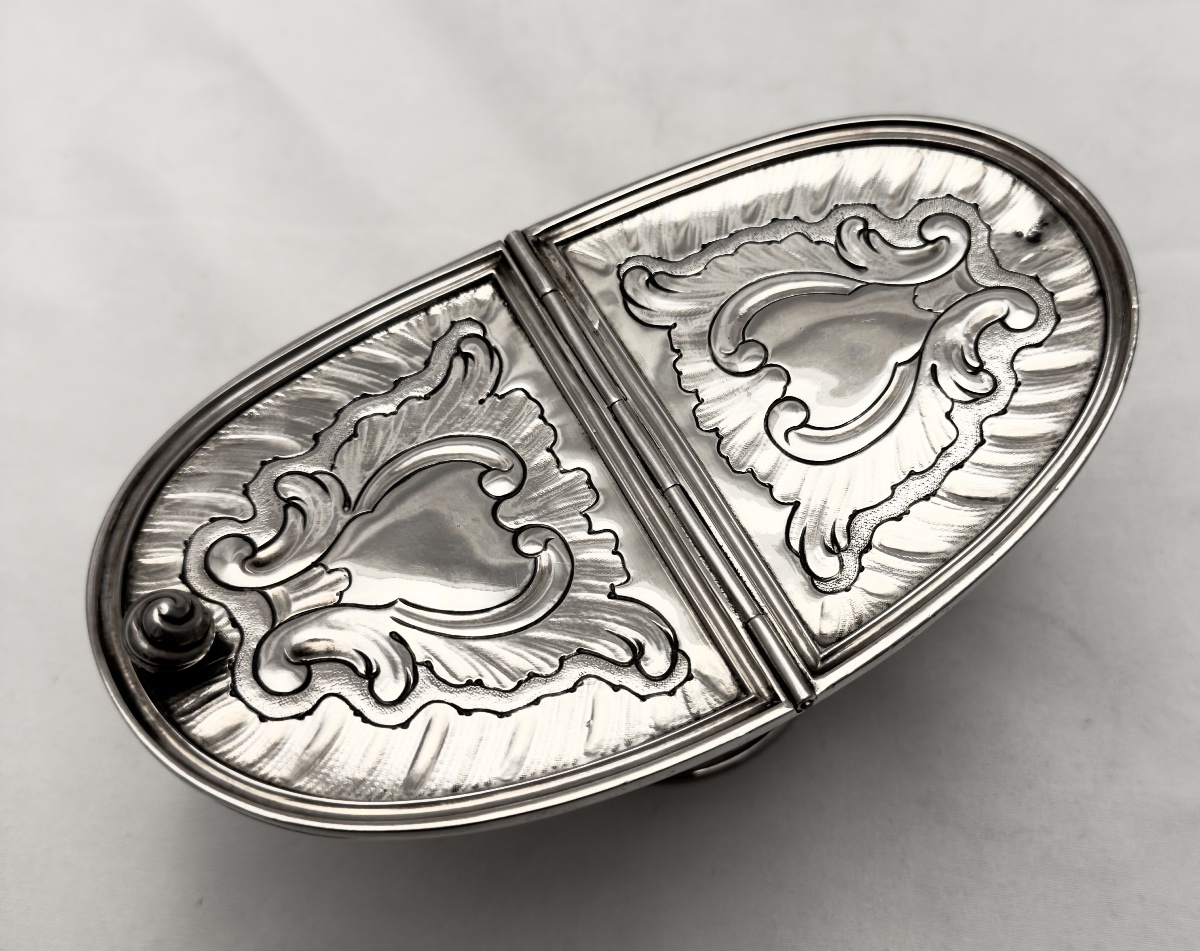
Of elongated and undulating form, the body rests on a moulded foot. The hinged cover is decorated with two large Rococo cartouches and surmounted by a shell-shaped finial. Despite its relatively late date, the piece remains entirely faithful to the Rococo vocabulary that characterises an important part of eighteenth-century Marseille silver: flowing curves, asymmetrical cartouches and shells.
The incense boat was intended to hold the grains of incense used during the liturgy. It accompanied the thurible or censer; the incense was taken from it with a small spoon before being placed upon the glowing charcoal in the censer. Its elongated shape, reminiscent of a small boat, explains the traditional French term navette used for this type of liturgical vessel.
The piece is preserved in remarkably fine condition.
Marseille, 1779
Master silversmith: Mathieu Brémond
Solid silver
Weight: 344 g
Length: 17.5 cm – width: 10 cm – height: 9 cm
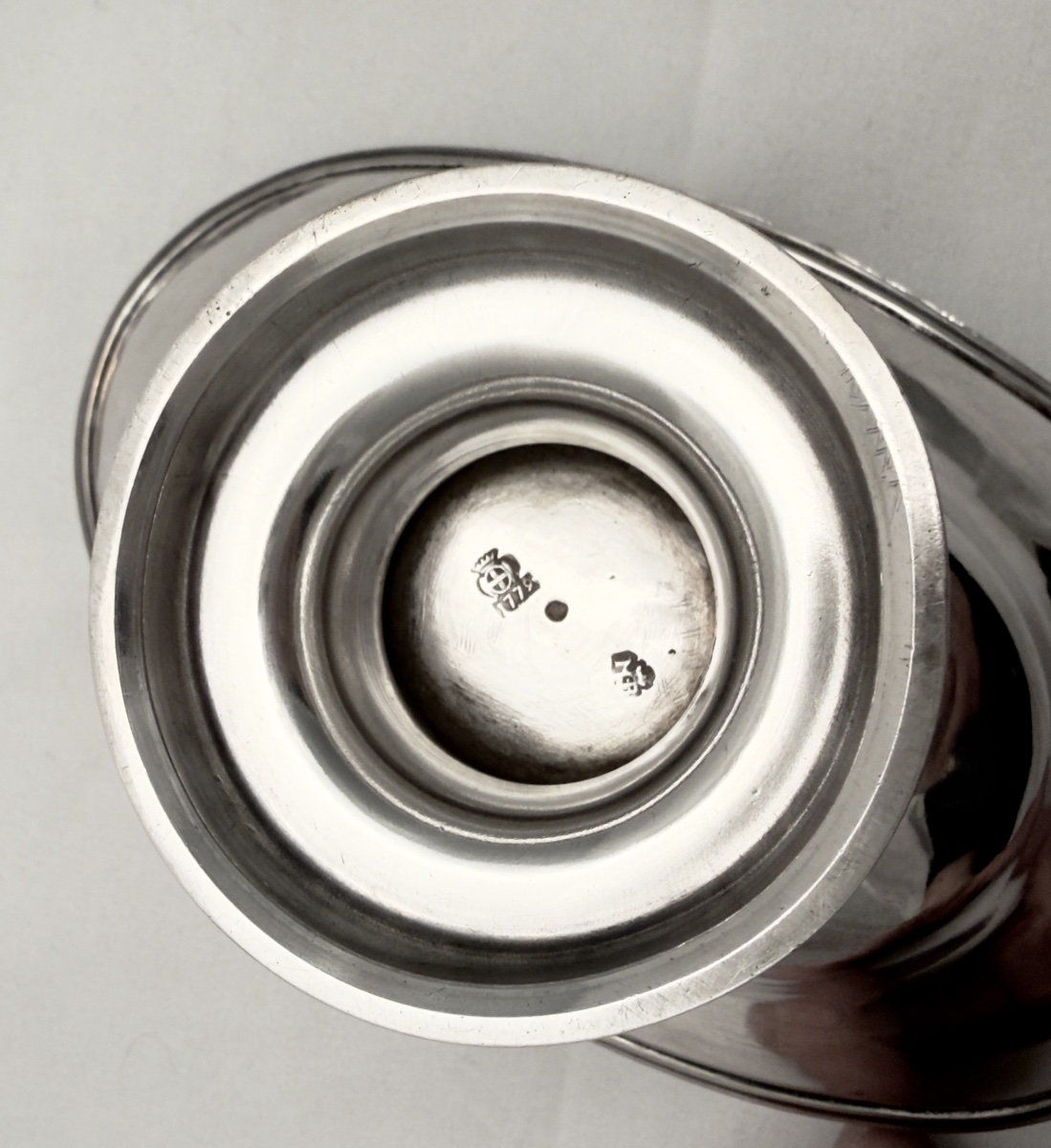
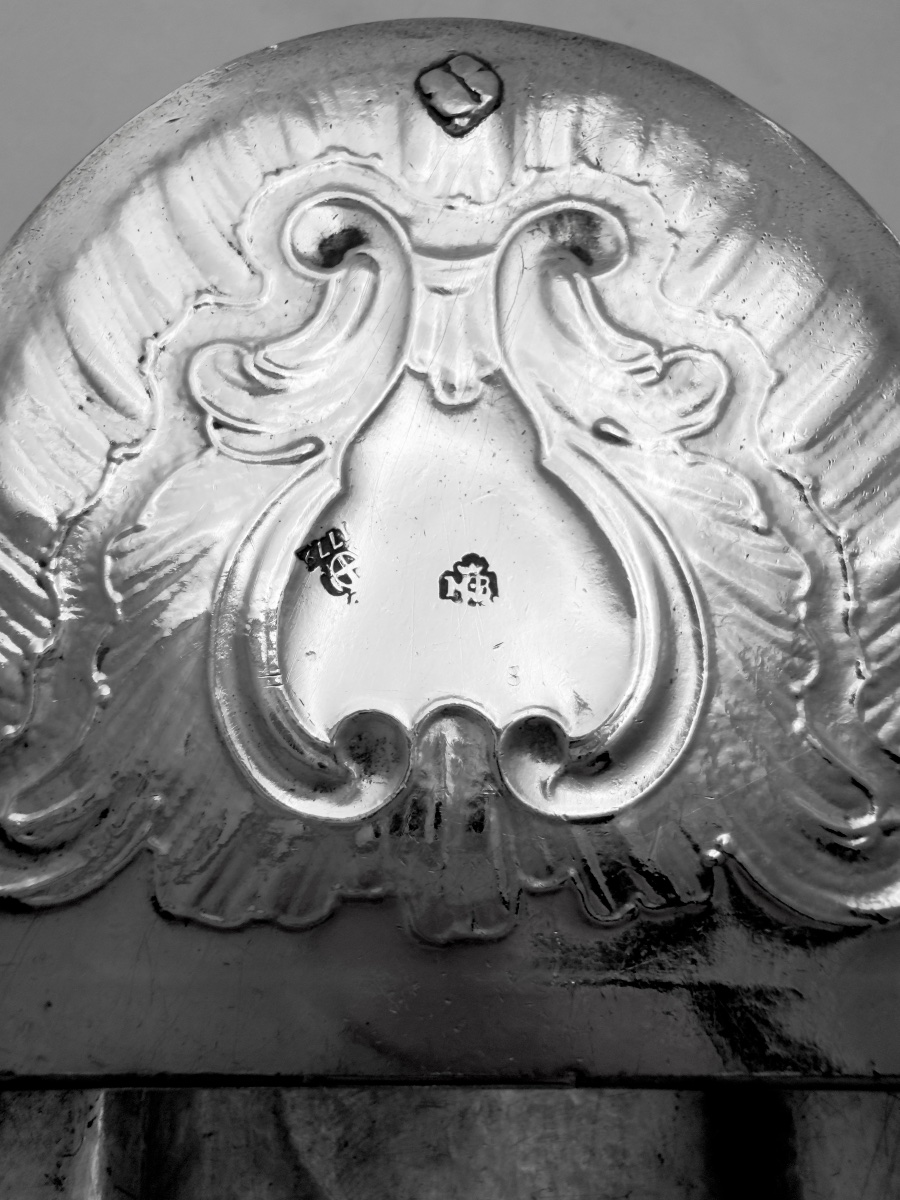
The hallmarks
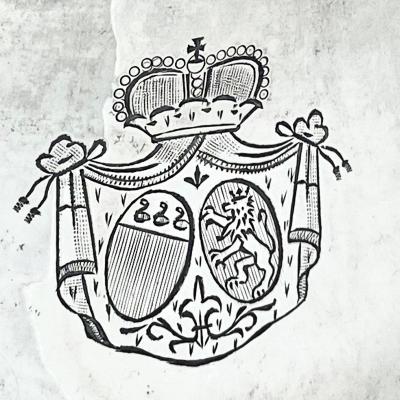
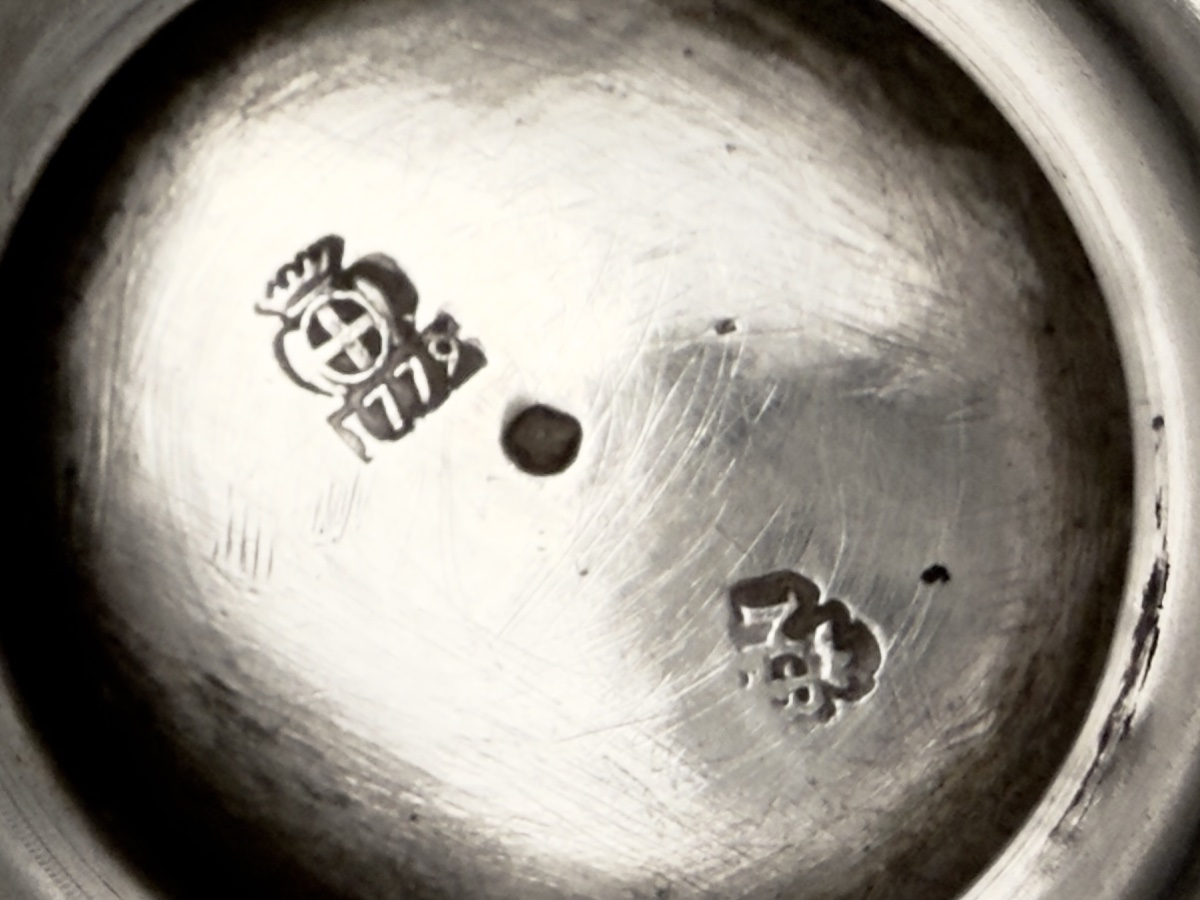
Both the body and the cover bear the Marseille hallmark, together with the maker’s mark of Mathieu Brémond: MB beneath a crown, with two pellets between the letters.
One characteristic detail deserves particular mention. On several known works by Brémond, the M of his maker’s mark appears incomplete or partially crushed, whereas the B is generally much more legible. The same peculiarity can already be observed in photographs of his marks published in the standard reference catalogue L’Orfèvrerie en Provence au XVIIIe siècle. It therefore seems likely to correspond to a defect or wear in the punch itself rather than merely to an occasional imperfect strike.
Mathieu Brémond
Mathieu Brémond was baptised in Marseille on 19 July 1717. He belonged to a family of silversmiths and naturally learned his trade in the workshop of his father, Antoine Brémond, to whom he was apprenticed from 21 July 1730 until 22 July 1738.
He subsequently remained a journeyman silversmith for fourteen years, an unusually long period, before presenting his masterpiece on 19 April 1752: a gold ring with a hollow-bevelled bezel set with a jasper engraved with a head. Two days later he replaced Jacques-Joseph Giraud, who had resigned, and had his large maker’s mark registered in Marseille on 22 April 1752. A smaller punch intended for small articles of gold was also registered in Aix on 26 January 1757.
The family tradition continued with his son Pierre I Brémond, who likewise served his apprenticeship under his father, from 8 January 1753 until 10 January 1761. Pierre presented his masterpiece in 1765 and was admitted as a master that same year. Father and son could consequently work simultaneously, which explains the existence of works by Mathieu dating from well after 1765.
Mathieu Brémond appears to have enjoyed a particularly prosperous career. His success clearly extended beyond the confines of his workshop: on 16 April 1776, three years before the manufacture of the present incense boat, he purchased at auction, for the considerable sum of 55,000 livres, the entire property of the former Convent of the Grande-Trinité in Marseille, with the intention of dividing it into lots. An investment of such magnitude bears witness to the considerable wealth achieved by the silversmith in the mature years of his career.
An important body of work of remarkable quality
A relatively substantial body of work by Mathieu Brémond has now been identified. These pieces demonstrate that he worked both for the Church and for an affluent secular clientele, and that he was capable of executing particularly ambitious commissions.
Among his earliest surviving works is a silver chalice, repoussé, chased, engraved and partially gilt, dated 1753 by its hallmarks. Measuring 28.5 cm in height, it is officially attributed to Mathieu Brémond in the POP–Palissy database of the French Ministry of Culture and constitutes an important testimony to his activity in the field of ecclesiastical silver.
The catalogue of the exhibition L’Orfèvrerie en Provence au XVIIIe siècle, held at the Musée Grobet-Labadié in Marseille in 2005–2006, illustrates several of his most important works.
Among them is a remarkable cream jug of 1758, 11 cm high, its spirally fluted body chased with ribbons and festoons. It bears the marks of Mathieu Brémond, the Marseille Maison Commune mark for 1758 and the charge mark of the sub-farmer responsible for Marseille.
The same catalogue illustrates an important sugar bowl of 1758, of pear-shaped form, richly chased with Rococo cartouches, flowers, palms and scrolls. Its cover is surmounted by a strawberry-shaped finial. This piece particularly demonstrates the quality of Brémond’s workmanship and his taste for abundant Rococo decoration.
Another sugar bowl of 1759, of baluster form on a spreading foot, with spiral fluting and wave decoration, is documented by Christie’s. The auction house specifically notes that spiral fluting appears to have been a recurring characteristic of Brémond’s work and compares this sugar bowl with the cream jug of 1758 and the sugar bowl illustrated in the Musée Grobet-Labadié exhibition catalogue.
A monumental pair of candlesticks with their detachable nozzles, also illustrated in the exhibition catalogue, measures 26.5 cm in height and weighs 1,144 g. Their particularly elaborate decoration combines shells, Rococo cartouches, fluting and laurel garlands. The maker’s mark is struck three times, a practice associated with Brémond’s status as a maître abonné.
Among his most impressive works is a large ewer and basin of 1771, likewise illustrated in the exhibition catalogue. The basin, 38 cm long, weighs 1,197 g, while the ewer, 28 cm high, weighs 1,262 g. Together, the two pieces therefore contain almost two and a half kilograms of silver. The baluster-shaped ewer is richly chased with reeds, Rococo ornament and cartouches, while the basin displays an extensive Rococo decoration. This important ensemble demonstrates the scale and quality of the commissions that Brémond’s workshop was capable of undertaking.
This body of both ecclesiastical and secular silver allows the present incense boat of 1779 to be placed within a now relatively well-documented œuvre. It belongs to the mature period of Mathieu Brémond’s career and constitutes a particularly attractive example of the persistence of the Rococo taste in Marseille silver during the closing years of the reign of Louis XV and the early years of the reign of Louis XVI.
Principal reference
Danielle Maternati-Baldouy and Gilles Mihière, L’Orfèvrerie en Provence au XVIIIe siècle, exhibition catalogue, Musée Grobet-Labadié, Marseille, 26 November 2005 – 26 February 2006, Éditions A. Barthélemy, Avignon, 2005.
For the 1753 chalice: French Ministry of Culture, POP–Palissy database, record PM54001396.
For the 1759 sugar bowl: Christie’s, Sucrier et son couvercle en argent, par Mathieu Brémond, Marseille, 1759.
Period: 18th century
Style: Louis 15th - Transition
Condition: Perfect condition
Material: Sterling silver
Length: 17,5 cm
Width: 10 cm
Height: 10 cm
Reference (ID): 1813116
Availability: In stock