

Ritual Or Votive Mask Depicting Yama-no-kami — Matagi Culture, Japan — 19th Century
RITUAL or VOTIVE MASK depicting Yama-no-Kami
Matagi Culture, Japan
19th century
Edo Period (1603–1868)
Wood, pigments, and plant fibers
H.: 20; W.: 11.5 cm
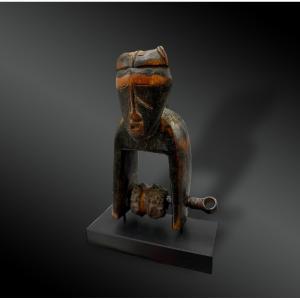
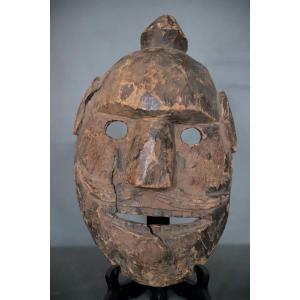
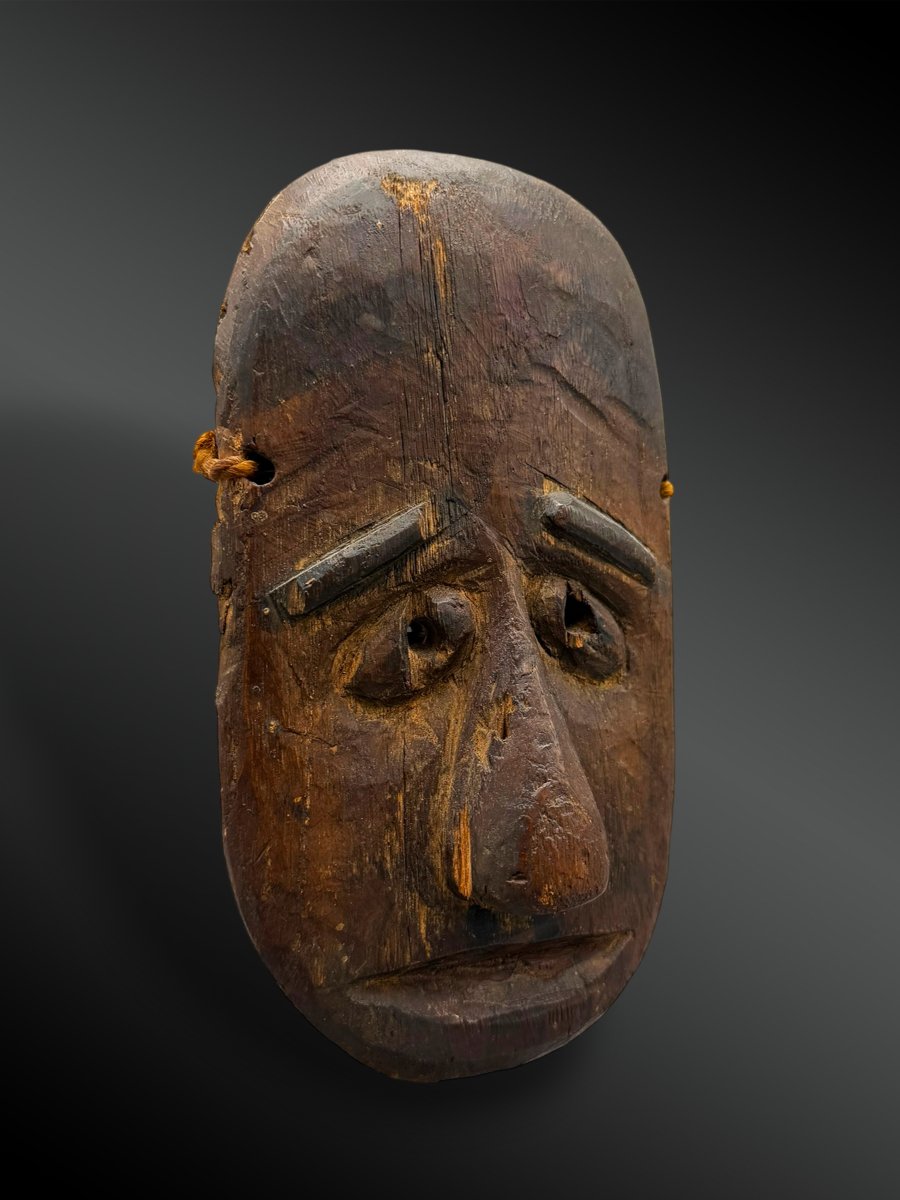
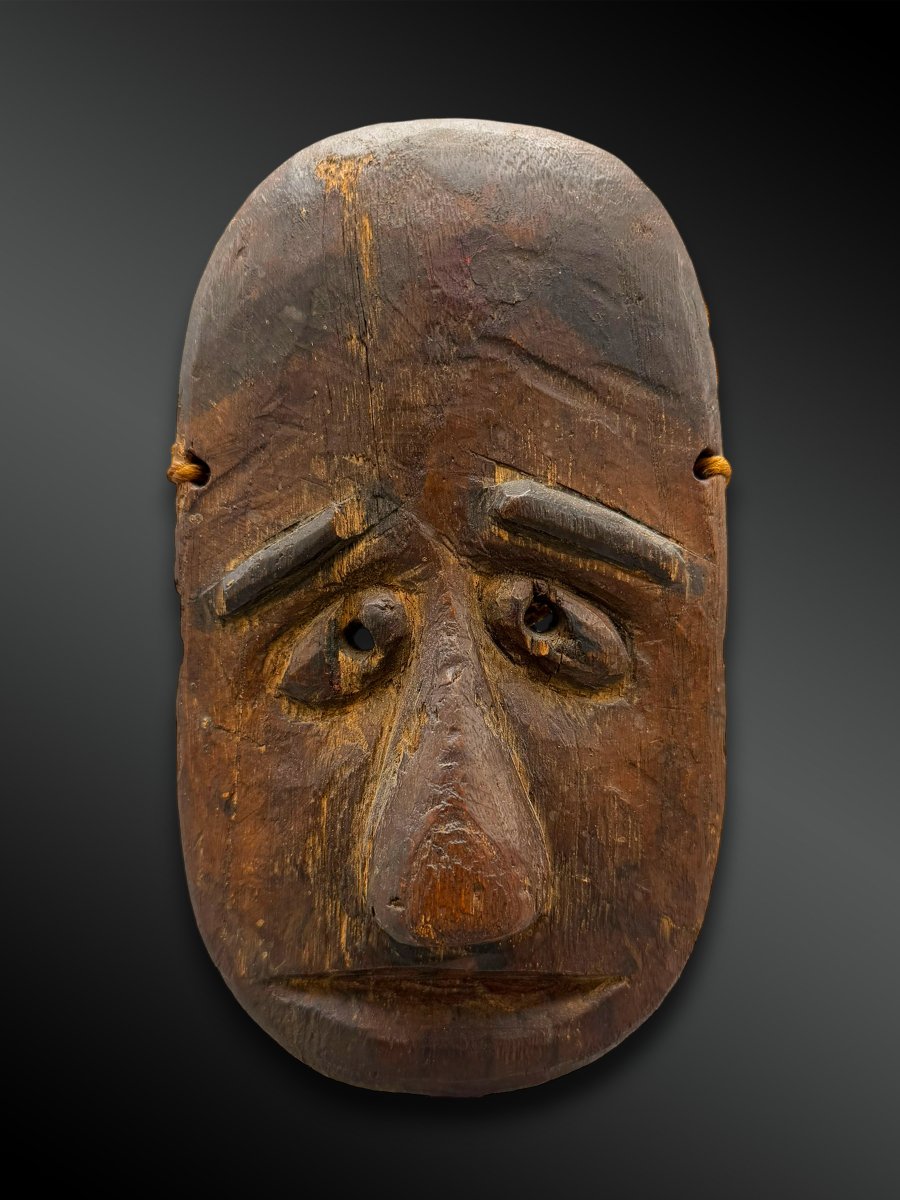
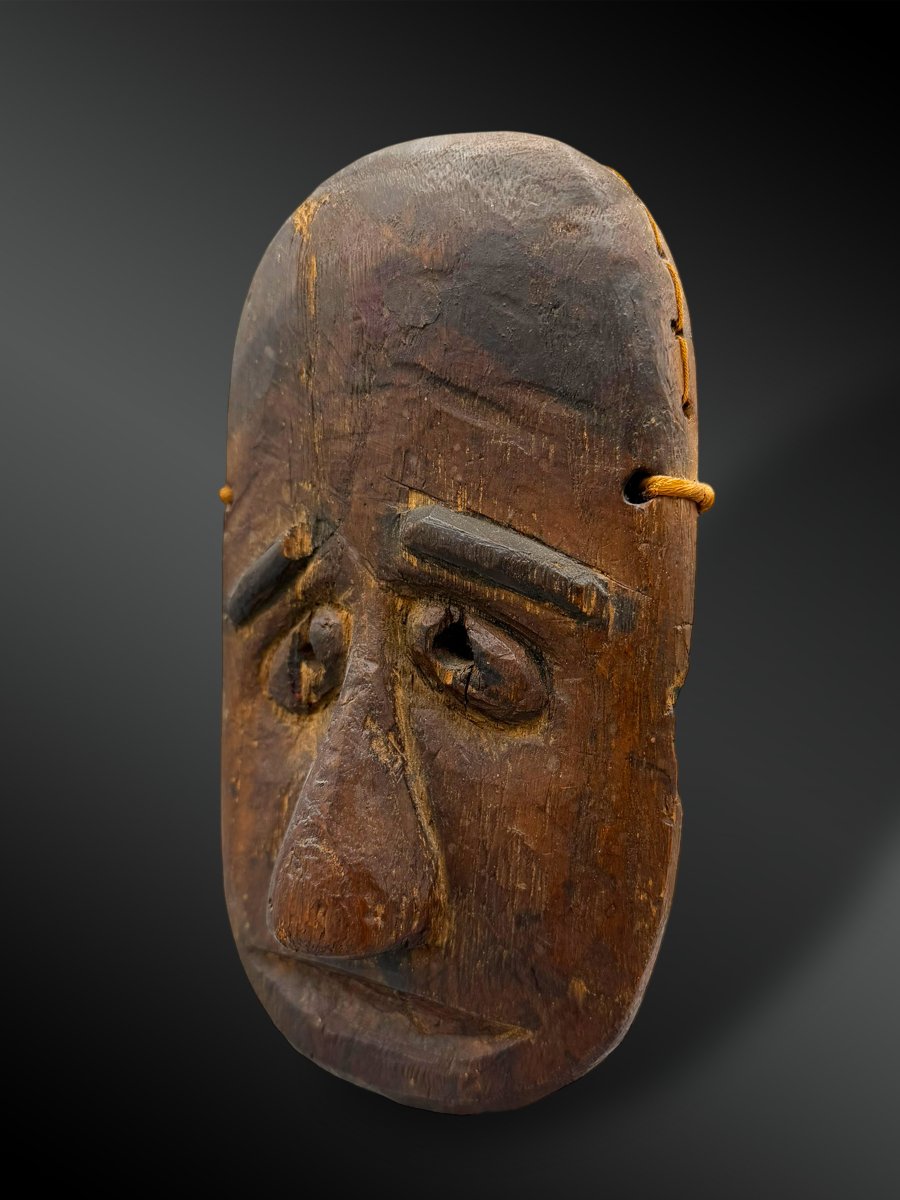
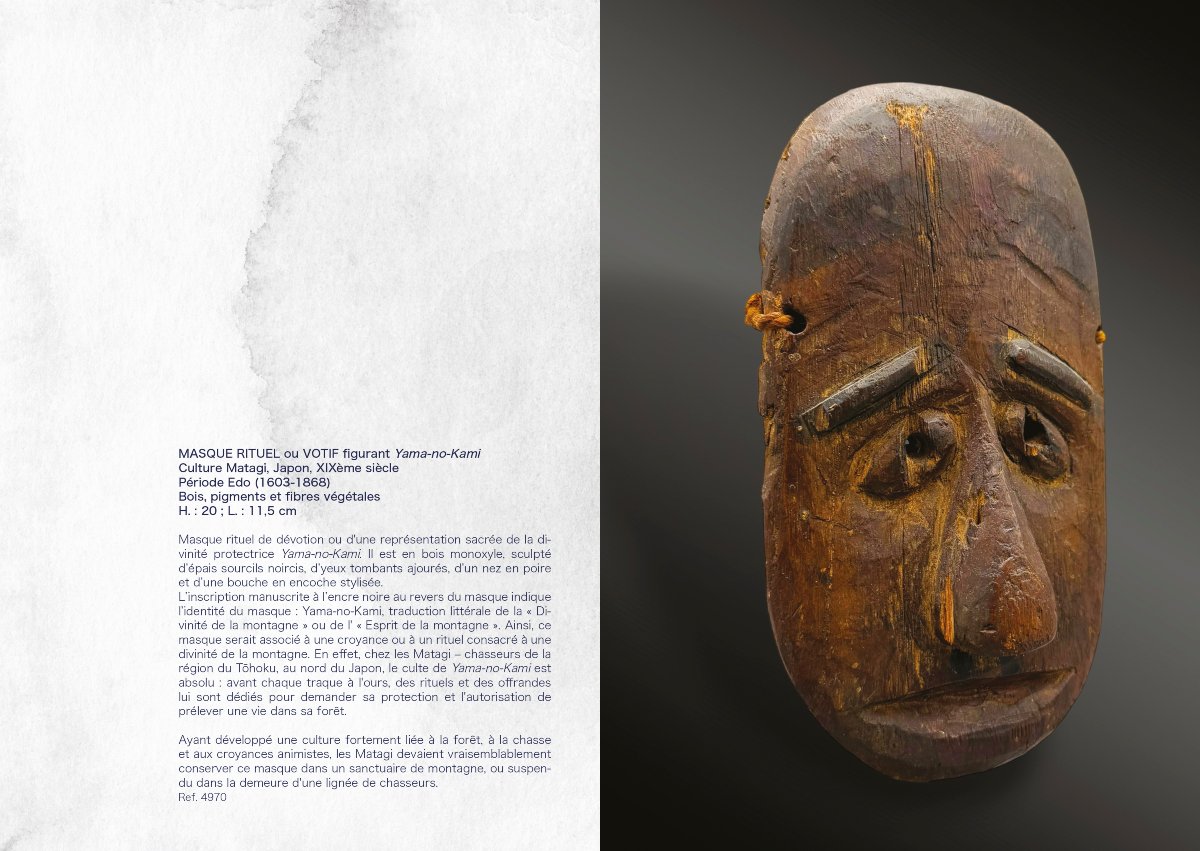
Ritual mask used for devotion or as a sacred representation of the protective deity Yama-no-Kami. It is made of a single piece of wood, carved with thick, blackened eyebrows, openwork drooping eyes, a pear-shaped nose, and a stylized notched mouth.
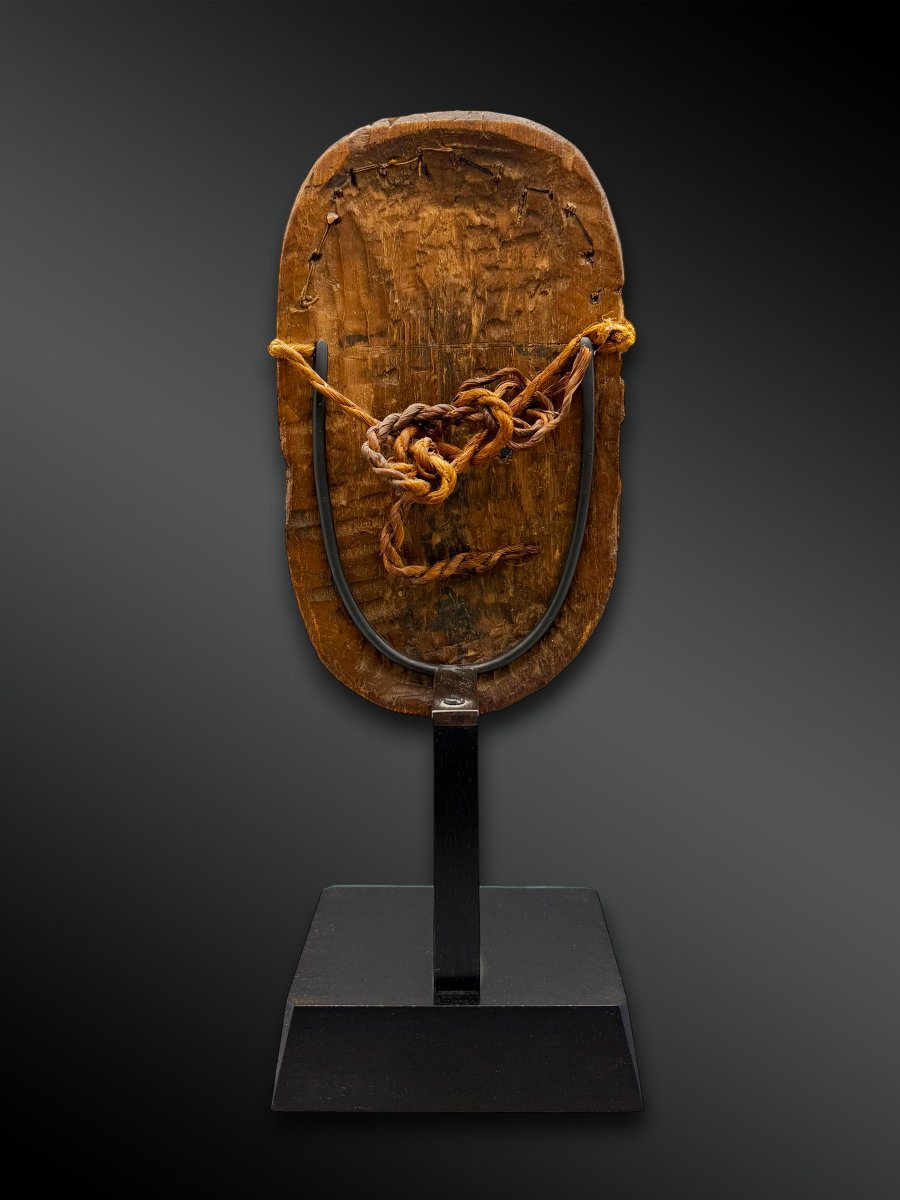
The handwritten inscription in black ink on the back of the mask identifies it as Yama-no-Kami, a literal translation of “Mountain Deity” or “Spirit of the Mountain.” Thus, this mask is believed to be associated with a belief or ritual dedicated to a mountain deity. Indeed, among the Matagi—hunters from the Tōhoku region in northern Japan—the worship of Yama-no-Kami is absolute: before every bear hunt, rituals and offerings are made to him to ask for his protection and permission to take a life in his forest.
Having developed a culture deeply rooted in the forest, hunting, and animist beliefs, the Matagi likely kept this mask in a mountain shrine or hung it in the home of a line of hunters.
Ref. 4970
Text and photos © FCP CORIDON
Matagi Culture, Japan
19th century
Edo Period (1603–1868)
Wood, pigments, and plant fibers
H.: 20; W.: 11.5 cm
Ritual mask used for devotion or as a sacred representation of the protective deity Yama-no-Kami. It is made of a single piece of wood, carved with thick, blackened eyebrows, openwork drooping eyes, a pear-shaped nose, and a stylized notched mouth.
The handwritten inscription in black ink on the back of the mask identifies it as Yama-no-Kami, a literal translation of “Mountain Deity” or “Spirit of the Mountain.” Thus, this mask is believed to be associated with a belief or ritual dedicated to a mountain deity. Indeed, among the Matagi—hunters from the Tōhoku region in northern Japan—the worship of Yama-no-Kami is absolute: before every bear hunt, rituals and offerings are made to him to ask for his protection and permission to take a life in his forest.
Having developed a culture deeply rooted in the forest, hunting, and animist beliefs, the Matagi likely kept this mask in a mountain shrine or hung it in the home of a line of hunters.
Ref. 4970
Text and photos © FCP CORIDON
2 880 €
Period: 19th century
Style: Asian art
Condition: Excellent condition
Reference (ID): 1816443
Availability: In stock
Print