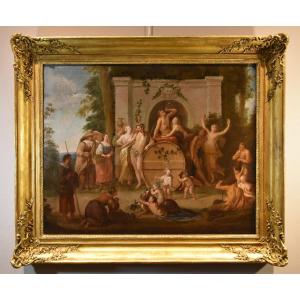


The Triumph Of Bacchus, Jean Jacques Spoede (antwerp 1680 – Paris 1757)
Artist: Jean Jacques Spoede (anvers 1680 - Paris 1757)
Jean Jacques Spoede (Antwerp 1680 – Paris 1757)
The Triumph of Bacchus
Oil on canvas (66 x 83 cm. – Framed: 84 x 101 cm.)
Full details (click HERE)
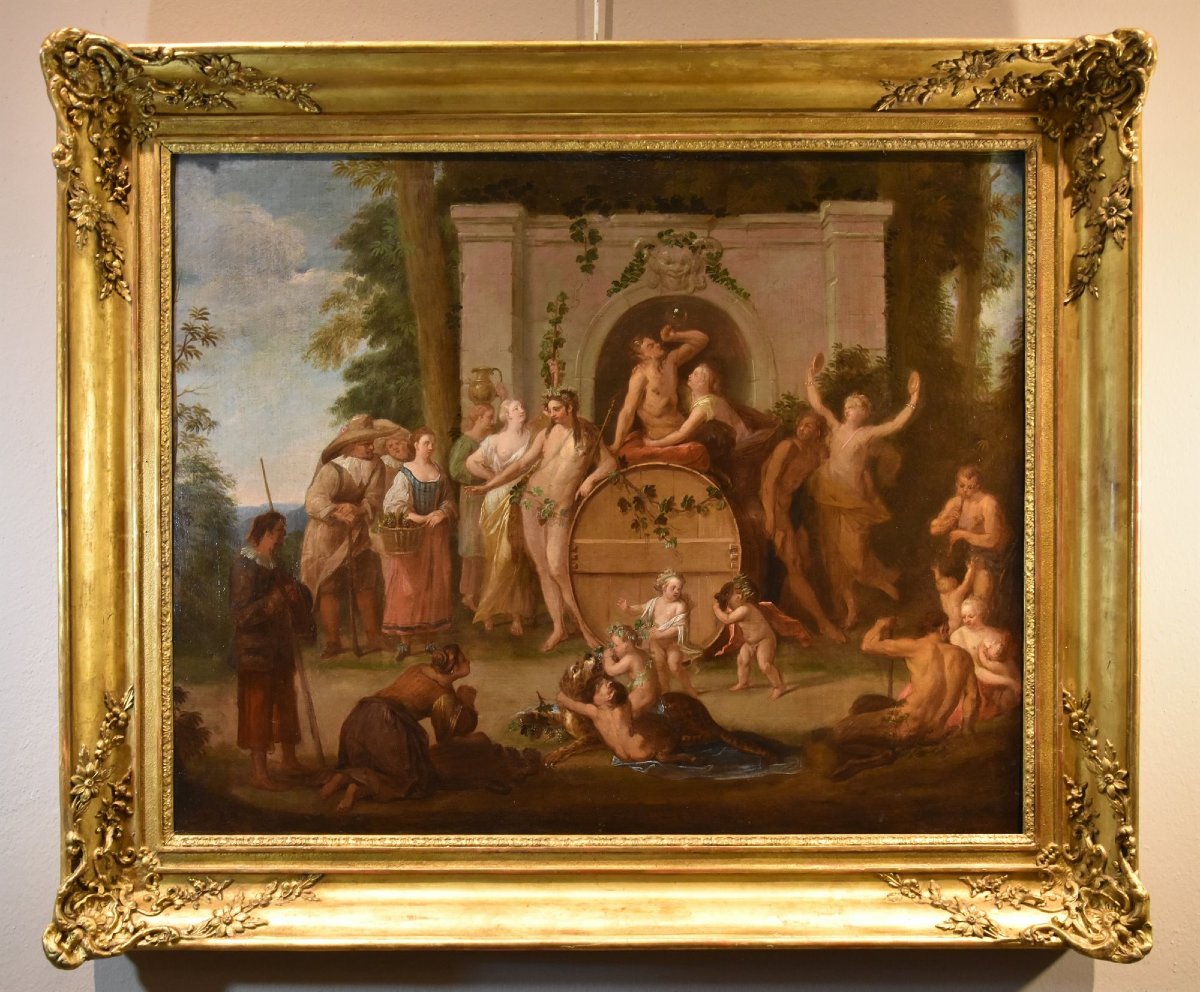
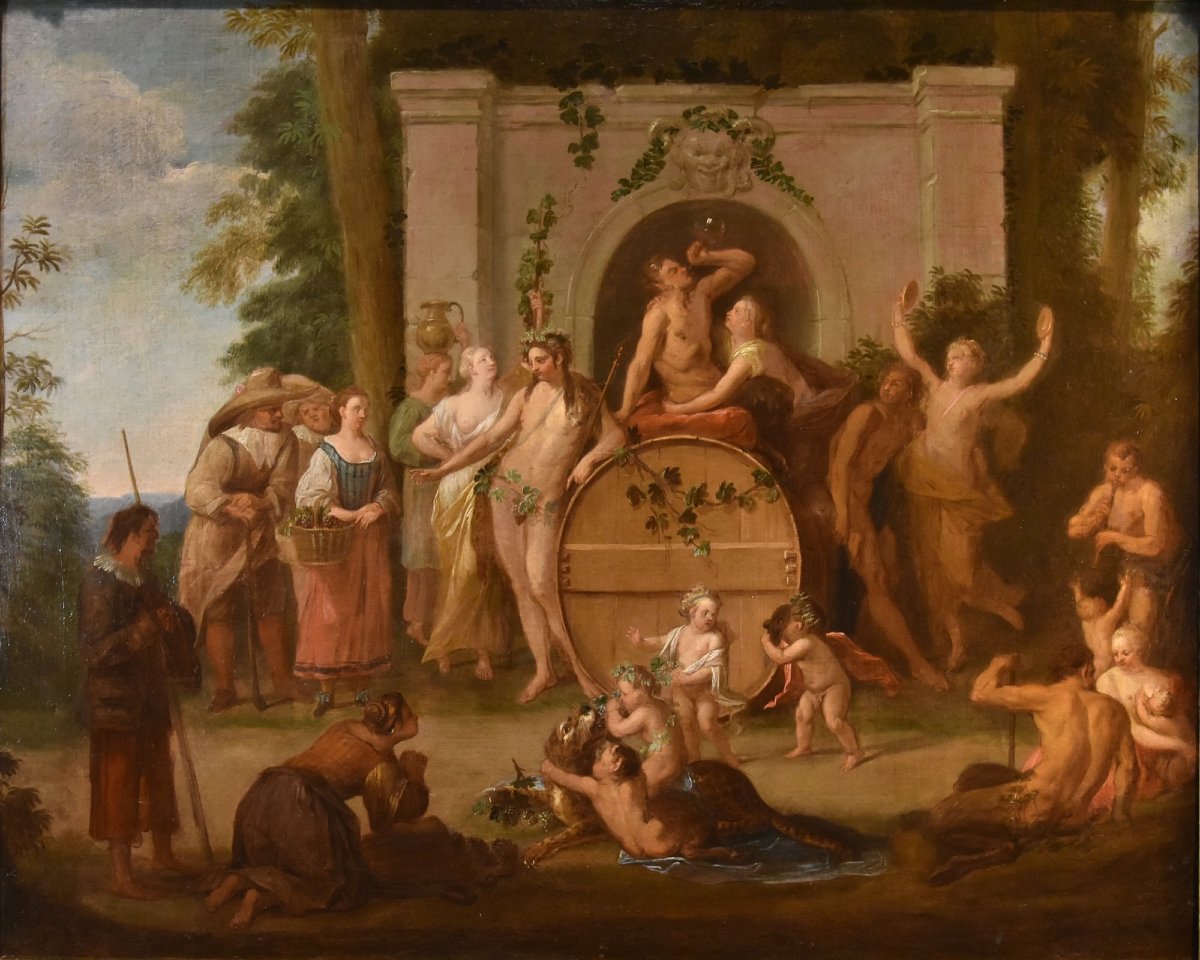
In this captivating painting, attributed to Jean Jacques Spoede (Antwerp, 1680 – Turin, 1752), we find ourselves immersed in the heart of a bacchanal, a pagan festival in honor of Bacchus, god of wine and intoxication—a Dionysian celebration that blends sensuality, mythology, and unbridled joy.
This is a fascinating subject with ancient origins, specifically from the propitiatory celebrations that took place at the end of the grape harvest as a rite of thanksgiving and fellowship to engage the farming community through dancing and singing, often accompanied by theatrical performances dedicated to the veneration of Bacchus, due to his ancestral ties to the Roman god of wine.
A Flemish painter active in Italy, Spoede is known for his ability to blend Northern precision with the elegance and theatricality of the Italian Baroque. After moving to Turin, he worked for the court of the House of Savoy, distinguishing himself with his mythological and allegorical scenes, and our painting is a perfect example of this: refined, cultured, yet also surprisingly sensual.
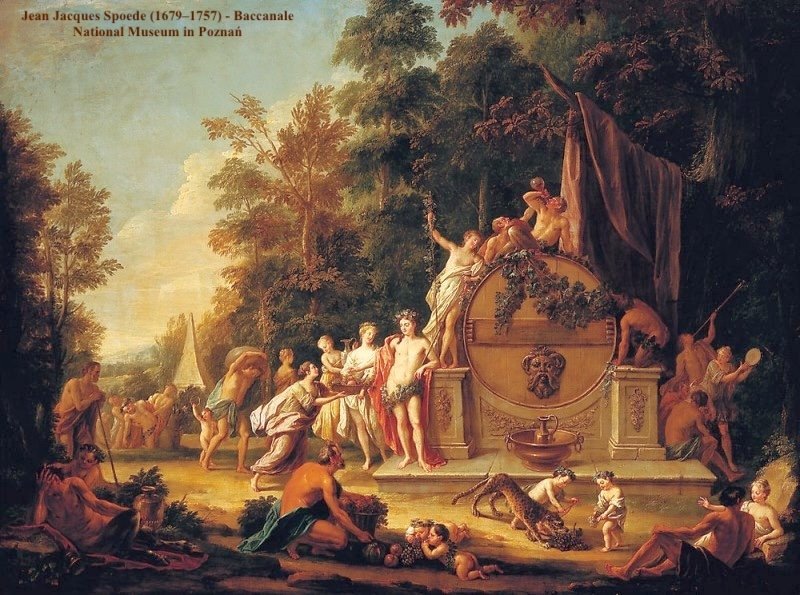
A painting of his that is very similar in subject and detail is currently on display at the National Museum in Poznań; it was painted between 1720 and 1730 (oil on canvas, 120 x 160 cm).
LINK: https://commons.wikimedia.org/wiki/File:Spoede_Bacchanals.jpg *
The image offers us an opulent and vibrant vision, with a work that celebrates the beauty of the body, the joy of the senses, and the freedom of the spirit—a true apotheosis of the myth of Bacchus—transporting the viewer to a timeless universe where myth and nature, art and desire merge in an eternal embrace.
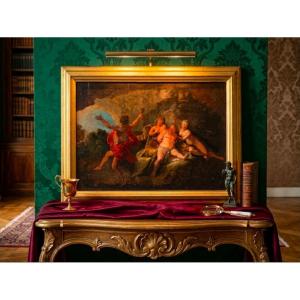
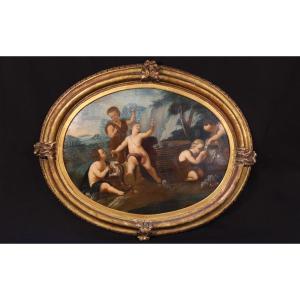
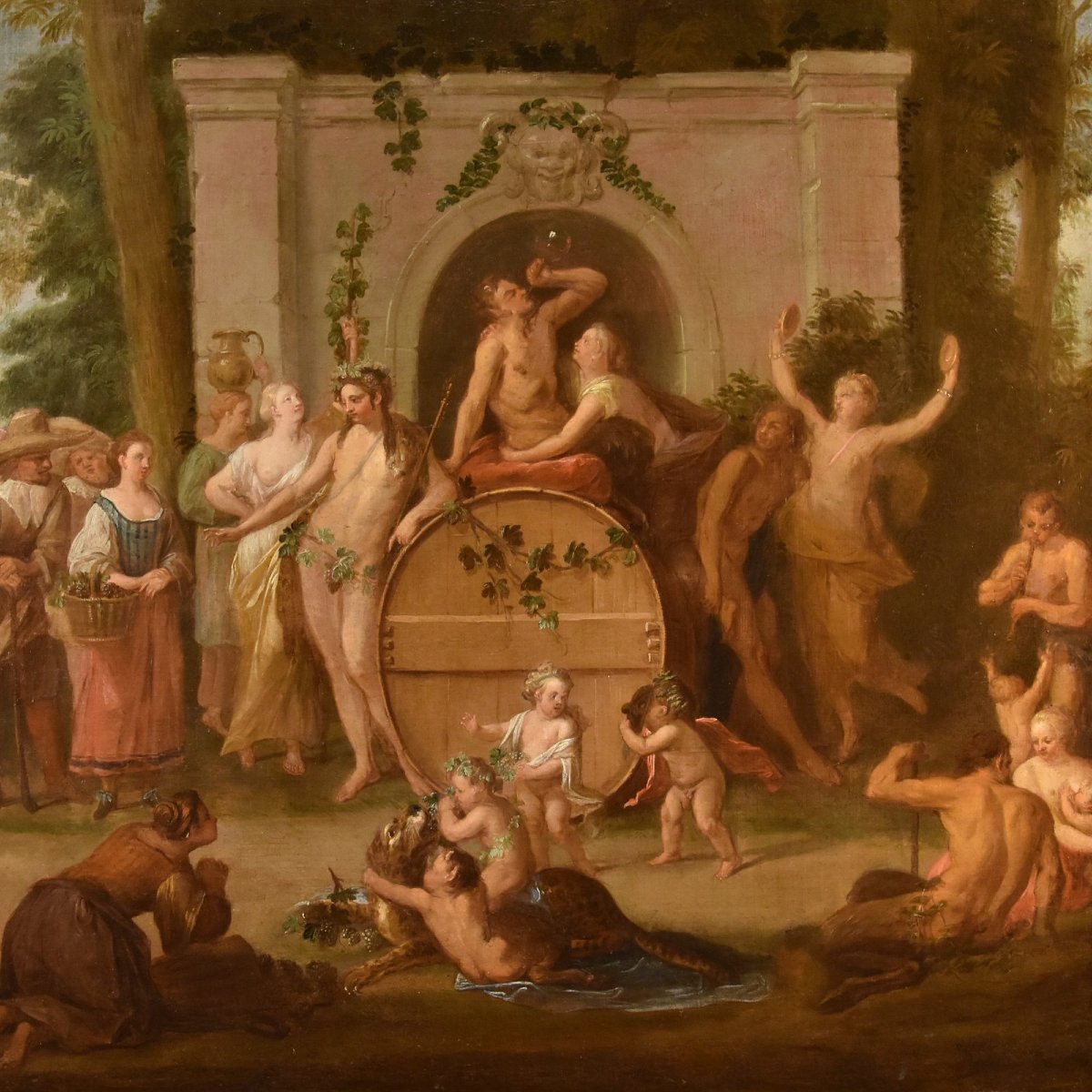
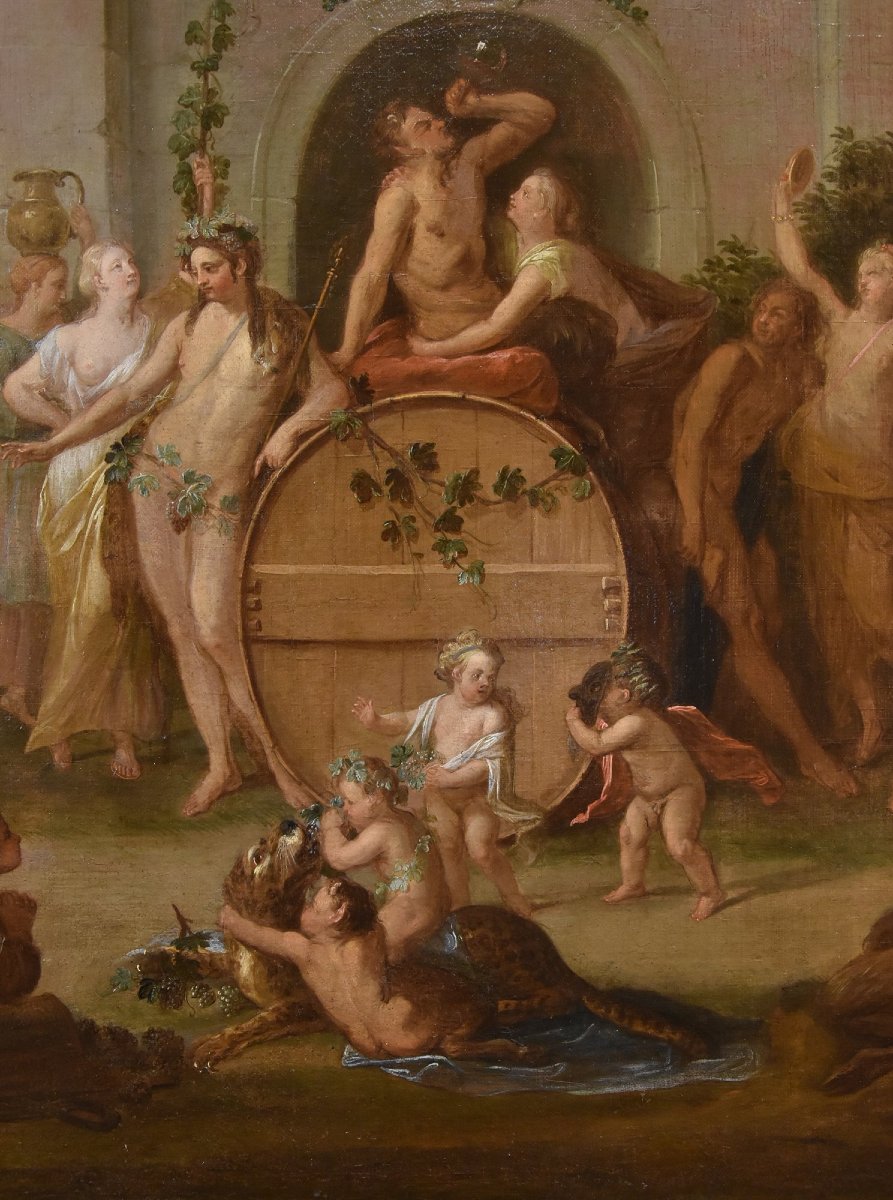
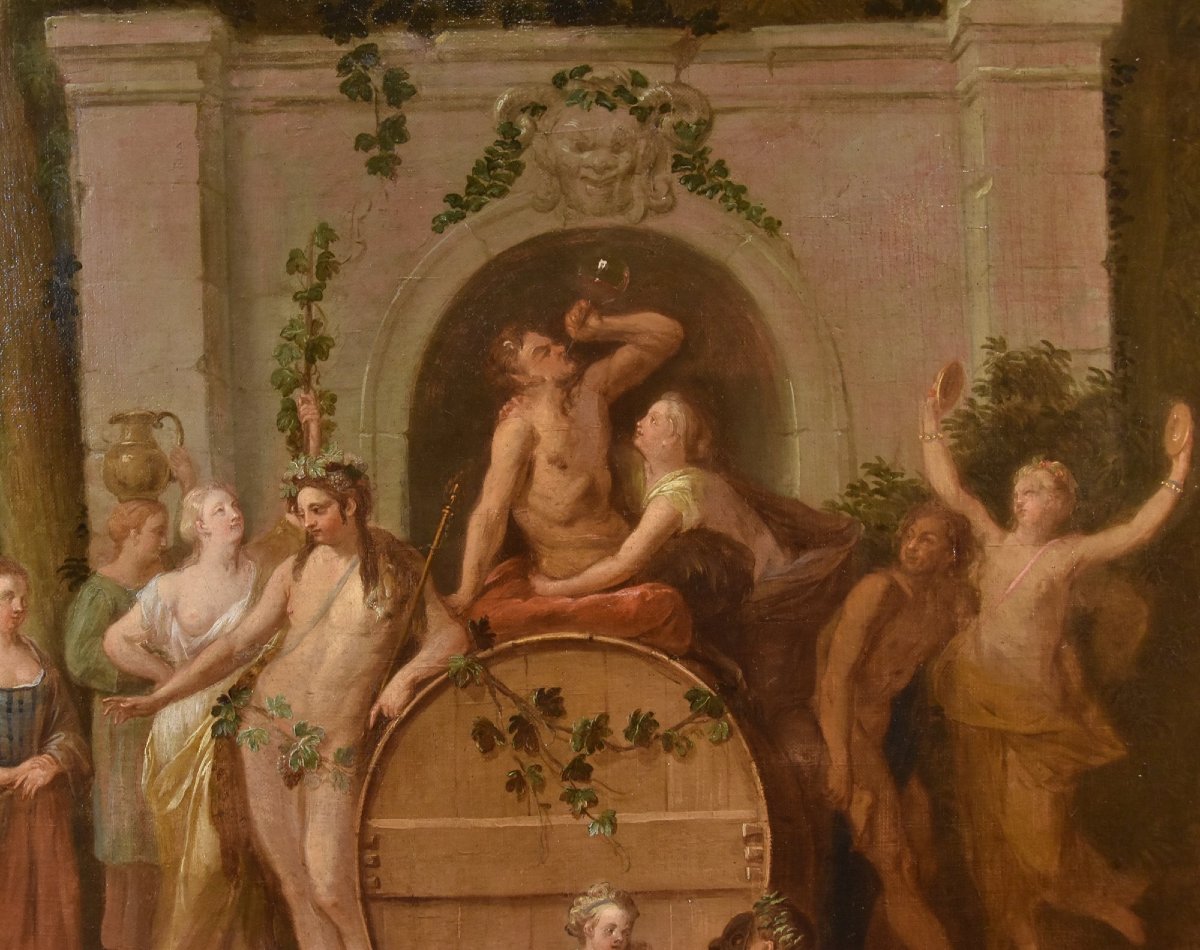
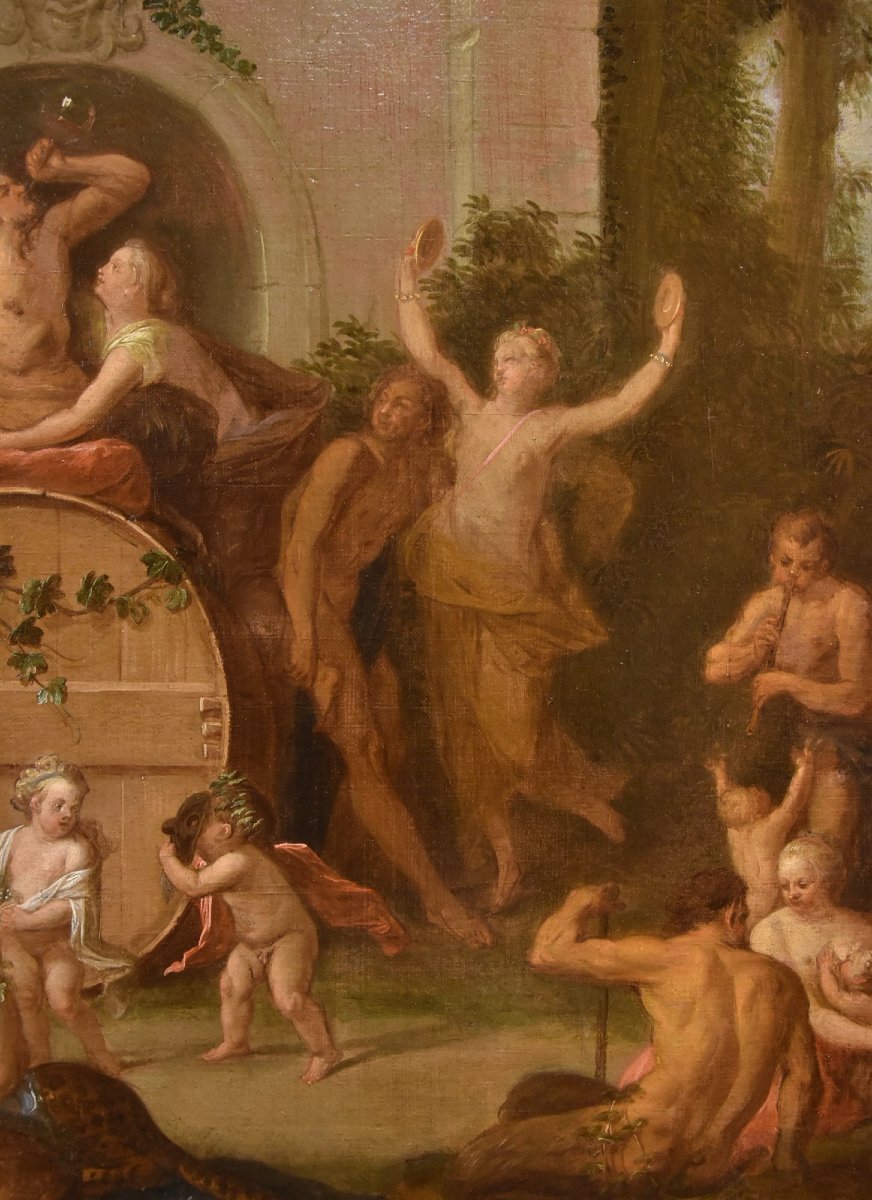
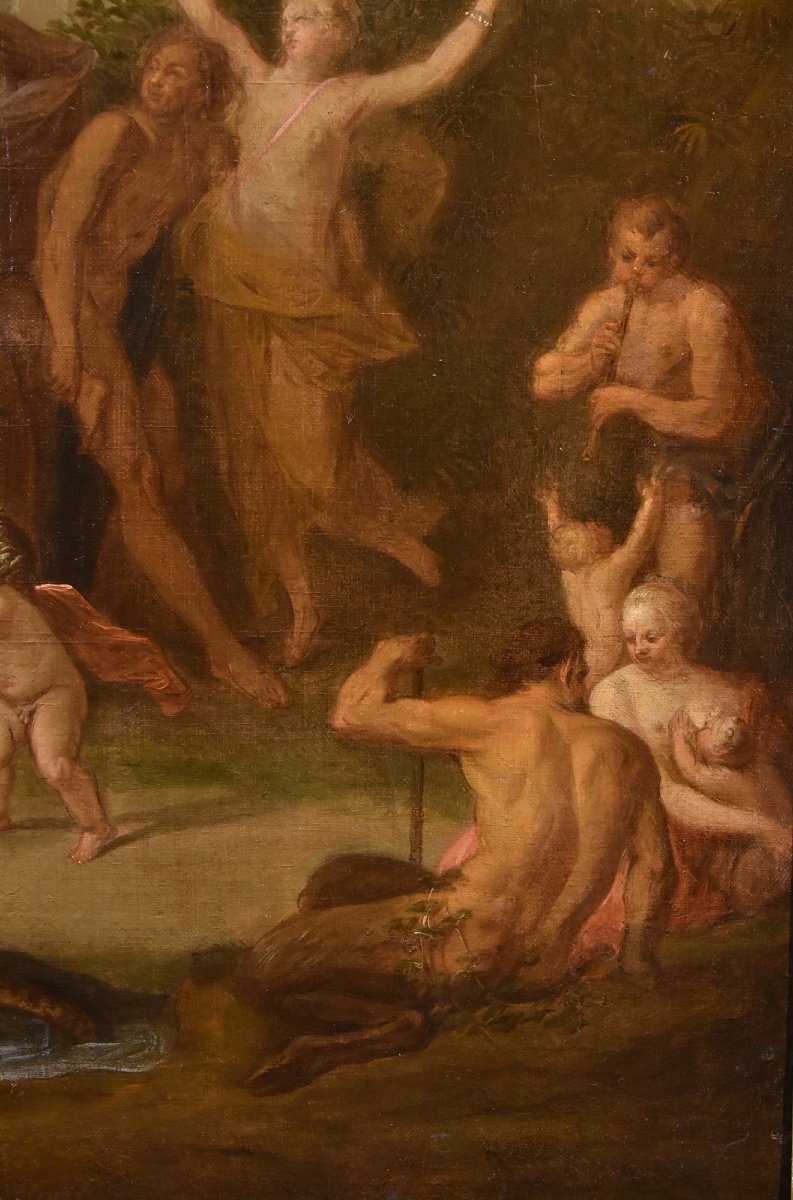
At the center of the composition, we see a monumental wine barrel adorned with vine shoots, evoking a profane altar, around which an exuberant dance of bodies unfolds, accompanied by the music of flutes and tambourines. Semi-nude bodies and mythological figures, including satyrs and nymphs, intertwine in a whirlwind of movement, music, and pleasure. A satyr in the center, crowned with vine leaves, raises his cup to the sky in an ecstatic gesture, evoking the spirit of Bacchus and celebrating wine as divine nectar.
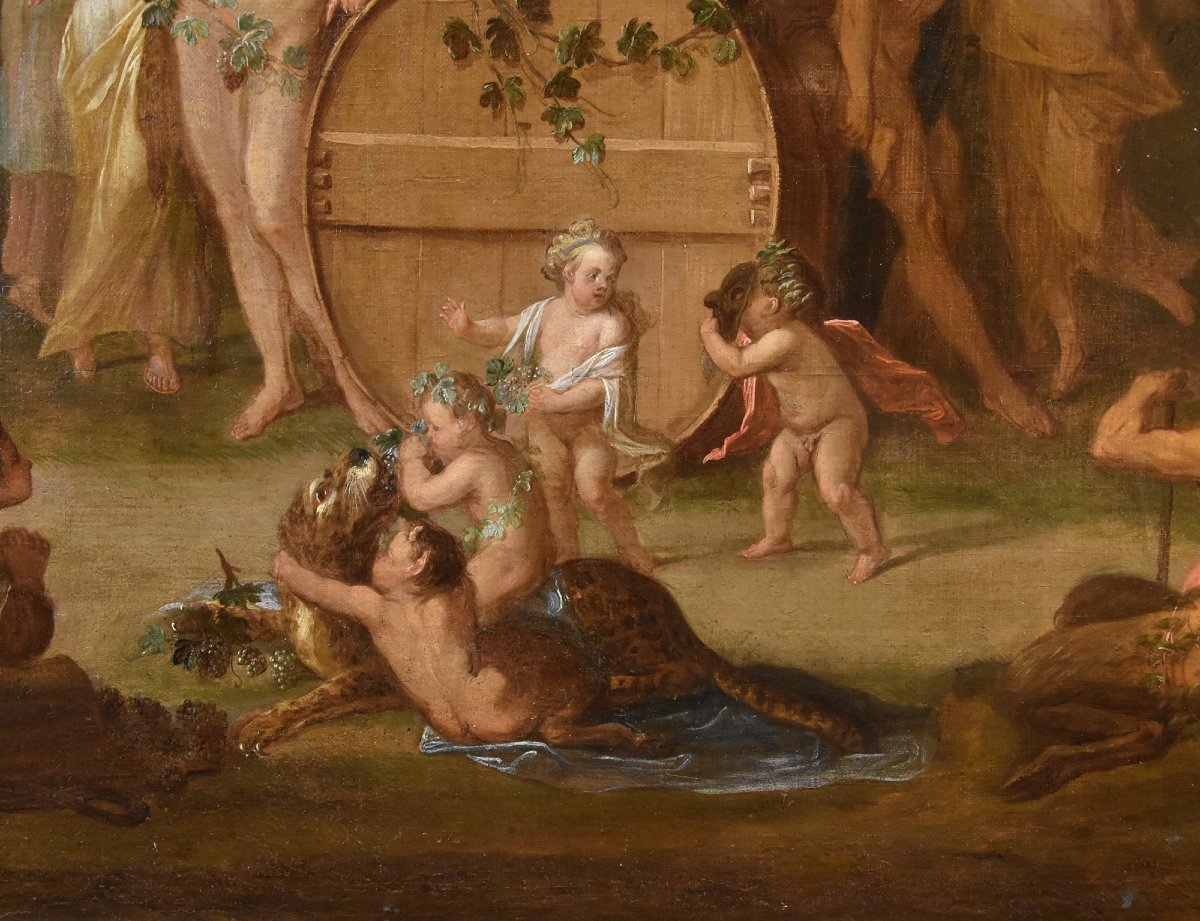
On the ground, children—both satyrs and humans—play among clusters of grapes, personifying innocence lost in sensual lust, and a leopard, alluding to the wild and primordial energy that characterizes these festivities.
The setting is lush: verdant nature embraces an architectural fountain in the background, almost like a forgotten temple, now reborn in the Dionysian revelry. A golden light, typical of Baroque painting, caresses the bodies and faces, enhancing the sensuality and euphoria of the moment.
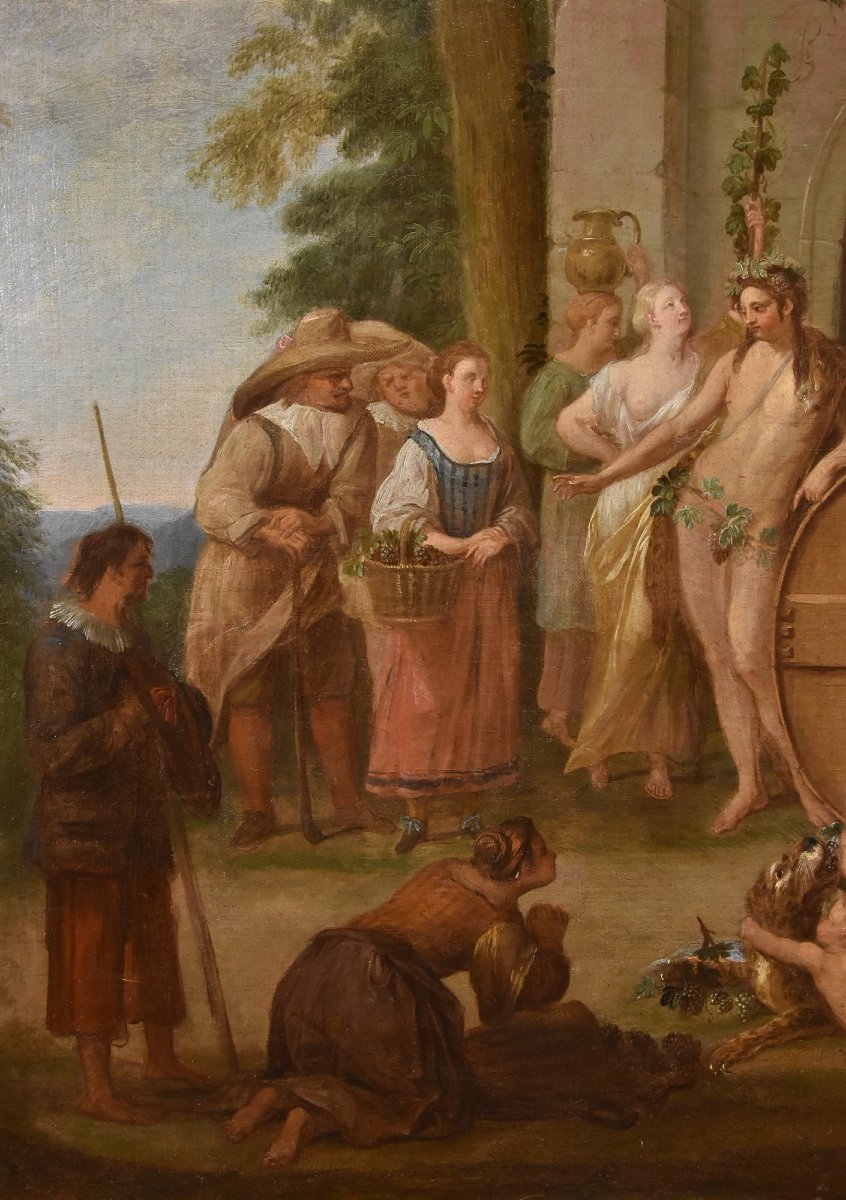
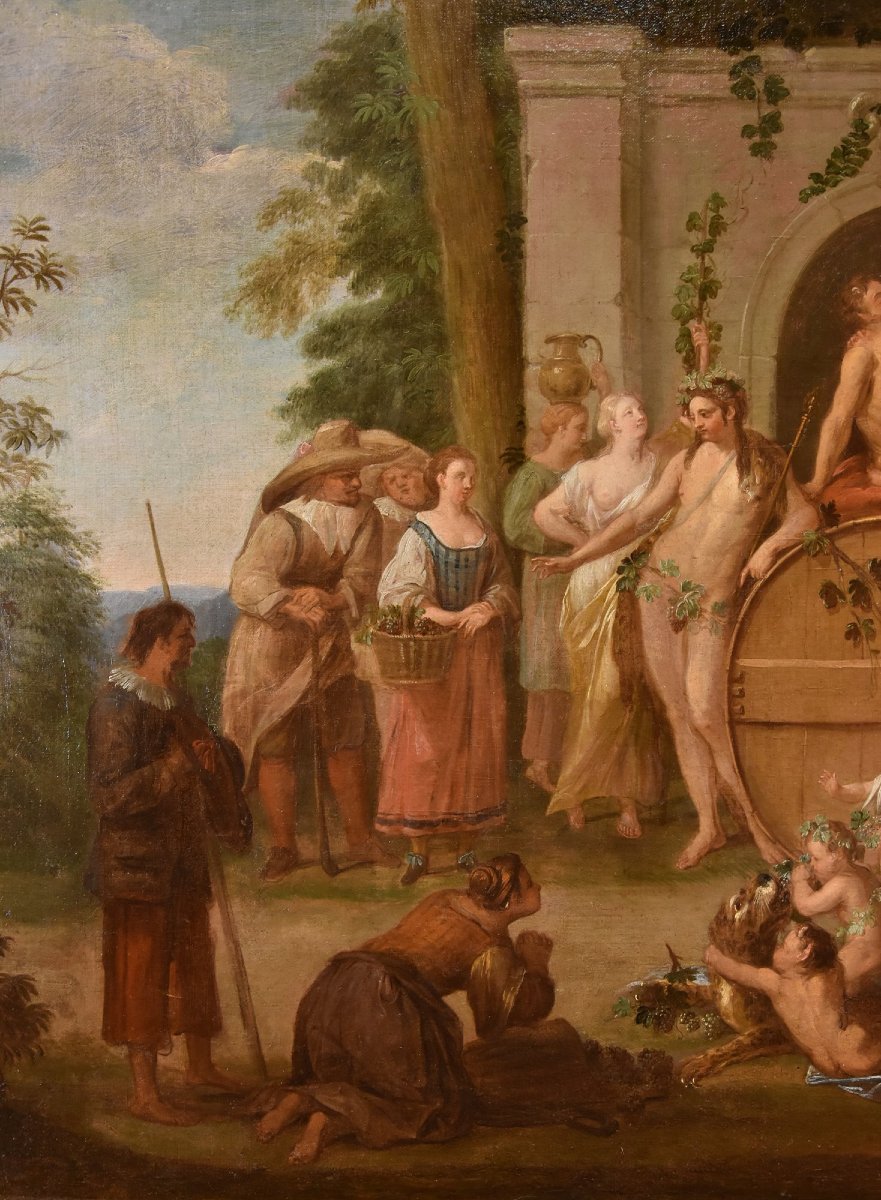
This scene serves as an imaginary portal between the earthly world and the mythological realm: on the left side, in fact, several peasants with baskets overflowing with grapes—the fruit of the harvest—watch the scene with wonder or reverence, suggesting the connection between daily life and the mythological realm, between the sacred and the profane.
ADDITIONAL INFORMATION:
The work is framed in a beautiful gilded wooden frame and is sold with a certificate of authenticity and a descriptive iconographic sheet.
We handle and arrange shipping for purchased artworks, both within Italy and internationally, using professional, insured carriers. If you would like to view this or other works in person, we would be delighted to welcome you to our new gallery in Riva del Garda, located at Viale Giuseppe Canella 18. We look forward to seeing you!
Please contact us for any information; we will be happy to assist you.
Follow us on:
https://www.instagram.com/galleriacastelbarco/?hl=it
https://www.facebook.com/galleriacastelbarco/
The Triumph of Bacchus
Oil on canvas (66 x 83 cm. – Framed: 84 x 101 cm.)
Full details (click HERE)
In this captivating painting, attributed to Jean Jacques Spoede (Antwerp, 1680 – Turin, 1752), we find ourselves immersed in the heart of a bacchanal, a pagan festival in honor of Bacchus, god of wine and intoxication—a Dionysian celebration that blends sensuality, mythology, and unbridled joy.
This is a fascinating subject with ancient origins, specifically from the propitiatory celebrations that took place at the end of the grape harvest as a rite of thanksgiving and fellowship to engage the farming community through dancing and singing, often accompanied by theatrical performances dedicated to the veneration of Bacchus, due to his ancestral ties to the Roman god of wine.
A Flemish painter active in Italy, Spoede is known for his ability to blend Northern precision with the elegance and theatricality of the Italian Baroque. After moving to Turin, he worked for the court of the House of Savoy, distinguishing himself with his mythological and allegorical scenes, and our painting is a perfect example of this: refined, cultured, yet also surprisingly sensual.
A painting of his that is very similar in subject and detail is currently on display at the National Museum in Poznań; it was painted between 1720 and 1730 (oil on canvas, 120 x 160 cm).
LINK: https://commons.wikimedia.org/wiki/File:Spoede_Bacchanals.jpg *
The image offers us an opulent and vibrant vision, with a work that celebrates the beauty of the body, the joy of the senses, and the freedom of the spirit—a true apotheosis of the myth of Bacchus—transporting the viewer to a timeless universe where myth and nature, art and desire merge in an eternal embrace.
At the center of the composition, we see a monumental wine barrel adorned with vine shoots, evoking a profane altar, around which an exuberant dance of bodies unfolds, accompanied by the music of flutes and tambourines. Semi-nude bodies and mythological figures, including satyrs and nymphs, intertwine in a whirlwind of movement, music, and pleasure. A satyr in the center, crowned with vine leaves, raises his cup to the sky in an ecstatic gesture, evoking the spirit of Bacchus and celebrating wine as divine nectar.
On the ground, children—both satyrs and humans—play among clusters of grapes, personifying innocence lost in sensual lust, and a leopard, alluding to the wild and primordial energy that characterizes these festivities.
The setting is lush: verdant nature embraces an architectural fountain in the background, almost like a forgotten temple, now reborn in the Dionysian revelry. A golden light, typical of Baroque painting, caresses the bodies and faces, enhancing the sensuality and euphoria of the moment.
This scene serves as an imaginary portal between the earthly world and the mythological realm: on the left side, in fact, several peasants with baskets overflowing with grapes—the fruit of the harvest—watch the scene with wonder or reverence, suggesting the connection between daily life and the mythological realm, between the sacred and the profane.
ADDITIONAL INFORMATION:
The work is framed in a beautiful gilded wooden frame and is sold with a certificate of authenticity and a descriptive iconographic sheet.
We handle and arrange shipping for purchased artworks, both within Italy and internationally, using professional, insured carriers. If you would like to view this or other works in person, we would be delighted to welcome you to our new gallery in Riva del Garda, located at Viale Giuseppe Canella 18. We look forward to seeing you!
Please contact us for any information; we will be happy to assist you.
Follow us on:
https://www.instagram.com/galleriacastelbarco/?hl=it
https://www.facebook.com/galleriacastelbarco/
8 800 €
Period: 18th century
Style: Louis 14th, Regency
Condition: Excellent condition
Material: Oil painting
Width: encadré 101 cm.
Height: encadré 84 cm.
Reference (ID): 1812850
Availability: In stock
Print