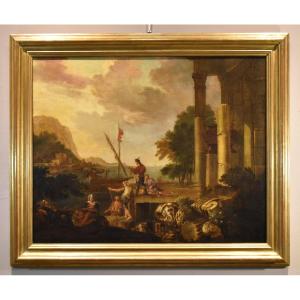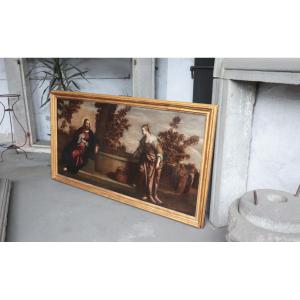
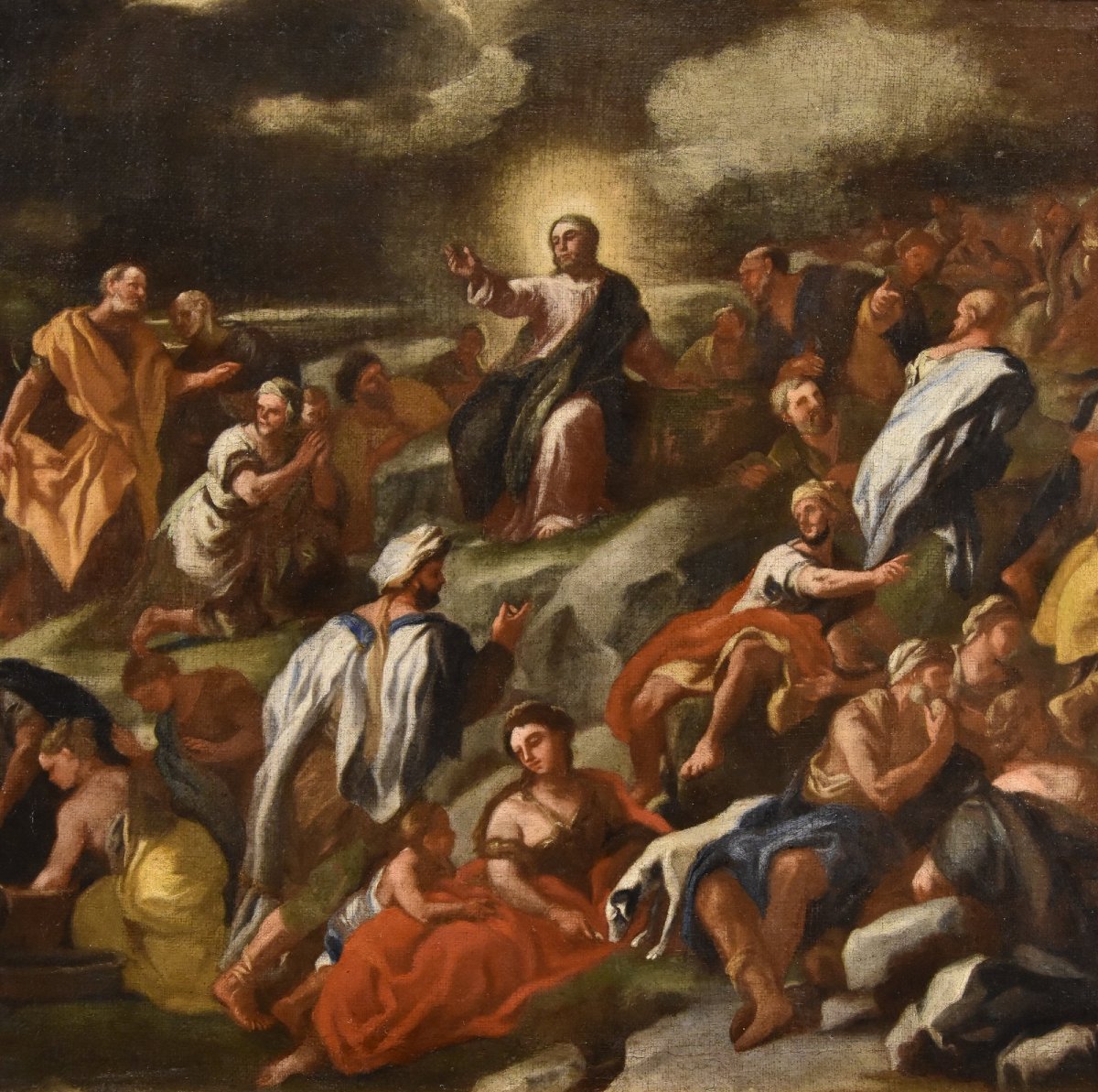
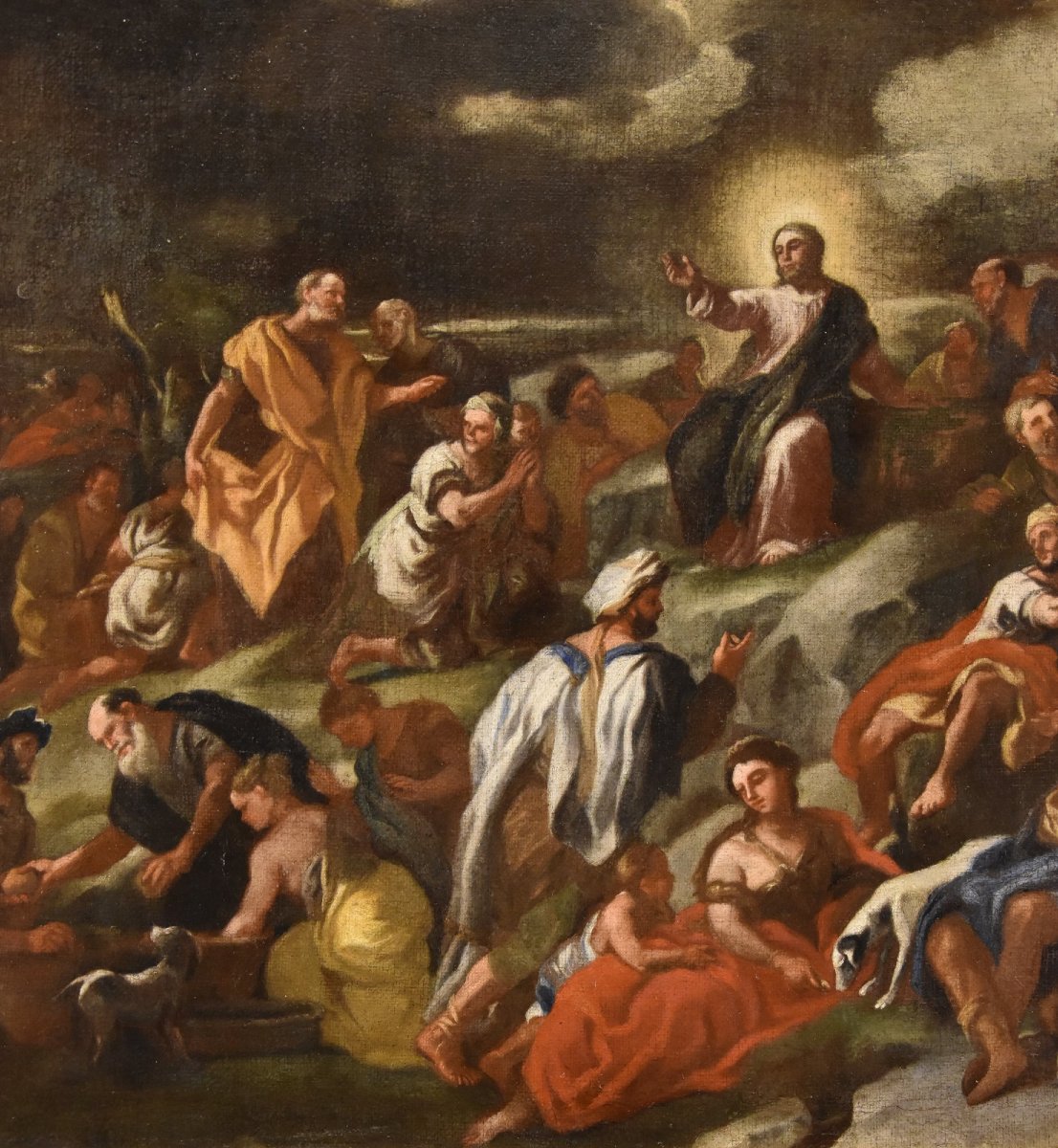
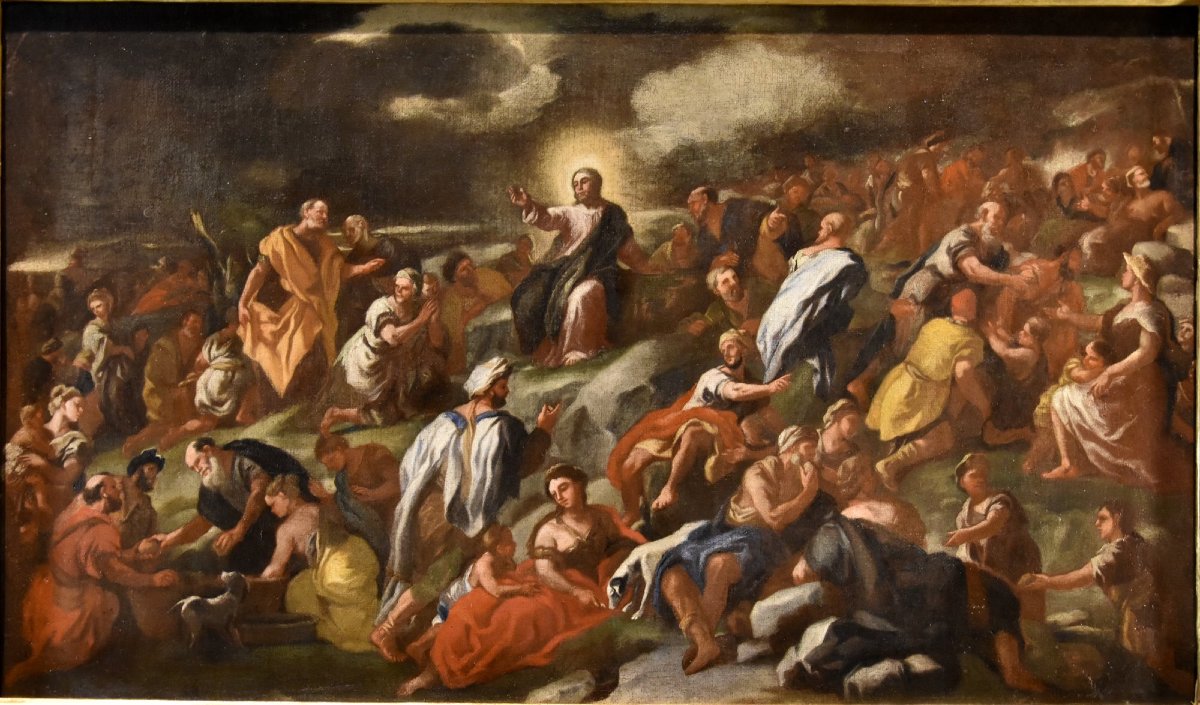
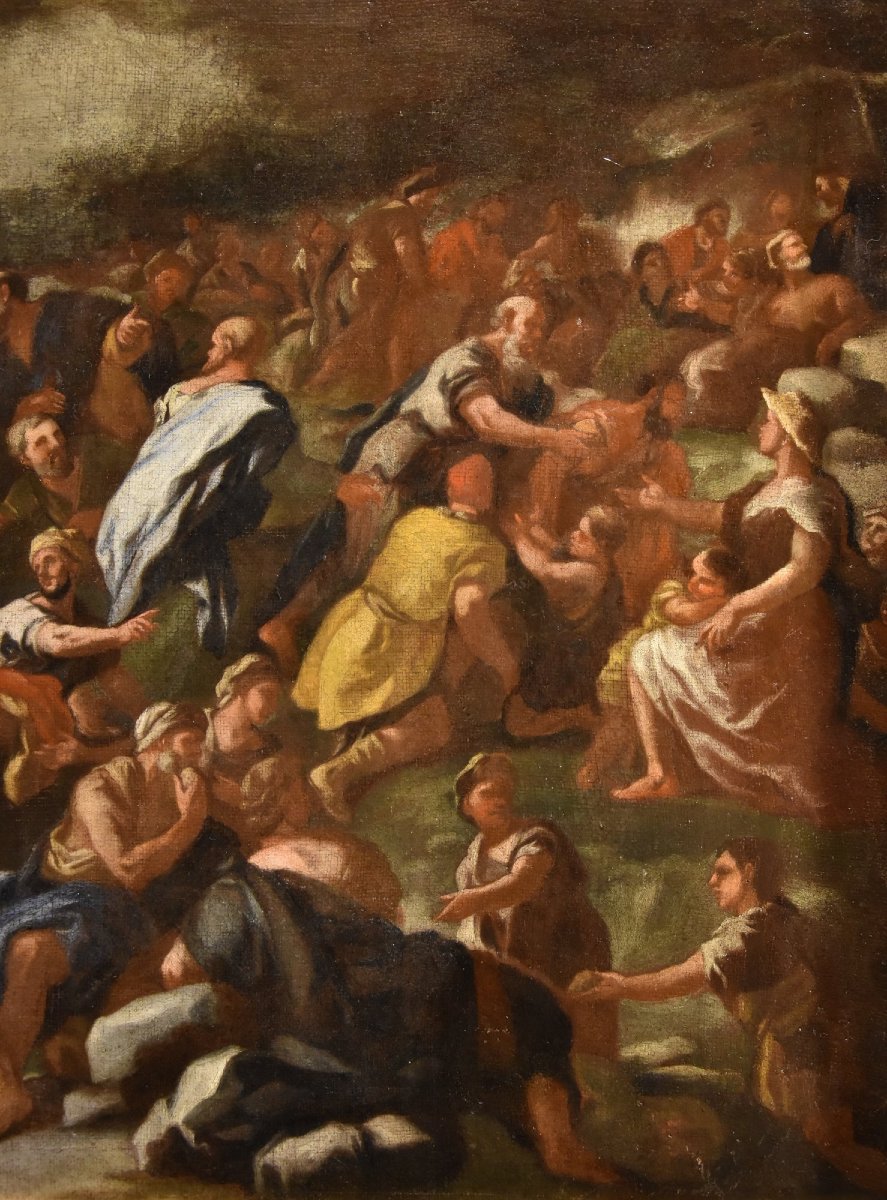


The Multiplication Of The Loaves And Fishes, Angelo Solimena (canale Di Serino, 1629 – Barra, 1716)
Angelo Solimena (Canale di Serino, 1629 – Barra, 1716)
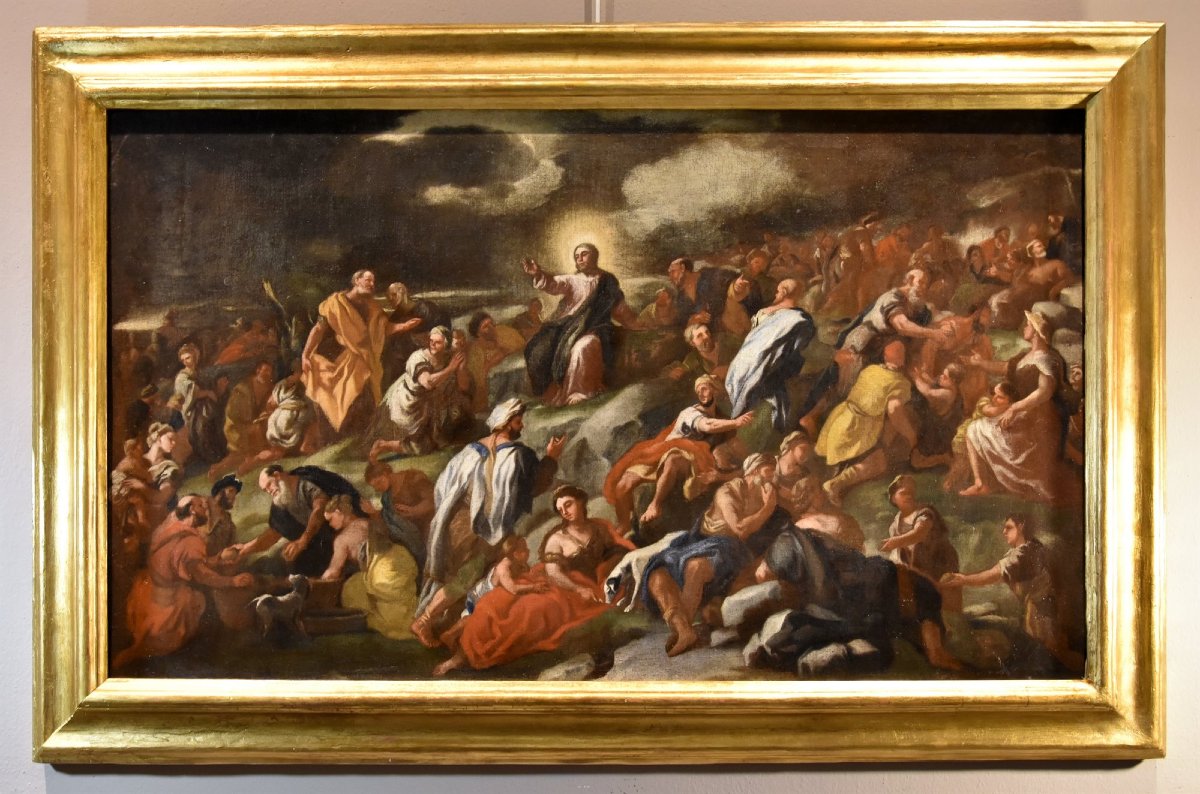
The Multiplication of the Loaves and Fishes
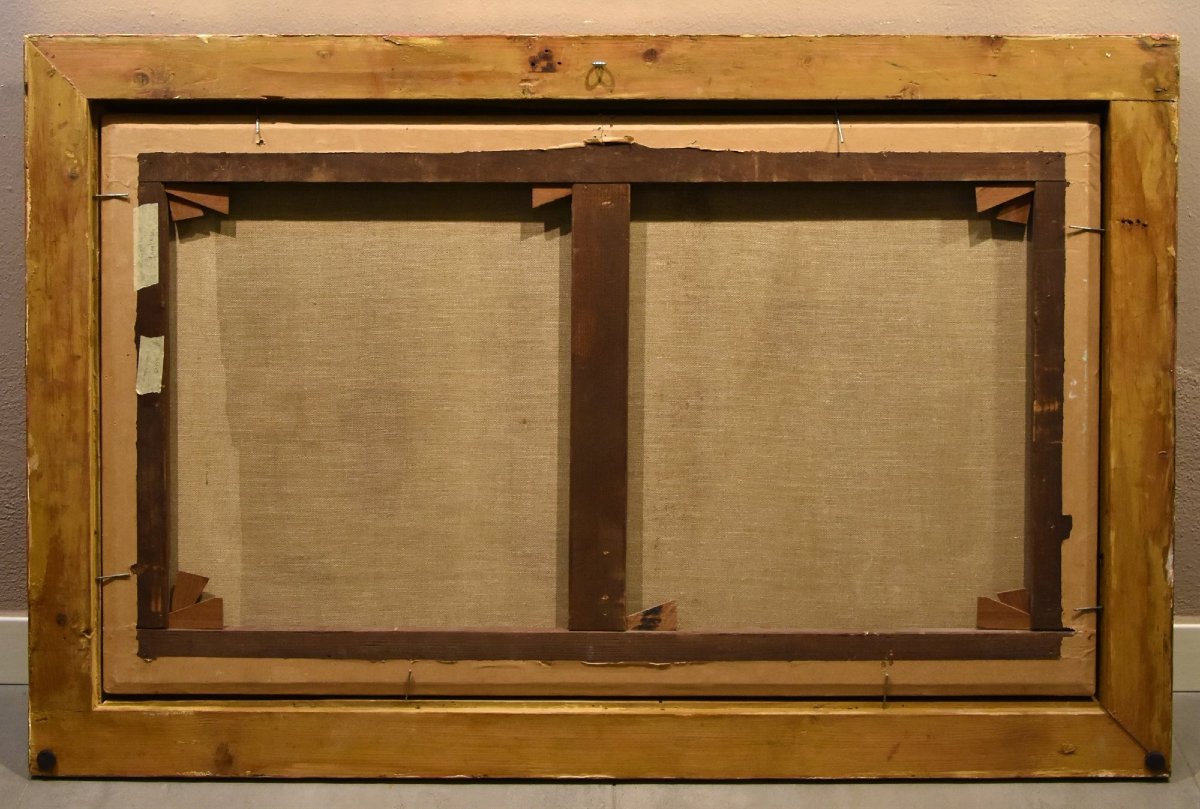
Oil on canvas
60 x 102 cm. - Framed: 76 x 116 cm.
Work accompanied by an expert report by Prof. Emilio Negro
Complete details of the painting (click HERE)
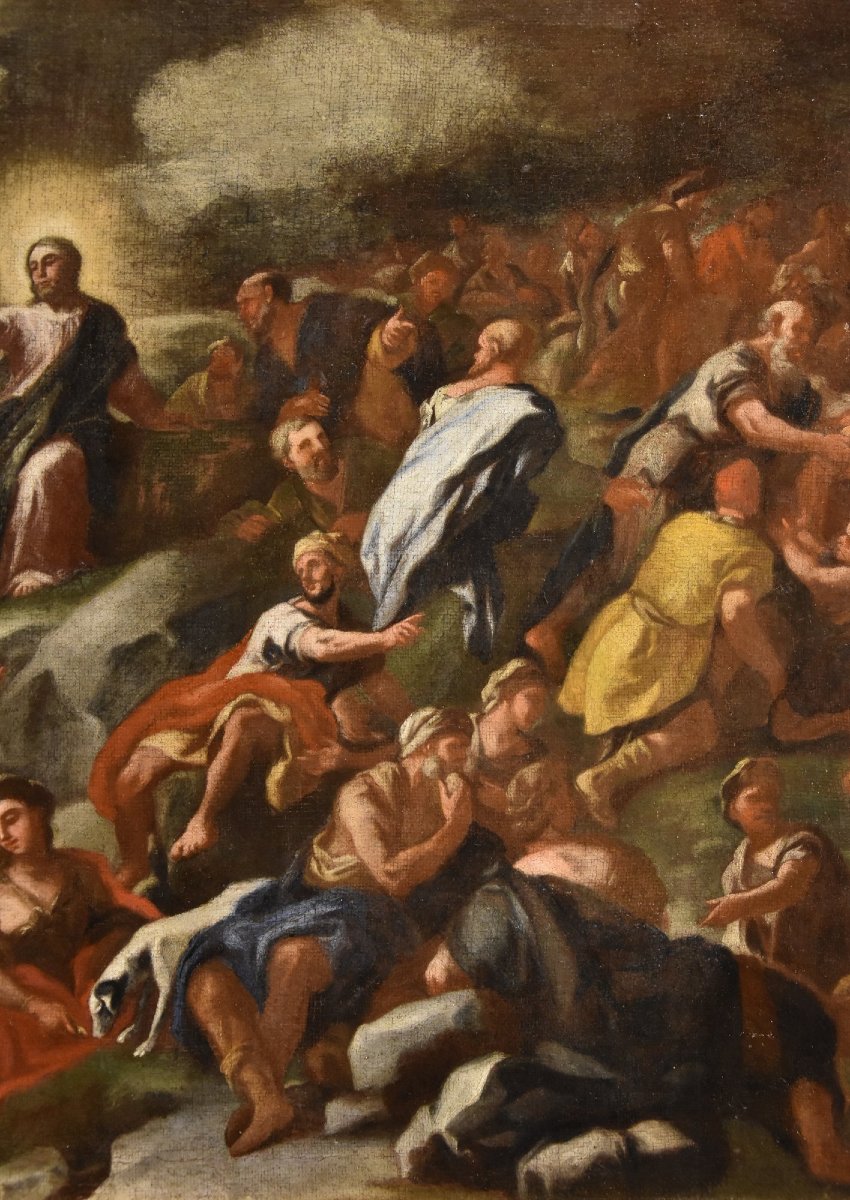
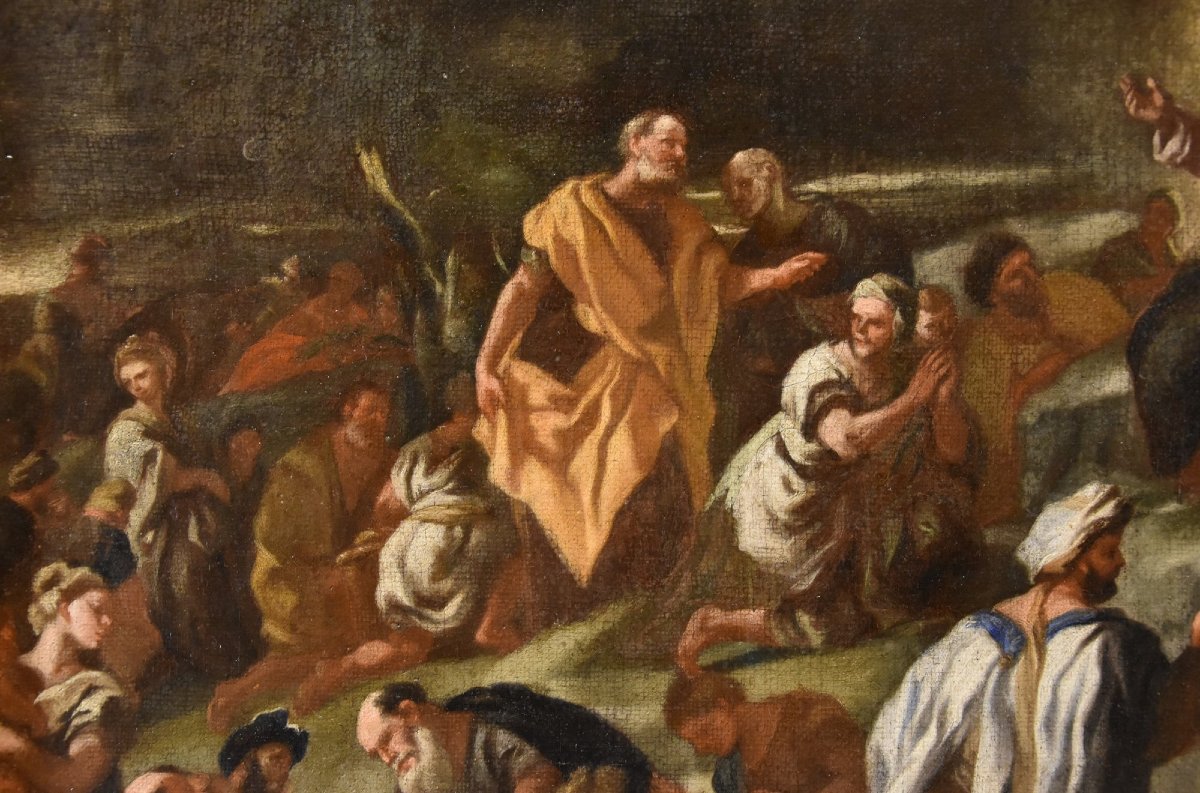
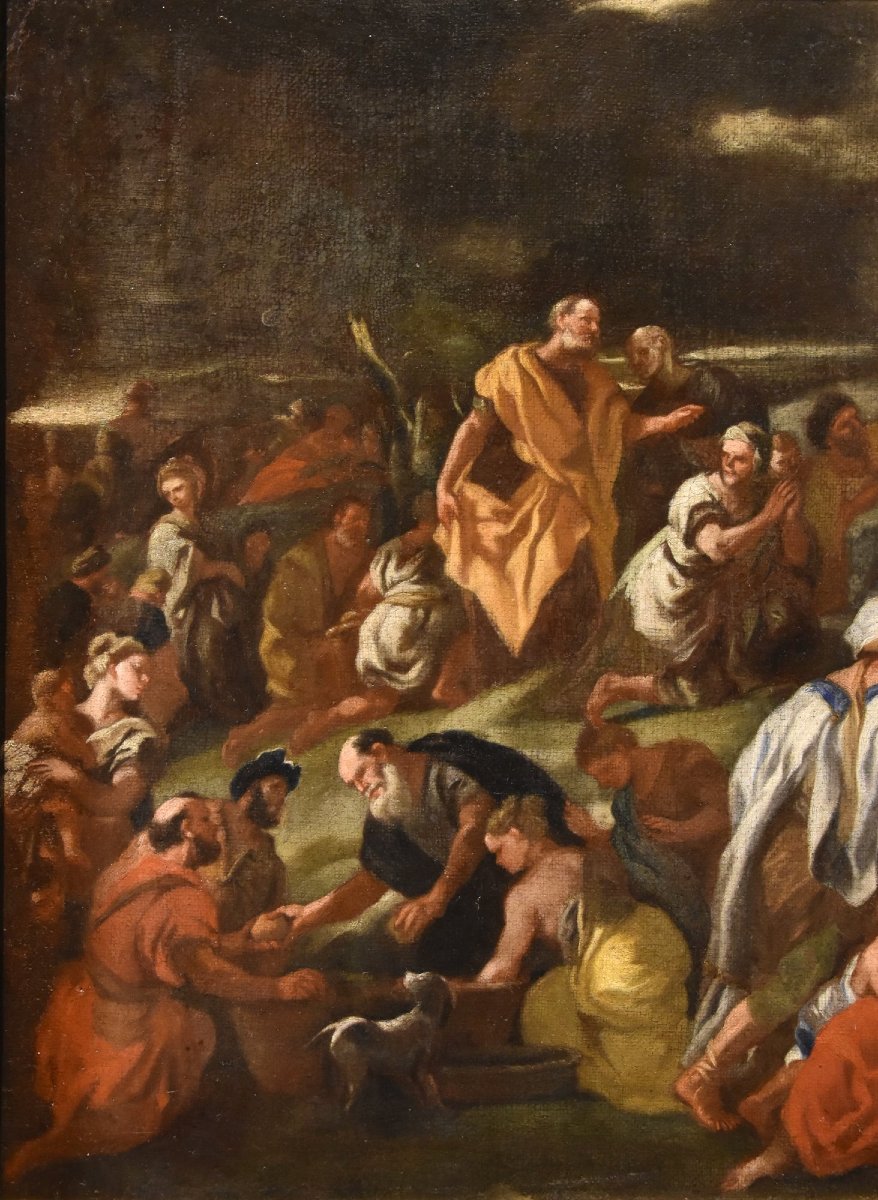
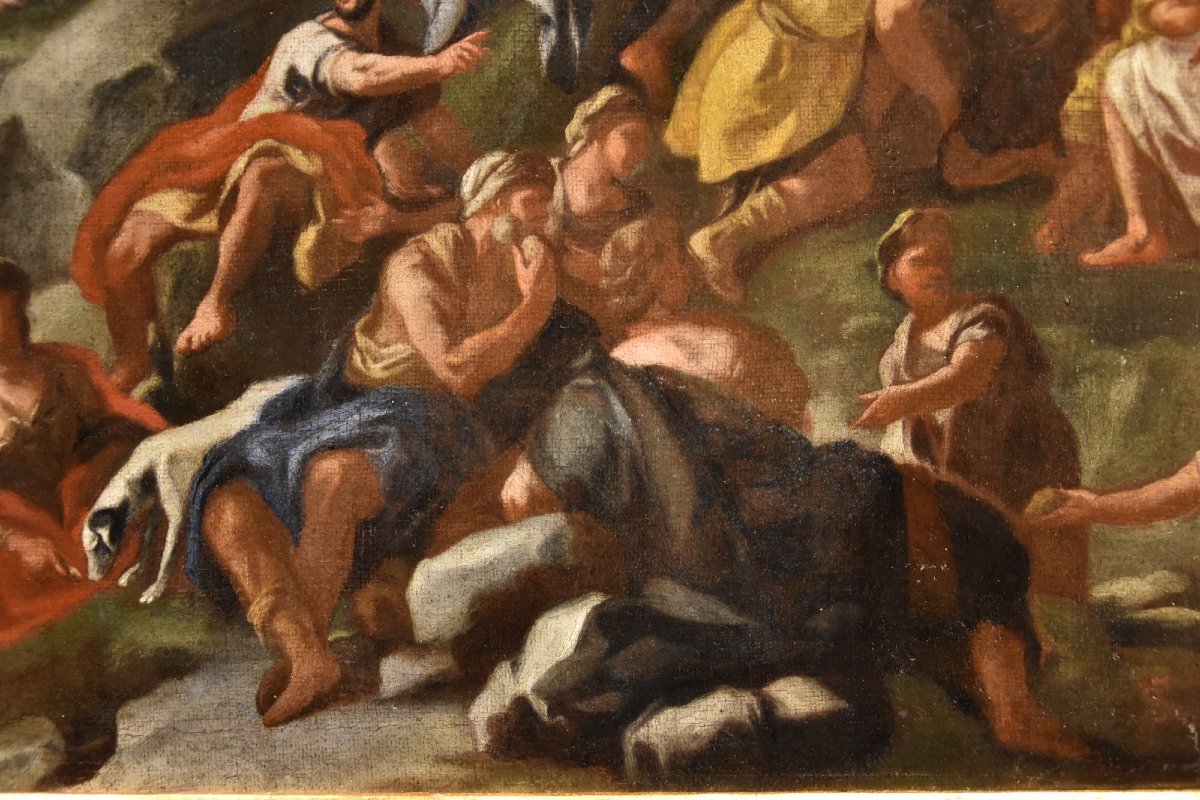
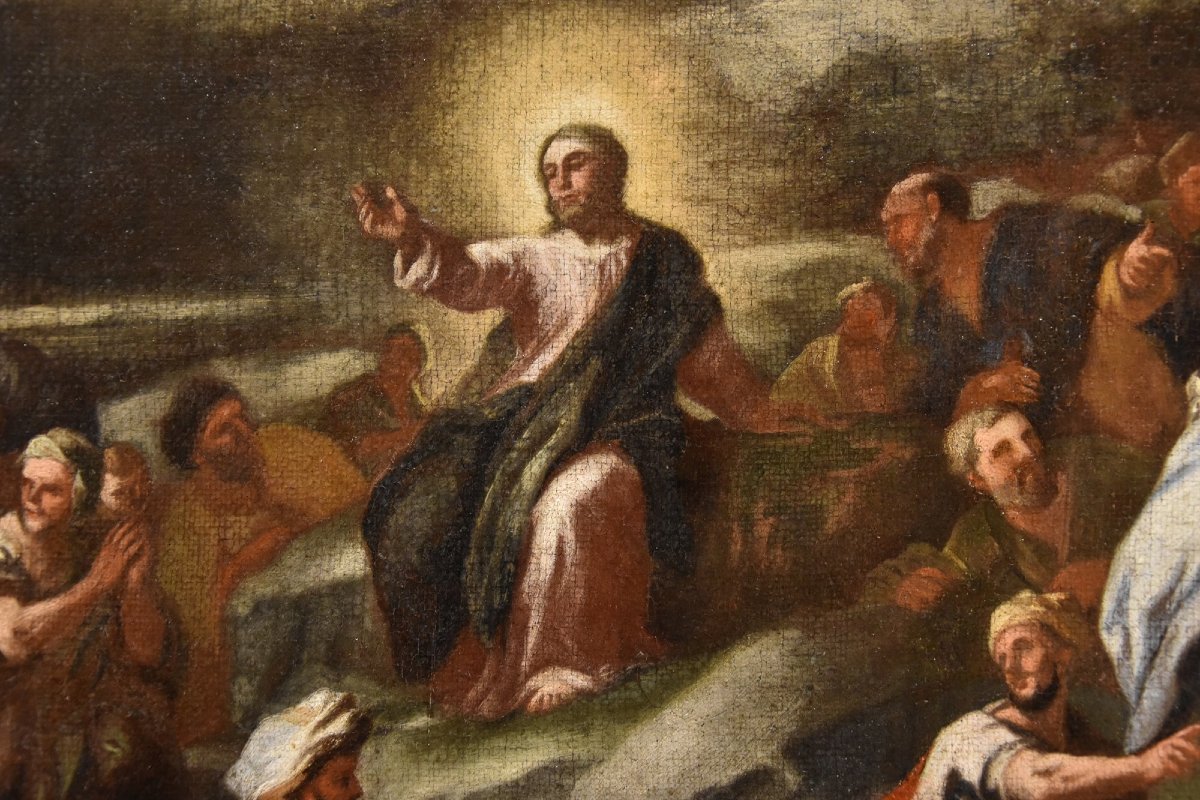
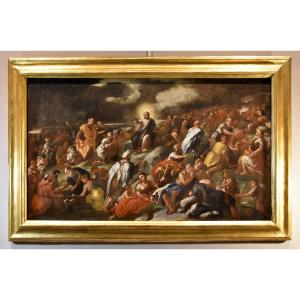
The painting depicts the miracle of the “Multiplication of the Loaves and Fishes,” a biblical episode recounted in all four Gospels and one of the most emblematic events of Jesus’ ministry.
The iconography used in this painting draws inspiration from St. John (6:1–13), which recounts that Christ, accompanied by his disciples, arrived in Tiberias, where a crowd of over five thousand people—who had been following him and were now exhausted—urgently needed to be fed.
The only provisions available were five barley loaves and two fish that a boy was keeping in a basket—far too few to feed such a large crowd: Jesus asked him to bring them to Him, ordered the people to sit down, took the five loaves, looked up to heaven, gave thanks, and broke them. Then he instructed his disciples to distribute them to everyone present, who miraculously ate their fill.
Regarding the identification of the painting’s artist, as Professor Emilio Negro points out in his study of the work, we are looking at a depiction that highlights the stylistic features characteristic of Neapolitan Arcadian painting between the 17th and 18th centuries, derived from familiarity with the works of Francesco Guarino and, above all, those of Luca Giordano.
In fact, our canvas replicates (albeit with variations—the flying angels are missing, the colors are different, as is the shape of the large clouds, etc.) a similar, larger-scale composition painted by Giordano in 1705 for the Neapolitan church of Santa Maria Donnaregina Nuova (link: https://www.museodiocesanonapoli.com/complesso-monumentale-donnaregina/moltiplicazione-dei-pani-luca... ).
These differences should come as no surprise, since it is well known that many artists used to replicate, with certain changes, the best-known works of other masters, from whom they drew inspiration.
In particular, based on its stylistic characteristics, the painting can be linked to the style of Angelo Solimena (Canale di Serino 1629 – Barra, 1716), the founder of a family of artists (father of Francesco Solimena, also known as Abbot Ciccio).
He worked primarily in the Salerno area, but it was his move to Nocera that brought about the most interesting phase of his artistic career. After receiving commissions from nobles and clergy, toward the end of his career he had the opportunity to work alongside his son Francesco, through whom he was introduced to the dazzling painterly techniques adopted by Luca Giordano.
His painting is characterized by this unique style, featuring pronounced play of light and a dry yet effective rendering of drapery: This painting serves as an emblem of his artistic style, acting as an ideal bridge between the techniques of his master, Francesco Guarino, and the Baroque and Neo-Venetian pictorial language of Luca Giordano and, later, Francesco Solimena himself.
ADDITIONAL INFORMATION:
The work is sold complete with a gilded wooden frame and is accompanied by a certificate of authenticity and a descriptive iconographic sheet.
We handle and arrange the shipping of purchased works, both within Italy and internationally, using professional, insured carriers. You can also view the painting at our gallery in Riva del Garda; we would be delighted to welcome you and show you our collection of artworks.
Please feel free to contact us, with no obligation, for any additional information.
Follow us on:
INSTAGRAM https://www.instagram.com/galleriacastelbarco/?hl=it
FACEBOOK https://www.facebook.com/galleriacastelbarco/
Period: 17th century
Style: Louis 14th, Regency
Condition: Excellent condition
Material: Oil painting
Width: encadré 116 cm.
Height: encadré 76 cm.
Reference (ID): 1807868
Availability: In stock