

A Painter In The Style Of Leonardo (early 16th Century), Madonna And Child
Artist: Cercle De Léonard De Vinci, Début Du Xvie Siècle - Attribuée à Bernardino De Conti (castelseprio, 1470 – Pavie, 1523)
A painter in the style of Leonardo, early 16th century
Attributed to Bernardino de Conti (Castelseprio, 1470 – Pavia, 1523)
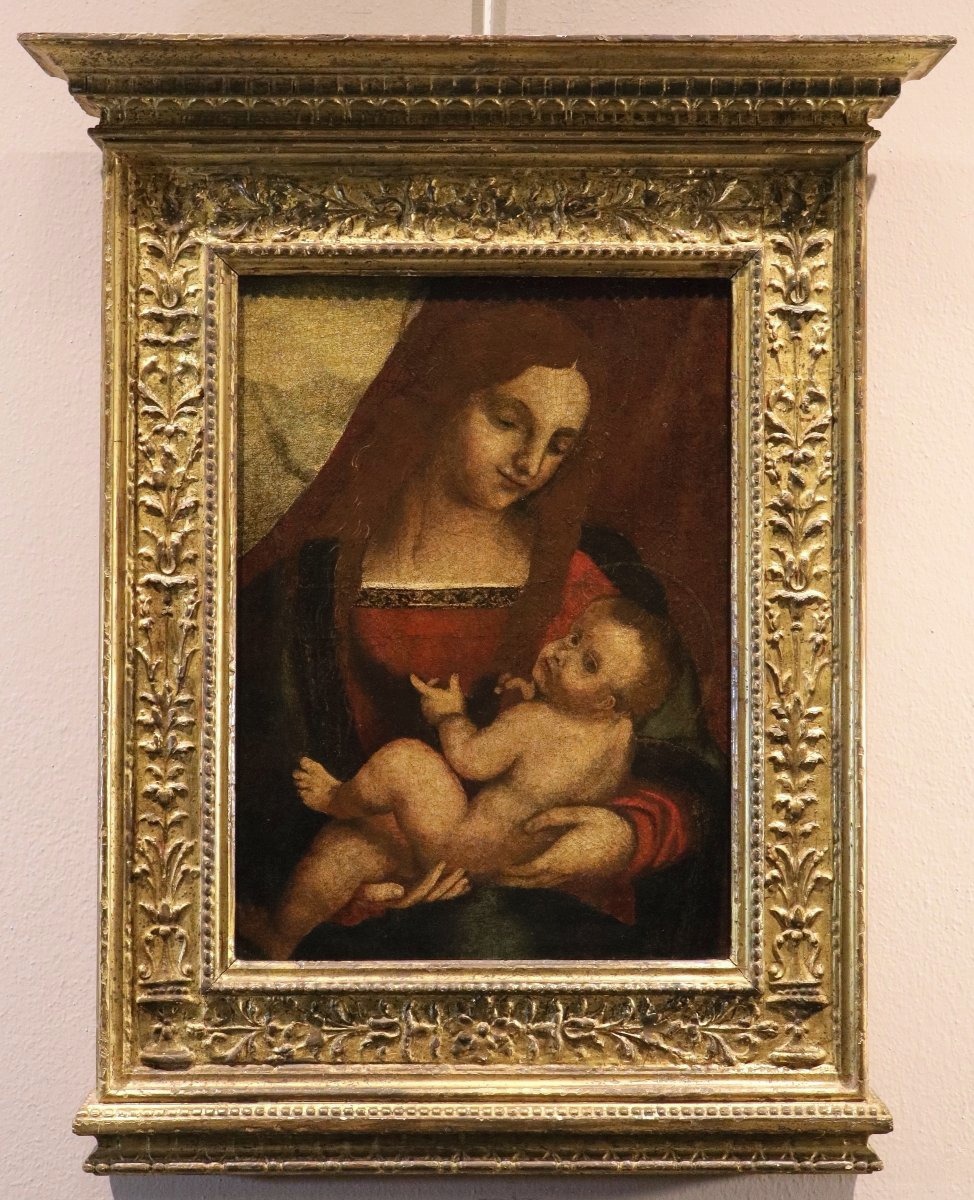
Madonna and Child
Oil on canvas
45 x 34 cm.
With frame: 71 x 57 cm.
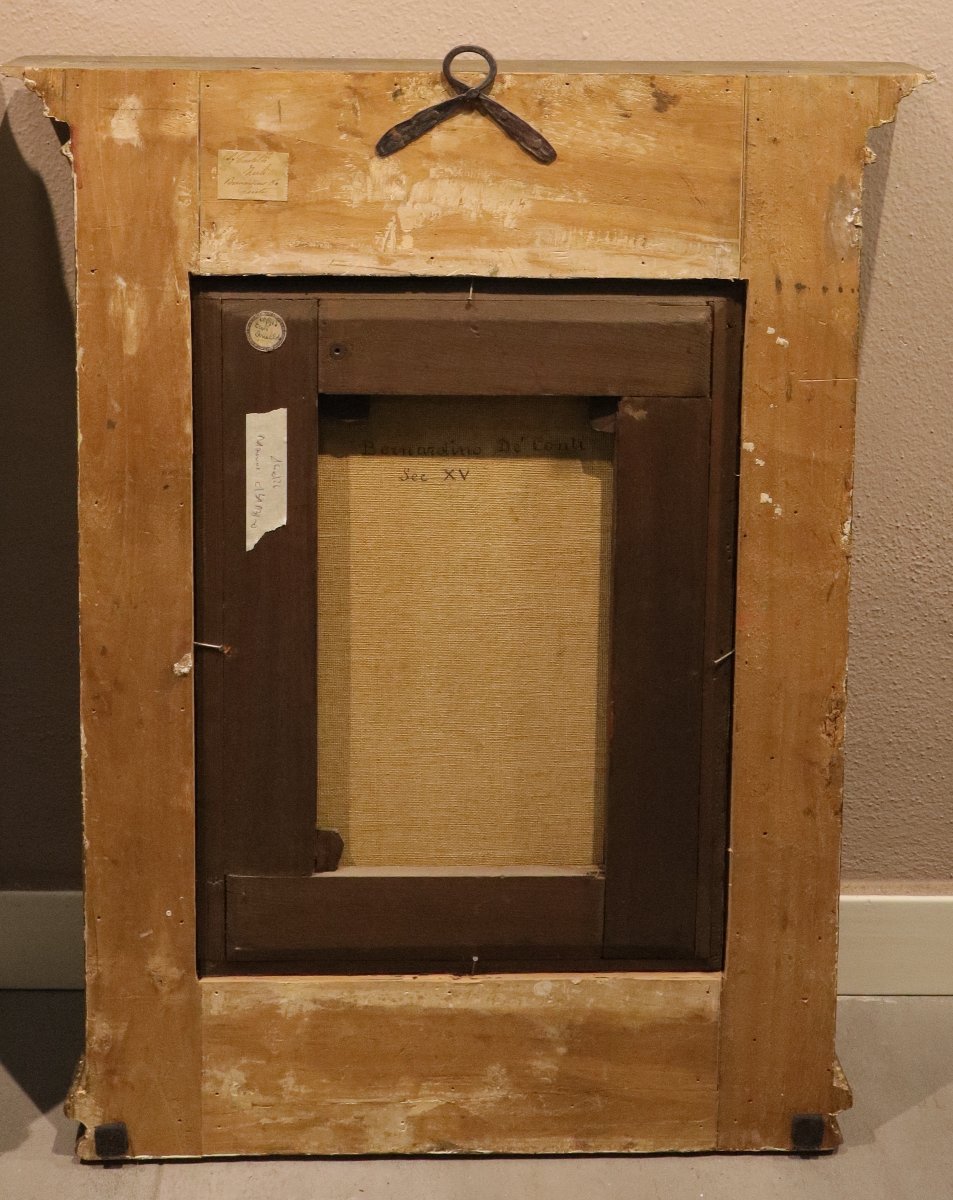
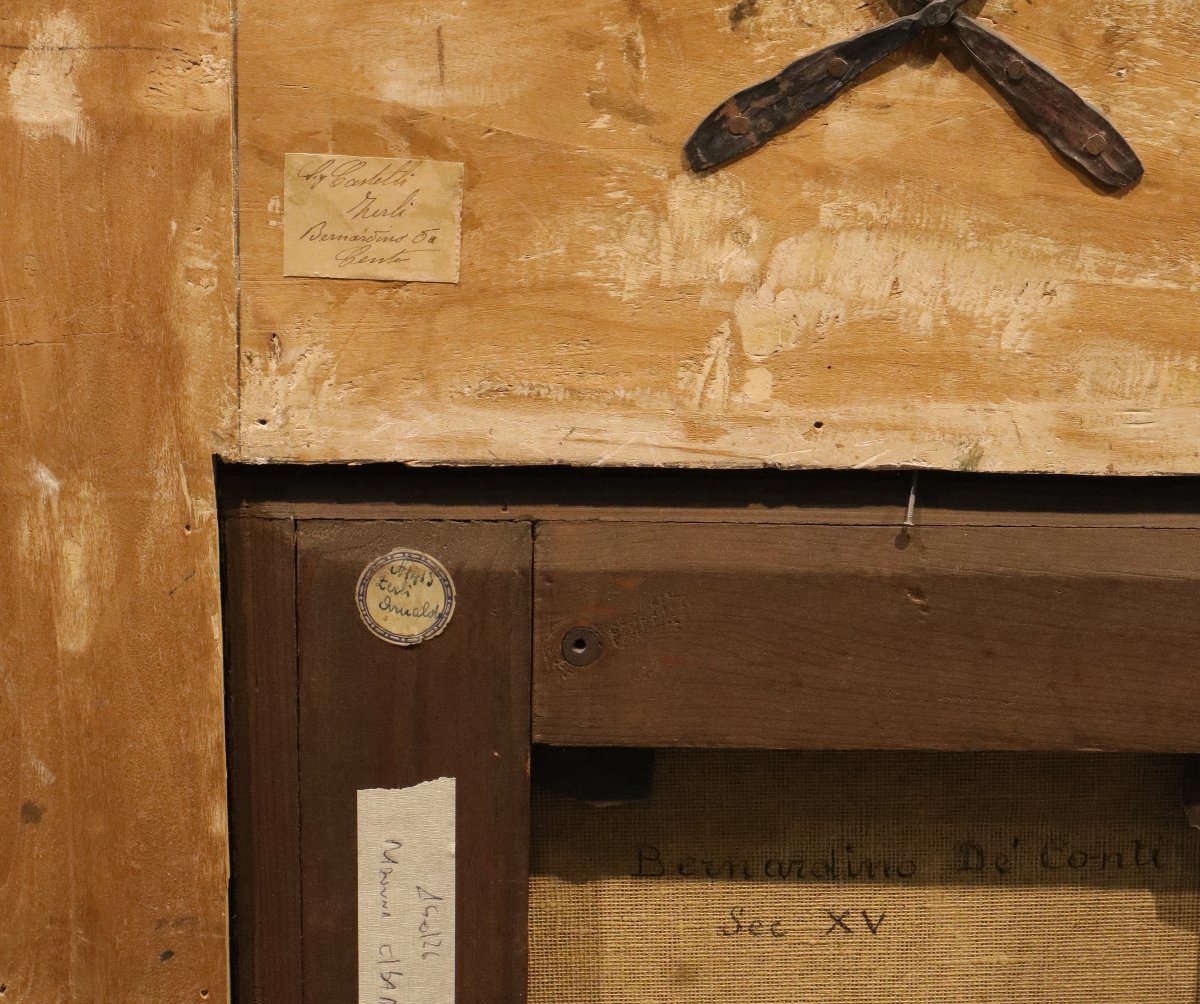
(On the reverse, antique labels of provenance: the Castelli Zerli Arnaldo)
COMPLETE DETAILS OF THE WORK (CLICK HERE)
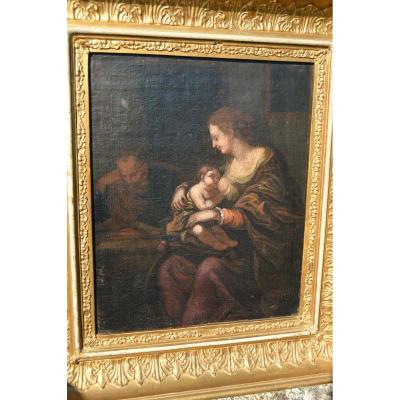
The exquisite Madonna and Child presented here, dating from around the early 16th century, is traditionally attributed to the Leonardo-school painter Bernardino de’ Conti (Castelseprio, 1470 – Pavia, 1523), one of the leading figures of the most glorious period of the Lombard Renaissance, famous above all as the official portraitist of the Sforza court in Milan.
His style represents a fascinating convergence between the solid classical Lombard tradition (represented by Vincenzo Foppa) and the revolutionary innovations brought to Milan by Leonardo da Vinci.
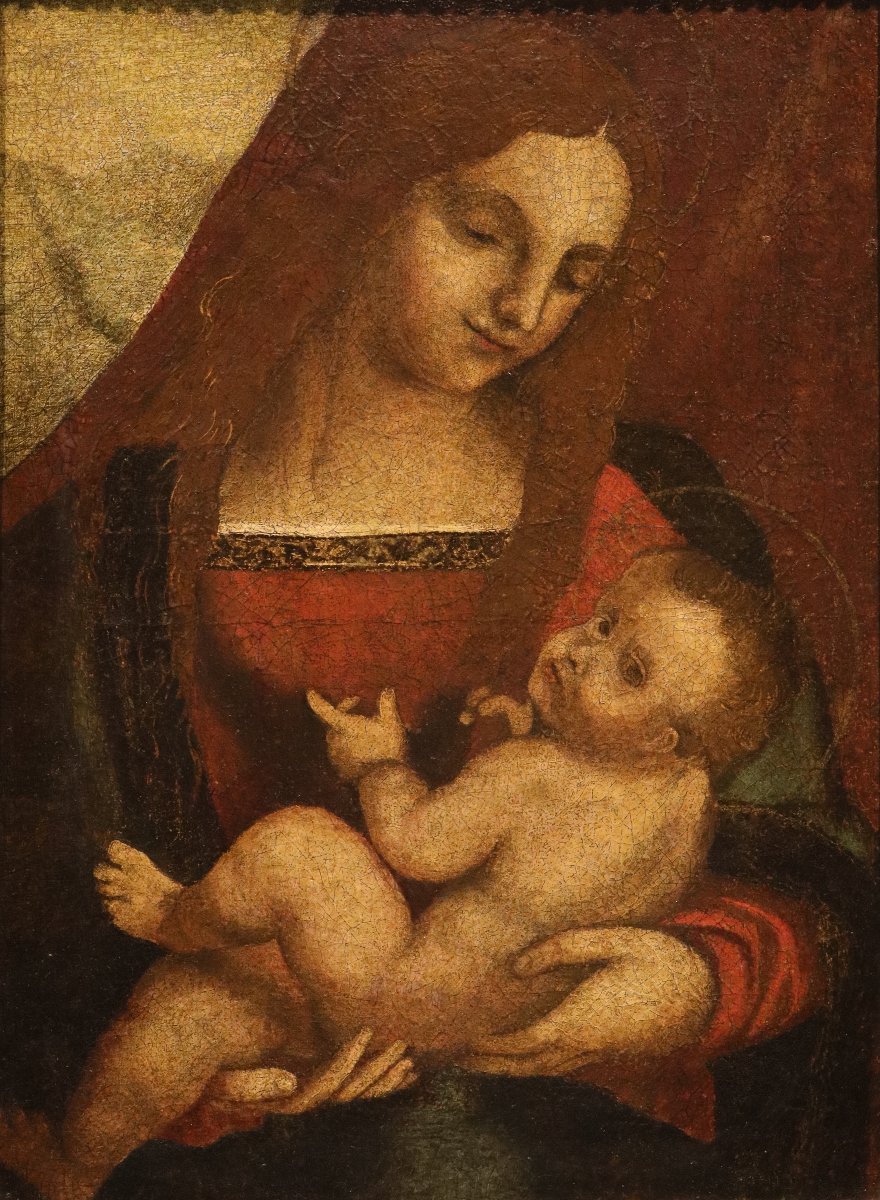
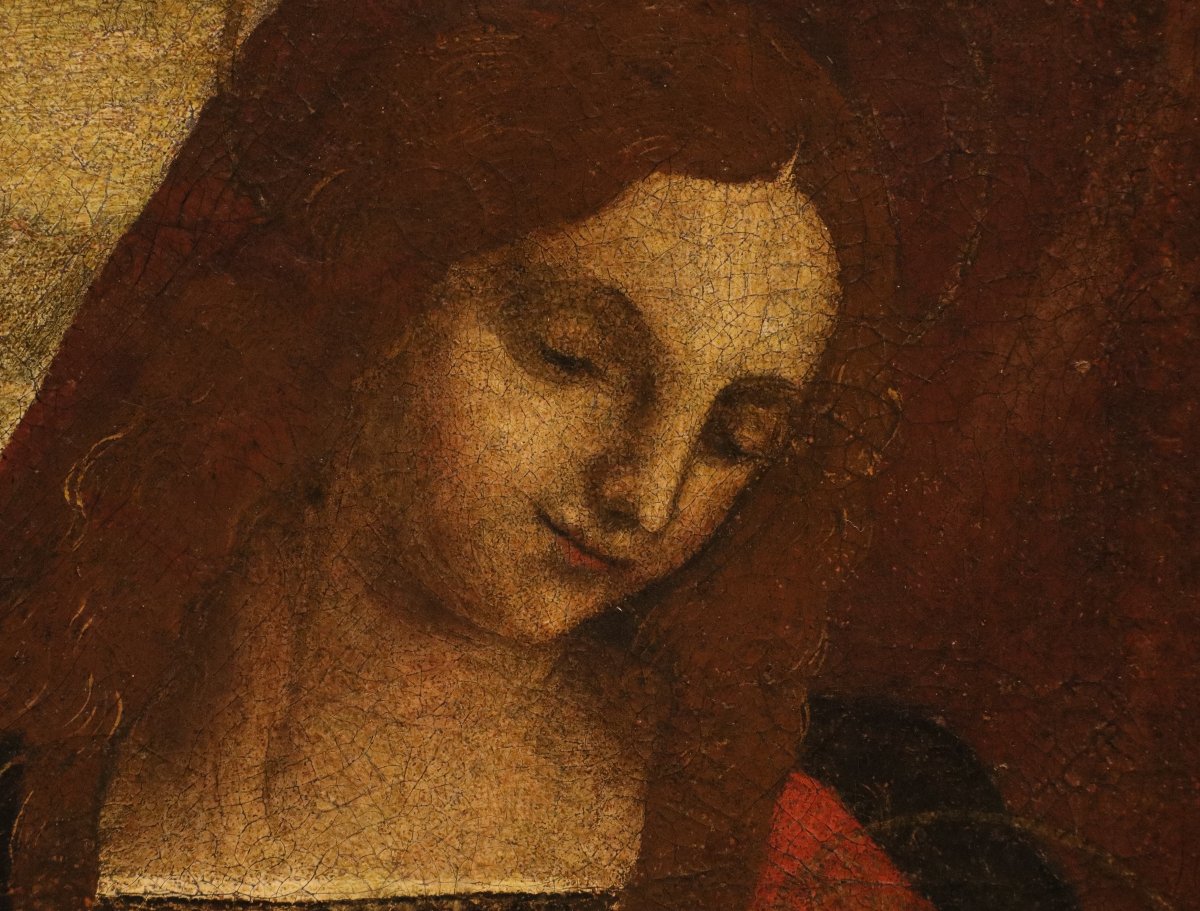
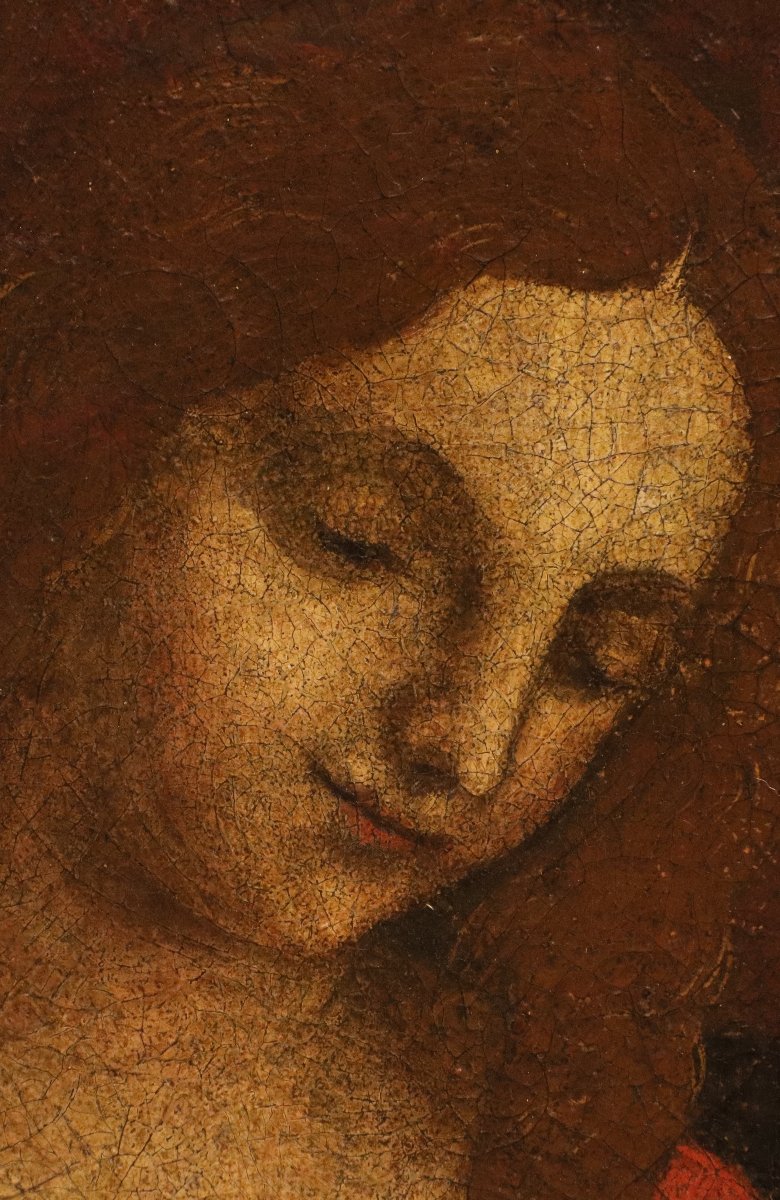
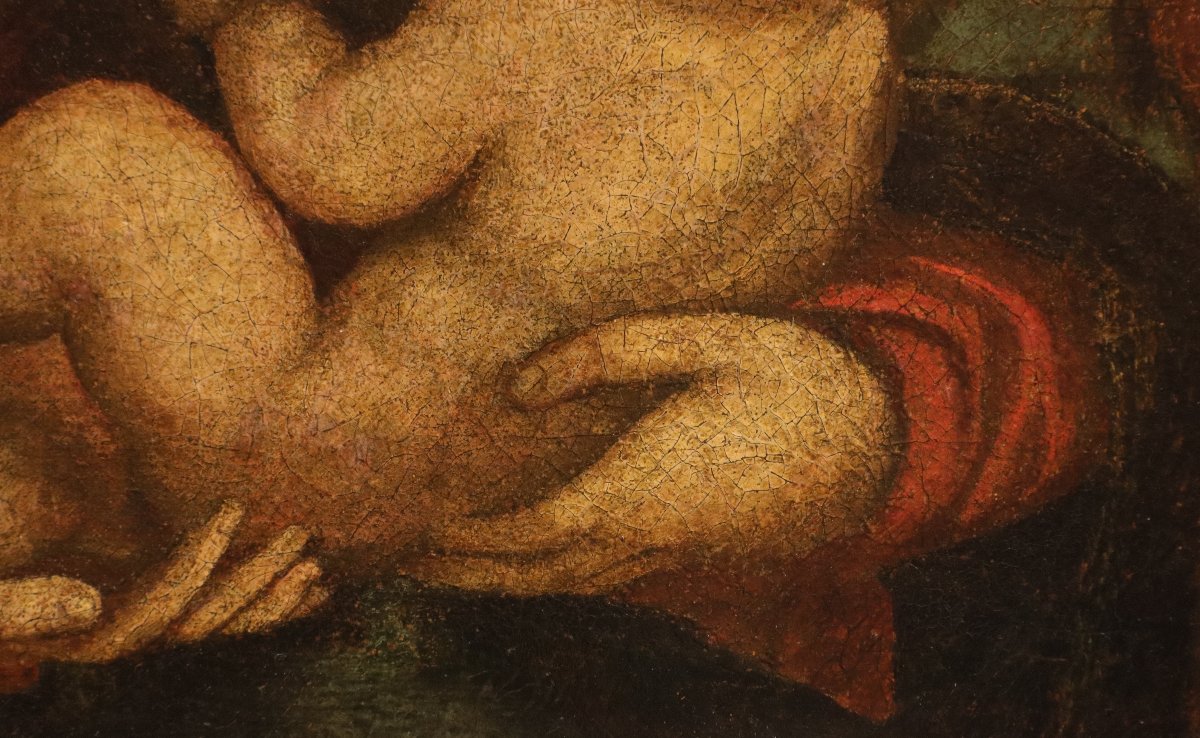
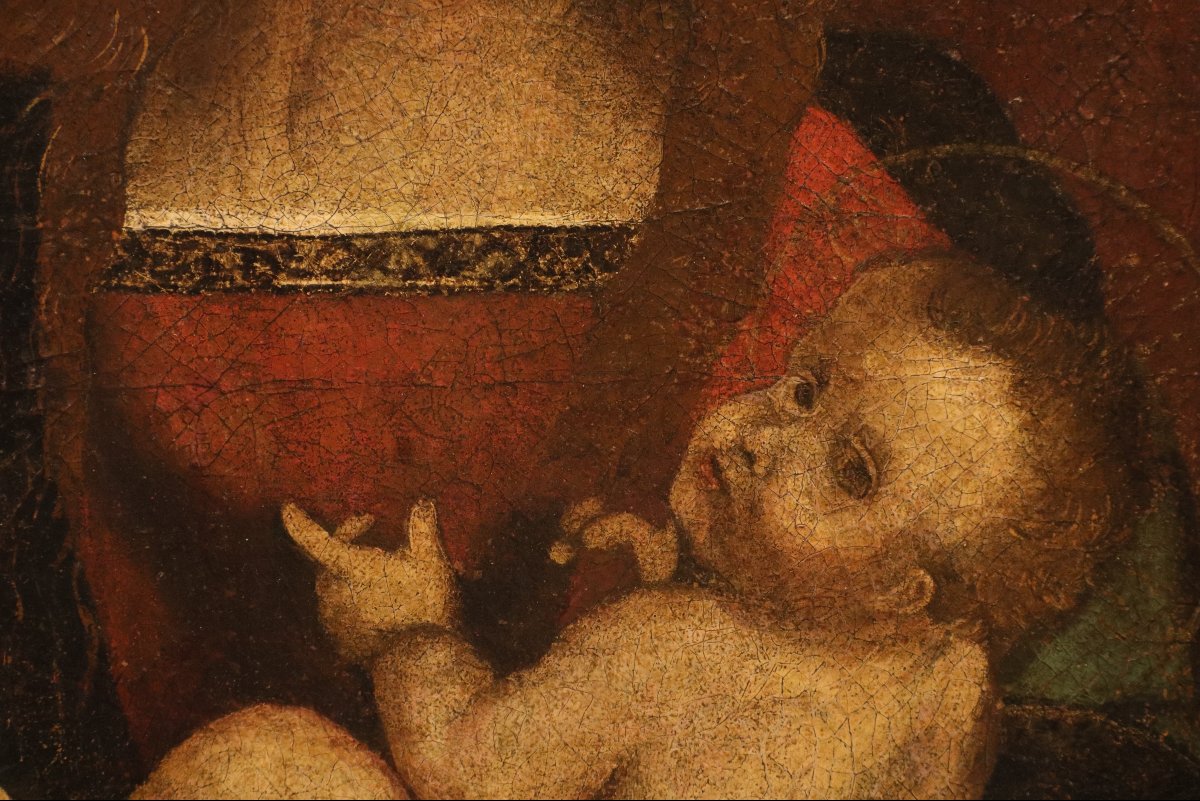
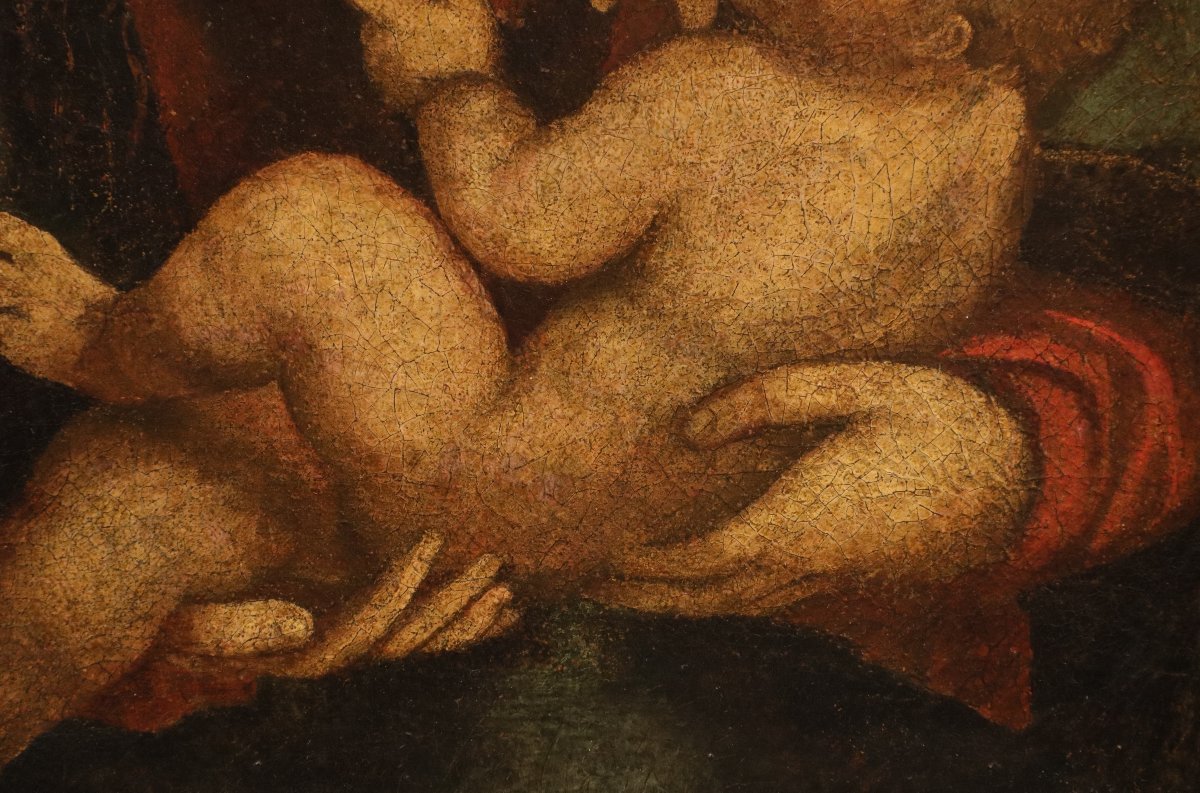
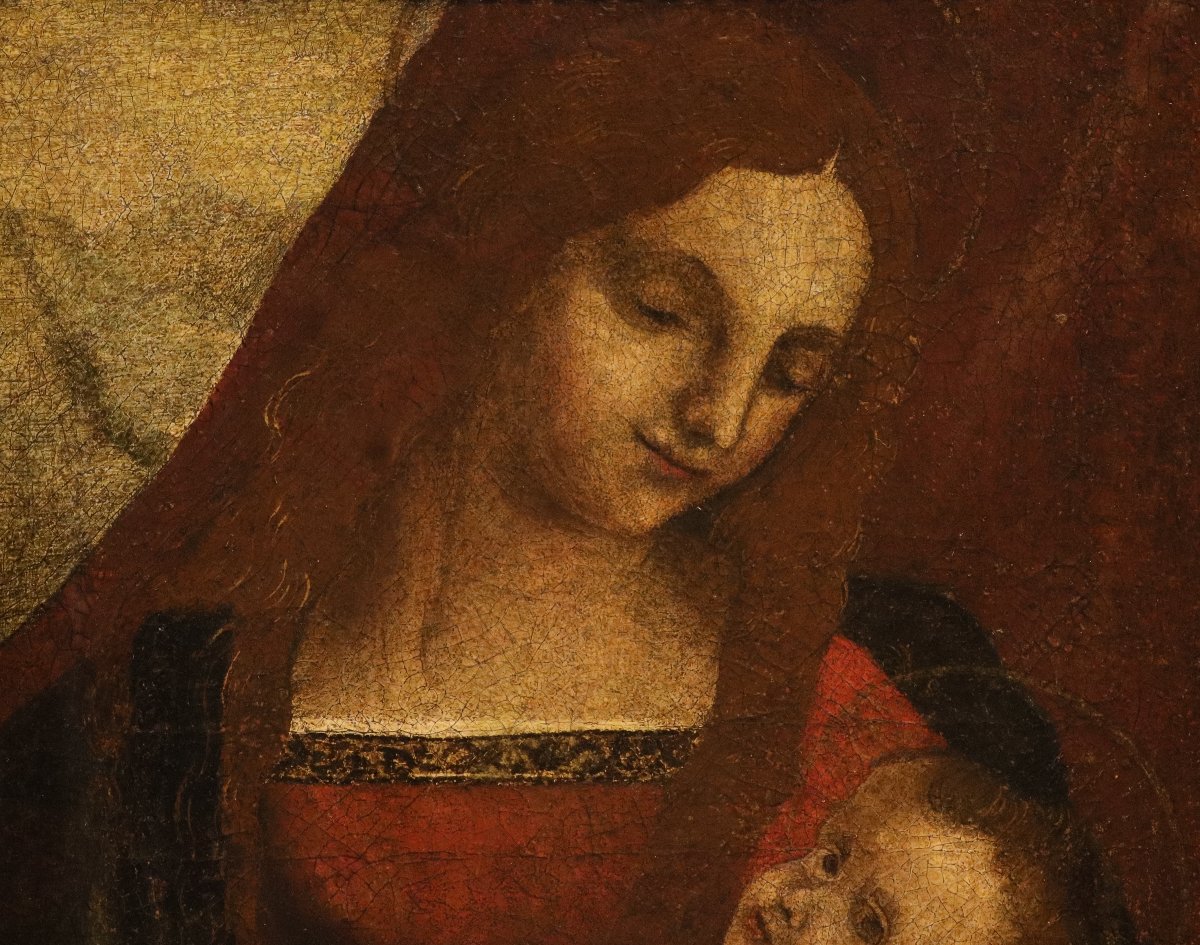
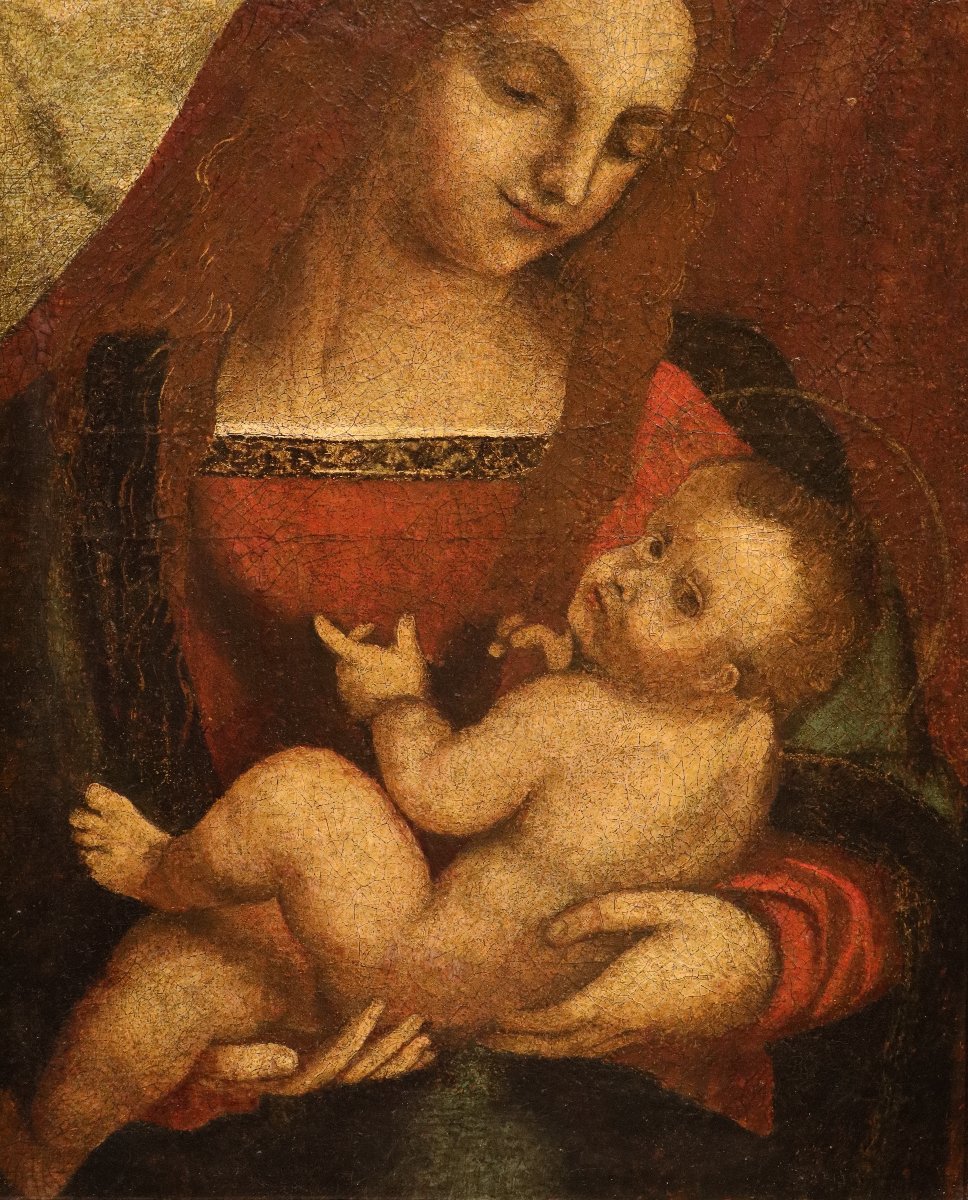
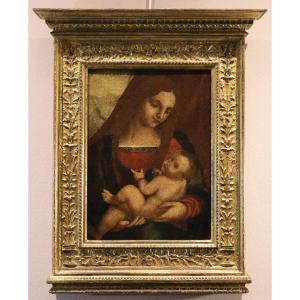
Returning to our Madonna and Child, we see the most beloved and widespread compositional structure of the Lombard Renaissance, in which great emphasis is placed on the affectionate bond between the Virgin—portrayed with half-closed eyes and a serene expression— and her son, held in her lap with extreme tenderness as she reaches out to him in a lively gesture.
The gentle facial features and soft chiaroscuro reflect the influence of Leonardo da Vinci on the 16th-century Lombard school.
We also see the well-balanced use of the sfumato technique—a technique invented by Leonardo—with its characteristic soft transition from one color to another, eliminating sharp outlines to define the edges: by softening the corners of the mouth and eyes, the faces take on an air of mystery and seem as if they are about to change expression at any moment.
Mary’s face reflects an intimate and melancholic suffering, a characteristic derived directly from Leonardo’s studies on the “moti dell’animo” (movements of the soul) and human expressiveness. Leonardo’s softness is combined with strong sculptural relief and sharp details, influenced by both Flemish painting and Northern Italian classicism.
ADDITIONAL INFORMATION:
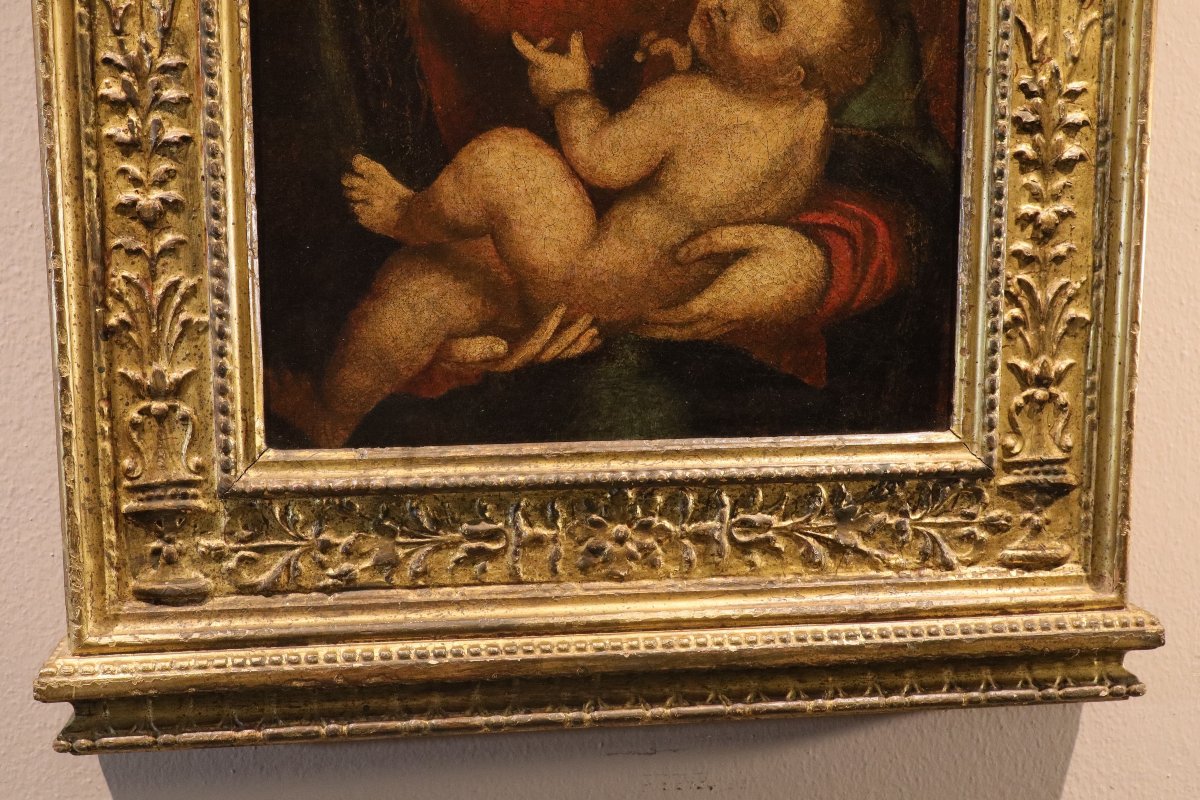
The painting is set in an elegant, gilded, and carved wooden frame in the Renaissance style; the frame is not antique.
The work is sold with a certificate of authenticity and a descriptive iconographic sheet.
We arrange and organize the shipping of purchased works, both within Italy and internationally, through professional and insured carriers.
Please contact us for any information; we will be happy to assist you. You can also view the painting at our gallery in Riva del Garda; we would be delighted to welcome you and show you our collection of artworks.
Follow us on:
https://www.instagram.com/galleriacastelbarco/?hl=it
https://www.facebook.com/galleriacastelbarco/
Attributed to Bernardino de Conti (Castelseprio, 1470 – Pavia, 1523)
Madonna and Child
Oil on canvas
45 x 34 cm.
With frame: 71 x 57 cm.
(On the reverse, antique labels of provenance: the Castelli Zerli Arnaldo)
COMPLETE DETAILS OF THE WORK (CLICK HERE)
The exquisite Madonna and Child presented here, dating from around the early 16th century, is traditionally attributed to the Leonardo-school painter Bernardino de’ Conti (Castelseprio, 1470 – Pavia, 1523), one of the leading figures of the most glorious period of the Lombard Renaissance, famous above all as the official portraitist of the Sforza court in Milan.
His style represents a fascinating convergence between the solid classical Lombard tradition (represented by Vincenzo Foppa) and the revolutionary innovations brought to Milan by Leonardo da Vinci.
Returning to our Madonna and Child, we see the most beloved and widespread compositional structure of the Lombard Renaissance, in which great emphasis is placed on the affectionate bond between the Virgin—portrayed with half-closed eyes and a serene expression— and her son, held in her lap with extreme tenderness as she reaches out to him in a lively gesture.
The gentle facial features and soft chiaroscuro reflect the influence of Leonardo da Vinci on the 16th-century Lombard school.
We also see the well-balanced use of the sfumato technique—a technique invented by Leonardo—with its characteristic soft transition from one color to another, eliminating sharp outlines to define the edges: by softening the corners of the mouth and eyes, the faces take on an air of mystery and seem as if they are about to change expression at any moment.
Mary’s face reflects an intimate and melancholic suffering, a characteristic derived directly from Leonardo’s studies on the “moti dell’animo” (movements of the soul) and human expressiveness. Leonardo’s softness is combined with strong sculptural relief and sharp details, influenced by both Flemish painting and Northern Italian classicism.
ADDITIONAL INFORMATION:
The painting is set in an elegant, gilded, and carved wooden frame in the Renaissance style; the frame is not antique.
The work is sold with a certificate of authenticity and a descriptive iconographic sheet.
We arrange and organize the shipping of purchased works, both within Italy and internationally, through professional and insured carriers.
Please contact us for any information; we will be happy to assist you. You can also view the painting at our gallery in Riva del Garda; we would be delighted to welcome you and show you our collection of artworks.
Follow us on:
https://www.instagram.com/galleriacastelbarco/?hl=it
https://www.facebook.com/galleriacastelbarco/
7 500 €
Period: 16th century
Style: Renaissance, Louis 13th
Condition: Excellent condition
Material: Oil painting
Width: encadré 57 cm.
Height: encadré 71 cm.
Reference (ID): 1820476
Availability: In stock
Print