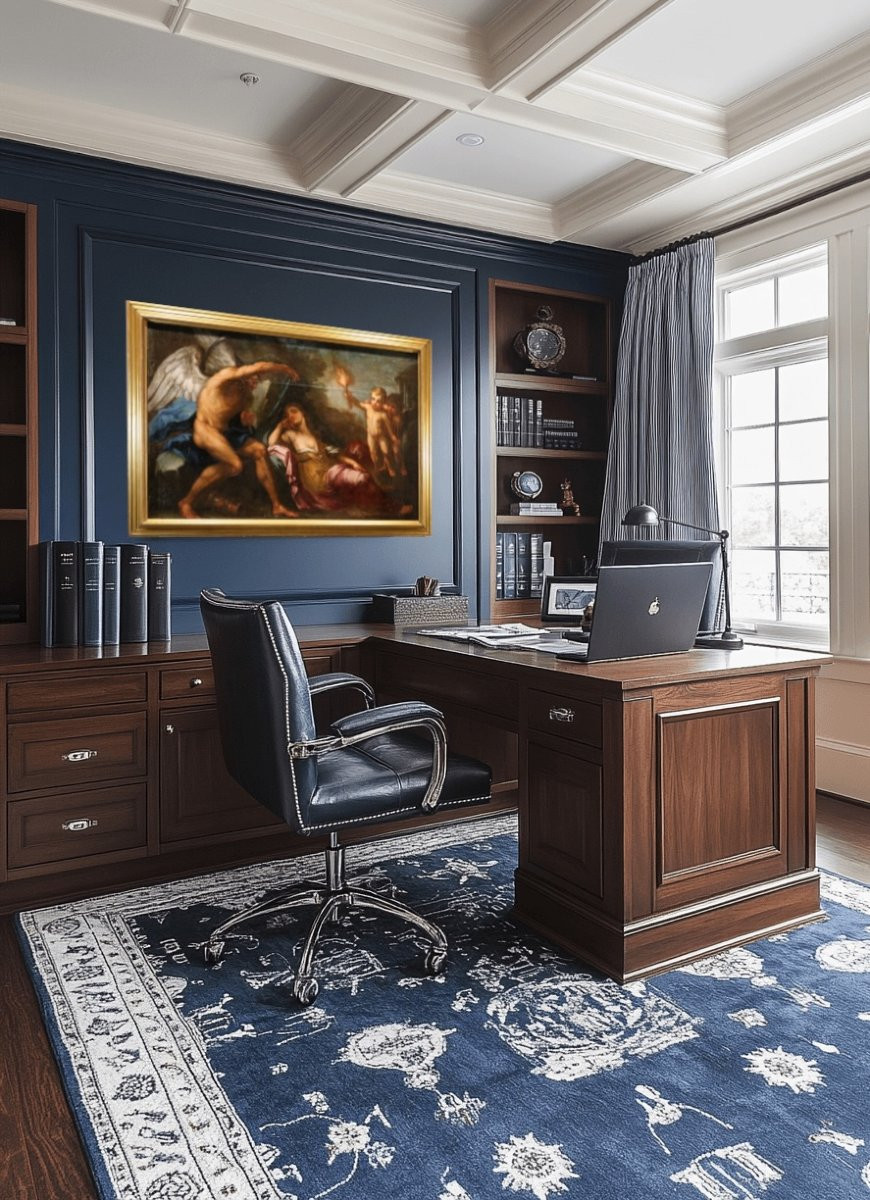




Luigi Garzi (rome, 1638 – Rome, 1721), Allegory Of Time Unveiling Truth
Artist: Luigi Garzi (rome, 1638 - Rome, 1721)
Luigi Garzi (Rome, 1638 – Rome, 1721)
Allegory of Time Unveiling Truth
Oil on canvas (91 x 140 cm – Framed 107 x 155 cm)
Work accompanied by an expert report by Dr. Arabella Cifani
FULL DETAILS OF THE WORK (click HERE)
The theme of ‘Time Unveiling Truth’ is a widely used allegorical subject in European painting, particularly during the Renaissance and Baroque periods, and has its philosophical roots in the thought of Seneca, who, in his treatise ‘De Ira’, writes on the subject: “Dandum semper est tempus: veritatem dies aperit” (one must always allow time: time unveils truth).
The philosopher suggests that truth and virtue always triumph, overcoming lies and appearances, and urges patience and restraint from acting impulsively.
This subject also has a moral dimension; it is, in fact, an allegory celebrating the triumph of justice and the innocence that is finally recognised, based on the idea that, despite efforts to conceal it, the truth always emerges in time.
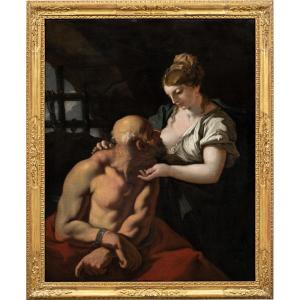
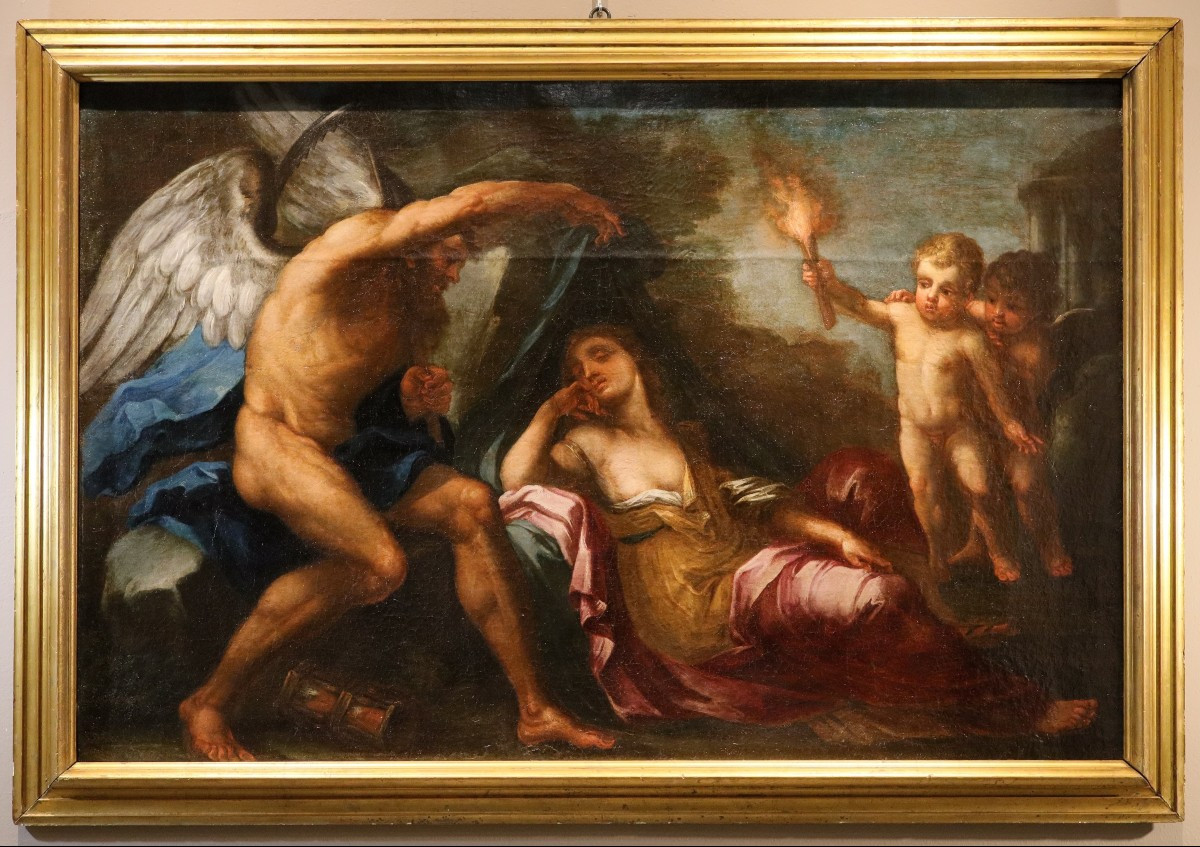
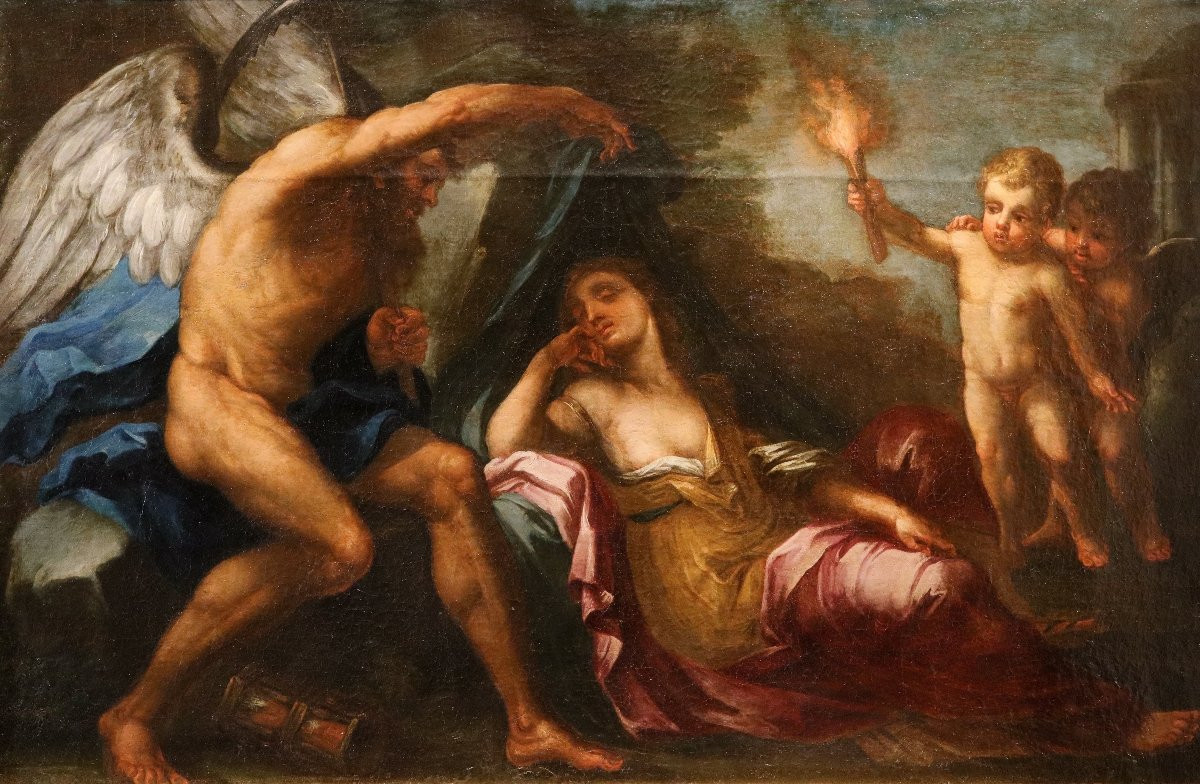
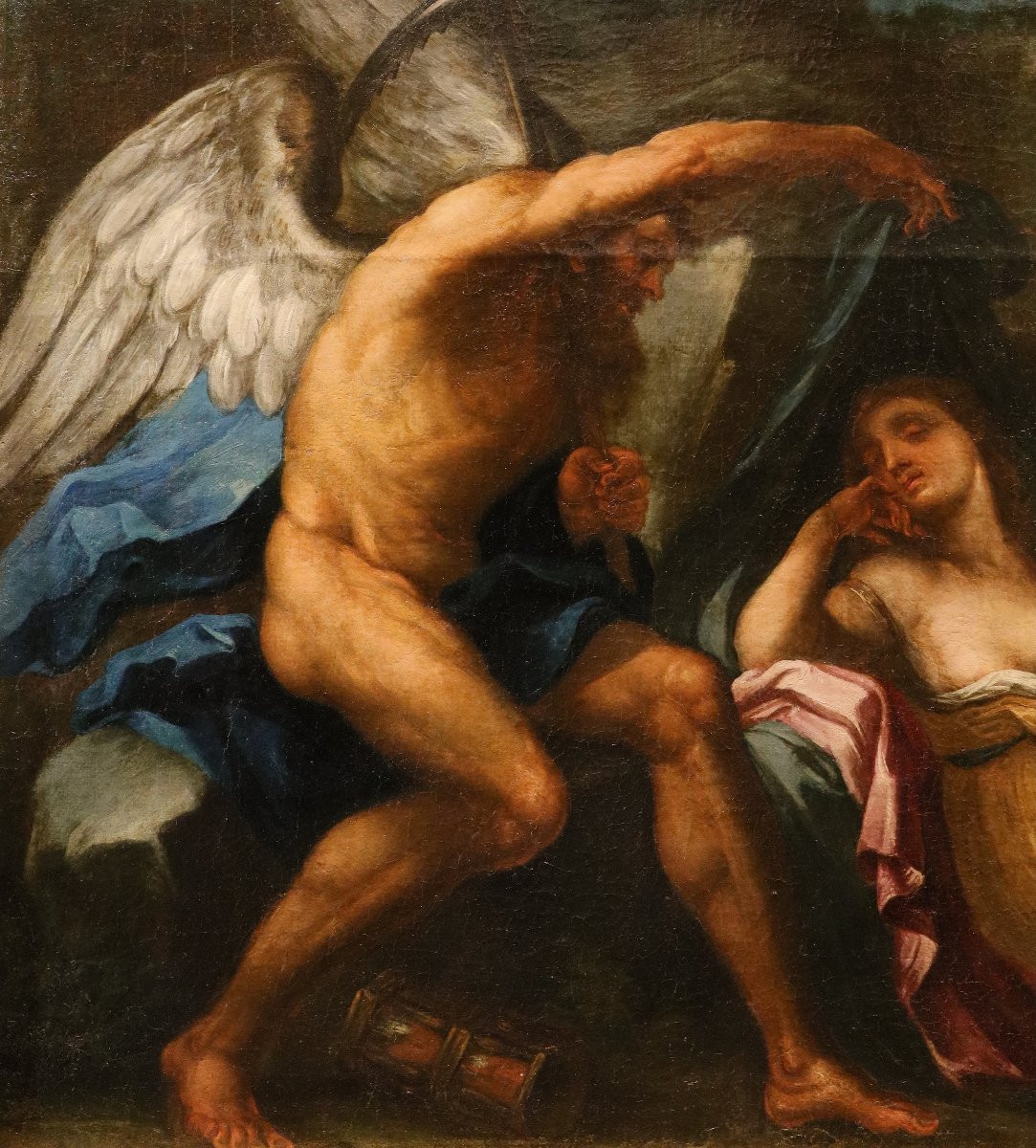
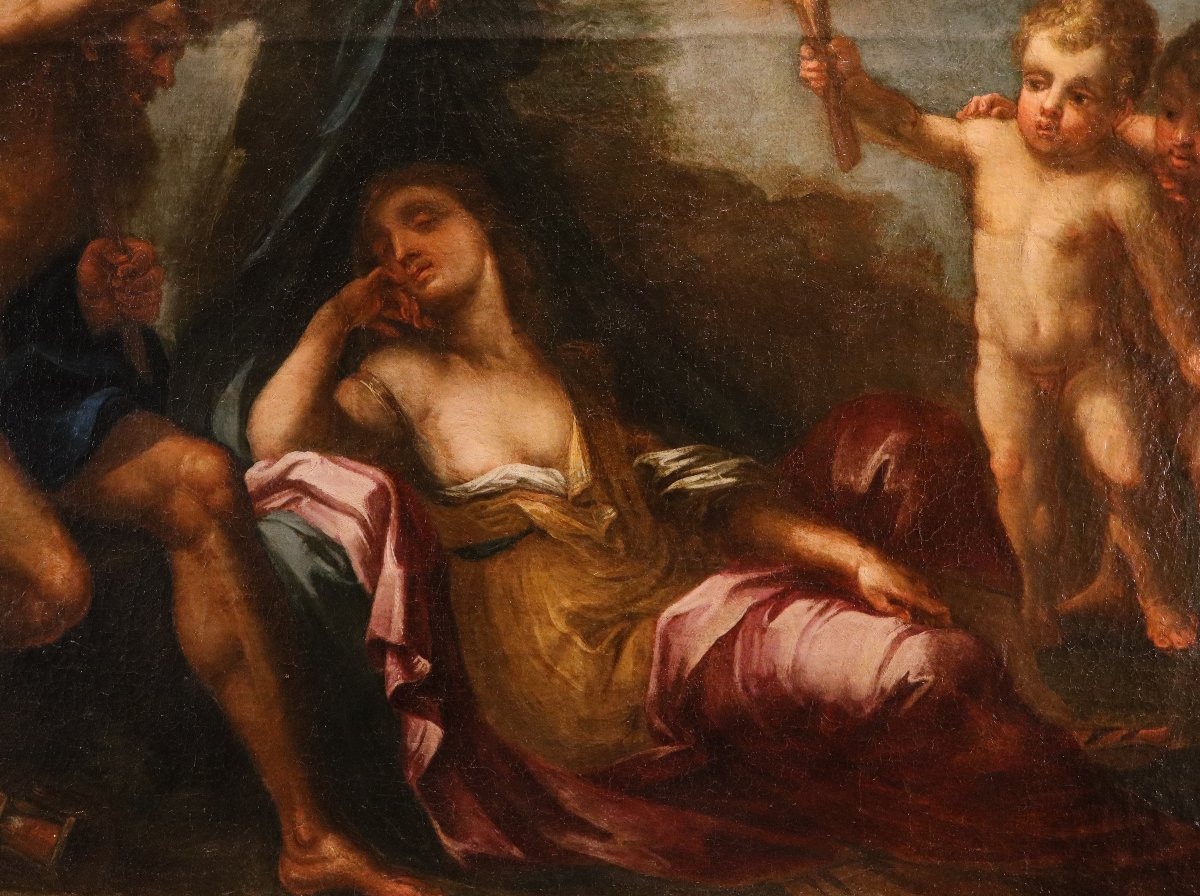
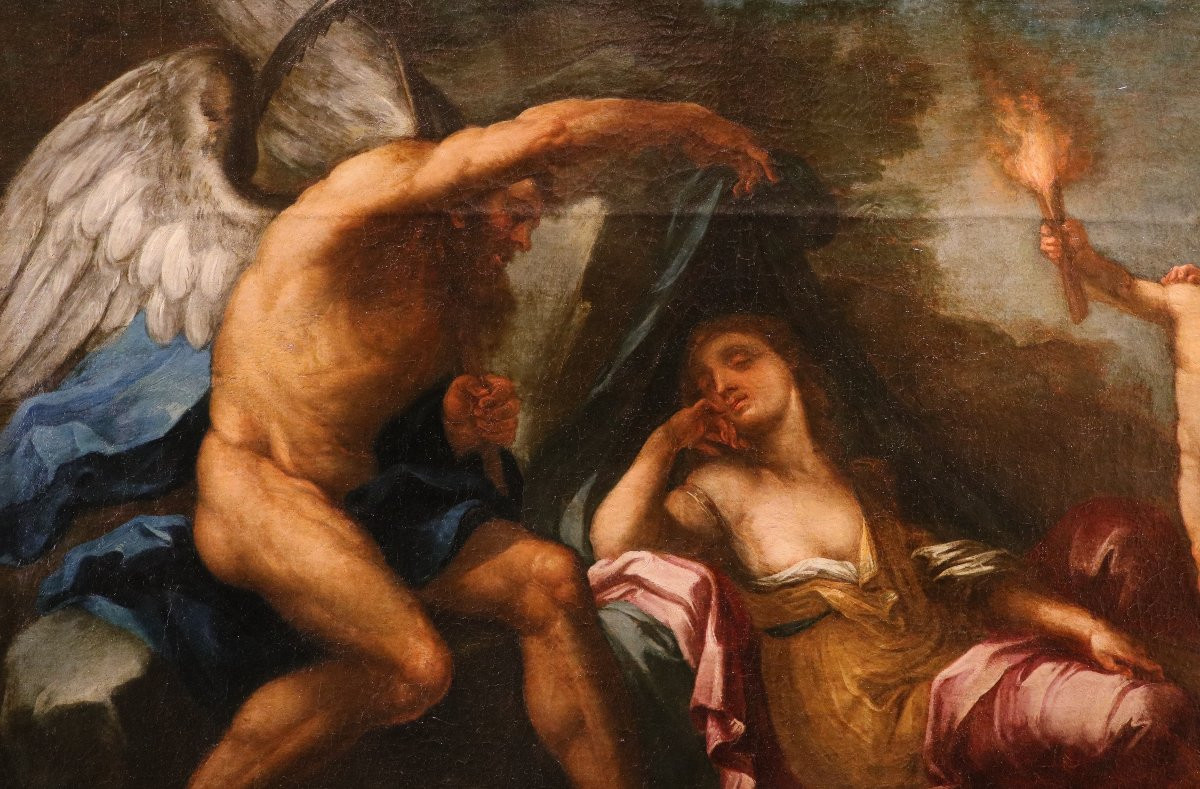
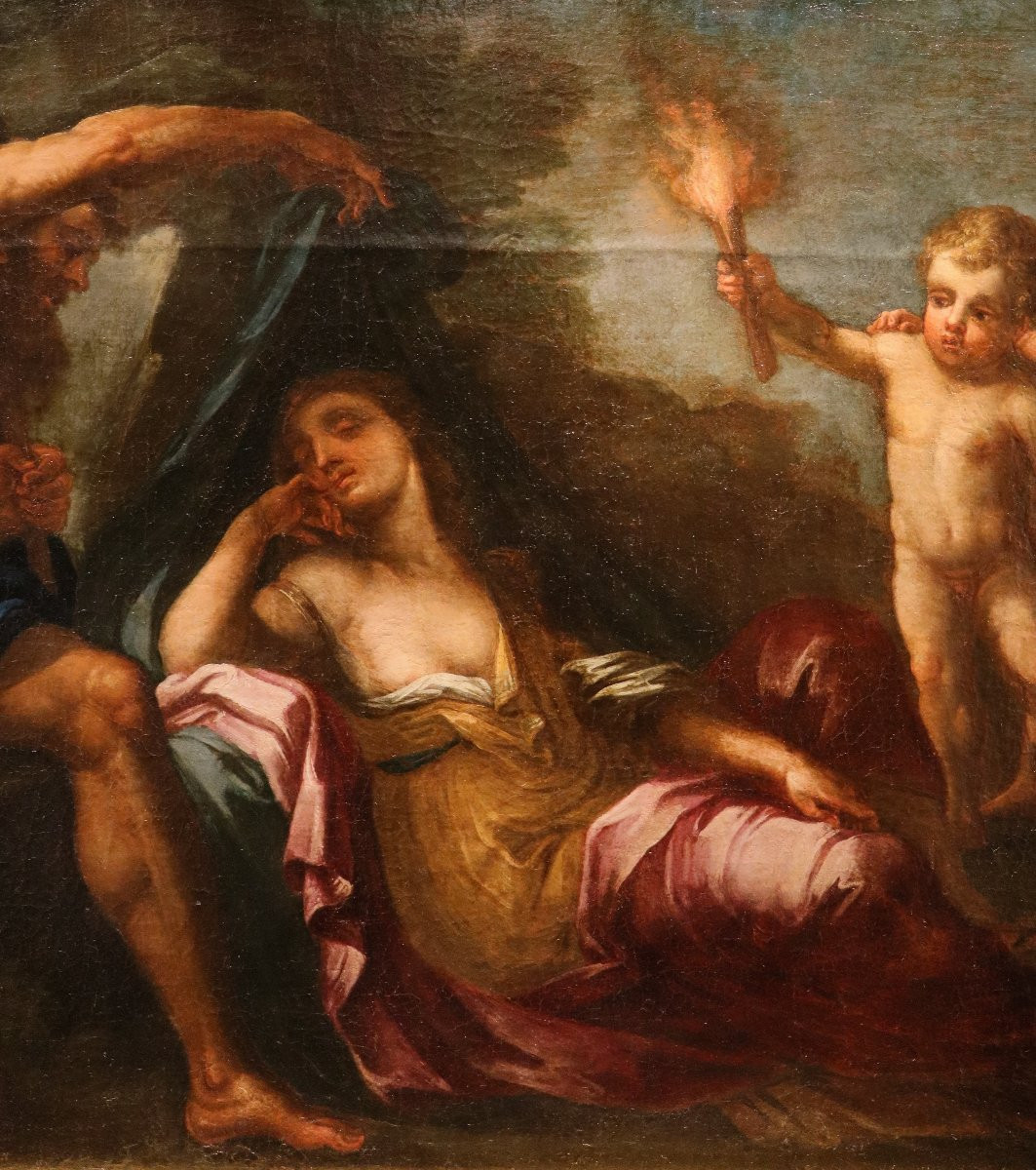
In the painting we see a young, half-naked maiden, Truth, sleeping in a shadowy corner, covered by a blue curtain, whilst on the left Time, a winged old man of mythological origin, prepares to gently uncover her and wake her, with his scythe on his shoulder and an hourglass at his feet, an emblem of the passing of moments in the world.
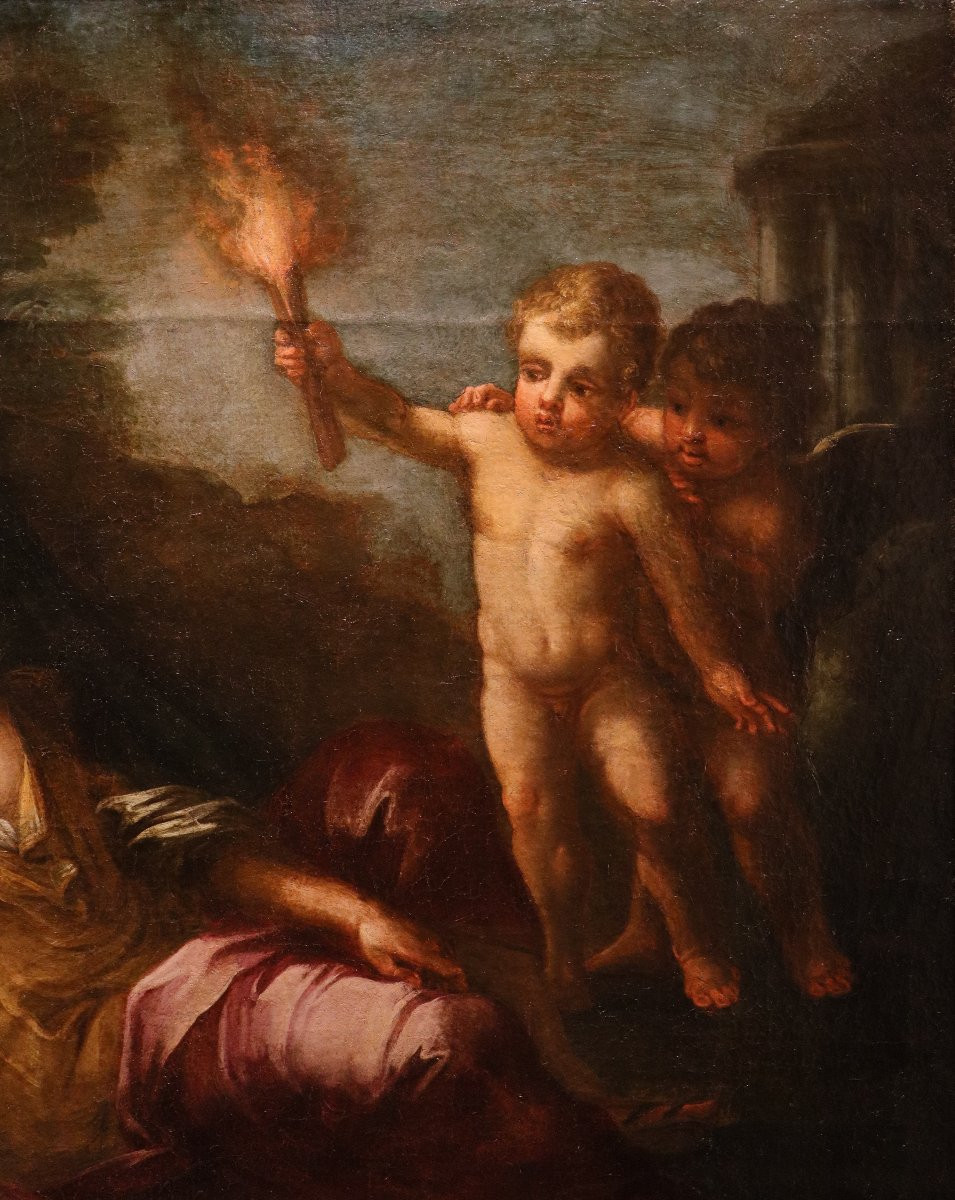
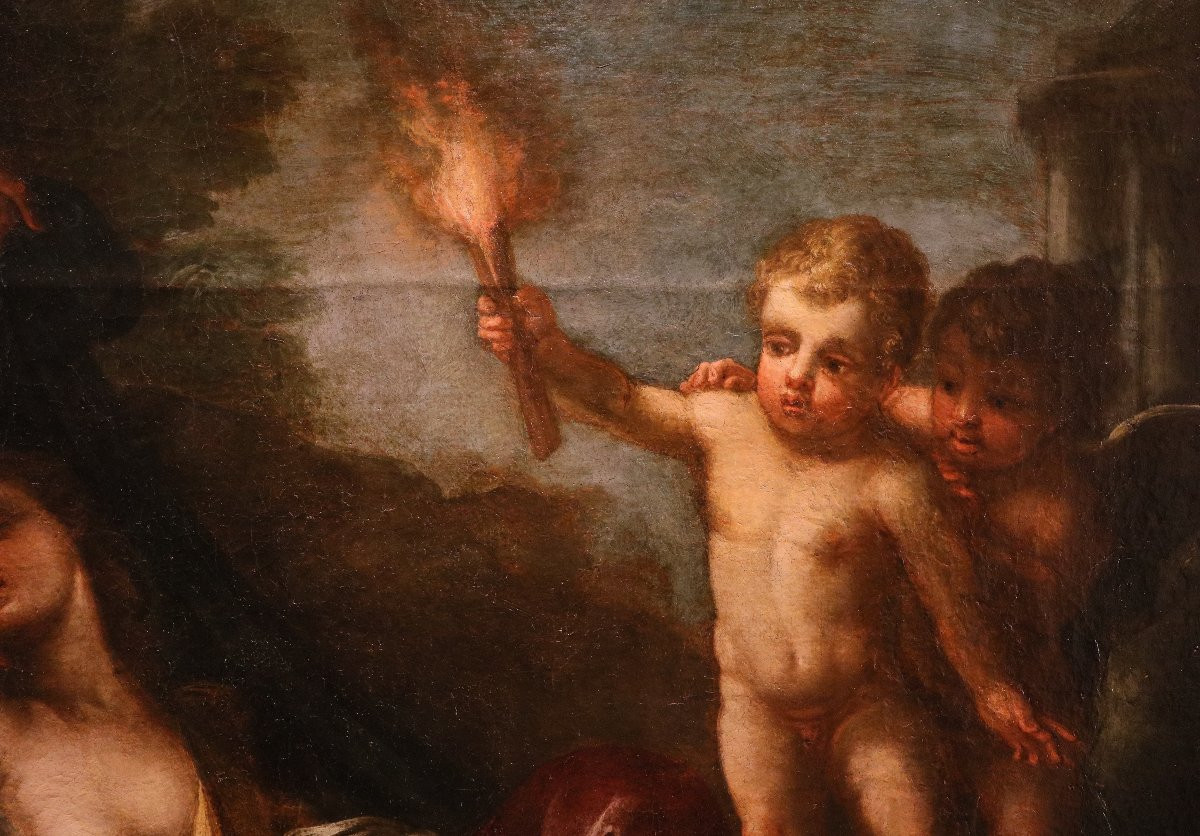
On the right, two cherubs burst in, one of them carrying a torch with which he illuminates the Truth as it returns to the light: essentially, the painting celebrates the theme of Truth always coming to light, even if it has been covered or hidden for a long time.
The painting is rich in classical references, starting with the figure of Truth, which is clearly inspired by the famous Sleeping Ariadne in the Vatican Museums, whilst the two cherubs, on the other hand, seem closer to the lively children that populate the vaults of Annibale Carracci’s Farnese Gallery.
The work is clearly of Roman origin and is attributed to Luigi Garzi (Rome, 1638 – Rome, 1721), an important Italian Baroque painter and a leading figure in the Roman art scene between the 17th and 18th centuries
He initially trained in Pistoia before moving to Rome, where he entered the workshop of Andrea Sacchi, who steered his style towards the classicism of Raphael, Domenichino and Nicolas Poussin; he was also strongly influenced by Emilian models, with a particular preference for Giovani Lanfranco, who shaped his taste and style, alongside a nuanced Cortonism, whilst his pre-eighteenth-century sensibilities are attributable to the teachings of Carlo Maratta.
Nevertheless, there is no doubt that the painter developed his own personality without ever succumbing to imitation, achieving a refined elegance and autonomy of style, as clearly demonstrated by the canvas under consideration here, in which many and varied influences find a refined amalgam in perfect harmony with the Baroque evolution between the 17th and 18th centuries, suggesting a date in his late maturity.
His clear and measured painterly language, at times whimsical and refined, the restrained theatricality of his compositions, his ability to assimilate and rework figurative elements of various origins—from the Emilian to the French—in an original manner, and his glazed colours, often in cool tones, secured his success in Rome and throughout the territories of the Papal States.
Garzi’s career unfolded almost entirely in Rome, marked by many successes and prestigious commissions, such as the frescoes in Palazzo Borghese and San Carlo al Corso, right up to the dome of the Cybo Chapel in Santa Maria del Popolo,
The painting under consideration here shares many similarities with Garzi’s works. From the muscular male nude of Time, which we find very similar in a drawing at the Accademia di San Luca and in another at the Berlin Museum, to the woman’s face, which appears particularly close to that of the woman in the painting at Pommersfelden, Schloss Weißenstein.
Bibliography:
Luigi Garzi 1638–1721. ‘Roman Painter’, edited by Francesco Grisolia and Guendalina Serafinelli, Milan, Officina Libraria, 2018, see previous bibliography;
Principi, Patrizia, ‘Luigi Garzi inventor’: original and translated prints from the Central Institute for Graphic Arts, in: Art History, New Series 1/2 (2021), pp. 218–237.
ADDITIONAL INFORMATION:
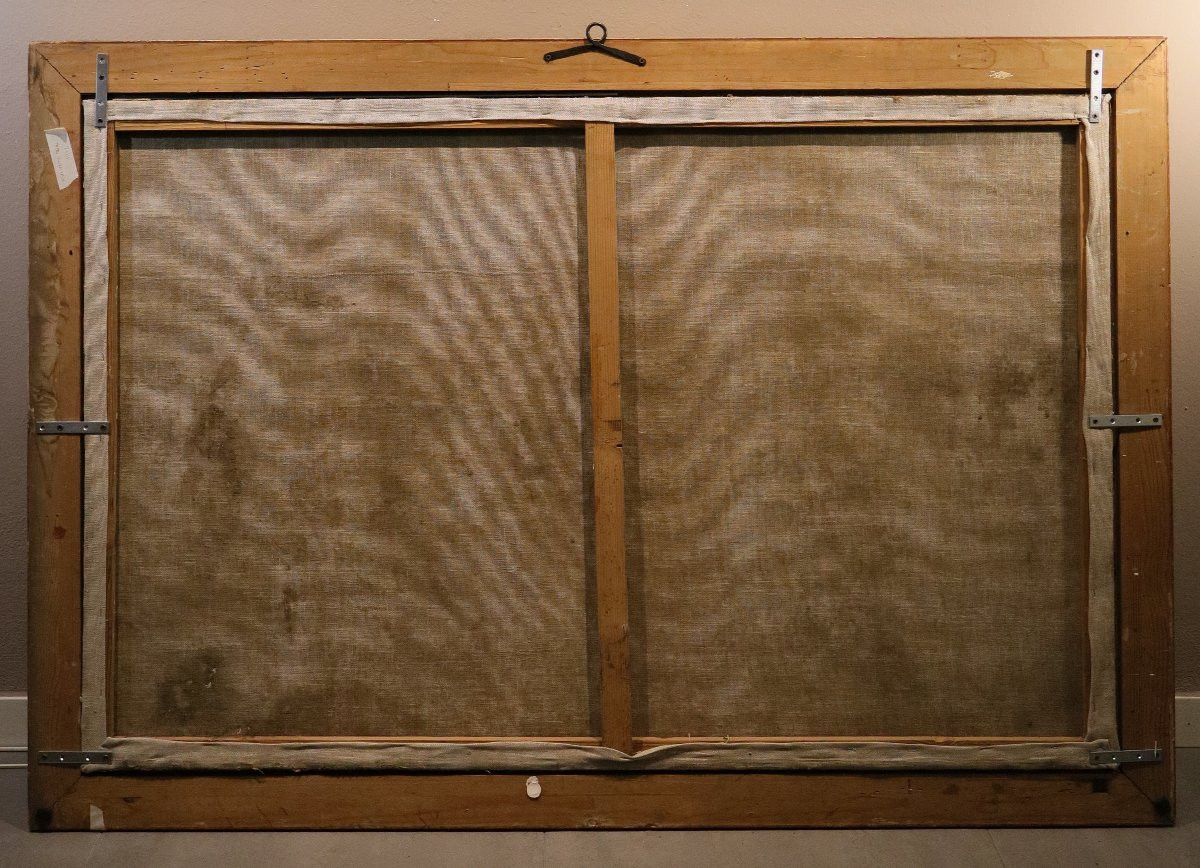
The condition is good, with a join between two canvases in the upper section.
The work is sold complete with a gilded wooden frame and is accompanied by a certificate of authenticity and a descriptive iconographic sheet.
We arrange and organise the transport of purchased works, both within Italy and abroad, using professional and insured carriers. It is also possible to view the painting at our gallery in Riva del Garda; we would be delighted to welcome you to show you our collection of works.
Please feel free to contact us for any further information.
Follow us on:
INSTAGRAM https://www.instagram.com/galleriacastelbarco/?hl=it
FACEBOOK https://www.facebook.com/galleriacastelbarco/
Allegory of Time Unveiling Truth
Oil on canvas (91 x 140 cm – Framed 107 x 155 cm)
Work accompanied by an expert report by Dr. Arabella Cifani
FULL DETAILS OF THE WORK (click HERE)
The theme of ‘Time Unveiling Truth’ is a widely used allegorical subject in European painting, particularly during the Renaissance and Baroque periods, and has its philosophical roots in the thought of Seneca, who, in his treatise ‘De Ira’, writes on the subject: “Dandum semper est tempus: veritatem dies aperit” (one must always allow time: time unveils truth).
The philosopher suggests that truth and virtue always triumph, overcoming lies and appearances, and urges patience and restraint from acting impulsively.
This subject also has a moral dimension; it is, in fact, an allegory celebrating the triumph of justice and the innocence that is finally recognised, based on the idea that, despite efforts to conceal it, the truth always emerges in time.
In the painting we see a young, half-naked maiden, Truth, sleeping in a shadowy corner, covered by a blue curtain, whilst on the left Time, a winged old man of mythological origin, prepares to gently uncover her and wake her, with his scythe on his shoulder and an hourglass at his feet, an emblem of the passing of moments in the world.
On the right, two cherubs burst in, one of them carrying a torch with which he illuminates the Truth as it returns to the light: essentially, the painting celebrates the theme of Truth always coming to light, even if it has been covered or hidden for a long time.
The painting is rich in classical references, starting with the figure of Truth, which is clearly inspired by the famous Sleeping Ariadne in the Vatican Museums, whilst the two cherubs, on the other hand, seem closer to the lively children that populate the vaults of Annibale Carracci’s Farnese Gallery.
The work is clearly of Roman origin and is attributed to Luigi Garzi (Rome, 1638 – Rome, 1721), an important Italian Baroque painter and a leading figure in the Roman art scene between the 17th and 18th centuries
He initially trained in Pistoia before moving to Rome, where he entered the workshop of Andrea Sacchi, who steered his style towards the classicism of Raphael, Domenichino and Nicolas Poussin; he was also strongly influenced by Emilian models, with a particular preference for Giovani Lanfranco, who shaped his taste and style, alongside a nuanced Cortonism, whilst his pre-eighteenth-century sensibilities are attributable to the teachings of Carlo Maratta.
Nevertheless, there is no doubt that the painter developed his own personality without ever succumbing to imitation, achieving a refined elegance and autonomy of style, as clearly demonstrated by the canvas under consideration here, in which many and varied influences find a refined amalgam in perfect harmony with the Baroque evolution between the 17th and 18th centuries, suggesting a date in his late maturity.
His clear and measured painterly language, at times whimsical and refined, the restrained theatricality of his compositions, his ability to assimilate and rework figurative elements of various origins—from the Emilian to the French—in an original manner, and his glazed colours, often in cool tones, secured his success in Rome and throughout the territories of the Papal States.
Garzi’s career unfolded almost entirely in Rome, marked by many successes and prestigious commissions, such as the frescoes in Palazzo Borghese and San Carlo al Corso, right up to the dome of the Cybo Chapel in Santa Maria del Popolo,
The painting under consideration here shares many similarities with Garzi’s works. From the muscular male nude of Time, which we find very similar in a drawing at the Accademia di San Luca and in another at the Berlin Museum, to the woman’s face, which appears particularly close to that of the woman in the painting at Pommersfelden, Schloss Weißenstein.
Bibliography:
Luigi Garzi 1638–1721. ‘Roman Painter’, edited by Francesco Grisolia and Guendalina Serafinelli, Milan, Officina Libraria, 2018, see previous bibliography;
Principi, Patrizia, ‘Luigi Garzi inventor’: original and translated prints from the Central Institute for Graphic Arts, in: Art History, New Series 1/2 (2021), pp. 218–237.
ADDITIONAL INFORMATION:
The condition is good, with a join between two canvases in the upper section.
The work is sold complete with a gilded wooden frame and is accompanied by a certificate of authenticity and a descriptive iconographic sheet.
We arrange and organise the transport of purchased works, both within Italy and abroad, using professional and insured carriers. It is also possible to view the painting at our gallery in Riva del Garda; we would be delighted to welcome you to show you our collection of works.
Please feel free to contact us for any further information.
Follow us on:
INSTAGRAM https://www.instagram.com/galleriacastelbarco/?hl=it
FACEBOOK https://www.facebook.com/galleriacastelbarco/
14 900 €
Period: 17th century
Style: Louis 15th - Transition
Condition: Excellent condition
Material: Oil painting
Width: encadré 155 cm.
Height: encadré 107 cm.
Reference (ID): 1733703
Availability: In stock
Print