

Agostino Carracci (1557–1602) Of Cerchia, *andromeda And The Sea Monster*
Artist: Agostino Carracci (1557 - 1602) Cercle De
Agostino Carracci (1557–1602) Circle of
Andromeda and the Sea Monster
Oil on canvas
75 x 59 cm. — Framed: 96 x 77 cm.
Full details of the work (click HERE)
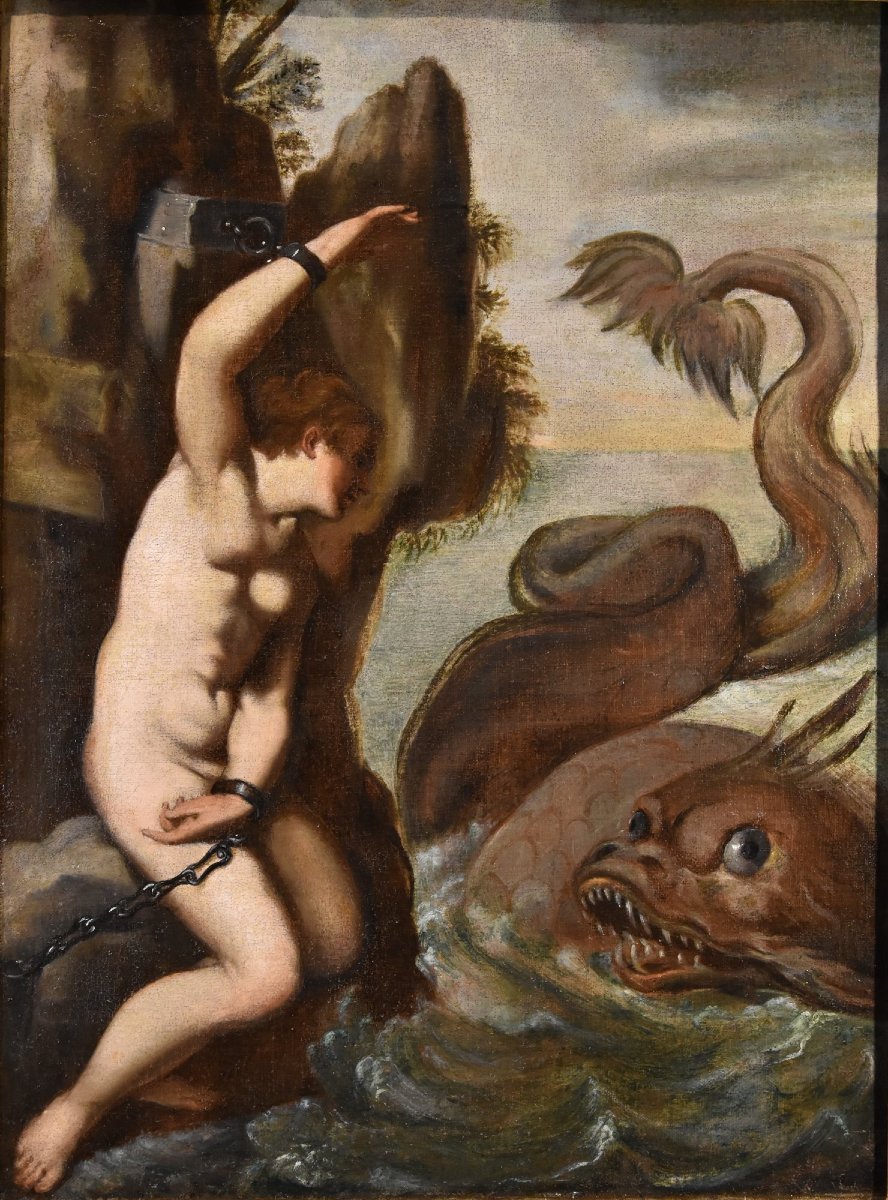
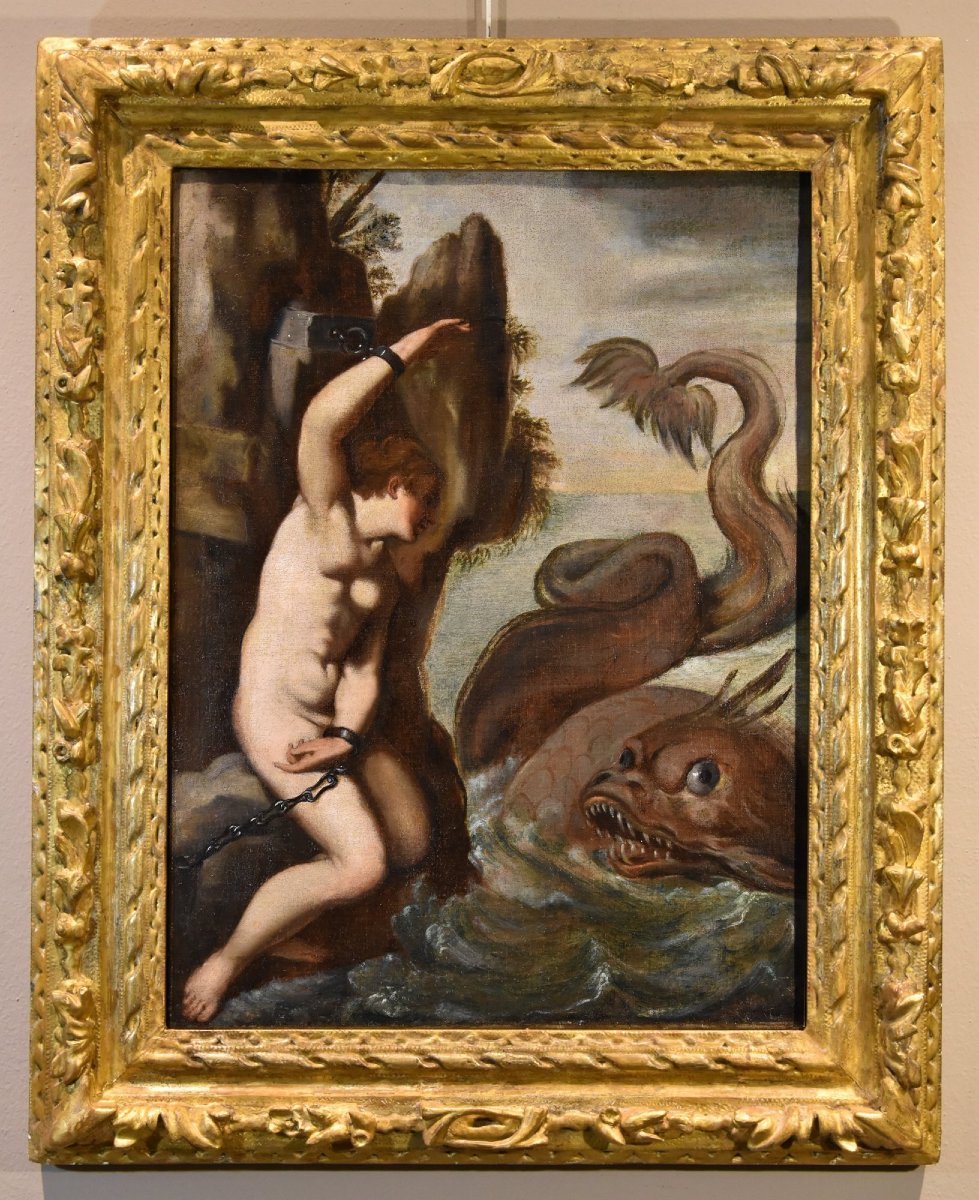
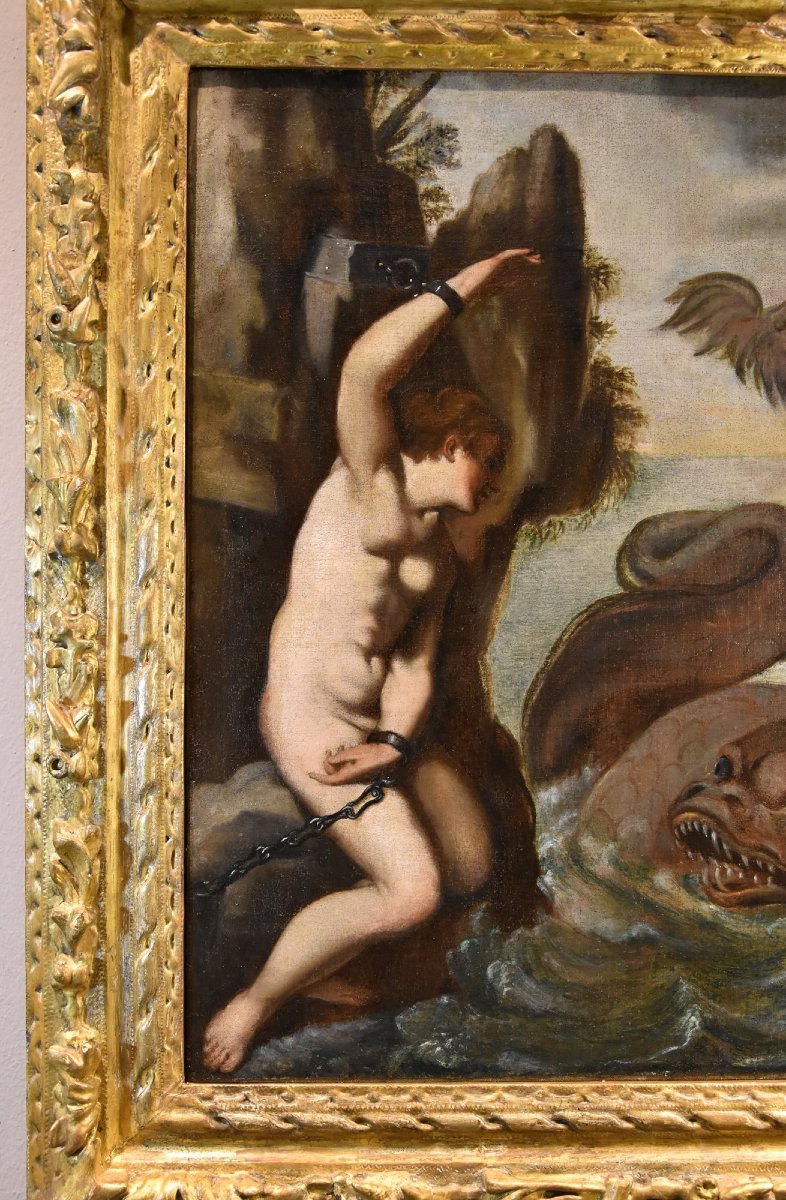
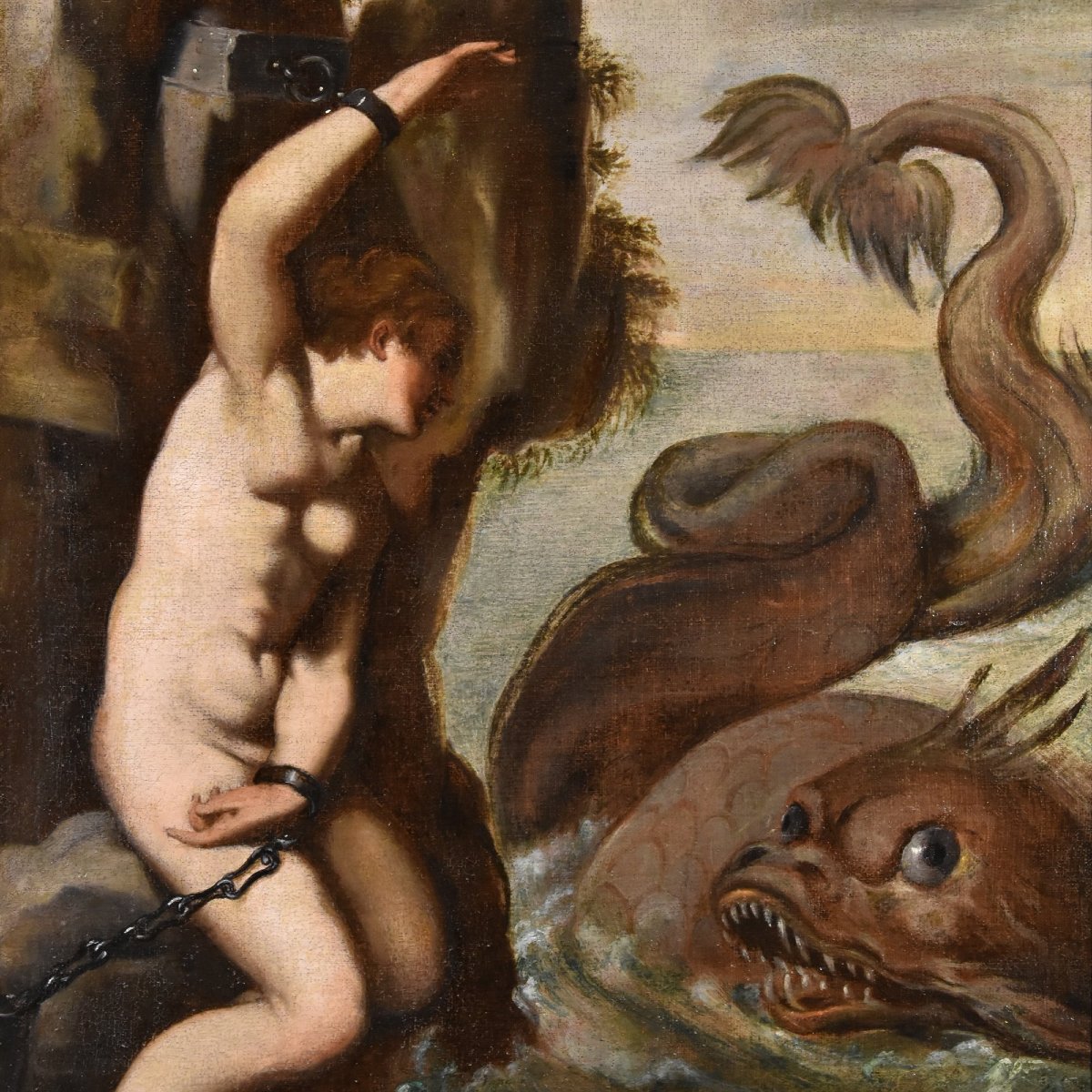
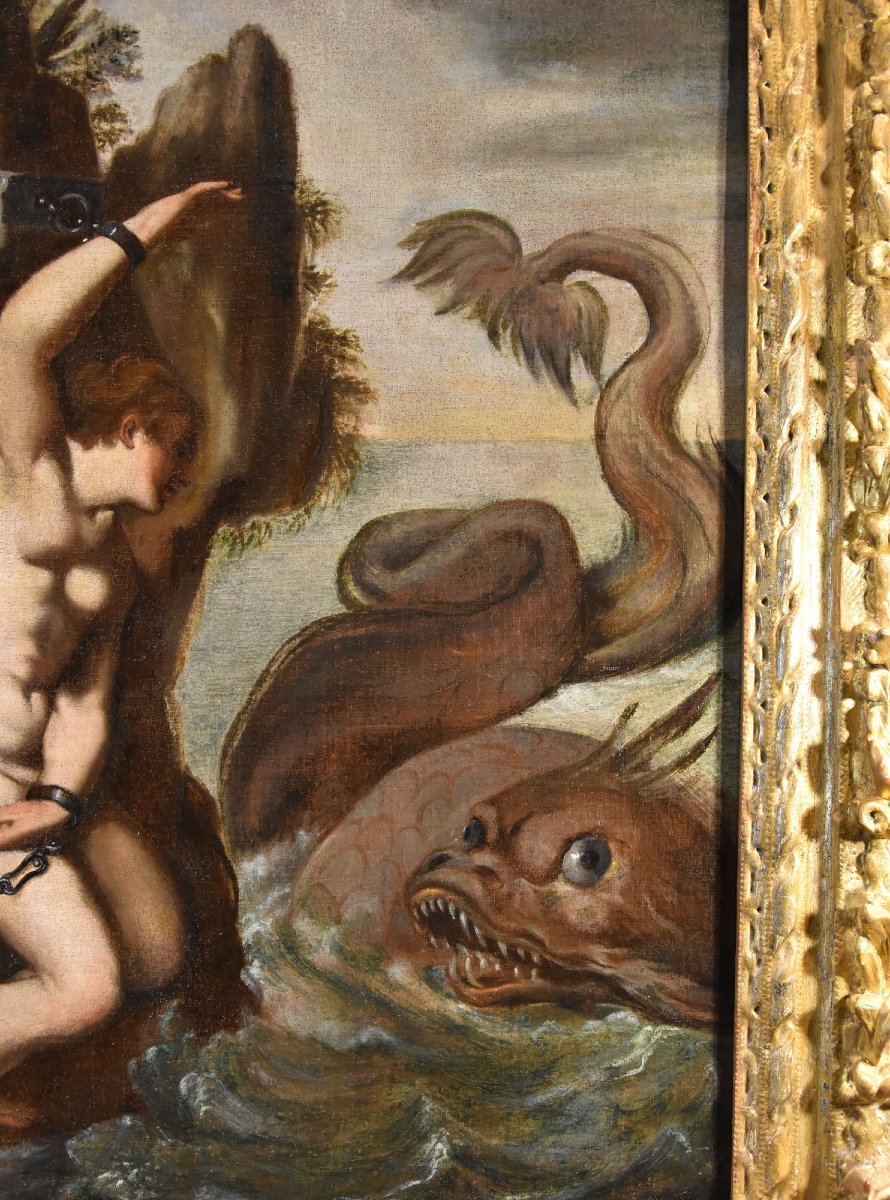
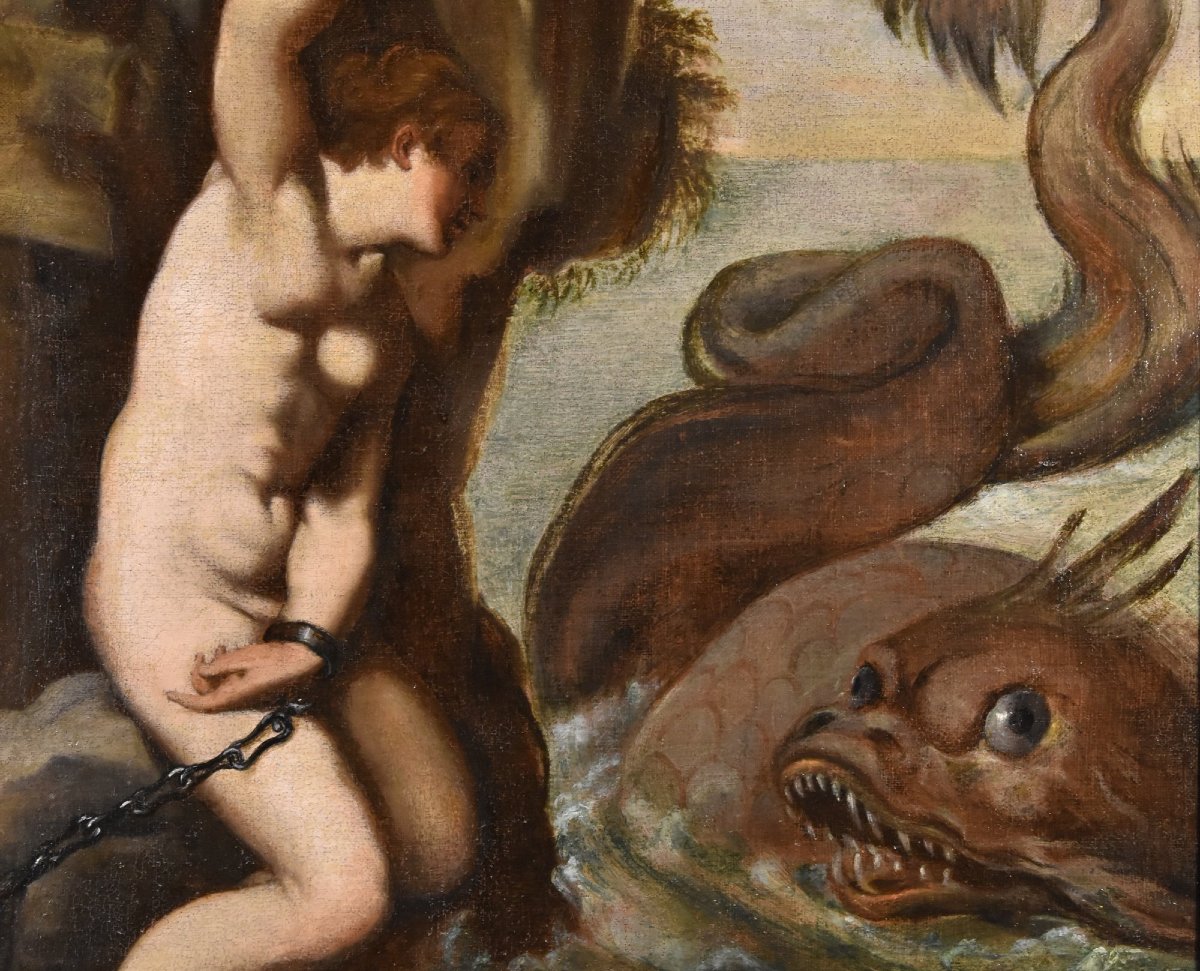
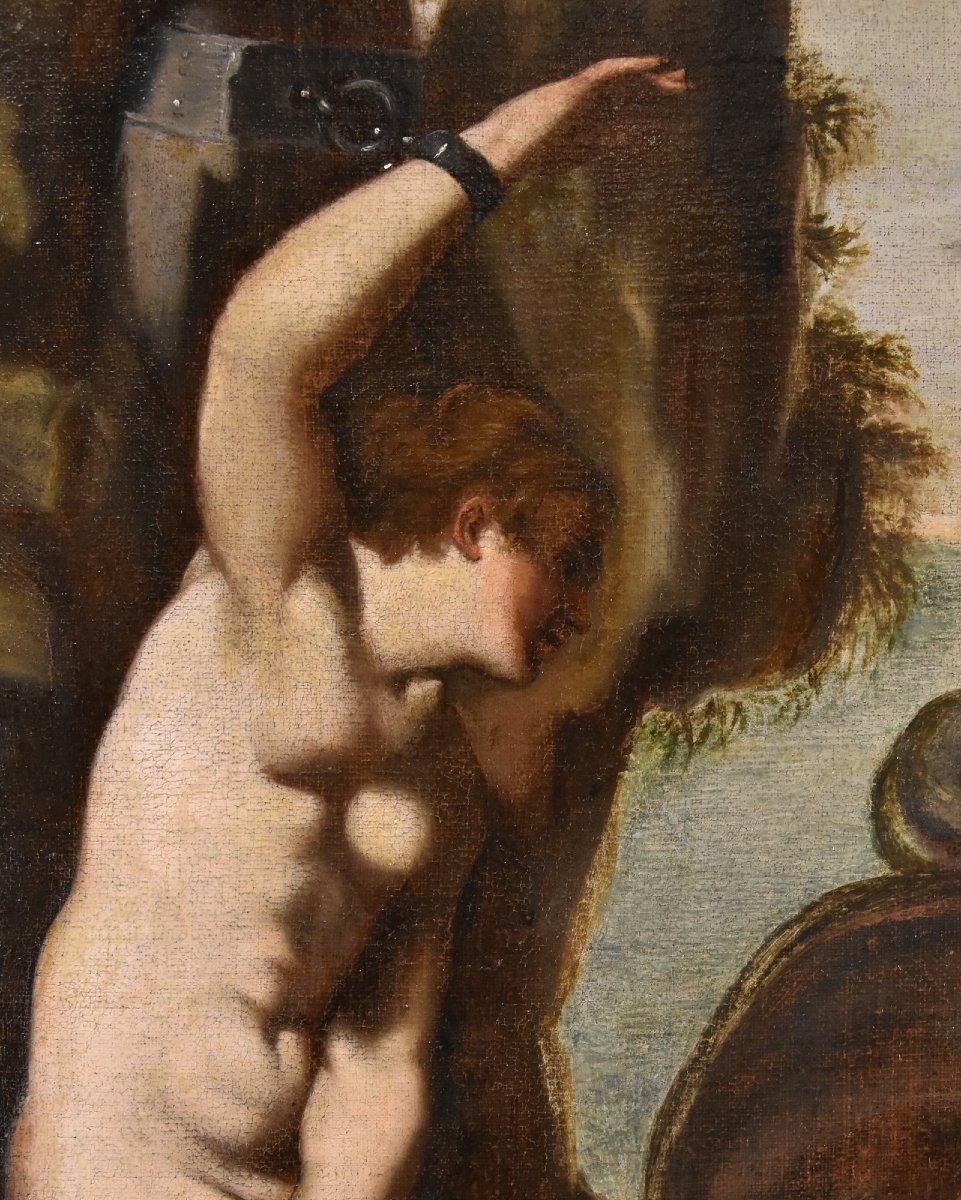
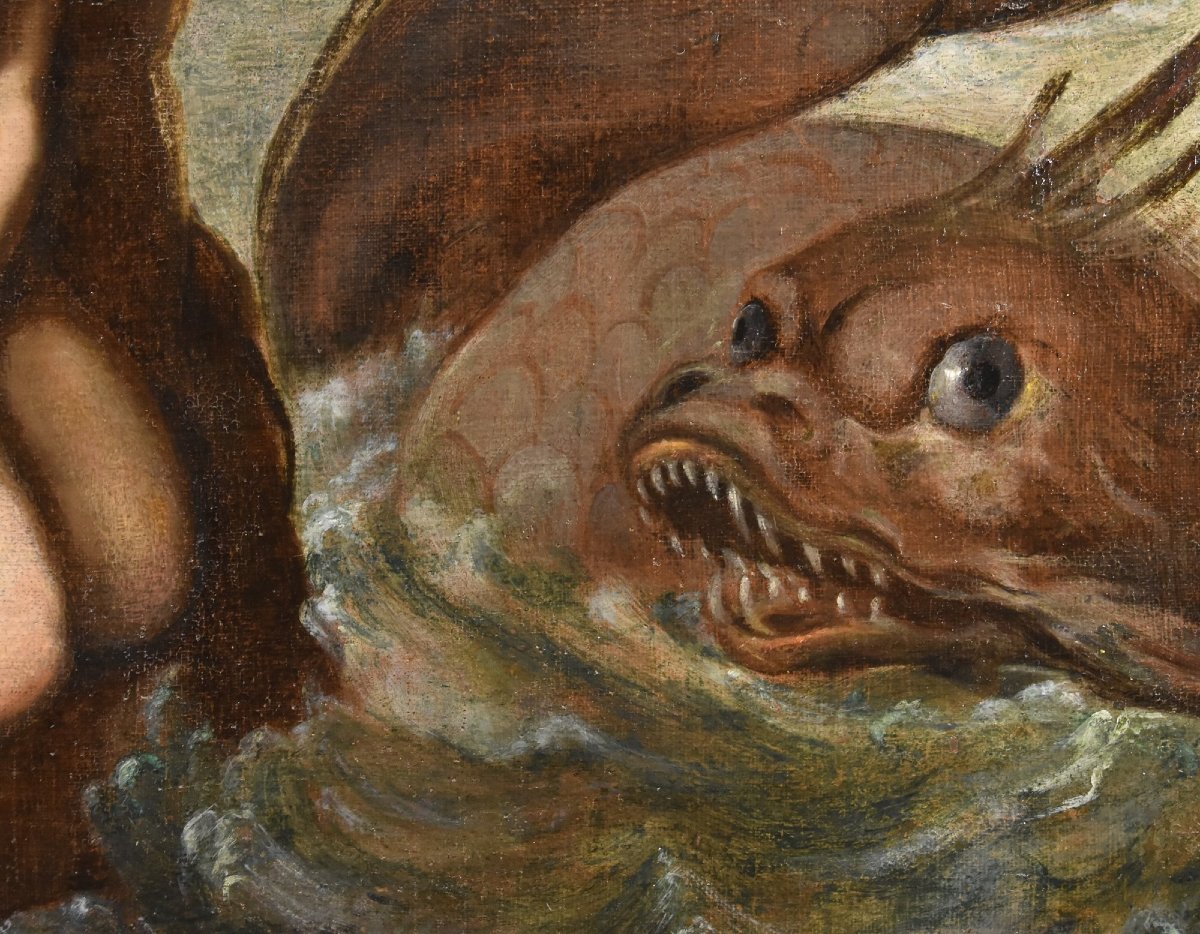
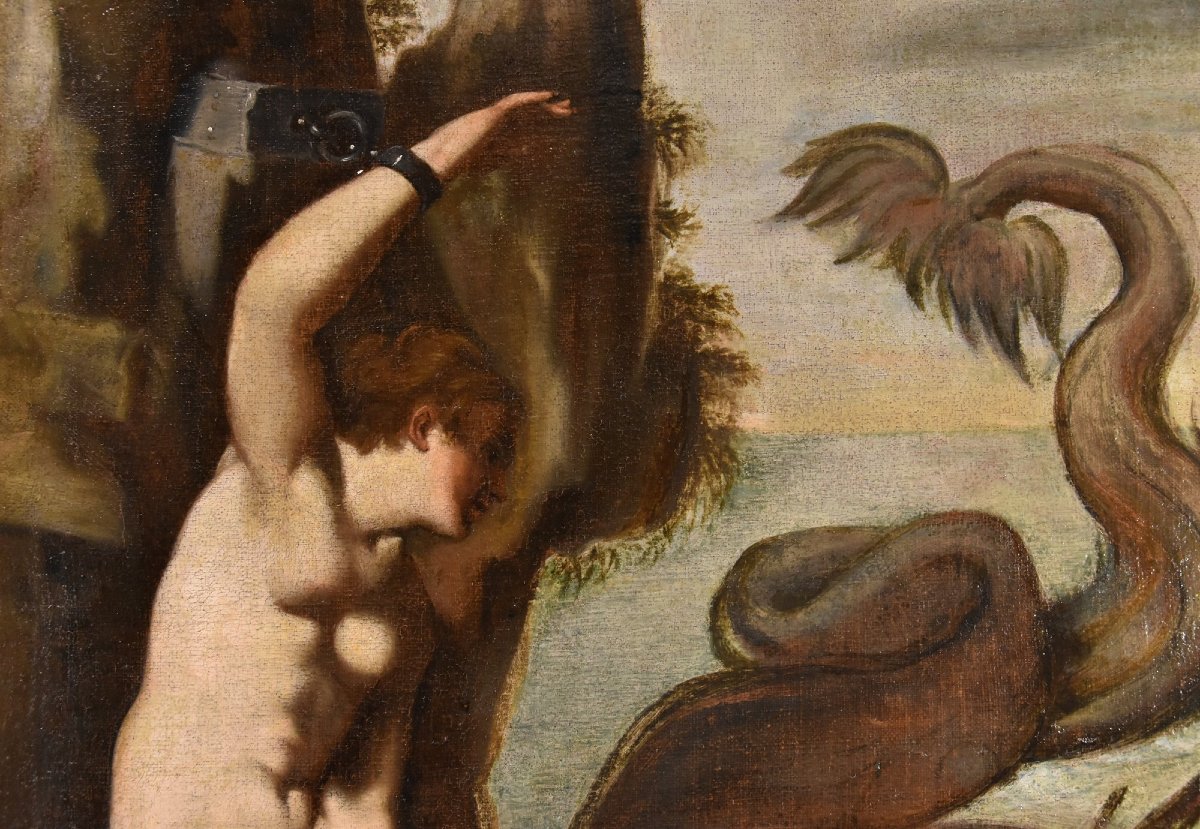
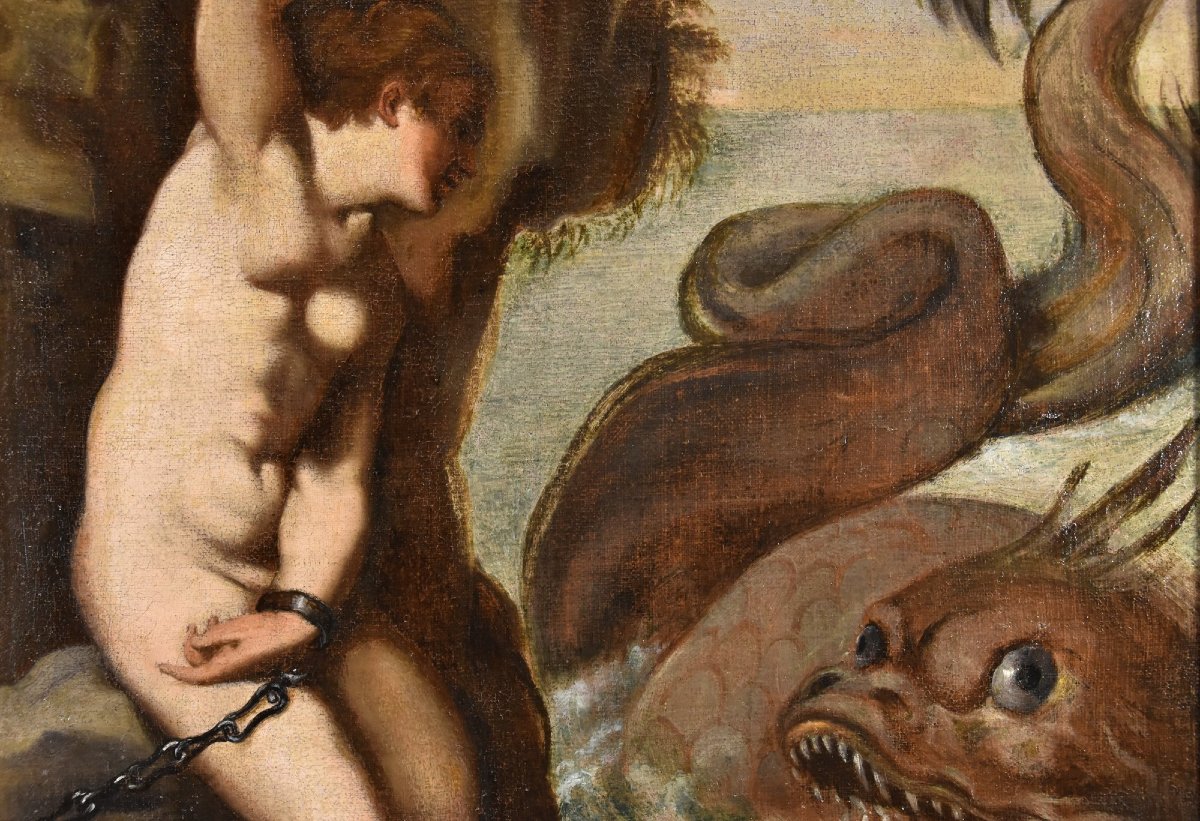
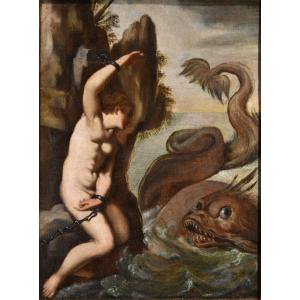
The subject of the painting, derived from Ovid’s *Metamorphoses*, is inspired by the myth of Princess Andromeda, daughter of King Cepheus of Ethiopia and Queen Cassiopeia, who, bound to a rock, is about to be attacked by a sea monster sent by Poseidon at the request of the Nereids.
The heroine’s misfortune was having a mother who boasted that her beauty surpassed even that of the Nereids, the sea nymphs who were daughters of the god of the sea. According to mythology, the young woman was therefore chained to a cliff and offered as a sacrifice to the terrible monster sent to appease the wrath of the nymphs, who were offended by Cassiopeia’s unforgivable arrogance.
This myth was highly popular in Roman Baroque painting, often commissioned as a subject to adorn the sumptuous private rooms of the aristocratic palaces of Rome: despite her Ethiopian origins, Andromeda is depicted with fair skin—a detail intended to cater to the tastes of the patrons of the time, who would certainly not have appreciated a figure with dark skin as an object of beauty to admire.
Considering this context, the painting seems designed to present the viewer with an image of a female nude in an extremely sensual, almost erotic pose—as an object of pleasure for the aristocratic patrons of the 16th and 17th centuries, who took great delight in owning such compositions and displaying them in their collections.
The work, which is attributed to an artist active in Rome in the 17th century, draws direct inspiration from an engraving by Agostino Carracci, dating from around 1590 (Fig. 1, https://www.britishmuseum.org/collection/object/P_U-2-154).
The beautiful maiden is depicted according to an iconography particularly dear to artists of the period, with a pose evoking the classical goddesses—completely nude and chained to a rock—and, just as described in Ovid’s words, exuding great sensuality.
‘As soon as he (Perseus, her liberator) saw her bound by her arms to the hard rock, were it not for a gentle breeze ruffling her hair and the warm tears streaming from her eyes, he would have taken her for a marble statue … without realizing it, he was captivated and entranced by the image of beauty before him …’’ (Metamorphoses IV, lines 672–683).
ADDITIONAL INFORMATION:
The work is sold complete with a gilded wooden frame and comes with a certificate of authenticity and a descriptive iconographic sheet.
We handle and arrange the shipping of purchased works, both within Italy and internationally, through professional and insured carriers.
You can also view the painting at our gallery in Riva del Garda; we would be delighted to welcome you and show you our collection of works.
Please feel free to contact us, with no obligation, for any additional information.
Follow us on:
INSTAGRAM https://www.instagram.com/galleriacastelbarco/?hl=it
FACEBOOK https://www.facebook.com/galleriacastelbarco/
Andromeda and the Sea Monster
Oil on canvas
75 x 59 cm. — Framed: 96 x 77 cm.
Full details of the work (click HERE)
The subject of the painting, derived from Ovid’s *Metamorphoses*, is inspired by the myth of Princess Andromeda, daughter of King Cepheus of Ethiopia and Queen Cassiopeia, who, bound to a rock, is about to be attacked by a sea monster sent by Poseidon at the request of the Nereids.
The heroine’s misfortune was having a mother who boasted that her beauty surpassed even that of the Nereids, the sea nymphs who were daughters of the god of the sea. According to mythology, the young woman was therefore chained to a cliff and offered as a sacrifice to the terrible monster sent to appease the wrath of the nymphs, who were offended by Cassiopeia’s unforgivable arrogance.
This myth was highly popular in Roman Baroque painting, often commissioned as a subject to adorn the sumptuous private rooms of the aristocratic palaces of Rome: despite her Ethiopian origins, Andromeda is depicted with fair skin—a detail intended to cater to the tastes of the patrons of the time, who would certainly not have appreciated a figure with dark skin as an object of beauty to admire.
Considering this context, the painting seems designed to present the viewer with an image of a female nude in an extremely sensual, almost erotic pose—as an object of pleasure for the aristocratic patrons of the 16th and 17th centuries, who took great delight in owning such compositions and displaying them in their collections.
The work, which is attributed to an artist active in Rome in the 17th century, draws direct inspiration from an engraving by Agostino Carracci, dating from around 1590 (Fig. 1, https://www.britishmuseum.org/collection/object/P_U-2-154).
The beautiful maiden is depicted according to an iconography particularly dear to artists of the period, with a pose evoking the classical goddesses—completely nude and chained to a rock—and, just as described in Ovid’s words, exuding great sensuality.
‘As soon as he (Perseus, her liberator) saw her bound by her arms to the hard rock, were it not for a gentle breeze ruffling her hair and the warm tears streaming from her eyes, he would have taken her for a marble statue … without realizing it, he was captivated and entranced by the image of beauty before him …’’ (Metamorphoses IV, lines 672–683).
ADDITIONAL INFORMATION:
The work is sold complete with a gilded wooden frame and comes with a certificate of authenticity and a descriptive iconographic sheet.
We handle and arrange the shipping of purchased works, both within Italy and internationally, through professional and insured carriers.
You can also view the painting at our gallery in Riva del Garda; we would be delighted to welcome you and show you our collection of works.
Please feel free to contact us, with no obligation, for any additional information.
Follow us on:
INSTAGRAM https://www.instagram.com/galleriacastelbarco/?hl=it
FACEBOOK https://www.facebook.com/galleriacastelbarco/
7 900 €
Period: 17th century
Style: Renaissance, Louis 13th
Condition: Excellent condition
Material: Oil painting
Width: encadré 77 cm.
Height: encadré 96 cm.
Reference (ID): 1828359
Availability: In stock
Print