

Saint Nicholas And The Three Children – 17th-century Oak Sculpture
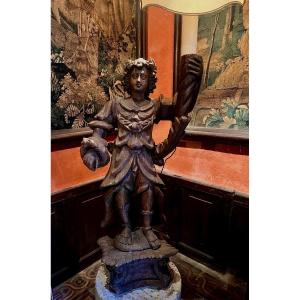
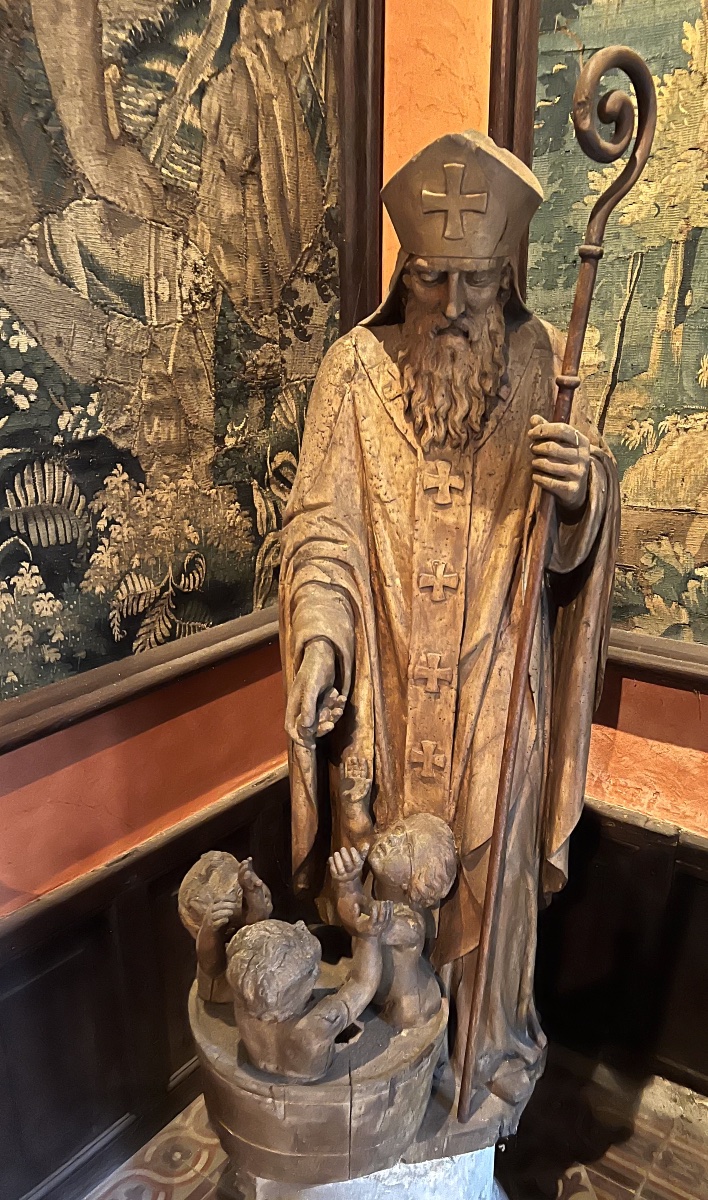
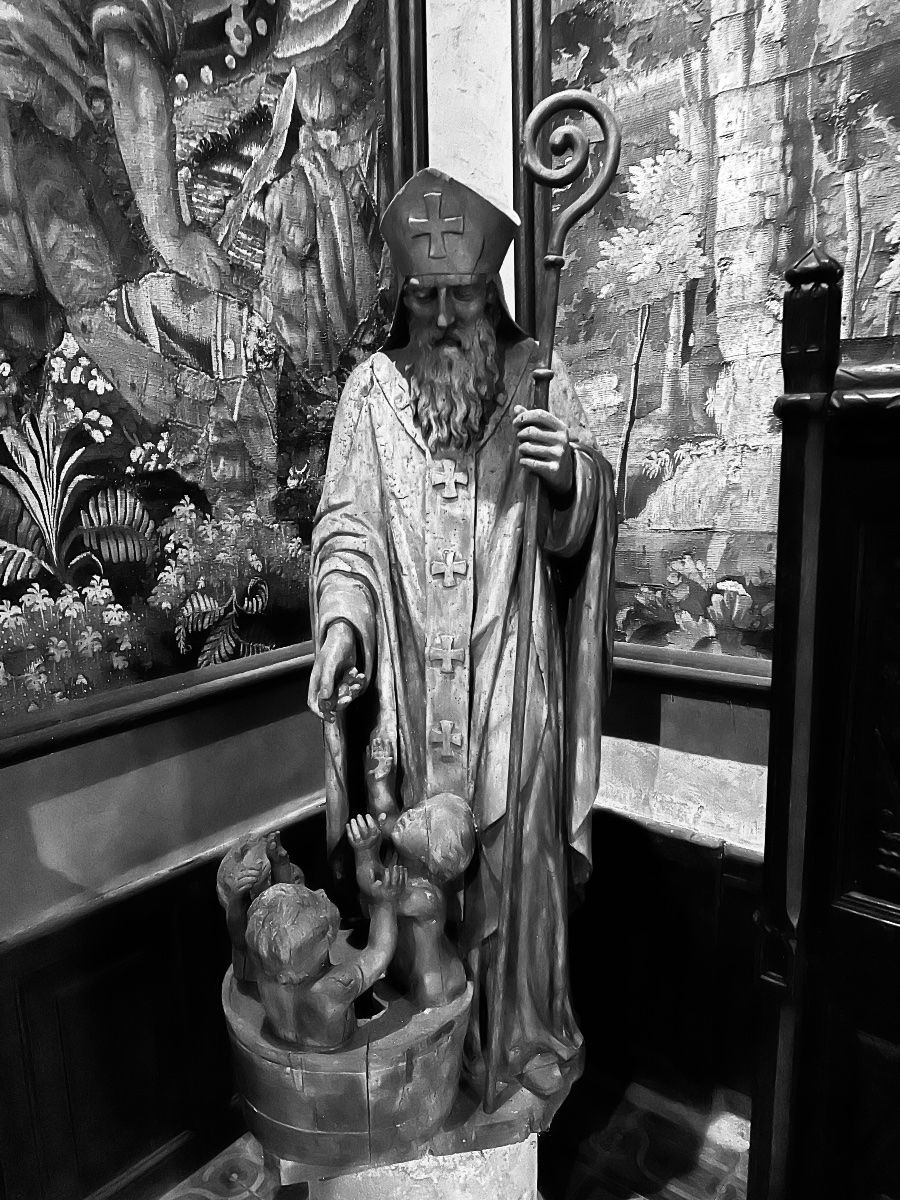
A very beautiful and significant oak sculpture depicting Saint Nicholas of Myra accompanied by three children, dating from the 17th century.
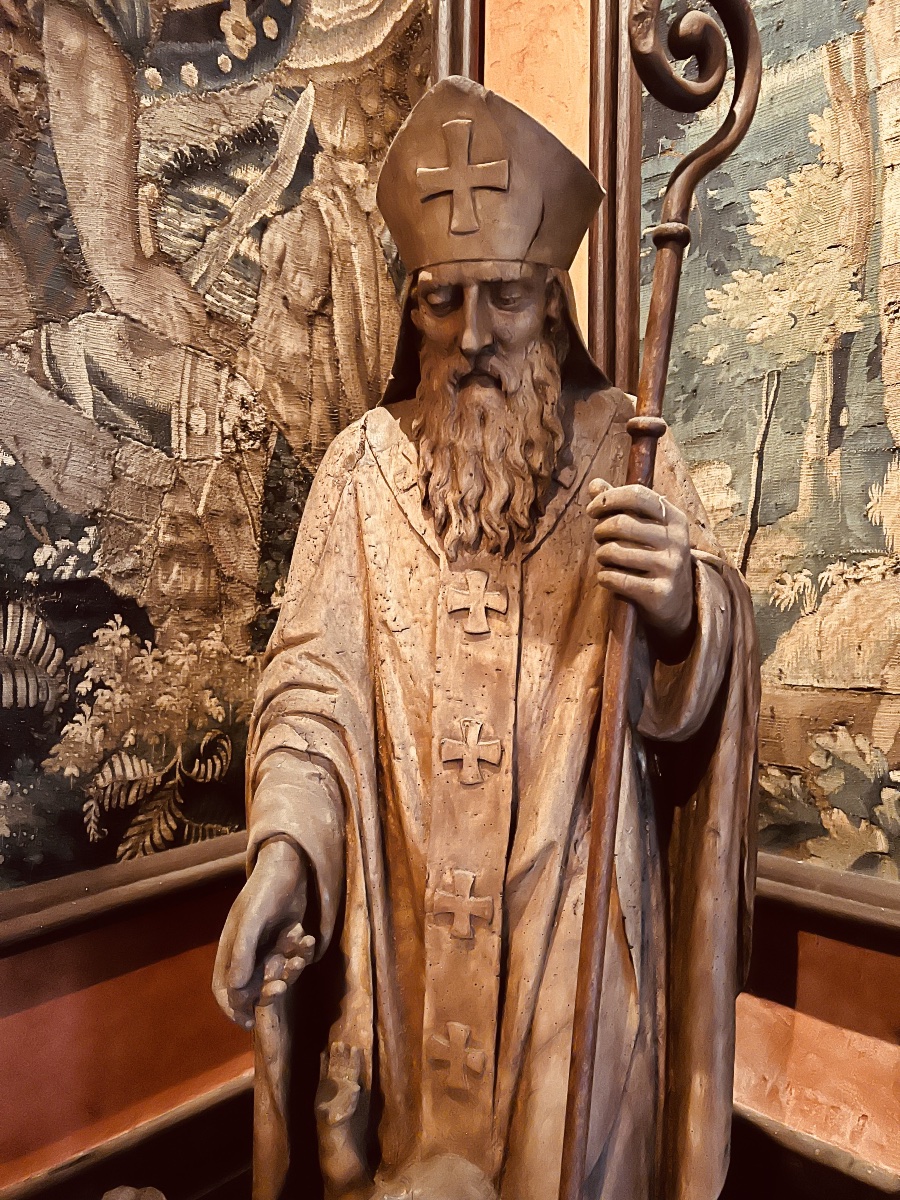
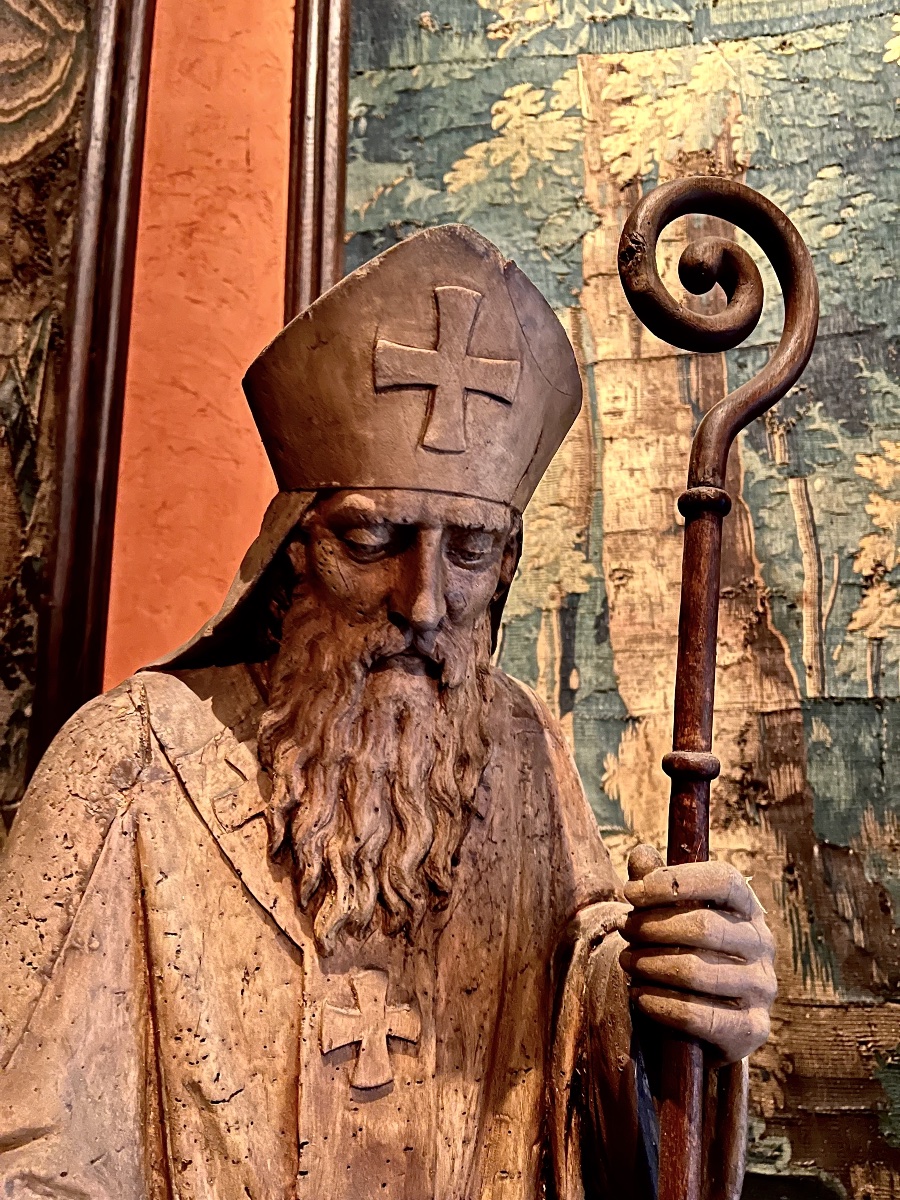
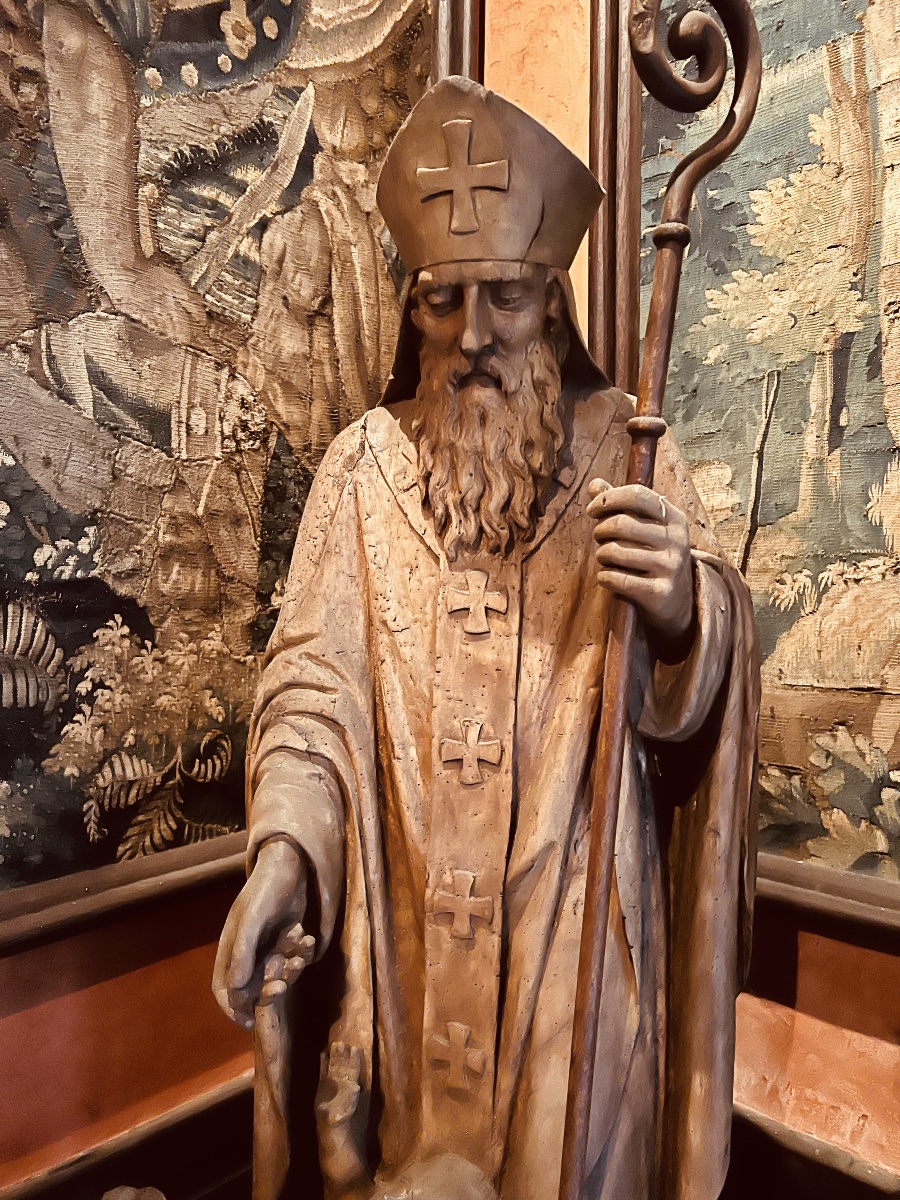
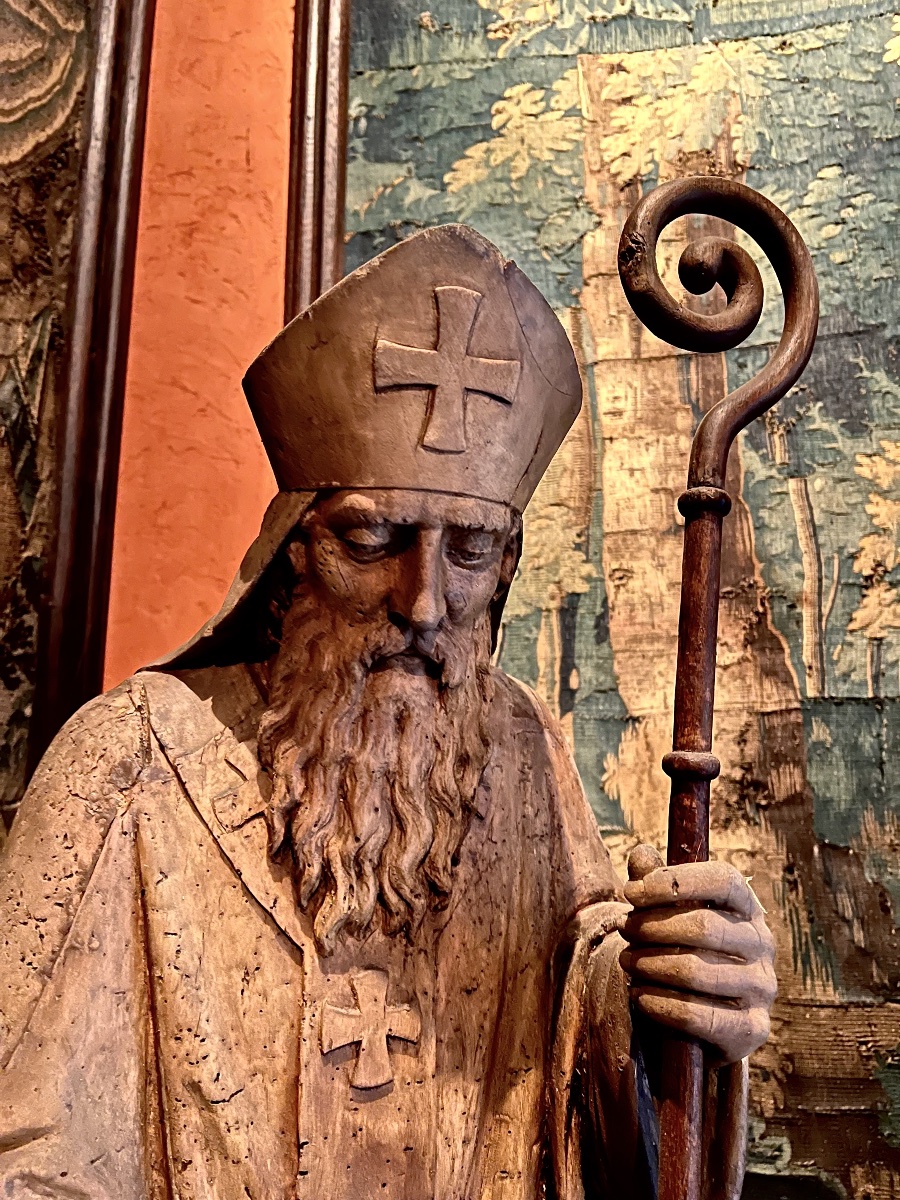
Saint Nicholas is depicted standing, dressed in his episcopal vestments, wearing a miter, and holding his crozier. His long, carefully carved beard, the rendering of the drapery, and the details of his garments attest to a fine mastery of woodcarving.
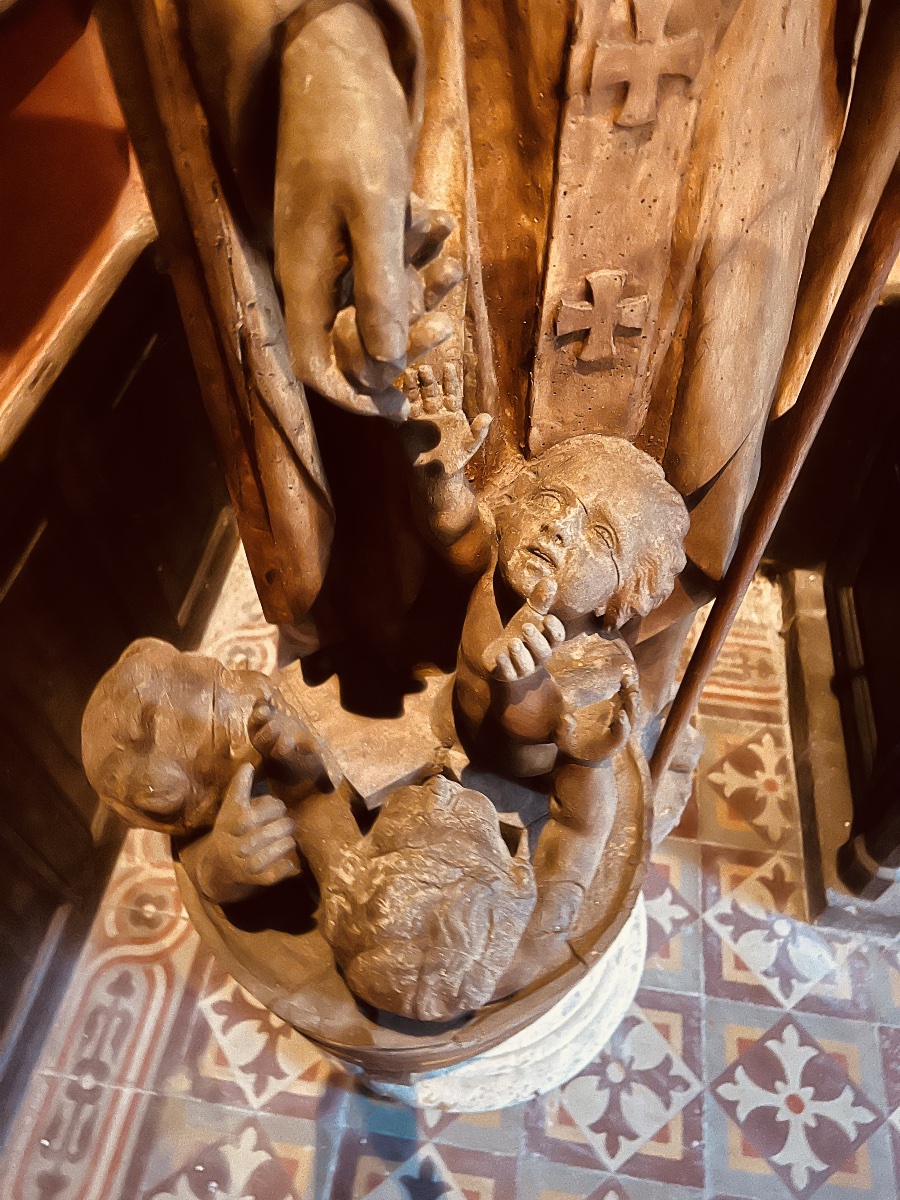
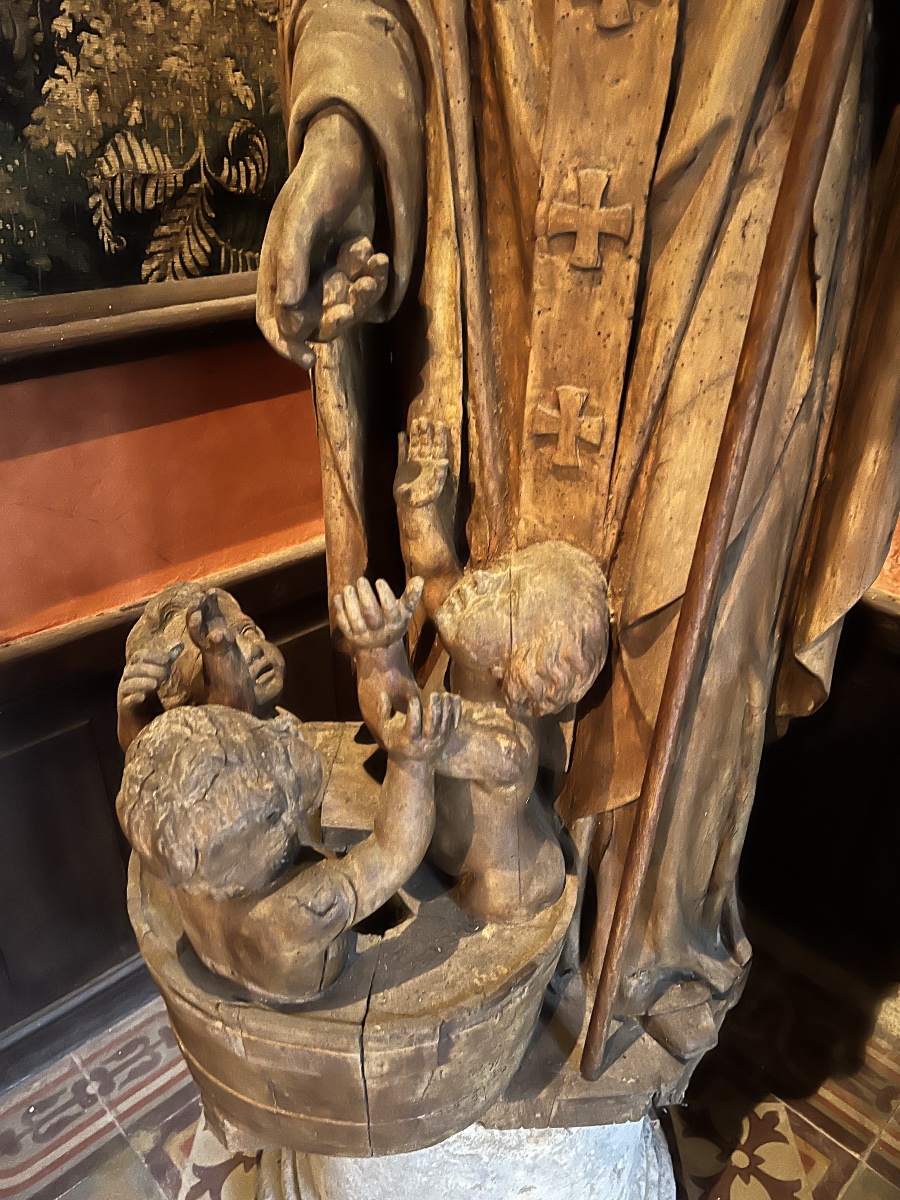
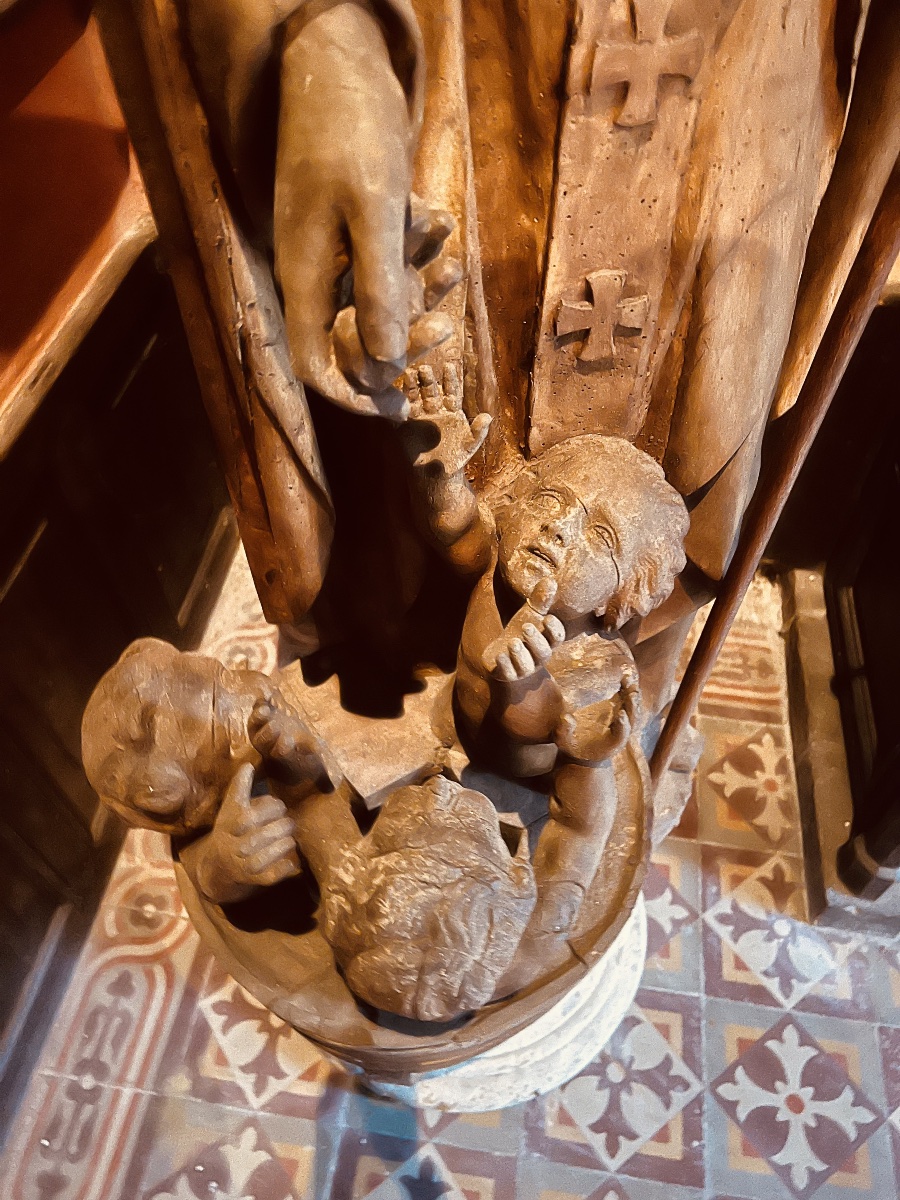
At his feet are depicted the three children in the salt barrel, a traditional episode from the legend of Saint Nicholas. According to tradition, the holy bishop is said to have resurrected three young children who had been killed and placed in a salt barrel by a butcher. This iconography, particularly popular in early religious sculpture, creates a composition here that is both monumental and highly expressive.
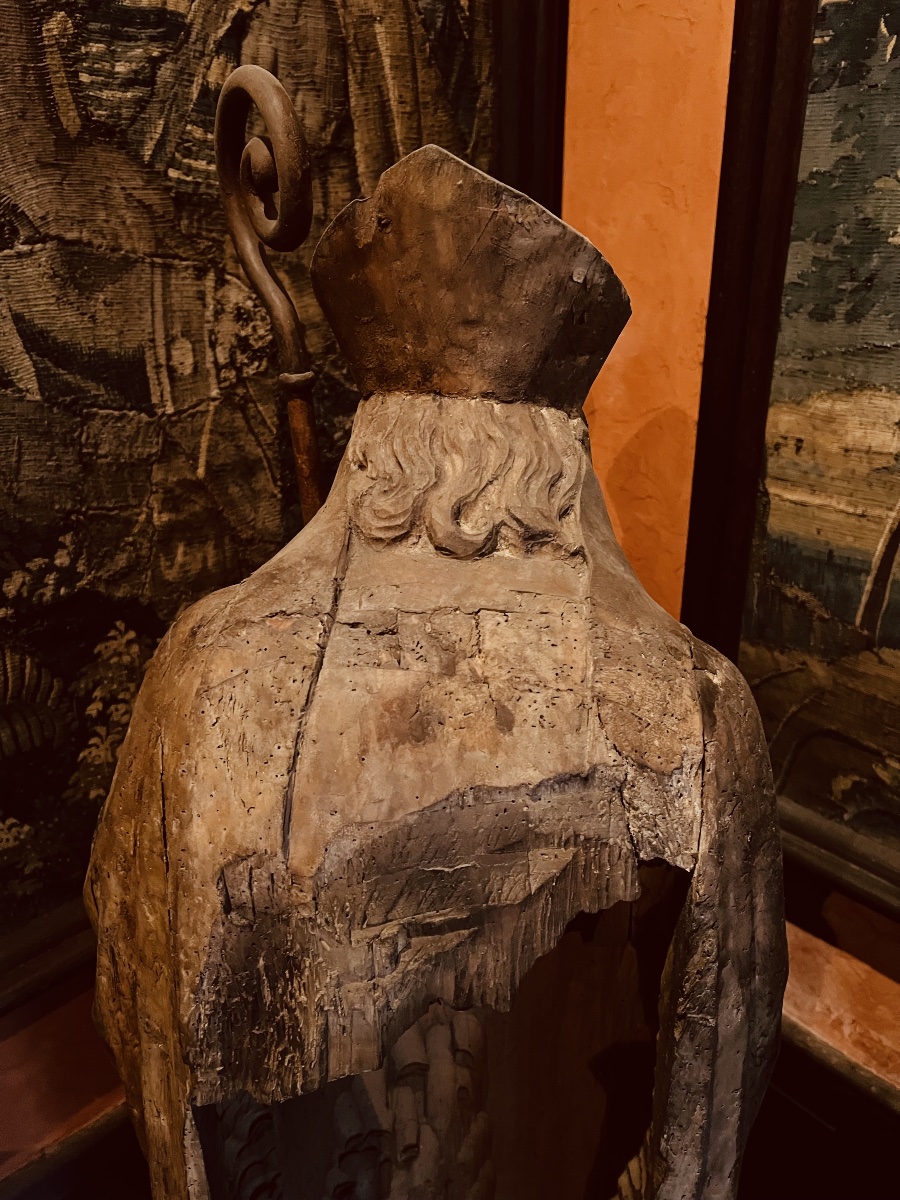
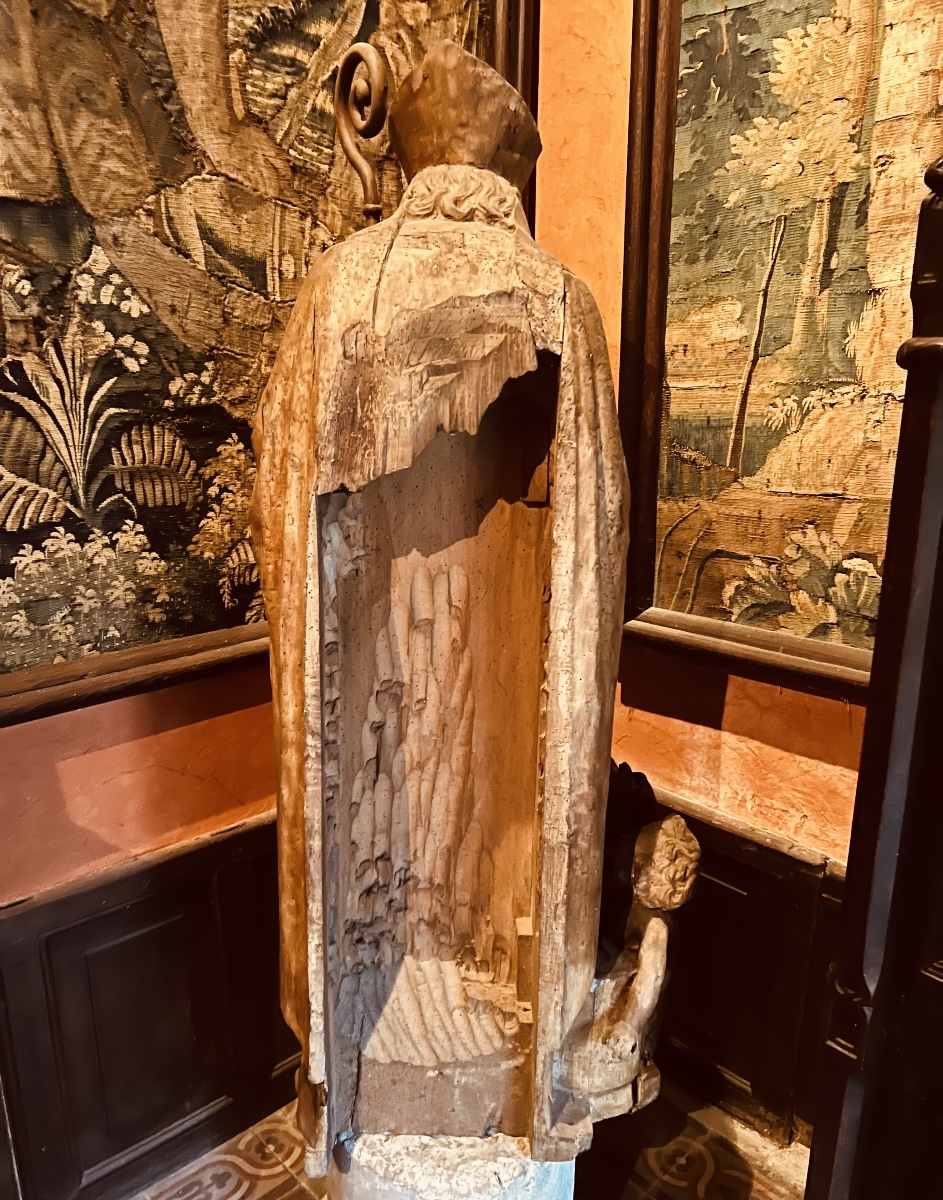
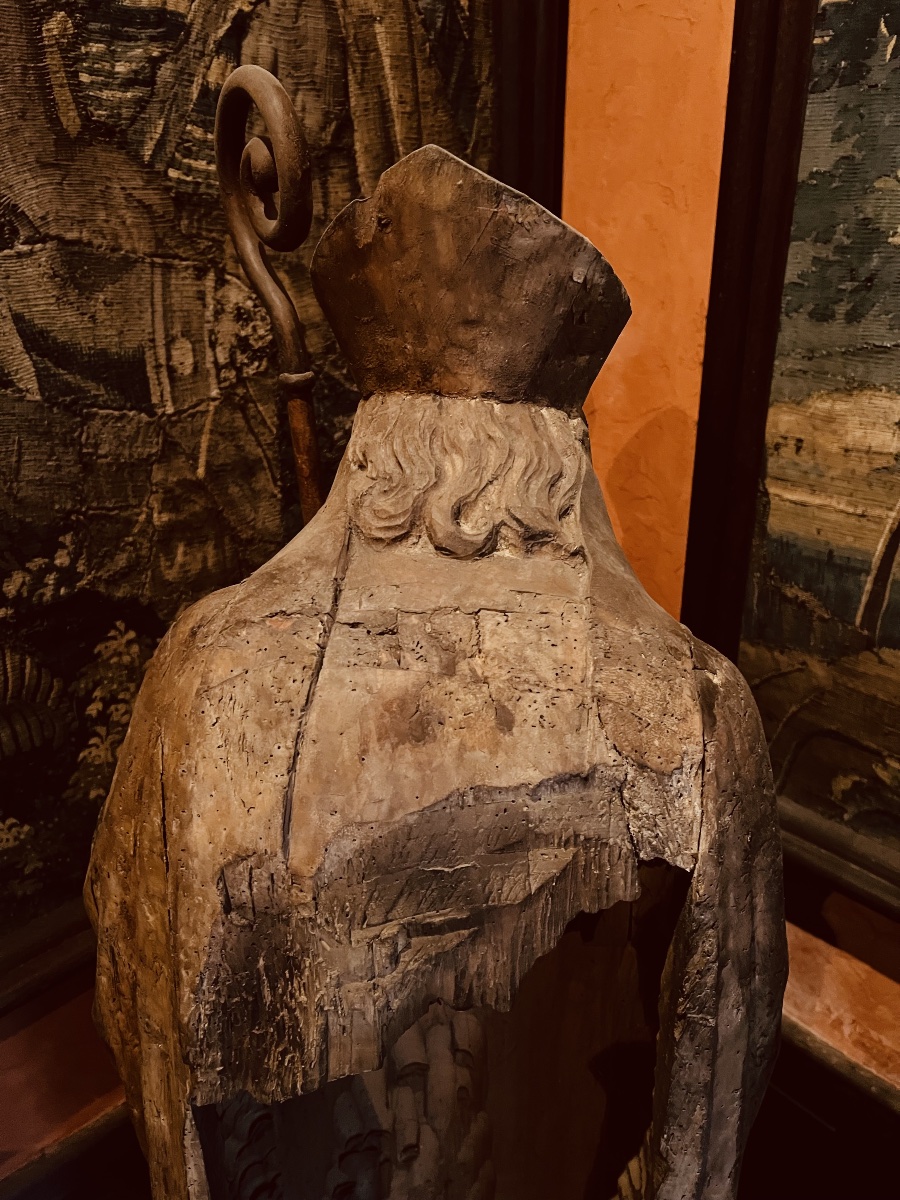
The sculpture features deep, vigorous carving, with particularly interesting detail in the rendering of the faces, hair, and folds of the clothing. The wood has retained a beautiful antique patina, highlighting the quality of the sculpture and its age.
A work of character, this depiction of Saint Nicholas is a fine example of 17th-century religious wood sculpture, originally intended for a devotional setting.
A particularly decorative and striking sculpture that will find its place equally well in a collection of antique religious art or in a home seeking authentic and historic works.
Provenance: family chapel for six generations.
Nicholas of Myra, better known as Saint Nicholas, was a bishop born in Patara, Lycia, around 270 and died on December 6, 335, in the city of Myra. Venerated by most Christian traditions, he is celebrated on December 6 (the day of his repose).
Orphaned at a very young age, Saint Nicholas was raised by his uncle, also named Nicholas, who was the bishop of Myra. Upon his uncle’s death in the year 300, the future Saint Nicholas took over the episcopal office. The saint then performed miracles that established his reputation, his legend, and his numerous patronages. For example, he ensured that his flock was treated with respect despite the imprisonment of the Christians of Myra, and even secured a tax reduction from Emperor Constantine by pleading the cause of the people of Myra in Constantinople.
The Beginnings of a Cult
Saint Nicholas was buried in the Church of Saint Nicholas of Myra until 1087. His relics are unique in that they produce an oil considered miraculous, “the manna of Saint Nicholas,” which is still harvested today. This posthumous miracle contributed to the spread of the legend and cult of Saint Nicholas within the Orthodox Church.
Period: 17th century
Style: Renaissance, Louis 13th
Condition: Good condition
Material: Solid wood
Width: 55
Height: 130
Reference (ID): 1812506
Availability: In stock