


Cabinet Decorated With Hardstones And Blackened Wood, 17th Century
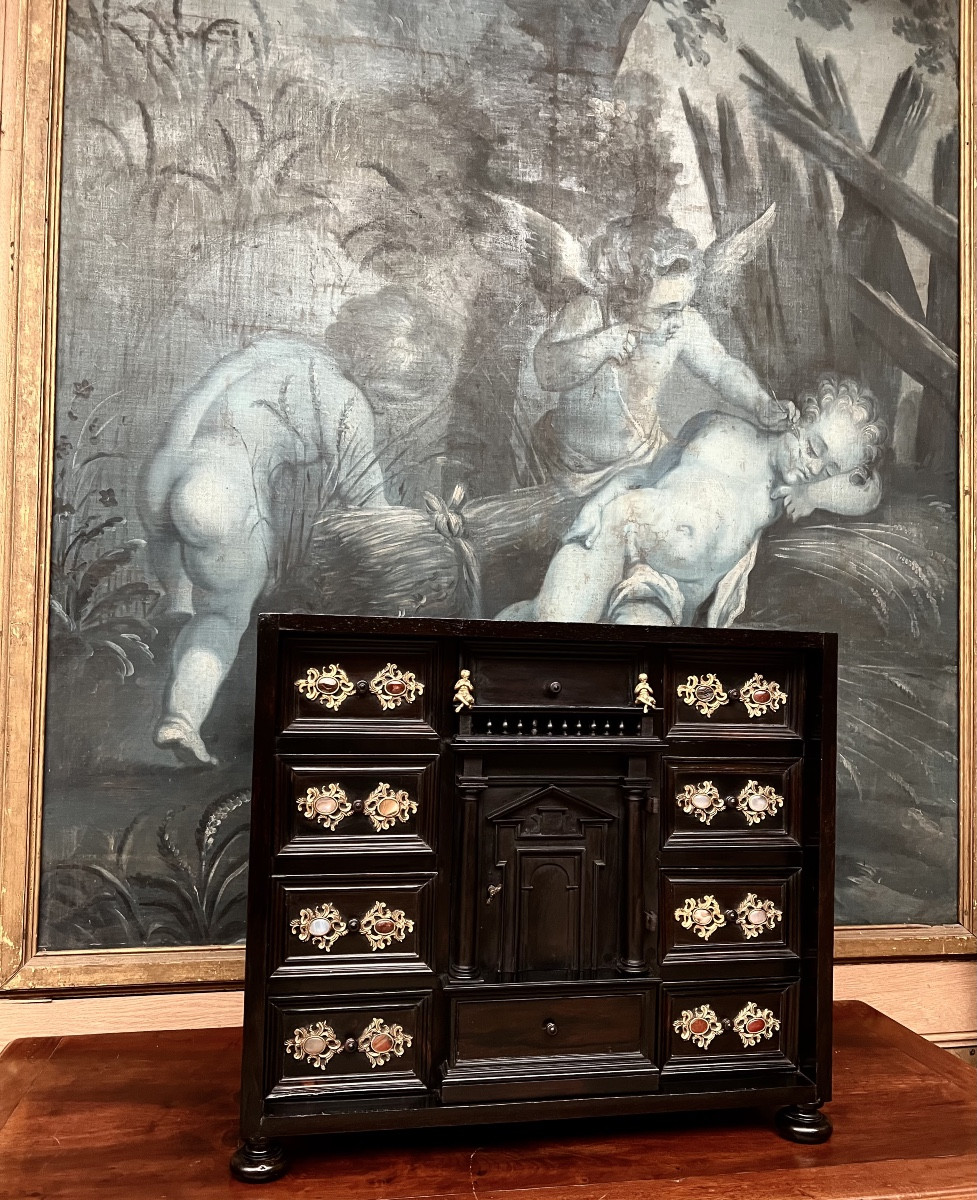
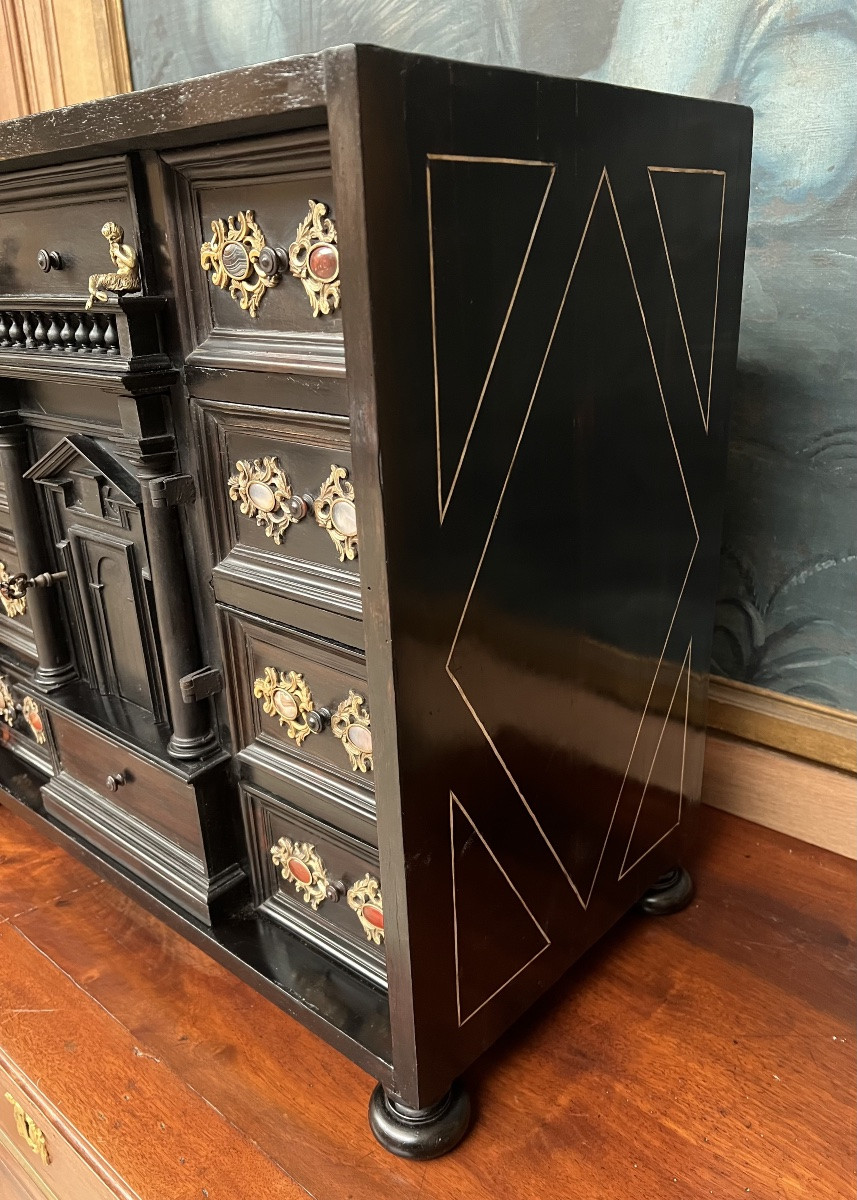
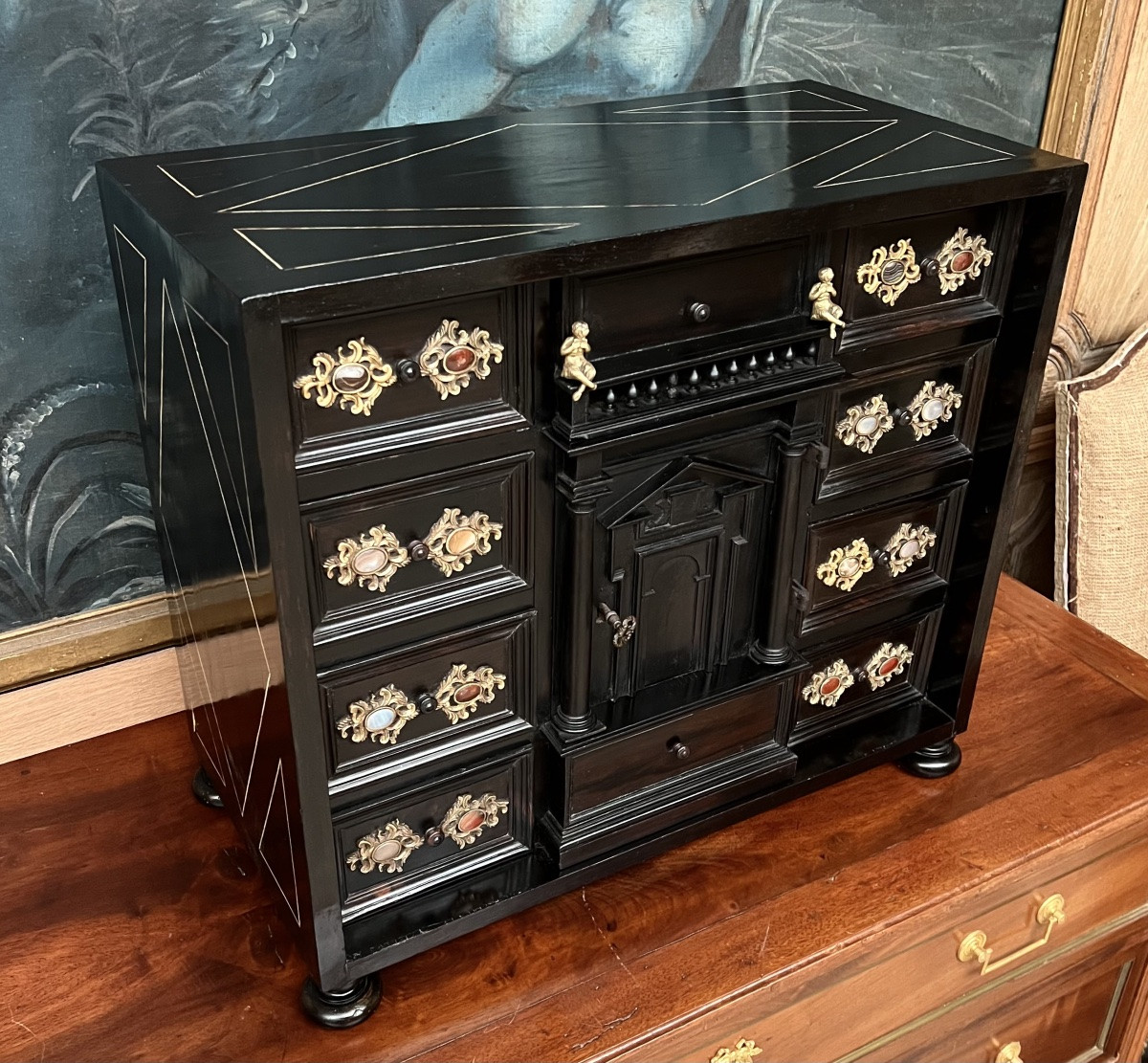
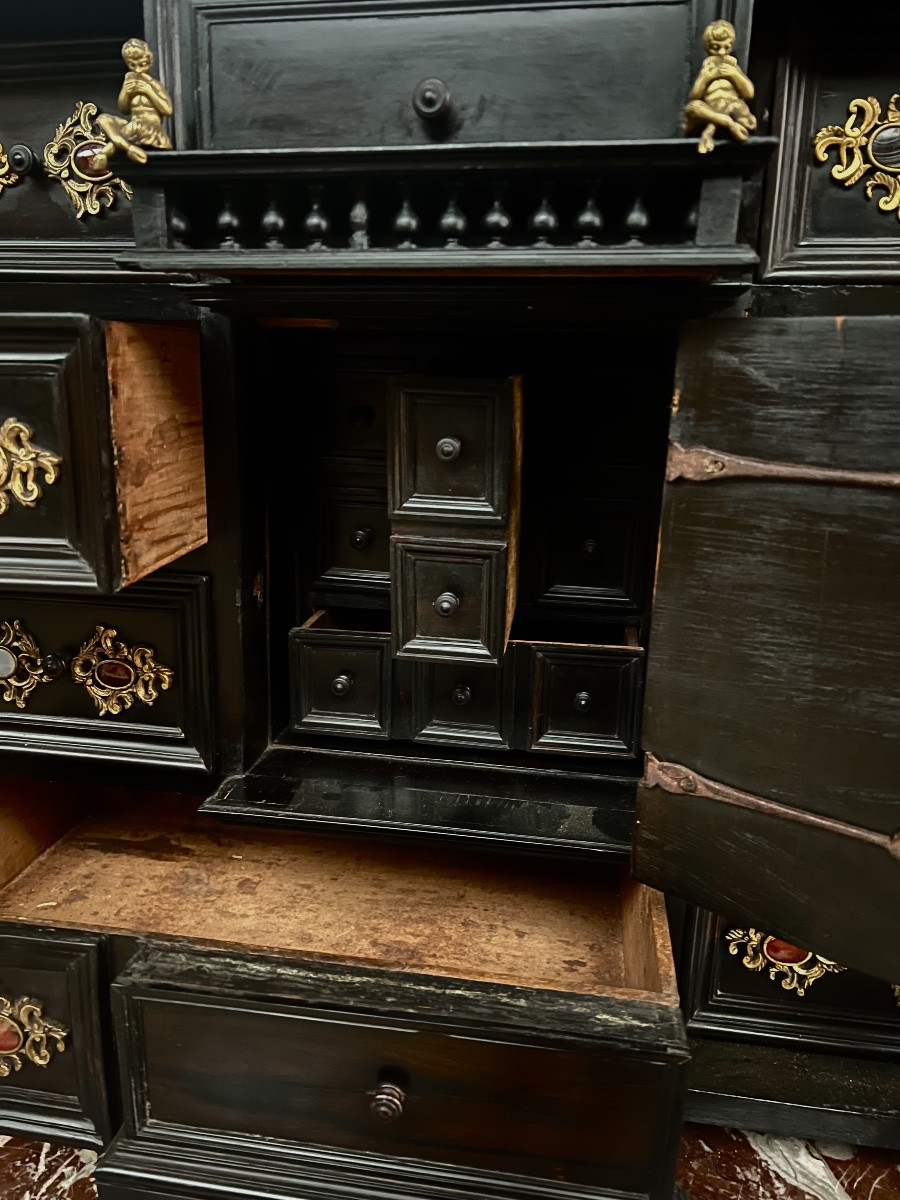
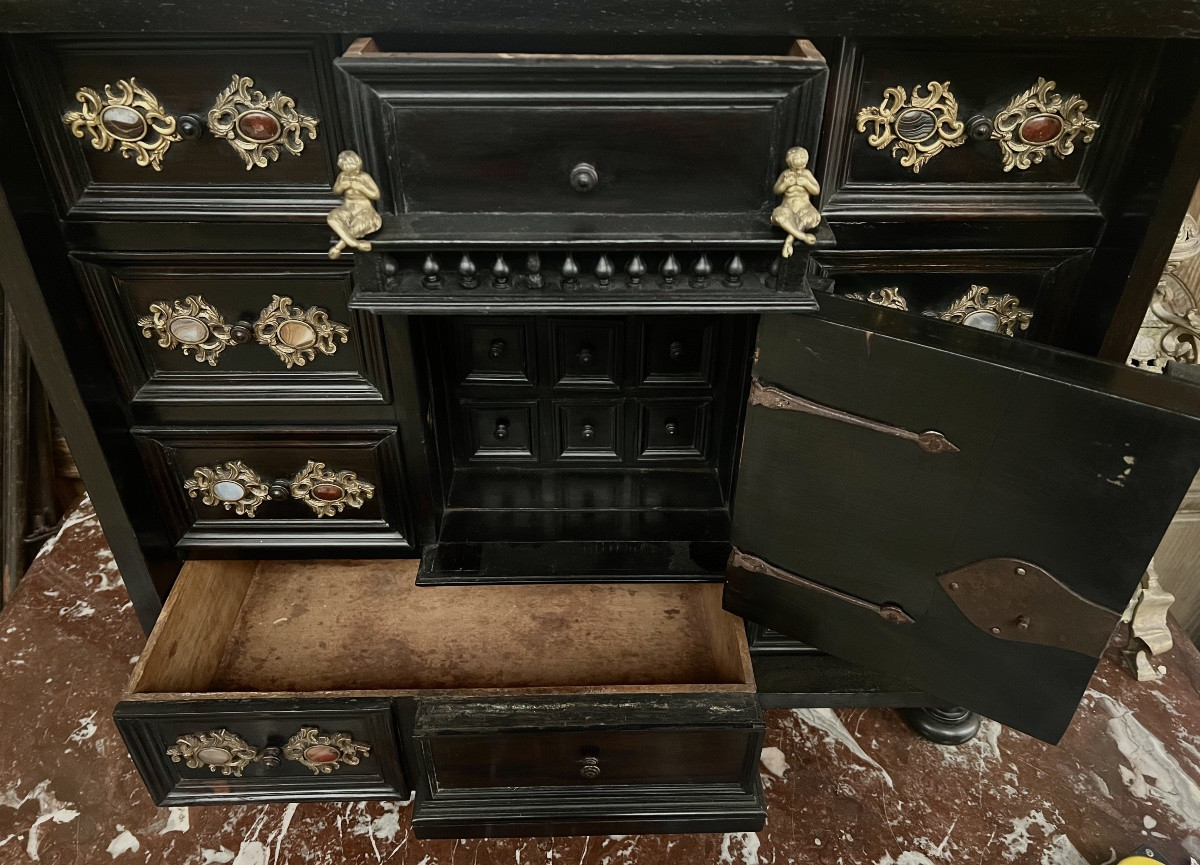
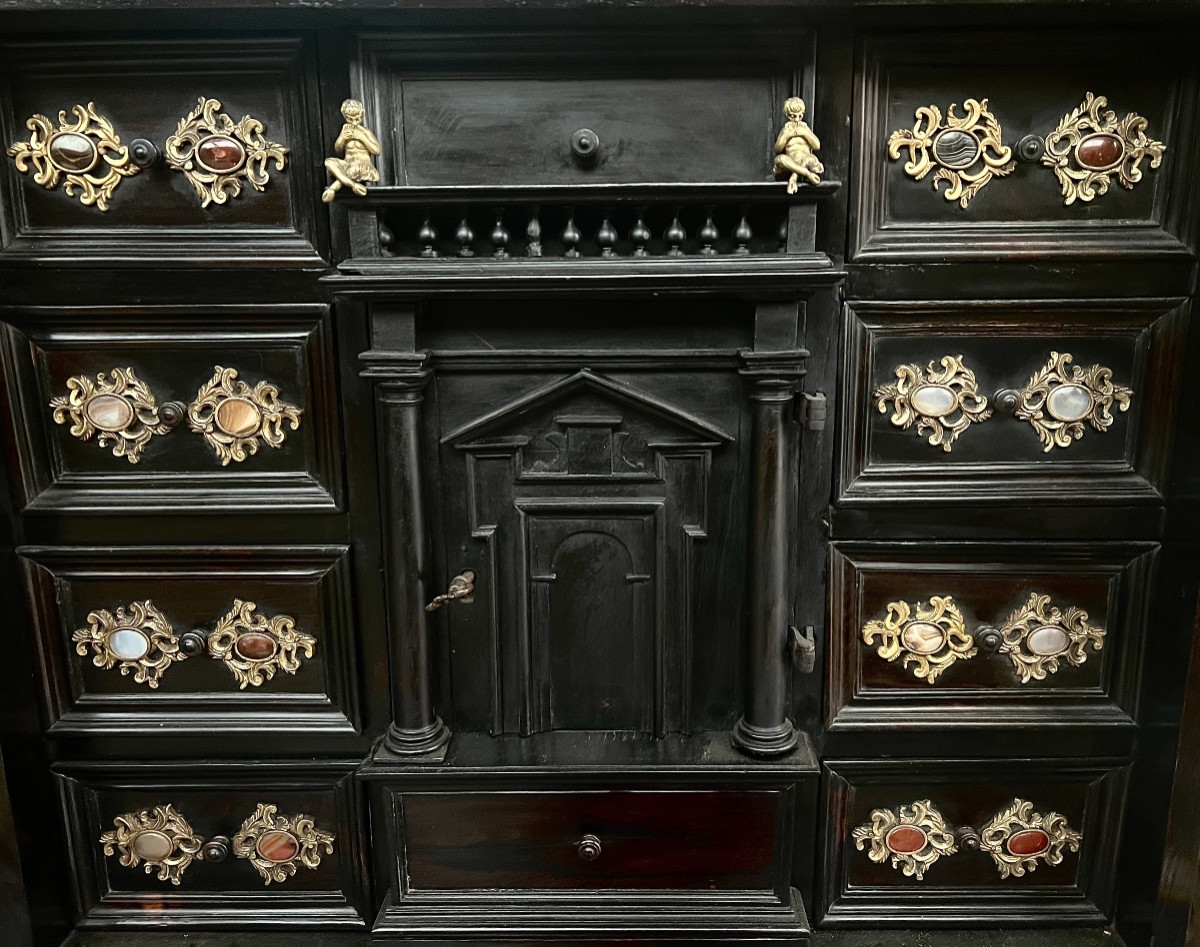
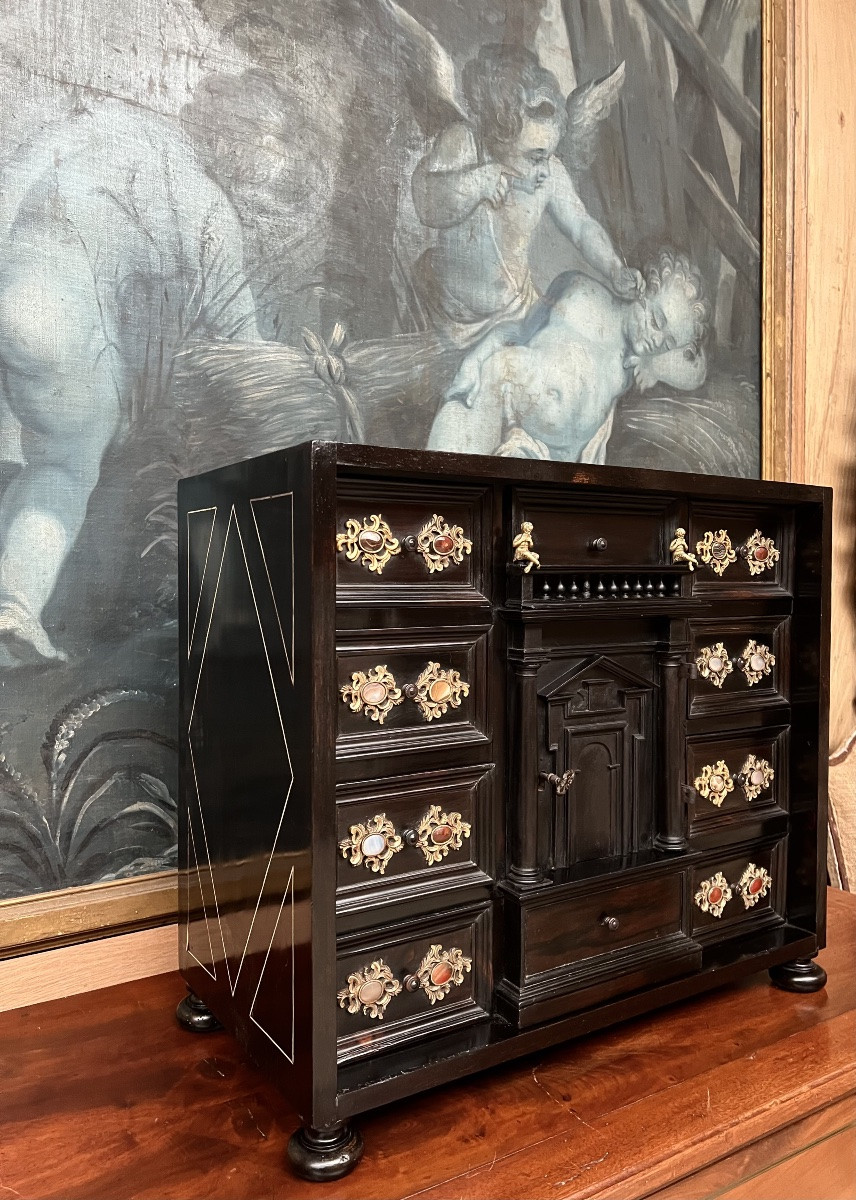
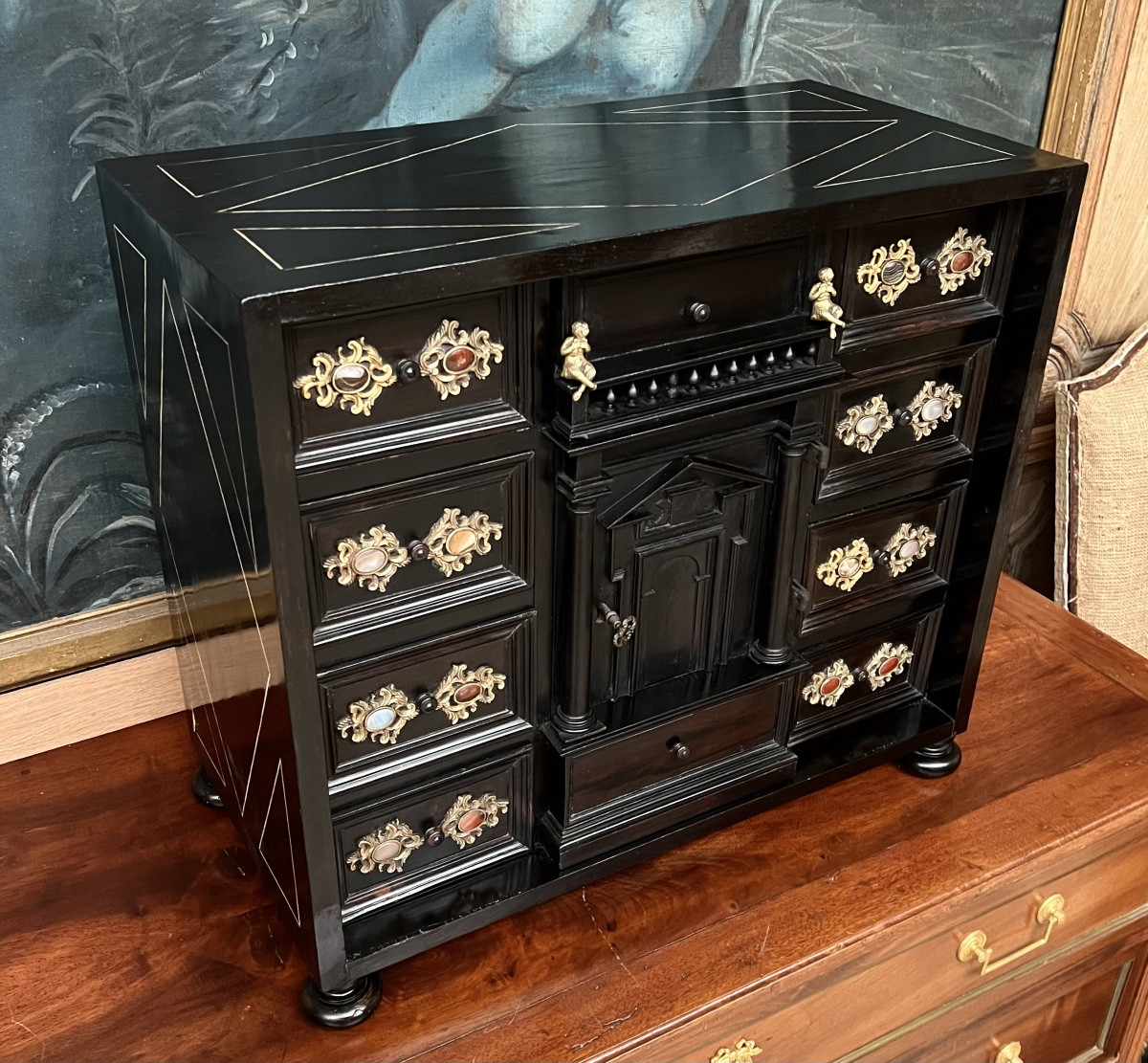
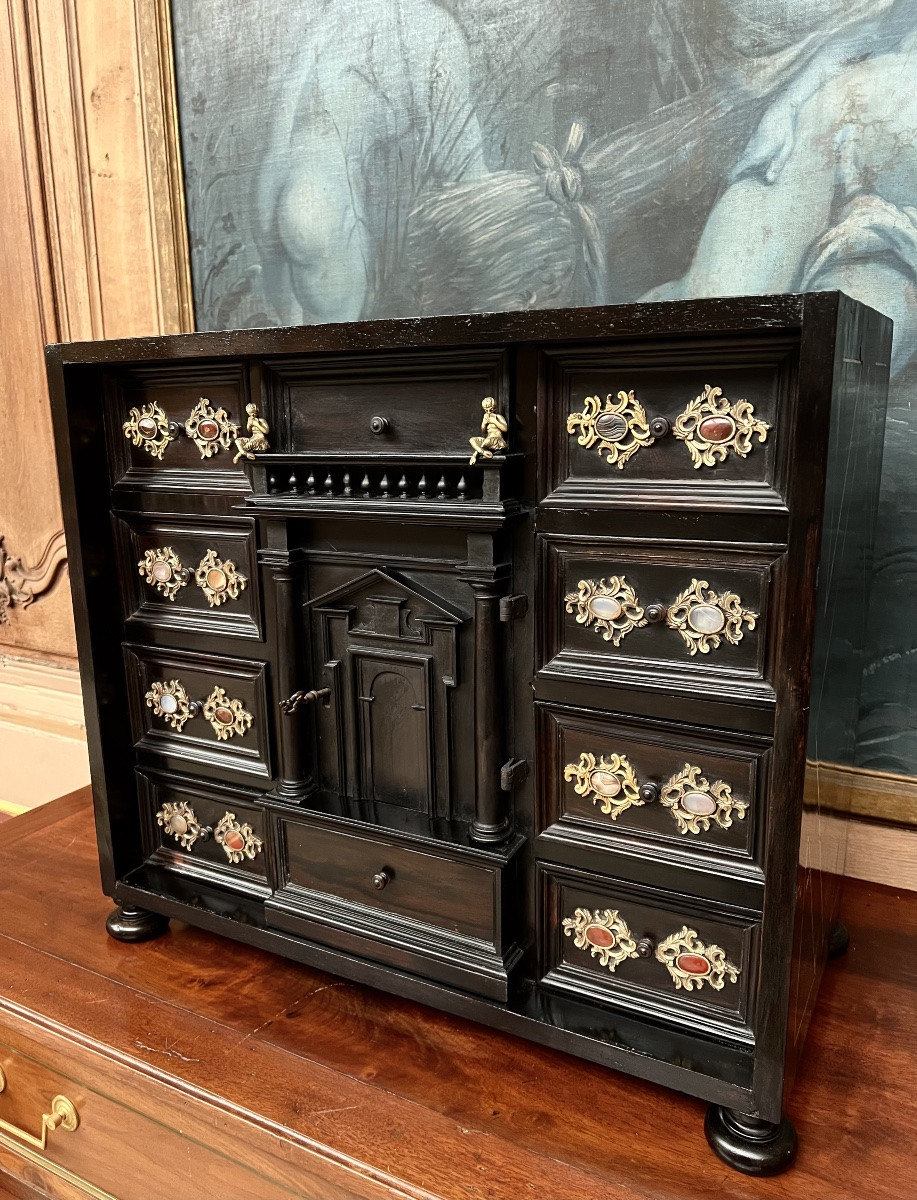
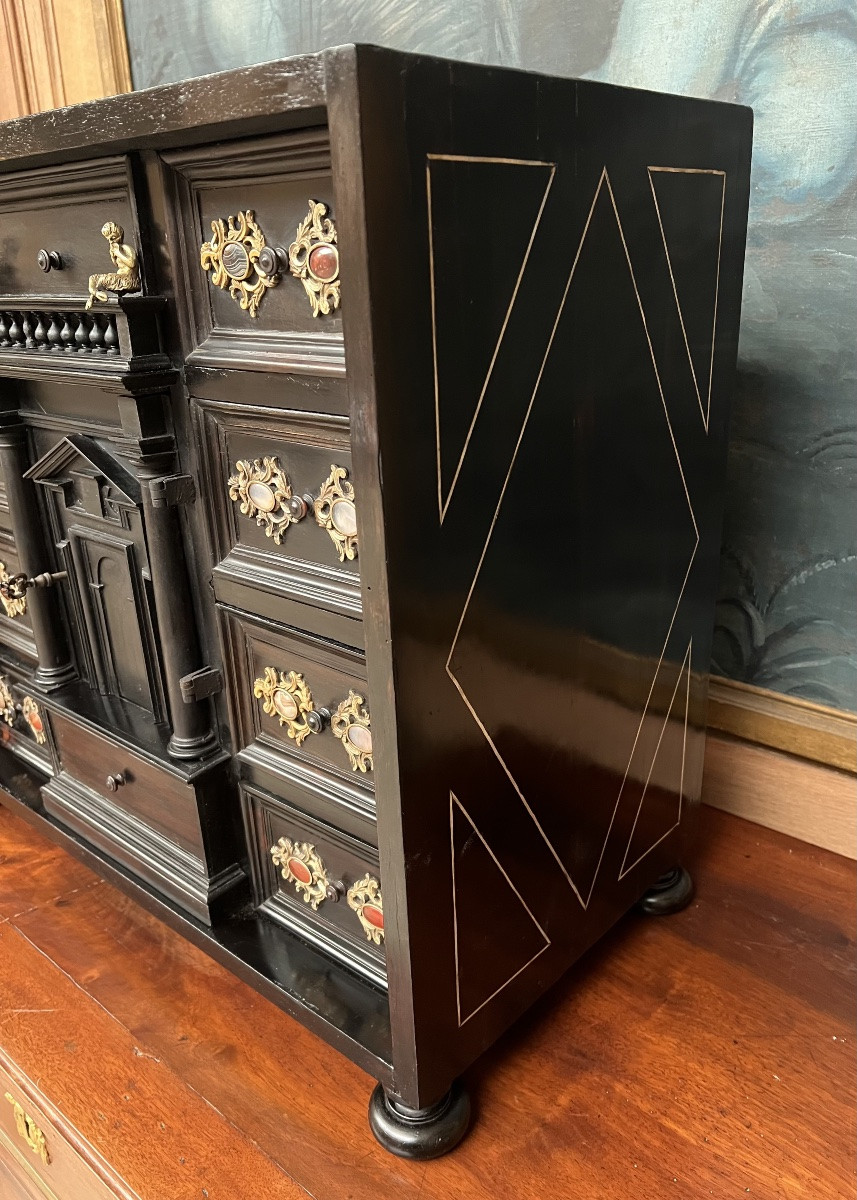
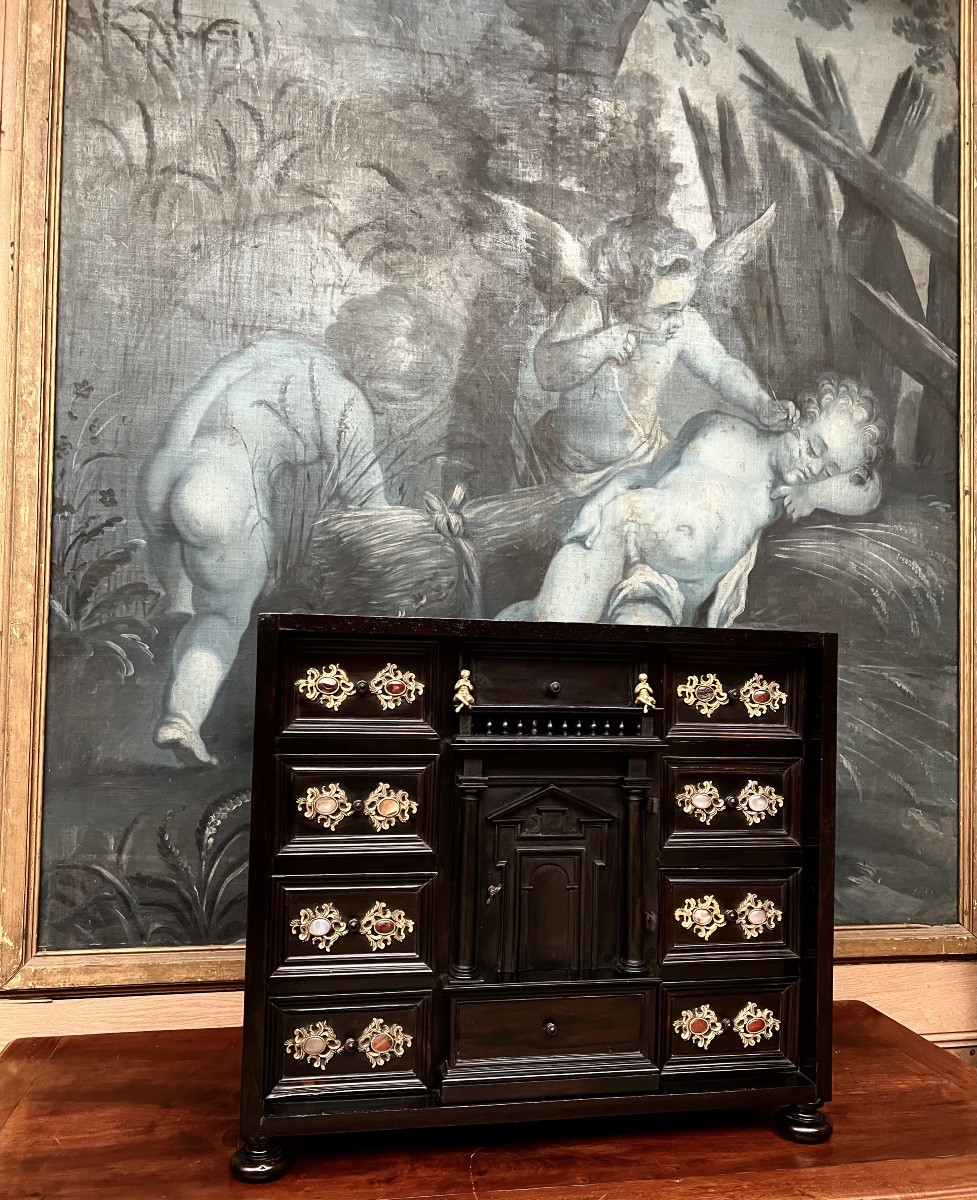
Magnificent cabinet in blackened wood, typical of prestigious productions in Northern and Southern Europe during the 17th century. Flanders (Antwerp), between 1650 and 1700. This is a cabinet with drawers, often called a cabinet of curiosities or an ebony cabinet, designed to house precious objects, documents, and private collections. Visible characteristics: Blackened wood structure (often ebony or wood stained to imitate ebony), a very luxurious material and representative of Baroque taste. Highly architectural façade, with a central portico-shaped element reminiscent of a small temple, typical of 17th-century cabinets with an "architectural façade." Multiple drawers arranged symmetrically on either side: Each adorned with applied gilt bronze plaques with scrolled motifs (Baroque cartouches). At the center of these ornaments are polychrome cabochons or faux cameos, often made of semi-precious stones, glass paste, or agate, highly prized in precious cabinets. Gilded figurines sit on the cornice of the upper drawer—small decorative figures characteristic of Flemish and Germanic cabinets. The cabinet rests on turned toupie feet. Function and symbolism: Cabinets like this one were prestigious pieces of furniture, intended to display the owner's wealth and culture. They were often used to: store important documents, keep jewelry and precious objects, display natural or miniature curiosities, and conceal secret drawers, common in this type of craftsmanship. Their architectural facade evoked classical knowledge, order, and harmony. This is very likely an ebony or blackened wood cabinet, in the Flemish (Antwerp) or German-Flemish tradition, dating from the mid- to late 17th century. The architectural features, the presence of secret drawers, and the openwork bronze mounts are typical of high-end Flemish production, sometimes exported to France and Spain. ⚜️Important stylistic elements: Baluster cornice - The miniature gallery beneath the top drawer, composed of small turned balusters, is one of the major hallmarks of 17th-century Flemish cabinets. - Repeated square moldings - Typical Flemish technique: small, molded, square interior drawers repeated on the front. Ball feet - Used in ebony cabinets of this period. Furniture intended to hold jewelry, coins, medals, and precious letters, used by aristocrats or wealthy bourgeois.
10 500 €
Period: 17th century
Style: Renaissance, Louis 13th
Condition: Good condition
Material: Precious stone
Length: 64
Height: 57
Depth: 33
Reference (ID): 1663892
Availability: In stock
Print