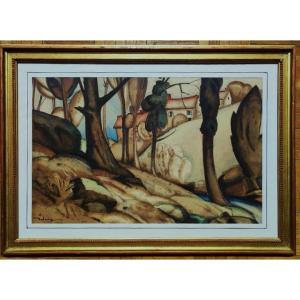


Edouard Debourg (1880–1939) The Billiards Player On The Gargilesse ~1920. Crozant School, Coucy....
Artist: Edouard Debourg (1880-1939)
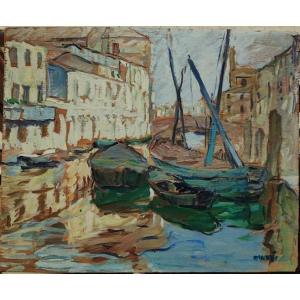
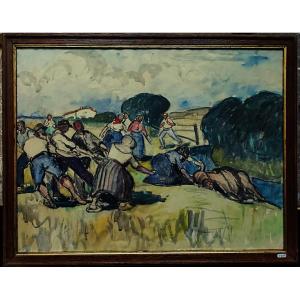
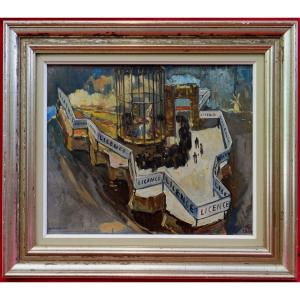
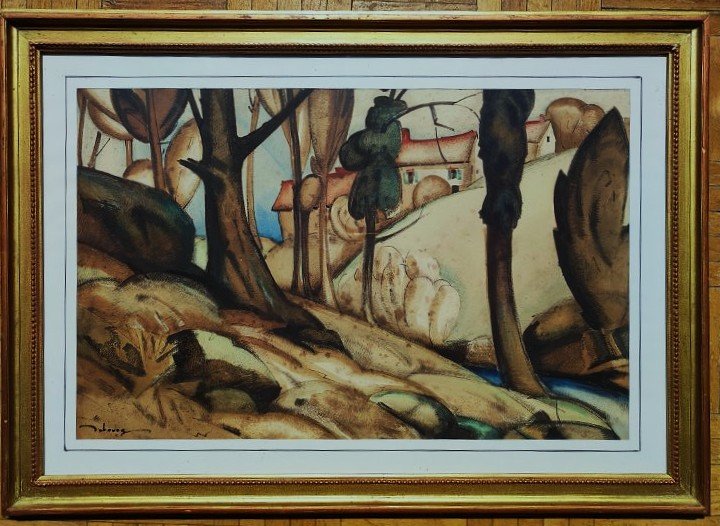
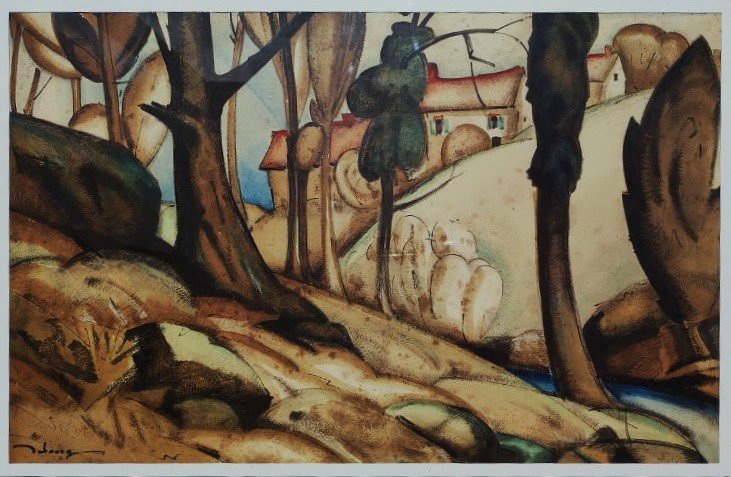
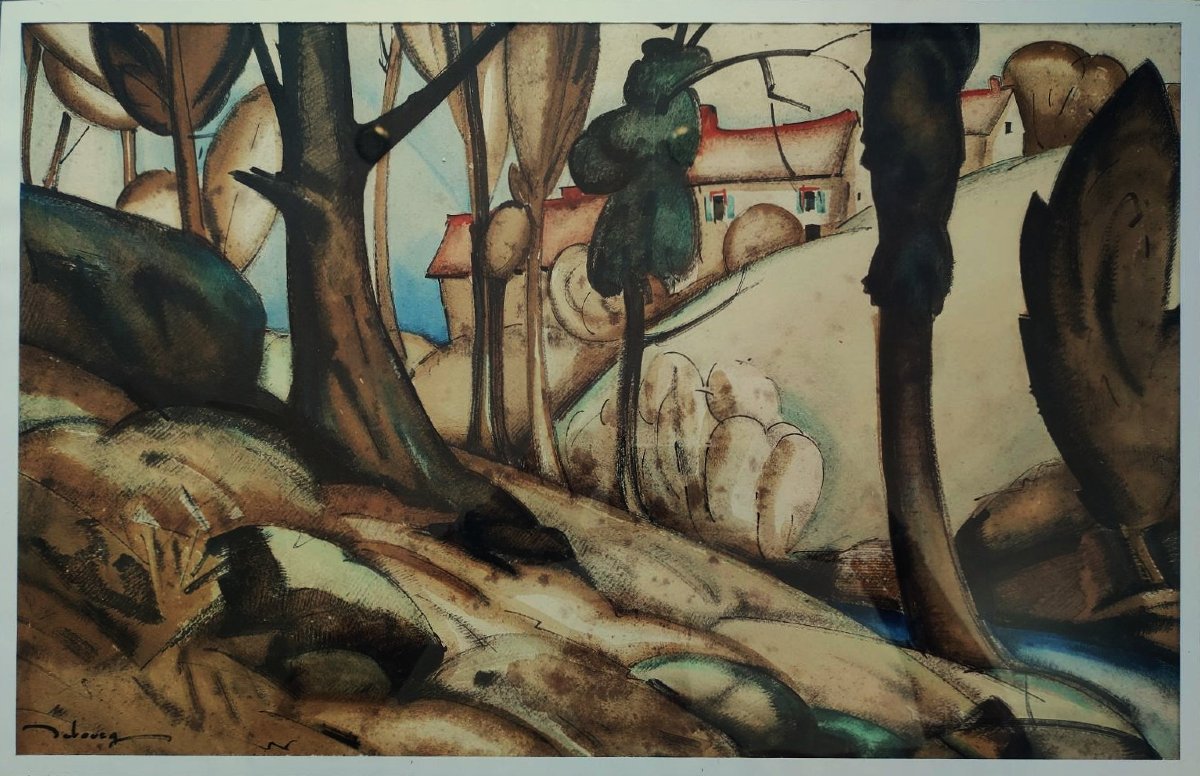
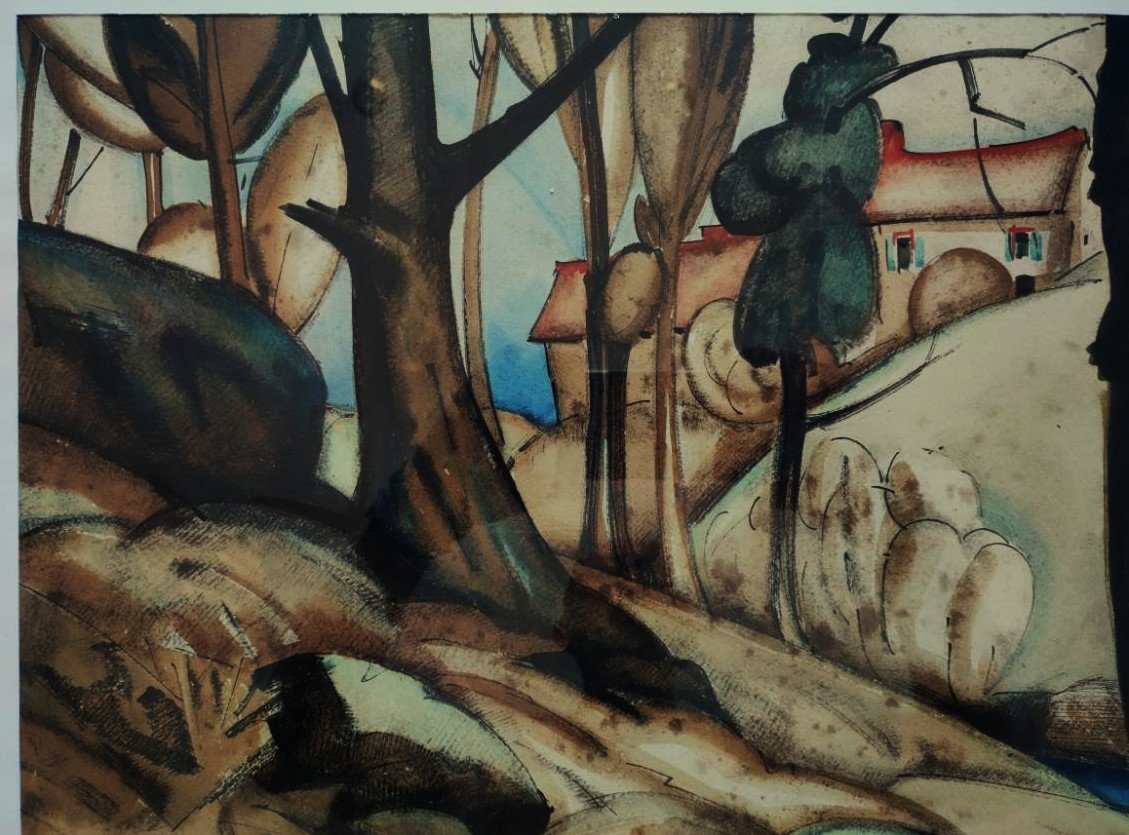
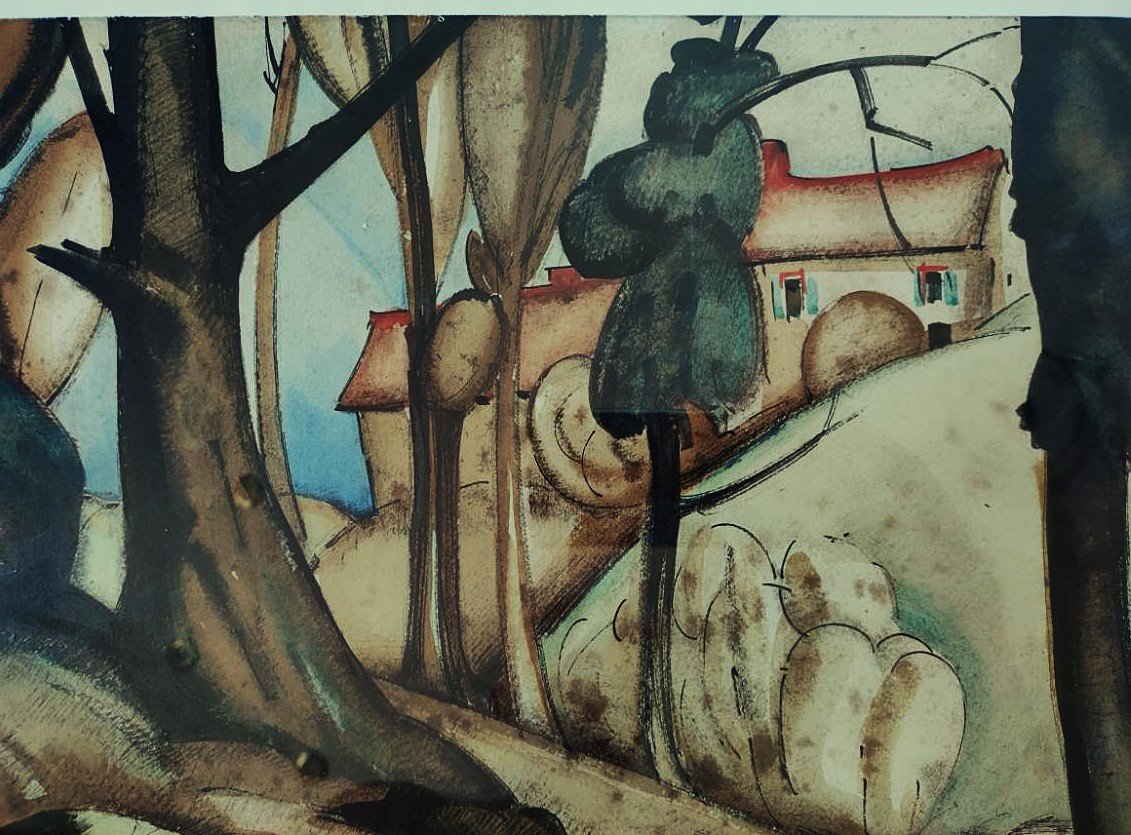
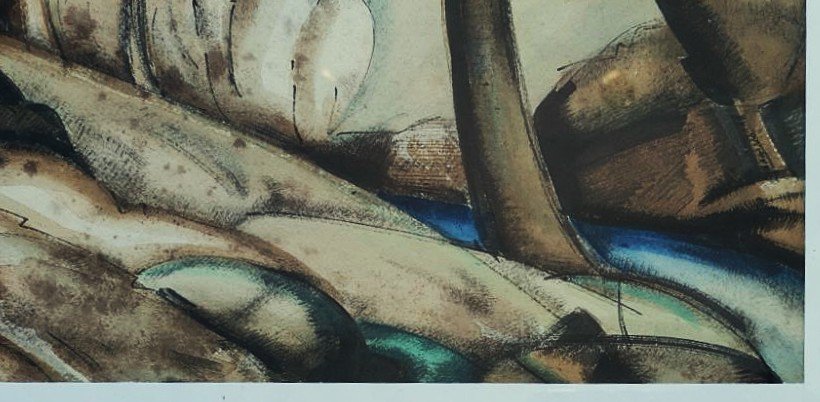
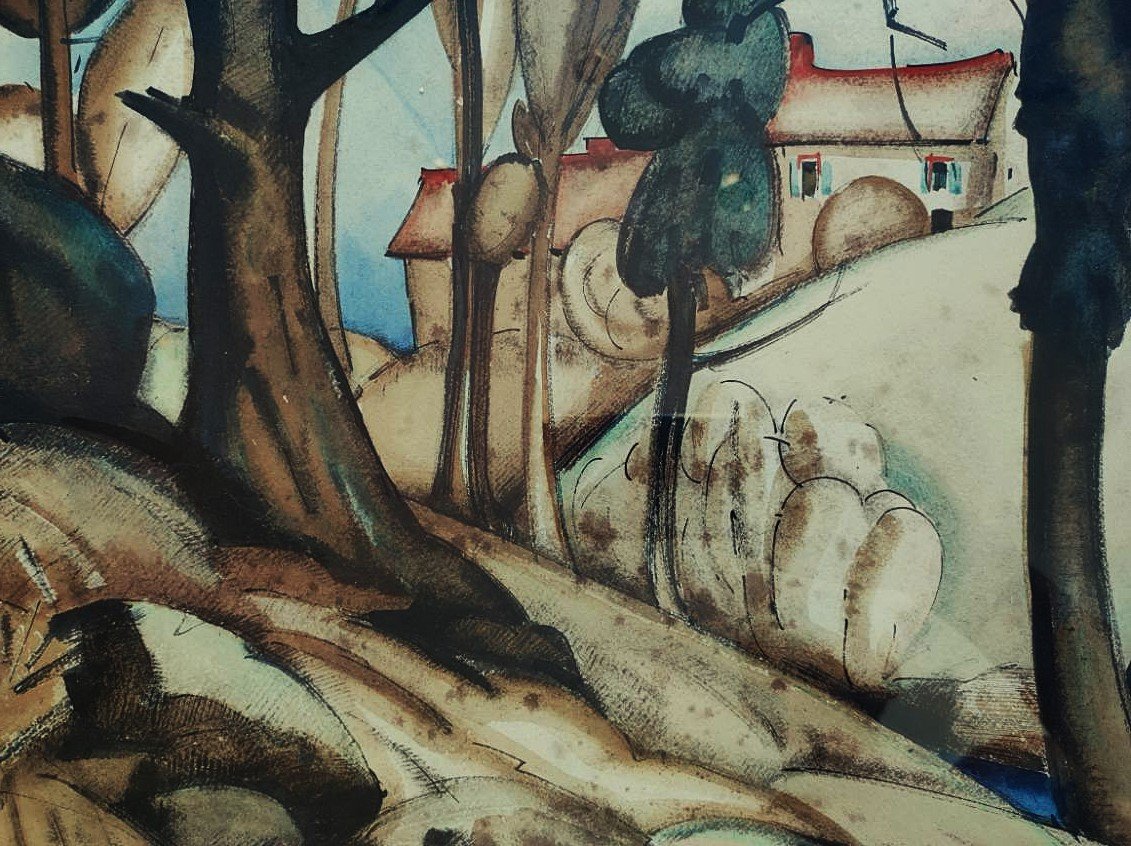
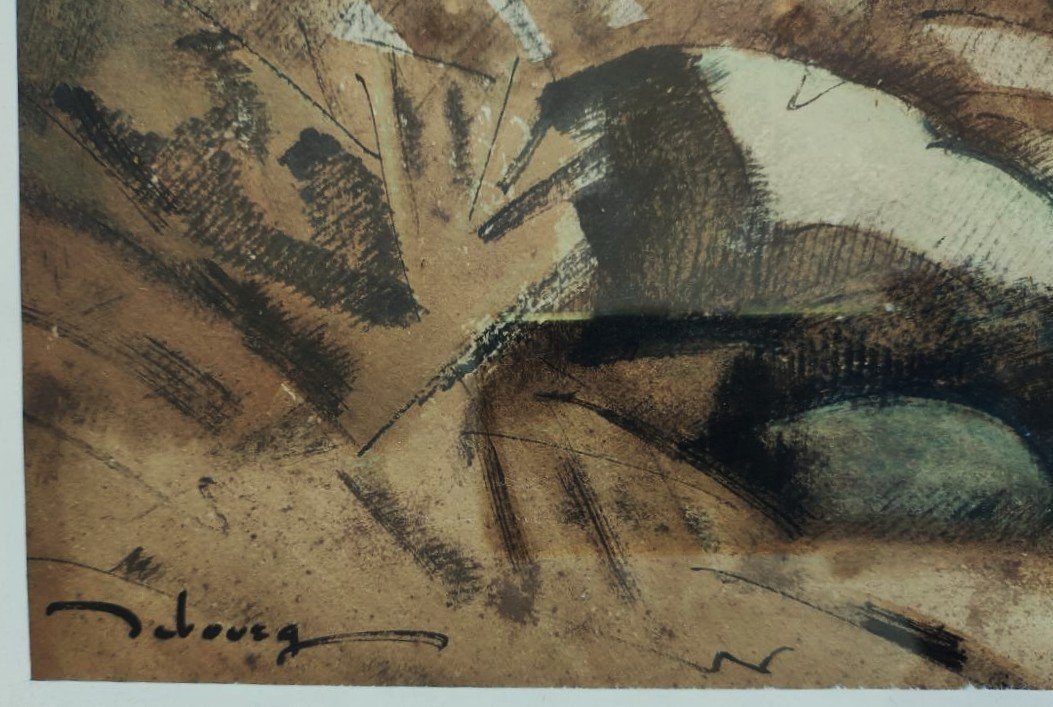
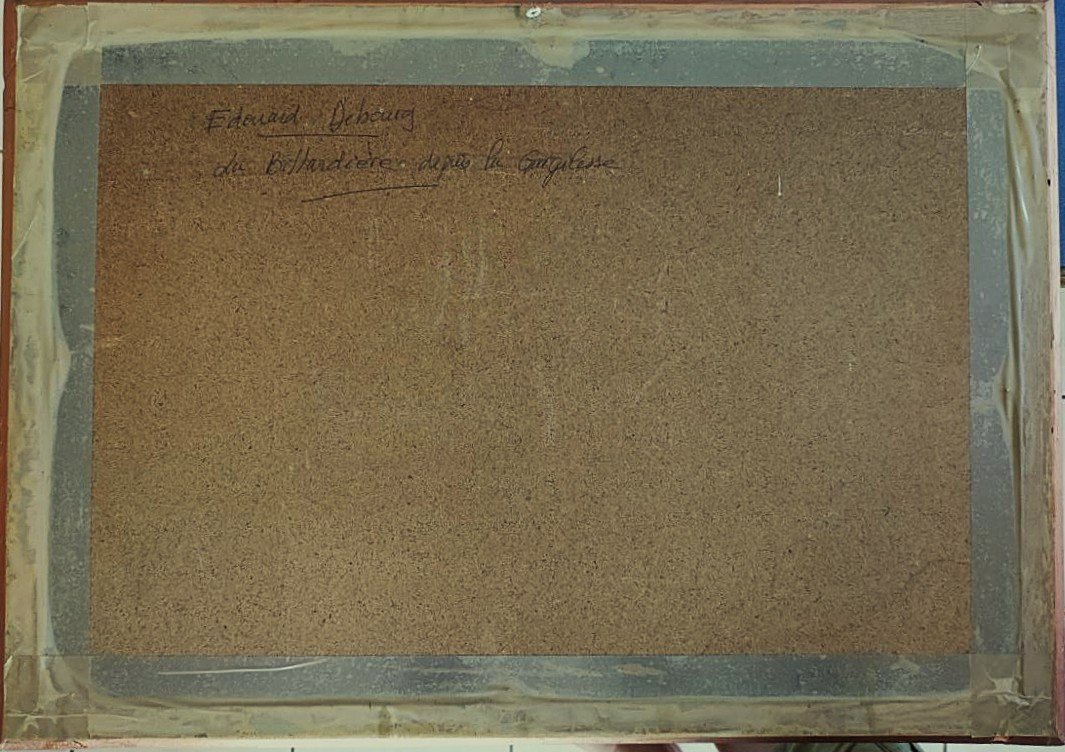
A new work by Edouard Debourg—this time a superb watercolor depicting La Billardière on the Gargilesse River circa 1920–1925, signed lower left and marked on the back “Edouard Debourg, La Billardière from the Gargilesse"
Dimensions of the watercolor alone: 33x52 cm; 46x67 cm including the frame
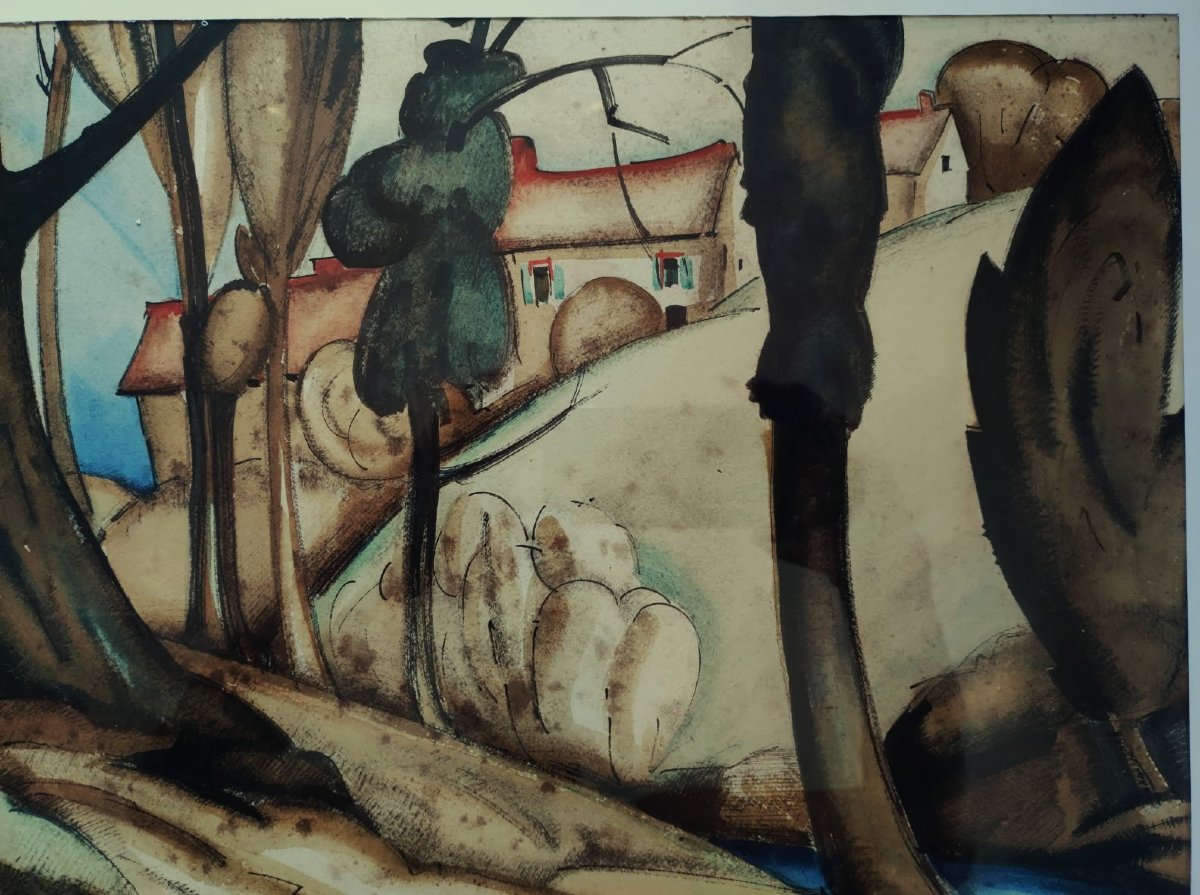
In very good original condition, with a few very slight foxing spots here and there; delivered in an antique gilded frame. It looks even better in person, as you can see the reflections caused by the glass.
Authenticity guaranteed
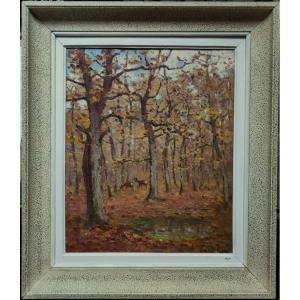
Provenance: descendants of the painter. I have two more watercolors by Debourg left; please check out the other listings, including a very beautiful one depicting a wooded grove near Le Pin.
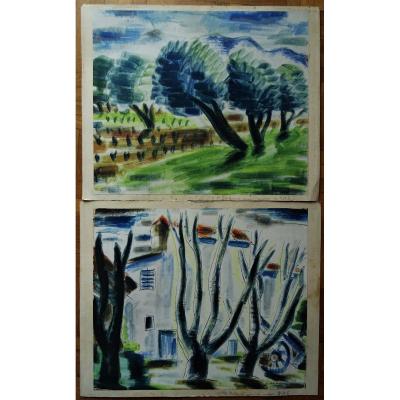
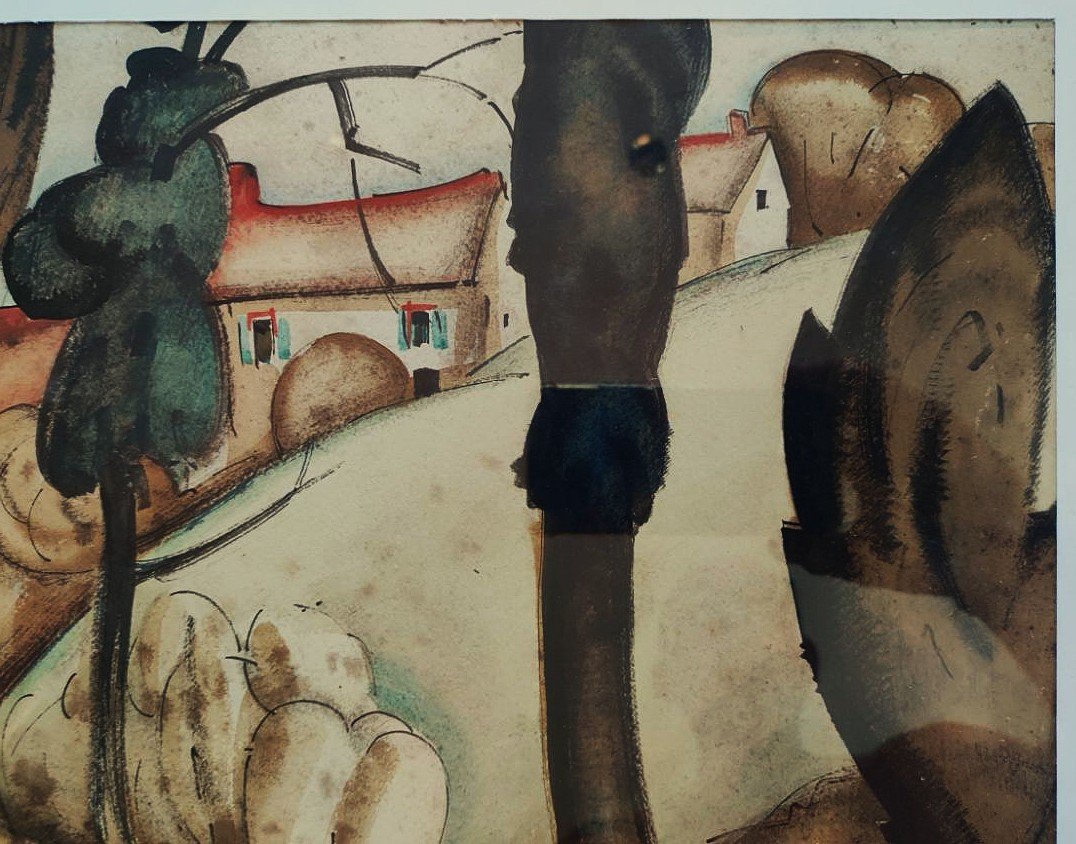
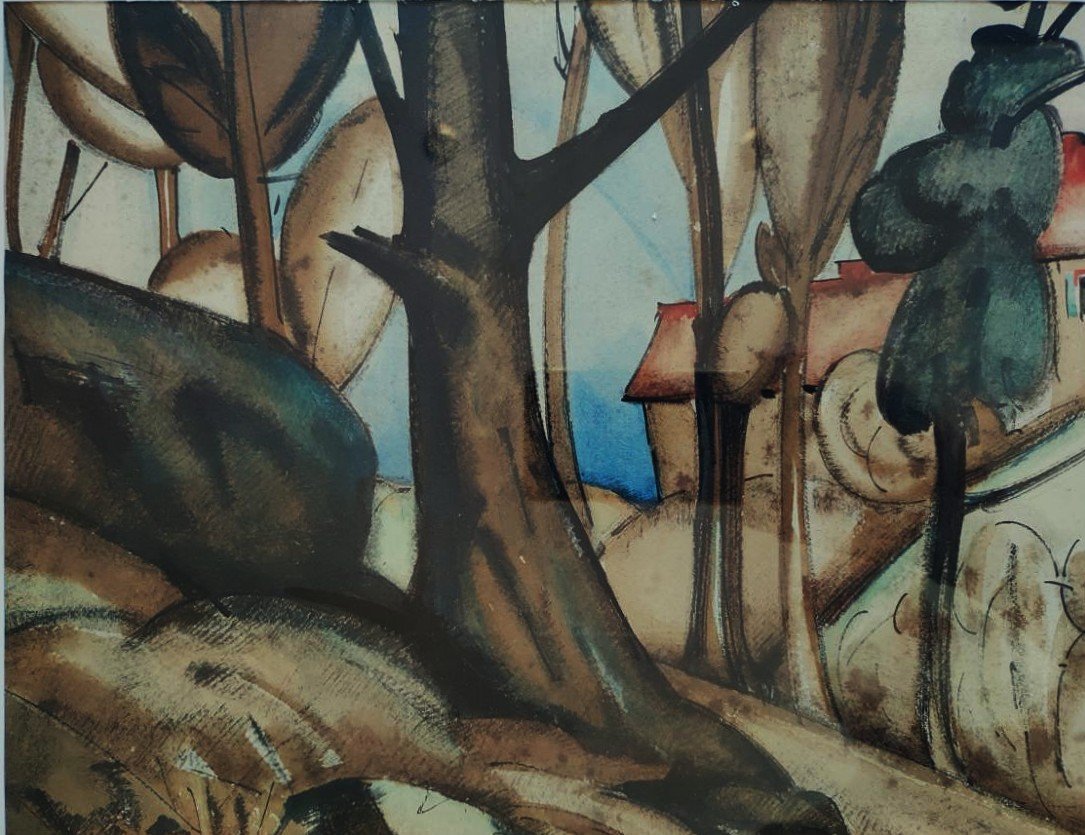
This is indeed a magnificent watercolor by Edouard Debourg from his so-called Cubist period; and you can clearly see that the painter applied the lessons of Lhote or Herbin here; he stylizes his subject and renders it with straight, geometric lines, then applies his colors—in this case, shades of Sienna brown, green, orange, and blue. The location he is painting is La Billardière, a small hamlet on the outskirts of Gargilesse; it may, in fact, be the artist’s studio house, as he lived there for several years until his death.
This is, therefore, a highly recognizable work by one of the iconic painters of the Crozant School—and more specifically, of the Gargilesse group , of which he was a member alongside his friends Anders Osterlind, Marcel Coucy, André Villeboeuf, and Claude Chéreau—and one might even add Louis Moreau.
His work is, in fact, very often compared to that of his friends Anders Osterlind and Marcel Coucy.
Edouard Bourgeois, known as Debourg, was born in Versailles in 1880 and died in Gargilesse in 1939.
Hebegan by attending classes at the École des Beaux-Arts in Paris, where he met Emile Othon Friesz, with whom he struck up a friendship; this friendship would later lead him to meet other painters who frequented the Creuse Valley, such as the Detroys, Osterlind, and Guillaumin.
In 1900, he participated in the Paris World’s Fair; in 1913, he exhibited at the Salon d’Automne and the Salon des Artistes Français, continuing to do so until 1938. In 1917, during a trip to Gargilesse and the Creuse Valley, he met the Osterlind clan, with whom he became friends; a few years later, they would even become part of the same family through their respective spouses.
In 1920, he purchased a house in La Billardière nearGargilesse, where he would live until the end of his life. From there, he would socialize withall of his artist friends mentioned earlier. In 1921, he exhibited at the Salon des Indépendants and continued to do so until 1938. He worked in Brussels and exhibited alongside Anders Osterlind at the Manteau Gallery. Starting in 1923, he discovered the Corrèze region, where he painted numerous paintings and drawings, especially in the areas around Uzerche, Argentat, Collonges, and Beaulieu. He spent the winter of 1924 in Brittany near Concerneau and decided to go meet the painters of Pont-Aven and the Académie Ranson. In 1925 he exhibited extensively, mainly in Paris, at the Druet, Granoff, and Chappe galleries, among others...
In 1931, he exhibited alongside his friends Belle, Coucy, Detroy, Villeboeuf, Jamet, Joseph, and Othon-Friesz...at the Salle de l’Excelsior on the Champs-Élysées for the exhibition “The Painters of the Creuse Valley.” Between 1934 and 1936, he helped decorate the ceiling of the Rex movie theater.
In 1937, he opened a studio on Rue des Sablons in Paris, and in 1939, he passed away in Gargilesse.
Therewere numerous posthumous exhibitions, notably in Orléans and Limoges, as well as several sales of part of his studio collection in Orléans.
Today, he is considered one of the top 10 painters of the Crozant School.
Dimensions of the watercolor alone: 33x52 cm; 46x67 cm including the frame
In very good original condition, with a few very slight foxing spots here and there; delivered in an antique gilded frame. It looks even better in person, as you can see the reflections caused by the glass.
Authenticity guaranteed
Provenance: descendants of the painter. I have two more watercolors by Debourg left; please check out the other listings, including a very beautiful one depicting a wooded grove near Le Pin.
This is indeed a magnificent watercolor by Edouard Debourg from his so-called Cubist period; and you can clearly see that the painter applied the lessons of Lhote or Herbin here; he stylizes his subject and renders it with straight, geometric lines, then applies his colors—in this case, shades of Sienna brown, green, orange, and blue. The location he is painting is La Billardière, a small hamlet on the outskirts of Gargilesse; it may, in fact, be the artist’s studio house, as he lived there for several years until his death.
This is, therefore, a highly recognizable work by one of the iconic painters of the Crozant School—and more specifically, of the Gargilesse group , of which he was a member alongside his friends Anders Osterlind, Marcel Coucy, André Villeboeuf, and Claude Chéreau—and one might even add Louis Moreau.
His work is, in fact, very often compared to that of his friends Anders Osterlind and Marcel Coucy.
Edouard Bourgeois, known as Debourg, was born in Versailles in 1880 and died in Gargilesse in 1939.
Hebegan by attending classes at the École des Beaux-Arts in Paris, where he met Emile Othon Friesz, with whom he struck up a friendship; this friendship would later lead him to meet other painters who frequented the Creuse Valley, such as the Detroys, Osterlind, and Guillaumin.
In 1900, he participated in the Paris World’s Fair; in 1913, he exhibited at the Salon d’Automne and the Salon des Artistes Français, continuing to do so until 1938. In 1917, during a trip to Gargilesse and the Creuse Valley, he met the Osterlind clan, with whom he became friends; a few years later, they would even become part of the same family through their respective spouses.
In 1920, he purchased a house in La Billardière nearGargilesse, where he would live until the end of his life. From there, he would socialize withall of his artist friends mentioned earlier. In 1921, he exhibited at the Salon des Indépendants and continued to do so until 1938. He worked in Brussels and exhibited alongside Anders Osterlind at the Manteau Gallery. Starting in 1923, he discovered the Corrèze region, where he painted numerous paintings and drawings, especially in the areas around Uzerche, Argentat, Collonges, and Beaulieu. He spent the winter of 1924 in Brittany near Concerneau and decided to go meet the painters of Pont-Aven and the Académie Ranson. In 1925 he exhibited extensively, mainly in Paris, at the Druet, Granoff, and Chappe galleries, among others...
In 1931, he exhibited alongside his friends Belle, Coucy, Detroy, Villeboeuf, Jamet, Joseph, and Othon-Friesz...at the Salle de l’Excelsior on the Champs-Élysées for the exhibition “The Painters of the Creuse Valley.” Between 1934 and 1936, he helped decorate the ceiling of the Rex movie theater.
In 1937, he opened a studio on Rue des Sablons in Paris, and in 1939, he passed away in Gargilesse.
Therewere numerous posthumous exhibitions, notably in Orléans and Limoges, as well as several sales of part of his studio collection in Orléans.
Today, he is considered one of the top 10 painters of the Crozant School.
690 €
Period: 20th century
Style: Modern Art
Condition: Good condition
Material: Water color
Length: 52
Height: 33
Reference (ID): 1810376
Availability: In stock
Print