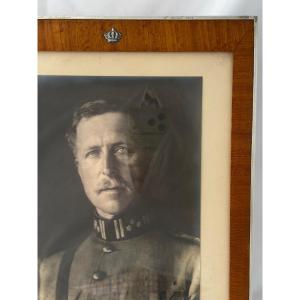


A Gift From King Albert I Of Belgium, Silver And Maple, Brussels, 1920–1930, Thomas Braun, d'Ursel
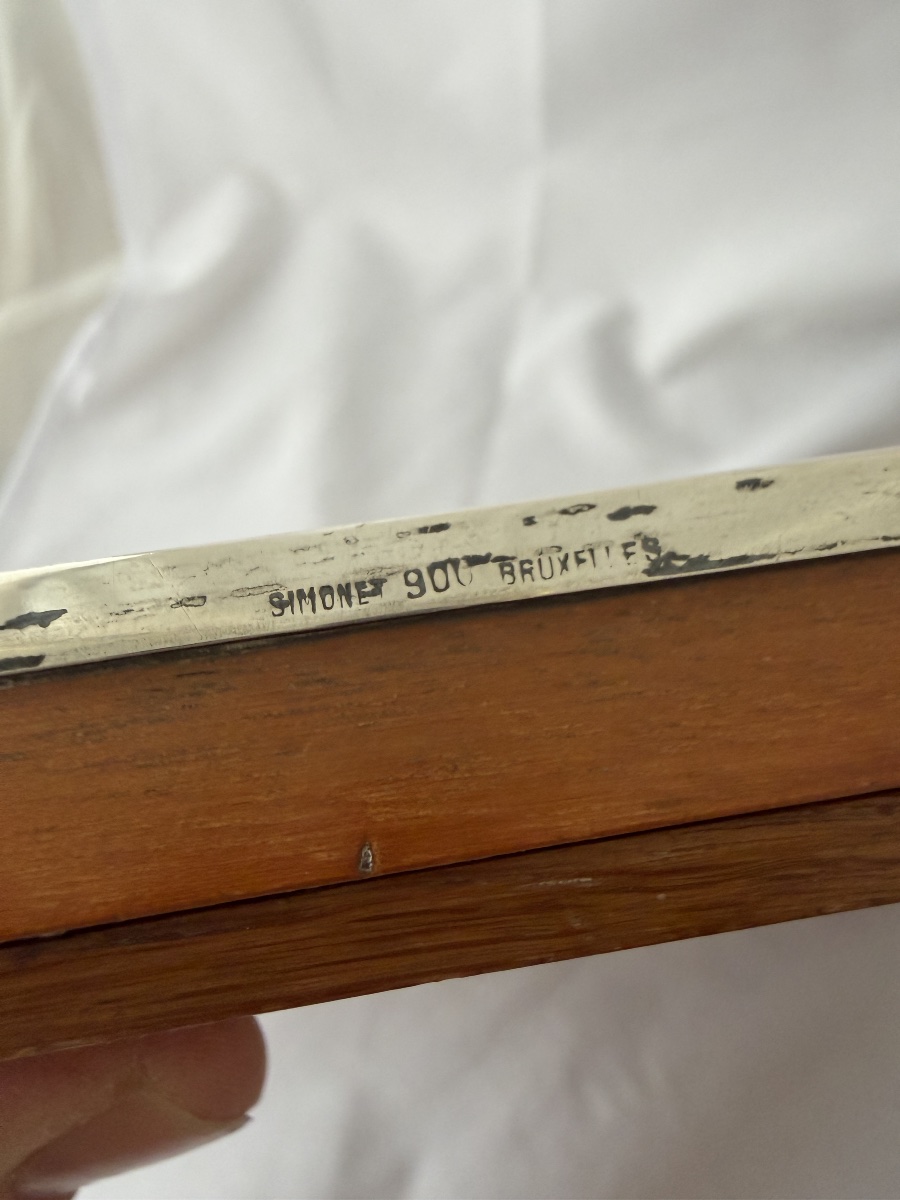
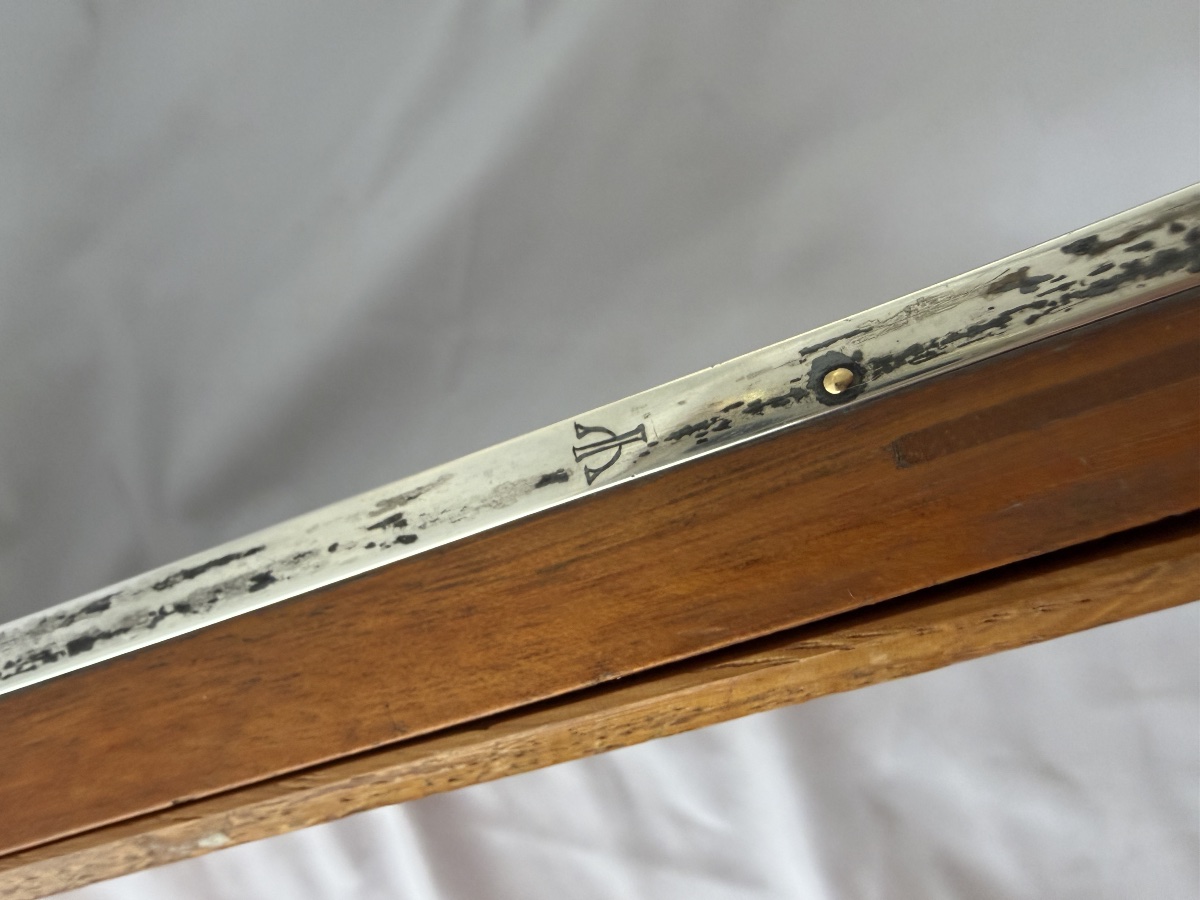
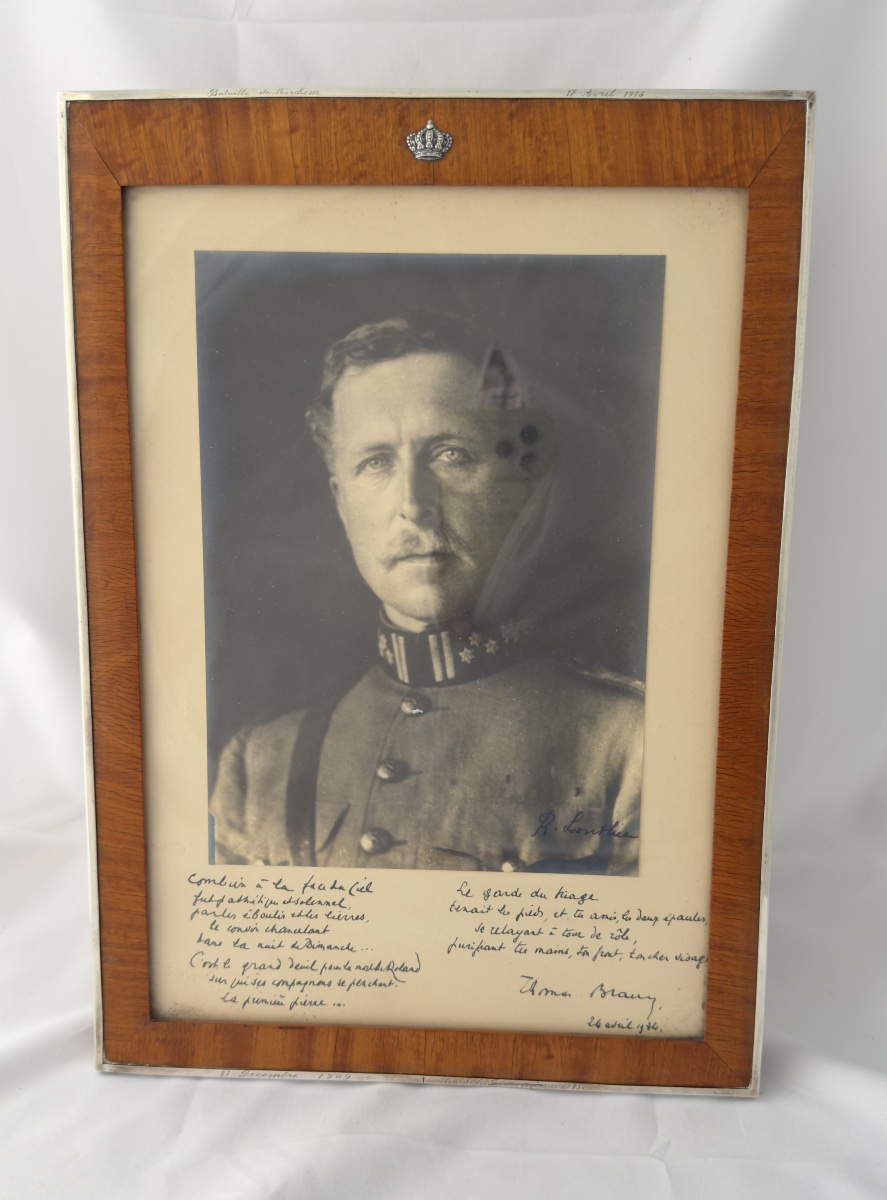
This remarkable commemorative frame dedicated to King Albert I of the Belgians is at once a work of silversmithing, a historical document and a particularly personal testimony to the memory of the “Soldier King”. Constructed on a substantial solid oak frame, with the front veneered in maple, it is enriched with important elements in solid silver, 900/1000 fineness, and bears the mark of the Maison Simonet in Brussels. The collection of Simonet designs preserved at DIVA in Antwerp includes several drawings for comparable frames made for the Belgian Royal Household, confirming the production of this type of model in the context of commissions from the Court.
Belgian sovereigns customarily presented frames in solid silver and precious woods containing their portrait to important political, diplomatic, academic and military associates on various occasions. The substantial dimensions of the present frame further suggest that its recipient must have been a person of some importance to the King.
It cannot be excluded that the arrangement of the photograph within the frame, as well as the paper mount on which the text is inscribed, was slightly altered or adapted in order to accommodate the addition of Thomas Braun’s text. Any such modifications, however, do not affect the fundamental nature of the object, whose royal provenance is certain and documented.
The Maison Simonet was among the Brussels silversmiths working for the Court during the reign of Albert I. A study devoted to Belgian royal silver specifically lists Simonet among the Brussels suppliers to the sovereign. The present DIVA, Museum for Diamonds, Jewellery and Silver in Antwerp, successor to the collections of the Sterckshof Silver Museum, moreover preserves a very important Simonet & Vansteeger archive comprising thousands of drawings, photographs and workshop documents originating notably from Simonet-Deanscutter and the workshop that succeeded it. This archive is today an essential source for the study of this important Belgian silversmithing firm.
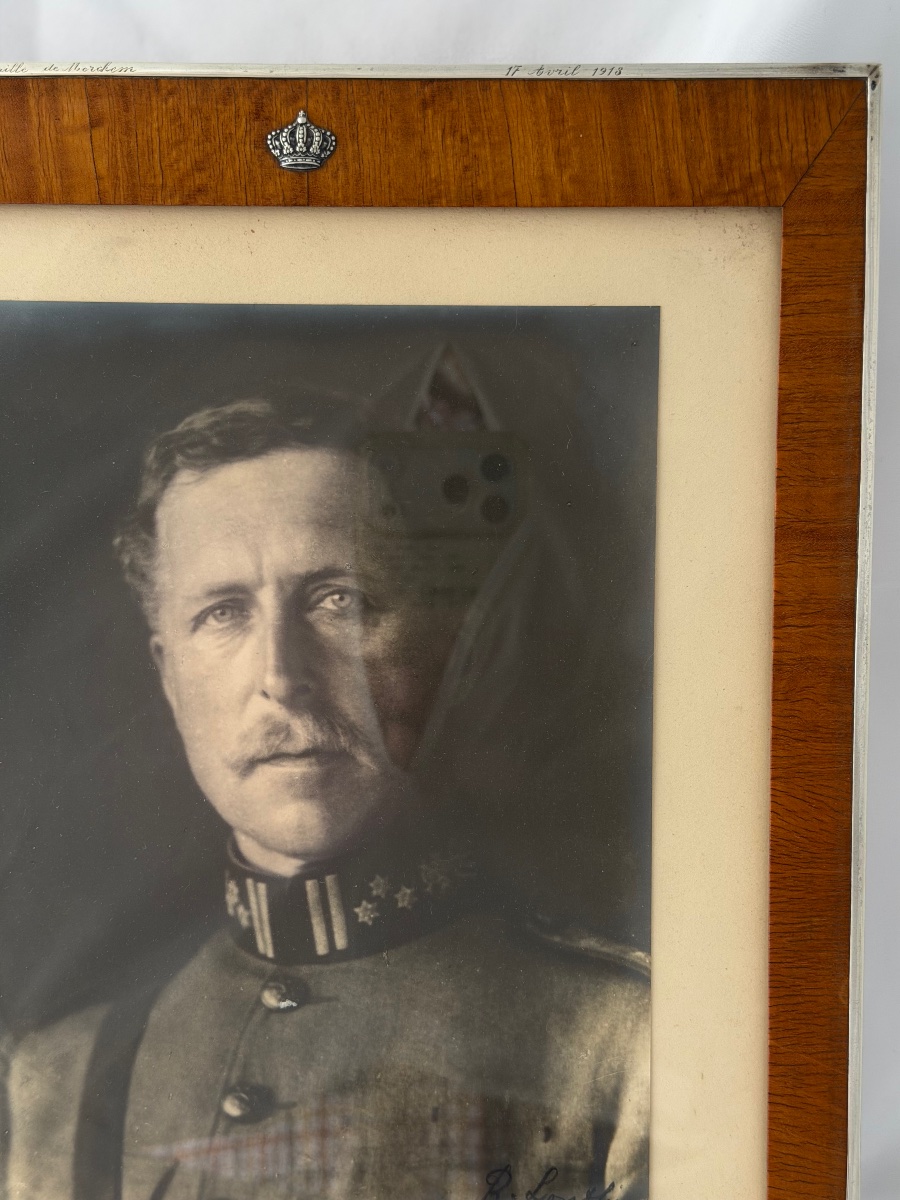
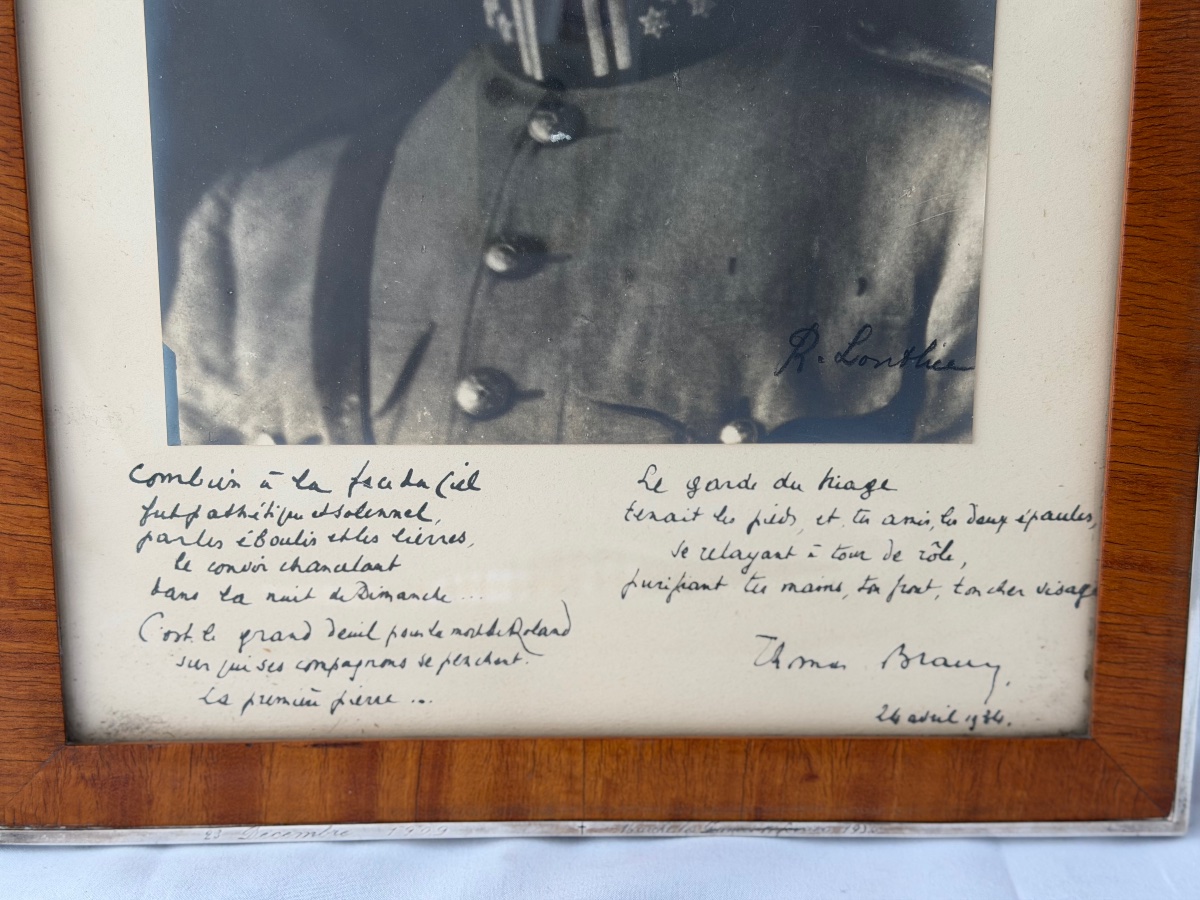
At the centre of the frame is a photographic portrait of King Albert I, signed by René Lonthie. Lonthie was established on Avenue Louise in Brussels and had succeeded the photographer E. Bouté. Contemporary advertisements for his studio describe him as “Photographe du Roi” – Photographer to the King, while a recent study by the Royal Institute for Cultural Heritage concerning the relationship between the Belgian dynasty and photography confirms that R. Lonthie was officially accredited by the Palace. His studio thus belonged to the relatively select circle of photographers in whom the Belgian Royal Family placed its confidence.
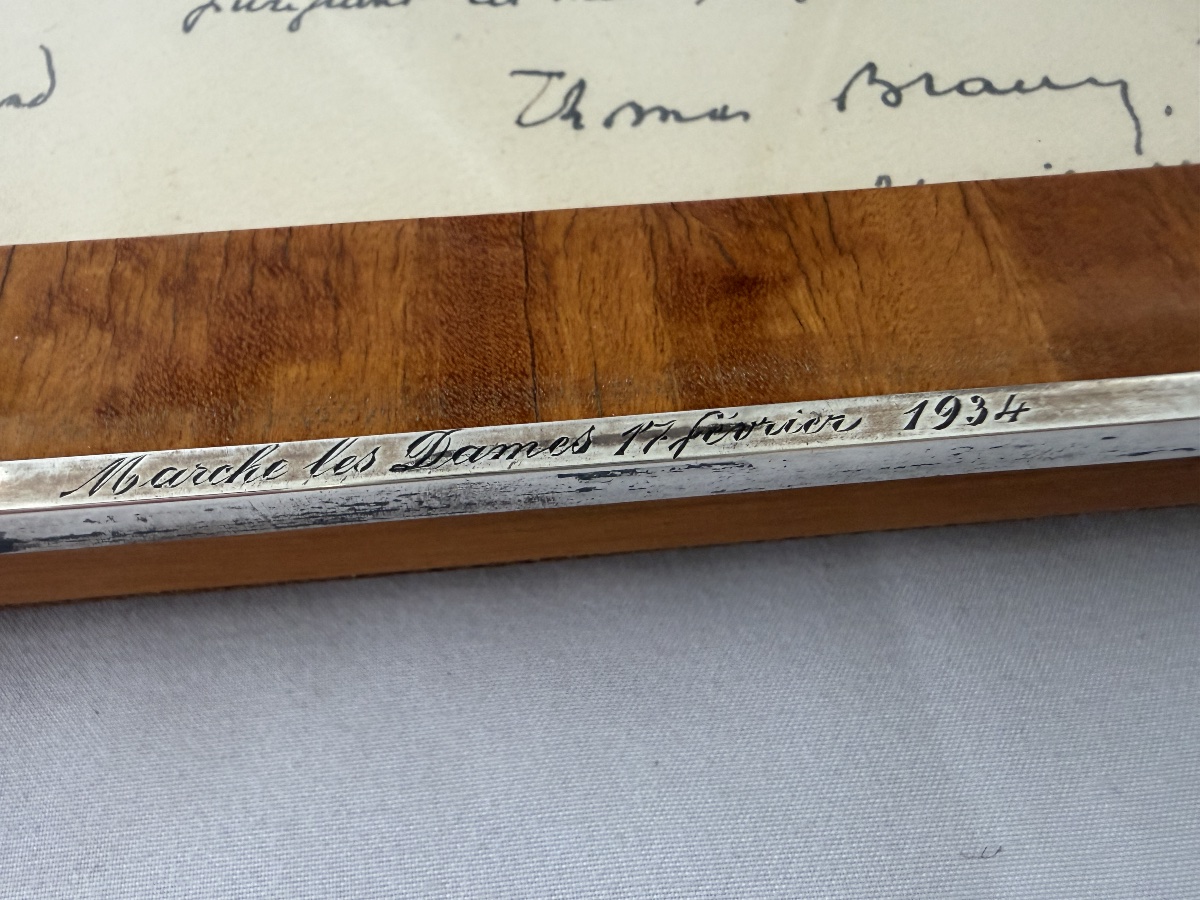
The photograph is surrounded by a mount bearing another exceptional element: an autograph text by Thomas Braun, dated 24 April 1934, scarcely more than two months after the King’s accidental death at Marche-les-Dames on 17 February. Thomas Braun (Brussels, 1876 – Ixelles, 1961) was both a prominent figure of the Belgian Bar and a recognised poet. A lawyer, later President of the Brussels Bar and a member of the Royal Academy of French Language and Literature of Belgium, he also distinguished himself during the First World War through his participation in the Committee for the Free Defence of Belgians prosecuted before the military courts of the German occupying authorities. Together with a small number of fellow lawyers, he thus contributed to the defence of thousands of his compatriots.
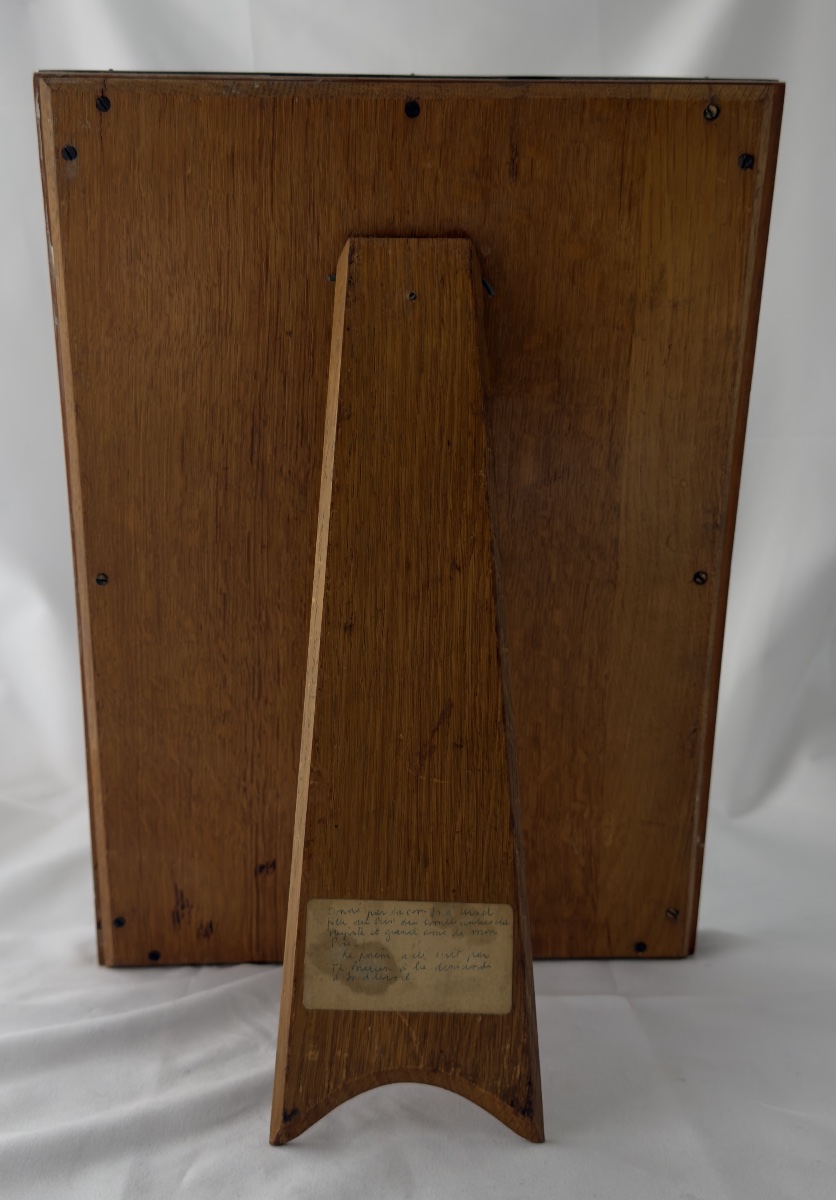
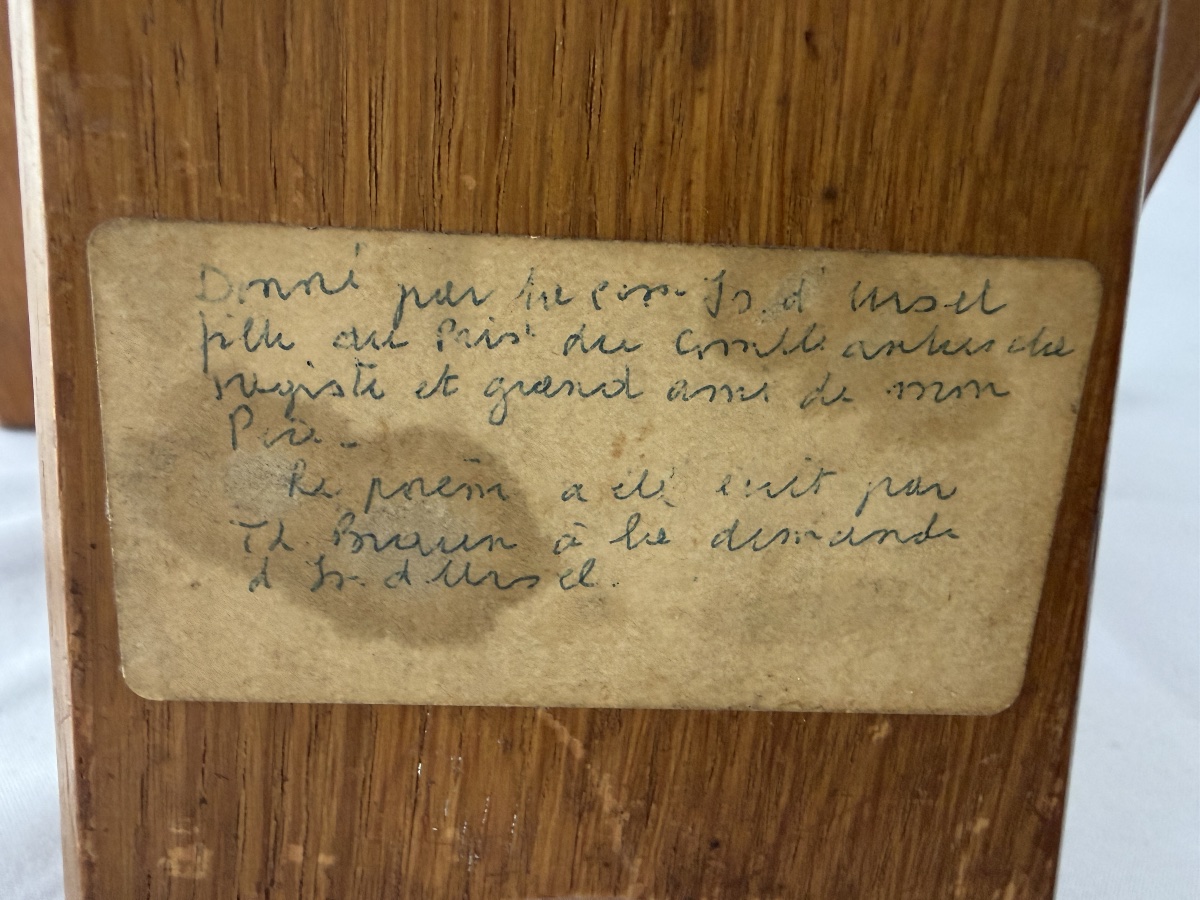
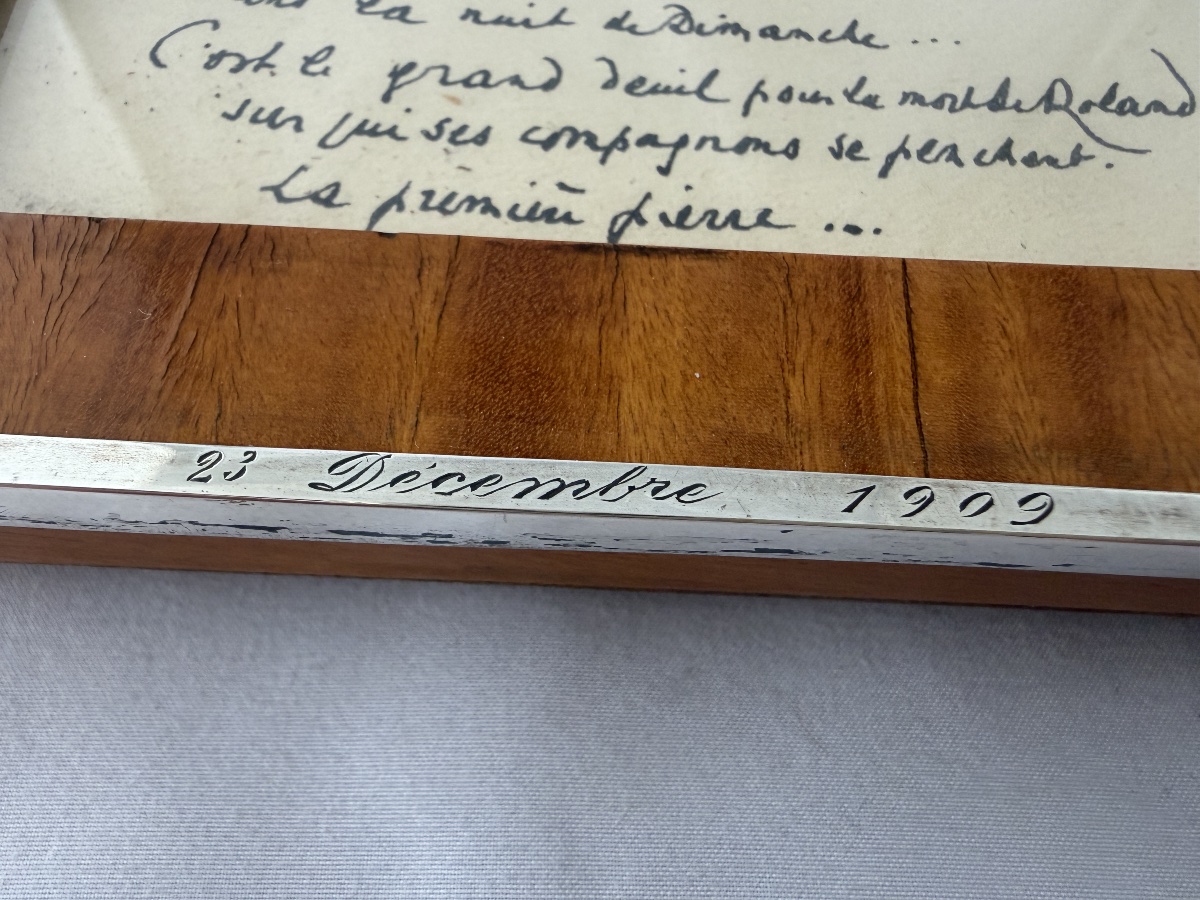
Deeply affected by the death of Albert I, Braun dedicated to him in 1934 his Thrène pour la mort du Roi (Threnody for the Death of the King), a long elegiac poem published in Brussels by Édition Universelle in a booklet of approximately twenty-five pages. The passage inscribed on the present frame is taken from this poem. Its documentary significance is further enhanced by an old label preserved on the reverse, which establishes that Braun did not add these lines by chance: he wrote them expressly at the request of Countess Isabelle d’Ursel.
The silverwork of the frame itself forms part of its historical narrative. Engraved along its lower section are the two dates that precisely delimit the reign of Albert I: 23 December 1909 – 17 February 1934. The first marks his accession to the throne following the death of Leopold II; the second records his death at Marche-les-Dames.
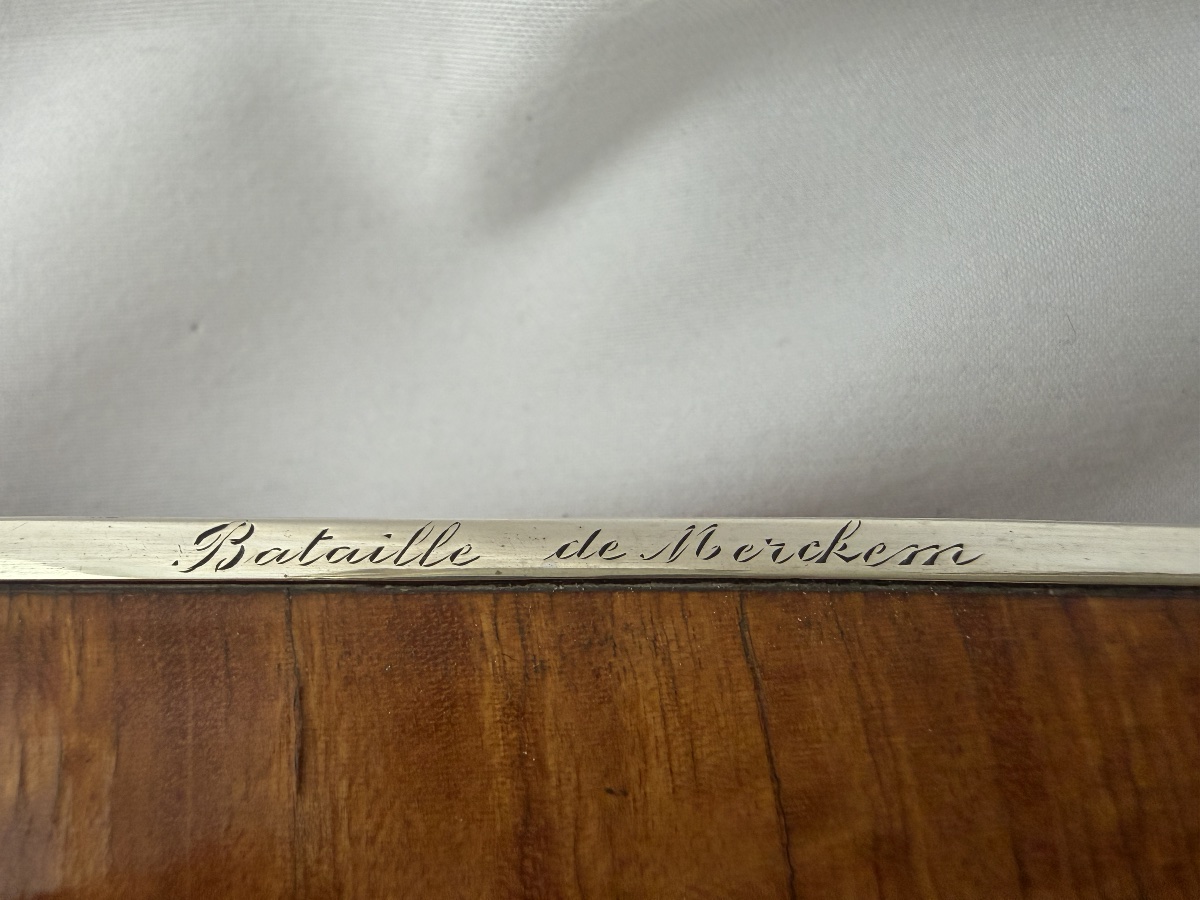
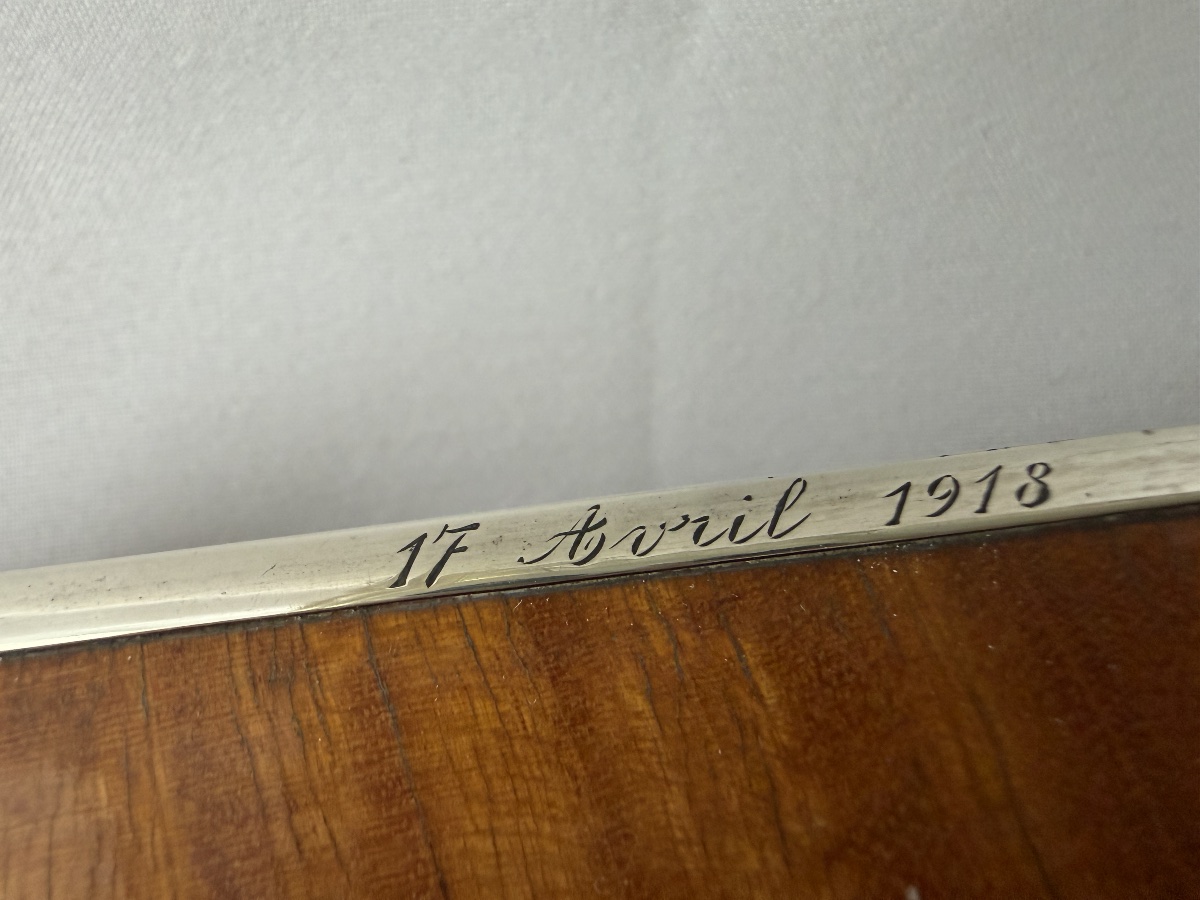
Even more remarkable is the inscription engraved at the top:
“Bataille de Merckem – 17 avril 1918”
“Battle of Merckem – 17 April 1918”
The Battle of Merckem – today spelled Merkem – was one of the most remarkable episodes of the final year of the Great War on the Belgian front. On 17 April 1918, during the great German spring offensive, the positions of the Belgian 3rd Army Division came under a violent attack. After several forward positions had been lost, the Belgian forces methodically counter-attacked and, before the end of the day, had recovered most of the lost ground while taking several hundred German prisoners. The action is frequently described in Belgian military historiography as the first clear-cut Belgian victory since the stabilisation of the Yser front – a description that should be understood as referring to an indisputable tactical victory rather than literally the first Belgian military success of the war.
The central figure in this victory was Lieutenant-General Jules-Marie-Alphonse Jacques, commander of the 3rd Army Division. Already renowned for his role in the defence of Dixmude, he was created Baron by King Albert I in 1919 and was subsequently authorised to add “de Dixmude” to his name. The memory of Merckem became inseparable from his military career: the coat of arms granted to him by Albert I even incorporated, among its ornaments, a shield bearing the arms of Merckem, together with another bearing those of Dixmude.
It is at this point that a small old label, still attached to the reverse of the frame although now somewhat difficult to decipher, assumes considerable importance. It reads:
“Given by Countess Isabelle d’Ursel, daughter of the President of the Anti-Slavery Committee and a great friend of my father. The poem was written by Thomas Braun at the request of Isabelle d’Ursel.”
Countess Isabelle d’Ursel was the daughter of Count Hippolyte d’Ursel (1850–1937), politician, historian and President of the Belgian Anti-Slavery Society. Hippolyte d’Ursel had been closely associated with General Jacques since the period of the anti-slavery campaigns in Africa. The depth of their relationship remained evident even after the General’s death: in 1929, d’Ursel personally collected and annotated his letters for the publication La Campagne antiesclavagiste belge racontée par les lettres de Jacques de Dixmude (The Belgian Anti-Slavery Campaign as Told through the Letters of Jacques de Dixmude).
This inscription therefore allows a particularly compelling provenance to be proposed, while retaining the caution required by the fact that the name of the original recipient has not yet been established. The words “a great friend of my father”, combined with the very specific reference to Merckem, strongly suggest that the frame was presented by Isabelle d’Ursel to a member of the Jacques de Dixmude family, most probably one of the General’s children or descendants. Hippolyte d’Ursel was indeed a close friend of General Jacques; his daughter Isabelle was aware of this relationship and personally asked Thomas Braun to enrich the frame with an autograph passage from his elegy for the late King.
Thus, within a single object are brought together Albert I, the Maison Simonet, royal photographer René Lonthie, poet Thomas Braun, the Battle of Merckem, General Jacques de Dixmude and the d’Ursel family. Made or completed in the weeks following the King’s death in 1934, this frame appears to be far more than a simple royal portrait. It is best understood as a private memorial, created within a circle directly connected to the Belgian Court, the Belgian Army and the prominent families surrounding Albert I. The remarkable combination of autograph material, historical inscriptions and the surviving contemporary provenance label gives this object an exceptionally rich and rare historical character.
Period: 20th century
Style: Art Deco
Condition: Excellent condition
Material: Sterling silver
Width: 26 cm
Height: 36 cm
Reference (ID): 1809037
Availability: In stock