

18th-century Neapolitan School — 29 × 41 Cm
Brown ink with extensive white highlights on brown paper
Dimensions: 29 × 41 cm
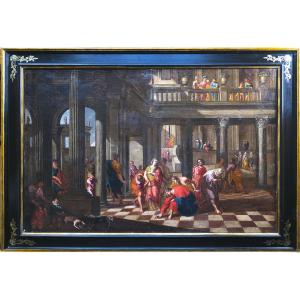
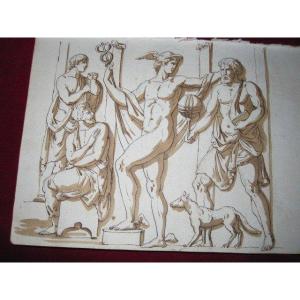
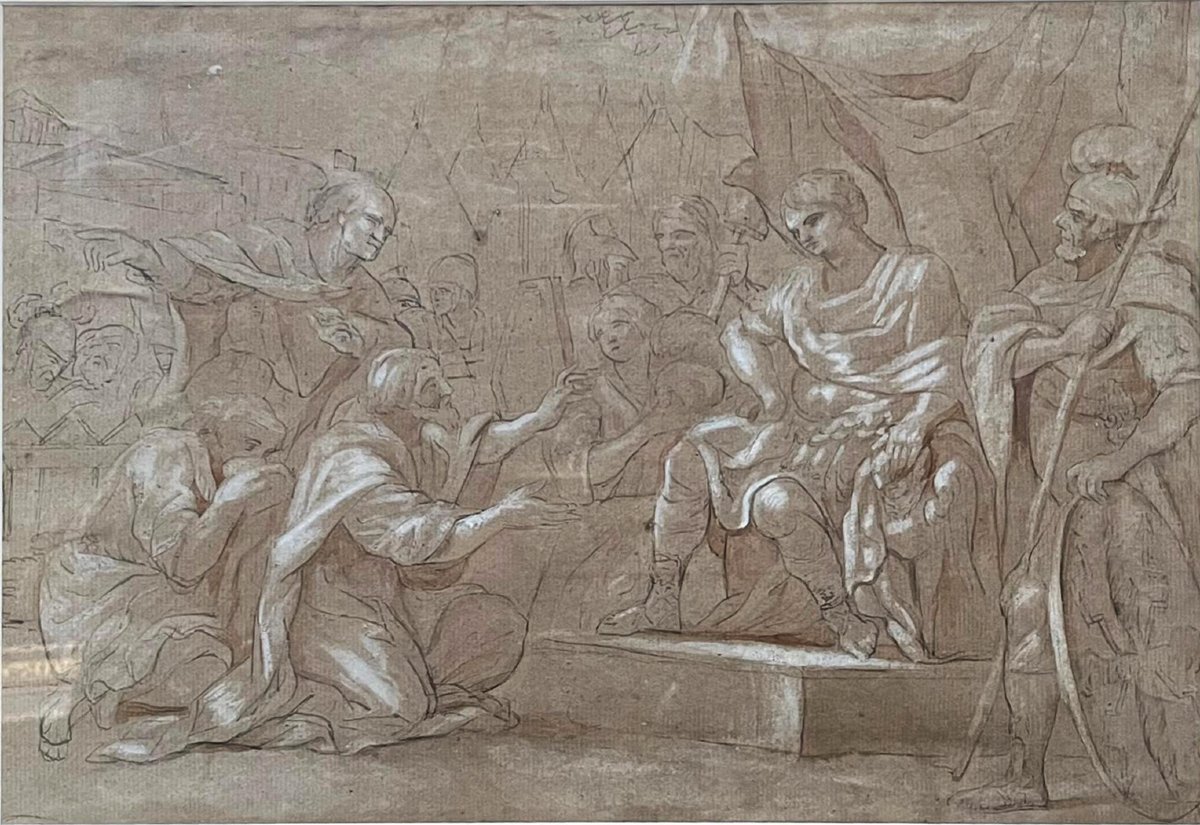
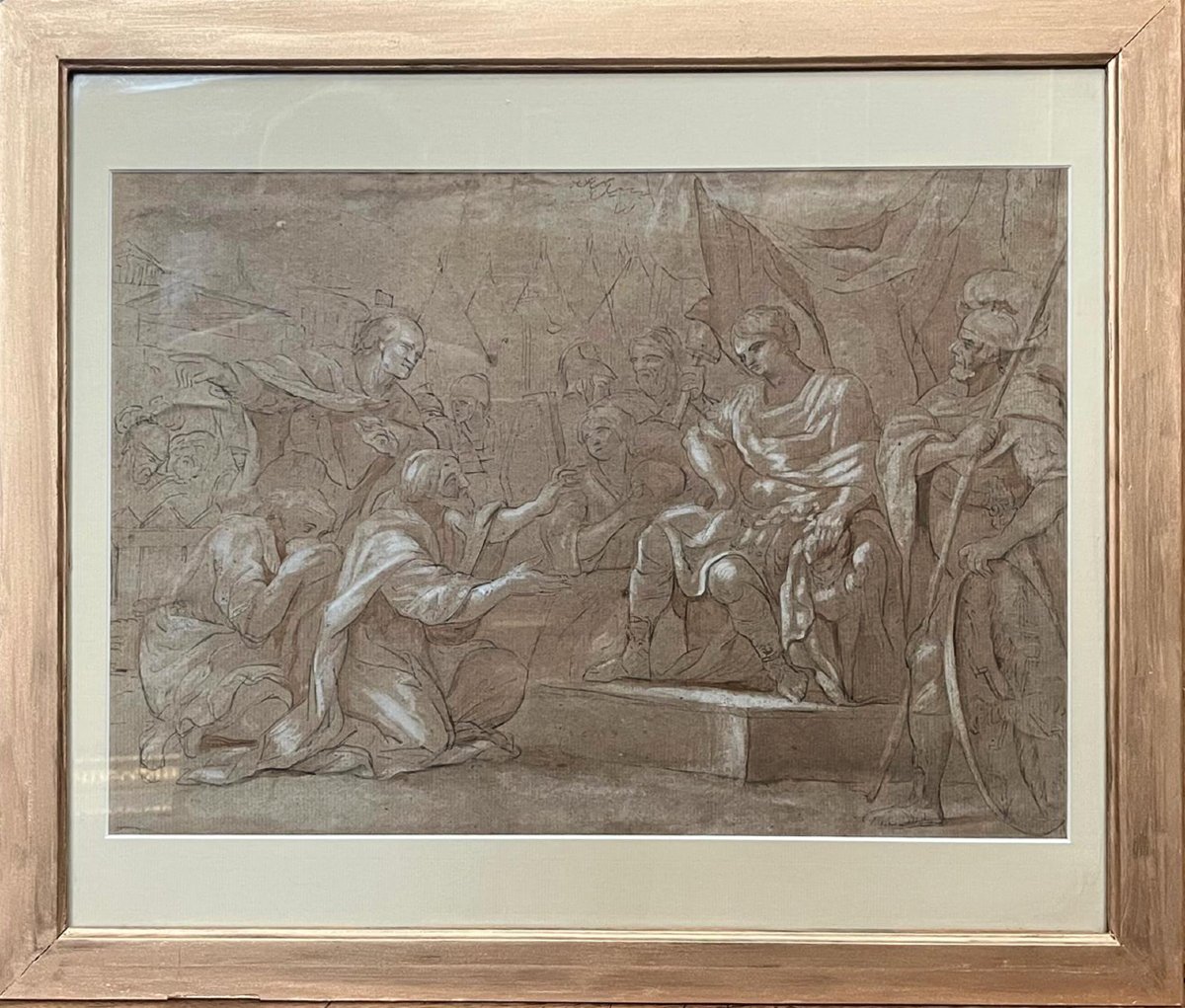
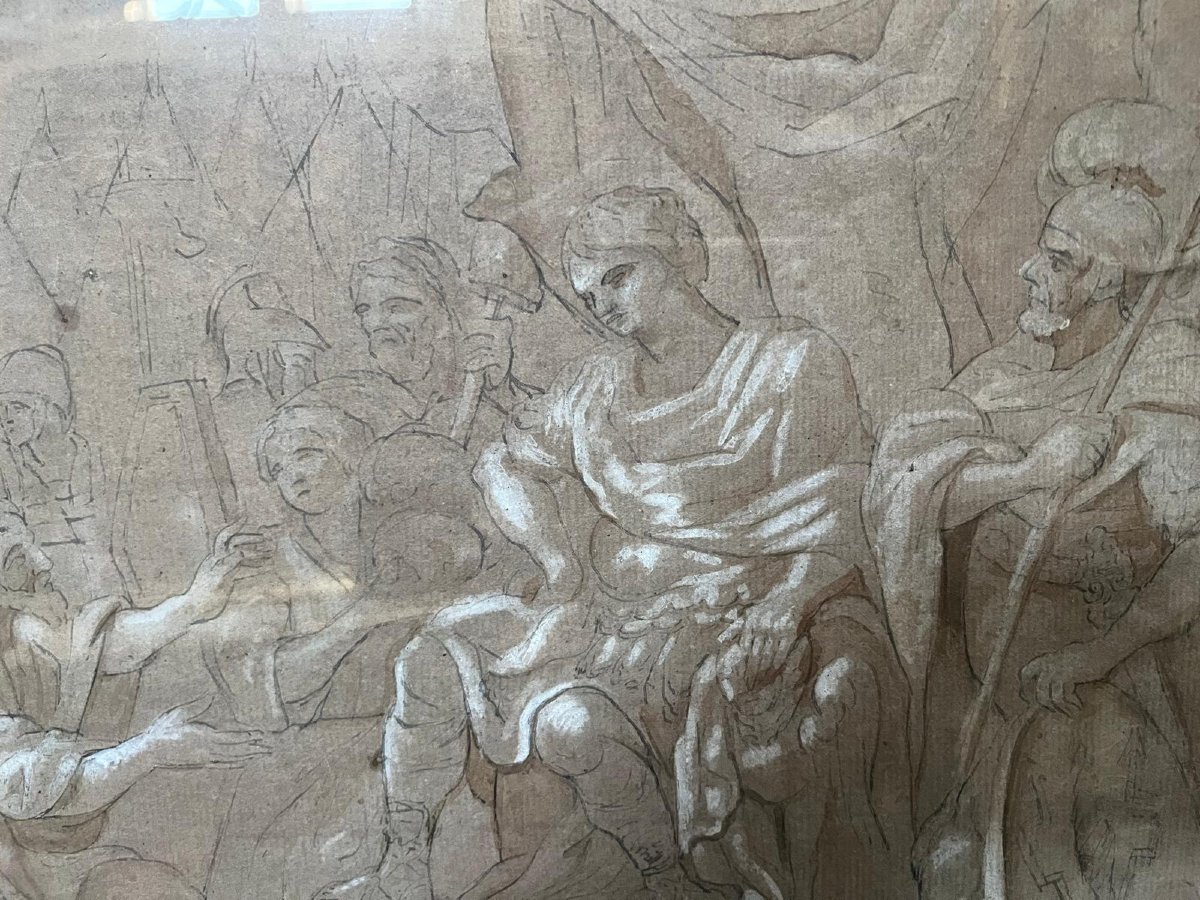
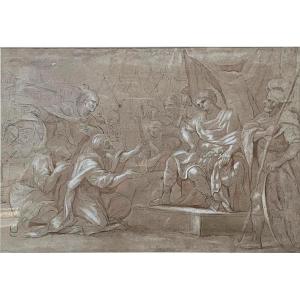
A large and very beautiful sheet from the 18th-century Neapolitan school depicting The Continence of Scipio, a famous episode in Roman history celebrating the clemency and virtue of Scipio Africanus.
The composition gathers around the Roman general—seated on a platform and dressed in ancient style—a crowd of soldiers, kneeling figures, and onlookers. The highly theatrical arrangement of the scene, the multitude of figures, and the alternation between monumental figures in the foreground and quickly sketched silhouettes in the background lend the print a remarkable sense of liveliness.
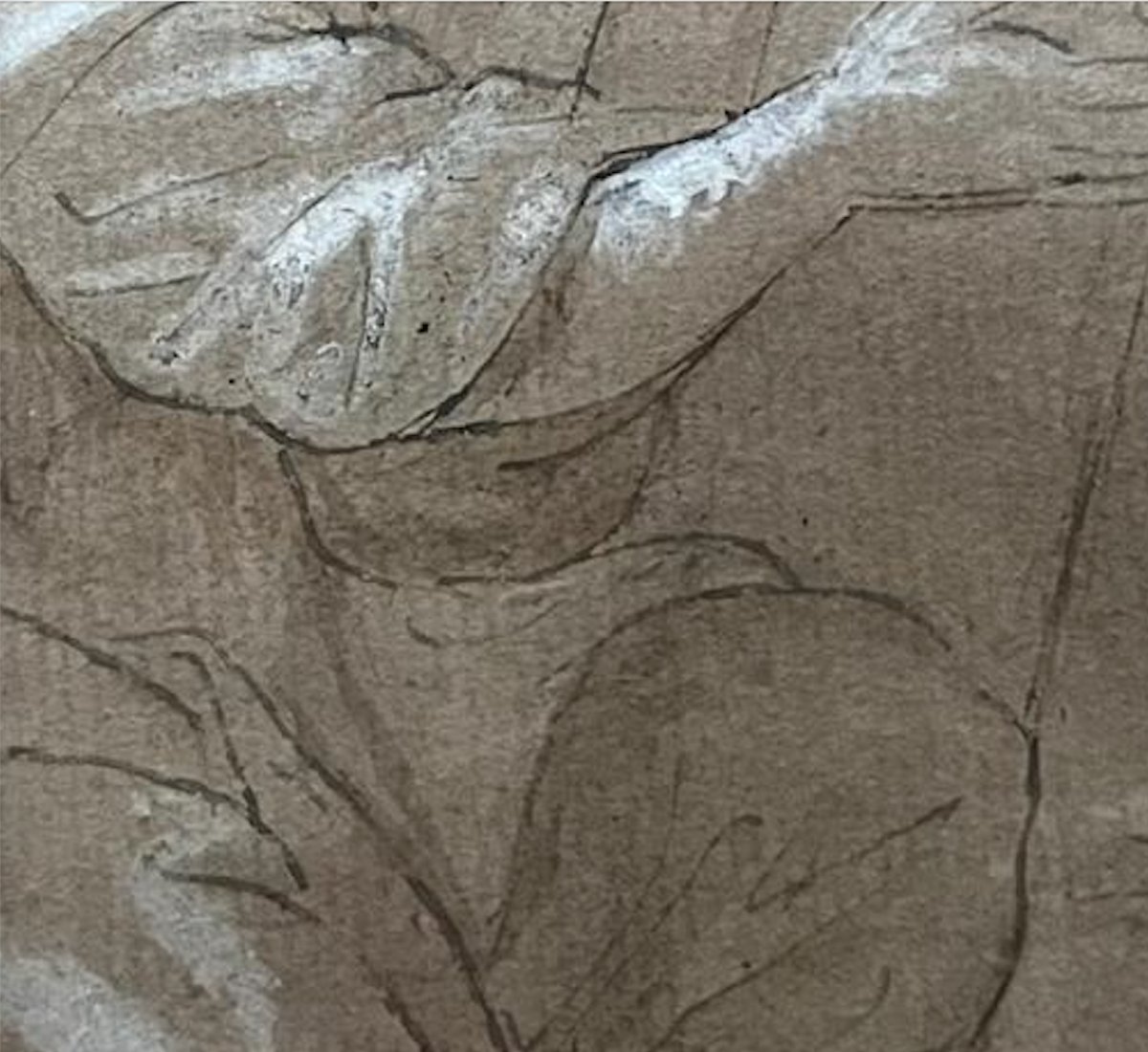
Great virtuosity in drawingThe quality of this drawing lies particularly in the confidence and economy of the line.
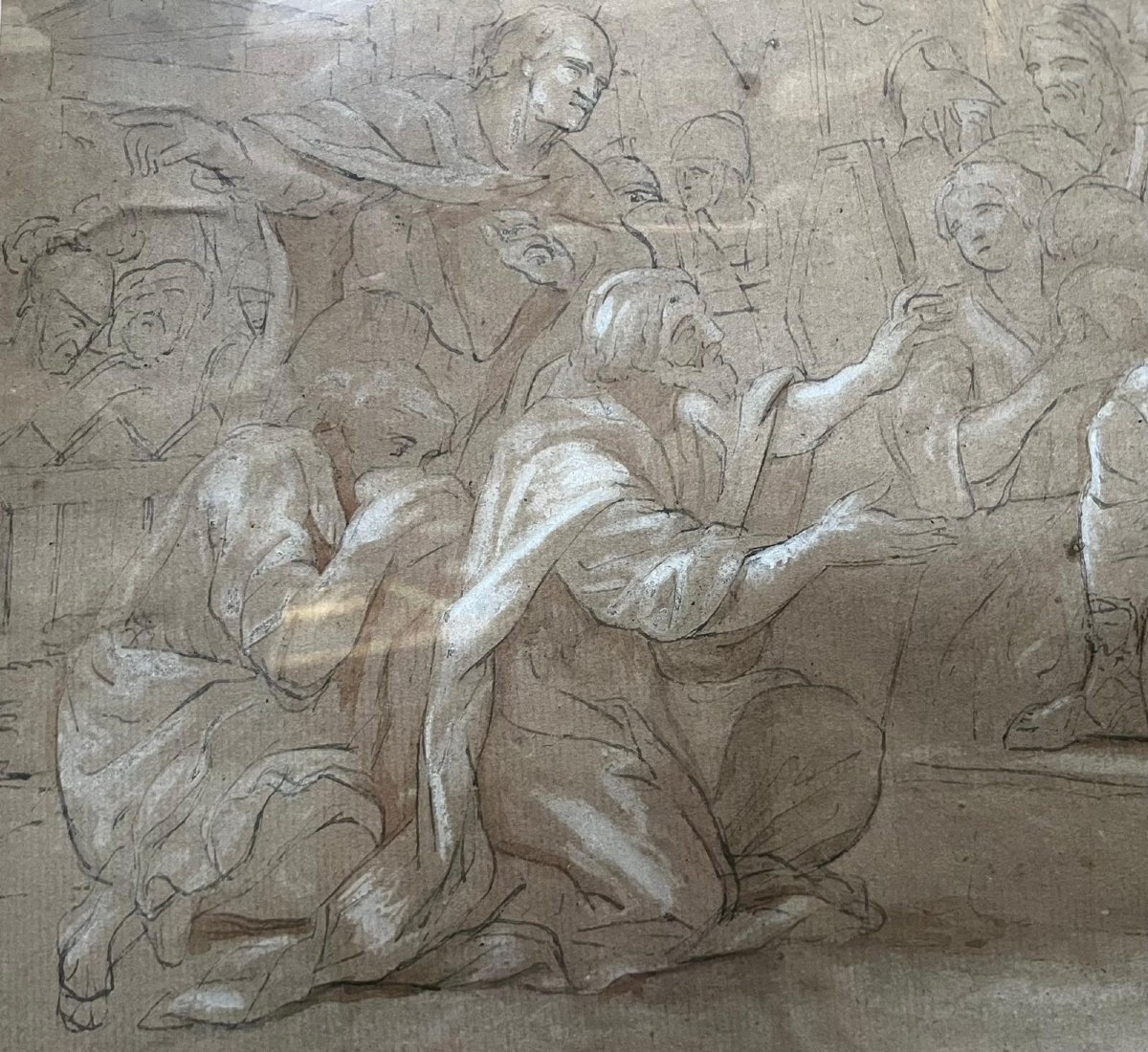
The main figures are rendered with remarkable anatomical mastery: arms extending into space, twisted torsos, expressive hands, and strongly foreshortened legs are depicted with minimal means and without heaviness.
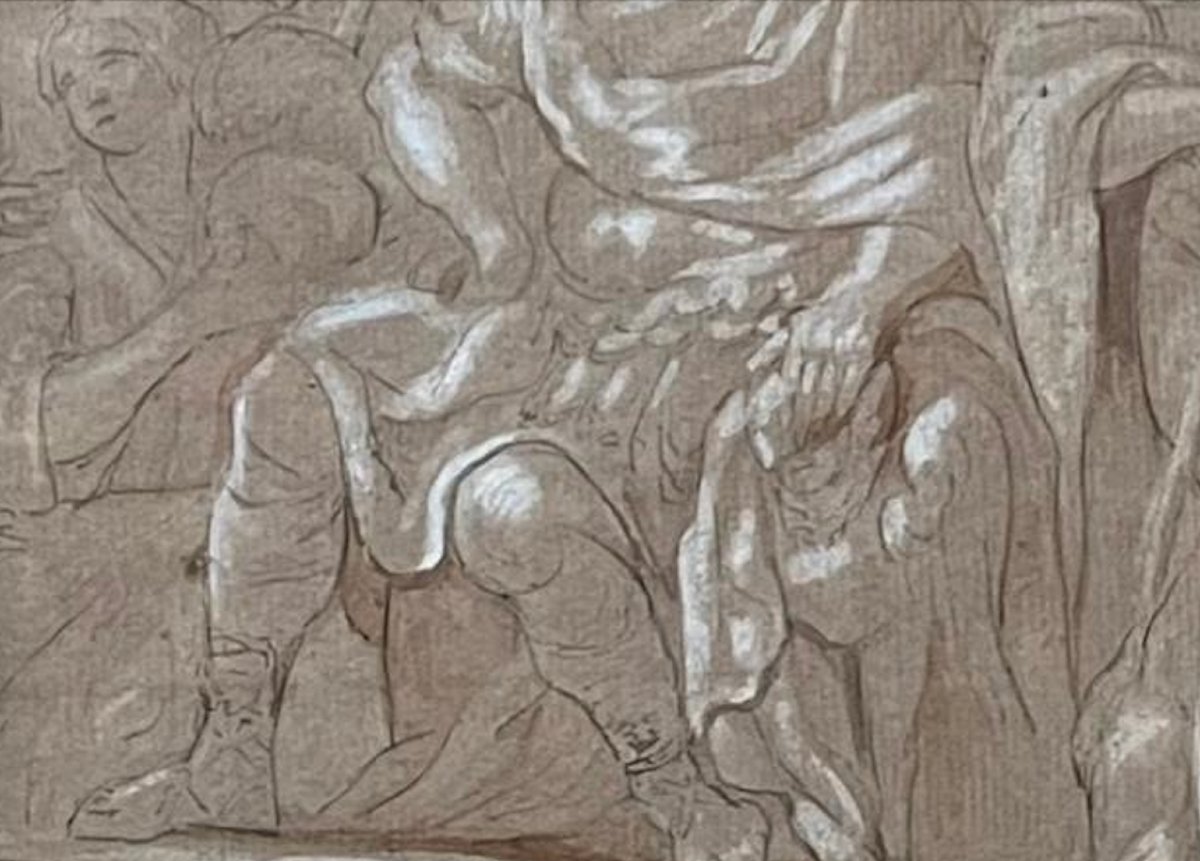
The figure of Scipio is particularly remarkable. The complex position of his legs, the knees presented at different angles, and the drapery’s fall demonstrate a true mastery of foreshortening and the representation of the body in space.
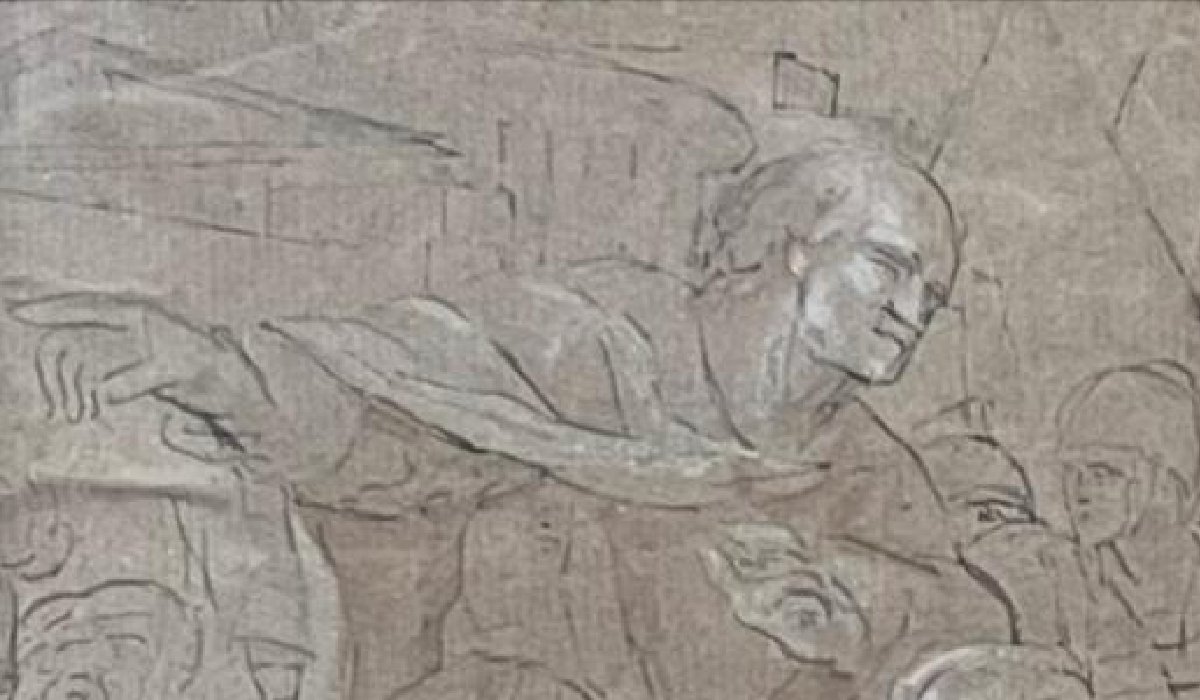
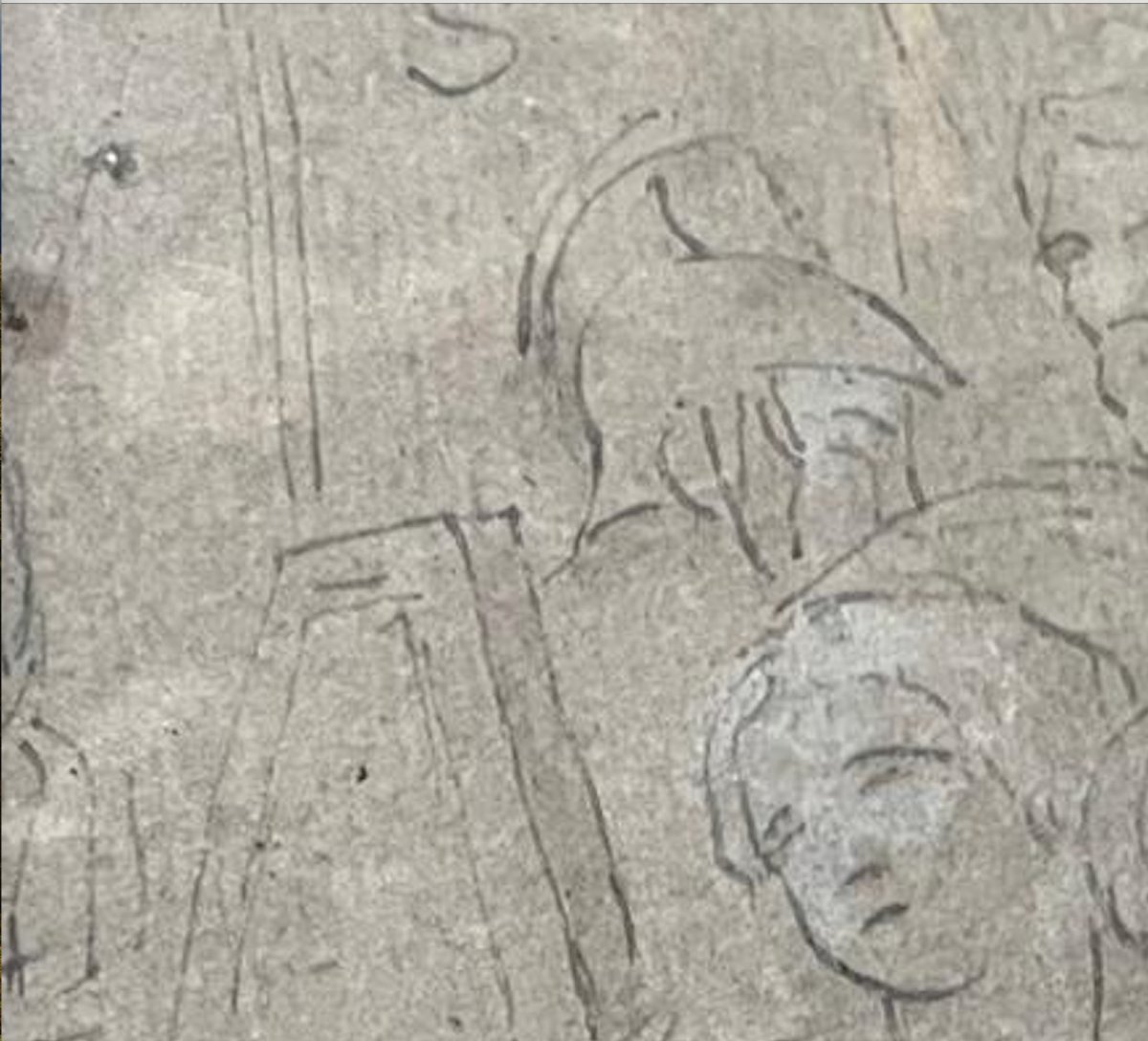
This precision in the main figures is counterbalanced by the extraordinary freedom of the secondary characters: some of the faces of soldiers or spectators consist of only a few pen strokes, yet these are sufficient to convey a facial expression, a posture, and the direction of their gaze.
The prominent highlights of white play an essential role in this composition. Generously applied to the drapery, arms, faces, and legs, they catch the light and make the figures emerge from the warm tones of the brown paper. Particularly striking on Scipio’s tunic and legs, they lend the composition a truly painterly quality.
Dating and Attribution to the Neapolitan School
Both the technique and the graphic language of this sheet lead us to date it to southern Italy, most likely Naples, between the late 17th and early 18th centuries. The use of brown-tinted paper, on which the artist combines vigorous ink lines with significant highlights of white, is characteristic of a technique that allows for the simultaneous rendering of light and shadow by using the paper’s tone as an intermediate value. But it is above all the style that points to the Neapolitan school: the monumentality of the figures, a penchant for foreshortening, expressive and theatrical poses without decorative excess, drapery rendered in broad swaths, and a remarkable economy of means. The artist alternates between solidly constructed main figures and a crowd in which some faces require only a few strokes to come to life. This combination of great anatomical accuracy, an energetic and concise line, and strongly contrasting light is fully in keeping with the graphic tradition developed in Naples at the turn of the 17th and 18th centuries. In the absence of a signature and historical provenance, we nevertheless prefer to maintain the cautious attribution of Neapolitan School, late 17th–early 18th century, without proposing the name of an artist at this stage.
Drawing mounted on a mat, framed.Period: 18th century
Style: Rome and Antic Greece
Condition: Good condition
Material: Paper
Reference (ID): 1808432
Availability: In stock