

Oslo 1715, Solid Silver Beaker, Michel Michelsen Rømer, Christiania
Rare solid silver beaker, Christiania (Oslo), 1715, by Michel Michelsen Rømer (1682–1739), master silversmith.
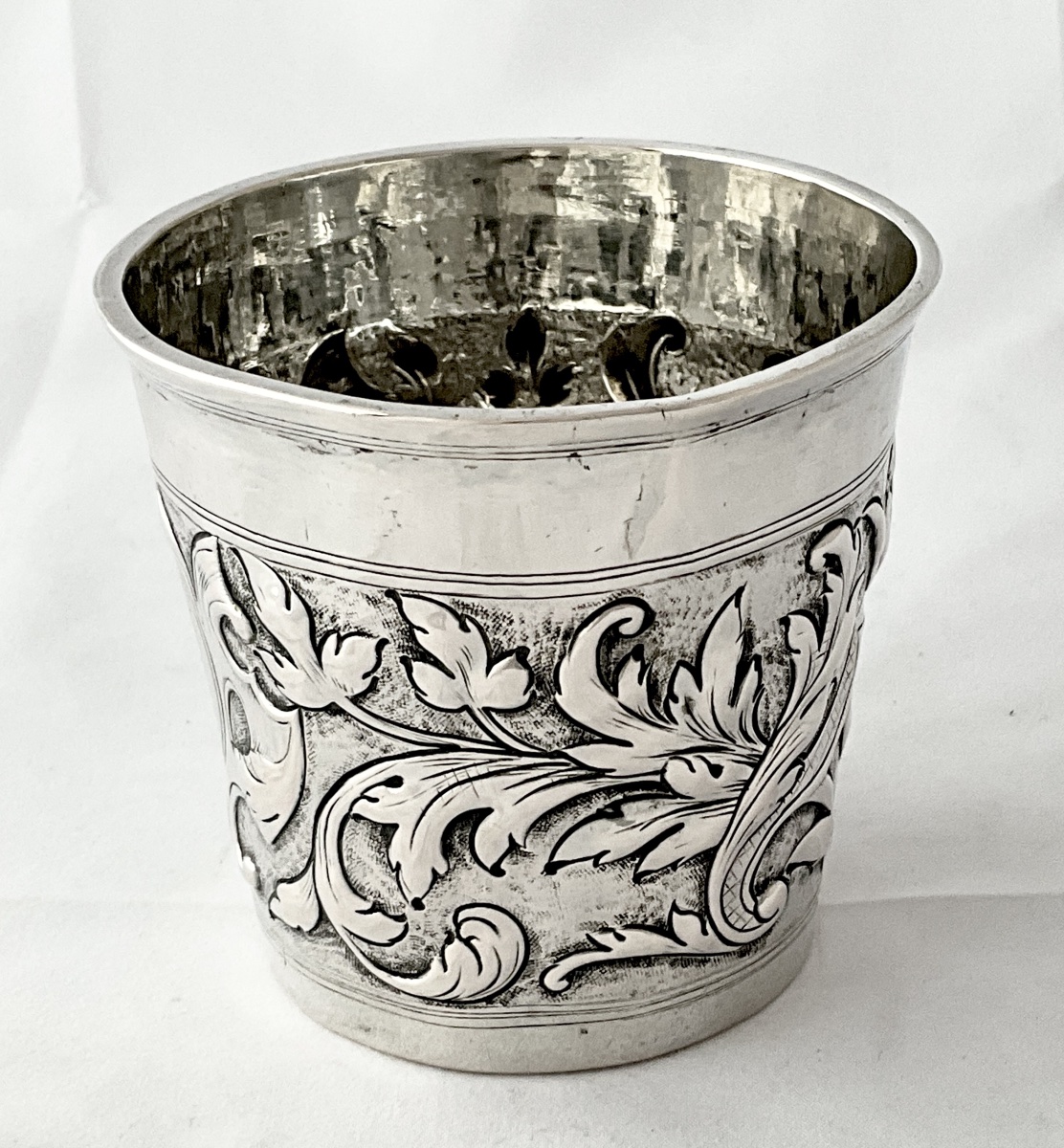
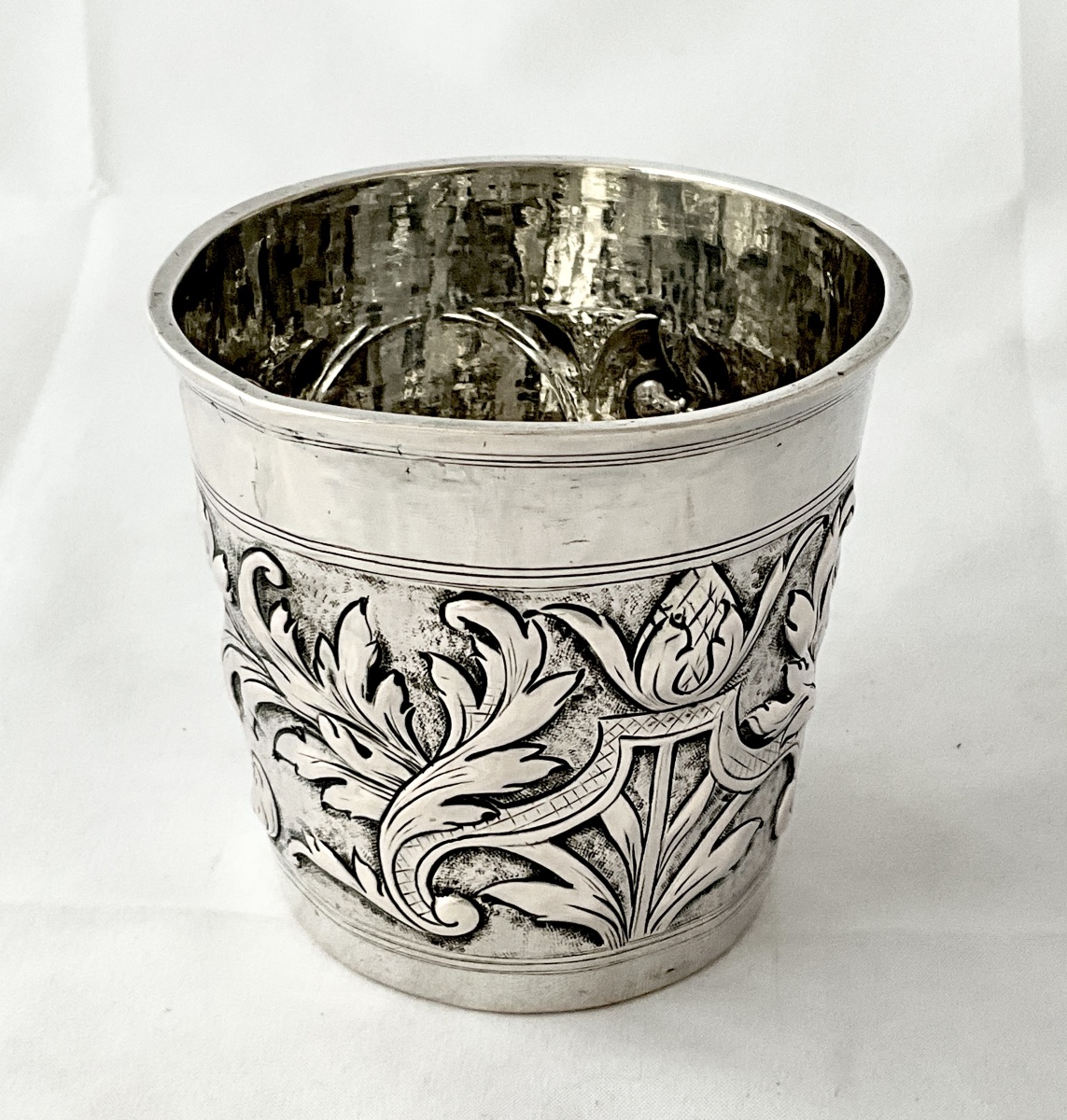
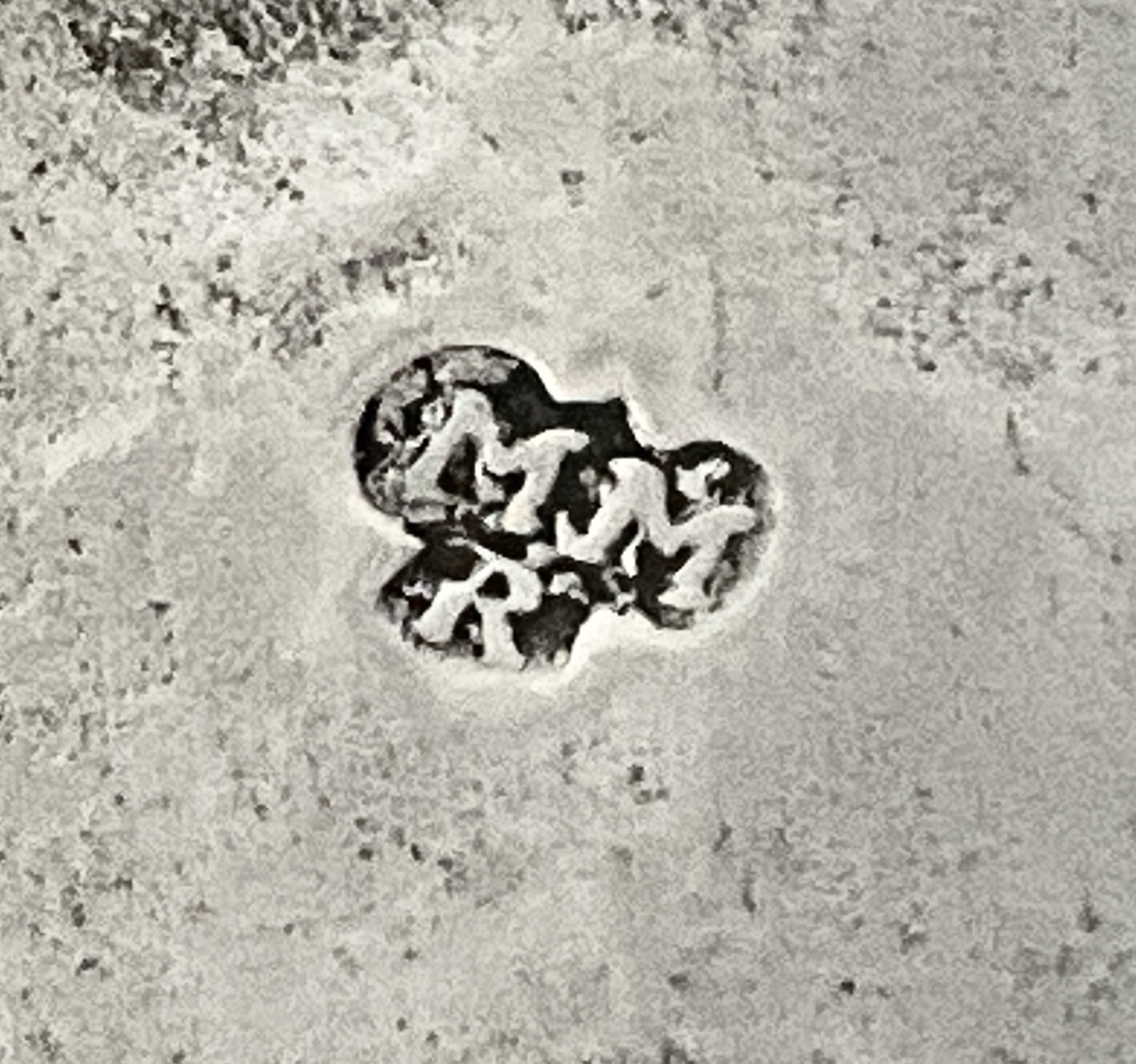
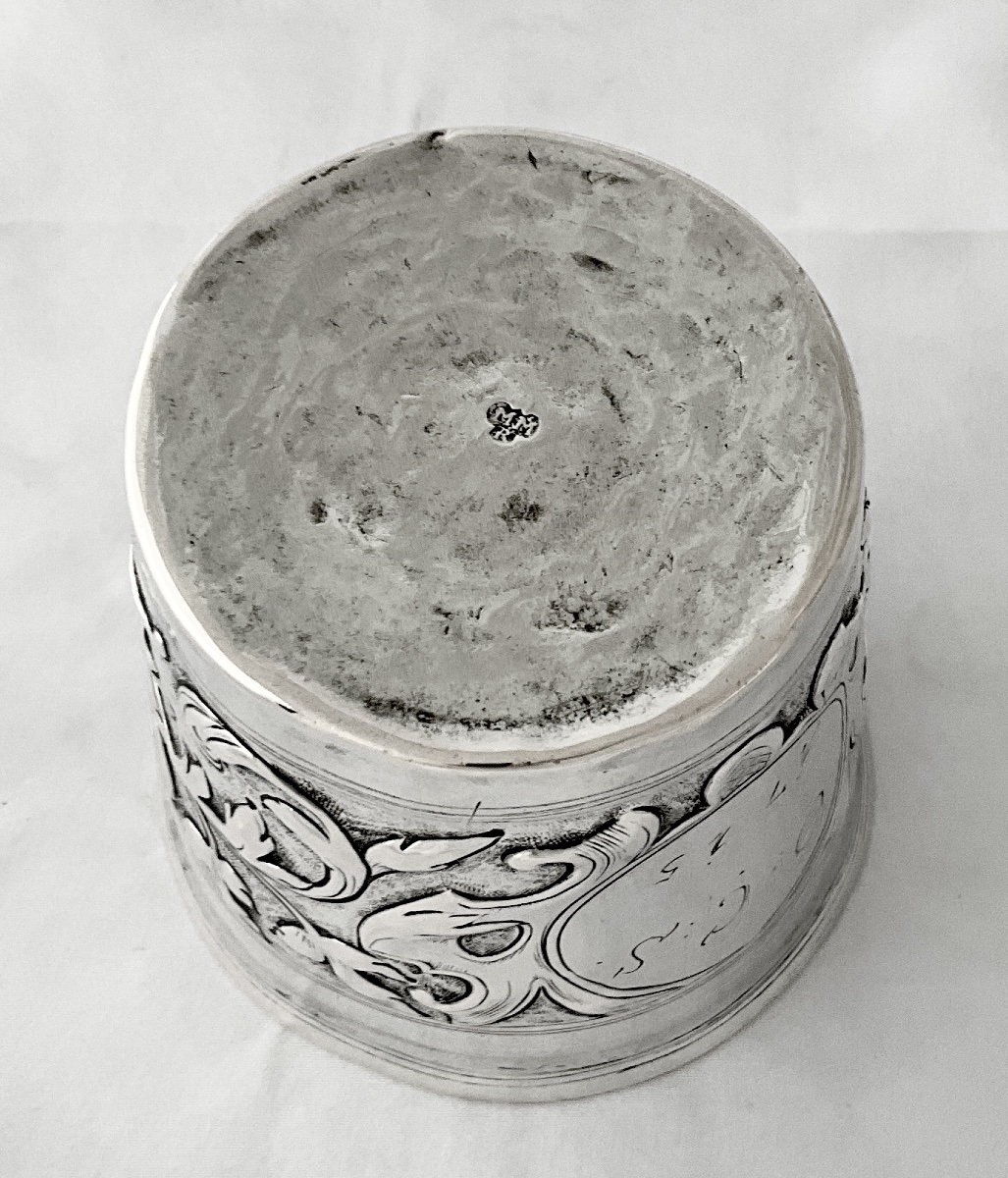
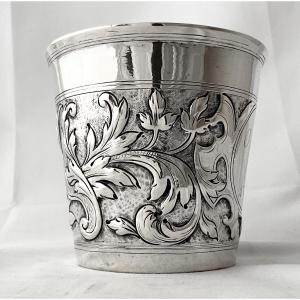
A rare and significant cylindrical solid-silver goblet, made in Christiania—now Oslo—in 1715 by master silversmith Michel Michelsen Rømer. Its base bears the master’s mark MM on R, set within a multilobed cartouche; this mark has now been definitively identified thanks to Scandinavian public collections.
Weighing approximately 157 grams, this goblet is particularly heavy for its time. Its weight is nearly three times that of a comparable goblet held at the Nationalmuseum in Stockholm, attesting to a commission of exceptional quality.
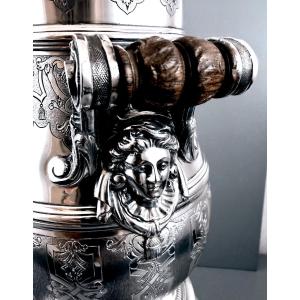
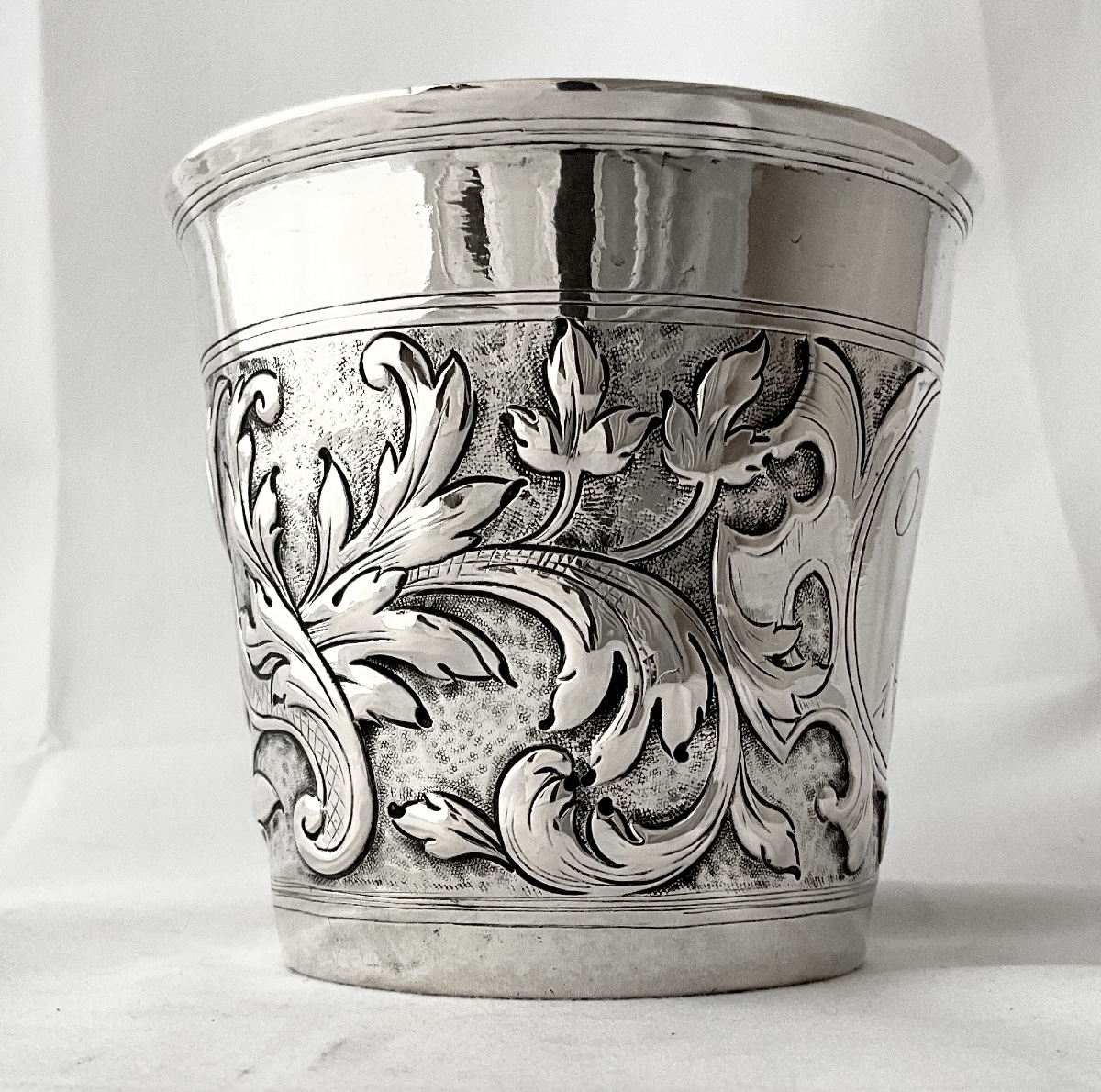
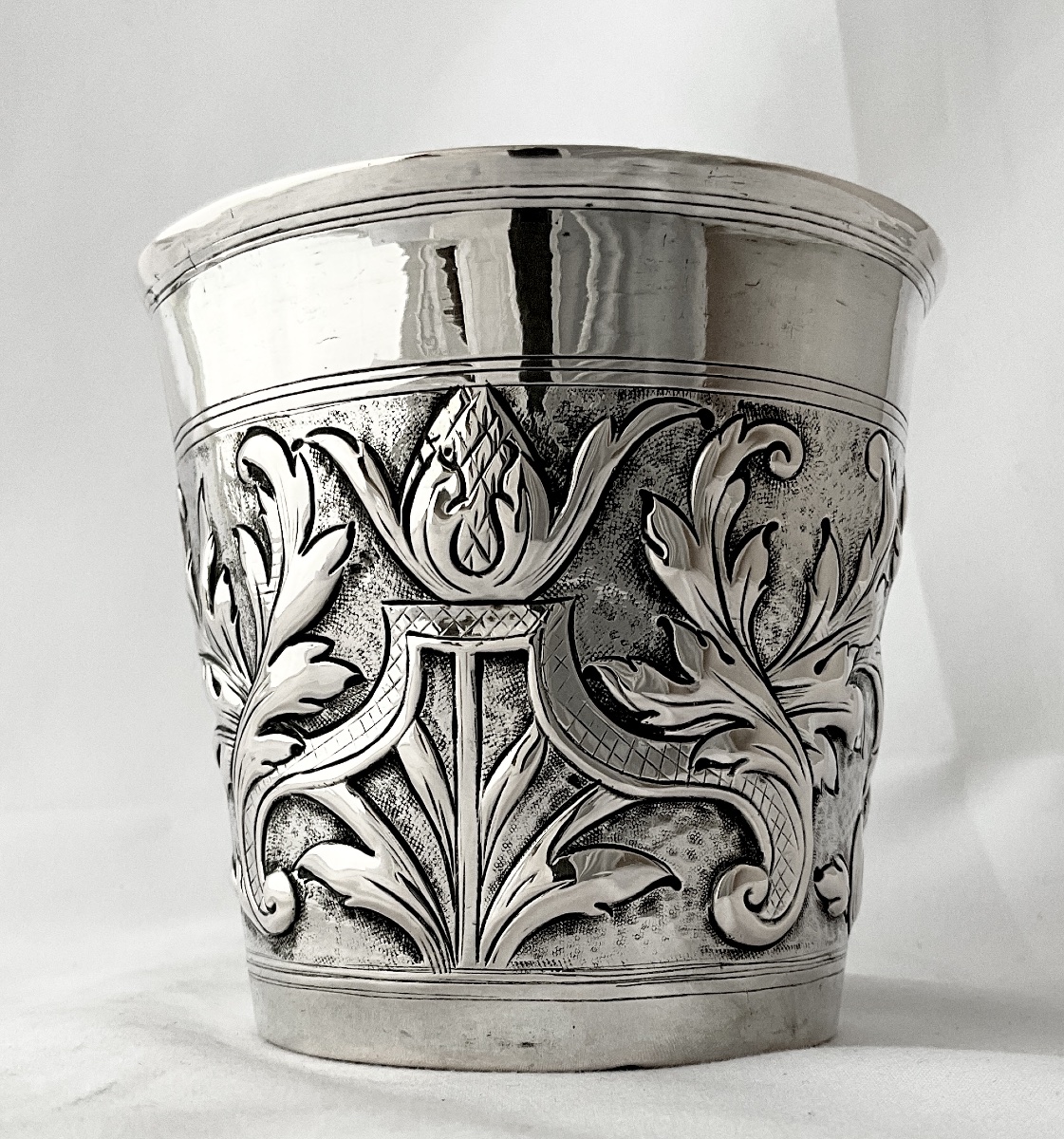
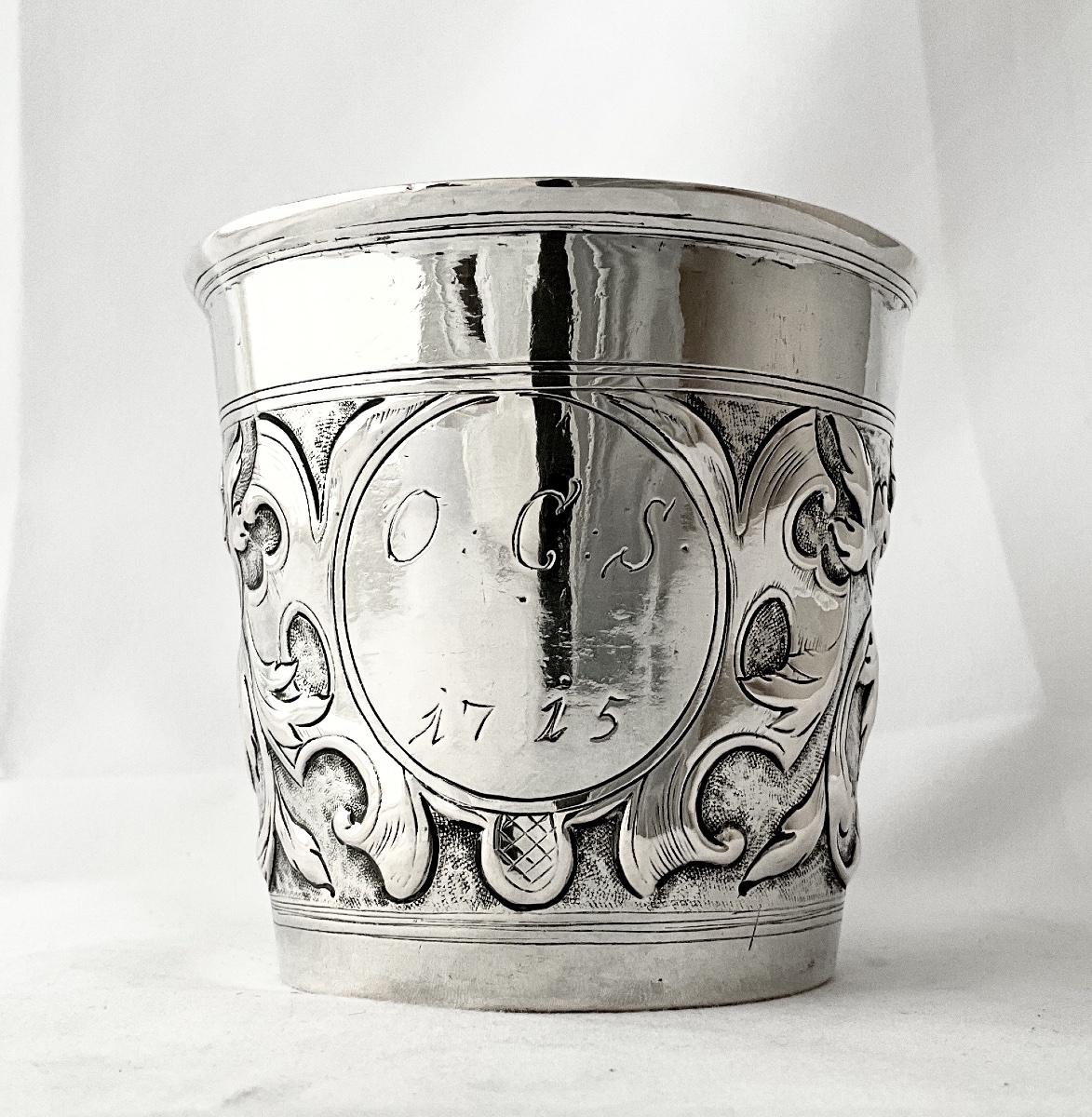
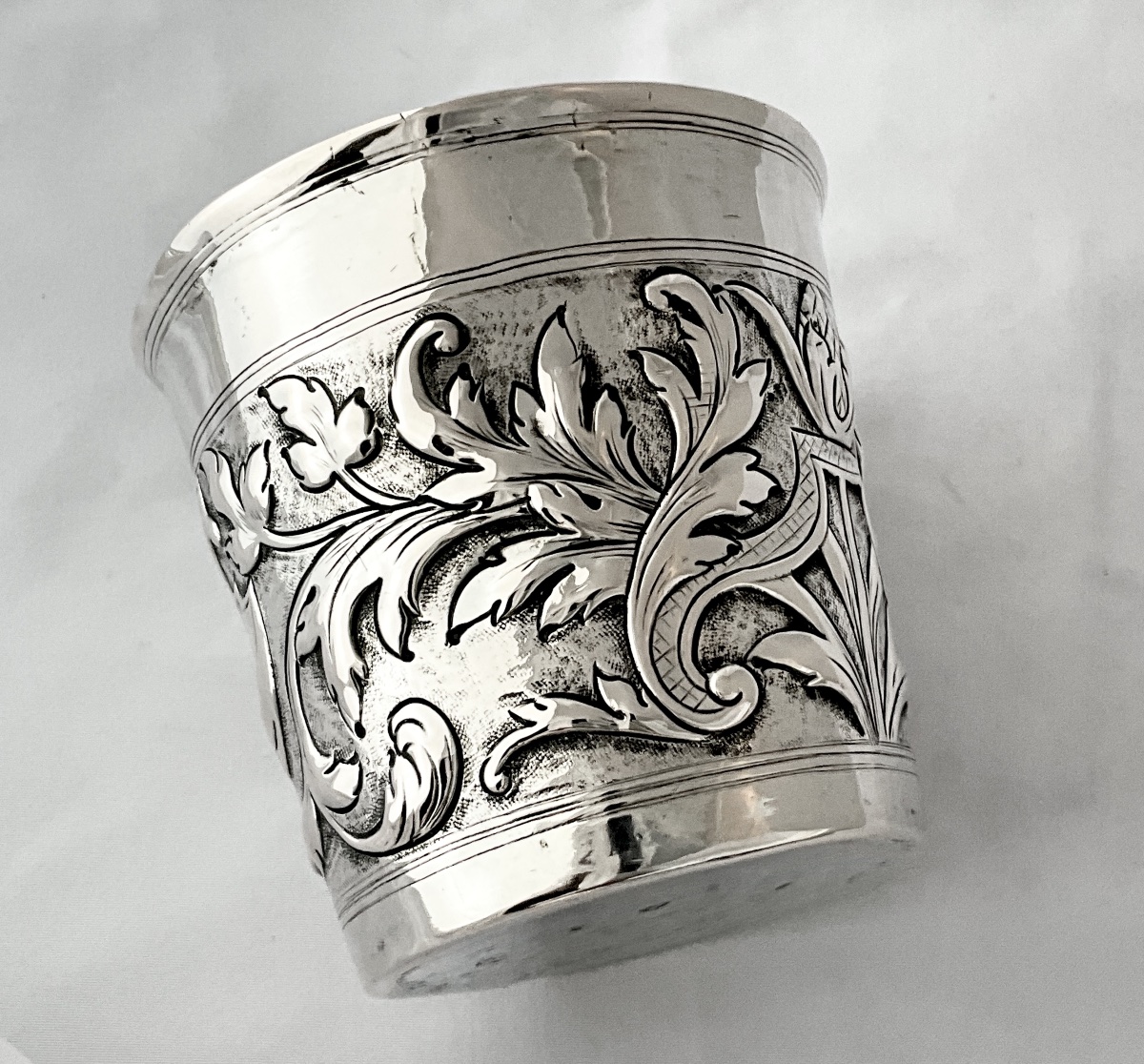
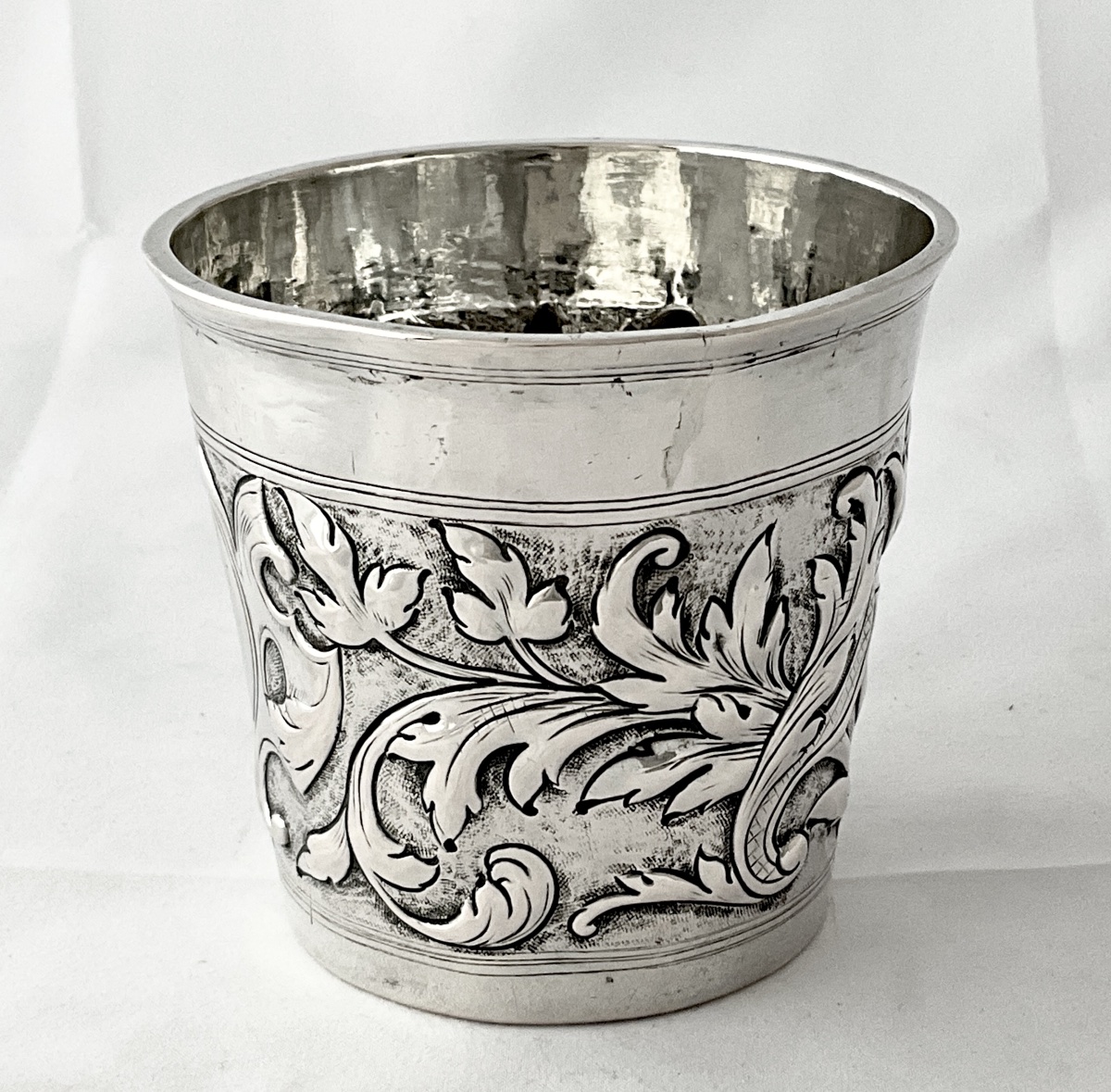
The body, cylindrical in shape and slightly flared, is entirely covered with a rich Baroque decoration executed in repoussé and then refined with chiseling. Powerful acanthus scrolls, palmettes, and fleurons stand out in high relief against finely embossed backgrounds. The overall design reveals remarkable technical mastery and a highly developed sense of form, rarely seen on Scandinavian timbales from this period.
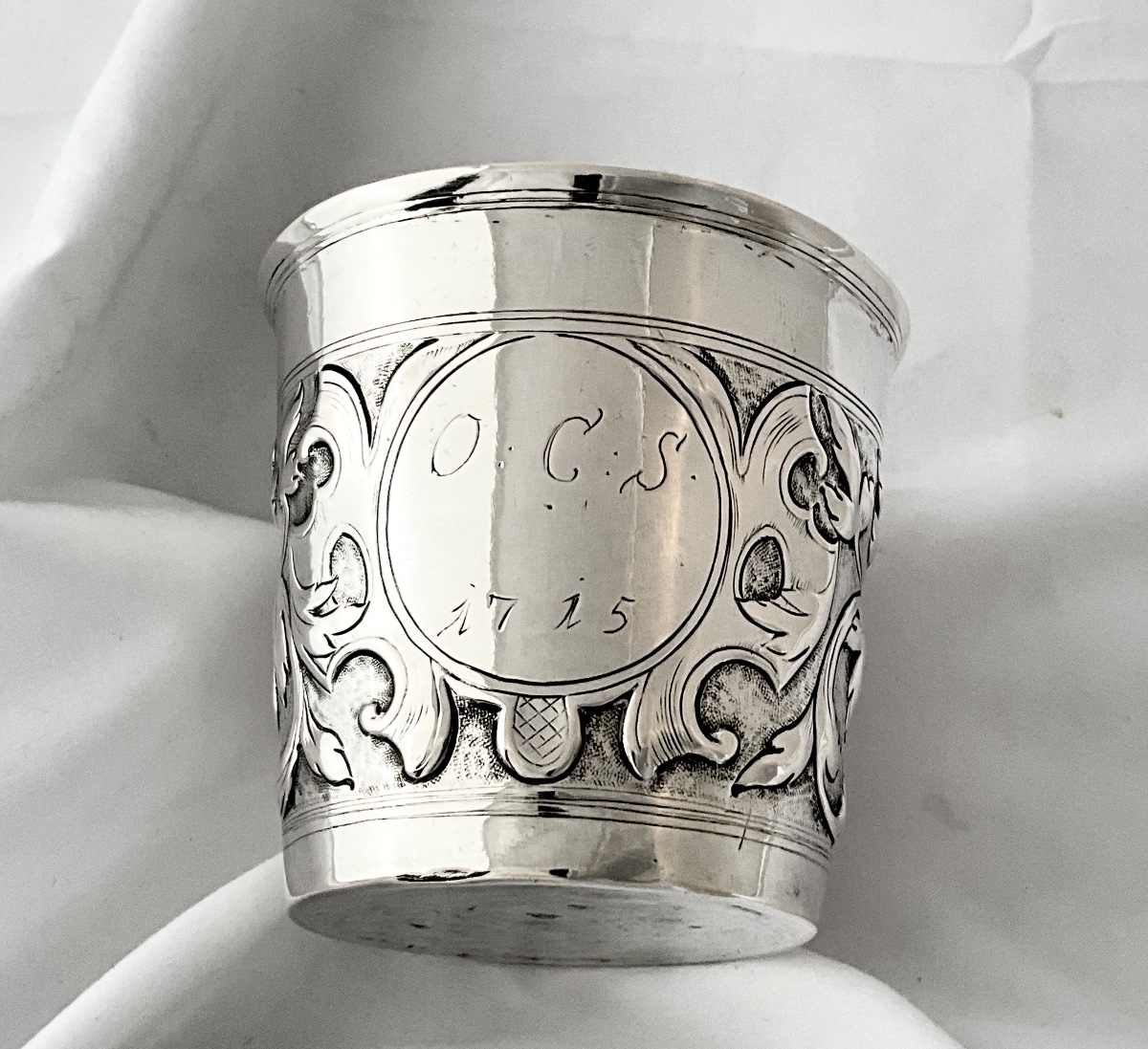
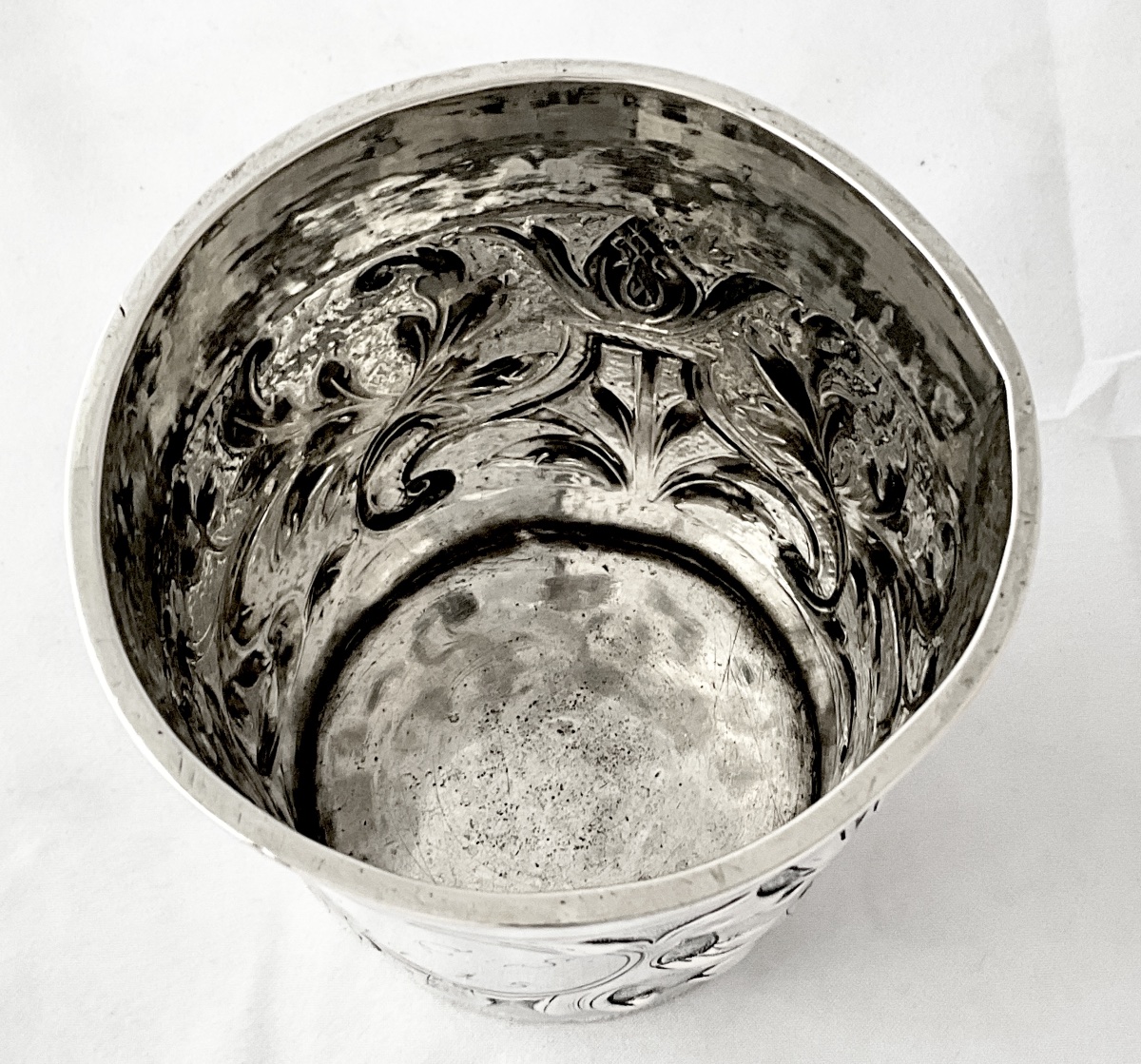
At the center of the composition is a large cartouche engraved with the initials of its first owner and the date 1715, contemporary with its manufacture. The interior perfectly preserves the reverse side of the repoussé work, attesting that the decoration was shaped directly into the silver sheet before being fully reworked with chiseling.
With its generous dimensions, unusual weight, the quality of its decoration, and its excellent state of preservation, this timbale is one of the finest known examples of Michel Michelsen Rømer’s civilian work.
Born in 1682, Michel Michelsen Rømer was one of the leading goldsmiths active in Christiania during the first half of the 18th century. He was granted master status around 1707 and practiced there until his death in 1739.
His work is now held in several Scandinavian institutions, notably the Nasjonalmuseet in Oslo, which owns a remarkable chocolate pot dated 1734, as well as the Nationalmuseum in Stockholm, where a timbale bearing the same master’s mark is preserved. A chalice dated 1718, housed in the church at Lunder, also bears his MM/R hallmark, confirming the identification of this piece.
The decorative vocabulary of this timbale, characterized by large, deeply modeled scrollwork, bears close parallels to the goldsmith’s other known works and attests to the existence of a distinct workshop style.
The history of this family extends far beyond Norway’s borders.
Michel Michelsen Rømer’s son, Emick Romer (1724–c. 1799), left Christiania to settle in London, where he became one of the most renowned silversmiths of the second half of the 18th century. Based in High Holborn, he worked notably for the prestigious firm Parker & Wakelin, purveyor to the British Court and the high aristocracy. His tea caddies, table centerpieces, candlesticks, and serving pieces are now found in numerous collections and regularly appear on the international market. Toward the end of his life, he returned to Norway and settled in Halden.
This goblet thus represents the origin of a true dynasty of silversmiths whose fame spread from Norway all the way to London.
Christiania in 1715
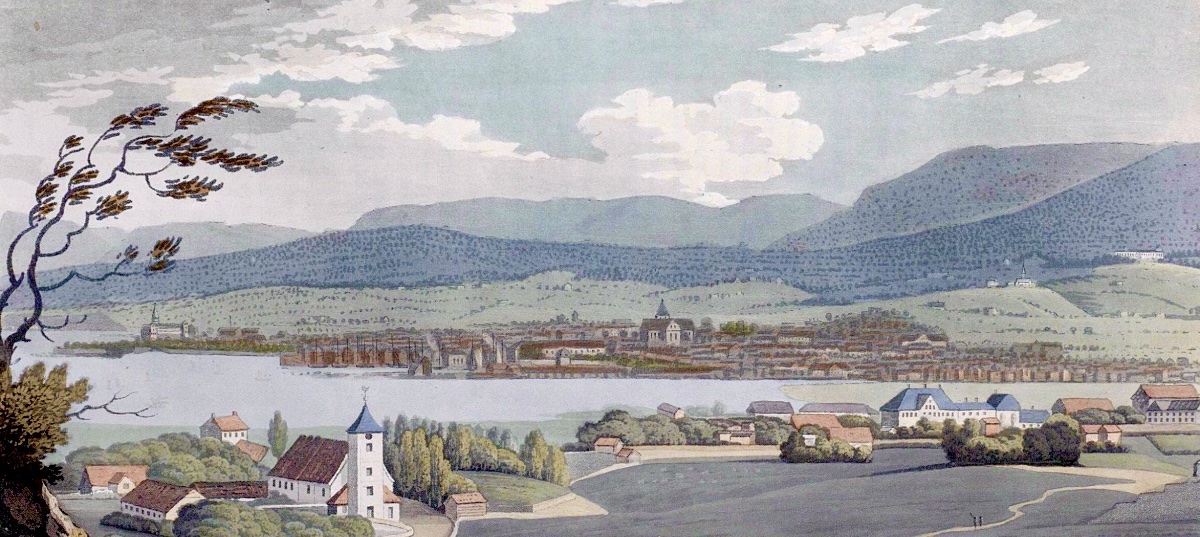
When this goblet was made, the city was not yet called Oslo but Christiania, a name given by King Christian IV of Denmark and Norway after the great fire of 1624. The city had then been rebuilt according to a regular grid plan at the foot of Akershus Fortress.
At the beginning of the 18th century, Christiania had only about 10,000 inhabitants. Although it was Norway’s largest city, it remained a modest capital where the number of goldsmiths was very limited. Goldsmithing production there was nowhere near that of major capitals such as Copenhagen, Stockholm, Amsterdam, or Paris.
Owning a piece today that dates from 1715 and is signed by one of the leading masters of this small Scandinavian capital is therefore a particularly rare example of early 18th-century Norwegian goldsmithing.
Bibliography:
- Nasjonalmuseet, Oslo, online collections.
- Norges Kirker, entry on Lunder Church (1718 chalice signed by Michel Michelsen Rømer).
- Nationalmuseum, Stockholm, online collections.
- DigitaltMuseum, Oslo.
Period: 18th century
Style: Louis 14th, Regency
Condition: Excellent condition
Material: Sterling silver
Diameter: 9 cm
Height: 8,5 cm
Reference (ID): 1803823
Availability: In stock