

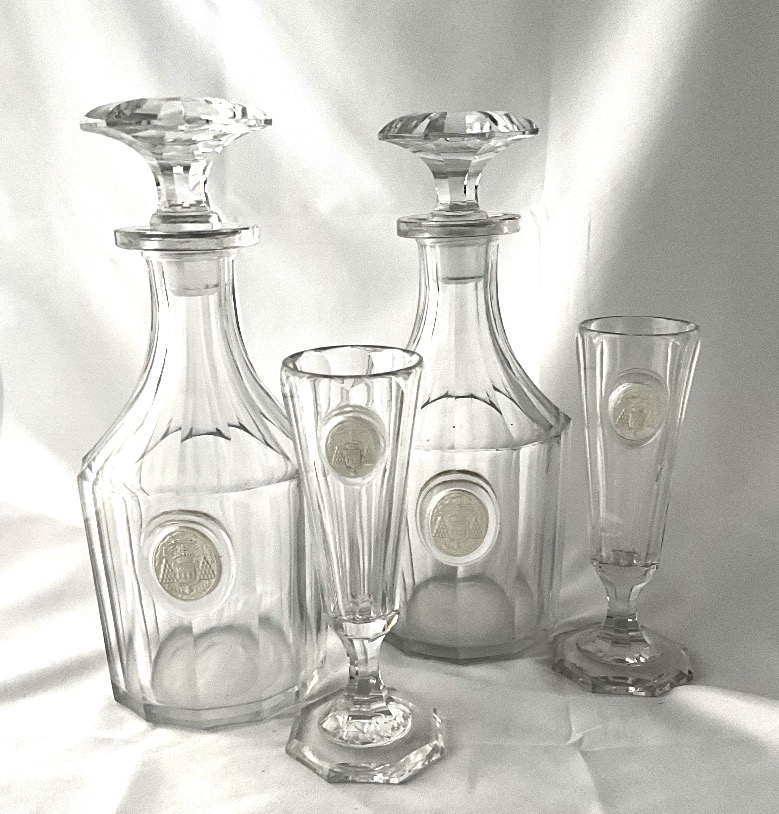
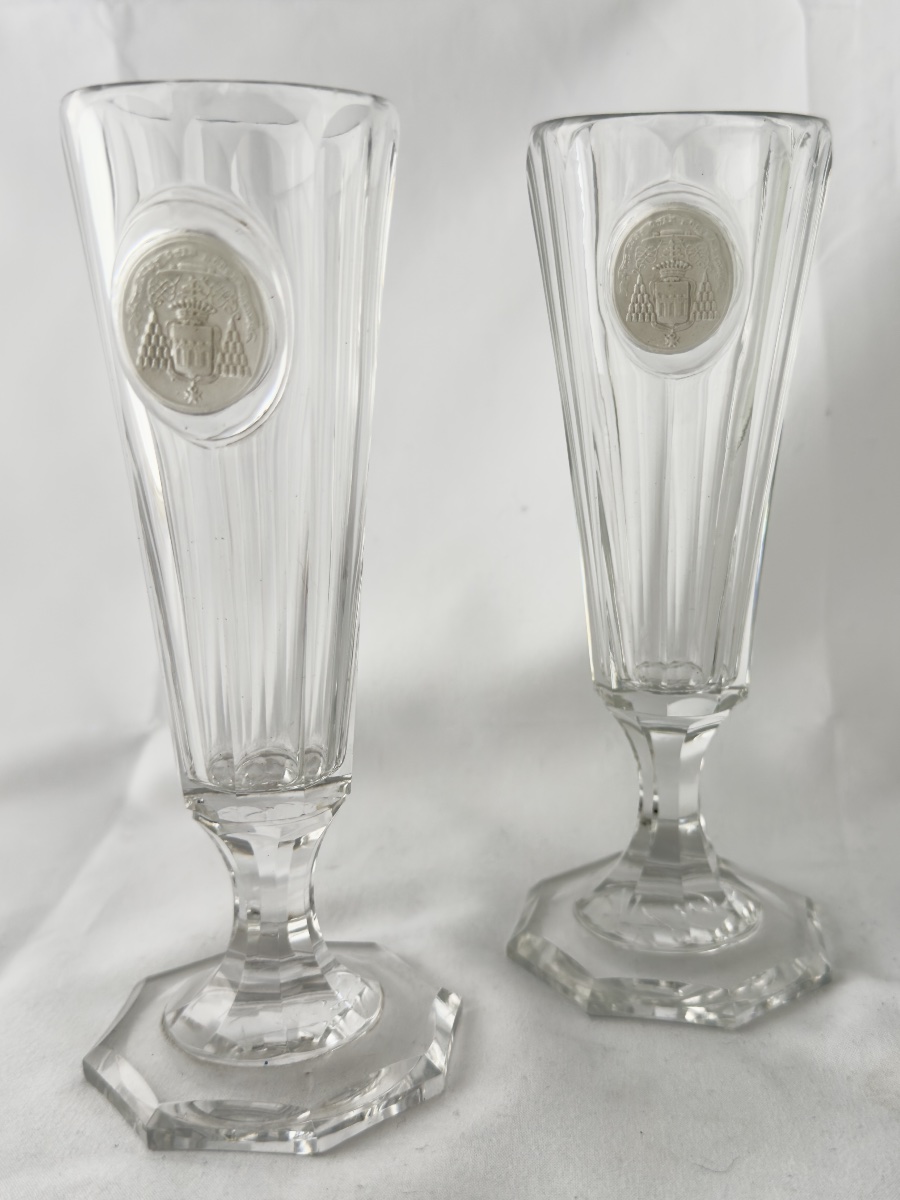
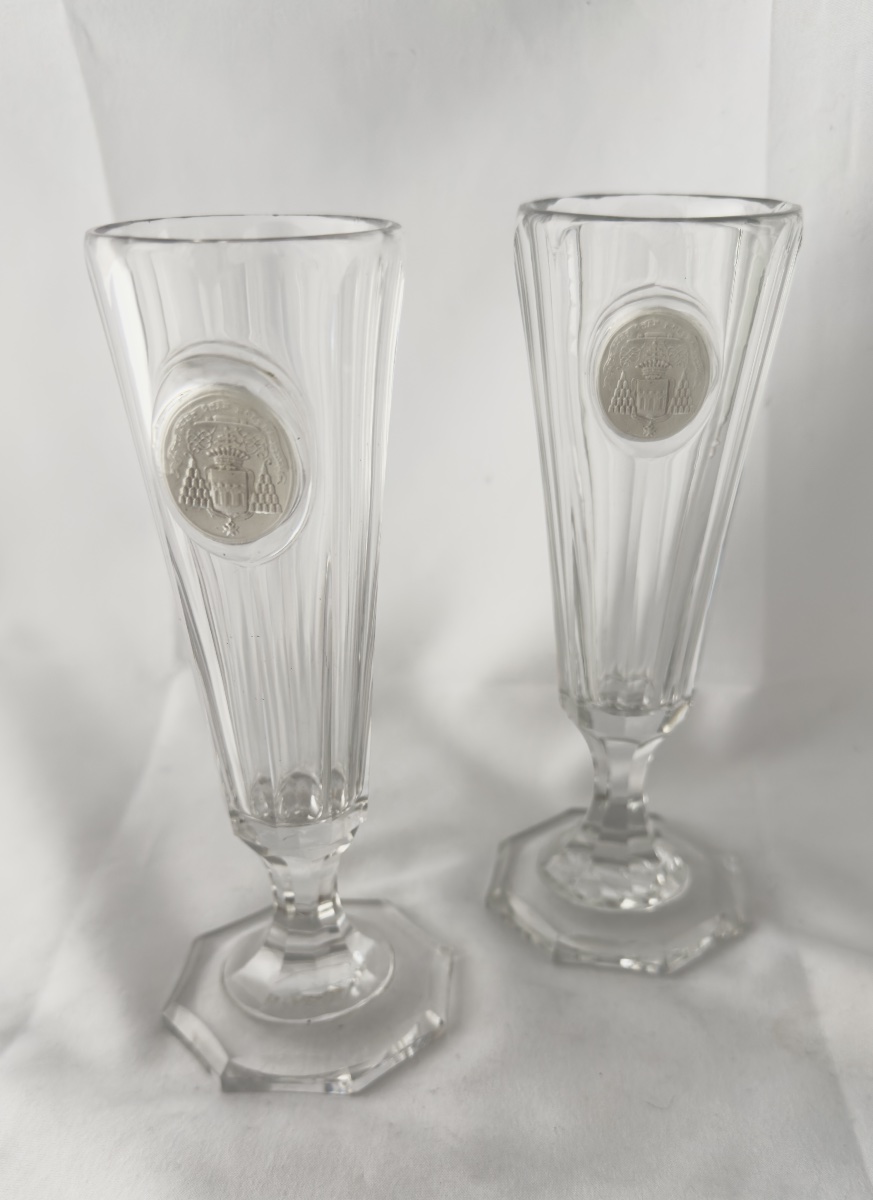
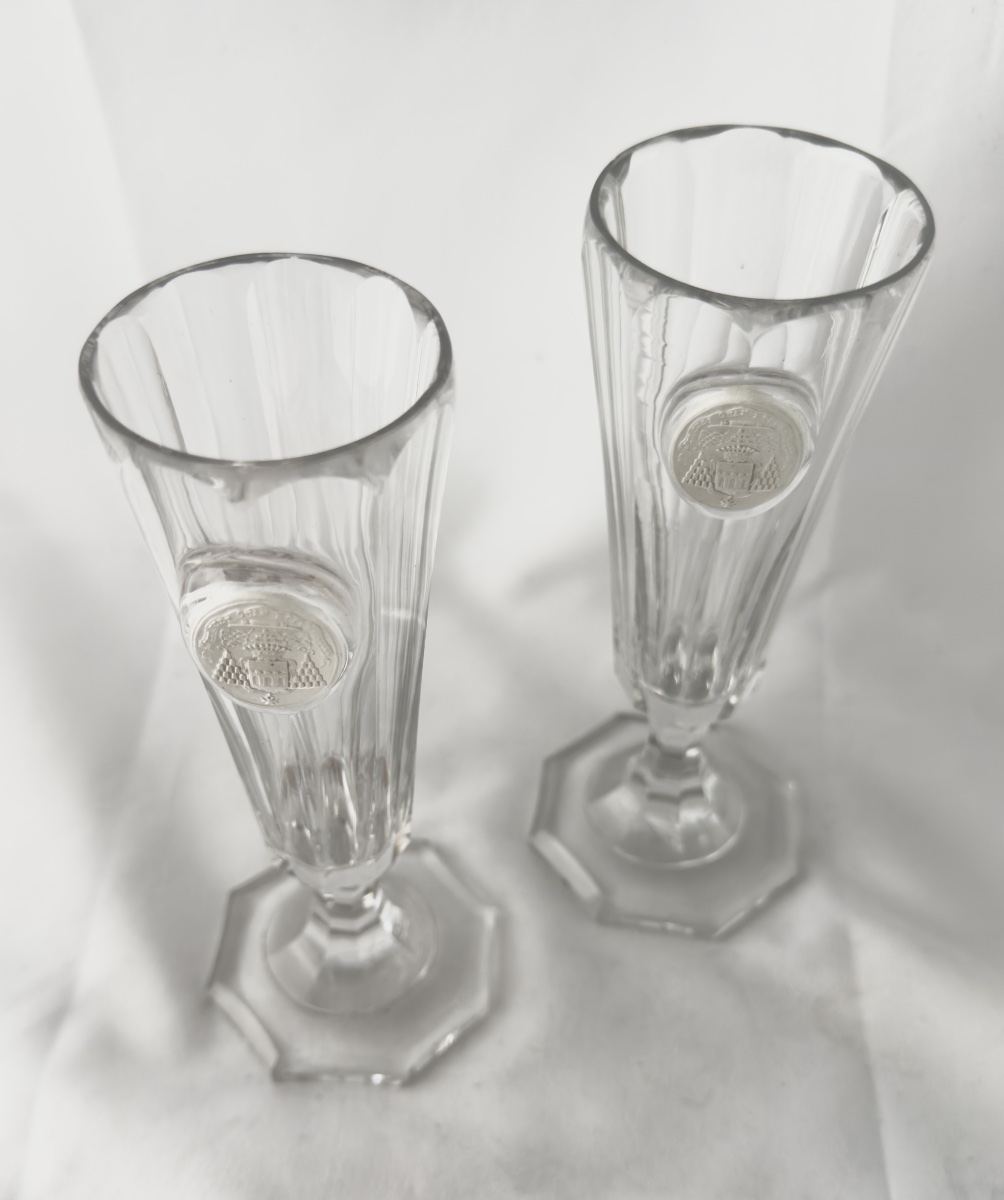
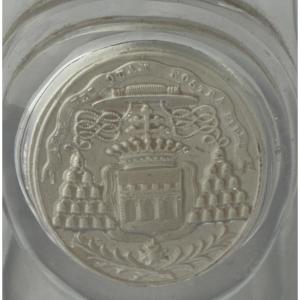


Champagne Flute With A Heraldic Crystal-ceramic Inlay, Cardinal Dupont, Archbishop Of Bourges
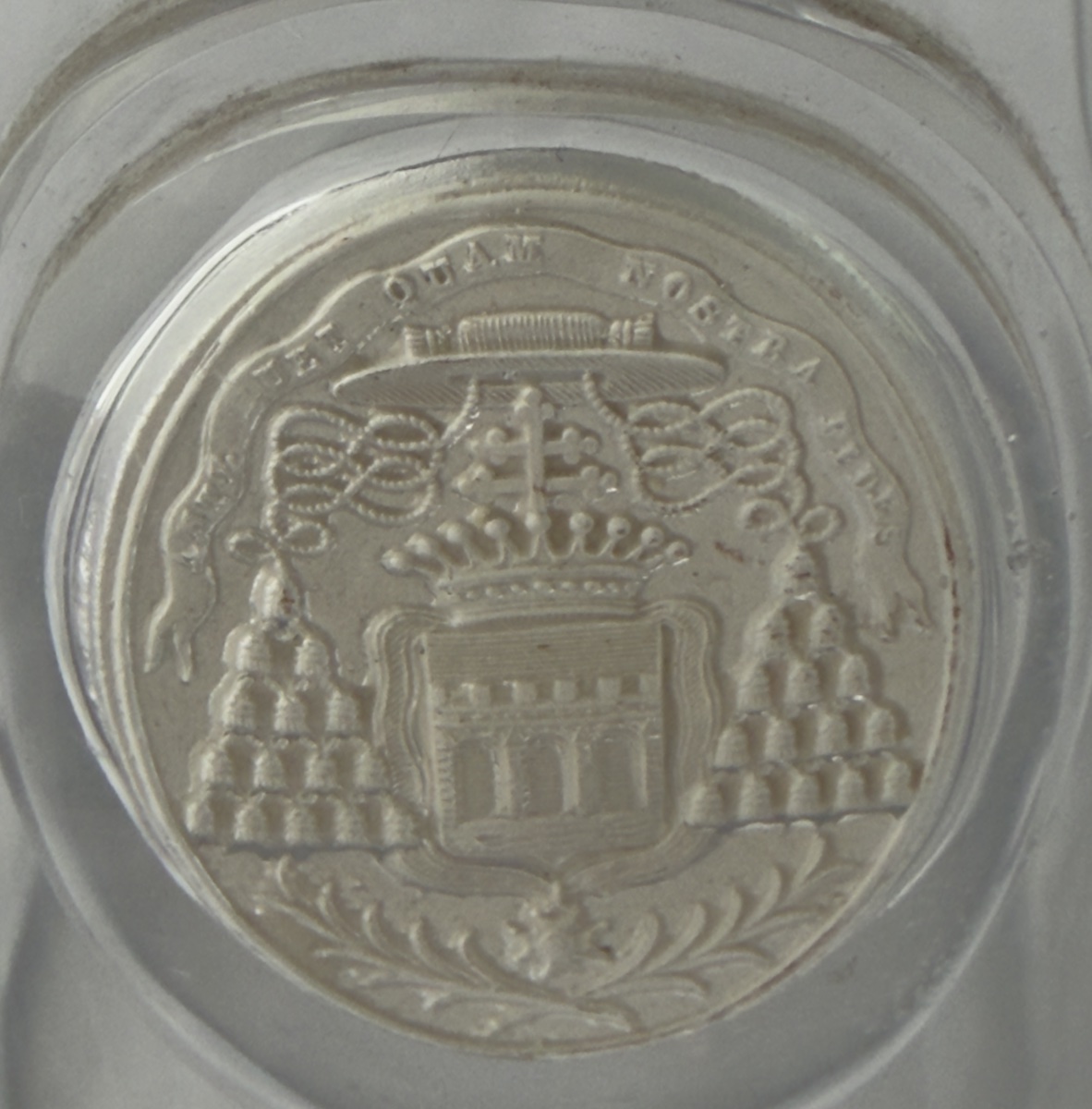
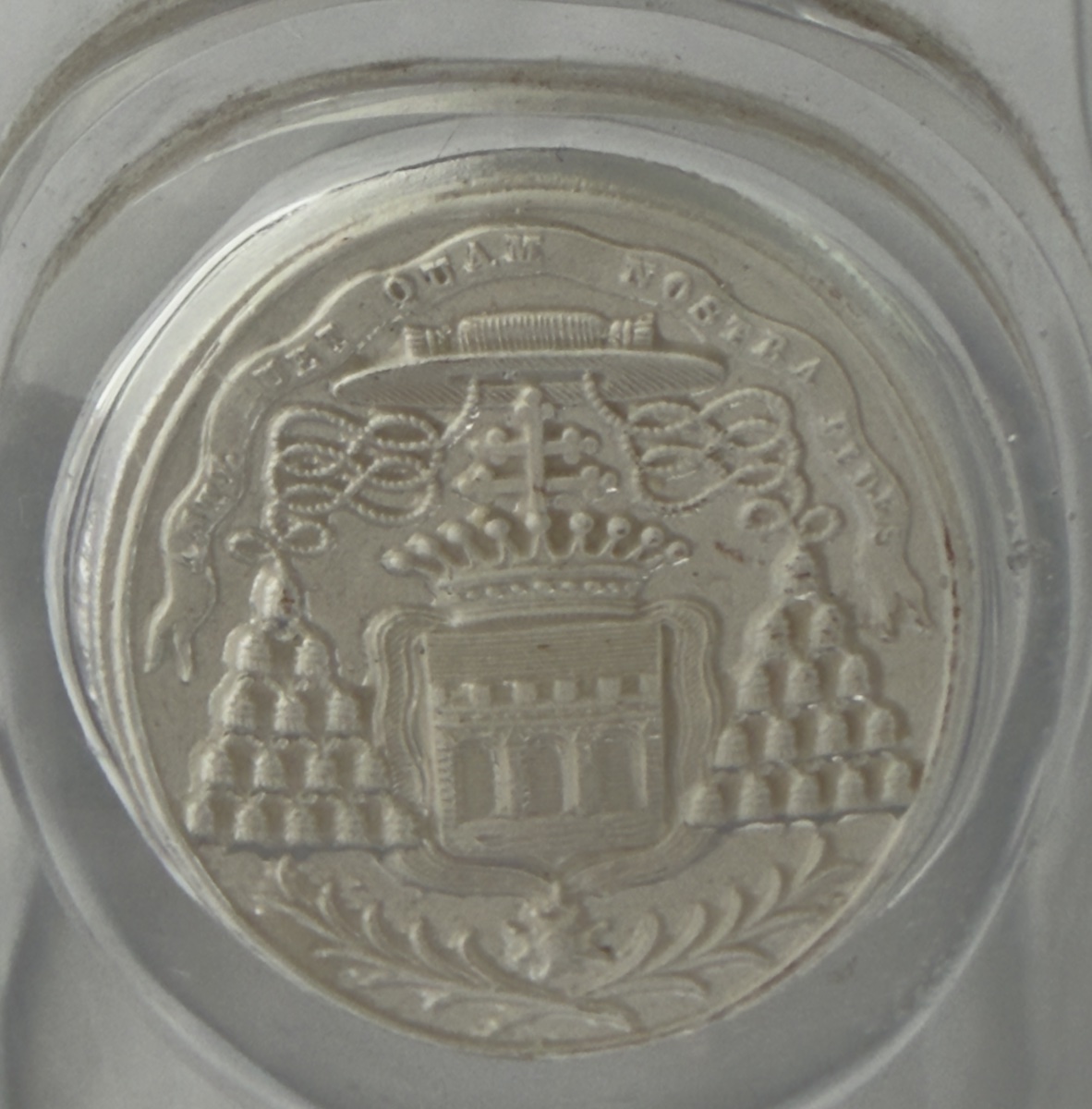
This champagne glass showcases a refined technique that was highly prized in the 19th century: cristallo-cérame, also sometimes referred to as “sulfure.” The decoration—in this case, a cardinal’s coat of arms—is not painted on the surface but embedded within the crystal itself. A small medallion made of white ceramic paste, molded and then precisely carved, was placed into the still-hot crystal before being completely encased in the transparent material. It is sold individually. I have a second glass available for purchase at the same price.
First appearing in the late 18th century and perfected in the early 19th, this technique enjoyed great success during the Restoration and the July Monarchy. It allowed for the creation of portraits, emblems, orders of honor, or coats of arms intended for an aristocratic, ecclesiastical, or bourgeois clientele. The major French crystal manufacturers, notably Baccarat, Saint-Louis, and Clichy, produced this type of object, sometimes in series, sometimes for specific commissions.
With its religious heraldic decoration and the virtuosity of its inlay, this glassware attests both to the 19th-century taste for personalized prestige objects and to the technical excellence of French crystal manufacturers.
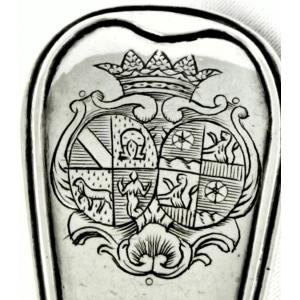
The cardinal’s coat of arms in question is that of Cardinal Dupont.
Cardinal Jacques-Marie Célestin Dupont had a somewhat unusual background for a French bishop: he was born in Sardinia, the son of a Sardinian naval commissioner, and had to become a naturalized French citizen upon his consecration as auxiliary bishop of Sens. This shows that his rise within the Church of France occurred despite his foreign origins, thanks in particular to the protection of Cardinal de La Fare.
Another notable trait: he had a reputation for being a very reform-minded prelate, sometimes to the point of making himself unpopular. In Saint-Dié, then in Avignon, and finally in Bourges, he sought to reorganize ecclesiastical discipline and modify certain diocesan practices. These reforms provoked strong resistance among the local clergy; in Saint-Dié, the opposition was so strong that he eventually secured a transfer to Avignon.
His major project in Bourges was the creation of the Saint-Célestin minor seminary, which he envisioned as a model institution. The idea dated back to 1840, even before his arrival in Bourges. He had a large plot of land purchased north of the road from Bourges to Dun-le-Roi, in a place then known as the “Ruelle aux Loups.” The cornerstone was laid on October 11, 1845, with a parchment placed in the foundations, but construction took eleven years, largely due to the economic crisis of 1847–1848. The final cost reached approximately one million francs, a considerable sum for the time. Finally, his career clearly illustrates the link between the Church and political power in the 19th century. His good relations with the July Monarchy contributed to his creation as a cardinal by Pius IX in 1847. Later, during the Second Empire, he became a senator and was awarded the rank of Commander of the Legion of Honor, demonstrating that he was also an important public figure, beyond his religious role.
Period: 19th century
Style: Louis Philippe, Charles 10th
Condition: Good condition
Material: Crystal
Height: 16 cm
Reference (ID): 1778284
Availability: In stock