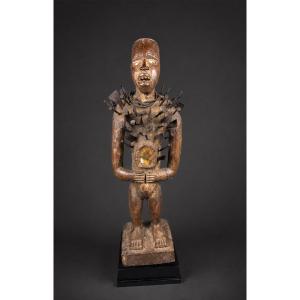


Statue Of The Bakongo Ancestor Nkisi
Origin. Democratic Republic of the Congo
Tribe Name. Bakongo
Material. Wood, nails, iron
Dimensions. 78 cm
Shipping Method. Colissimo/DHL within 24–48 business hours.
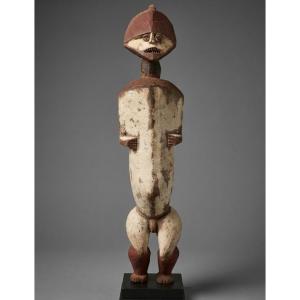
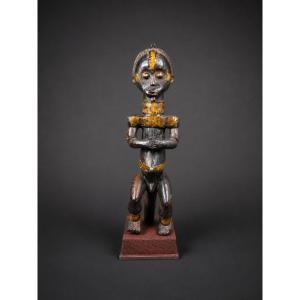
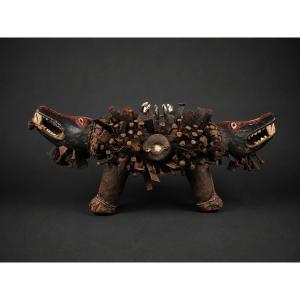
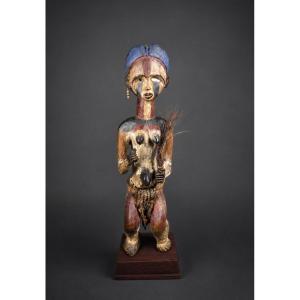
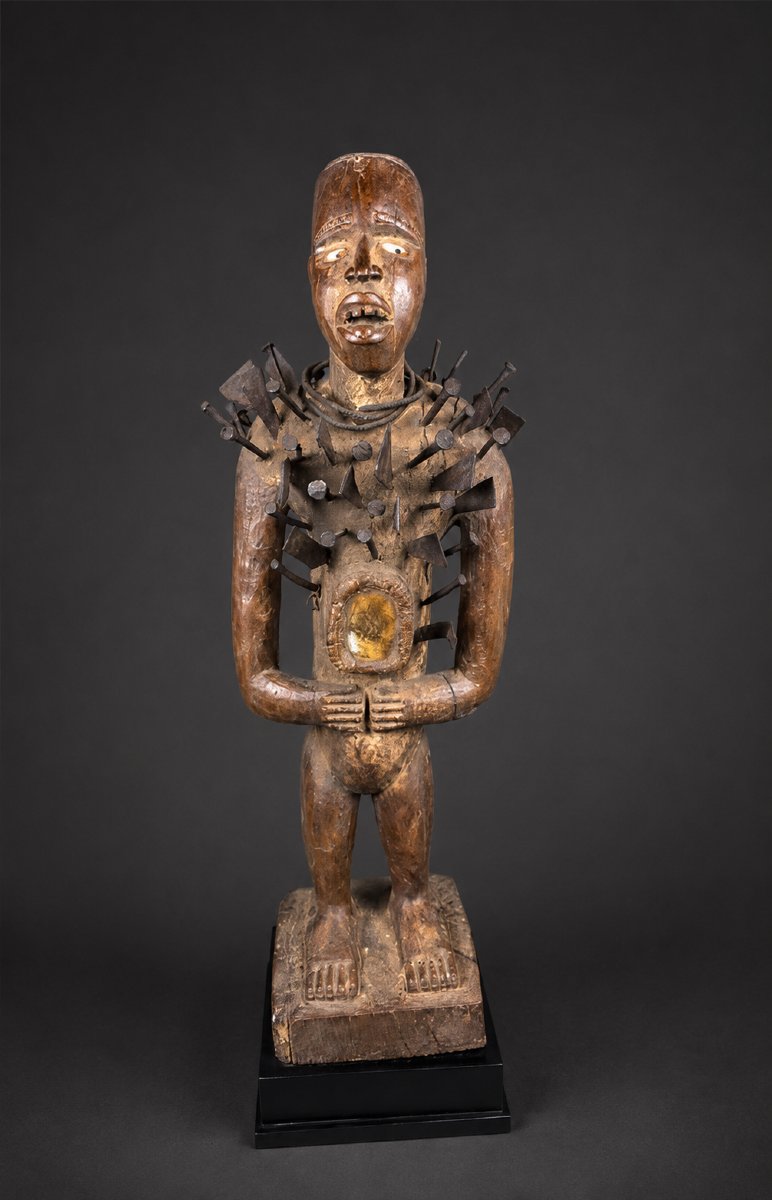
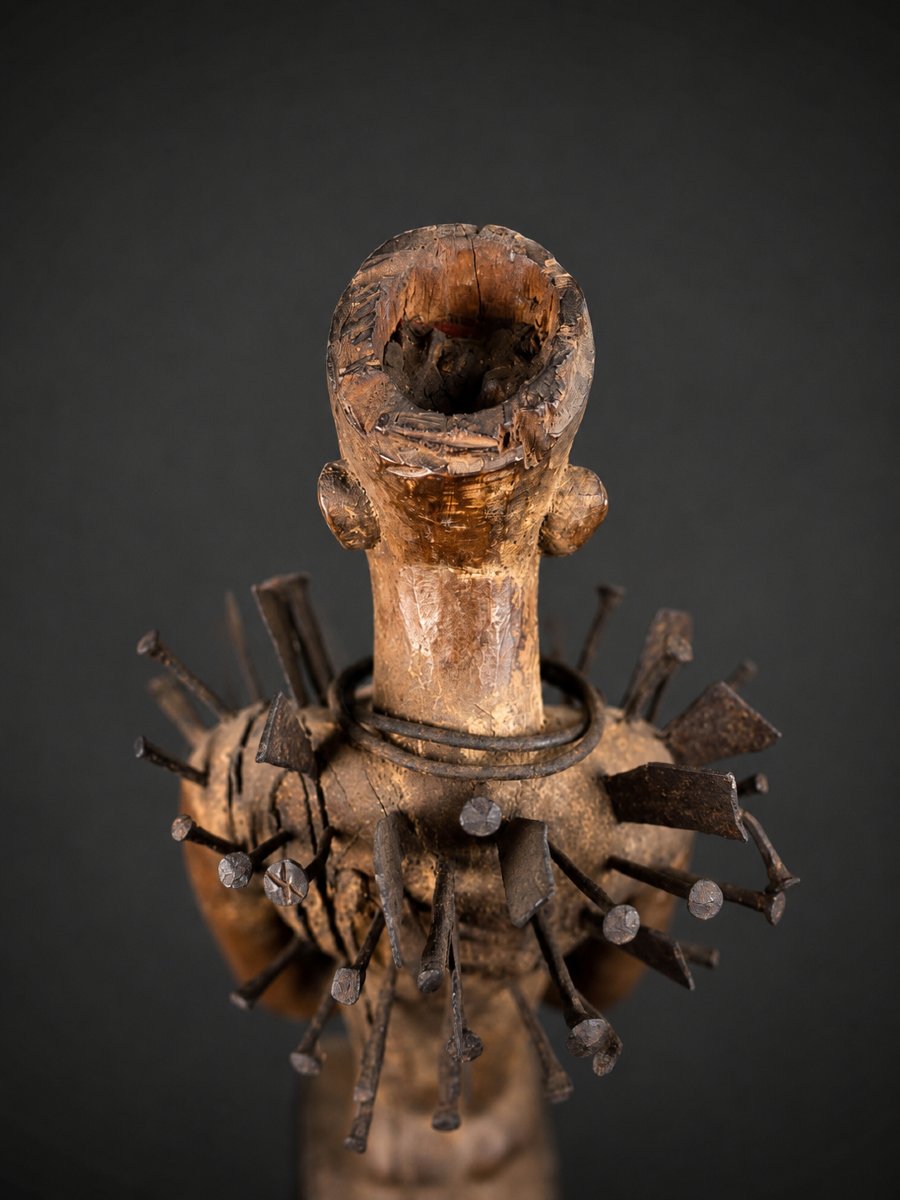
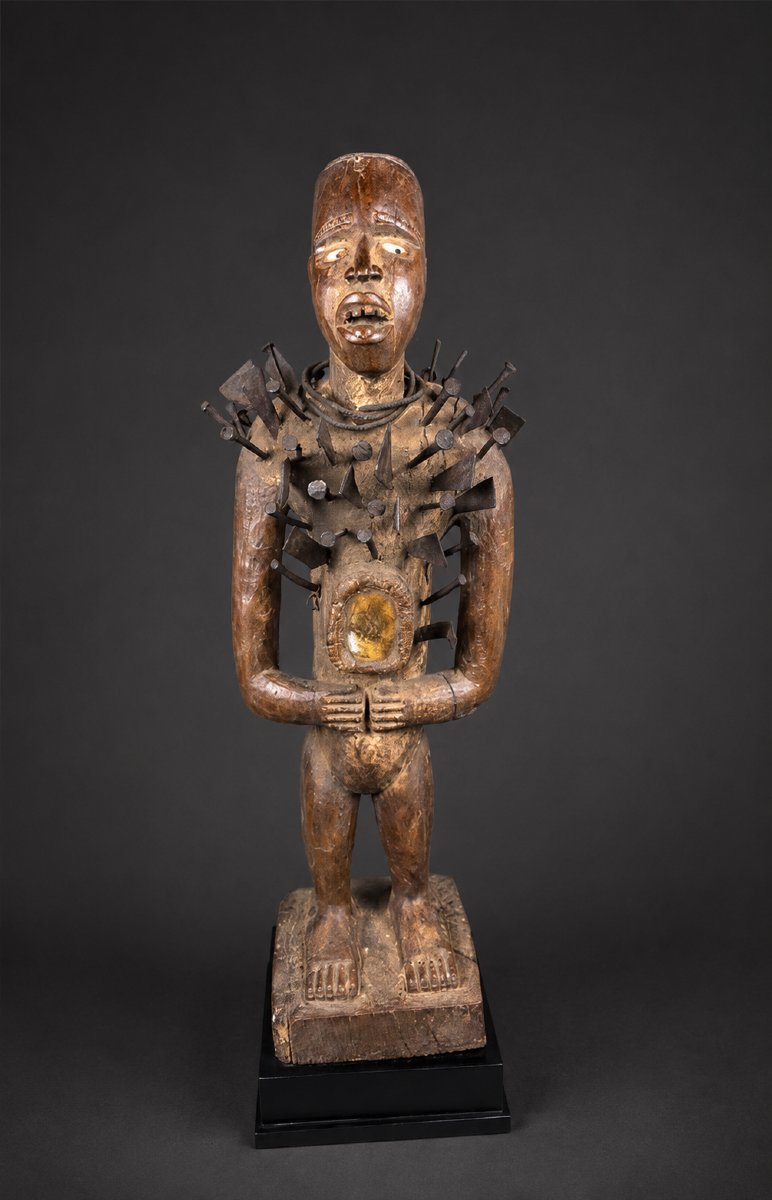
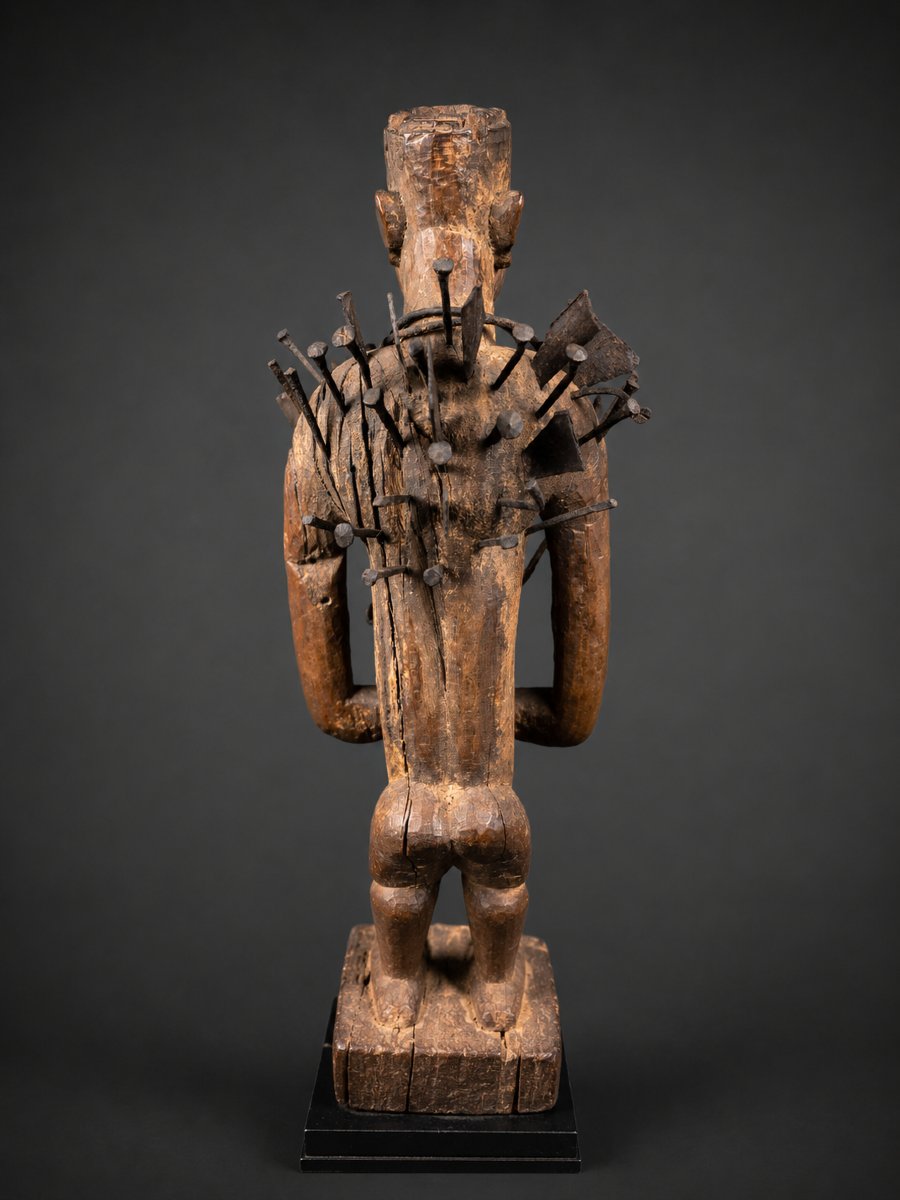
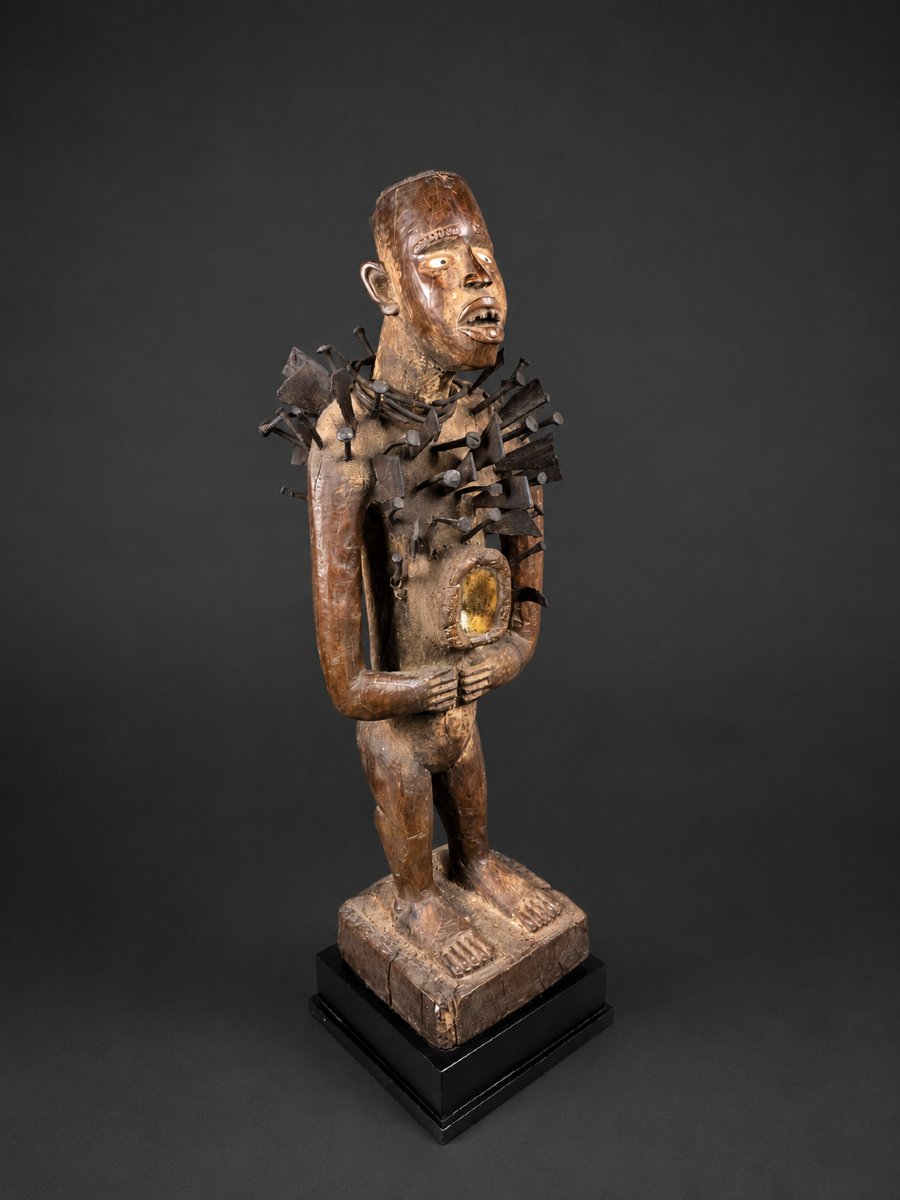
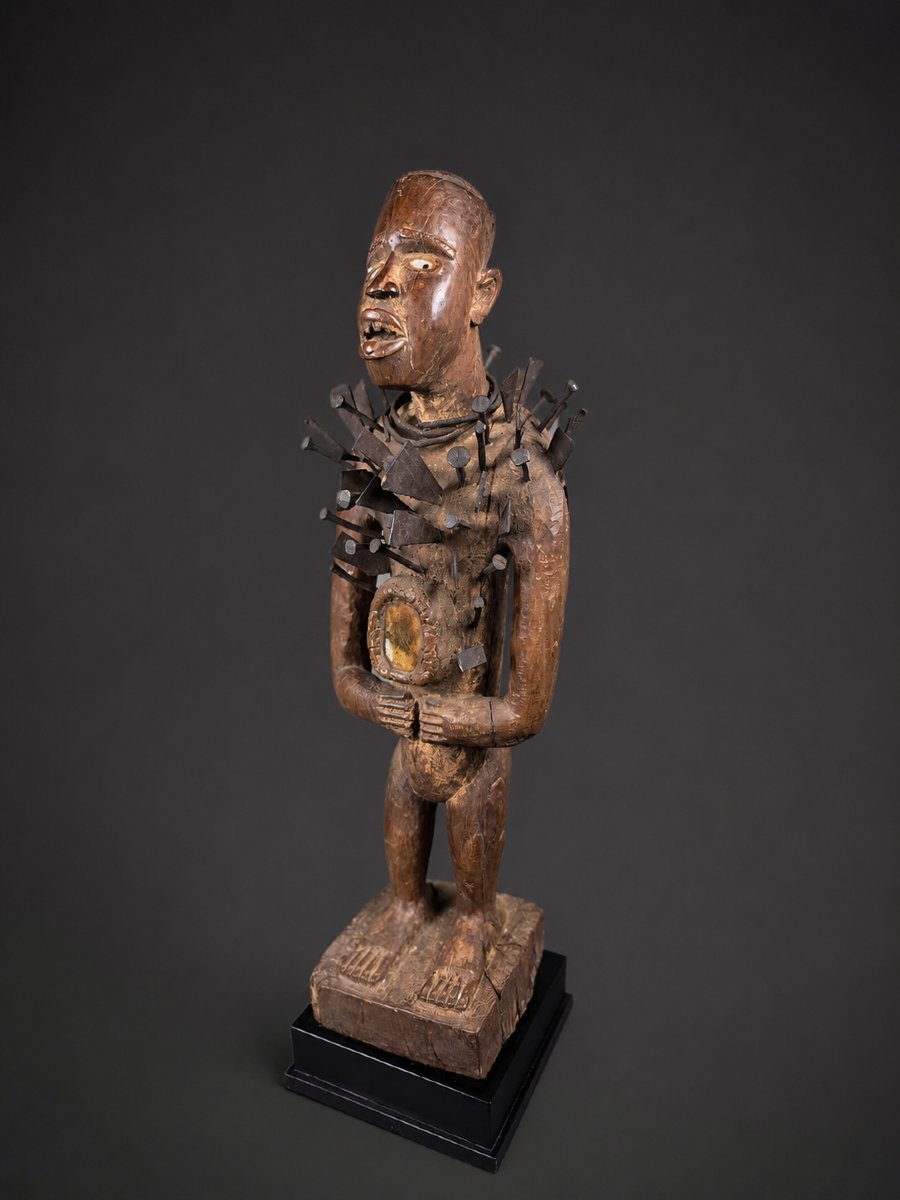
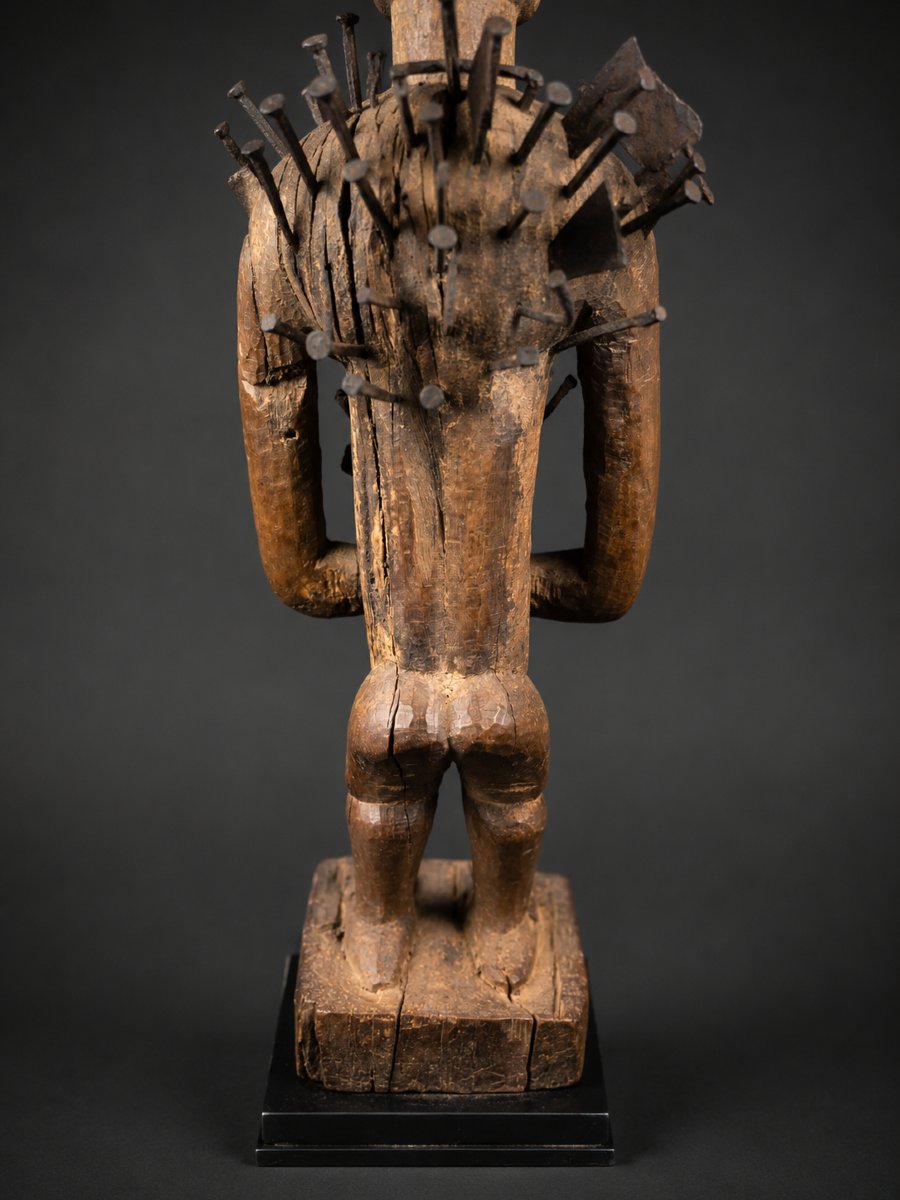
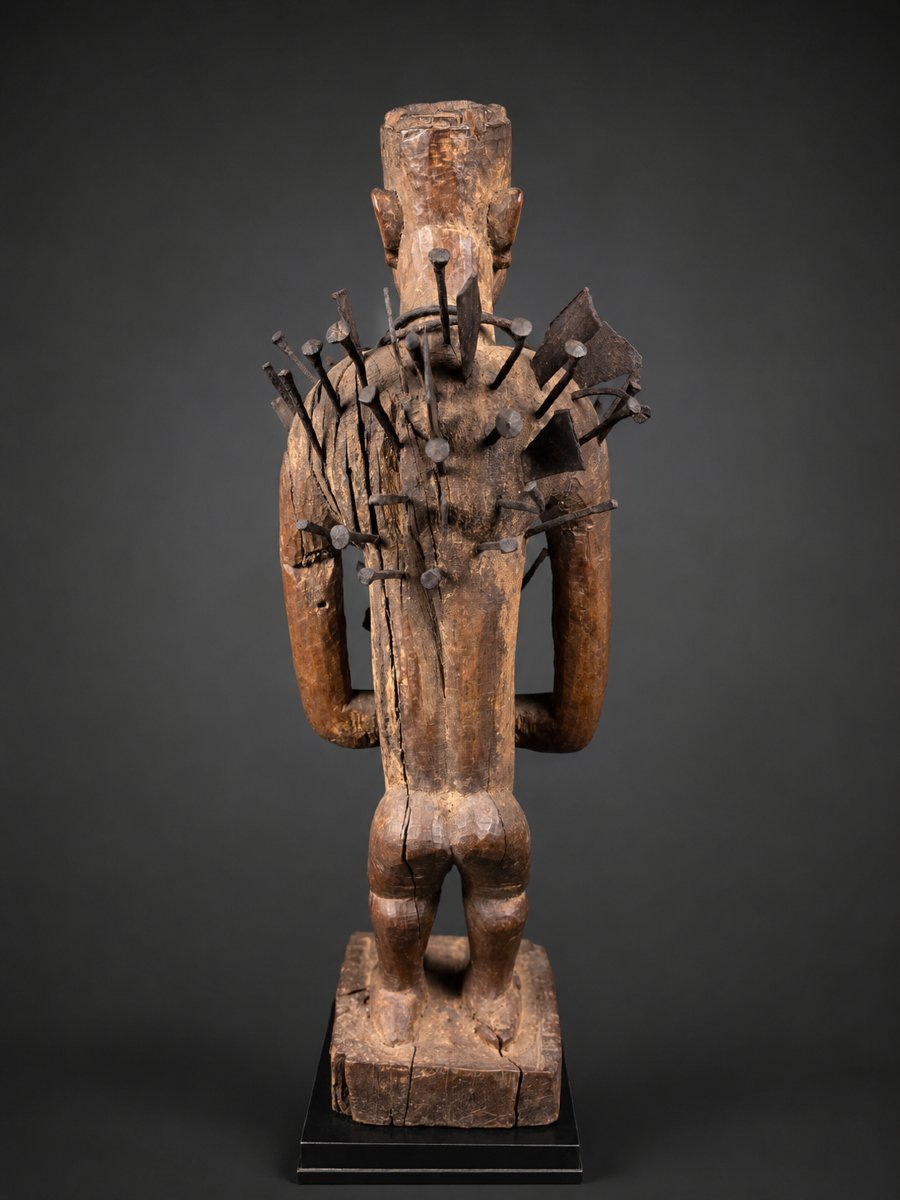
This anthropomorphic wooden statue, associated with the Kongo culture (or Bakongo of Central Africa), is a type of power or arbitration fetish commonly known as nkisi nkondi (or, more precisely, mankisi with metal attachments).1. Morphological and Structural DescriptionMain Materials: Carved from dark, weathered hardwood, the piece incorporates numerous wrought-iron elements (nails of various sizes, blades, spikes) as well as a raised abdominal capsule sealed with a mirror.Posture: The figure stands upright, firmly anchored on a massive wooden base. Its legs are bent, and its hands meet discreetly at the abdomen, framing the central magical charge.Face and Expressions: The face features intensely expressive features. The wide-open eyes are inlaid with a light-colored material (shell or kaolin), reinforcing its piercing and inquisitive gaze. The mouth is slightly parted, revealing carved or sculpted teeth, suggesting the utterance of an oath or an incantation.2. Distinctive Ritual AttributesNailing (metal pieces): The upper body (torso, shoulders, back, and neck) is densely studded with nails, bent pieces of iron, and metal strips. Each embedded nail or piece of iron symbolizes the intervention of a complainant, the conclusion of an agreement, the resolution of a dispute, or an appeal to divine justice against a reprehensible act.The abdominal cavity (the bilongo): At the center of the abdomen is a rectangular or oval cavity, originally sealed by a mirror (partially broken or weathered). In the Kongo tradition, the mirror symbolizes the spirit world and allows the statue to “see” through invisible dimensions and detect sorcerers or liars.The upper cavity (top of the skull): The top of the head, hollowed out to form a receptacle, was used to hold additional magical and medicinal substances (bilongo) intended to activate the object’s spiritual power. Ornaments: A rudimentary necklace made of braided strands encircles the sculpture’s neck.3. Cultural and Spiritual FunctionIn traditional Kongo society, these objects are not merely artistic representations, but genuine agents of justice and protection.They were commissioned by a diviner-healer (nganga) for a community or a chief.The hammer and nails were driven in during specific rituals to “awaken” the spirit’s fury, seal solemn oaths, punish criminals, or identify evil forces.
Tribe Name. Bakongo
Material. Wood, nails, iron
Dimensions. 78 cm
Shipping Method. Colissimo/DHL within 24–48 business hours.
This anthropomorphic wooden statue, associated with the Kongo culture (or Bakongo of Central Africa), is a type of power or arbitration fetish commonly known as nkisi nkondi (or, more precisely, mankisi with metal attachments).1. Morphological and Structural DescriptionMain Materials: Carved from dark, weathered hardwood, the piece incorporates numerous wrought-iron elements (nails of various sizes, blades, spikes) as well as a raised abdominal capsule sealed with a mirror.Posture: The figure stands upright, firmly anchored on a massive wooden base. Its legs are bent, and its hands meet discreetly at the abdomen, framing the central magical charge.Face and Expressions: The face features intensely expressive features. The wide-open eyes are inlaid with a light-colored material (shell or kaolin), reinforcing its piercing and inquisitive gaze. The mouth is slightly parted, revealing carved or sculpted teeth, suggesting the utterance of an oath or an incantation.2. Distinctive Ritual AttributesNailing (metal pieces): The upper body (torso, shoulders, back, and neck) is densely studded with nails, bent pieces of iron, and metal strips. Each embedded nail or piece of iron symbolizes the intervention of a complainant, the conclusion of an agreement, the resolution of a dispute, or an appeal to divine justice against a reprehensible act.The abdominal cavity (the bilongo): At the center of the abdomen is a rectangular or oval cavity, originally sealed by a mirror (partially broken or weathered). In the Kongo tradition, the mirror symbolizes the spirit world and allows the statue to “see” through invisible dimensions and detect sorcerers or liars.The upper cavity (top of the skull): The top of the head, hollowed out to form a receptacle, was used to hold additional magical and medicinal substances (bilongo) intended to activate the object’s spiritual power. Ornaments: A rudimentary necklace made of braided strands encircles the sculpture’s neck.3. Cultural and Spiritual FunctionIn traditional Kongo society, these objects are not merely artistic representations, but genuine agents of justice and protection.They were commissioned by a diviner-healer (nganga) for a community or a chief.The hammer and nails were driven in during specific rituals to “awaken” the spirit’s fury, seal solemn oaths, punish criminals, or identify evil forces.
4 500 €
Period: 20th century
Style: Tribal Art
Condition: Excellent condition
Material: Solid wood
Length: 78 cm
Height: 78 cm
Reference (ID): 1803144
Availability: In stock
Print