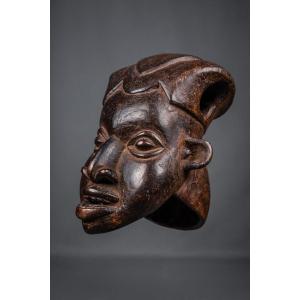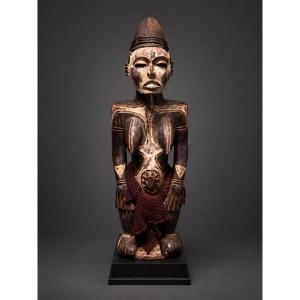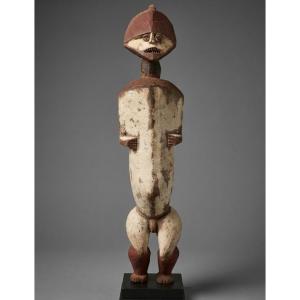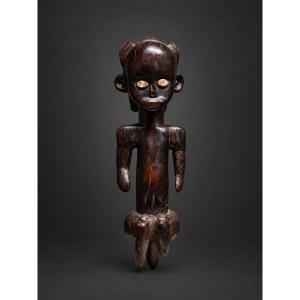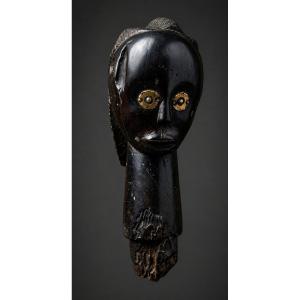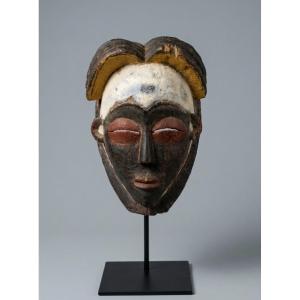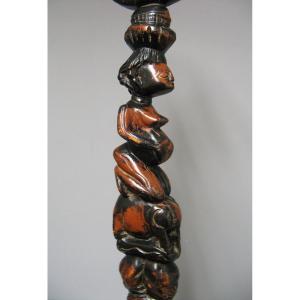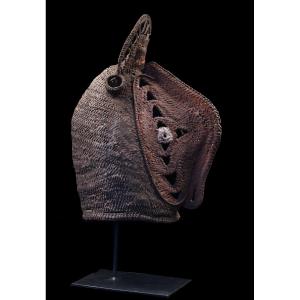
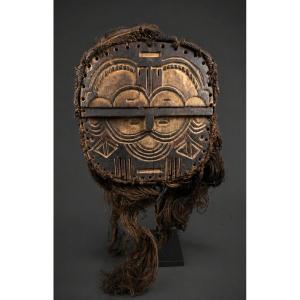


Teké-bateké Mask
Origin. Democratic Republic of the Congo
Tribe Name. Bateké
Material. Wood, feathers
Dimensions. H 37 cm W 35 cm
Shipping method. Colissimo/DHL within 24–48 business hours.
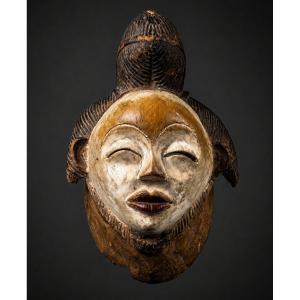
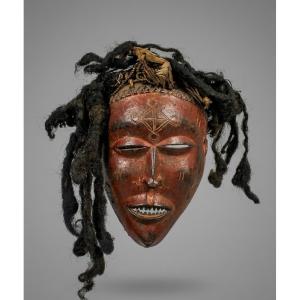
Masks from the Téké ethnic group (found primarily in Congo, Gabon, and the Democratic Republic of the Congo) are major works of traditional African art, characterized by a very strong geometric and symbolic aesthetic.
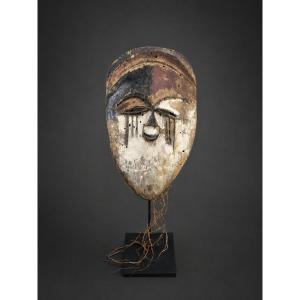
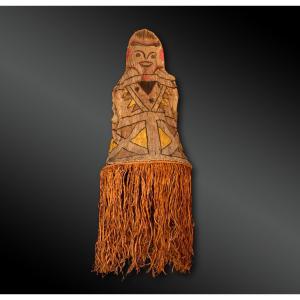
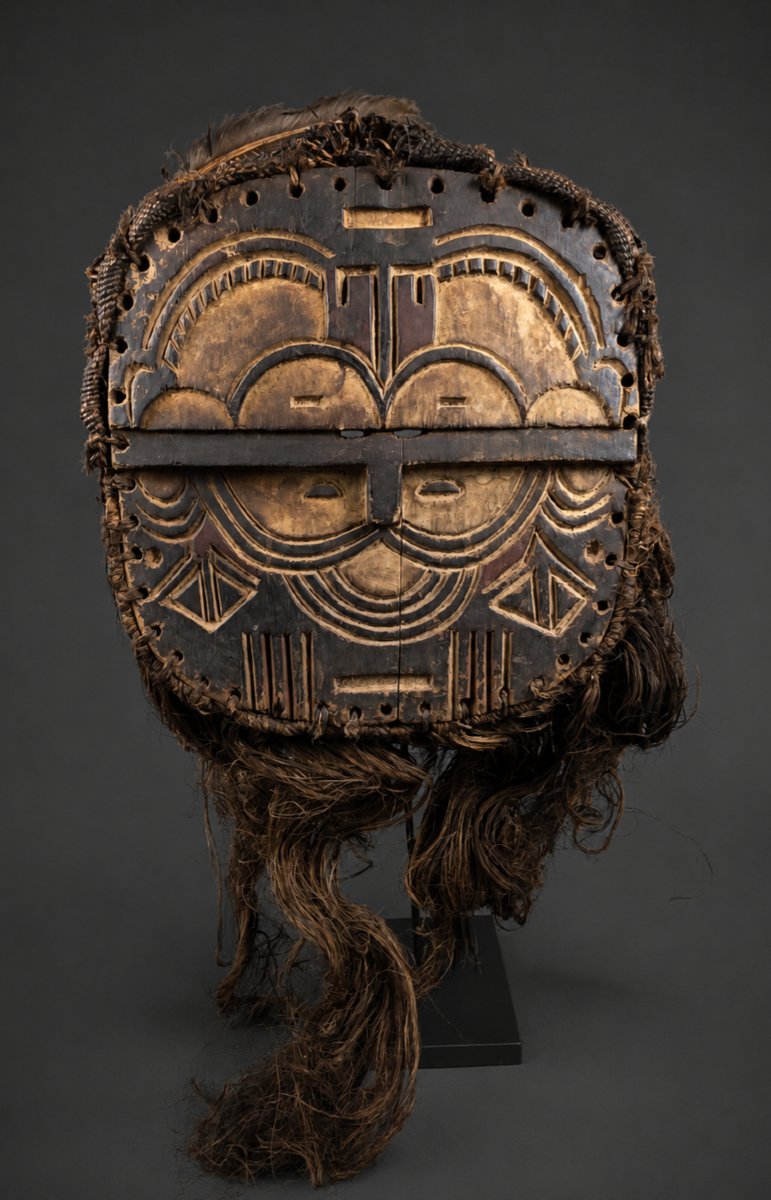
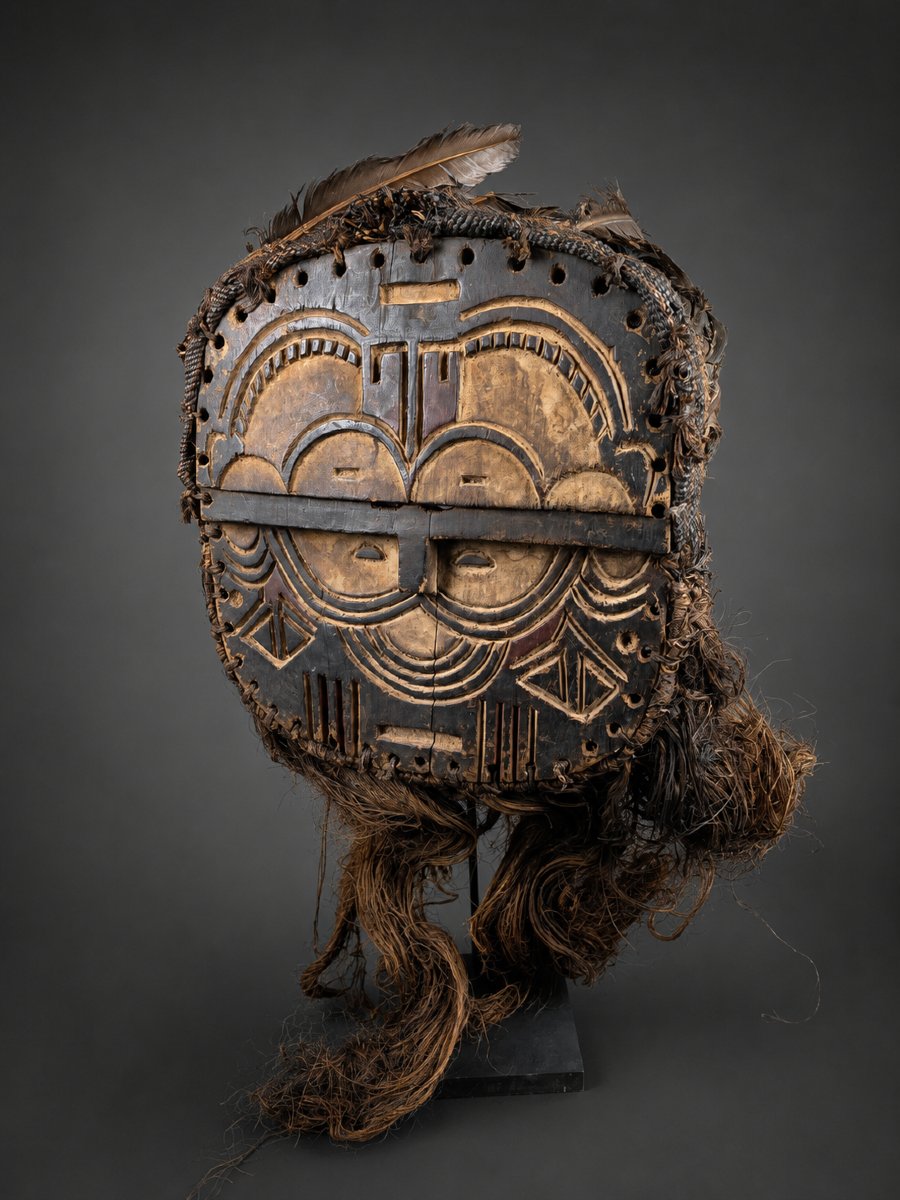
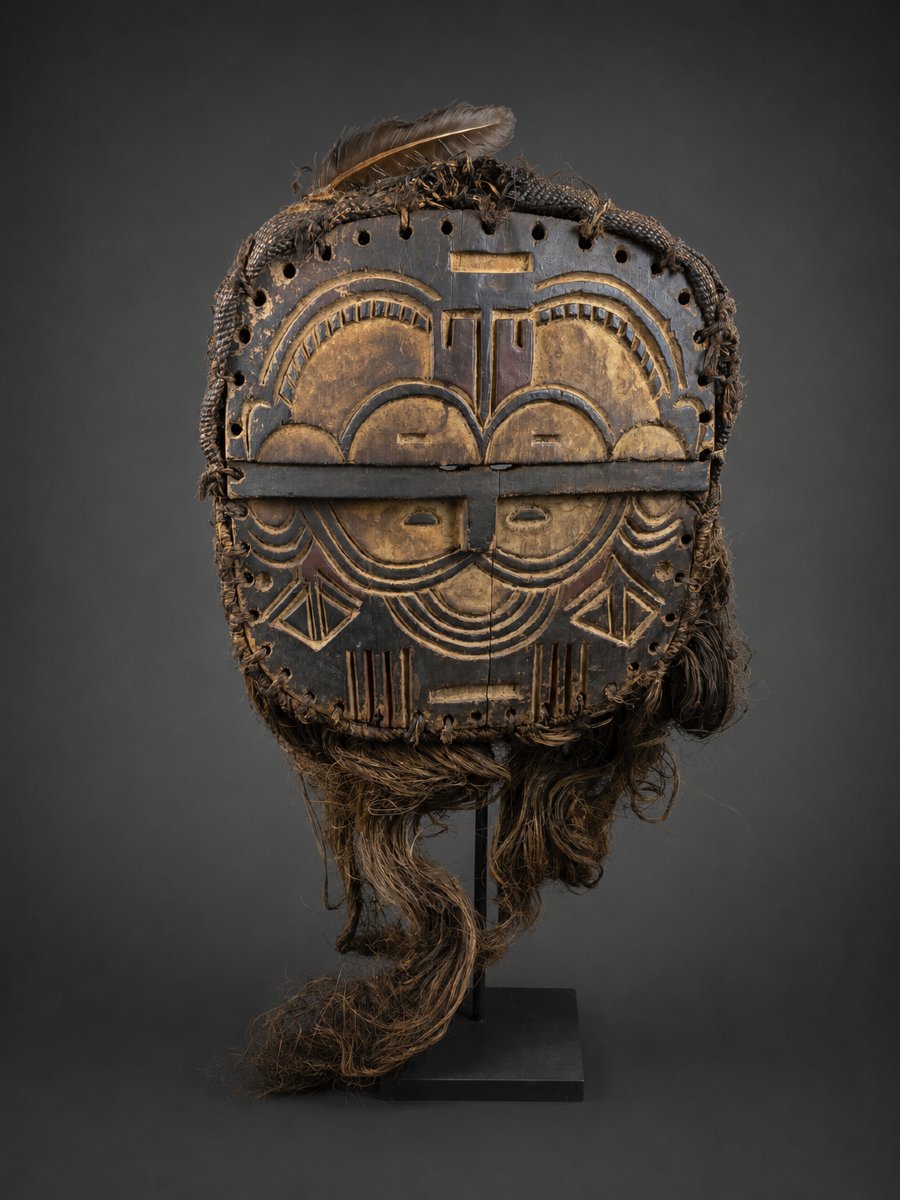
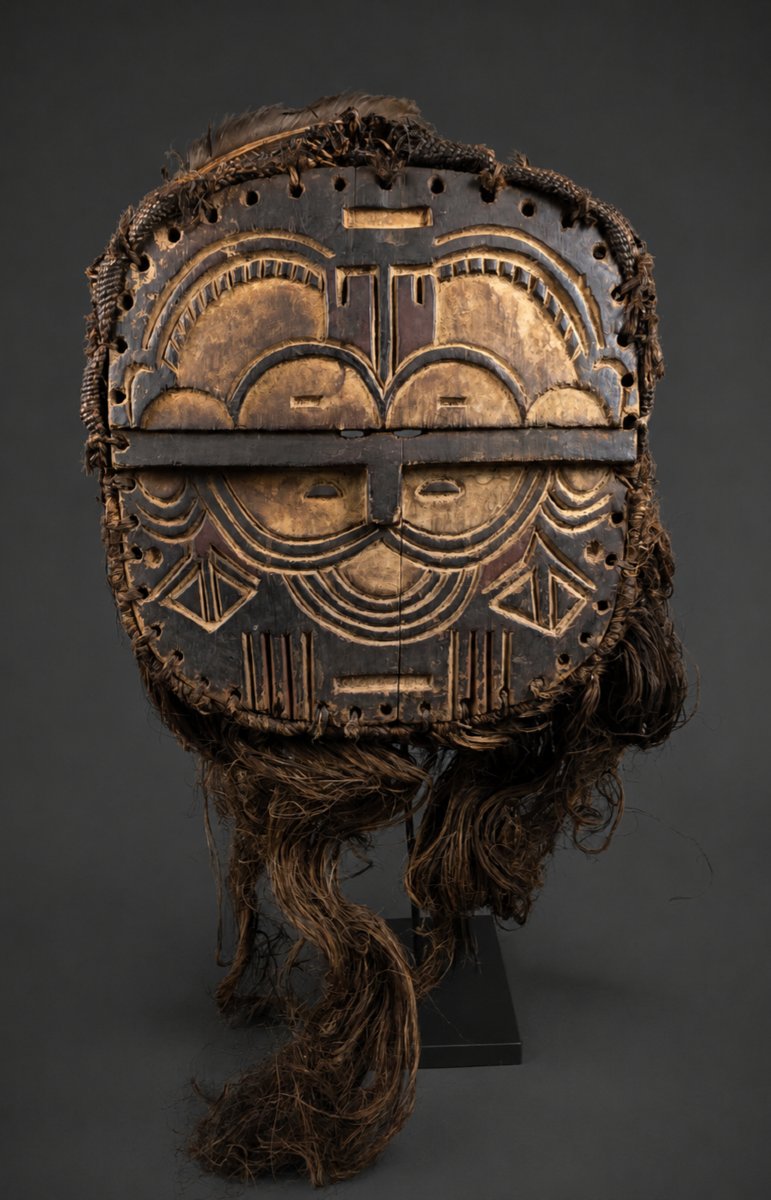
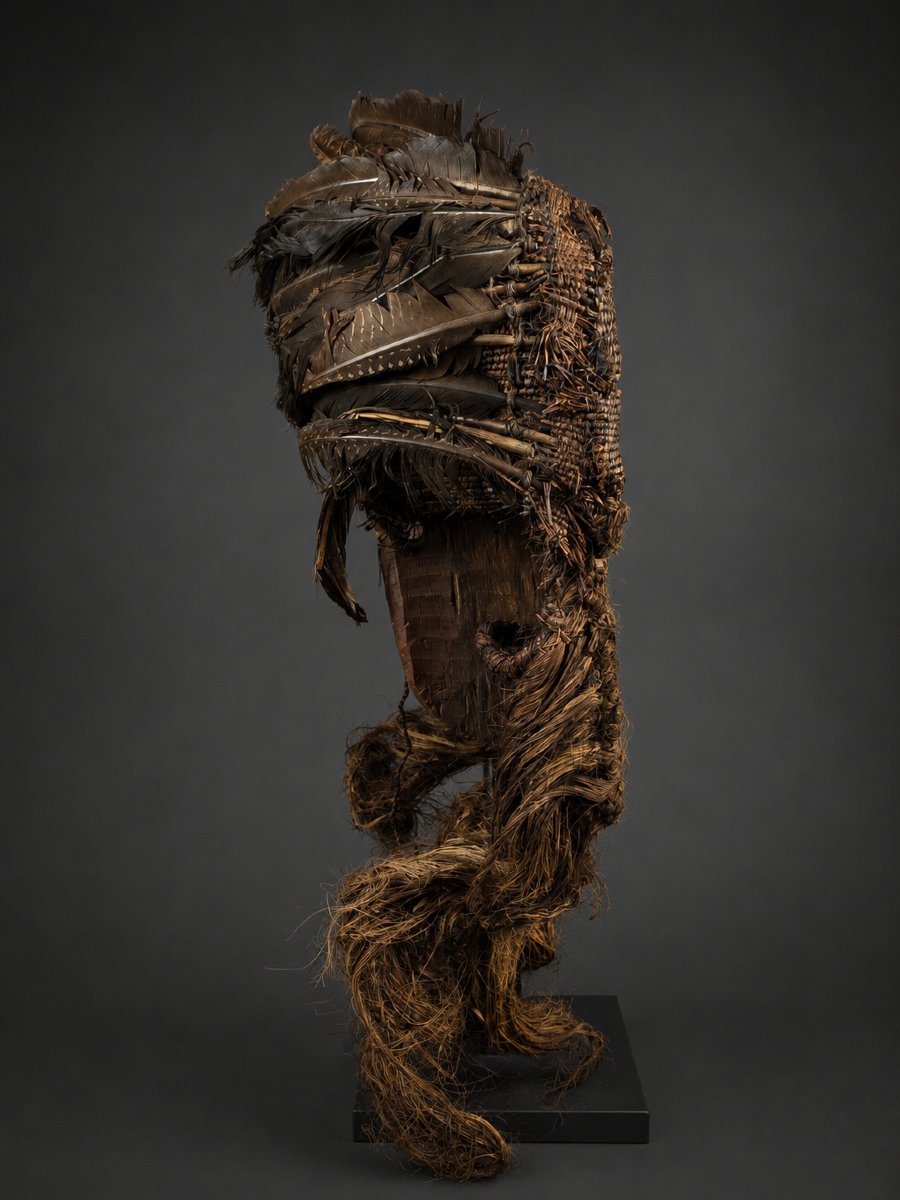
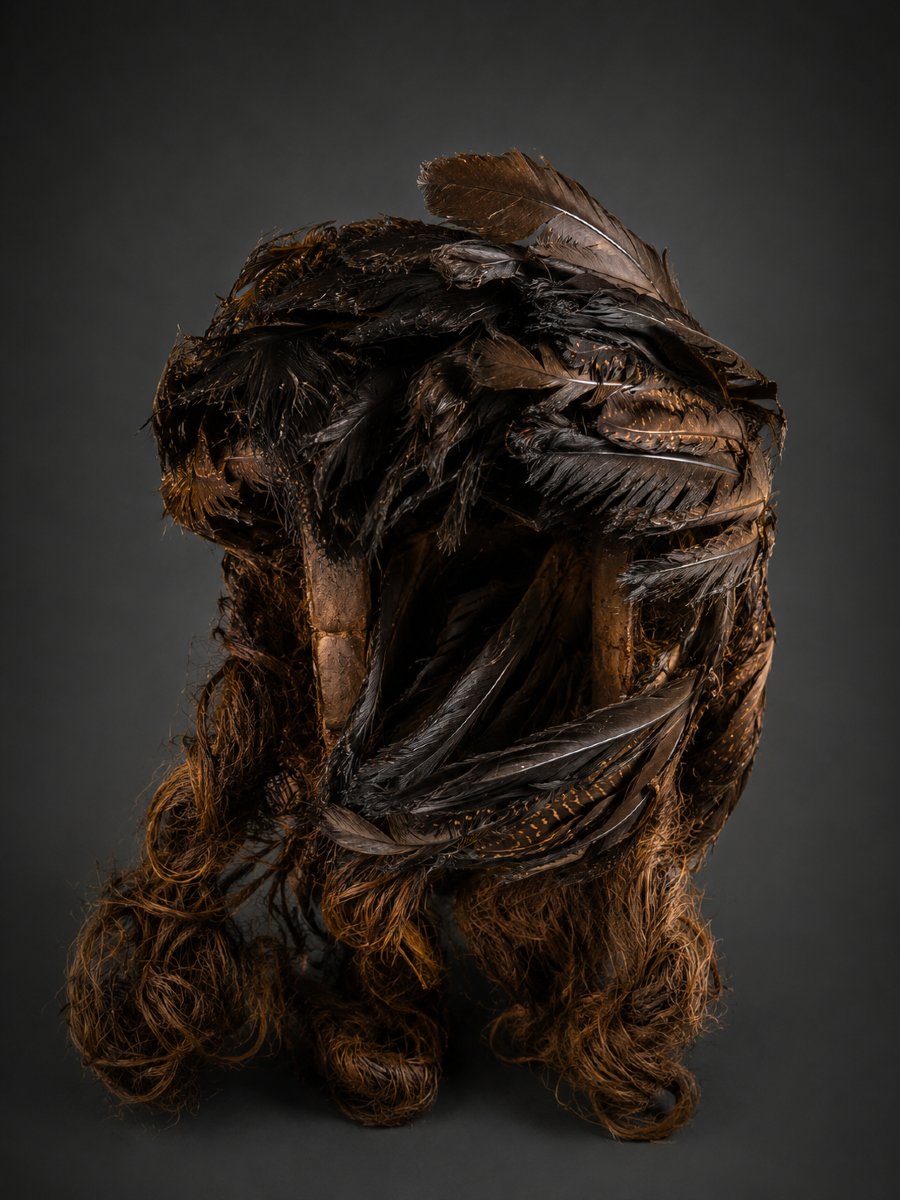
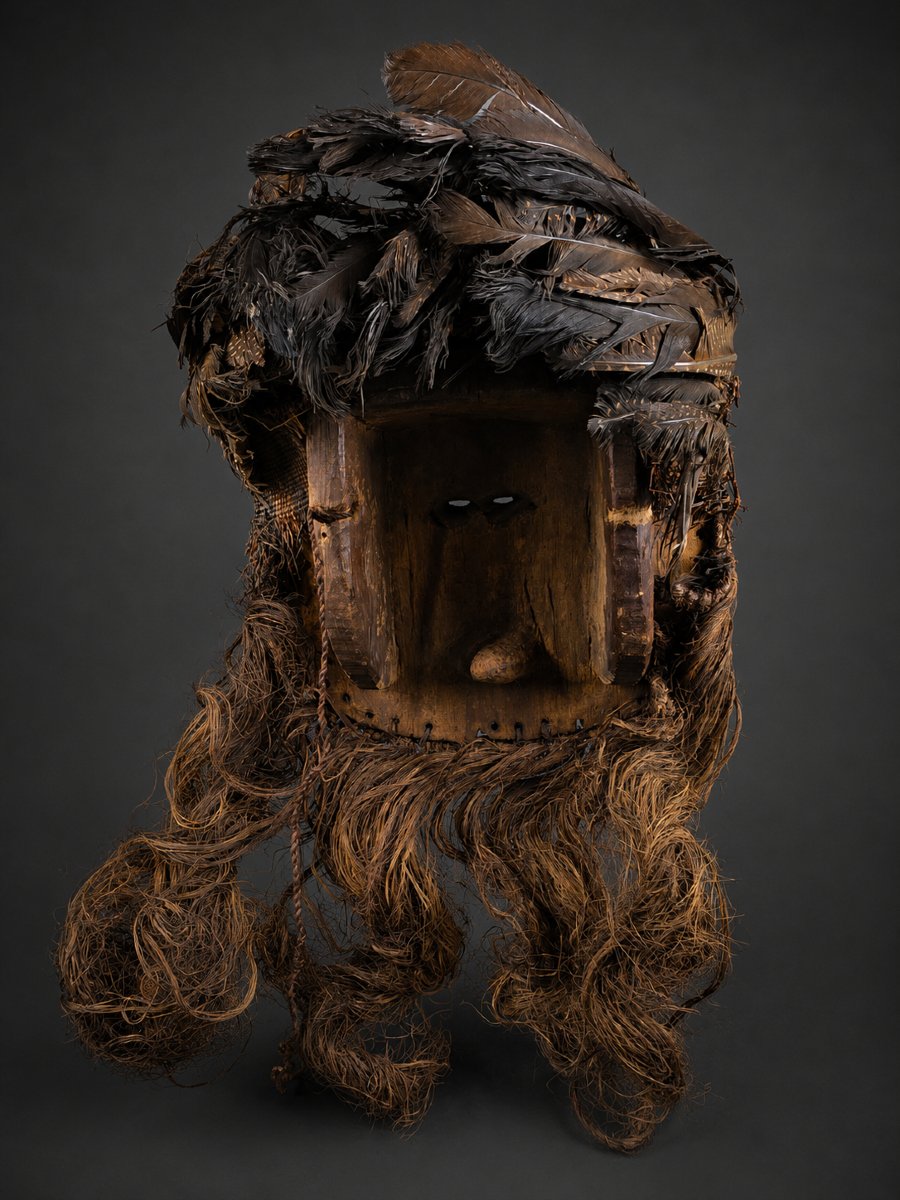
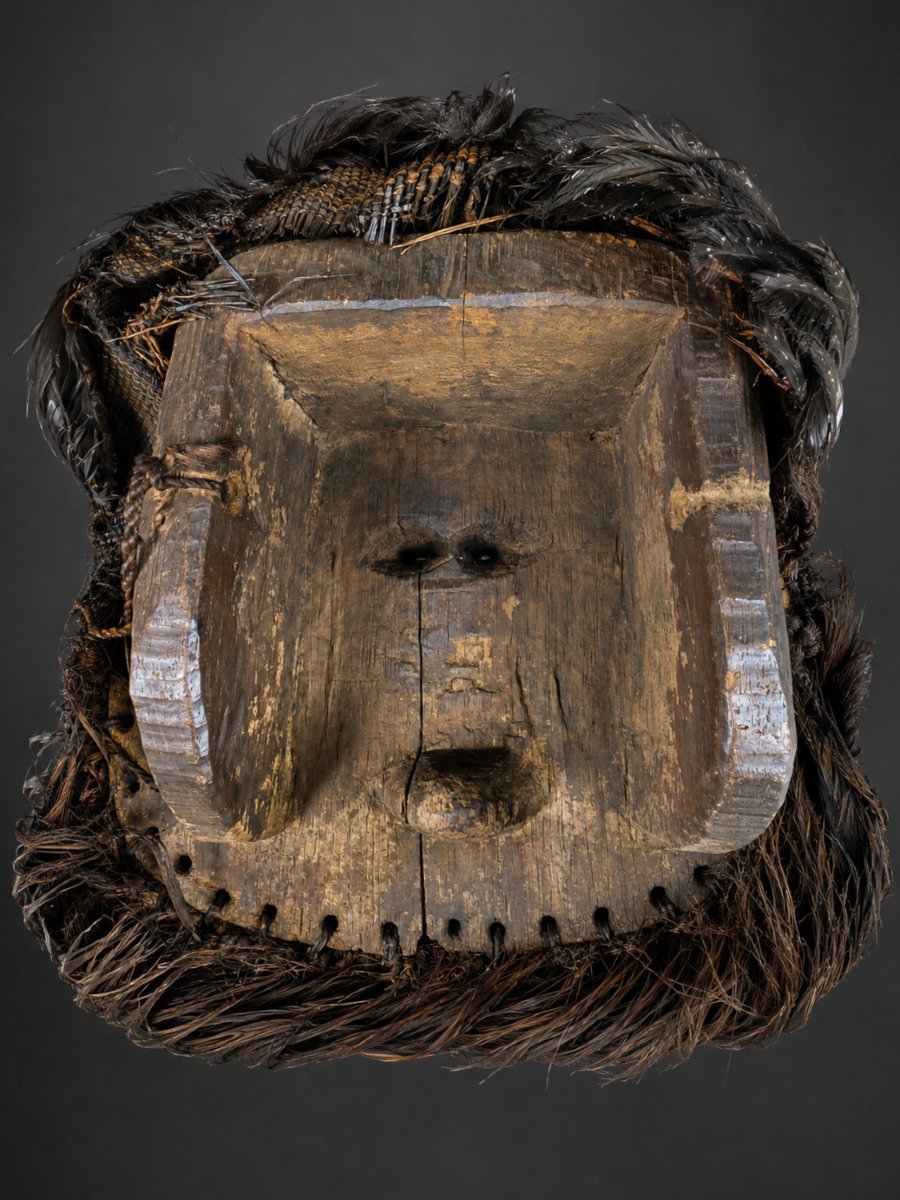
Here is a detailed description of this type of mask (often referred to as a flat, zoomorphic, or spirit mask): 1. Structure and Shape (Front View - Panel)The front panel: The mask consists of a large carved wooden plank, generally rectangular in shape with rounded corners or oval.The horizontal division: A raised crossbar visually divides the mask into two halves (upper and lower), creating a central cross with the vertical axis of the nose.The geometric decoration: The surface is richly carved with symmetrical patterns. These include concentric circles, crescent moons, hatched triangles, and vertical lines. This abstract geometric language is typical of the Teke people and often refers to cosmic, clan-related, or protective symbols.Polychromy: The wood displays contrasts between dark and light hues (a patina alternating between black, brown, and beige/ochre), highlighting the incisions.2. Volume and Organic Features (Front and Side Views—Headdress and Beards)The sumptuous headdress: The top of the mask is crowned with an abundant arrangement of dark feathers interlaced and layered, forming a textured crown that accentuates the height and solemnity of the object.The Woven Structure: At the back and on the sides, the mask incorporates a woven framework of plant fibers (wickerwork) that allowed it to be securely fastened and worn.The Raffia Fibers: A long, dense mane or beard made of raffia fibers (or frayed plant fibers) cascades generously all around the lower base, enveloping the wearer and concealing their body during ritual dances.3. Function and SymbolismCultural Role: Traditionally used during important ceremonies (funerals of dignitaries, initiation rituals, or agricultural festivals), these masks embodied nature spirits or protective ancestors.Aesthetics: Unlike realism, Téké art seeks extreme stylization. The geometric precision of the face contrasts with the organic, untamed chaos of the feathers and raffia, symbolizing the junction between the ordered world of humans and the mysterious world of the wild and spiritual.
Formerly in the collection of Galerie Michel Huguenin
Tribe Name. Bateké
Material. Wood, feathers
Dimensions. H 37 cm W 35 cm
Shipping method. Colissimo/DHL within 24–48 business hours.
Masks from the Téké ethnic group (found primarily in Congo, Gabon, and the Democratic Republic of the Congo) are major works of traditional African art, characterized by a very strong geometric and symbolic aesthetic.
Here is a detailed description of this type of mask (often referred to as a flat, zoomorphic, or spirit mask): 1. Structure and Shape (Front View - Panel)The front panel: The mask consists of a large carved wooden plank, generally rectangular in shape with rounded corners or oval.The horizontal division: A raised crossbar visually divides the mask into two halves (upper and lower), creating a central cross with the vertical axis of the nose.The geometric decoration: The surface is richly carved with symmetrical patterns. These include concentric circles, crescent moons, hatched triangles, and vertical lines. This abstract geometric language is typical of the Teke people and often refers to cosmic, clan-related, or protective symbols.Polychromy: The wood displays contrasts between dark and light hues (a patina alternating between black, brown, and beige/ochre), highlighting the incisions.2. Volume and Organic Features (Front and Side Views—Headdress and Beards)The sumptuous headdress: The top of the mask is crowned with an abundant arrangement of dark feathers interlaced and layered, forming a textured crown that accentuates the height and solemnity of the object.The Woven Structure: At the back and on the sides, the mask incorporates a woven framework of plant fibers (wickerwork) that allowed it to be securely fastened and worn.The Raffia Fibers: A long, dense mane or beard made of raffia fibers (or frayed plant fibers) cascades generously all around the lower base, enveloping the wearer and concealing their body during ritual dances.3. Function and SymbolismCultural Role: Traditionally used during important ceremonies (funerals of dignitaries, initiation rituals, or agricultural festivals), these masks embodied nature spirits or protective ancestors.Aesthetics: Unlike realism, Téké art seeks extreme stylization. The geometric precision of the face contrasts with the organic, untamed chaos of the feathers and raffia, symbolizing the junction between the ordered world of humans and the mysterious world of the wild and spiritual.
Formerly in the collection of Galerie Michel Huguenin
2 500 €
Period: 20th century
Style: Tribal Art
Condition: Good condition
Material: Solid wood
Length: 37 cm
Width: 35 cm
Height: 37 cm
Reference (ID): 1807014
Availability: In stock
Print