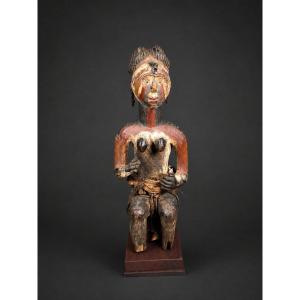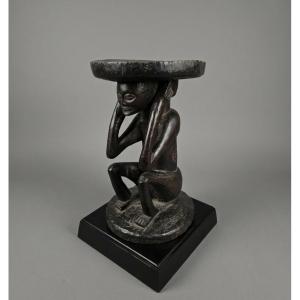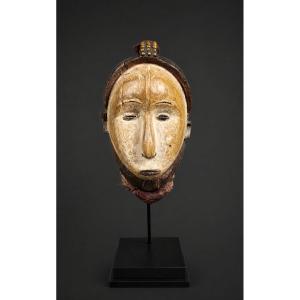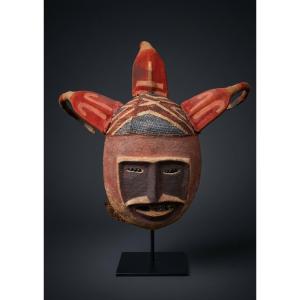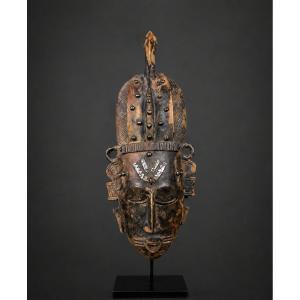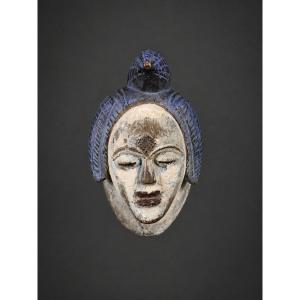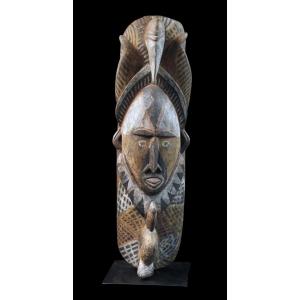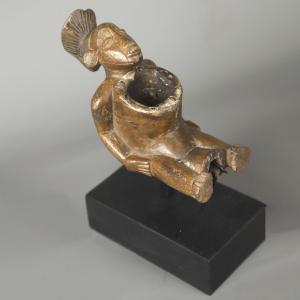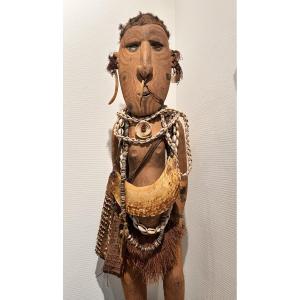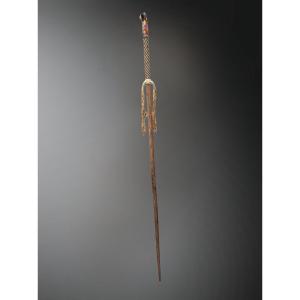


Fang Ntumu Statue—gabon
Origin. Gabon
Tribe Name. Fang Ntumu
Material. Wood
Dimensions. 50 cm
Shipping Method. Colissimo/DHL within 24–48 business hours.
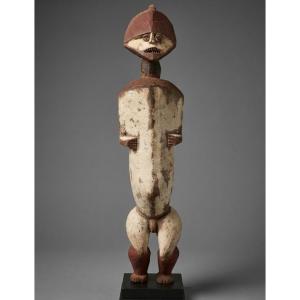
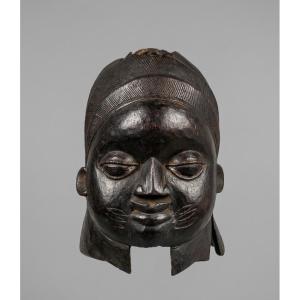
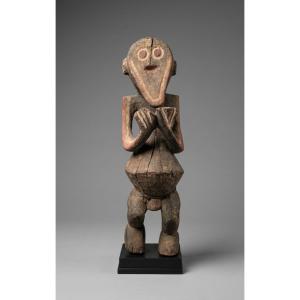
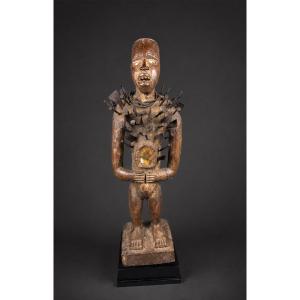
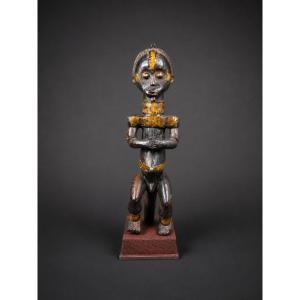
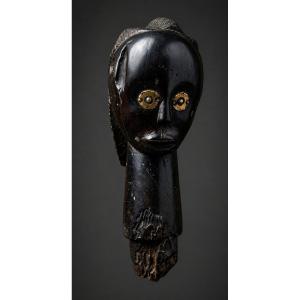
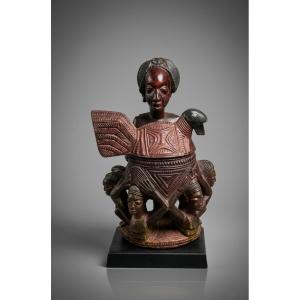
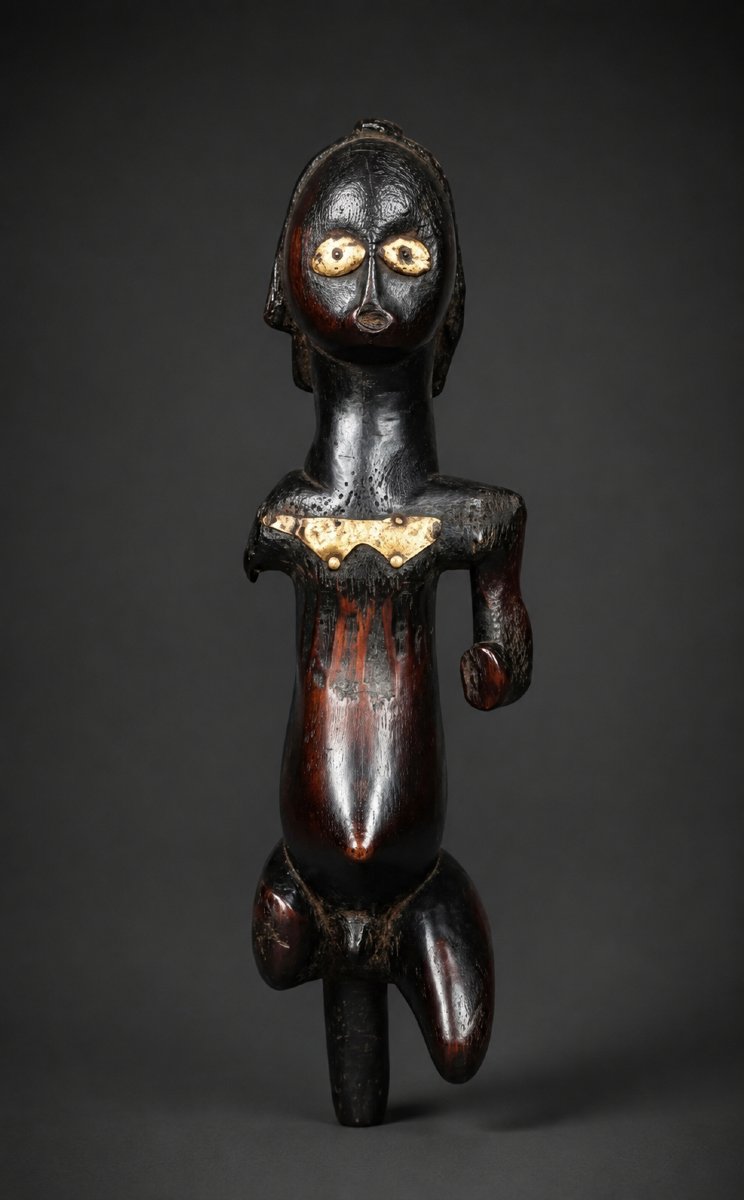
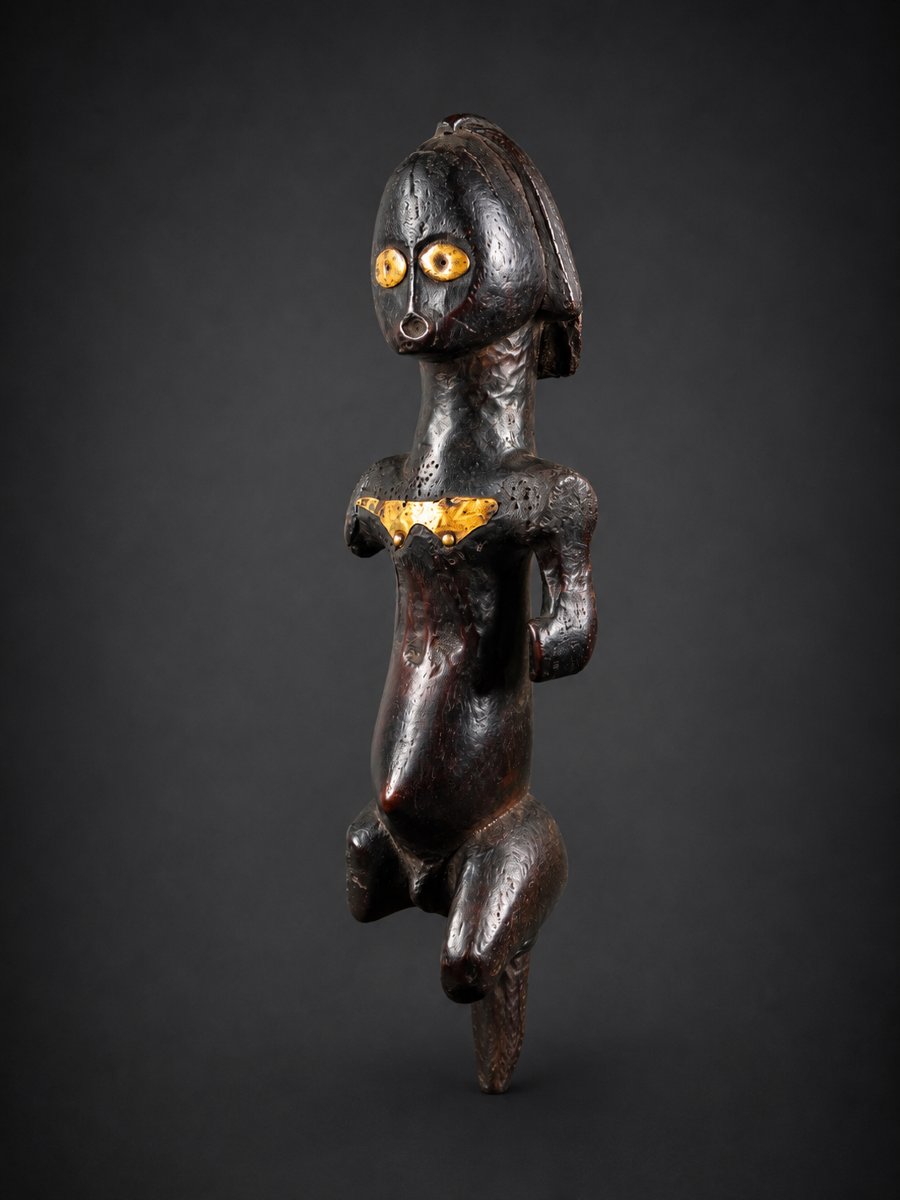
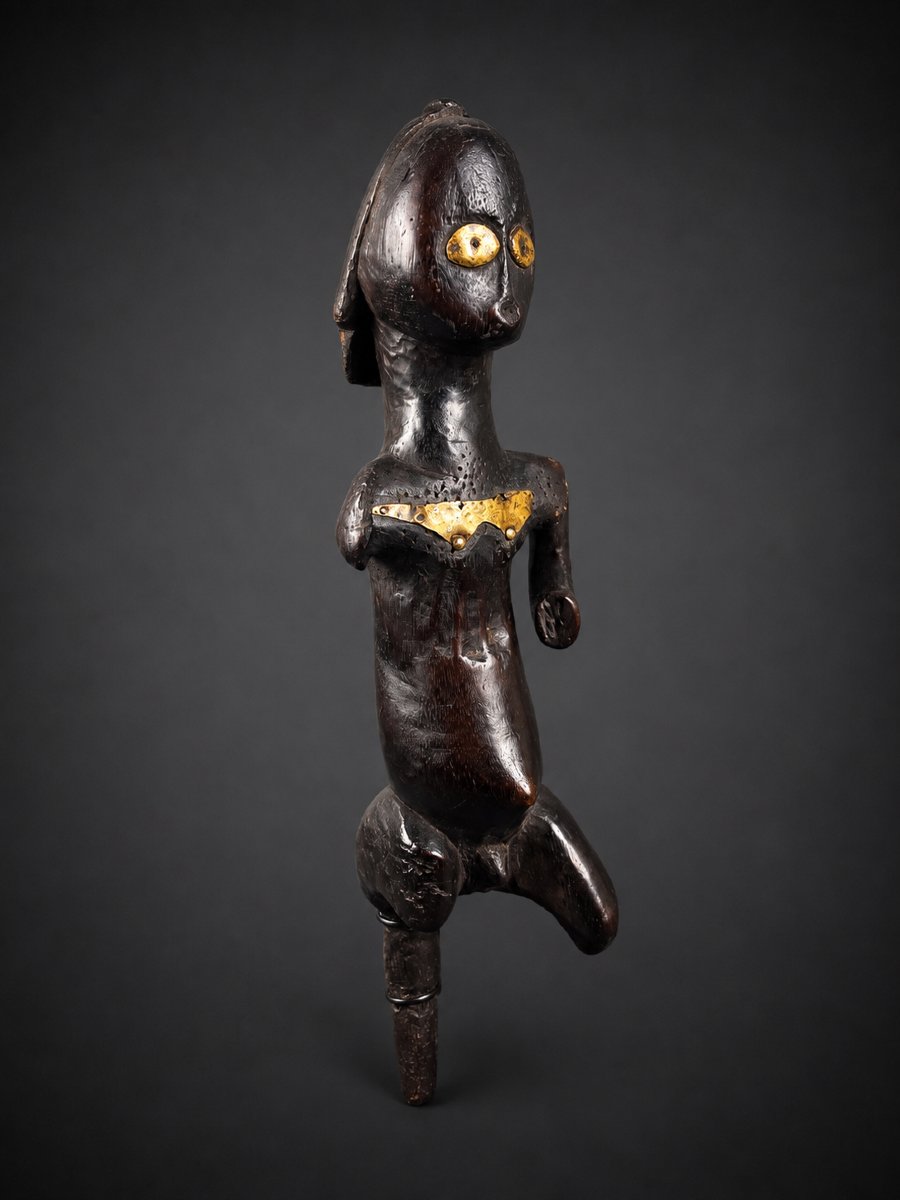
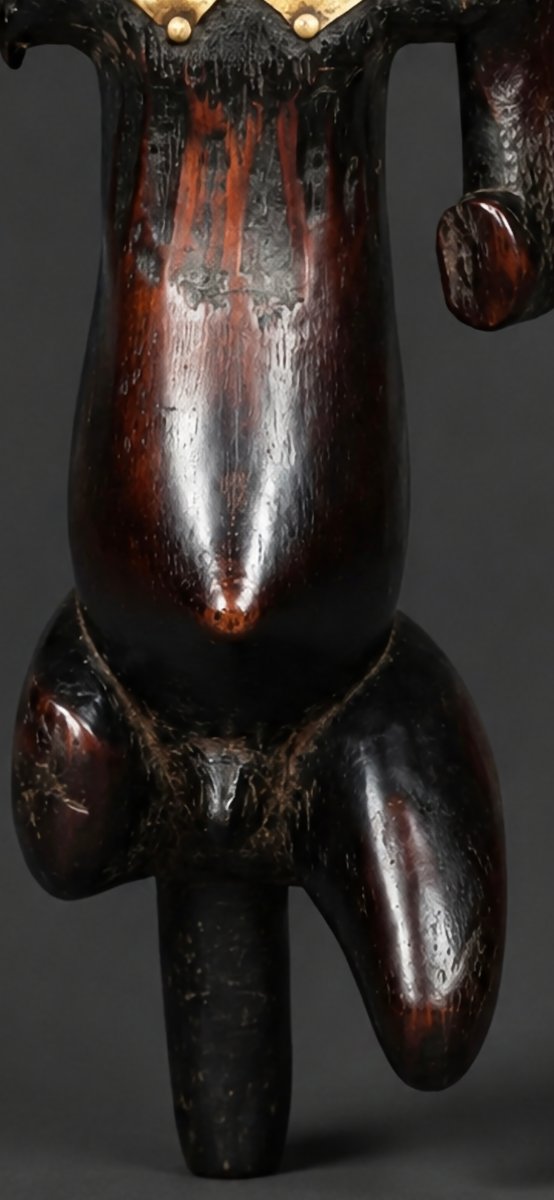
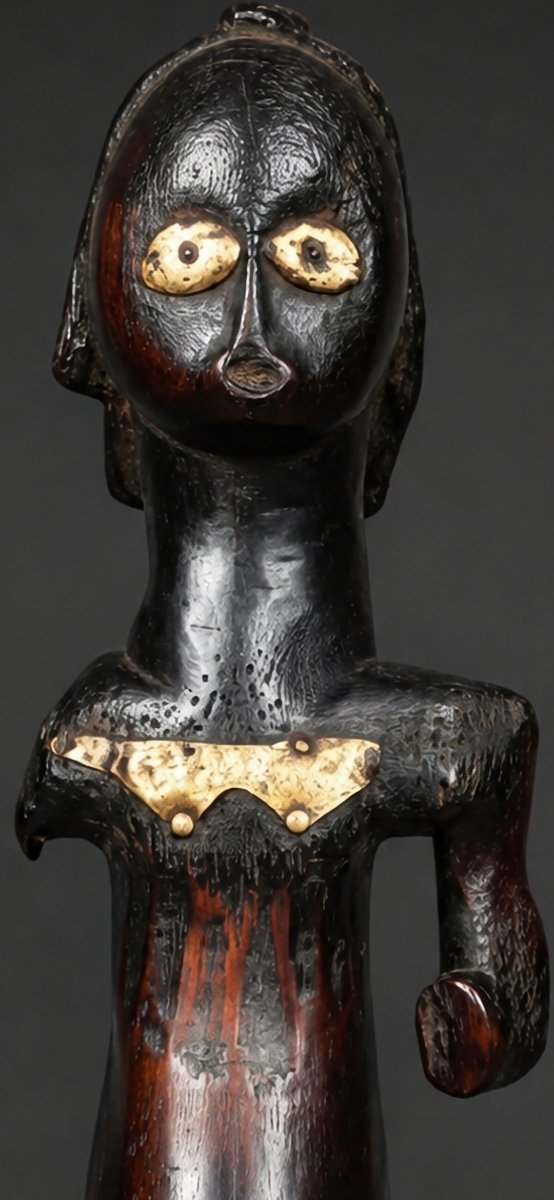
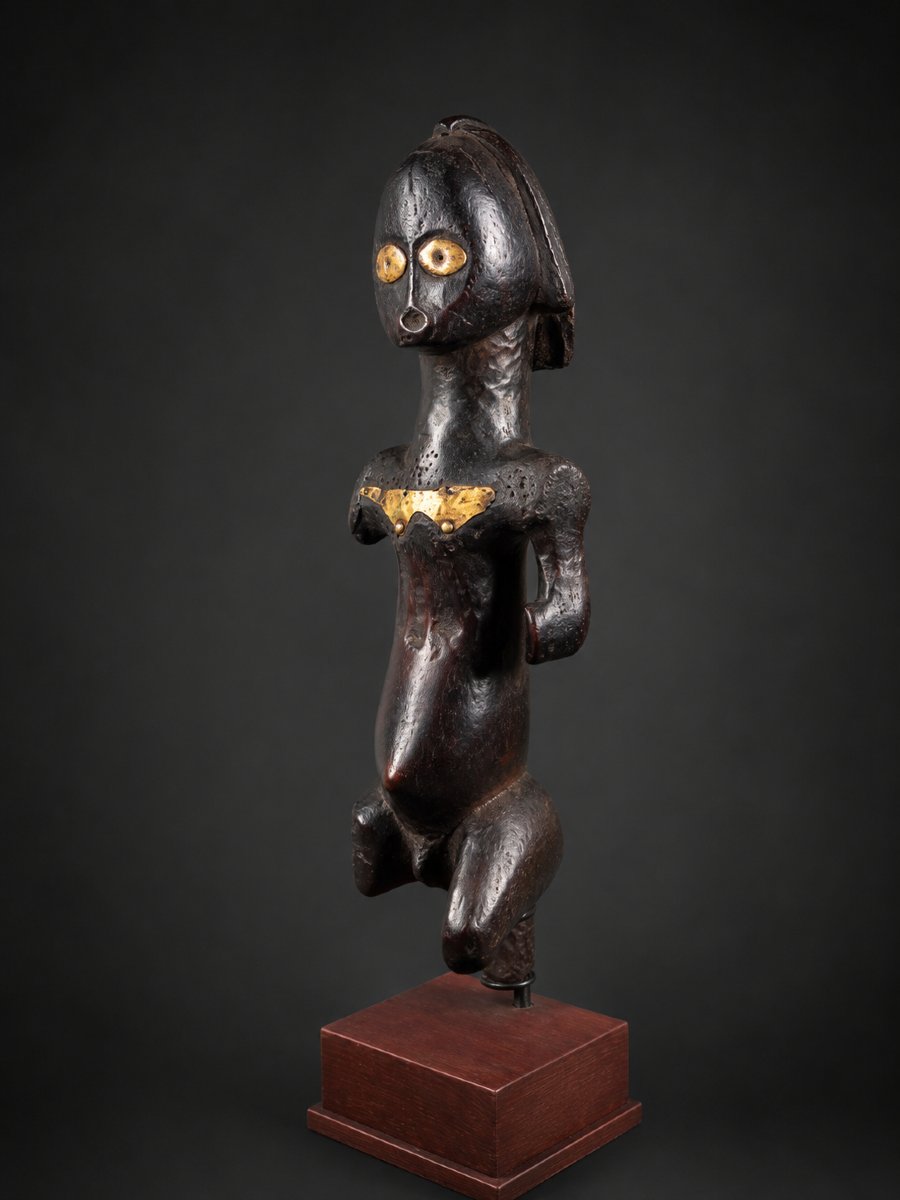
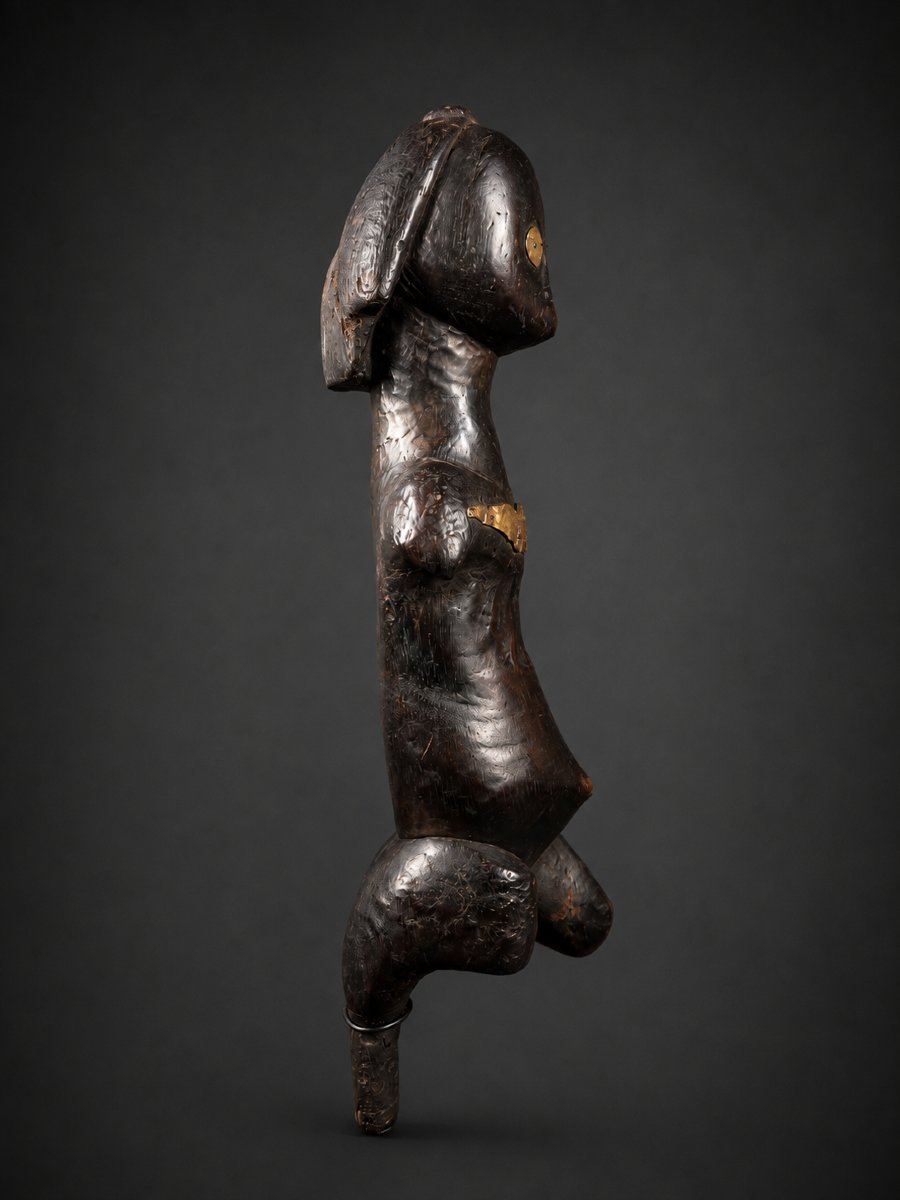
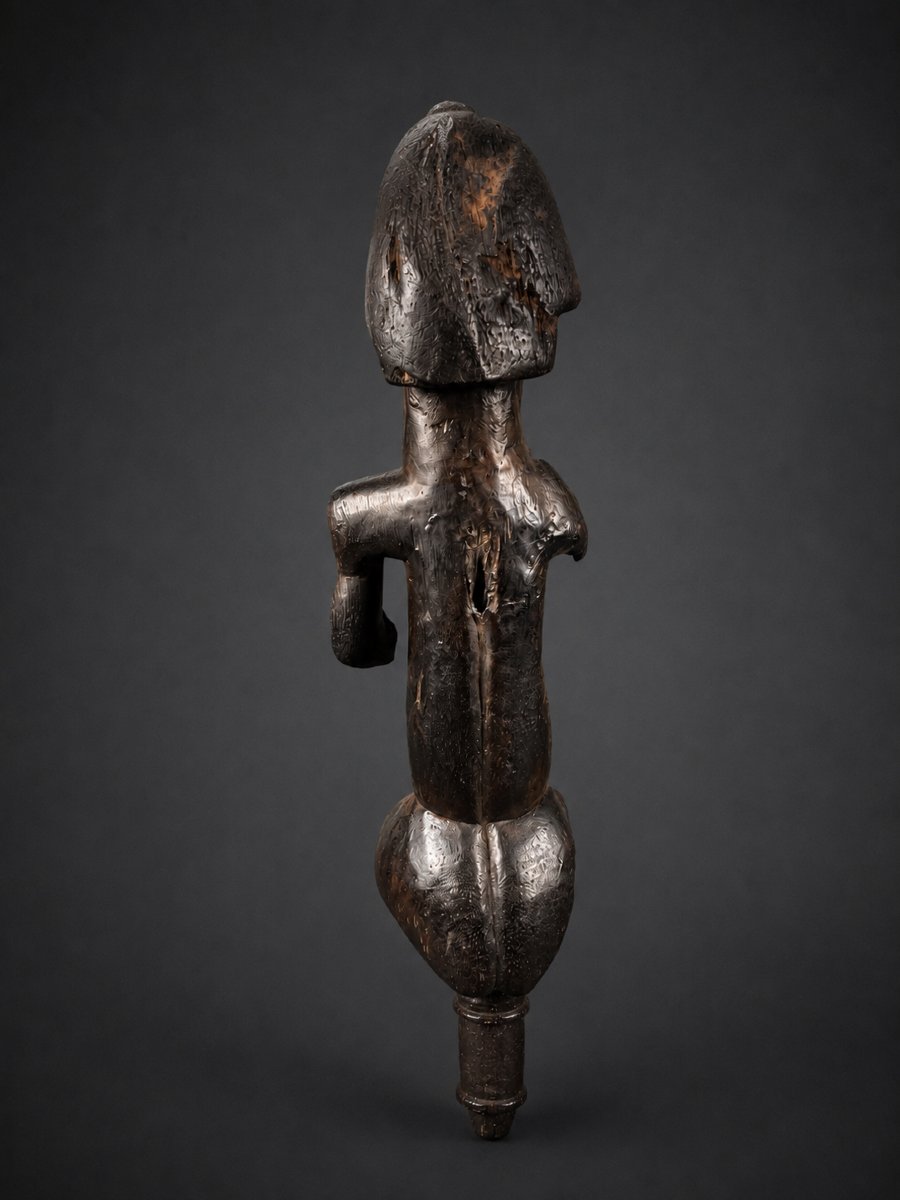
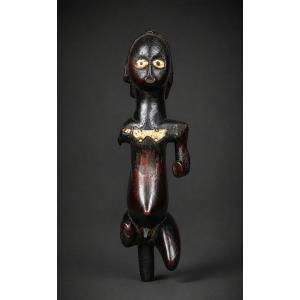
This magnificent Fang Ntumu reliquary statue (originating from Gabon or Cameroon) displays the major stylistic and iconographic characteristics of this ethnic group’s traditional art:## 1. Materials and PatinaWood and metals: Carved from dense, hard wood, the piece features a dark patina—ranging from dark brown to black—enriched by successive ritual libations.Metal inlays: The eyes are formed of polished brass or copper plates, secured with nails—a classic feature that gives the gaze a piercing and luminous intensity as it watches over the relics. A cut-out metal plate also adorns the chest.## 2. Morphological and Iconographic AnalysisThe head and headdress: The skull is prominent, topped by a longitudinal, crested headdress (often braided or helmet-shaped) characteristic of Ntumu figures. The heart-shaped face features a pointed chin and a prominent nose.The neck and torso: The neck is long, cylindrical, and powerful. The torso features a decorative metal plate affixed to the chest, emphasizing the center of the body.The arms: The arms adopt a distinctly asymmetrical posture: one is bent upward with the hand raised, while the other is truncated or positioned differently, adding dynamism to the sculptural composition.The abdomen and posture: The abdomen is rounded, prominent, and stretched downward, symbolizing vital force and descendants. The legs are bent and drawn up, adapted to the original seated posture in which the statue sat on the edge of the reliquary chest (nsek-bieri).The mounting tenon: The statue extends downward via a cylindrical stake or tenon, which was used to drive it directly into and secure it to the lid of the reliquary containing the ancestors’ bones.## 3. Cultural FunctionIn the Fang tradition, this type of figure (called Eyema bieri) is not an idol to be worshipped, but a protective guardian. It protects the relics of revered ancestors from desecrators and serves as a spiritual link between the living and the founding spirits of the lineage.
Private French collection
Tribe Name. Fang Ntumu
Material. Wood
Dimensions. 50 cm
Shipping Method. Colissimo/DHL within 24–48 business hours.
This magnificent Fang Ntumu reliquary statue (originating from Gabon or Cameroon) displays the major stylistic and iconographic characteristics of this ethnic group’s traditional art:## 1. Materials and PatinaWood and metals: Carved from dense, hard wood, the piece features a dark patina—ranging from dark brown to black—enriched by successive ritual libations.Metal inlays: The eyes are formed of polished brass or copper plates, secured with nails—a classic feature that gives the gaze a piercing and luminous intensity as it watches over the relics. A cut-out metal plate also adorns the chest.## 2. Morphological and Iconographic AnalysisThe head and headdress: The skull is prominent, topped by a longitudinal, crested headdress (often braided or helmet-shaped) characteristic of Ntumu figures. The heart-shaped face features a pointed chin and a prominent nose.The neck and torso: The neck is long, cylindrical, and powerful. The torso features a decorative metal plate affixed to the chest, emphasizing the center of the body.The arms: The arms adopt a distinctly asymmetrical posture: one is bent upward with the hand raised, while the other is truncated or positioned differently, adding dynamism to the sculptural composition.The abdomen and posture: The abdomen is rounded, prominent, and stretched downward, symbolizing vital force and descendants. The legs are bent and drawn up, adapted to the original seated posture in which the statue sat on the edge of the reliquary chest (nsek-bieri).The mounting tenon: The statue extends downward via a cylindrical stake or tenon, which was used to drive it directly into and secure it to the lid of the reliquary containing the ancestors’ bones.## 3. Cultural FunctionIn the Fang tradition, this type of figure (called Eyema bieri) is not an idol to be worshipped, but a protective guardian. It protects the relics of revered ancestors from desecrators and serves as a spiritual link between the living and the founding spirits of the lineage.
Private French collection
7 500 €
Period: 20th century
Style: Tribal Art
Condition: Condition of use
Material: Solid wood
Length: 50 cm
Height: 50 cm
Reference (ID): 1807736
Availability: In stock
Print