

Baoulé Monkey Statue—ivory Coast
Origin: Ivory Coast
Tribe: Baoulé
Material: Wood
Dimensions: 62 cm
Shipping Method: Colissimo/DHL within 24–48 business hours.
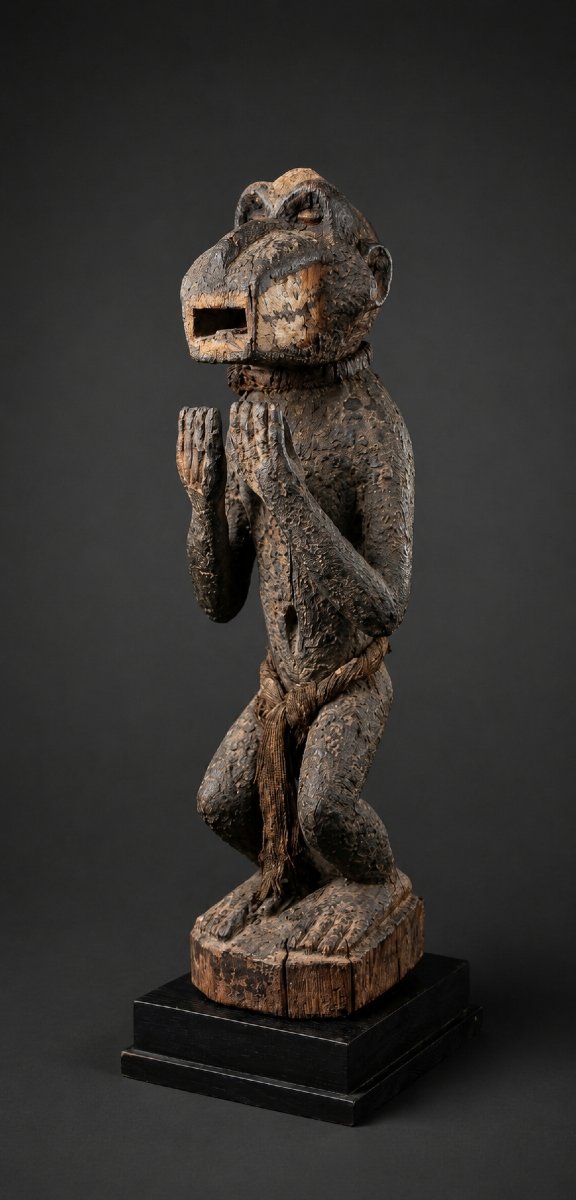
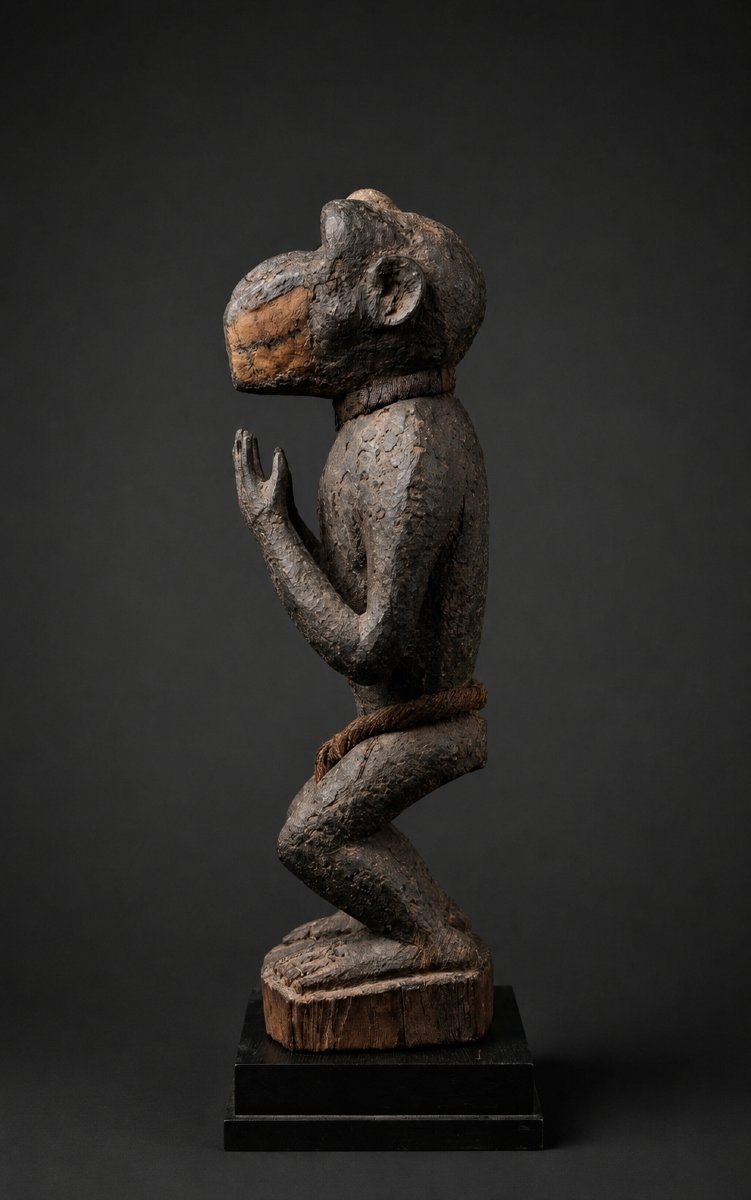
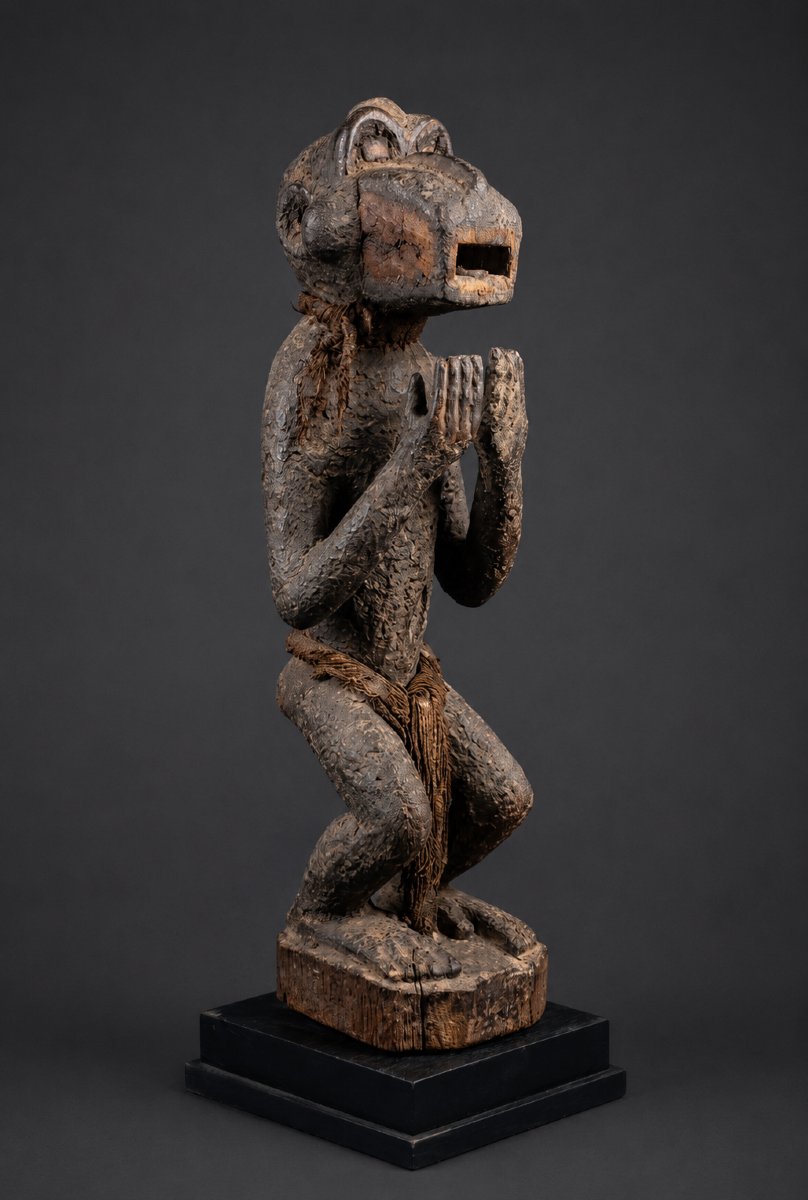
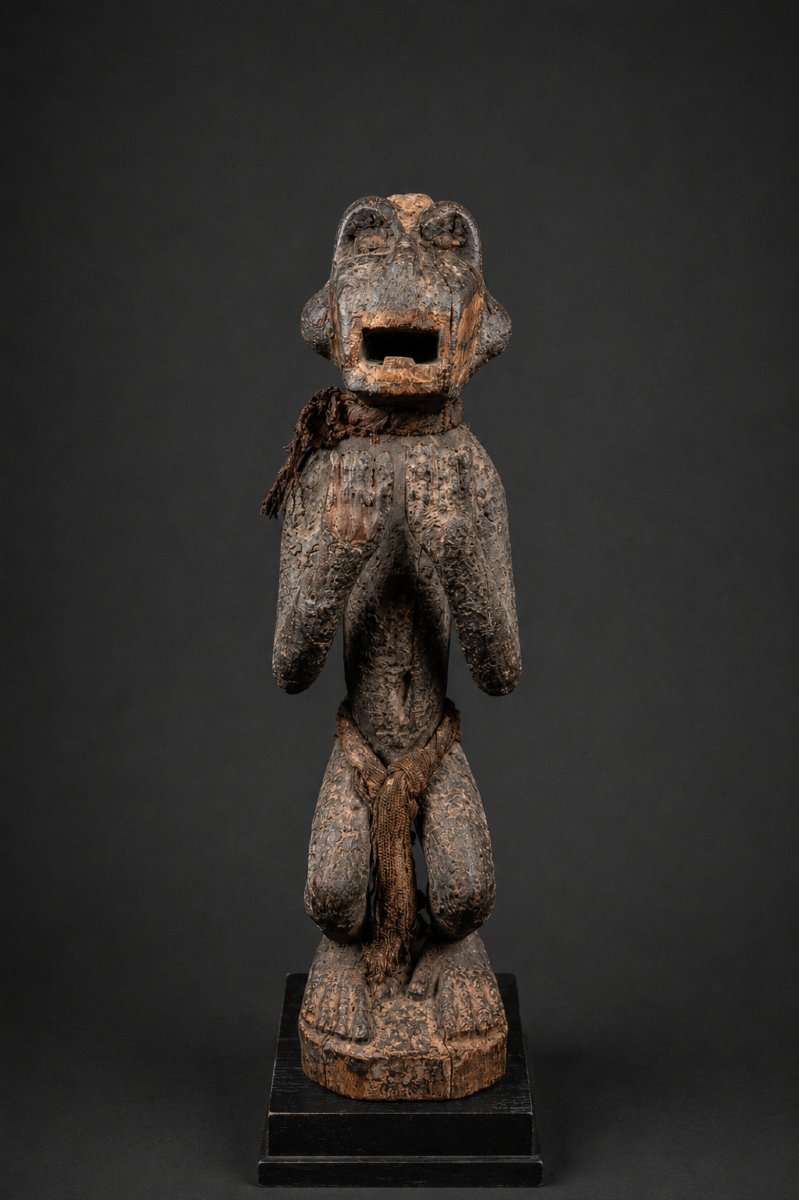
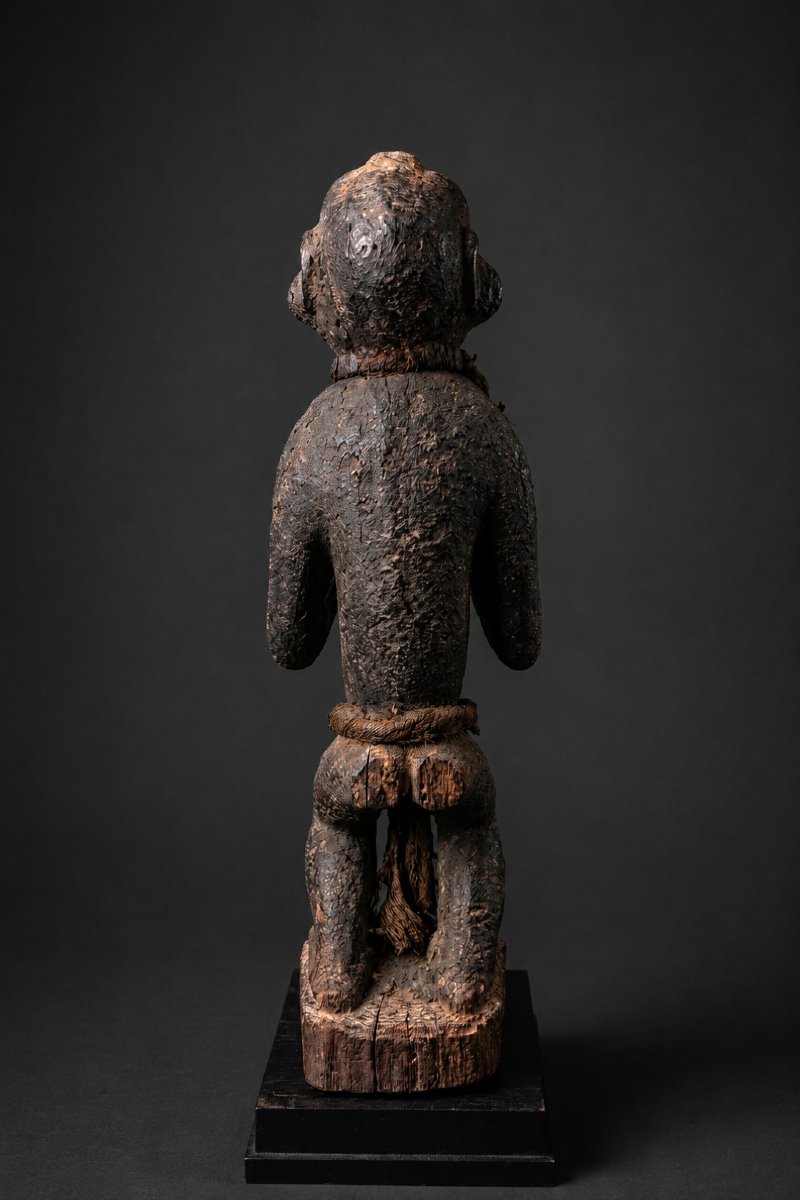
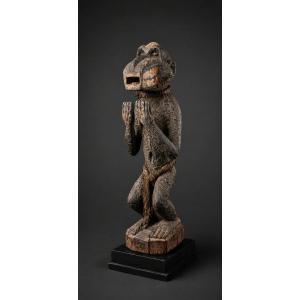
This magnificent wooden statue depicts a cynocéphale monkey (or baboon), an iconic figure in the traditional statuary art of the Baoulé people of Côte d'Ivoire. Here is a detailed description of the work from various perspectives: 1. Morphology and Posture Crouching posture: The monkey is depicted in a crouched position, with bent knees and feet anchored on a circular base made of raw wood, which gives the piece a strong sense of visual stability and a feeling of concentration. Raised Hands: The arms are raised upward, and the hands are pressed palm-to-palm in front of the chest, in a gesture evoking supplication, an offering, or prayer. Head and Profile: The skull is rounded and topped by a prominent forehead. The muzzle is very elongated, ending in a rectangular mouth that is wide open and hollowed out—a characteristic feature of Baoulé anthropomorphic monkey figures. The ears are small, round, and pressed flat against the sides of the head. 2. Materials and Patina Sacrificial patina: The surface of the wood is dark, rough, and deeply weathered. It has a cracked and textured appearance, the result of successive ritual libations (oils, blood, kaolin, or other organic substances) that have accumulated over time. Two-tone muzzle: The muzzle displays a striking contrast with a light-colored area (likely due to wear or the application of kaolin or whitish pigments to the raw wood). Ornaments and Organic Additions: A rudimentary necklace made of plant fibers or vine wraps around the neck. A rustic belt of plant cord cinches the waist, holding in place hanging strands of fibers that run along the back and between the legs. 3. Function and Symbolism In Baoulé culture, monkeys (often associated with the bush, untamed spirits, or the spirit Mienu) occupy an ambivalent position. They embody both the force of the wild and a powerful intermediary with the invisible world. This type of statue serves as an altar figure or a protective talisman. The wide-open mouth was sometimes used to receive food offerings or magical substances intended to appease the monkey’s spirit, to win its favor, or to ward off spells and misfortune.
Formerly in the collection of Galerie Michel Huguenin
Tribe: Baoulé
Material: Wood
Dimensions: 62 cm
Shipping Method: Colissimo/DHL within 24–48 business hours.
This magnificent wooden statue depicts a cynocéphale monkey (or baboon), an iconic figure in the traditional statuary art of the Baoulé people of Côte d'Ivoire. Here is a detailed description of the work from various perspectives: 1. Morphology and Posture Crouching posture: The monkey is depicted in a crouched position, with bent knees and feet anchored on a circular base made of raw wood, which gives the piece a strong sense of visual stability and a feeling of concentration. Raised Hands: The arms are raised upward, and the hands are pressed palm-to-palm in front of the chest, in a gesture evoking supplication, an offering, or prayer. Head and Profile: The skull is rounded and topped by a prominent forehead. The muzzle is very elongated, ending in a rectangular mouth that is wide open and hollowed out—a characteristic feature of Baoulé anthropomorphic monkey figures. The ears are small, round, and pressed flat against the sides of the head. 2. Materials and Patina Sacrificial patina: The surface of the wood is dark, rough, and deeply weathered. It has a cracked and textured appearance, the result of successive ritual libations (oils, blood, kaolin, or other organic substances) that have accumulated over time. Two-tone muzzle: The muzzle displays a striking contrast with a light-colored area (likely due to wear or the application of kaolin or whitish pigments to the raw wood). Ornaments and Organic Additions: A rudimentary necklace made of plant fibers or vine wraps around the neck. A rustic belt of plant cord cinches the waist, holding in place hanging strands of fibers that run along the back and between the legs. 3. Function and Symbolism In Baoulé culture, monkeys (often associated with the bush, untamed spirits, or the spirit Mienu) occupy an ambivalent position. They embody both the force of the wild and a powerful intermediary with the invisible world. This type of statue serves as an altar figure or a protective talisman. The wide-open mouth was sometimes used to receive food offerings or magical substances intended to appease the monkey’s spirit, to win its favor, or to ward off spells and misfortune.
Formerly in the collection of Galerie Michel Huguenin
3 500 €
Period: 20th century
Style: Tribal Art
Condition: Excellent condition
Material: Solid wood
Length: 62 cm
Height: 62 cm
Reference (ID): 1807698
Availability: In stock
Print