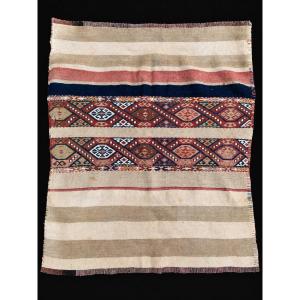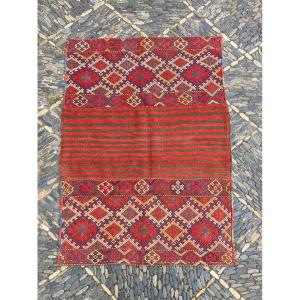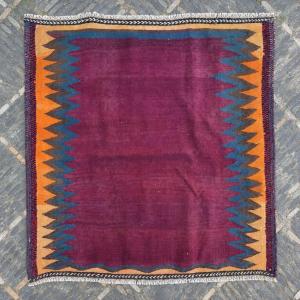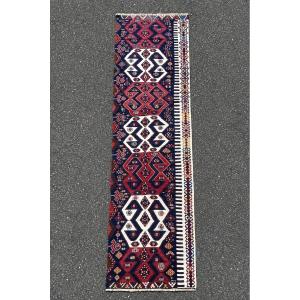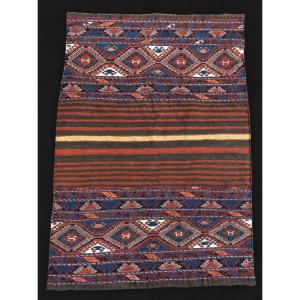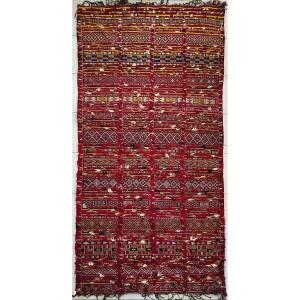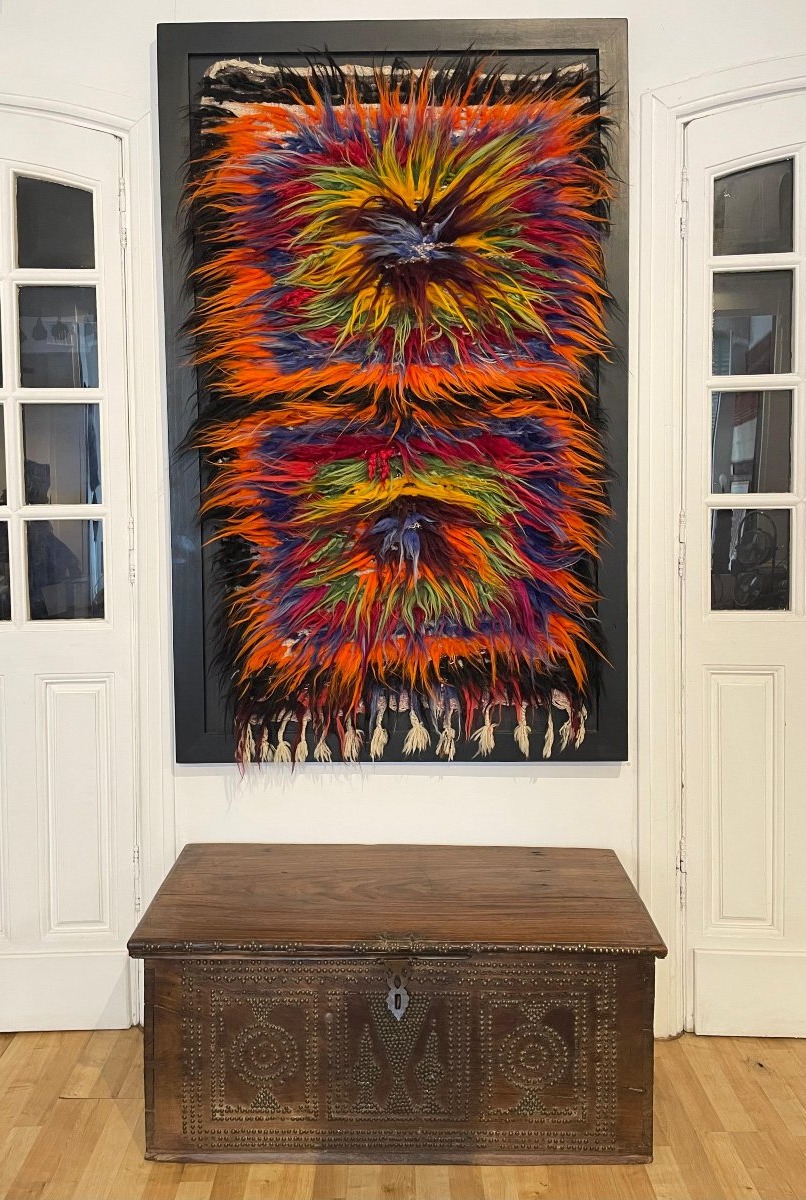







Tülü, Konya—anatolia. Early 20th Century. 150 X 85 Cm
Tülü are iconic pieces in many respects. They belong to the broad family of everyday objects crafted by the nomadic peoples of Anatolia.
Before addressing the technical aspects of their production and the various uses of such pieces, I would like to focus on their purely artistic dimension.
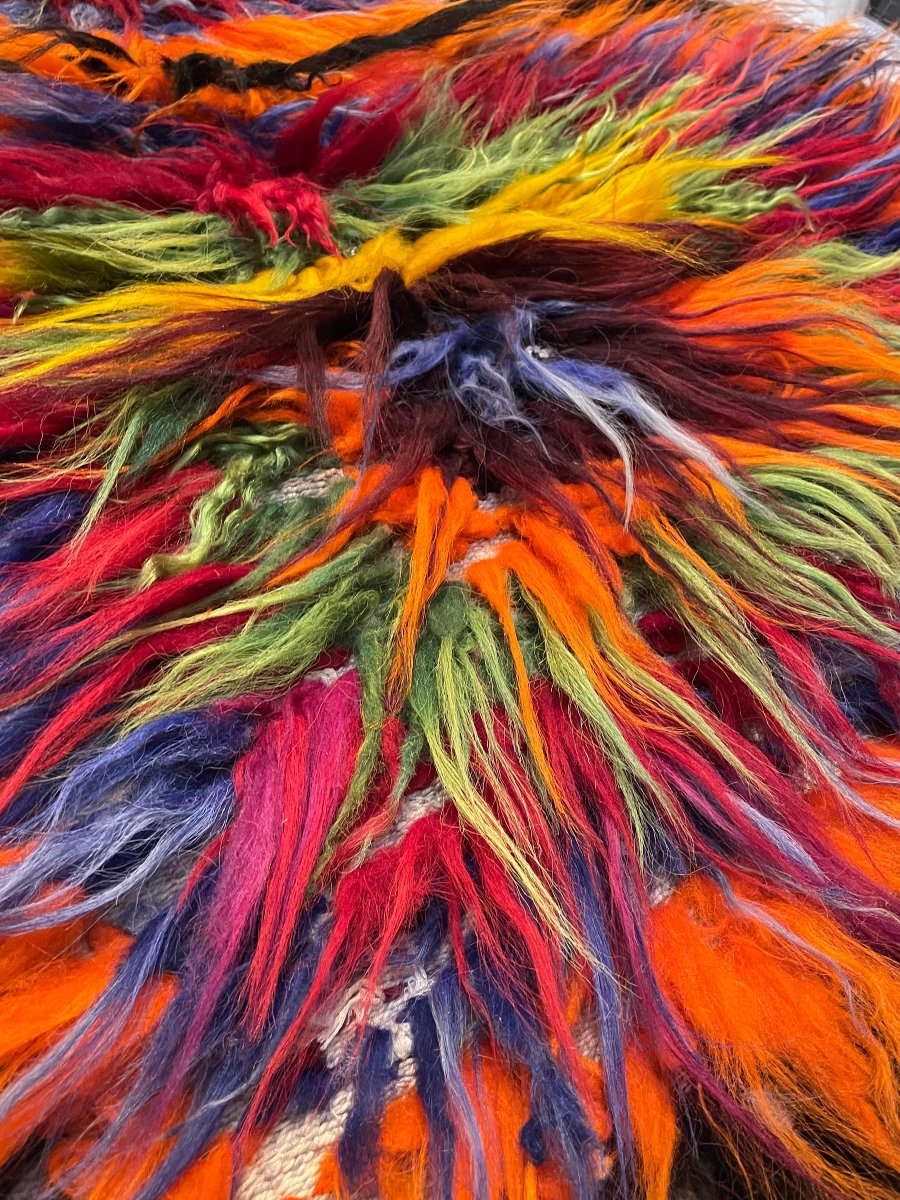
The format, the burst of colors, and the composition inevitably remind me of a work of contemporary art, somewhere between painting and sculpture. The material—the fibers—are made of Angora goat wool known as mohair, renowned for its thermal insulation properties as well as its lustrous sheen, comparable to silk. It’s impossible to resist touching it or even playing with its contours with your hand. The vibrant energy of this piece draws us in body and soul; it captivates the gaze with its circular patterns. It’s a true emotional spectacle...
Rest assured, you’re not reading AI-generated text—that’s not our style! On the contrary, I’m striving here to convey a visual dimension that is both artistic and highly decorative.
In fact, I’m making a loud and clear call to all interior designers: there’s a form of timeless modernity in the art of vintage textiles—in their authenticity—that elevates our contemporary interiors, the kind we never tire of! Let’s avoid vintage, boho-chic, and other outdated trends—for heaven’s sake!
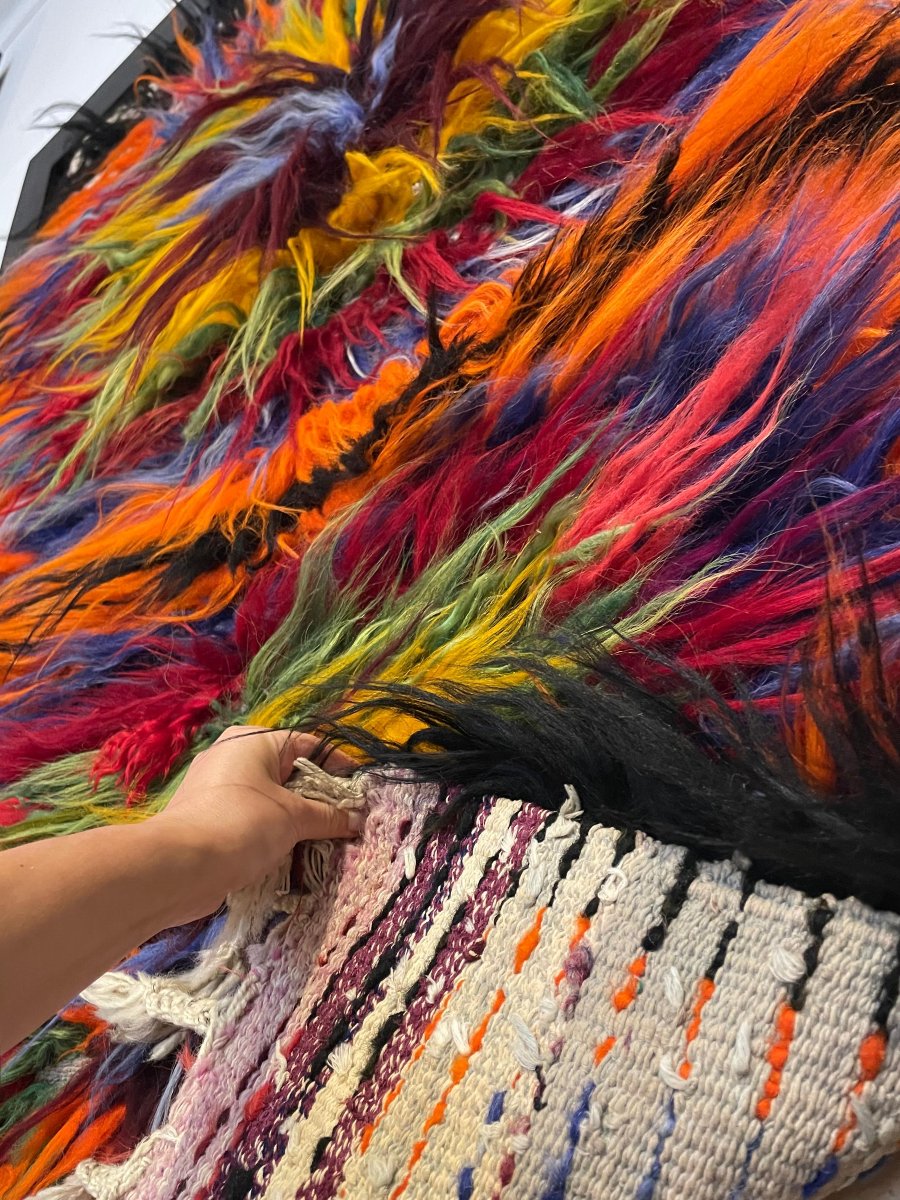
Now, back to the matter at hand: the piece is woven wool-on-wool, and its technical distinction lies in the long strands of wool inserted into the weft in successive rows. The piece features two distinct sides—brace yourselves—one for summer, the other for winter. Tülüs are the ancestors of our mattresses; they were also used as blankets. It’s even said that some were placed at the entrance to tents to block scorpions, which struggled to move across the uneven surface created by the long strands of wool. “Tül” means “strand” in Turkish; “tülü” means “having strands.”
The piece is sold framed or unframed.
The frame measures 170 x 107 cm and is made of solid wood stained matte black.
Early 20th century
Perfect condition
The tülü measures 150 x 85 cm
€1,600 framed
€1,300 for the piece alone.
Laurent
Beauty of Kilims
Before addressing the technical aspects of their production and the various uses of such pieces, I would like to focus on their purely artistic dimension.
The format, the burst of colors, and the composition inevitably remind me of a work of contemporary art, somewhere between painting and sculpture. The material—the fibers—are made of Angora goat wool known as mohair, renowned for its thermal insulation properties as well as its lustrous sheen, comparable to silk. It’s impossible to resist touching it or even playing with its contours with your hand. The vibrant energy of this piece draws us in body and soul; it captivates the gaze with its circular patterns. It’s a true emotional spectacle...
Rest assured, you’re not reading AI-generated text—that’s not our style! On the contrary, I’m striving here to convey a visual dimension that is both artistic and highly decorative.
In fact, I’m making a loud and clear call to all interior designers: there’s a form of timeless modernity in the art of vintage textiles—in their authenticity—that elevates our contemporary interiors, the kind we never tire of! Let’s avoid vintage, boho-chic, and other outdated trends—for heaven’s sake!
Now, back to the matter at hand: the piece is woven wool-on-wool, and its technical distinction lies in the long strands of wool inserted into the weft in successive rows. The piece features two distinct sides—brace yourselves—one for summer, the other for winter. Tülüs are the ancestors of our mattresses; they were also used as blankets. It’s even said that some were placed at the entrance to tents to block scorpions, which struggled to move across the uneven surface created by the long strands of wool. “Tül” means “strand” in Turkish; “tülü” means “having strands.”
The piece is sold framed or unframed.
The frame measures 170 x 107 cm and is made of solid wood stained matte black.
Early 20th century
Perfect condition
The tülü measures 150 x 85 cm
€1,600 framed
€1,300 for the piece alone.
Laurent
Beauty of Kilims
1 300 €
Period: 20th century
Style: Orientalism
Condition: Excellent condition
Material: Wool
Length: 150 cm
Width: 85 cm
Reference (ID): 1802527
Availability: In stock
Print