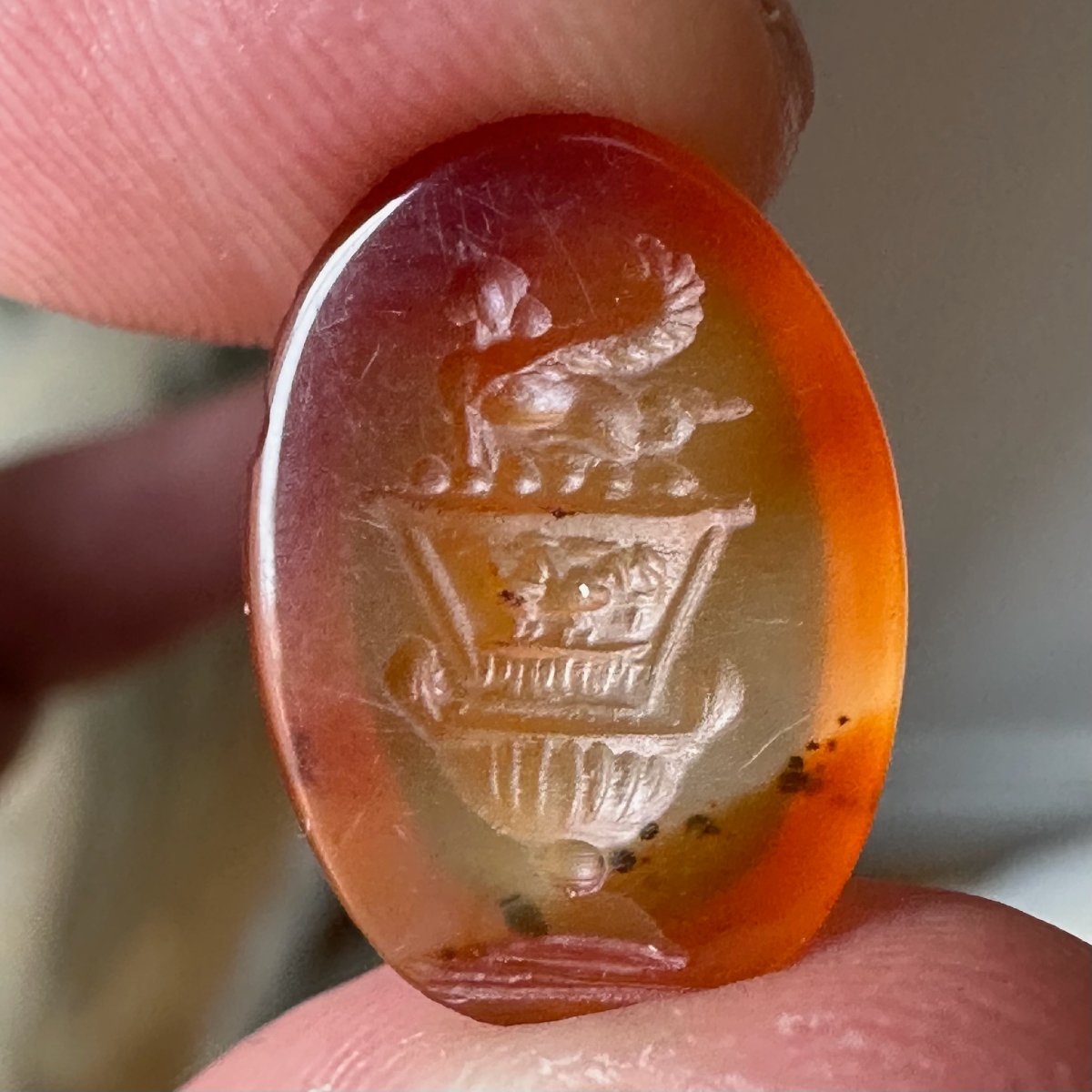


Large Roman Agate Intaglio. Sphinx On A Bell-shaped Krater.
Dimensions. 13 × 17 × 3.5 mm
Roman art, 1st–2nd century
Mounting available upon request
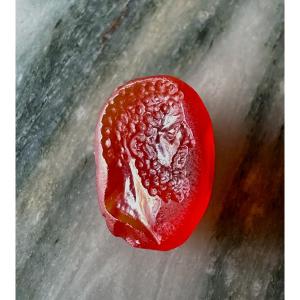
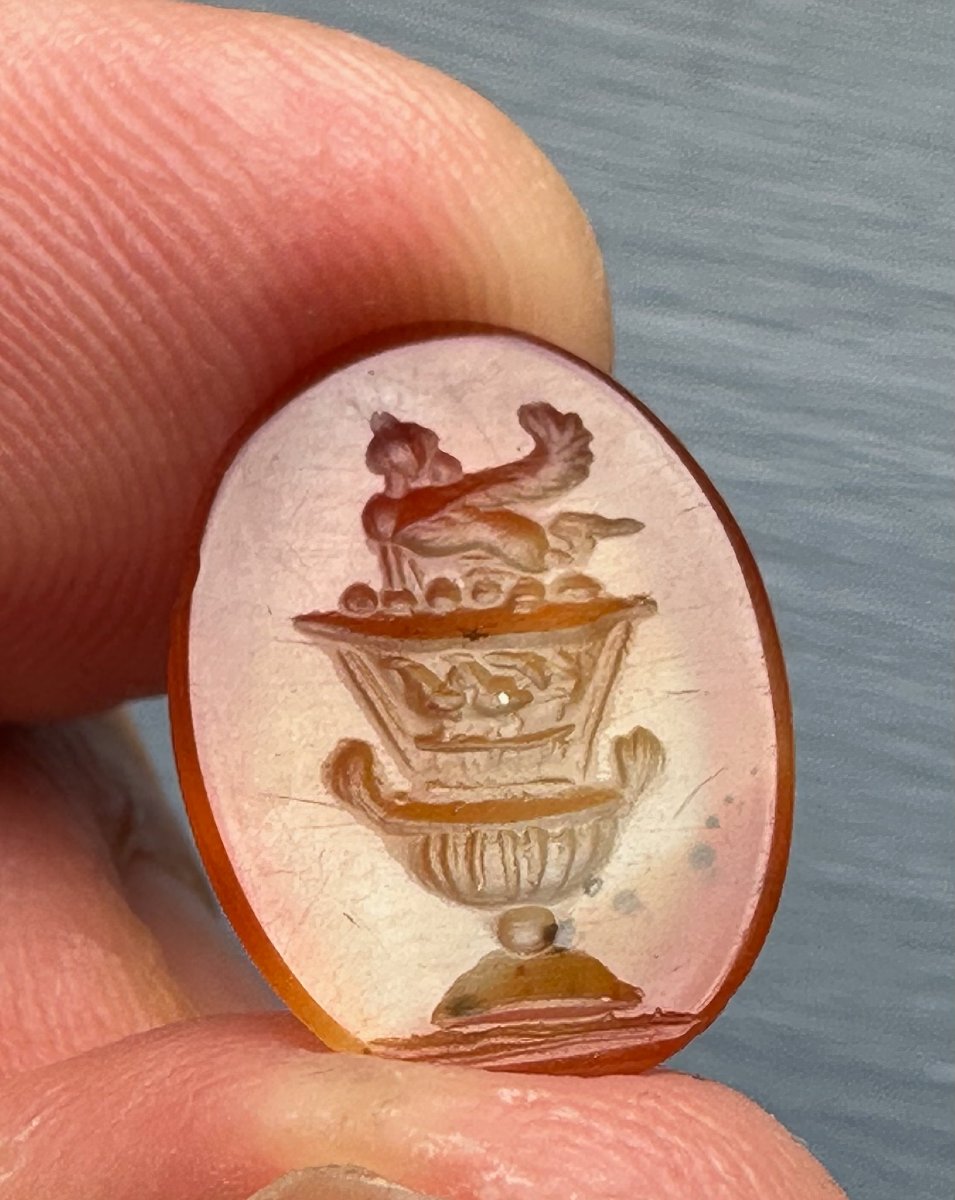
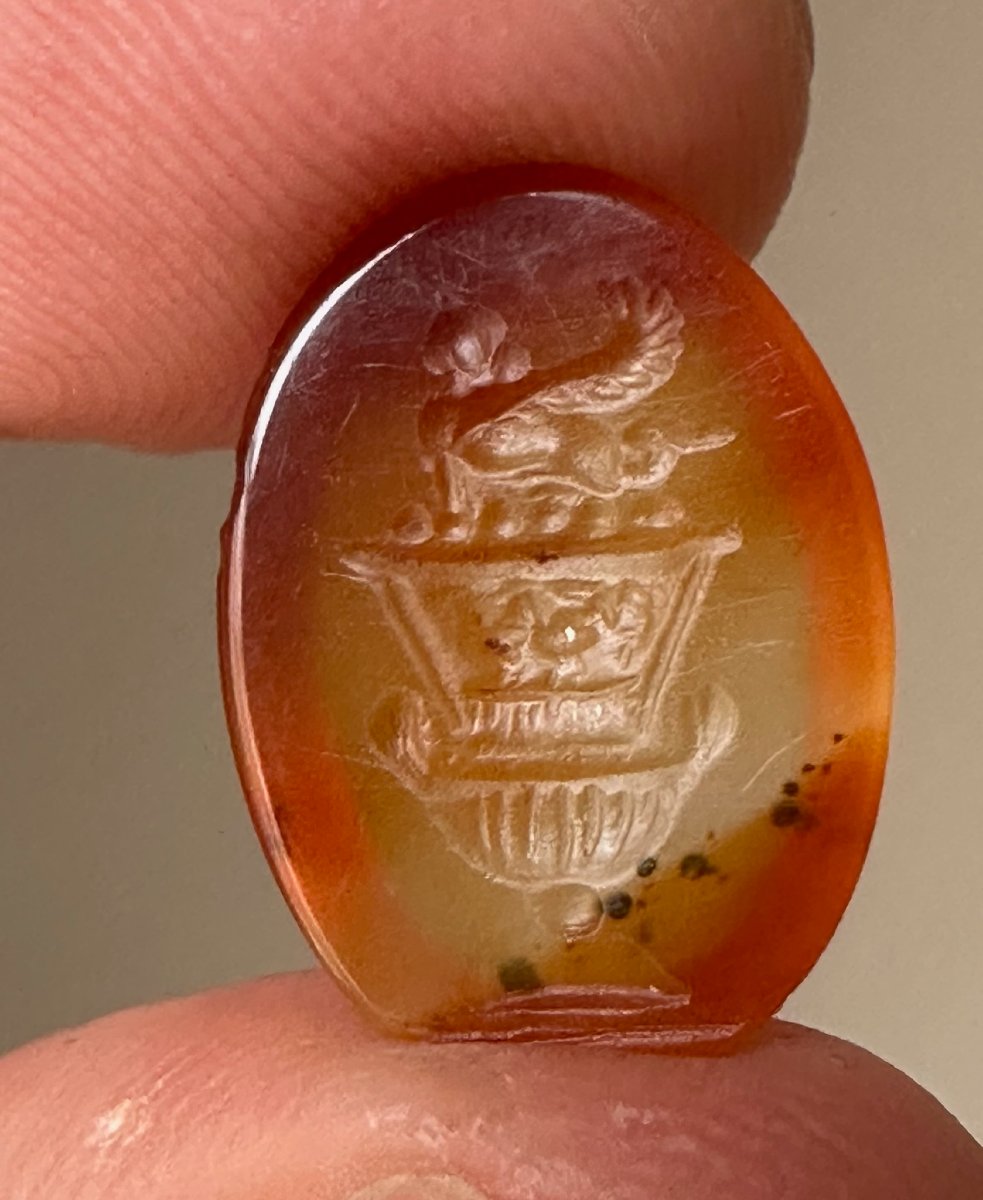
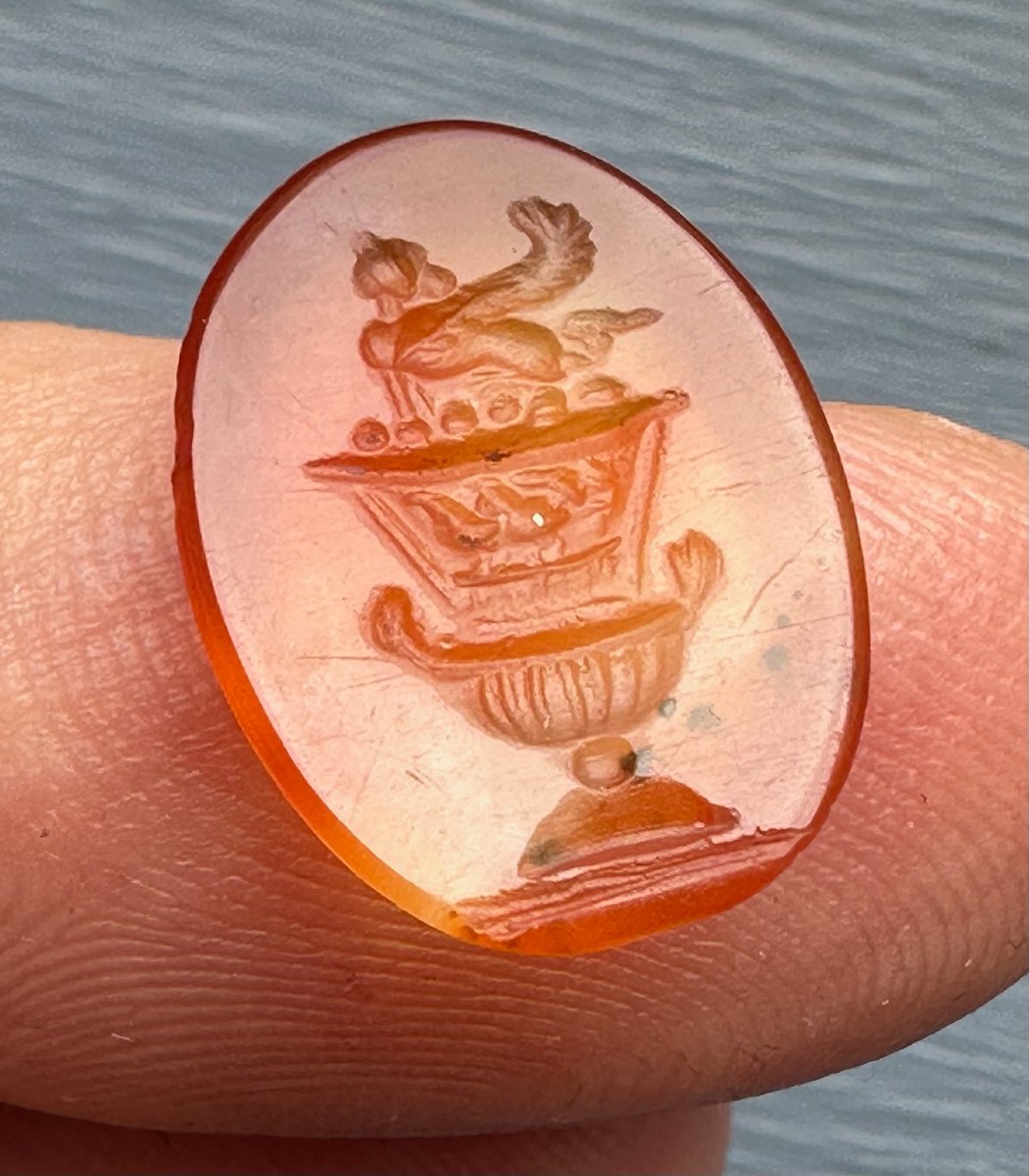
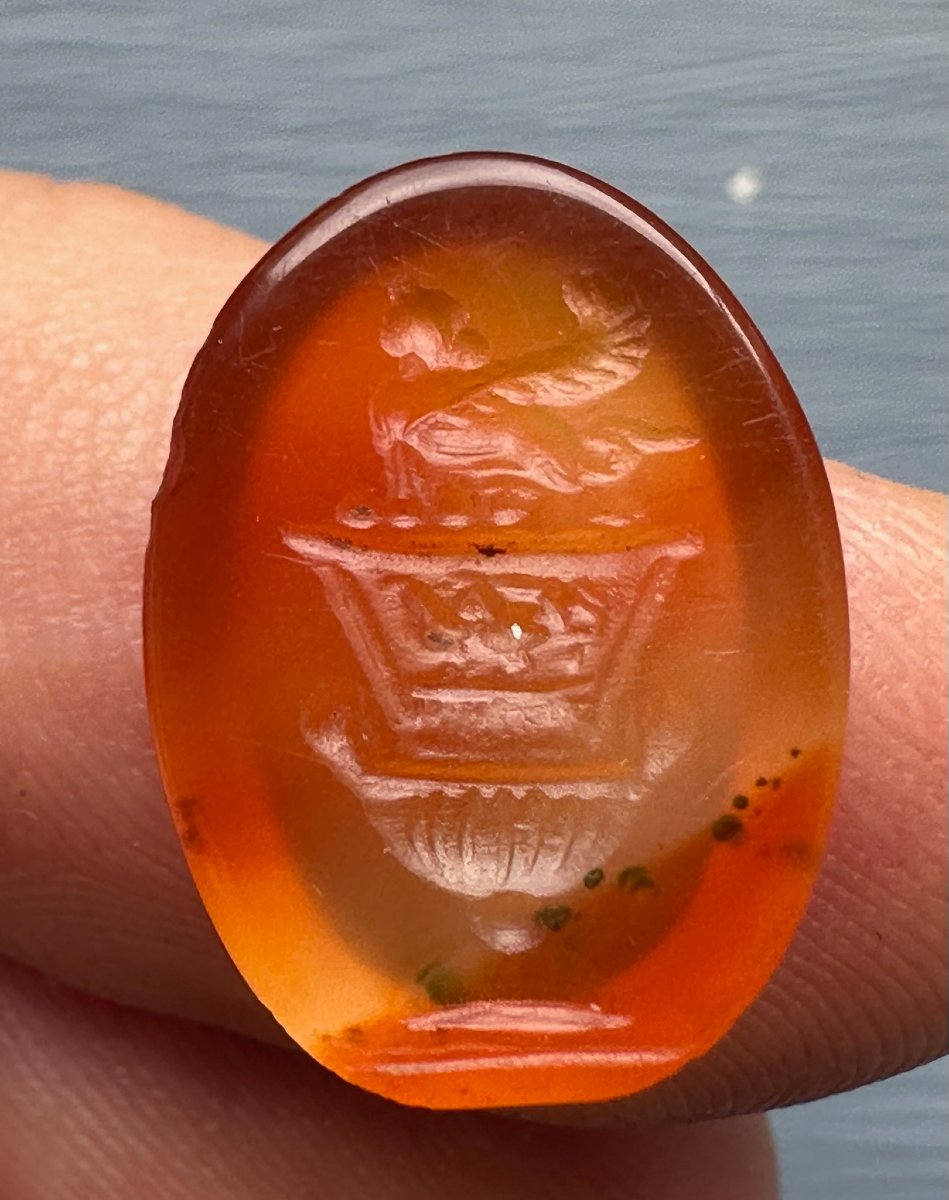
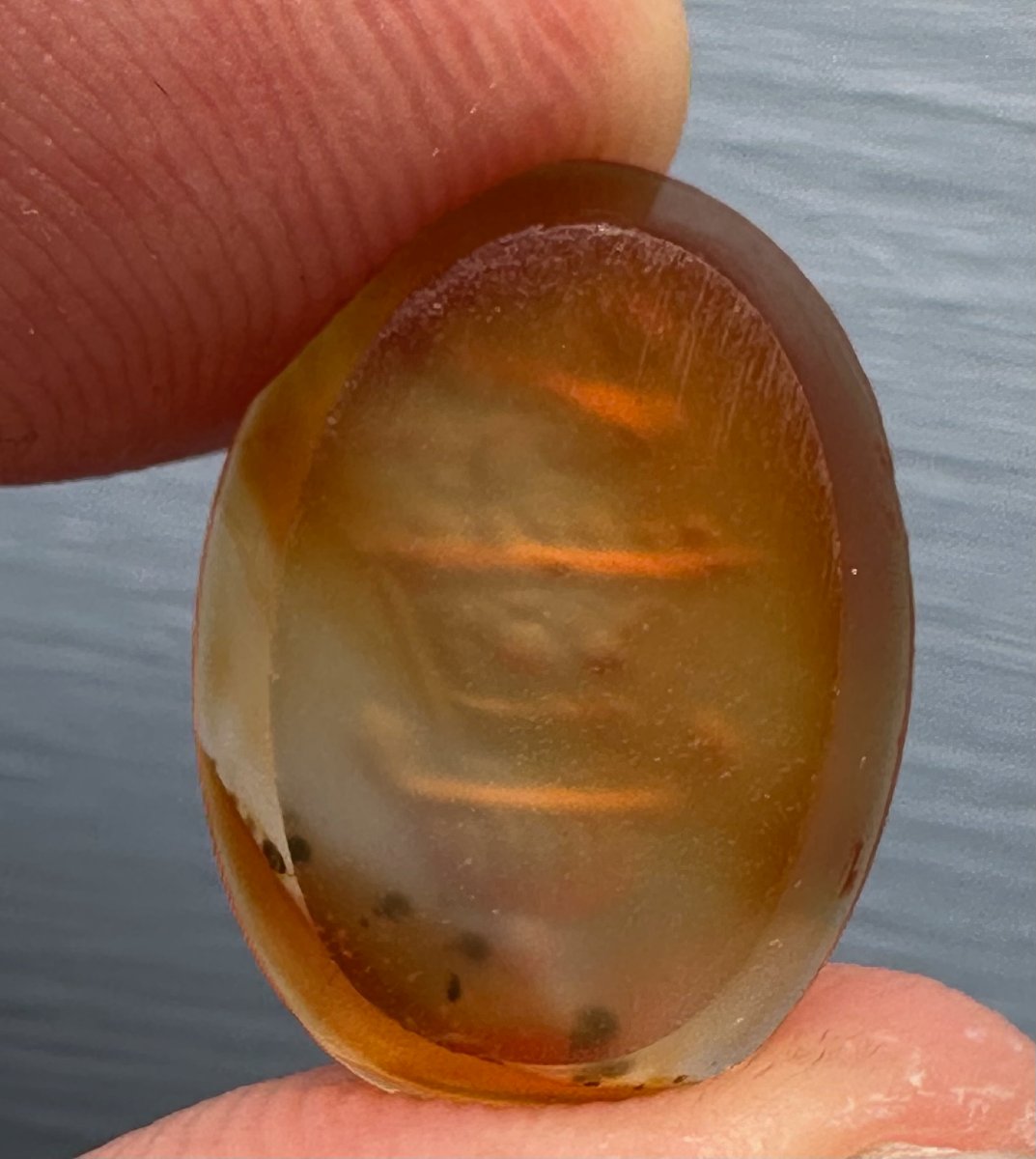
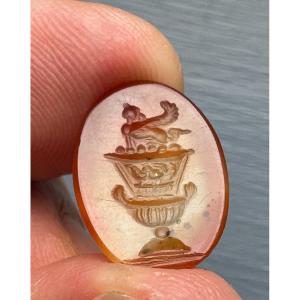
Large Roman agate intaglio, oval in shape, engraved in relief with a sphinx perched on a bell-shaped crater. The unusually large size of the stone allowed the engraver to create a two-register composition, executed with remarkable attention to detail.
The winged sphinx rests on the rim of the vase, its wing spread and tail raised in a plume. Below, the bell-shaped crater is rendered with precision: on the neck, one register depicts Eros driving a two-horse chariot drawn by two roosters—a miniature within a miniature, engraved within a few millimeters. The overhanging rim, the raised handles, and the fluted lower basin rest on a molded foot.
Iconography
The sphinx—with the body of a lion, the wings of a bird, and a human head—is the enigmatic guardian of the ancient world: perched on a vase, it watches over its contents just as it once watched over tombs and sanctuaries. The motif combines two themes dear to Roman glyptic art: the mythical bestiary and ceremonial tableware. It is worth noting that Augustus himself initially sealed his letters with a sphinx: the image carried a very special authority in Rome. The crater, a vessel for wine and banquets, imbues the composition with a Dionysian resonance, reinforced by the Eros charioteer on the neck: the races of Cupids harnessed to animals—roosters, goats, dolphins—are among the most graceful motifs in the Roman decorative repertoire.
Comparanda
– P. Gołyźniak, Roman Engraved Gems in the National Archaeological Museum in Lisbon, no. 69: glass paste intaglio depicting two ravens perched on a large krater.
– London, British Museum, inv. 1887,0307.I.408: Wedgwood & Bentley intaglio seal in black basalt (c. 1769–1780), lidded vase decorated with a bacchanal scene, reclining sphinx on the lid—based on a carnelian listed by Lippert (Lipp. II.1089; cf. Tassie & Raspe, 1791, nos. 13662–13663)
Roman art, 1st–2nd century
Mounting available upon request
Large Roman agate intaglio, oval in shape, engraved in relief with a sphinx perched on a bell-shaped crater. The unusually large size of the stone allowed the engraver to create a two-register composition, executed with remarkable attention to detail.
The winged sphinx rests on the rim of the vase, its wing spread and tail raised in a plume. Below, the bell-shaped crater is rendered with precision: on the neck, one register depicts Eros driving a two-horse chariot drawn by two roosters—a miniature within a miniature, engraved within a few millimeters. The overhanging rim, the raised handles, and the fluted lower basin rest on a molded foot.
Iconography
The sphinx—with the body of a lion, the wings of a bird, and a human head—is the enigmatic guardian of the ancient world: perched on a vase, it watches over its contents just as it once watched over tombs and sanctuaries. The motif combines two themes dear to Roman glyptic art: the mythical bestiary and ceremonial tableware. It is worth noting that Augustus himself initially sealed his letters with a sphinx: the image carried a very special authority in Rome. The crater, a vessel for wine and banquets, imbues the composition with a Dionysian resonance, reinforced by the Eros charioteer on the neck: the races of Cupids harnessed to animals—roosters, goats, dolphins—are among the most graceful motifs in the Roman decorative repertoire.
Comparanda
– P. Gołyźniak, Roman Engraved Gems in the National Archaeological Museum in Lisbon, no. 69: glass paste intaglio depicting two ravens perched on a large krater.
– London, British Museum, inv. 1887,0307.I.408: Wedgwood & Bentley intaglio seal in black basalt (c. 1769–1780), lidded vase decorated with a bacchanal scene, reclining sphinx on the lid—based on a carnelian listed by Lippert (Lipp. II.1089; cf. Tassie & Raspe, 1791, nos. 13662–13663)
2 300 €
Period: Before 16th century
Style: Rome and Antic Greece
Condition: Excellent condition
Reference (ID): 1800149
Availability: In stock
Print