


English School, Circa 1850–70 – The Little Wood-chip Seller – Oil On Canvas
English School
The Little Wood Chip Seller
Circa 1850–70
Oil on canvas, re-stretched
Varnished mahogany frame, late 19th–early 20th century
Dimensions: 27.5 x 22.5 cm, 33.5 x 29.5 cm framed
All in good condition
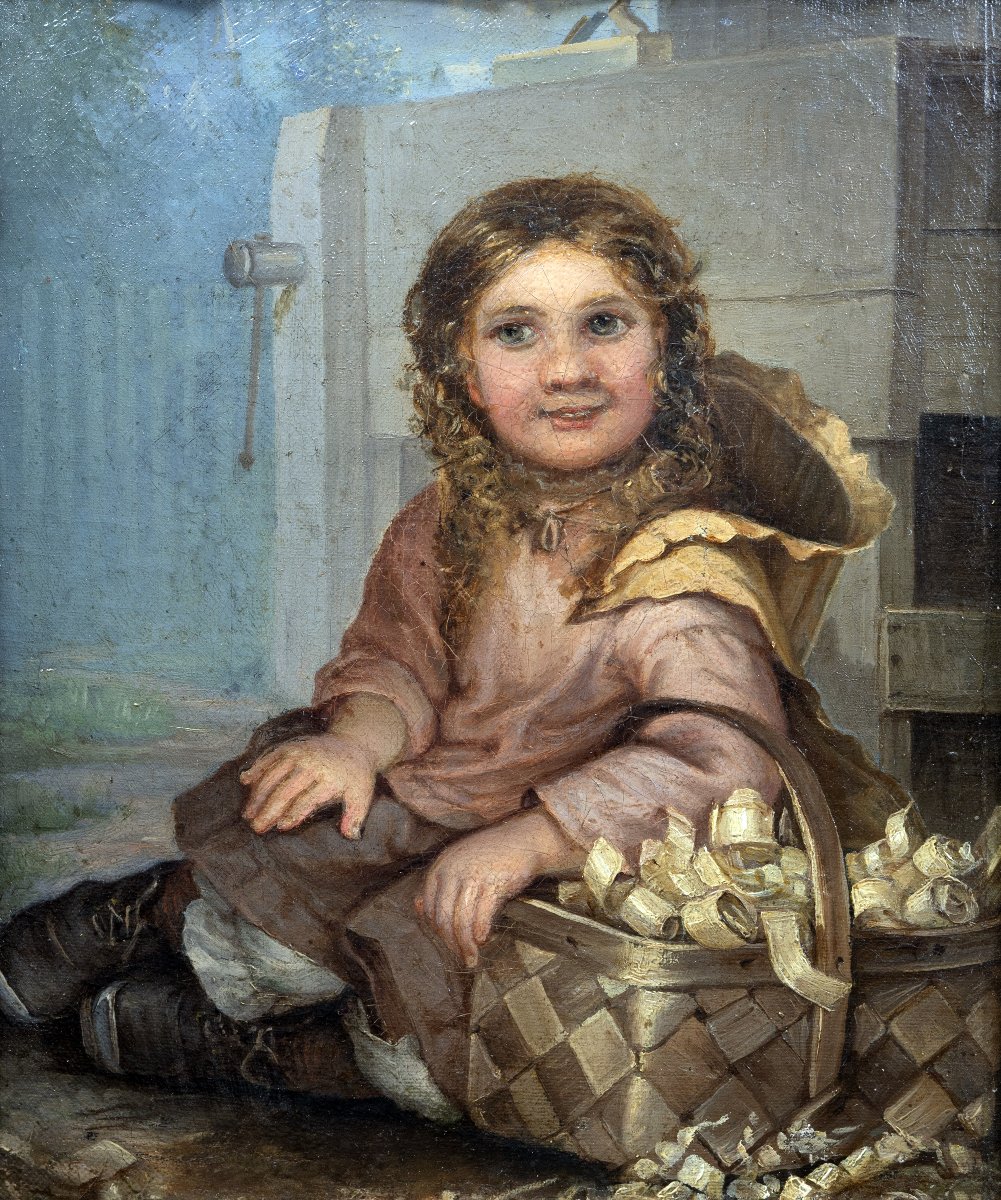
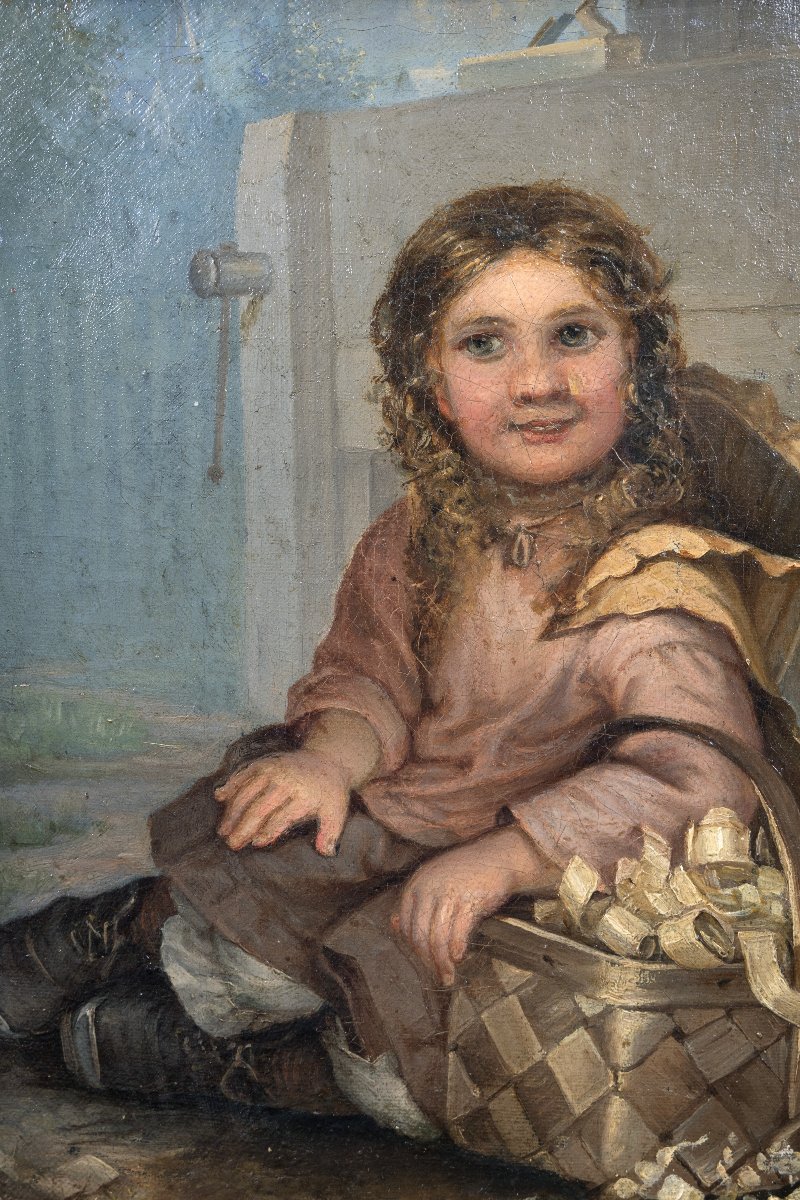
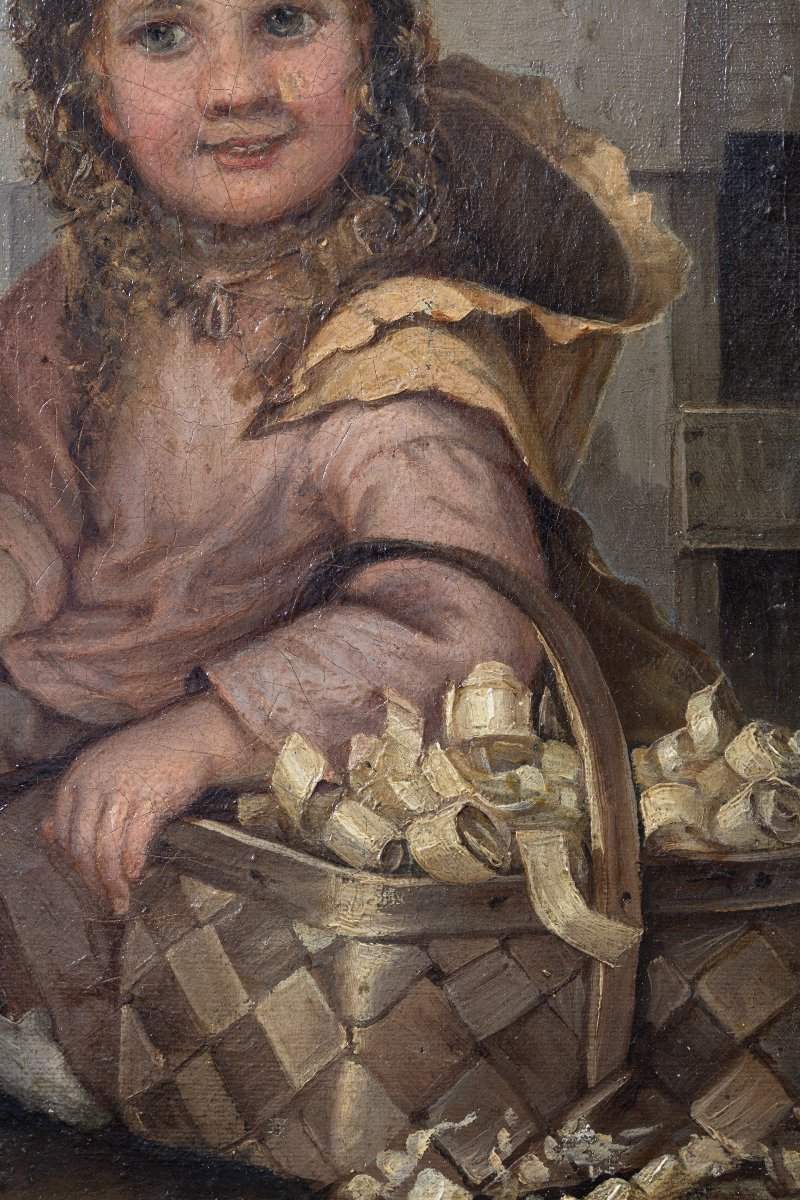
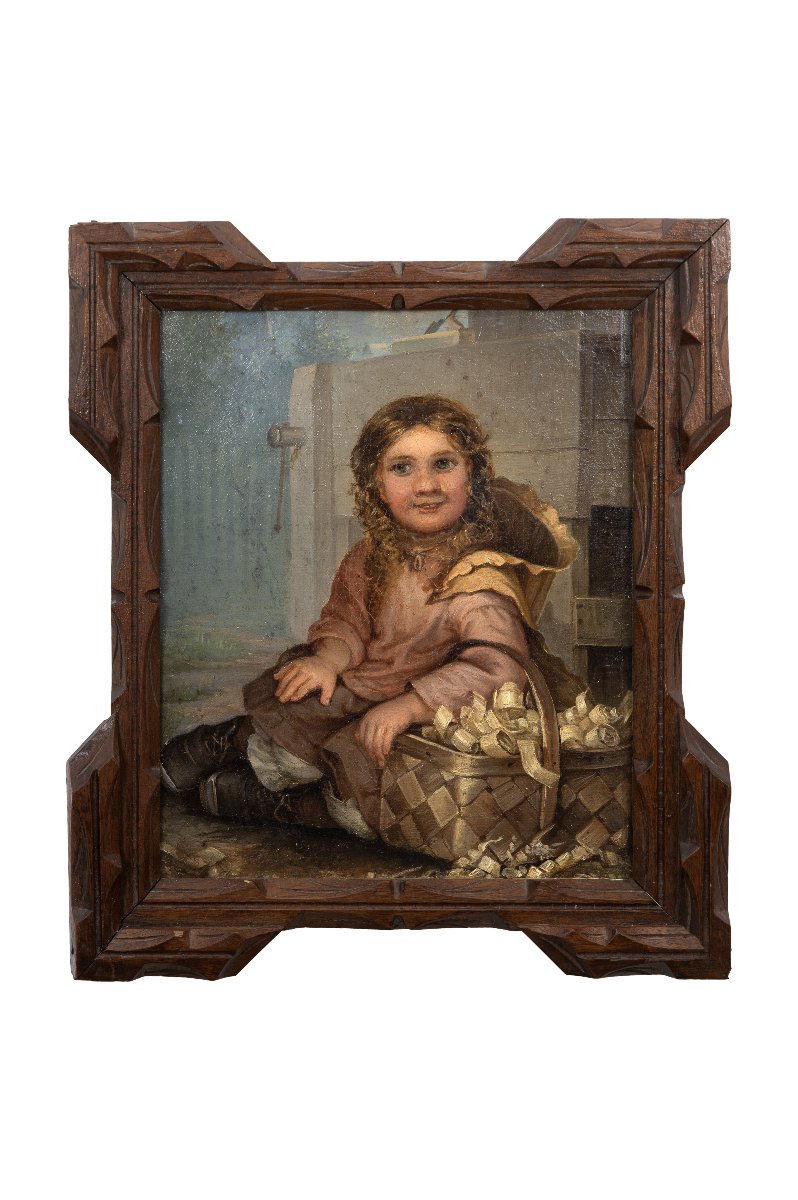
She has set her two baskets down in the dust, right in front of the workshop. Behind her, a mallet hangs on the wall, a plane left on the workbench: the carpenter has been working all morning, and wood shavings have piled up on the floor. She gathered them up. Now she’s selling them.
It’s a trivial trade, and yet it was a profession. In nineteenth-century cities, people bought baskets of wood shavings to light their fires, and this task fell to the poorest children. Henry Mayhew, in his major study of the streets of London published in 1851, lists these kindling sellers among the countless street trades. The painter places us exactly in the customer’s position: the little girl looks up, smiles, and waits.
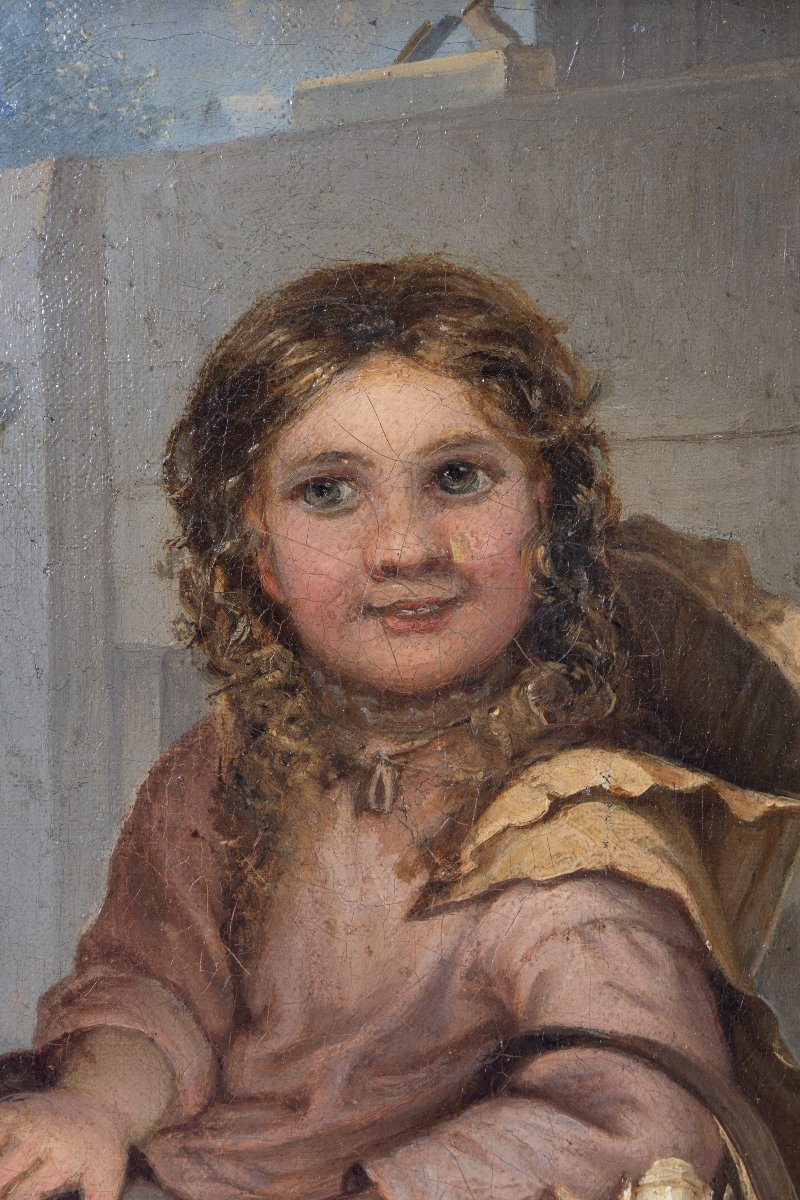
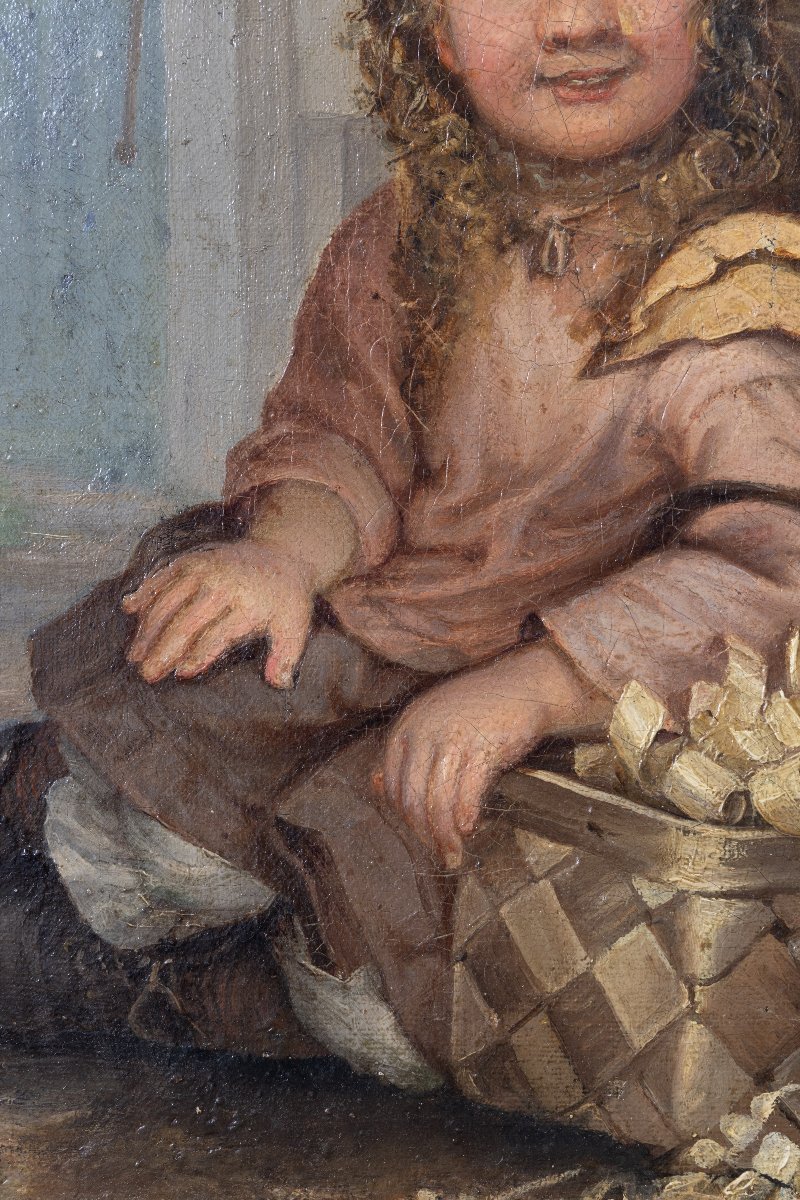
And one must see with what relish he painted these wood shavings. This is where all his artistry lies: thick strokes of white and yellow ochre, applied in tight swirls, spilling over the baskets and spreading across the ground. The contrast is deliberate with the face—smooth, rosy, and rendered in thin glazes—the healthy complexion of a child that softens, as is often the case with Victorian painters, the subject’s actual harshness. The rest is rendered in bluish grays and dusty beiges, with a glimmer of light in the background and a bit of grass growing at the foot of the wall.
Classification. The painting unambiguously belongs to the Victorian genre painting tradition, that major movement that made the small trades of childhood its favorite subject between 1840 and 1890—flower sellers, newspaper vendors, chimney sweeps. The quality of execution is that of a professional exhibitor: solid composition, masterful handling of the medium, and a true sense of staging. The girl’s costume—with its wide, light-colored ruff and long puff sleeves—dates the scene to around 1850–1870. In the absence of a signature, we present it as a work of the English school from this period.
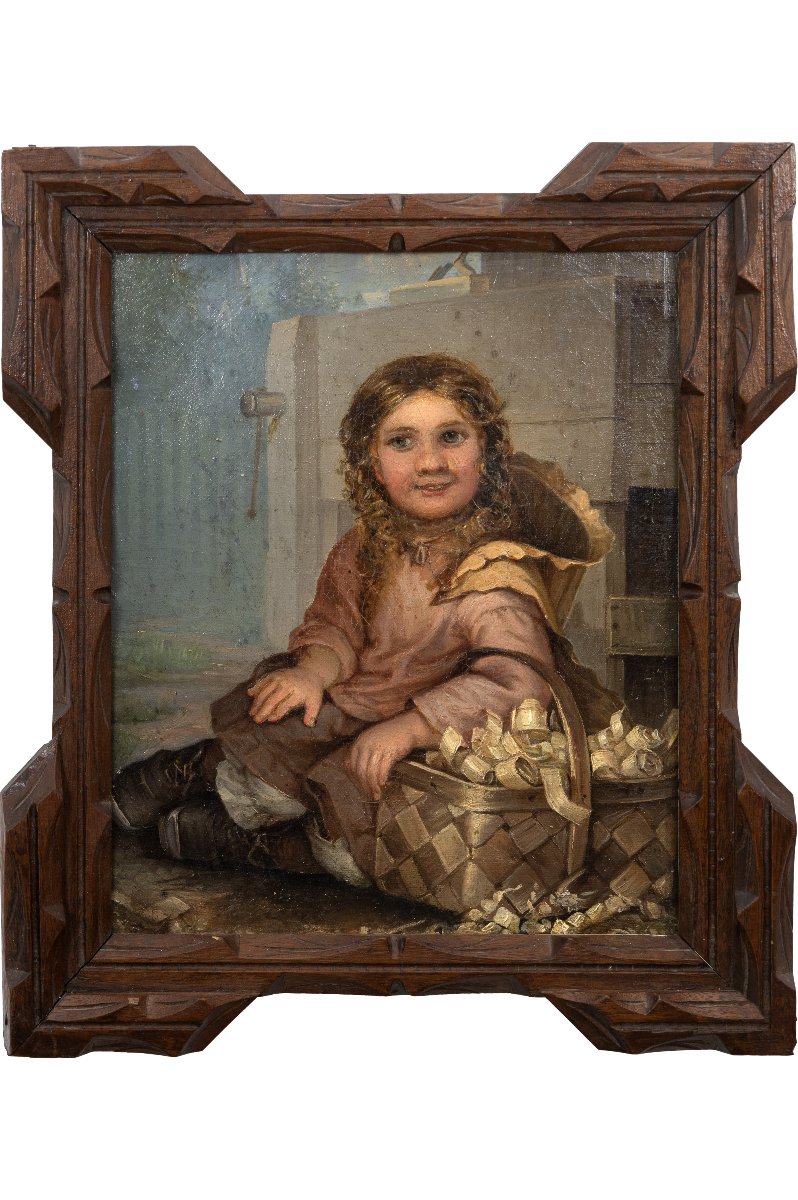
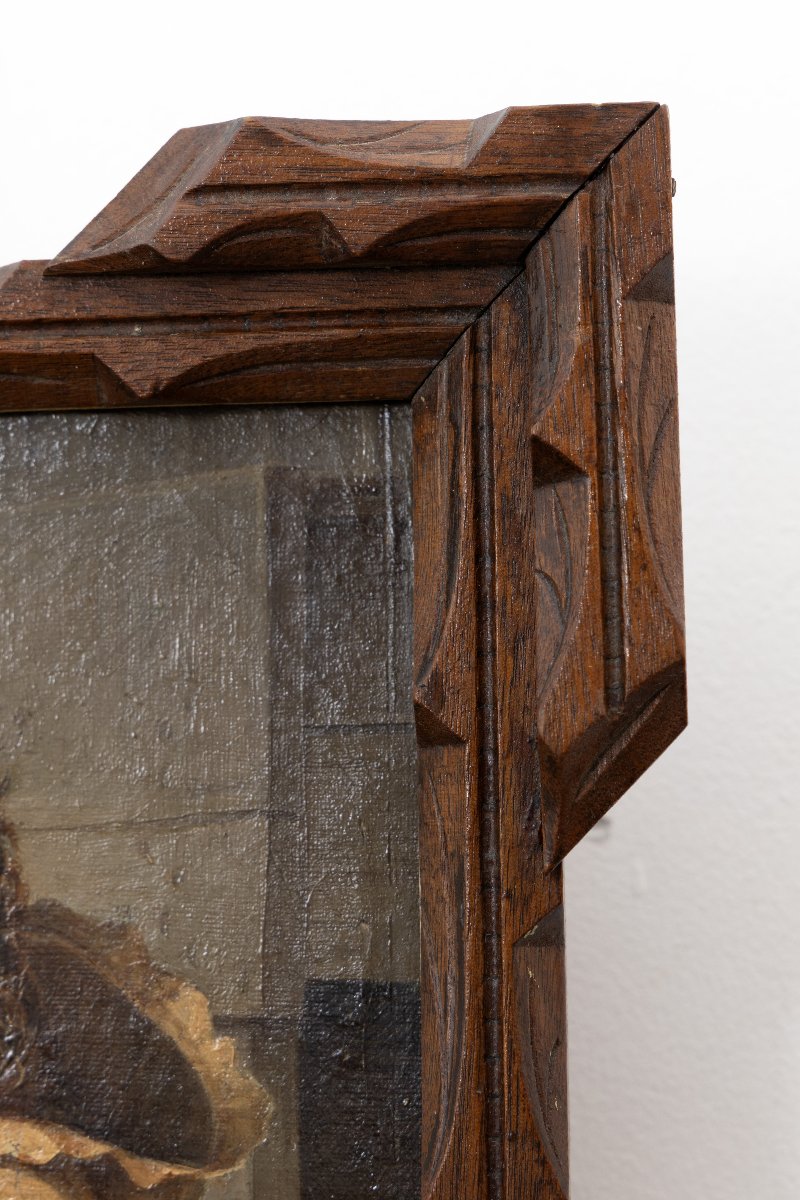
Frame. A varnished, mahogany-style red wooden frame, carved with projecting, notched corners, featuring a pattern of lozenges and wide grooves carved directly into the wood. A style typical of the late Victorian era, from the 1870s to 1900, and thus likely slightly later than the painting itself, though it was mounted on the current frame some time ago. It complements the painting remarkably well. Beautiful patina and a lovely sheen to the varnish, as is.
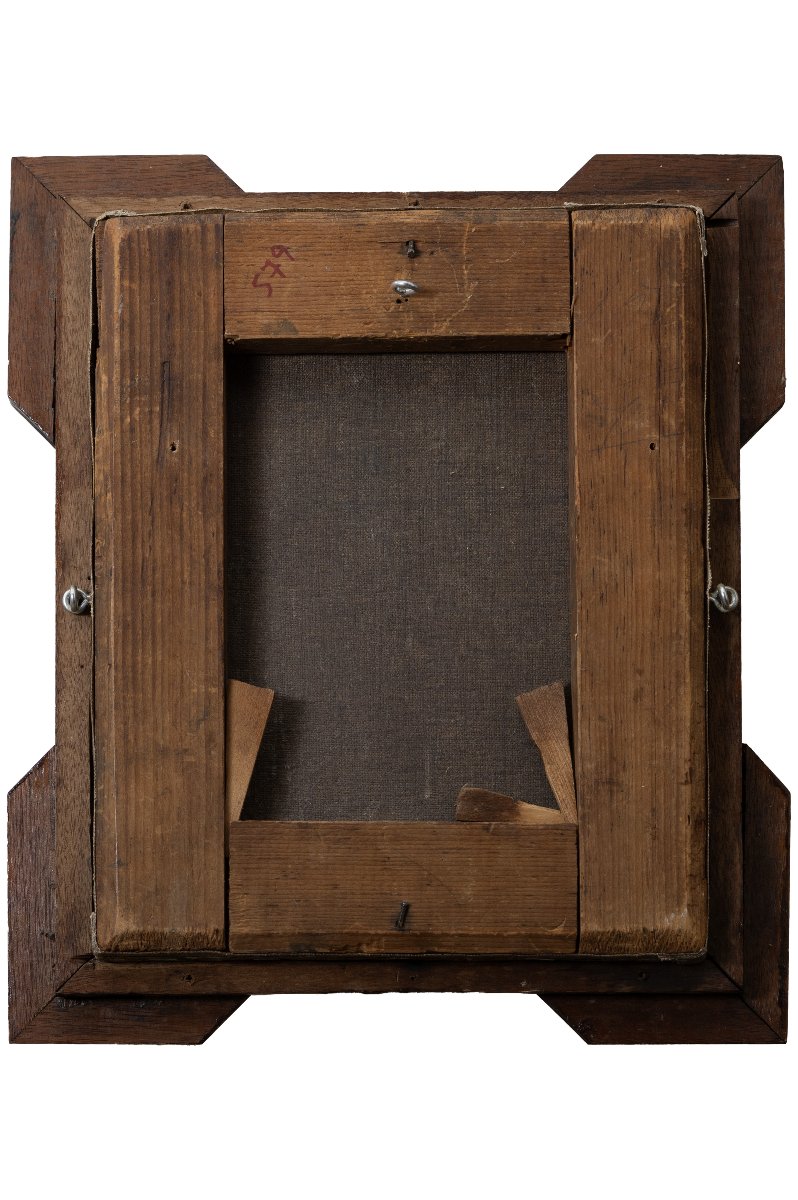
Condition. Good overall condition. The work has been re-stretched and mounted on a key-frame. A network of age-related craquelure is visible across the entire surface; it is stable and shows no lifting. Some minor surface wear and scuffing, particularly in the sky in the upper left corner. Frame in good condition, with signs of wear consistent with its age.
Provenance. Acquired in Portland (Oregon, United States) in the 1990s. Private collection, France.
Work on view at the gallery (07240)
Shipping: Please contact us for shipping costs within France and internationally.
The Little Wood Chip Seller
Circa 1850–70
Oil on canvas, re-stretched
Varnished mahogany frame, late 19th–early 20th century
Dimensions: 27.5 x 22.5 cm, 33.5 x 29.5 cm framed
All in good condition
She has set her two baskets down in the dust, right in front of the workshop. Behind her, a mallet hangs on the wall, a plane left on the workbench: the carpenter has been working all morning, and wood shavings have piled up on the floor. She gathered them up. Now she’s selling them.
It’s a trivial trade, and yet it was a profession. In nineteenth-century cities, people bought baskets of wood shavings to light their fires, and this task fell to the poorest children. Henry Mayhew, in his major study of the streets of London published in 1851, lists these kindling sellers among the countless street trades. The painter places us exactly in the customer’s position: the little girl looks up, smiles, and waits.
And one must see with what relish he painted these wood shavings. This is where all his artistry lies: thick strokes of white and yellow ochre, applied in tight swirls, spilling over the baskets and spreading across the ground. The contrast is deliberate with the face—smooth, rosy, and rendered in thin glazes—the healthy complexion of a child that softens, as is often the case with Victorian painters, the subject’s actual harshness. The rest is rendered in bluish grays and dusty beiges, with a glimmer of light in the background and a bit of grass growing at the foot of the wall.
Classification. The painting unambiguously belongs to the Victorian genre painting tradition, that major movement that made the small trades of childhood its favorite subject between 1840 and 1890—flower sellers, newspaper vendors, chimney sweeps. The quality of execution is that of a professional exhibitor: solid composition, masterful handling of the medium, and a true sense of staging. The girl’s costume—with its wide, light-colored ruff and long puff sleeves—dates the scene to around 1850–1870. In the absence of a signature, we present it as a work of the English school from this period.
Frame. A varnished, mahogany-style red wooden frame, carved with projecting, notched corners, featuring a pattern of lozenges and wide grooves carved directly into the wood. A style typical of the late Victorian era, from the 1870s to 1900, and thus likely slightly later than the painting itself, though it was mounted on the current frame some time ago. It complements the painting remarkably well. Beautiful patina and a lovely sheen to the varnish, as is.
Condition. Good overall condition. The work has been re-stretched and mounted on a key-frame. A network of age-related craquelure is visible across the entire surface; it is stable and shows no lifting. Some minor surface wear and scuffing, particularly in the sky in the upper left corner. Frame in good condition, with signs of wear consistent with its age.
Provenance. Acquired in Portland (Oregon, United States) in the 1990s. Private collection, France.
Work on view at the gallery (07240)
Shipping: Please contact us for shipping costs within France and internationally.
600 €
Period: 19th century
Style: English Style
Condition: Excellent condition
Material: Oil painting
Width: 22,5 cm / 29,5 cm encadré
Height: 27,5 cm / 33,5 cm encadré
Reference (ID): 1799846
Availability: In stock
Print