


French Academic (neo-grec) School, 19th Century,in The Taste Of Jean-léon Gérôme (1824-1904)
French academic (Neo-Grec) school, second half of the 19th century, in the taste of Jean-Léon GÉRÔME (1824-1904)
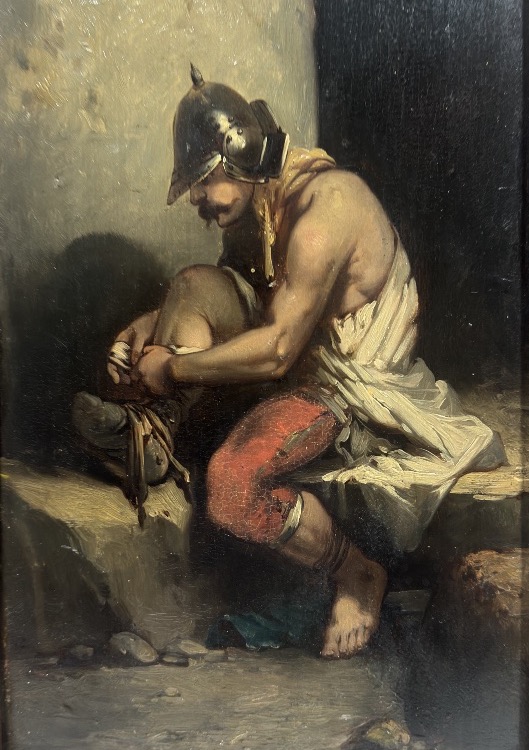
Gladiator Fastening his Ocrea
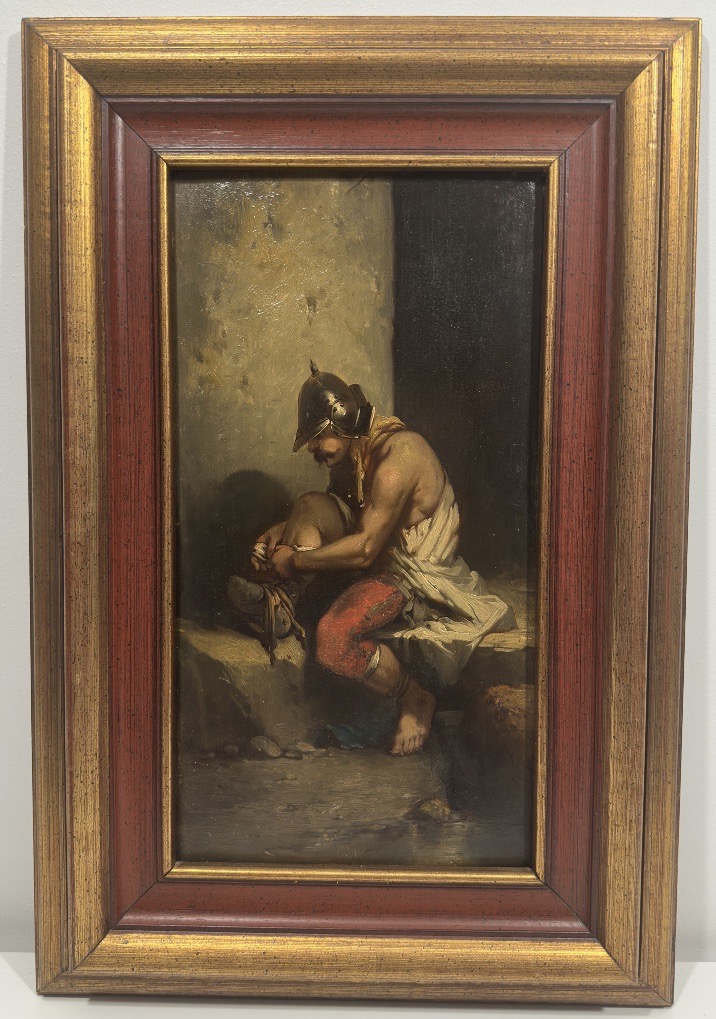
Oil on panel, unsigned, 40 x 21 cm — Frame: 57 x 38 cm
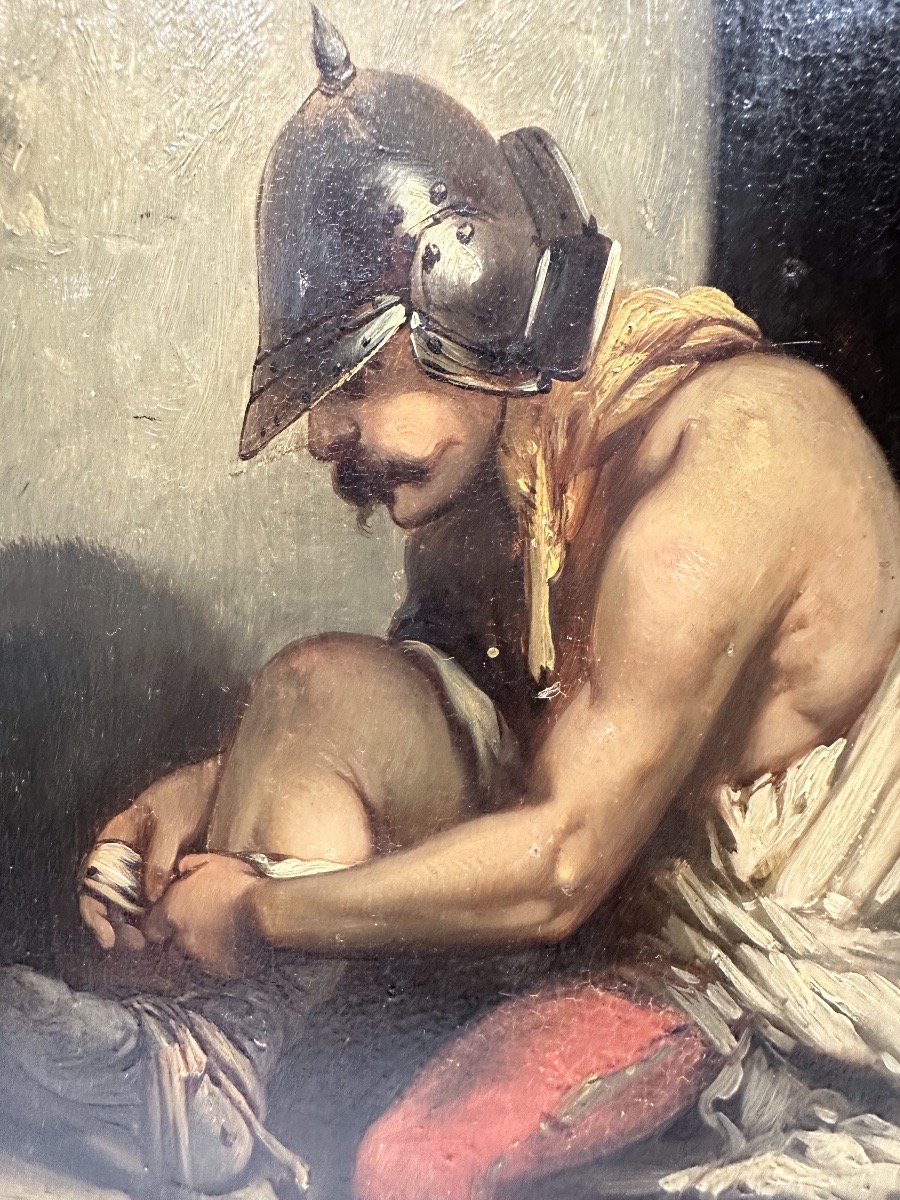
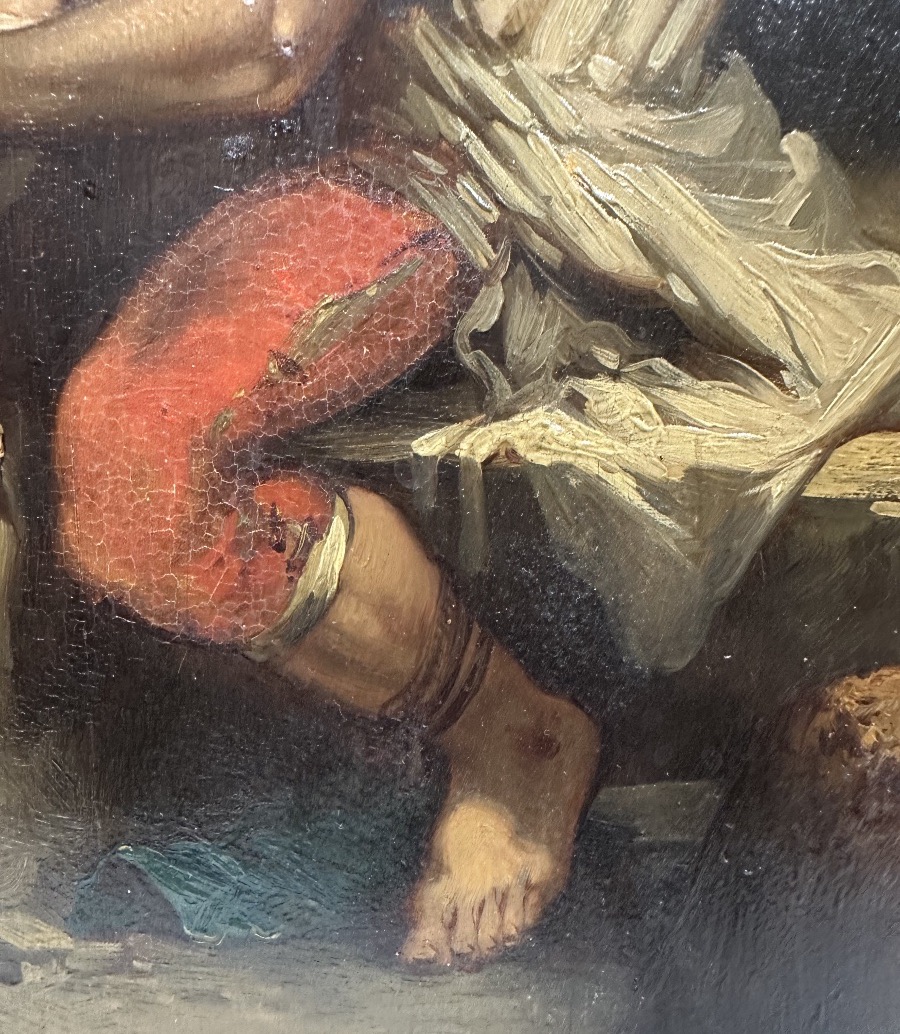
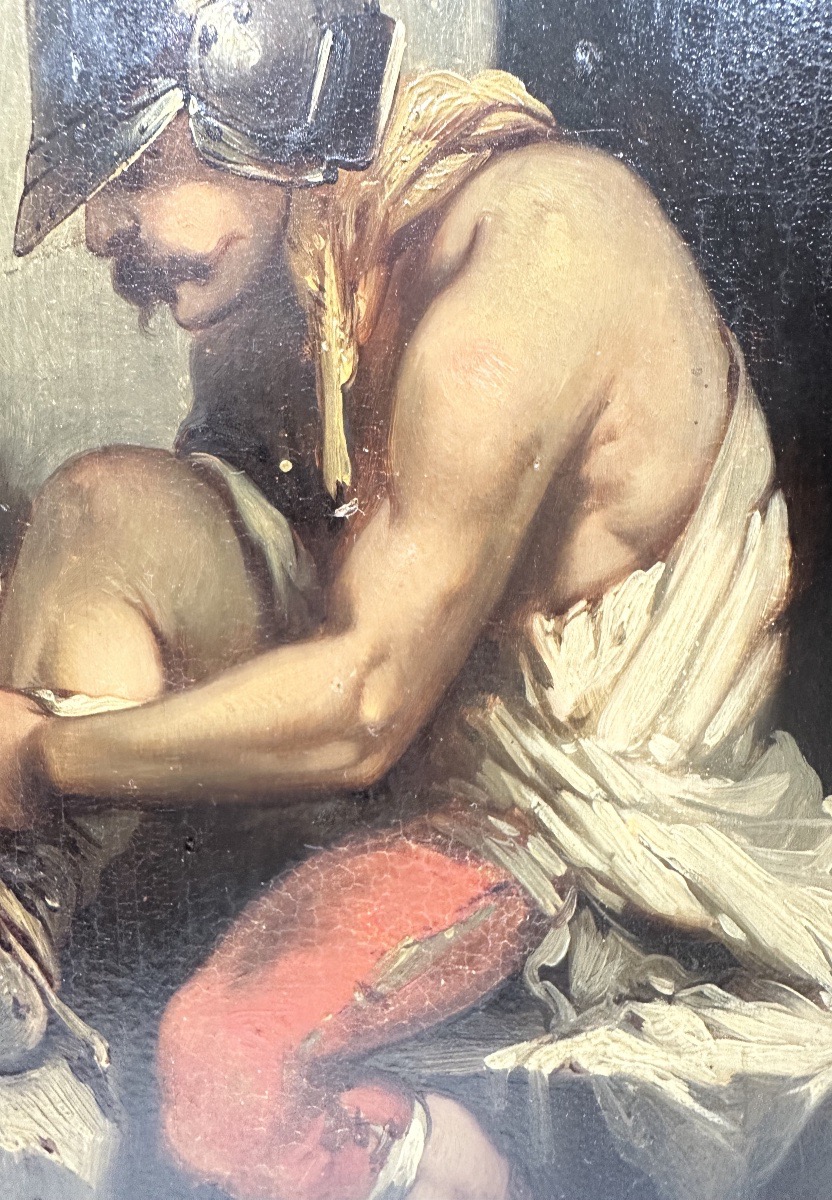
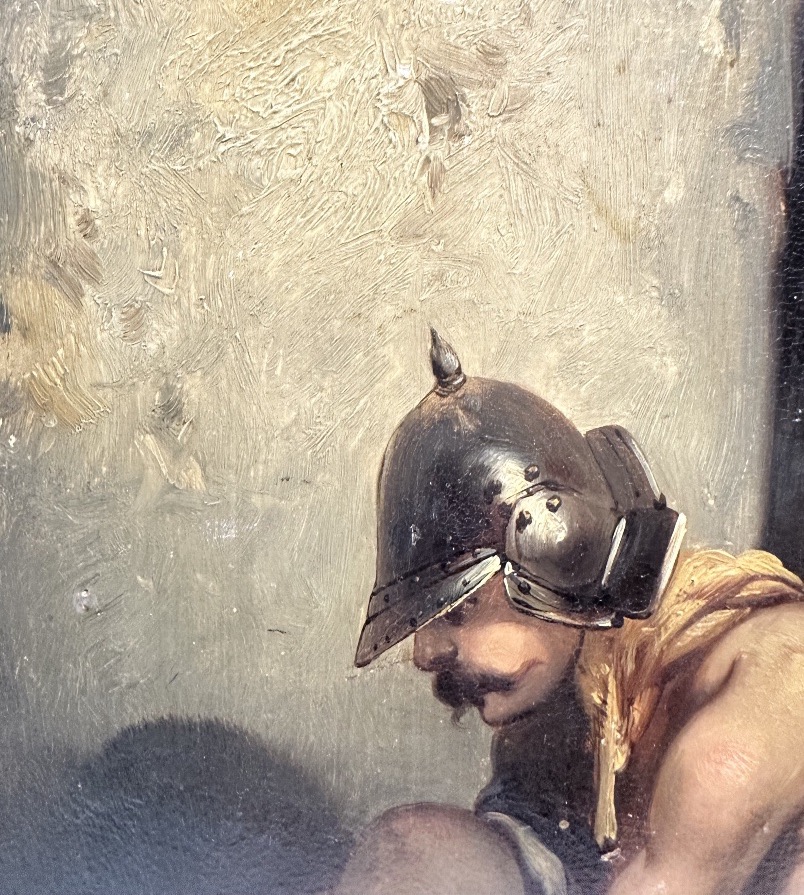
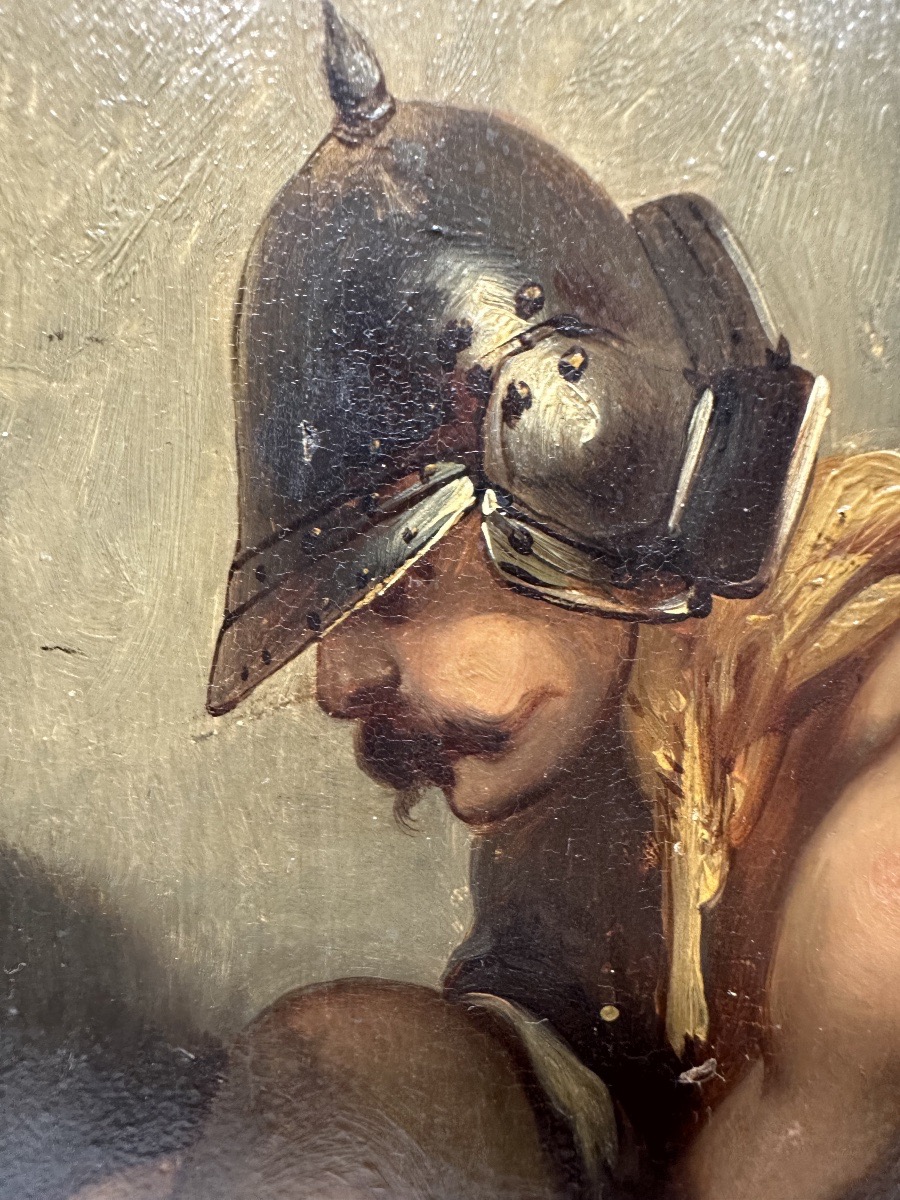
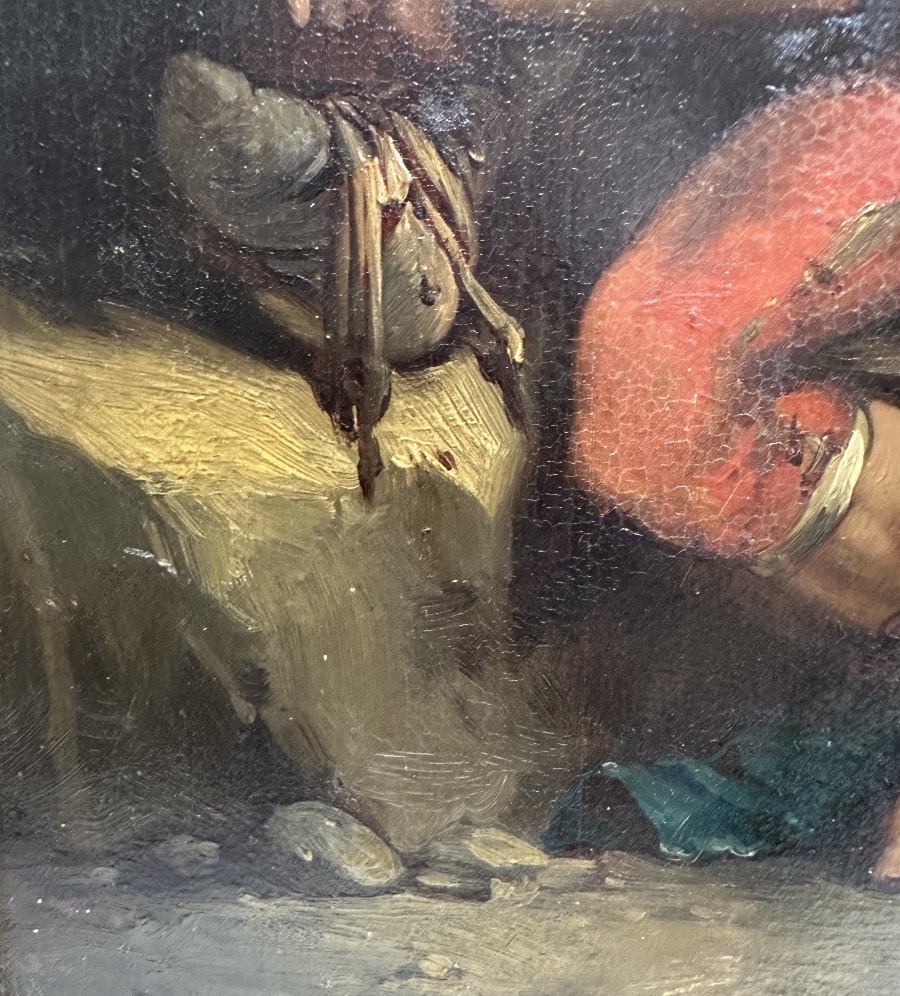
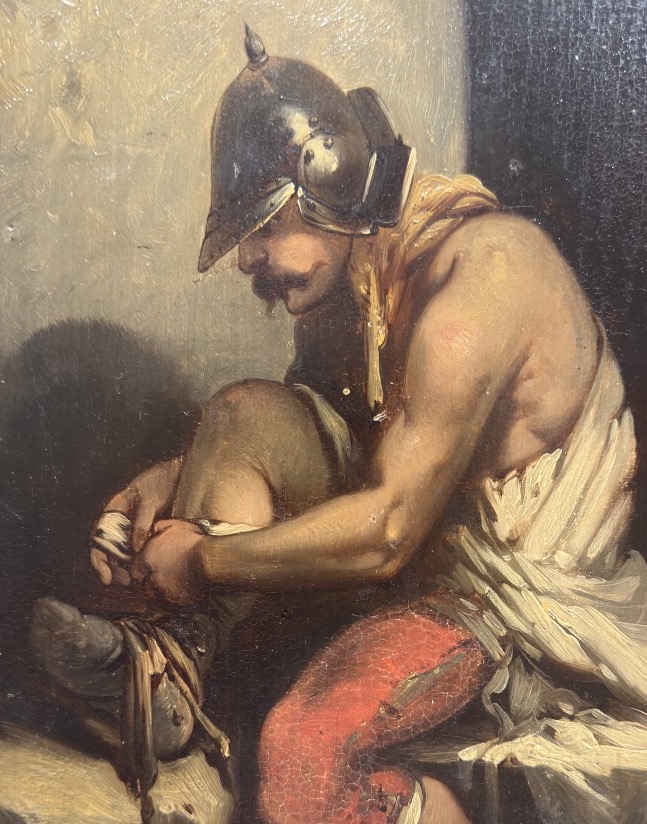
Oil on panel depicting a Roman gladiator seated in three-quarter view, wearing a crested helmet with grilled visor, bare and muscular torso, dressed in a draped white loincloth. Leaning forward, he is fastening the red ocrea protecting his right leg, a gesture of preparation before combat. The scene is treated with powerful chiaroscuro, the isolated figure standing out against a dark background, in a manner of depicting the antique subject highly characteristic of the second half of the nineteenth century.
This motif of the armoured gladiator, wearing a crested helmet, caught alone in a moment of preparation, follows directly in the iconographic line established by Jean-Léon Gérôme, who made the gladiatorial subject one of his specialities after discovering ancient equipment at the archaeological museum of Naples. Gérôme treated this theme on several occasions, notably in Ave Caesar, Morituri te Salutant (1859, Yale University Art Gallery) and then in his most famous work, Pollice Verso (1872, Phoenix Art Museum), and produced numerous isolated studies of armoured gladiators, always working out his figures separately before incorporating them into large crowd compositions. This type of Neo-Grec subject enjoyed its greatest success at the Paris Salon between roughly 1850 and 1890, before declining with the arrival of Impressionism and the avant-gardes.
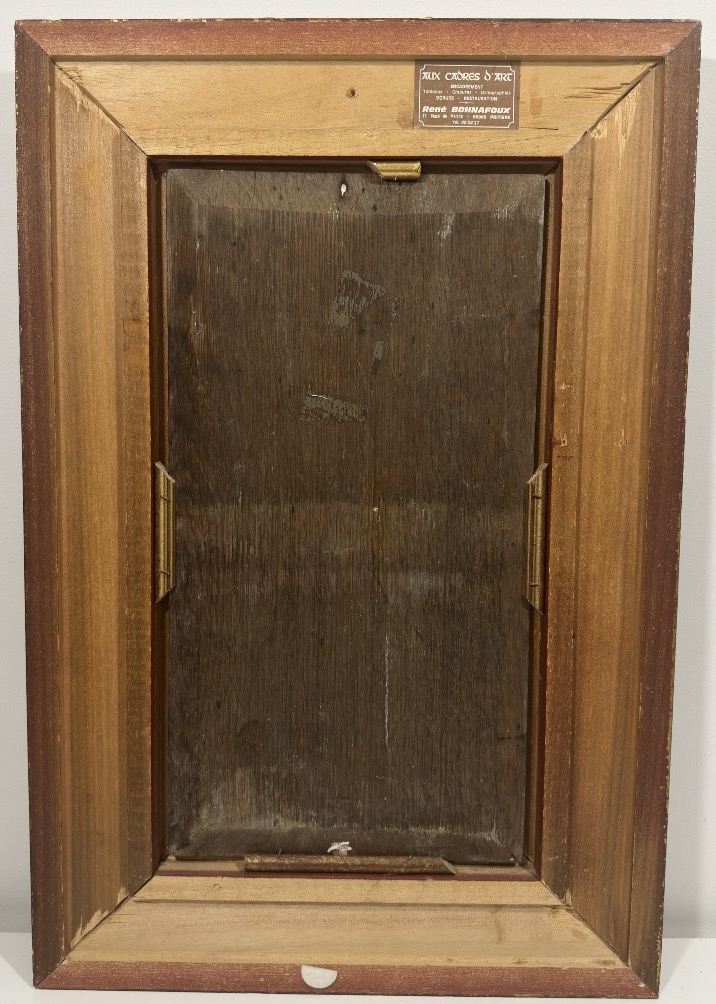
The panel is in good condition.
Deutsch
Französische akademische (neugriechische) Schule, zweite Hälfte des 19. Jahrhunderts, im Geschmack von Jean-Léon GÉRÔME (1824-1904)
Gladiator beim Anlegen seiner Ocrea
Öl auf Holz, nicht signiert, 40 x 21 cm — Rahmen: 57 x 38 cm
Öl auf Holz, einen römischen Gladiator in Dreiviertelansicht sitzend darstellend, mit Kammhelm und Gitterschutz auf dem Kopf, nacktem, muskulösem Oberkörper, bekleidet mit einem drapierten weißen Lendenschurz. Nach vorne gebeugt, schnürt er die rote Ocrea, die sein rechtes Bein schützt, eine Geste der Vorbereitung vor dem Kampf. Die Szene ist in kraftvollem Helldunkel gehalten, die isolierte Figur hebt sich vor einem dunklen Hintergrund ab, in einer Art der Darstellung des antiken Sujets, die für die zweite Hälfte des 19. Jahrhunderts sehr charakteristisch ist.
Dieses Motiv des gepanzerten Gladiators mit Kammhelm, allein in einem Moment der Vorbereitung erfasst, reiht sich unmittelbar in die von Jean-Léon Gérôme geprägte Bildtradition ein, der das gladiatorische Thema zu einer seiner Spezialitäten machte, nachdem er im archäologischen Museum von Neapel antike Ausrüstungsstücke entdeckt hatte. Gérôme behandelte dieses Thema mehrfach, insbesondere in Ave Caesar, Morituri te Salutant (1859, Yale University Art Gallery) und später in seinem berühmtesten Werk, Pollice Verso (1872, Phoenix Art Museum), und schuf zahlreiche isolierte Studien gepanzerter Gladiatoren, wobei er seine Figuren stets einzeln ausarbeitete, bevor er sie in große Massenkompositionen einfügte. Dieser Typus des neugriechischen Sujets erlebte seinen größten Erfolg im Pariser Salon etwa zwischen 1850 und 1890, bevor er mit dem Aufkommen des Impressionismus und der Avantgarden zurückging.
Die Tafel befindet sich in gutem Erhaltungszustand.
Italiano
Scuola accademica francese (neogreca), seconda metà del XIX secolo, nel gusto di Jean-Léon GÉRÔME (1824-1904)
Gladiatore che allaccia la sua ocrea
Olio su tavola, non firmato, 40 x 21 cm — Cornice: 57 x 38 cm
Olio su tavola raffigurante un gladiatore romano seduto di tre quarti, con elmo a cimiero e visiera a grata sul capo, torso nudo e muscoloso, vestito con un perizoma bianco drappeggiato. Chinato in avanti, è intento ad allacciare l'ocrea rossa che protegge la sua gamba destra, un gesto di preparazione prima del combattimento. La scena è trattata con un potente chiaroscuro, la figura isolata si staglia su uno sfondo scuro, secondo una maniera di rappresentare il soggetto antico molto caratteristica della seconda metà dell'Ottocento.
Questo motivo del gladiatore in armatura, con elmo a cimiero, colto da solo in un momento di preparazione, si inserisce direttamente nella linea iconografica fissata da Jean-Léon Gérôme, che fece del soggetto gladiatorio una delle sue specialità dopo aver scoperto al museo archeologico di Napoli i resti dell'equipaggiamento antico. Gérôme trattò questo tema più volte, in particolare in Ave Caesar, Morituri te Salutant (1859, Yale University Art Gallery) e poi nella sua opera più celebre, Pollice Verso (1872, Phoenix Art Museum), realizzando numerosi studi isolati di gladiatori in armatura, lavorando sempre le sue figure separatamente prima di inserirle nelle grandi composizioni di folla. Questo tipo di soggetto neogreco conobbe il suo massimo successo al Salon di Parigi tra circa il 1850 e il 1890, prima di declinare con l'arrivo dell'impressionismo e delle avanguardie.
La tavola è in buono stato di conservazione.
Period: 19th century
Style: Other Style
Condition: Excellent condition
Material: Oil painting on wood
Reference (ID): 1792770
Availability: In stock