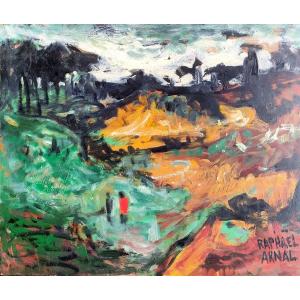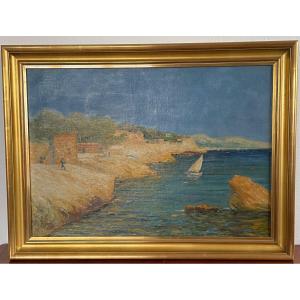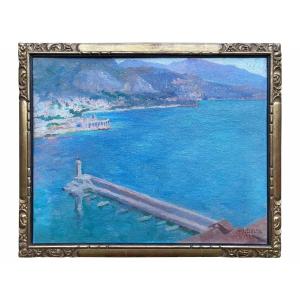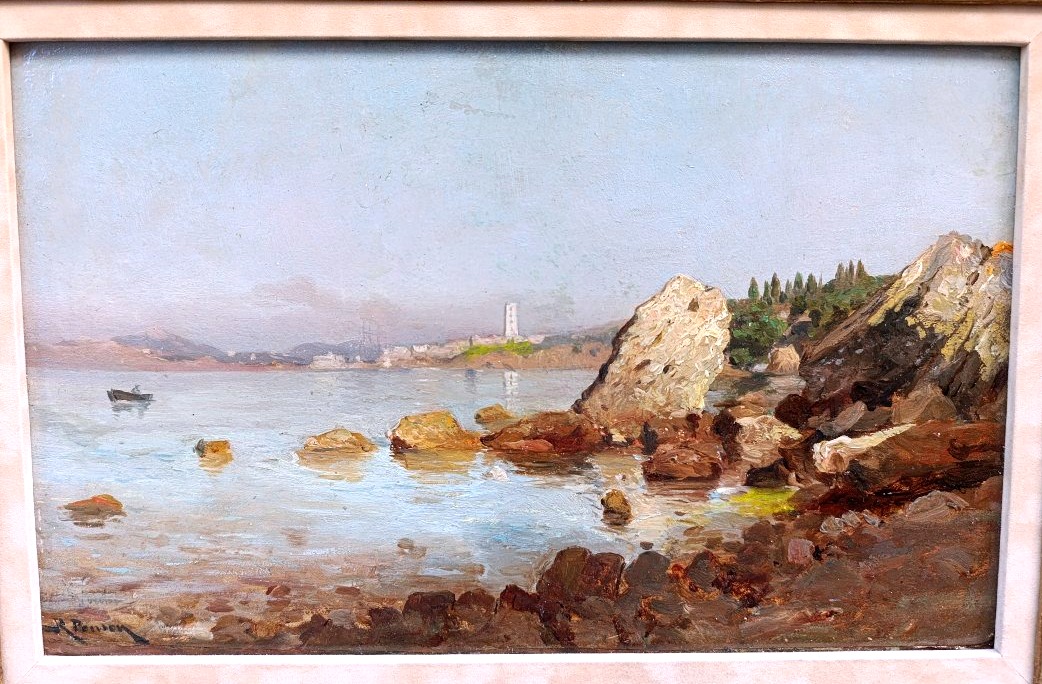
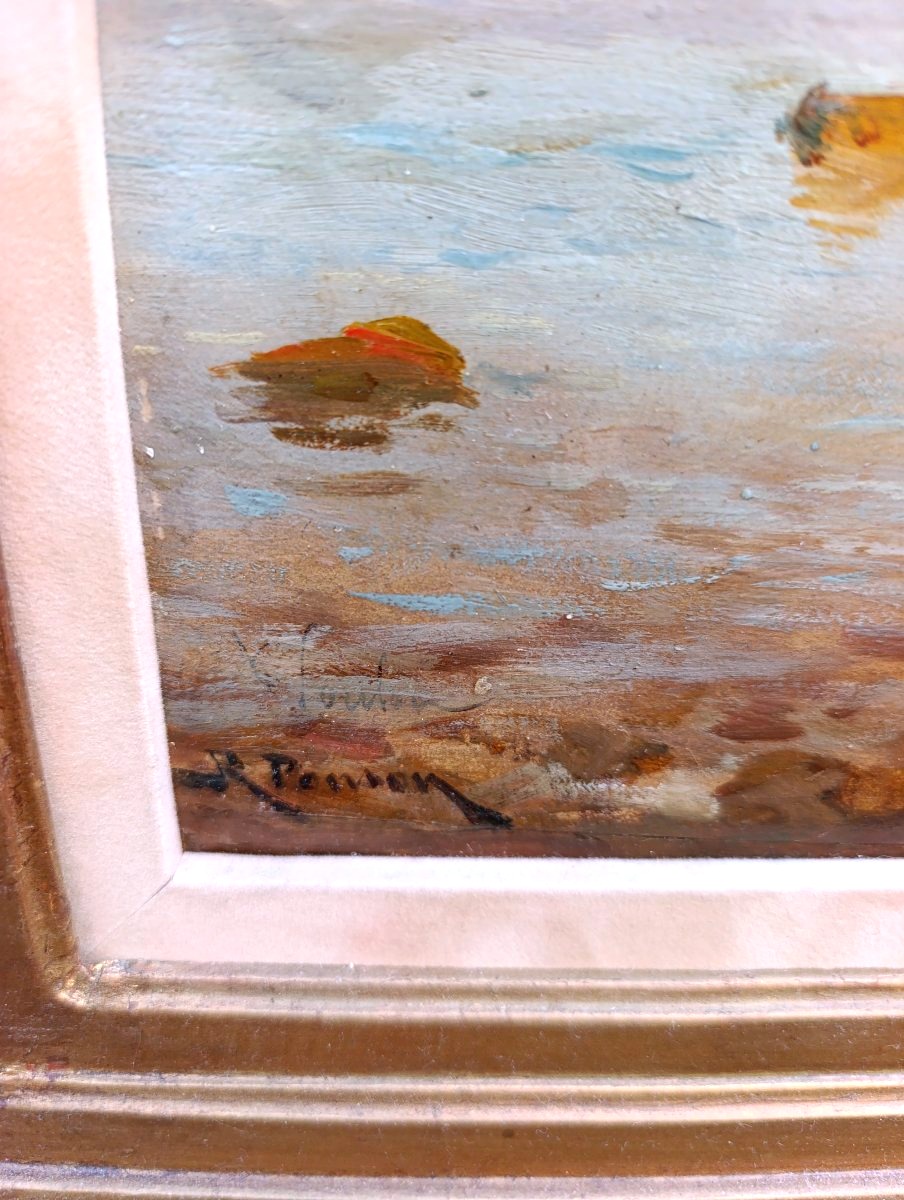

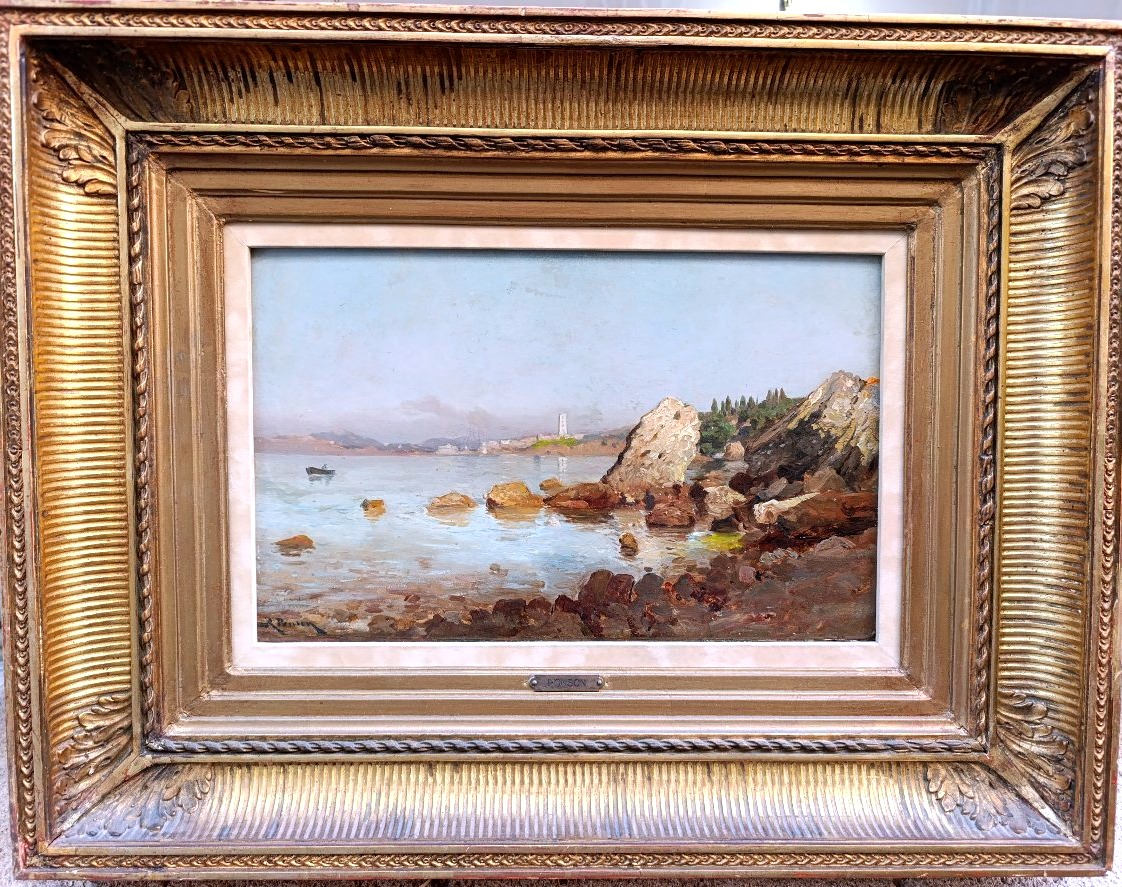


Raphael Ponson (1935–1904), Coastal Scene Near Toulon, Oil On Wood, Signed, Framed
Artist: Raphael Ponson (1835-1904)
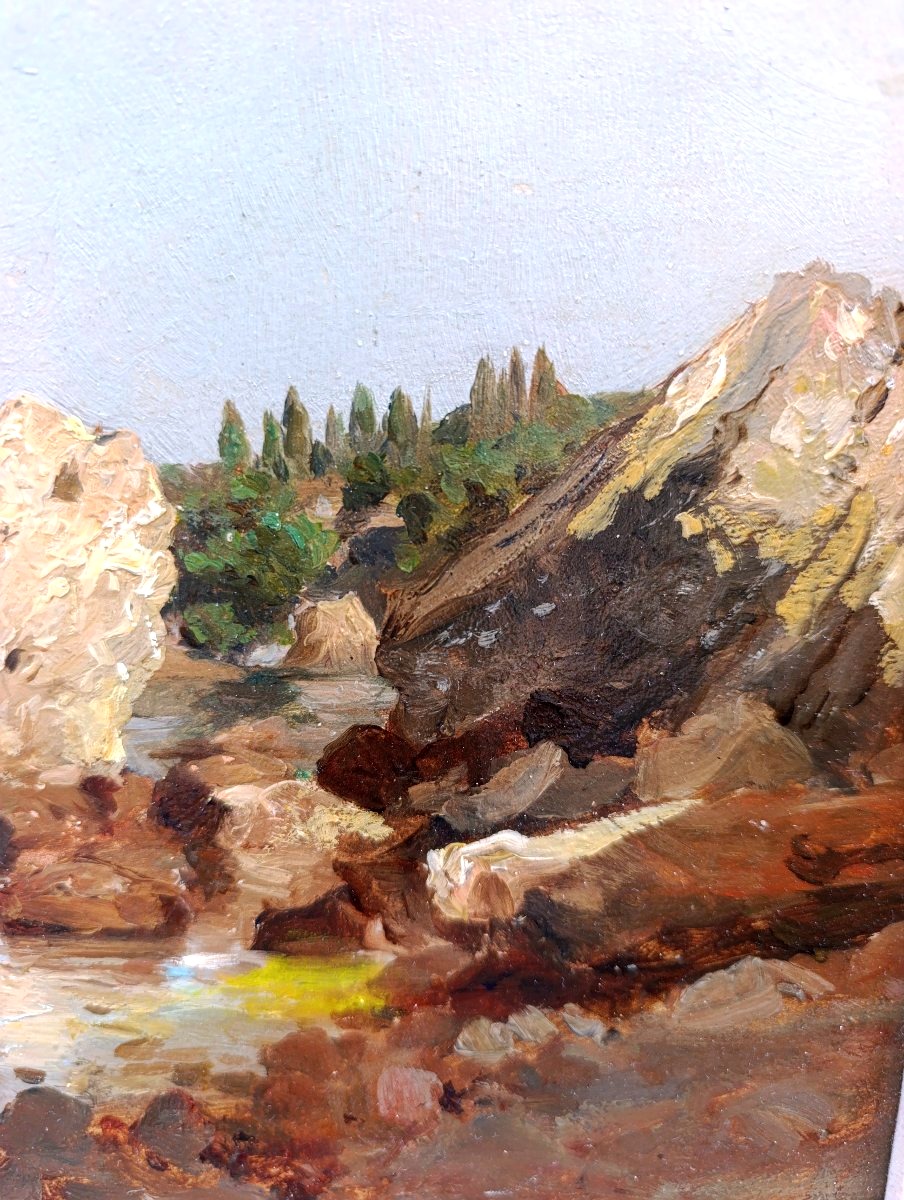
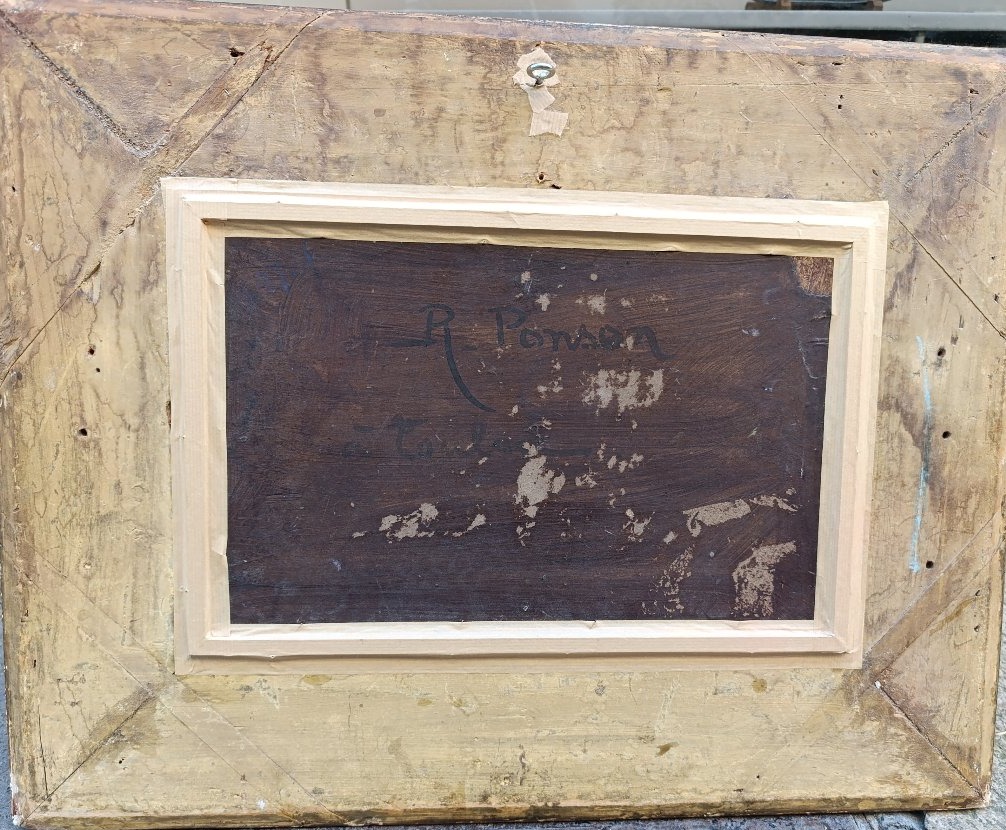
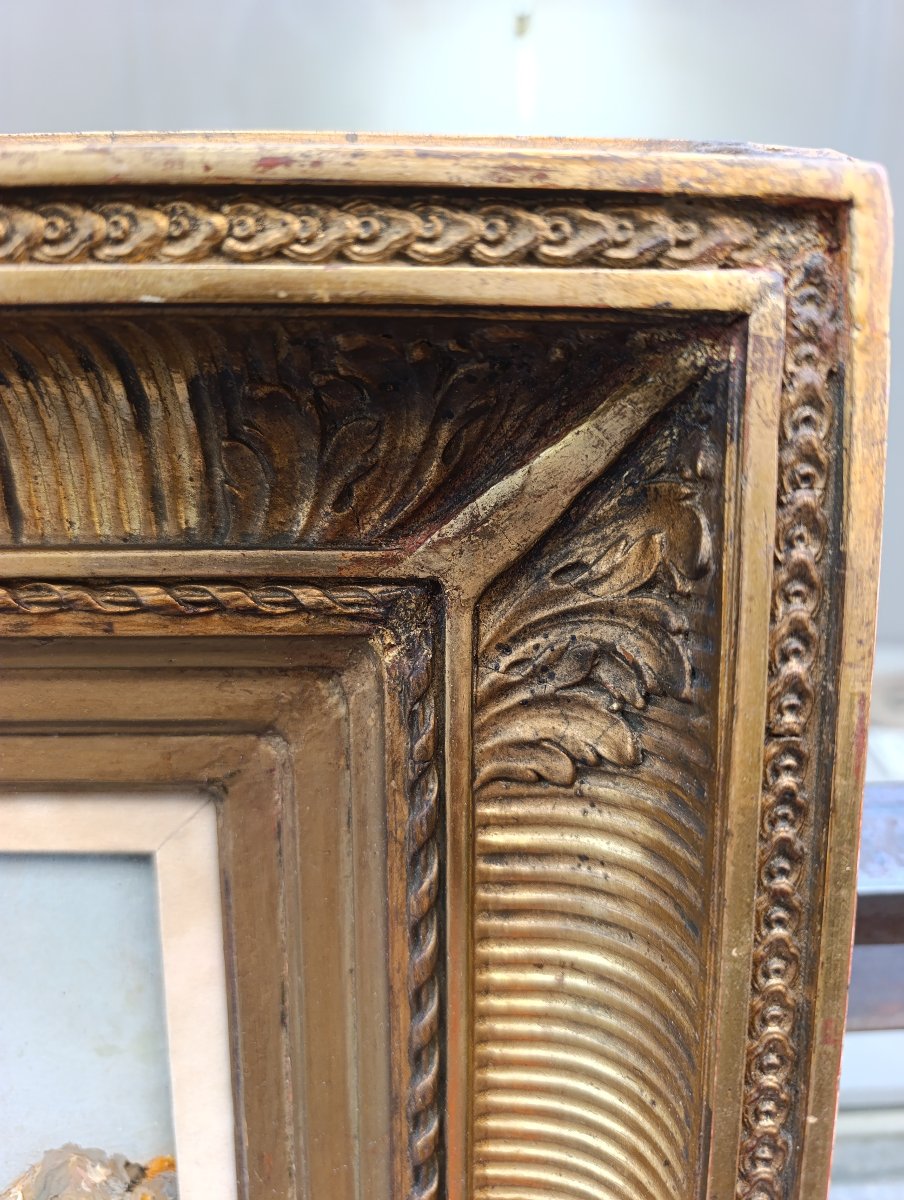
The Coast near Toulon by Raphael PONSON, a painter renowned for his landscapes of the Provençal coast, oil on wood, signed and dated on the reverse. Beautiful gilded frame with grooves.
He was the son of a theater set designer who taught him the basics of painting. He then attended the École Pratique de Dessin in Marseille, where he studied under Émile Loubon, who taught him to paint landscapes in keeping with the local atmosphere. He traveled to Paris in 1855 and 1856, then to Italy, where he completed his training. He then settled permanently in Marseille. He made his debut at the Marseille Salon in 1852 and at the Paris Salon in 1861 with The Chestnut Grove near Chevreuse and The Château d’If in the Bay of Marseille.
Works
In 1863, he decorated the gallery of the private apartments in the new Marseille prefecture. For the decoration of the first-floor rooms of the Natural History Museum at the Palais Longchamp, Henri-Jacques Espérandieu called upon Raphaël Ponson, whose flexible and brilliant talent would be perfectly suited to carrying out this work, according to the architect’s remarks during the presentation of the bid proposal to the city council. In 1867, he decorated the three rooms on the first floor, where he painted spectacular natural sites: Niagara Falls, the Mer de Glace, the Amazon rainforest, and the Fingal Basalt Caves on one of the Hebrides islands. The most famous room is the Provence Room, where Ponson depicts different landscapes for each of Provence’s smaller regions: cork oaks, chestnut trees, and arbutus trees for the Var; olive trees and oleanders for the Bouches-du-Rhône; and mulberry trees, almond trees, and melons for the Vaucluse. He also decorated the Café Rigaud and the Plauchut pastry shop at the top of the Canebière in Marseille.
He specialized in depicting the beaches, calanques, and seashores around Marseille. To distinguish himself from his younger brother, Étienne Aimé Ponson, a still-life painter, he added his first name to his surname. He participated in numerous regional exhibitions and received several awards.
Framed, 49 × 64 cm.
Works in public collectionsAix-en-Provence, Musée Granet: Gulf of Bandol. Avignon, Calvet Museum: L’Anse de la Couronne near Martigues. Béziers, Museum of Fine Arts
He was the son of a theater set designer who taught him the basics of painting. He then attended the École Pratique de Dessin in Marseille, where he studied under Émile Loubon, who taught him to paint landscapes in keeping with the local atmosphere. He traveled to Paris in 1855 and 1856, then to Italy, where he completed his training. He then settled permanently in Marseille. He made his debut at the Marseille Salon in 1852 and at the Paris Salon in 1861 with The Chestnut Grove near Chevreuse and The Château d’If in the Bay of Marseille.
Works
In 1863, he decorated the gallery of the private apartments in the new Marseille prefecture. For the decoration of the first-floor rooms of the Natural History Museum at the Palais Longchamp, Henri-Jacques Espérandieu called upon Raphaël Ponson, whose flexible and brilliant talent would be perfectly suited to carrying out this work, according to the architect’s remarks during the presentation of the bid proposal to the city council. In 1867, he decorated the three rooms on the first floor, where he painted spectacular natural sites: Niagara Falls, the Mer de Glace, the Amazon rainforest, and the Fingal Basalt Caves on one of the Hebrides islands. The most famous room is the Provence Room, where Ponson depicts different landscapes for each of Provence’s smaller regions: cork oaks, chestnut trees, and arbutus trees for the Var; olive trees and oleanders for the Bouches-du-Rhône; and mulberry trees, almond trees, and melons for the Vaucluse. He also decorated the Café Rigaud and the Plauchut pastry shop at the top of the Canebière in Marseille.
He specialized in depicting the beaches, calanques, and seashores around Marseille. To distinguish himself from his younger brother, Étienne Aimé Ponson, a still-life painter, he added his first name to his surname. He participated in numerous regional exhibitions and received several awards.
Framed, 49 × 64 cm.
Works in public collections
1 500 €
Period: 19th century
Style: Other Style
Condition: Good condition
Material: Oil painting on wood
Width: 39
Height: 27
Reference (ID): 1784078
Availability: In stock
Print